(Headline USA) The White House on Friday joined Bluesky, the social media platform of choice of many in the left-leaning online world.
In its inaugural post, the White House account offered a sizzle reel of the administration’s memes, trolls and messages from President Donald Trump’s nine months since returning to office. The post appeared aimed at tweaking liberals who aren’t fans of the Republican president.
The first post included mentions of the administration’s executive order renaming the Gulf of Mexico, a doctored image of Democratic House Minority Leader Hakeem Jeffries adorned in a sombrero with a faux mustache, and stream of photos and video from other big moments in the early going of Trump’s second term.
We realized everyone over at Bluesky probably wasn't seeing our content.
“What’s up, Bluesky?” the White House said in a message accompanying the video. ”We thought you might’ve missed some of our greatest hits, so we put this together for you. Can’t wait to spend more quality time together!”
Disgruntled X users began flocking to Bluesky after billionaire Elon Musk took over Twitter (now known as X) in 2022, and the platform reported a surge in new users late last year.
It remains small compared to more established online spaces such as X, but it has emerged as an alternative for those looking for a different mood.
The Department of Health and Human Services and the Department of Homeland Security also launched Bluesky accounts Friday.
Vice President JD Vance joined Bluesky in June.
Trump’s social media platform of choice is Truth Social. Trump is the biggest shareholder in Trump Media & Technology Group, the company that owns Truth Social.
(José Niño,Headline USA) People close to Changpeng Zhao, the former Binance CEO known as “CZ,” say talks are heating up inside the Trump White House over whether to issue a presidential pardon for the crypto executive, according to reporting from Charles Gasparino, Senior Correspondent at FOX Business.
Zhao, once one of the most powerful figures in digital finance, served time after a 2023 plea deal with the U.S. Department of Justice that forced Binance to pay $4.3 billion in fines.
Sources familiar with the discussions say several of Trump’s senior advisers see the case as politically charged. They describe it as part of what they call the Biden administration’s broader crackdown on cryptocurrency.
SCOOP: People close to @cz_binance, the former @binance chief who spent some time in the can amid the Biden Admin's crackdown on all things crypto, say discussions inside the White House are heating up on the possibility of a pardon from @realDonaldTrump. Many Trump insiders…
Zhao remains the largest individual shareholder in Binance, and a pardon could pave the way for his return to the company. He founded the exchange in 2017 and expanded it into the world’s leading platform for Bitcoin and crypto trading.
Speculation about a pardon has persisted for months, but sources now believe a decision is nearing.
Bitcoin Magazine noted that Zhao’s 2023 conviction became one of the most high-profile moments in the government’s campaign against major exchanges. U.S. prosecutors accused Binance of facilitating transactions with sanctioned entities and failing to enforce anti-money-laundering controls.
Zhao pleaded guilty, stepped down as CEO, and paid a $50 million personal fine.
He was sentenced to four months in prison and released in September 2024 after serving time in a low-security California facility and later in a halfway house.
According to Bitcoin Magazine, even critics of Binance have questioned the severity of the charges. Trump’s advisers reportedly see Zhao’s case as a chance to highlight what one called a “new era of crypto policy,” emphasizing innovation over punishment.
Gasparino notes that a final decision could arrive by the end of the year, though Trump’s focus remains divided between foreign policy flashpoints involving Gaza, Ukraine, and renewed trade disputes with China. He adds that clemency discussions “often take longer than expected.”
José Niño is the deputy editor of Headline USA. Follow him at x.com/JoseAlNino
(Luis Cornelio, Headline USA) The anti-Trump “No Kings” protests planned for Saturday are being funded by liberal billionaire George Soros and a network of Marxist-aligned organizations.
The protests, typically marked by low turnout and vague objectives, are being held nationwide. However, one of the main rallies is set for New York City’s Father Duffy Square at 11 a.m. local time. Top Democrats, including Senate Minority Leader Chuck Schumer, are expected to attend.
One of the pamphlets obtained by Headline USA shows that several Marxist groups, including the Communist Party USA and the Democratic Socialists of America, are sponsoring the New York City-based “No Kings” protest.
A closer look at the event revealed deep ties to George Soros, as his Open Society Foundations has granted millions to Indivisible, the group credited with creating the “No Kings” protest format.
According to OSF’s website, the organization awarded Indivisible a two-year, $3 million grant “to support the grantee’s social welfare activities.”
That funding is significant, as Indivisible is directly managing the “data and communications” operations of the No Kings protest, according to Fox News.
FIRST ON FOX: George Soros’ foundation is helping bankroll the anti-Trump ‘No Kings’ protests planned this weekend in cities nationwide.
Republican Sen. Ted Cruz is sounding the alarm to FOX News, saying: “This politicized march is being organized by Soros operatives and funded… pic.twitter.com/54XE3IyT6R
Soros’s foundation has faced criticism for years over its financial influence in left-wing politics, funneling vast sums to progressive and radical organizations.
Public records reviewed by Headline USA show OSF has given Indivisible roughly $7.6 million since 2018.
The ties between OSF and Indivisible extended beyond funding, as Indivisible co-founder and co-executive director Leah Greenberg previously worked for Tom Perriello, the former congressman who later ran OSF.
House Speaker Mike Johnson, R-La., blasted the upcoming rally and its ties to radical leftist groups during a press conference on Friday.
“If you think about what’s going to happen here tomorrow, you’re going to bring together the Marxists, the socialists, the Antifa advocates, the anarchists, and the pro-Hamas wing of the far-left Democrat Party,” he said. “That is the modern Democratic Party.”
SPEAKER JOHNSON on the "No Kings" rally: “If you think about what’s going to happen here tomorrow, you’re going to bring together the Marxists, the socialists, the Antifa advocates, the anarchists, and the pro-Hamas wing of the far-left Democrat Party—that is the modern… pic.twitter.com/UYRVFSspvv
Sen. Markwayne Mullin, R-Okla., echoed Johnson’s remarks on X, writing: “Chuck Schumer is more interested in appeasing his radical leftist base than ending the Schumer Shutdown and paying our troops.”
The ‘No Kings’ Anti-Trump Rally tomorrow is literally sponsored by the “Communist Party of America.”
Chuck Schumer is more interested in appeasing his radical leftist base than ending the Schumer Shutdown and paying our troops. pic.twitter.com/jd1GulnPYu
(Luis Cornelio, Headline USA) Michigan Gov. Gretchen Whitmer’s administration has agreed to reverse its planned killing of a beloved blind baby deer named “Peanut,” following days of mounting backlash on social media and pressure from bipartisan state lawmakers.
Peanut, along with a coyote named “Kota,” had been scheduled for euthanasia by the Whitmer-led Department of Natural Resources, despite opposition from the non-profit currently caring for the rescued animals. Kota’s fate remains uncertain.
Gretchen Whitmer’s DNR reverses kill order for blind fawn Peanut after public pressure https://t.co/Aa3RHAfqbf
The Detroit Animal Welfare Group rescued Peanut on Oct. 1 and requested permission from the Whitmer administration to keep her at their facility.
The DNR had denied the request, claiming the non-profit had missed deadlines and that keeping the blind deer would violate state regulations.
According to The Westerner, the Whitmer administration approved saving Peanut, provided she is transferred to a different facility for educational purposes.
Current state regulations stipulate that rehabilitated deer must be released by Oct. 1, ahead of winter. Rescued animals kept past that deadline are typically subject to euthanasia.
Republican Rep. Angela Rigas led a group of bipartisan lawmakers advocating for Peanut’s life.“We won,” Rigas said in an interview. “Next we save Kota and the ducks.”
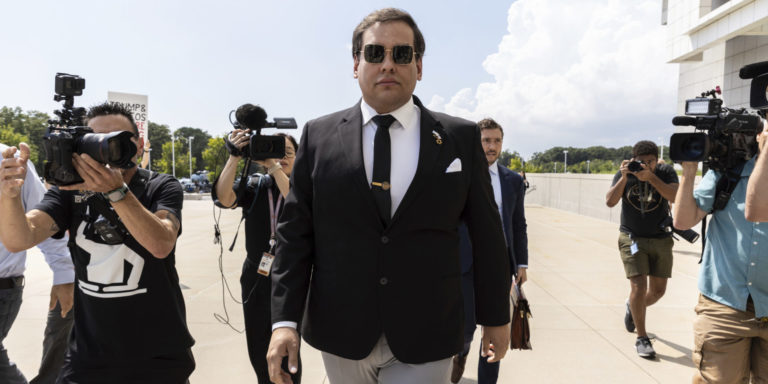
(Chris Wade, The Center Square) President Donald Trump wielded his executive powers Friday to commute the prison sentence of former New York congressman George Santos, ordering his immediate release from a federal facility.
“George has been in solitary confinement for long stretches of time and, by all accounts, has been horribly mistreated,” Trump posted on Truth Social Friday night. “Therefore, I just signed a Commutation, releasing George Santos from prison, IMMEDIATELY. Good luck George, have a great life!”
Santos reported to prison in July at a federal penitentiary in Fairton, New Jersey, shortly after he pleaded guilty to charges of wire fraud and aggravated identity theft during his 2022 campaign. He has served less than three months of a seven-year term, which he agreed to an exchange for avoiding a trial.
The president cited the former New York lawmaker’s political support in the announcement, saying Santos has “the Courage, Conviction and Intelligence to “ALWAYS VOTE REPUBLICAN.”
“George Santos was somewhat of a ‘rogue,’ but there are many rogues throughout our Country that aren’t forced to serve seven years in prison,” Trump wrote in the post.
Santos had openly sought clemency from Trump since the president’s return to the White House in January. He’s been helped by Rep. Marjorie Taylor Greene, who sent a letter to the Department of Justice to formally request Santos’ sentence be commuted.
But the president’s move drew criticism from several New York Republicans who voted to expel Santos from Congress. They said the disgraced former lawmaker deserved more time in jail.
“George Santos didn’t merely lie — he stole millions, defrauded an election, and his crimes (for which he pled guilty) warrant more than a three-month sentence,” U.S. Rep. Nick LaLota, R-Rocky Point, said in a statement. “He should devote the rest of his life to demonstrating remorse and making restitution to those he wronged.”
Rep. Andrew Garbarino, a member of the House Ethics subcommittee that investigated Santos, also blasted the commutation, saying the short period of time Santos has spent in prison “is not justice.”
“The victims of his crimes still have not been made whole, including the people he stole from and the voters he defrauded,” Garbarino said in a statement. “He has shown no remorse.”
Federal prosecutors in New York say that Santos and his former campaign treasurer, Nancy Marks, submitted false financial reports to the Federal Election Commission, inflating his fundraising numbers. They also allege he fraudulently collected over $24,000 in unemployment insurance benefits. Marks has pleaded guilty to the charges.
A previous indictment filed in May against Santos charged him with embezzling money from his campaign and lying to Congress about his income, among other allegations. He had previously pleaded not guilty to those charges and has confessed his innocence for months. He was scheduled to go to trial in September.
Following Santos’ indictment in October, Congress formally expelled Santos in a bipartisan vote after a damaging report from a House ethics subcommittee found “substantial evidence” of misconduct and illegal activity.
Santos, who has admitted to faking his resume and lying about his educational background, was also hit with a Federal Elections Commission complaint alleging his campaign engaged in a “straw donor scheme” to conceal the sources of a $705,000 personal loan to his campaign.
His expulsion prompted a special election that led to Republicans losing New York’s 3rd Congressional District seat to Democrat Tom Suozzi, a former congressman.
Gold had pushed past $4,300, and silver broke $54 on the day of recording. Asked if that’s bubble territory, Weldon said you can argue both sides, but futures open interest remains relatively low; the bid looks like accumulation, not a blow-off.
He tied the move to BRICS-aligned dollar selling and gold buying, repatriation of bars, tight vaults, and a U.S. dollar that hasn’t yet cracked.
Silver’s $36.50 breakout gave way to a sprint toward $50 and beyond, with $54 flashing intraday.
From there, the discussion widened to physical tightness, trust in the dollar, consumer and labor strains, a fragile equity market, and how a Fed pivot could propel the next metals leg.
If the Fed pivots back to easing and balance-sheet growth, Weldon expects the dollar to get hit, a setup that makes five-digit gold and silver’s march toward $100 plausible.
(Interview Starts Around 8:00 Mark)
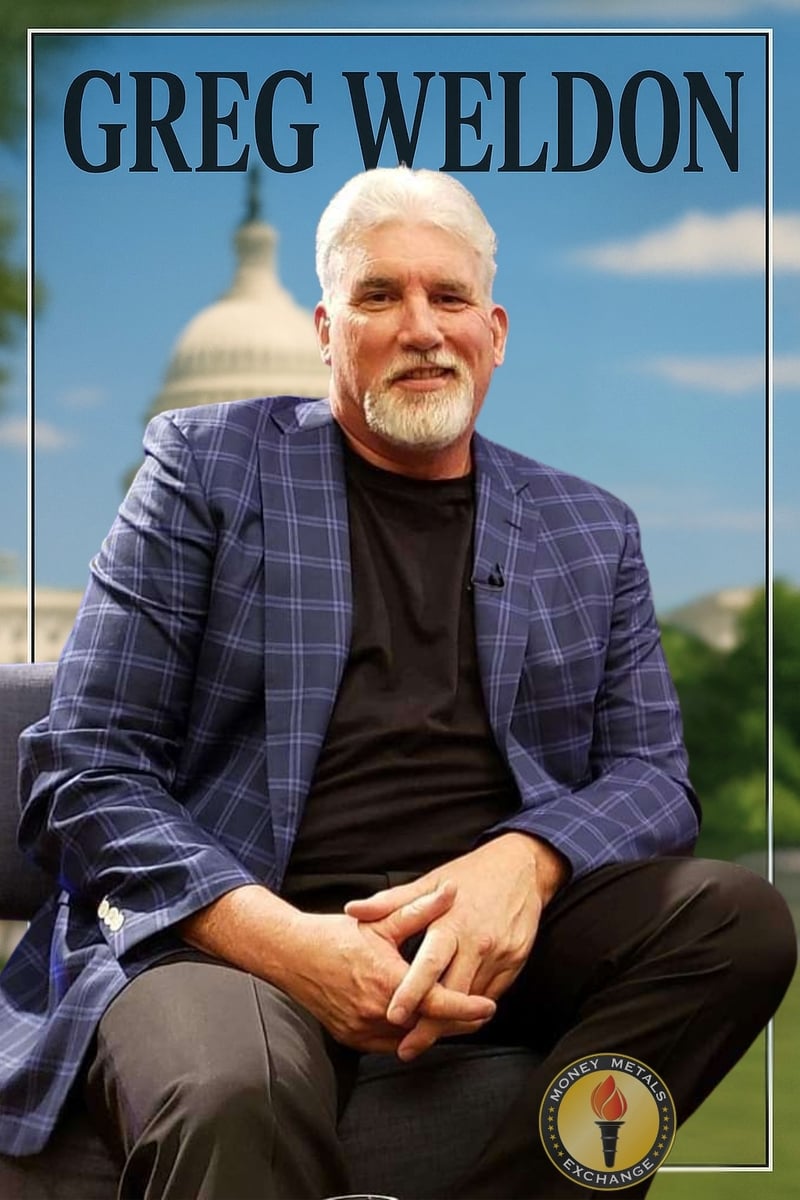
About Greg Weldon
Greg Weldon
Gregory T. Weldon, also known as Greg Weldon, brings 42 years in markets, starting on the COMEX floor in the silver pit. He has been a floor trader, institutional futures broker, hedge-fund manager, and CTA (Series 3).
He publishes independent macro research at Weldon Online and co-hosts Free Money Markets & New Age Investing.
His managed-futures program, launched in 2018 around China’s crude-market shift and an inflationary monetary reset, carries a $1,000,000 minimum.
Recent reports—Debt Black Hole, Tom Cruise Market, and In Something Else We Trust—frame metals within de-dollarization, policy error risk, and physical tightness.
He emphasizes he’s not a perma-bull; he’ll be long or short as conditions warrant.
Drivers of the rally
Weldon points to BRICS-aligned buyers selling dollars, buying gold, and shipping metal home, draining vaults. That’s a physical driver, not a paper fling.
The dollar hasn’t even cracked; in several non-USD currencies, gold has already tripled or quadrupled, implying a U.S. dollar catch-up leg without speculative froth.
Positioning fits: futures open interest is “pretty dang low,” inconsistent with a classic bubble.
Silver’s breakout and tightness
Silver’s tape confirmed the turn. Weldon had circled $36.50 as the breakout; once through, the only question was speed to $50, not whether it would get there.
It reached $54 on the day of recording. He believes silver is on its way to $100, while warning that drawdowns can be sharp.
London looks tight. The widening disconnect between New York futures and London spot reads like real metal moving, not a basis quirk.
India’s shortage is so acute that firms recently sourced 1,000-ounce bars from Money Metals—supply stress in the wild.
Even on $1,000,000-plus accounts, Weldon caps per-trade risk at about 0.5%–1%. With $50 silver and three-dollar intraday ranges, entries that respect those limits are hard to find.
In 42 years—starting in the silver pit—he hasn’t seen metals more volatile, more uncertain, or harder to handicap.
Respect the tape, but respect risk more.
The trust backdrop and U.S. debt
“In God we trust” doesn’t reconcile $36 trillion in federal debt, roughly $28 trillion of it held domestically.
Add households and Weldon pegs total debt near 185% of GDP. In several months of the last fiscal year, Washington spent twice what it took in.
He argues that decades of comforting narratives have masked a deficit path that erodes confidence and drives a global search for “something else” to trust.
Weaponized finance and de-dollarization
Policy has weaponized finance. Tariffs, sanctions, and asset seizures nudged counterparties off dollar rails just as China became the world’s dominant trader by volume.
Weldon says BRICS de-dollarization didn’t stop; it moved backstage and gained urgency, with buyers sourcing metal and moving it home.
As dollar settlement becomes leverage, incentives to diversify reserves and settlement grow. Gold buying and relocation are rational responses.
Stagflation signals and consumer strain
Fresh surveys flash stagflation. The Philly Fed and a Richmond–Atlanta Fed CFO survey show firms boosting capex to replace labor, not expand, even as consumers weaken.
Savings trail credit-card debt. Delinquency rates are the second highest since 2008–2009.
The consumer looks stretched and fragile to rate and price shocks.
The mix—labor substitution by firms and tapped-out households—implies slower growth with sticky prices, a metals-friendly setup.
Labor market deterioration
The 12-month rise in “not in the labor force” hit 3.219 million in July, a threshold that historically coincides with recessions.
Roughly 1.3 million people over 65 left the labor force. Immigration delivered about 2 million fewer entrants.
Weldon views these flows as structural and additive to the slowdown. A softening labor market layered onto a stretched consumer is how an equity correction can start.
Equities, Bitcoin, and the “Tom Cruise” market
Equities look precarious. Consumer-sensitive ETFs such as XLY and XRT won’t confirm S&P highs.
Weldon calls this the “Tom Cruise market”—Mission Impossible, hanging by a few fingers over a cliff.
A near-5% 30-year once shook stocks; now the market shrugs, which he sees as complacency amid tightening conditions.
Bitcoin has been equitized via ETFs and now correlates tightly with the S&P 500. He treats it as a leading indicator for risk appetite, a tell for when equities and, briefly, metals could wobble together.
Sentiment and banks’ forecasts
Banks are scrambling to lift gold targets after dismissing such levels not long ago. TV now normalizes $4,000 and $5,000 gold.
Weldon recalls a 2007 Squawk Box appearance predicting Fed debt monetization and $1,200 gold when the metal was near $400–$420. He was called a nut job—then it happened.
He also recounts a recent segment in which a novice-sounding pundit touted $4,000 gold, followed minutes later by a large client asking if it was time to liquidate miners.
For him, that’s a sentiment “tell” and a short-term risk flag.
Near-term downside and the 2008 template
If stocks crack, everything can get sold for a spell—metals included—before gold leads the rebound.
In 2008, gold fell about 25%, far less than equities, and snapped back first and hard.
He advises keeping powder dry for that moment while maintaining strategic exposure where risk tolerances allow.
Fed policy and the coming pivot
Weldon thinks the Fed is too timid. With the consumer, housing, labor—and maybe stocks—softening, staying restrictive risks a harsher, later pivot into rising inflation.
When cuts and balance-sheet expansion return, he expects the dollar to get whacked, the transmission channel for a renewed and possibly more powerful metals leg.
If the pivot arrives late, falling real rates will feel stimulative even if nominal policy stays “tight,” and metals tend to front-run that.
Five-digit gold scenario
Five-digit gold becomes conceivable if the dollar’s credibility erodes and financing needs force repeated devaluations. The magnitude, he stresses, is about the currency, not the commodity.
Nominal highs can mask real decline—Argentina’s MERVAL is his cautionary rhyme.
In that world, central-bank gold buying persists, and private investors treat bullion as savings rather than a trade.
Deglobalization, tariffs, and 2018’s turn
Deglobalization and tariffs cut both ways. On balance, Weldon says it’s bad for the largest debtor nation and relatively good for China, Russia, and OPEC, which gain leverage over pricing and flows.
He dates a key turn to 2018, when China launched crude futures benchmarked to OPEC grades with non-dollar pricing and Russian oil referenced to that lane—the beginning of the end of dollar monopoly in that slice of trade.
He argues this pivot seeded today’s bifurcated system—one where settlement options proliferate and bullion matters more.
Historical backdrop and paper shorts
He doesn’t dismiss the GATA-era context. The Washington Accord in 1999 ended official selling after the Swiss and Bank of England dumps and reset central-bank behavior.
Allegations of large paper shorts have lingered for decades. The present squeeze, he thinks, looks like those positions reconciling with physical reality.
For the first time in years, physical tightness—not just a narrative—is writing the plot.
What it means for investors
He is not a perma-bull. He’ll be long or short as conditions merit. At these prices and this volatility, new entries demand patience, strict sizing, and acceptance of wider ranges.
If stocks roll first, metals may offer the last great pullback before the next advance. Silver’s structural tightness and central-bank gold buying are secular forces worth aligning with.
Watch Bitcoin and consumer-sensitive equities for the first crack, then use that window to scale in.
Where to find Greg Weldon’s work
Read his research at Weldon Online, follow him on X @WeldonLive, and listen to the Free Money Markets & New Age Investing podcast on Buzzsprout and major platforms.
He offers a free trial to his research and manages money as a CTA; inquiries can be directed through Weldon Online.
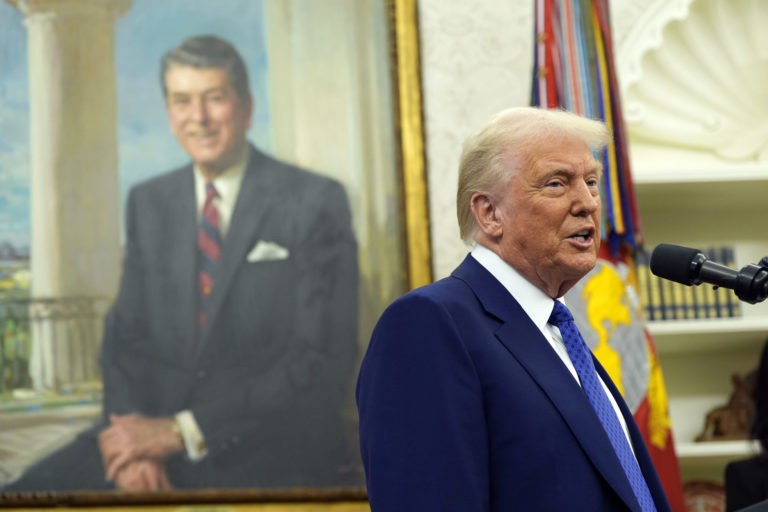
(Dave DeCamp, Antiwar.com) President Trump on Thursday threatened that “we” would have to “go in and kill” Hamas in Gaza if the group continues killing alleged criminals and Israeli collaborators, reversing his previous support for Hamas’s armed action.
“If Hamas continues to kill people in Gaza, which was not the Deal, we will have no choice but to go in and kill them. Thank you for your attention to this matter!” President Trump wrote on Truth Social.
Over the weekend, dozens were killed in clashes between Hamas and other militias in Gaza, and some Palestinians were summarily executed. But it’s unclear if there have been any internal clashes or executions in Gaza in recent days, while Israeli forces have continued to kill Palestinians despite the ceasefire, something Trump hasn’t condemned.
After the clashes, Hamas offered amnesty to members of armed groups and gave them until October 19 to surrender. According to a report from Sky News, at least three anti-Hamas militias that operate in areas of Gaza controlled by the Israeli military are refusing to disarm.
Israel has armed gangs and militias as part of its strategy against Hamas, including a gang led by Yasser Abu Shabab, who is known for looting aid trucks. Some members of the Abu Shabab gang, which controls territory in southern Gaza under the watch of the IDF, have ties to ISIS.
Trump’s comments on Thursday mark a departure from his support for Hamas’s activity in Gaza. He said earlier this week that Hamas had “approval” to reassert control of areas of Gaza to prevent crime and also said the people the group executed were gang members.
“You know, they did take out a couple of gangs that were very bad. Very, very bad gangs, and they did take them out. And they killed a number of gang members, and that didn’t bother me much, to be honest with you. That’s OK, it’s a couple of very bad gangs,” the president said on Tuesday.
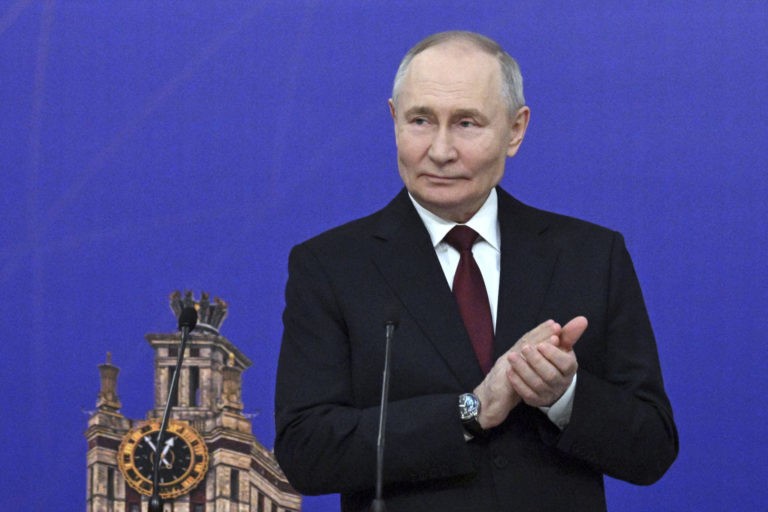
(Dave DeCamp, Antiwar.com) President Trump said on Thursday that he spoke by phone with Russian President Vladimir Putin and that he will soon meet in person again with the Russian leader in Budapest, Hungary, to discuss the possibility of ending the war in Ukraine.
Trump said in a post on Truth Social that high-level US and Russian officials will hold talks next week before he has a summit with Putin.
“At the conclusion of the call, we agreed that there will be a meeting of our High Level Advisors, next week. The United States’ initial meetings will be led by Secretary of State Marco Rubio, together with various other people, to be designated. A meeting location is to be determined,” Trump wrote.
“President Putin and I will then meet in an agreed upon location, Budapest, Hungary, to see if we can bring this “inglorious” War, between Russia and Ukraine, to an end,” the president added.
Trump said that he and Ukrainian President Volodymyr Zelensky will discuss the planned meeting when Zelensky visits the White House on Friday. “President Zelensky and I will be meeting tomorrow, in the Oval Office, where we will discuss my conversation with President Putin, and much more. I believe great progress was made with today’s telephone conversation,” he said.
Zelensky is expected to ask Trump to provide Ukraine with Tomahawk missiles, which have a range of over 1,000 miles and are nuclear-capable, a step that would mark a major escalation of the proxy war and bring a significant risk of the conflict turning into a direct confrontation between Russia and NATO.
Trump said on Wednesday that he and Zelensky will also discuss the possibility of Ukraine going on the “offensive,” something he said he needs to make a “determination” on. A delegation of Ukrainian officials has been in Washington this week, pushing for more weapons and less diplomacy with Russia.
State Rep. Adam Mathews called Judge Ted Berry’s comments egregious and inflammatory, and the second-term Republican has called for the judge’s resignation.
With no movement, Mathews introduced a concurrent resolution to start removal proceedings against the Hamilton County municipal court judge. He is the son of Theodore M. Berry, the first Black mayor of Cincinnati.
“Judge Berry has had more than a month to take the honorable path and resign,” Mathews said in a release. “The people of Ohio deserve a judiciary they can trust to be fair, unbiased, and beyond reproach. Judge Berry’s actions have fallen far short of that sacred trust, and now the Legislature must act to defend the courts.”
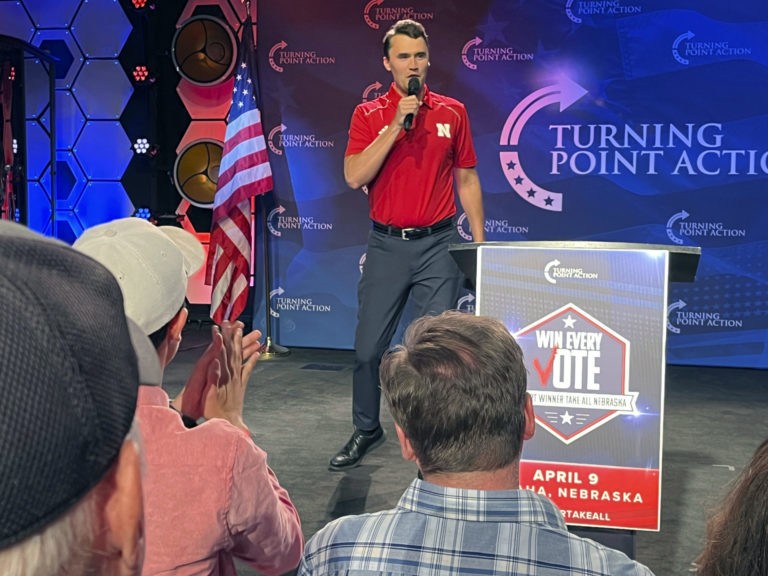
Kirk, posthumously awarded the Presidential Medal of Freedom earlier this week by second-term Republican President Donald Trump, was gunned down during a campus event in Utah in September. Kirk was the founder of Turning Point USA and known for active engagement in civil debate with those in disagreement with him.
Media reports have shown Berry’s comments included “reds in Hatred & Division,” “How’s he feel about gun violence & gun control in Hell now,” and “So, a white guy killed him! Color it KARMA!”
Rep. D.J. Swearingen, R-Huron, called the comments misconduct and violation of ethics.
“Judge Berry has had every opportunity to step down in recognition of his misconduct and his blatant violations of judicial ethics,” Swearingen said in a statement. “His refusal to resign leaves the Legislature no choice but to pursue the most serious option available to ensure public confidence in the fairness of Ohio’s courts.”
Berry was removed as a member of the Joe Burrow Foundation following the comments.
In 2021, Berry was charged by the Judicial Disciplinary Counsel with violating the code of judicial conduct for sending inappropriate Facebook messages and videos to a court employee.
According to records, he stipulated to the charge of misconduct and was publicly reprimanded.
(Thérèse Boudreaux, The Center Square) In an act of defiance, Democratic senators blocked the House-passed full-year funding bill for the Department of Defense from advancing Thursday.
The procedural vote on one of the 12 annual appropriations bills to properly fund the government in fiscal year 2026 failed despite Republican leaders bringing it to the floor to remedy some of the worst effects of the ongoing government shutdown.
The bill would have authorized funding for the DOD and its employees’ salaries, as well as restore pay for military service members won’t see their next paycheck if the shutdown drags on. The Pentagon has already dipped into untapped research and development funds in order to subsidize Oct. 15 paychecks.
Democratic leaders reasoned that advancing the bill would take away some of their leverage in shutdown negotiations. Senate Democrats have blocked Republicans’ Continuing Resolution to reopen and temporarily fund the federal government ten times already, demanding GOP leaders vow to renew the expanded Obamacare Premium Tax Credits.
Senate Majority Leader John Thune, R-S.D., has already promised to bring a bill extending the subsidies to the Senate floor in exchange for votes to open the government, but said it is impossible for him to guarantee it will pass.
“We offered to accommodate their health care demands by guaranteeing them a vote on their proposal if they vote to reopen the government. The answer [was] no,” Thune vented Thursday. “So we thought, if they don’t want to fund the government via a Continuing Resolution, we’ll give them the chance to fund the government a different way by attempting to move forward with regular order appropriations bills. And once again, the answer was no.”
He added, “if anything was needed to demonstrate just how fundamentally uninterested Democrats are in supporting our troops and defending our country, just take a look at this vote.”
Sens. John Fetterman, D-Pa.; Catherine Cortez Masto, D-Nev., and Jeanne Shaheen, D-N.H., were the only Democrats to vote for the bill.
Ever since Senate Democrats first blocked Republicans’ CR on Sept. 30, leading to the current government shutdown, the U.S. economy has lost an estimated $15 billion per day. Hundreds of thousands of federal workers have been furloughed, and thousands more are working without pay.
With senators now going home for the weekend, the government will remain closed for at least 20 days. The longest the U.S. government ever remained shuttered was 35 days.