Senate Dems Refuse to Return Epstein Cash While Demanding Document Release

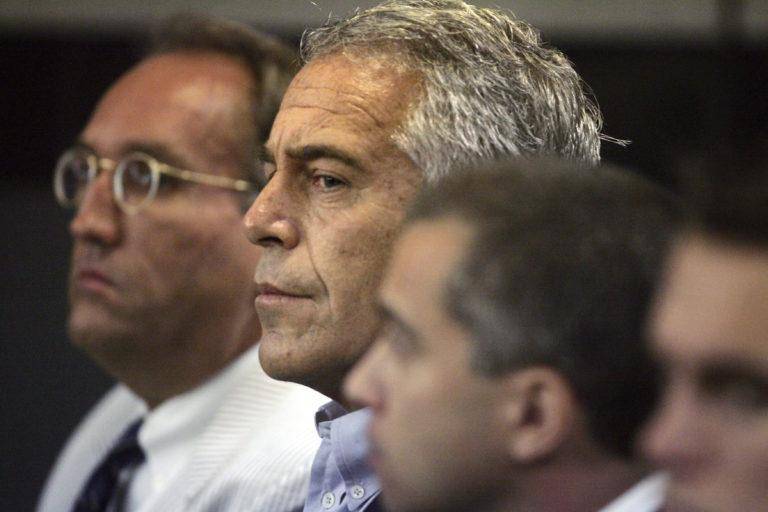
(Luis CornelioHeadline USA) Senate Democrats have failed to return donations from Jeffrey Epstein, the late convicted sex offender, even as they pressure the Trump administration to release files tied to the federal investigation into Epstein’s crimes.

The Democratic Senatorial Campaign Committee, the campaign arm of Senate Democrats, has kept the $59,000 in Epstein donations over the years, the New York Post reported Saturday.

The committee is currently headed by anti-Trump Sen. Kirsten Gillibrand, D-N.Y., who came under fire for taking a two-day vacation at a luxury Napa Valley hotel during the government shutdown.

Epstein made the donations between 1994 and 2000, including $20,000 in 1999 and $25,000 in 2000, according to Federal Election Commission records.

The DSCC was then led by (now former) Sen. Robert Torricelli, D-N.J., the disgraced lawmaker who resigned in 2002 following a DOJ probe into campaign finance violations.

The Democratic National Committee also pocketed $32,000 in Epstein contributions, the New York Post noted.

Their refusal to return Epstein’s money comes as both groups mount social media campaigns attempting to link President Donald Trump to Epstein, who died in federal custody in 2019.

The DNC has launched a digital ad campaign in several states, including Iowa and Wisconsin, demanding that the Trump administration and GOP lawmakers release Epstein files.

“Democrats are going to continue to hold the Trump administration and Iowa Republicans in Congress accountable for their failure to release the Epstein files and the cover-up that we are witnessing in real time,” DNC operative Tim Hogan said in a statement in August.

The DSCC also targeted Sen. Susan Collins, R-Maine, for voting against Senate Majority Leader Chuck Schumer’s, D-N.Y., attempt to include language forcing the release of Epstein files in a national defense bill.

Jay Jones’s Wife Donated to Controversial Fund That Freed Convicted Murderers

(Luis CornelioHeadline USA) The wife of scandal-plagued Jay Jones, a Democrat running for Virginia’s attorney general, donated to a controversial fund that posted bail for murderers, rapists and other violent criminals. 

Mavis Jones boasted of her donation to the Minnesota Freedom Fund in a post shared on X on May 30, 2020, and even urged her followers to do the same, the Washington Free Beacon reported Thursday. 

“I just donated to the Minnesota freedom fund,” she wrote, adding, “please consider doing the same or donating to any of the *legitimate* organizations supporting protesters.” 

The Minnesota Freedom Fund, which even former Vice President Kamala Harris promoted, gained national attention in 2020 as it sought to free individuals arrested during the George Floyd protests. 

In total, the fund received $42 million in donations but spent only $210,000 bailing rioters out of jail. 

The rest of the funds went toward posting bail for criminals like Christopher Boswell, a twice-convicted rapist who benefited from a $350,000 bail paid by the Minnesota Freedom Fund. 

Another individual bailed out by the group was George Howard, who later pleaded guilty to the second-degree murder of Damian Martinez Ortiz. 

The group announced earlier this year that it would stop bailing out criminal suspects in pretrial cases. 

The Jones connection to the Minnesota Freedom Fund comes as he struggles to navigate mounting scandals over his fitness to serve as Virginia’s top law enforcement official. 

Leaked text messages revealed that in August 2022, Jones threatened to put “two bullets to the head” of Todd Gilbert, then speaker of the Virginia House of Delegates. 

At the time, Jones had recently left the state legislature. 

In 2022, Jones was convicted of reckless driving after being busted driving 116 miles per hour on a highway. He was ordered to pay a $1,500 fine and serve 1,000 community service hours, half of which he spent volunteering at his own political action committee. 

Jones is running against incumbent Attorney General Jason Miyares. 

Trump Plans to Tell Congress About New Drug War, Won’t Seek Permission

(Brett Rowland, The Center Square) President Donald Trump and his administration plan to inform Congress about using the military to target drug traffickers, but stopped short of saying they would ask for authorization to use military force.

Since September, Trump has been using the U.S. military to destroy suspected drug boats in the Caribbean and eastern Pacific Ocean. The military campaign and build-up of U.S. military forces comes amid fresh pressure on Latin American countries. 

On Friday, Trump ordered the Gerald R. Ford Carrier Strike Group to the U.S. Southern Command.

“These forces will enhance and augment existing capabilities to disrupt narcotics trafficking and degrade and dismantle [transnational criminal organizations],” Chief Pentagon Spokesman Sean Parnell said in a statement.

Also on Friday, the U.S. Treasury’s Office of Foreign Assets Control designated Colombian President Gustavo Francisco Petro Urrego for alleged drug activities, effectively cutting off access to the U.S. financial system to Petro, his wife, his son, and a close associate.  

Friday’s moves come after a series of U.S. military strikes on suspected drug boats in the region. Previously, U.S. forces would stop and search such boats and turn anyone on board over to local authorities. But in September, Trump started blowing up suspected drug boats. The U.S. military has carried out at least 10 such strikes, killing more than 30 people.

Trump is also putting pressure on Nicolás Maduro, the president of Venezuela, who has been accused of consolidating power through fraudulent elections. In 2024, his reelection was widely condemned as illegitimate, with allegations of vote tampering and intimidation of opposition leaders. Maduro is also facing allegations of human rights abuses, corruption, and involvement in illegal narcotics trafficking. U.S. prosecutors have charged Maduro with running a drug cartel using cocaine trafficking as a tool to sustain the regime and put a $50 million bounty on information leading to his arrest.

“We may go to the Senate and we may go to the Congress and tell them about it. But I can’t imagine they’d have any problem with it,” Trump said Thursday at a White House roundtable discussing his plans to use the military to go after drug traffickers at sea and on land.

Democrats and Republicans have raised questions about the legality of the strikes and asked for more information from the administration, including legal justification. 

Since the 9/11 terrorist attacks in 2001, U.S. presidents of both parties have used the military to kill terrorists abroad, including members of Al-Qaeda and ISIS.

Walter Olson, a senior fellow at the Cato Institute’s Robert A. Levy Center for Constitutional Studies, said that despite Trump’s move to designate cartels and other groups as foreign terrorist organizations, U.S. laws restrict the use of the military, even in international waters.

“It requires a lot of creative thinking to say that the shipment of drugs into the United States is the same as flying a plane into a skyscraper or launching an attack on an American embassy,” Olson told The Center Square.

Most of the boat strikes have been near Venezuela.

Colombian President Gustavo Petro previously called for a criminal investigation into Trump and other U.S. officials related to the military strikes on suspected drug boats in the Caribbean. Petro recently proposed that Qatar could serve as a mediator to help stop the strikes.

Olson noted that over the course of the long U.S. war on drugs, tactics have rarely resulted in a significant decline in the shipment of drugs to the U.S. American demand for illicit drugs isn’t affected by the military strikes. 

“There is no reason to believe that this will curb the drug problems,” he told The Center Square.

He noted that previous U.S. crackdowns on illicit drugs have often resulted in more potent drugs coming across the border as smugglers look to limit risk and boost profits.

Olson said it would be worth studying the recent decrease in U.S. overdose deaths, but he said the recent strikes were unrelated.

“It has nothing to do with these flashy made-for-video strikes or the idea that it’s somehow too expensive to go on using Coast Guard boats to intercept these vessels,” he said. “Senator Rand Paul made a great point that I hope everyone pays attention to, which is that we have a lot of data from the boat interdictions that the Coast Guard has been doing, and about a quarter of the time it turns out they don’t find drugs, and they let everyone go because they didn’t find drugs.”

Trump Says Tech Leaders and Mayor Changed His Mind About Using Federal Force in San Francisco

(Headline USA) President Donald Trump was geared up for a show of federal force in San Francisco, a city he’s blasted as everything wrong with liberal governance. Then conversations with some of the Bay Area’s most prominent tech leaders and the mayor changed his mind.

“I got a great call from some incredible people, some friends of mine, very successful people,” Trump told reporters Thursday at the White House, specifically referencing Jensen Huang, the CEO of Nvidia, one of the world’s most valuable tech companies, and Marc Benioff, CEO of software company Salesforce.

He said they told him San Francisco was working hard to reduce crime. “So we are holding off that surge, everybody. And we’re going to let them see if they can do it,” Trump said. He said he could change his mind if it “doesn’t work out.”

Trump said the increased federal force had been planned for Saturday. He didn’t specify whether he was just referring to National Guard troops, which he had threatened to send in, or if he would also halt a potential ramp up of immigration enforcement. U.S. Customs and Border Protection agents arrived at a U.S. Coast Guard base near the city on Thursday morning, drawing protesters.

U.S. Immigration and Customs Enforcement informed Alameda County Sheriff Yesenia Sanchez that the operation had been called off for the entire Bay Area, a nine-county region of about 8 million people, Sgt. Roberto Morales, a spokesman for the sheriff, said Friday.

Outreach from billionaire CEOs clearly had a hand in the rare reprieve Trump handed a Democrat-led city. But Trump also credited Mayor Daniel Lurie, who has worked to avoid direct confrontation with the Republican president since both took office in January. Lurie has governed as an earnest and relentless cheerleader of San Francisco, and repeatedly refused to weigh in on national politics or to mention Trump’s name.

Instead, he’s focused on local issues — public safety, luring back business and reversing the city’s pandemic-fueled decline. When Trump said repeatedly earlier this week that he’d send the National Guard into San Francisco to quell crime, Lurie noted overall crime is down 26% compared to last year and car break-ins are at a 22-year low.

“I told the mayor, I love what you’re doing, I respect it, and I respect the people that are doing it,” Trump said, referencing a phone call the two had Wednesday.

An heir to the Levi Strauss fortune and anti-poverty philanthropist, Lurie is a centrist Democrat who had never held office until he ousted then-Mayor London Breed in last November’s election. He has stated no other political aspirations than to improve the city and has said that he will work with anyone who wants to do the same.

Lurie said he told Trump that he welcomes the city’s “continued partnership” with the Drug Enforcement Agency and other federal authorities to get illegal narcotics off the streets and contribute to San Francisco’s falling crime rates. Fentanyl has been a major scourge on the city’s streets.

“But having the military and militarized immigration enforcement in our city will hinder our recovery,” Lurie said.

Secretary of Homeland Security Kristi Noem said Friday that her department won’t tolerate violence like the truck that rammed into a Coast Guard station in the San Francisco Bay Area on Thursday night. She said during a news conference in Minneapolis that she had discussed the incident with Trump and suggested the president could change his mind about holding off a federal enforcement surge if more violence occurs.

If they “don’t figure out how to protect our law enforcement officers and protect our Coast Guard members, that we would be forced to come in and protect those individuals,” she said.

Former U.S. House Speaker Nancy Pelosi, a San Francisco Democrat, praised Lurie on social media, saying that he “has demonstrated exceptional leadership.” Steve Kerr, Golden State Warriors head coach, called him an “absolute superstar” responsible for the good things happening in San Francisco.

The office of California Gov. Gavin Newsom, a former San Francisco mayor, said on X that, “Trump, has finally, for once, listened to reason.” Newsom, for his part, has repeatedly sparred with Trump, particularly after Trump deployed the California National Guard to Los Angeles against Newsom’s wishes.

But others are skeptical that Trump will keep his word. Indeed, Trump said he was giving Lurie “a chance” to turn things around and said the federal government could “take criminals out” much faster.

“We cannot trust Trump,” said San Francisco Supervisor Connie Chan, a progressive who runs politically left of Lurie but has a good working relationship with the mayor.

Trump said he received “four or five calls” from business leaders urging him not to send federal force and to let city leaders continue to work on reducing crime.

“They’re the biggest people in the world, a lot of the high tech,” he said at the White House. “They want to do it. And I said, ‘I am so honored to let you do it. And if it doesn’t work out, we’ll do it for you very quickly.’”

Benioff of Salesforce, who also owns Time magazine, told the New York Times earlier this month that he’d welcome Guard troops to help quell crime ahead of his major annual business conference. He quickly face backlash and then apologized, saying the troops weren’t needed. He confirmed to The Associated Press that he spoke to Trump but did not provide more details. Nvidia declined to comment.

In announcing his decision to back off a surge, Trump did not mention other cities in the Bay Area, including Oakland, where he has also threatened to send in federal troops.

Some other Democrats who have also taken a less combative approach to Trump have avoided his focus as he deploys Guard troops around the country. He has not, for example, focused on Detroit despite criticism of the city. Michigan Gov. Gretchen Whitmer has tried to engage with Trump including with White House visits.

Adapted from reporting by the Associated Press

Shooting at a Party in North Carolina Kills 2 and Critically Injures Several Others

(Headline USA) A shooting at a large weekend party in southeastern North Carolina killed two people and critically wounded several others, a sheriff said Saturday.

Robeson County Sheriff Burnis Wilkins’ office said in a news release that 13 individuals were shot. He said early Saturday that homicide investigators and others were at the scene of the party in a rural area outside of Maxton, which is about 95 miles (150 kilometers) southwest of Raleigh near the South Carolina border.

“There is no current threat to the community as this appears to have been an isolated incident,” the release said.

More than 150 people fled the location before law enforcement officers arrived, Wilkins’ office said while asking that anyone with information about what happened or who were at the scene to contact sheriff’s investigators.

More information about the shooting, including names of those who died or were injured, was not immediately released Saturday. No arrests had been announced.

Adapted from reporting by the Associated Press


Libs Now Comparing Trump to Al-Qaeda in New Low

(Luis CornelioHeadline USAAfter the smear campaign comparing President Donald Trump to Adolf Hitler failed, some leftist commentators have sunk to a new low: likening Trump to Al-Qaeda. 

The comparison spread on X in response to Trump-led construction of a new ballroom at the White House’s East Wing, with critics claiming the construction resembles the destruction caused by Al-Qaeda on Sept. 11, 2001. 

Left-wing commentator Tara Setmayer, a frequent CNN and ABC contributor, wrote Friday that the construction site “feels almost the same as” when she saw the Pentagon after the terrorist attack more than two decades ago. 

For perspective, nearly 3,000 individuals lost their lives at the hands of Al-Qaeda terrorists that day. The Pentagon sustained a plane crash, causing the tragic deaths of 184 people.

By contrast, the White House is simply undergoing construction of a ballroom, funded directly by Trump and private donors, including some of the most leftist-aligned entities. 

Google, Meta and Microsoft, all companies known for censoring conservatives, have donated to the construction. Even Comcast Corporation, the parent company of MSNBC, contributed to the project. 

Setmayer’s comparison garnered nearly a million views and drew a wave of pushback from critics. 

“The left is unable to mentally distinguish between Islamic terrorism that kills thousands and … building improvements. Horrific break with reality we’re watching here,” wrote The Federalist editor-in-chief Mollie Hemingway. 

Former Wisconsin Gov. Scott Walker echoed this sentiment, writing, “That is nothing like what was done by radical Islamic terrorists – who were likely targeting the White House to kill the @POTUS – the day they flew into the Pentagon. Your TDS blinds you from reality.” 

Media analyst Greg Price added: “Liberals are so mentally ill that they can’t distinguish between a terrorist attack that killed thousands of people and renovations.” 

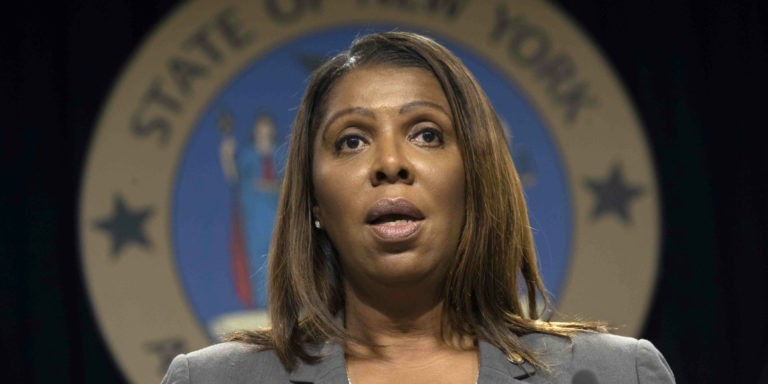
Letitia James Cries Politicization After Campaigning to Destroy Trump

(Luis CornelioHeadline USASpeaking outside her arraignment for mortgage fraud, New York Attorney General Letitia James blasted on Friday what she called a “weaponized” justice system. 

The remarks came after her grand jury indictment in the Eastern District of Virginia, tied to a rental property she illegally declared as a second home to secure a more favorable loan. 

“This is about a justice system which has been weaponized. A justice system which has been used as a tool of revenge, and a weapon against those individuals who simply did their job and who stood up for the rule of law,” James preached. 

Critics on X were quick to point out the irony in her remarks. James rose to statewide office in 2018 on the very premise to unleash her office on President Donald Trump and his finances despite no criminal evidence. 

At the time, she was a relatively unknown far-left politician serving as New York City’s public advocate, a citywide office akin to a non-voting member of the city council. 

On and after the campaign trail for attorney general, James called Trump an “illegitimate president” and said she was going to “look at his business transactions and his holdings here in the state of New York.” 

In another instance, she pledged to be a “pain in the a**” to Trump, adding: “We need to follow his money.” 

Once sworn in, James launched a broad civil investigation into the Trump Organization, alleging the president inflated his property values to secure favorable loans.  

Evidence presented at the bench trial showed that all the loans were fully repaid with interest. 

The case resulted in a $515 million civil judgment, which was ultimately thrown out as excessive and in violation of the Eighth Amendment of the U.S. Constitution. 

Even CNN host Anderson Cooper criticized her aggressive pursuit of Trump. 

“I mean, that’s not a great look for somebody who has just been elected, who has just been campaigning, who hasn‘t even looked, I guess, deeply at any evidence,” Cooper said. 

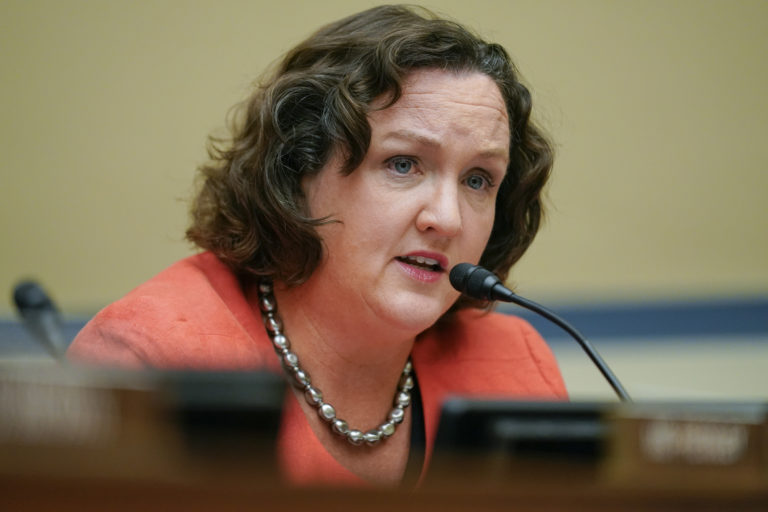
Calif. Gov. Hopeful Katie Porter’s Ex-Husband Calls Her ‘Master Manipulator’

(Luis CornelioHeadline USA) The ex-husband of former Rep. Katie Porter minced no words when describing her troubling temperament in a recent interview, bluntly calling her a “master manipulator.” 

Matthew Hoffman, who was married to Porter from 2003 to 2013, spoke to the New York Post outside his Portland home amid renewed scrutiny of Porter’s problematic behavior. Porter is now running for California governor, after serving in Congress from 2019 to 2025 and losing her U.S. Senate bid. 

Hoffman recently gained national attention after reports resurfaced of Porter’s mistreatment of himself, her staff and journalists, including viral videos showing her berating others. 

“It’s about time,” Hoffman told the Post, referencing the clips of Porter’s outbursts. 

“The amount of staff she goes through. The horrible things that she says [about others] … those aren’t fabrications,” he said. 

Hoffman added that his ex-wife is an example of why it is “hard to like politics.” 

He also claimed she has serious behavioral issues, as “she can’t even get along with Nancy Pelosi,” despite belonging to the same party and representing the same liberal state. 

The two had a messy separation in 2013, with Porter filing for divorce after obtaining both a protective order and then a restraining order against Hoffman. 

According to the Post, Hoffman was arrested after a fight that resulted in him breaking a light switch. He later filed his own restraining order and alleged that Porter “routinely” insulted him as a “f**king idiot” and “f**king incompetent.” 

In one incident, Porter allegedly shattered a glass coffee pot in March 2012 after complaining the house wasn’t clean enough. 

In 2006, she reportedly burned Hoffman’s scalp by dumping a ceramic bowl of steaming hot potatoes after getting angry that he couldn’t “read the f**king instructions.” 

Hoffman’s recent remarks followed viral clips showing Porter snapping at a journalist who asked how she planned to win over Republican voters in California. 

In another video, Porter was caught yelling at a congressional staffer who accidentally appeared in the background of a pre-recorded segment. 

“Get out of my f**king shot,” she shouted. 

Axel Merk: Gold’s Surge, Dollar’s Blind Spot

(Money Metals News Service) On a recent episode of the Money Metals podcast, Money Metals’ Mike Maharrey interviews Axel Merk, president and CIO of Merk Investments. They cover the metals selloff, the recent silver squeeze, thin market liquidity, stress in private credit, and why the U.S. Dollar Index can mislead investors.

Merk’s refrain is simple: gold hasn’t changed. What shifts is our perception.

(Interview Starts Around 6:36 Mark)

About Axel Merk

Axel Merk is the president and CIO of Merk Investments, where he leads gold-focused and macro strategies and manages over $3 billion across physical gold and gold-miner public products. His hands-on work in product design and market operations gives him authority on ETF plumbing, vault logistics, liquidity mechanics, and investor flows.

Axel Merk specializes in the nexus of monetary policy, real yields, deficits, currency dynamics, and precious metals, translating policy signals into market implications. Merk shares timely, data-driven commentary via a free newsletter at MerkInvestments.com and on X as @AxelMerk.

A Selloff Inside a Bull Market

Merk frames the pullback as the kind of exploding volatility that often accompanies mature gold bull markets. With gold “over $4,000” during the run-up, swings naturally scale with the price level.

Speculators have returned after detours into meme stocks, SPACs, and crypto. Speculation increases volatility far more than it changes fundamentals.

Retail Isn’t Driving This

Contrary to typical blow-off tops, retail hasn’t been the engine. Merk sees retail selling, which has left wholesalers cutting back orders to mints because inventory flows in from consumers.

Physical ETF markets confirm orderly operations. Spreads are behaving, even after notable redemptions overnight into Oct. 23 that followed earlier contributions.

The Silver Squeeze Is Mostly Logistics

Silver, around $50 per ounce, moves in bulk, unlike gold near $4,000 per ounce. That makes shipments heavy, slow, and costly.

Vault managers are “tired” from rerouting metal, especially back to London. The plumbing is holding, though some players get squeezed.

Money Metals even shipped a pallet of silver bars to India amid a scramble for physical. The squeeze is often about trucks, pallets, and vault slots, not broken markets.

Liquidity Is Skin-Deep

What looks like deep liquidity is frequently arbitrage-driven and dependent on lead market makers. In stress, they can step aside, and spreads blow out.

Merk notes similar fragility in private credit. Leverage and public wrappers that give retail exposure to historically accredited-only assets can obscure risk.

In this context, metals volatility is healthy. It discourages leverage and shakes out weak hands.

From Bonds to Bullion

A quiet but powerful driver is safe-haven investors disillusioned with bonds reallocating to precious metals. Public and private debt markets dwarf the metals complex, so even small reallocations can move gold meaningfully.

Retail’s muted role, along with continued buying through parts of the selloff, suggests the move may not be over. Merk avoids price targets but stresses the structural shift.

Dollar-Centrism Can Mislead

U.S. discourse remains dollar-centric, but the Dollar Index is an outdated, static basket. The euro carries roughly a 56% weight, making DXY a USD/EUR proxy.

That setup can show “strength” against other fiat while masking fiat-wide weakness relative to gold. Merk expects fragmentation rather than a neat replacement reserve: less global intermediation, more domestic financing of U.S. deficits, higher business costs, and a tailwind for gold.

Debt, Policy, and a Lame-Duck Fed

The U.S. national debt just eclipsed $38 trillion, up from $37 trillion roughly two months prior. Compounding is on display.

Abroad, policy oddities abound. Japan floated a stimulus to fight inflation by subsidizing those hurt by it.

At home, Merk characterizes Chair Powell as a “lame duck” without firm intellectual leadership on the inflation anchor. Fed projections imply inflation above 2% in the medium term. In practice, monetary policy is hostage to fiscal policy.

Gold Is the Constant

Gold hasn’t changed. It competes with cash when investors fear cash won’t preserve purchasing power.

TIPS, real yields, and policy credibility shape that perception. Retail selling often reflects cash needs or inheritance rather than macro views.

Metal migrates to strong hands and to geographies where it is valued more. For long-term holders, ounces—not headlines—are the point.

Takeaways for Investors

Expect volatility as a feature of this phase. Watch real yields, deficit trends, and liquidity stress in ETF spreads and flows.

Treat DXY with caution and test purchasing power against hard assets. Recognize that logistics—especially in silver—can jar prices without signaling broken markets.

In a world of thin liquidity, rising deficits, and growing fragmentation, the strategic case for precious metals endures.

Where to Follow Axel Merk

Find Merk’s writing and product information at MerkInvestments.com, where a free newsletter is available. Follow him on X at @AxelMerk.

Fired Prosecutor Shielding Letitia James Sent Case Info to Personal Email

(Luis CornelioHeadline USA) The recently fired federal prosecutor who tried to block the impending indictment of New York Attorney General Letitia James allegedly sent sensitive case information to her personal email. 

Elizabeth “Beth” Yusi served as an assistant U.S. attorney for the Eastern District of Virginia for over a decade before being terminated earlier this month, reportedly in part for “mishandling” documents tied to the James case, leftist network CNN reported Friday. 

In a statement issued through her attorney Margaret Donovan, Yusi said that she “has no record of any such email” and claimed she “has never used her personal email account for any portion of any investigation.” 

Yusi became an icon of the anti-Trump resistance after she wrote a memo dubiously explaining why career prosecutors believed James could not be charged with mortgage fraud. 

She specifically claimed she did not see probable cause to seek a grand jury indictment against James. 

Yusi, along with her top deputy Kristin G. Bird and U.S. Attorney Erik Seibert, were fired shortly after. 

President Donald Trump then appointed Lindsey Halligan, a top White House official, as interim U.S. attorney, paving the way for an indictment against James. 

According to the grand jury indictment, James committed mortgage fraud after listing a Virginia property as her second home instead of a rental unit to secure a more favorable loan. 

The scheme allowed James to save nearly $18,000 in interest, as rental properties typically carry higher rates. 

James pleaded not guilty Friday.