Felony Dropped after a Man Spent a Month in Jail for a Charlie Kirk Post

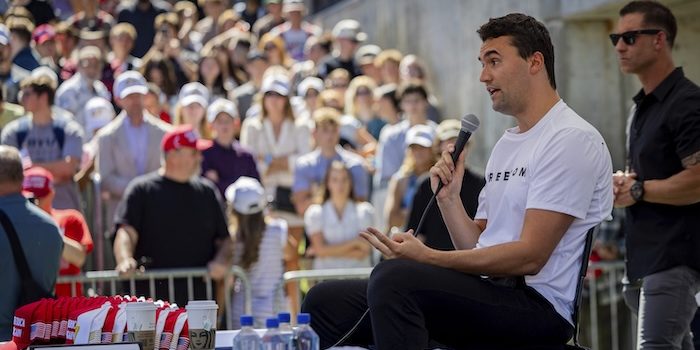
(Headline USAAuthorities in Tennessee have dropped a felony charge against a man who was jailed for more than a month over a Facebook post he made about the assassination of conservative activist Charlie Kirk.

Whereas many people across the U.S. lost their jobs over social media comments about Kirk’s death, Larry Bushart’s case stood out as one of the few instances where such online speech has led to criminal prosecution.

His arrest — on a charge of threatening mass violence at a school — alarmed free speech advocates, who said Perry County Sheriff Nick Weems had targeted Bushart because of his political views. Bushart was released Wednesday after prosecutors sought to dismiss the charge.

Bushart, a 61-year-old former law enforcement officer, had posted numerous memes on Facebook making light of Kirk’s killing.

The one that got Bushart arrested was a meme featuring President Donald Trump and the words, “We have to get over it.” That quote, the meme explained, was said by Trump last year after a school shooting at Iowa’s Perry High School.

Posting the meme, Bushart wrote: “This seems relevant today…”

Weems told news outlets that most of Bushart’s “hate memes” were lawful free speech, but residents were alarmed by the school shooting post, thinking Bushart was threatening the local Perry County High School, even though Weems said he knew the meme was referencing a school in Iowa.

“Investigators believe Bushart was fully aware of the fear his post would cause and intentionally sought to create hysteria within the community,” Weems said in a statement to The Tennessean last month.

He said Bushart was arrested after refusing to delete the post. His bail was set at $2 million.

Bushart spent more than five weeks in jail before being released. Neither Weems nor Hans Schwendimann, the local district attorney, immediately responded to requests for comment on why the charge was dropped.

“Very happy to be going home,” Bushart told WOPC-FM after his release. “I didn’t seek to be a media sensation, but here we are.”

Adapted from reporting by the Associated Press


Pentagon Tells Congress It Doesn’t Know Who It’s Killing in Latin American Boat Strikes

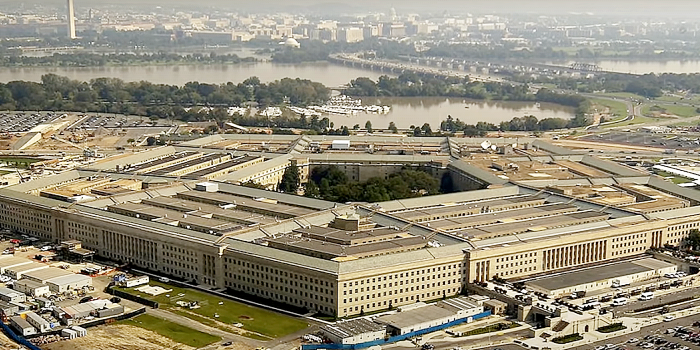
(Dave DeCamp, Antiwar.comUS War Department officials don’t know the identities of the 61 people who have been extra-judicially executed in US military strikes on boats in the waters near Venezuela and in the Eastern Pacific Ocean, POLITICO reported on Thursday, citing House Democrats who attended a classified briefing on the campaign.

“[The department officials] said that they do not need to positively identify individuals on these vessels to do the strikes, they just need to prove a connection to smuggling,” said Rep. Sara Jacobs (D-CA). “When we tried to get more information, we did not get satisfactory answers.”

While the Trump administration has cited overdose deaths in the US related to fentanyl to justify the bombing campaign, lawmakers were told in the briefing that the boats that have been targeted were allegedly smuggling cocaine, though the Pentagon has not provided evidence to back up its claims about what the vessels were carrying.

“They argued that cocaine is a facilitating drug of fentanyl, but that was not a satisfactory answer for most of us,” Jacobs said.

The briefing on Thursday came after the Pentagon shut out Democrats from another briefing it held with Republicans a day earlier, which left Democratic senators fuming. Democrats who attended Thursday’s briefing said Pentagon lawyers were pulled from the meeting at the last minute.

“Am I leaving satisfied? Absolutely not. And the last word that I gave to the admiral was, ‘I hope you recognize the constitutional peril that you are in and the peril you are putting our troops in,’” Rep. Seth Moulton (D-MA) told reporters after the briefing, according to CNN.

Jacobs said that, based on what she was told, even if Congress authorized the bombing campaign, it would still be illegal. “[T]here’s nothing that we heard in there that changes my assessment that this is completely illegal, that it is unlawful and even if Congress authorized it, it would still be illegal because there are extrajudicial killings where we have no evidence,” she said.

Criticism of the US bombing campaign has also come from Republicans, most prominently from Sen. Rand Paul (R-KY). “No one said their name, no one said what evidence, no one said whether they’re armed, and we’ve had no evidence presented,” Paul said this week of the people who have been targeted. “They summarily execute people without presenting evidence to the public … so it’s wrong.”

Paul has joined Senate Democrats in introducing a War Powers Resolution aimed at preventing the Trump administration from starting a war with Venezuela amid threats of US strikes on the country aimed at ousting President Nicolas Maduro and a major US military buildup in the region. A vote on the bill is expected to happen next week.

This article originally appeared at Antiwar.com.

Officials React to Allegations of Civilians Impersonating ICE

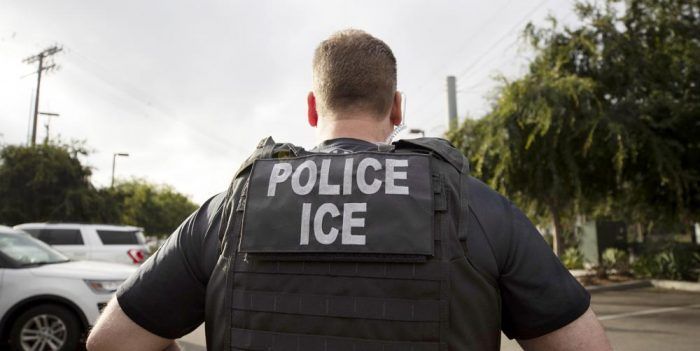
(The Center Square) One San Diego County supervisor is concerned about civilians posing as U.S. Immigration and Customs Enforcement agents using fake ICE clothing and tactical gear and sowing fear and discord.

Terra Lawson-Remer, chair of the Board of Supervisors, wrote in an Oct. 17 e-newsletter that she is leading efforts in the county to issue cease-and-desist letters to companies that sell fake law enforcement gear that allows members of the public to misrepresent themselves as U.S. Immigration and Customs Enforcement agents.

“When the public can’t tell the difference between legitimate officers and impostors, everyone loses – especially the communities already targeted by exploitation and fear,” Lawson-Remer wrote in the newsletter. “In San Diego County, we’re drawing the line. We’re saying no to masked federal chaos, no to deception, and no to the idea that accountability is optional.”

Lawson-Remer described a CNN investigation conducted earlier this year about people across the country buying shirts, baseball caps, bulletproof vests and other gear that would make the wearer look like an ICE agent. The supervisor said the ability to impersonate officers is made easier by an ICE policy that allows officers to wear masks to hide their identities.

“This type of behavior from federal law enforcement creates an opening for bad actors to step in and abuse this fear,” Lawson-Remer said in the e-newsletter.

The U.S. Department of Homeland Security has told The Center Square that masks are necessary to protect officers.

The CNN investigation, meanwhile, found more than two dozen cases of private individuals posing as ICE officers across the country since the start of President Donald Trump’s second term. A graphic displayed in a video produced as part of that investigation shows Southern California communities as the sites where officers were impersonated.

According to that investigation, real ICE agents often conduct operations in plainclothes and drive unmarked cars – a departure from the way at least one ICE impersonator operated in Seattle. The man drove a black SUV with “ICE” painted along the sides of the car in large white letters.

Online retailers are selling items marked ‘ICE’

Amazon.com is one online retailer that is selling items labeled with the “ICE” acronym. This week, baseball caps with “ICE” sewn across the front and an American flag on the side were selling for $36.95, while other caps with just “ICE” across the front sold for as low as $14.99.

A black windbreaker with the phrase “Border Patrol” on the front and back, in bold white lettering, can be bought on Amazon for $29.99. Unlabeled bulletproof vests sell on Amazon starting at $32.99, and generic fake police badges can be bought for as low as $13.99. It’s difficult to tell what agencies the badges are supposed to represent.

Other retailers sell ICE clothing. SHEIN, the popular fast-fashion site that sells trendy clothes for extremely low prices, sells a short-sleeved women’s T-shirt that says “ICE Federal Agent” across the front in large, bold yellow letters. That T-shirt sells for $9.95 on SHEIN’s website.

Another online retailer, Shield Republic, sells a T-shirt with the U.S. Department of Homeland Security logo on the back above the letters “ICE” in large black lettering.

“These predators are using fake ICE gear, including jackets, patches, badges, and vests, that can be bought online for next to nothing,” Lawson-Remer wrote in the e-newsletter.

However, city and county staff in San Diego and Los Angeles have suggested ICE impersonators are negligible, if they exist at all.

“I’m not aware of this occurring in San Diego,” wrote Rachel Laing, a staff member of the city of San Diego, in an email to The Center Square.

Similarly, officials in Los Angeles County said they haven’t seen ICE impersonators in their communities. However, some have released statements opposing ICE officers wearing masks, which they say encourage ICE impersonators to follow suit.

Officials say the general public can’t tell the difference.

“Across the county, people are being pulled out of their cars, beaten, and ripped from their families by men in tactical gear with balaclavas, no badges, and no names,” said Janice Hahn, a member of the Los Angeles County Board of Supervisors. “That’s not how law enforcement in a democracy should operate. Residents have a right to know who is stopping them, questioning them, and detaining them.”

Is any of this legal?

Impersonating an ICE officer is a felony.

And the U.S. Department of Homeland Security takes it seriously.

“Anyone caught impersonating themselves as a federal immigration agent will be prosecuted to the fullest extent of the law,” an unnamed senior DHS official wrote in an email to The Center Square on Thursday. “Impersonating a federal immigration officer endangers public safety and erodes trust in law enforcement.”

According to the Legal Information Institute at Cornell Law School, 18 U.S. Code § 913 states, “Whoever falsely represents himself to be an officer, agent, or employee of the United States, and in such assumed character arrests or detains any person or in any manner searches the person, buildings, or other property of any person, shall be fined under this title or imprisoned not more than three years, or both.”

Hedding Law Firm, which has an office in the Los Angeles neighborhood of Encino, warns against impersonating an officer.

“If you falsely represent yourself in certain situations, you could be charged with a federal criminal offense,” the firm’s website states.

Less clear is whether it’s legal for companies to sell clothing or other items with the ICE name, acronym or logo on them, or fake police badges and other gear that could be used to impersonate a federal officer.

The Media Law Resource Center said it’s all about context.

“It could be a liability issue if someone dresses in ICE insignia, and is either reasonably believed to be a member of ICE and attempting to undertake some action,” said Dave Heller, a lawyer and the center’s deputy director. “You could especially imagine, for example, any kind of vigilante act that people put on, whether it’s ICE or any other type of law enforcement garb, and have this wrongful intent to try to fool people about what they’re wearing.”

“Generally, labeling is okay so long as it doesn’t look like actual official garb,” Heller told The Center Square Thursday. “This is particularly so for state law enforcement officers that have identifiable uniforms. So the sale of ‘official’ uniforms online or elsewhere is illegal. For example, New York State Penal Law prohibits the sale of ‘any part of the [police] uniform which identifies the wearer as a member of a police department, such as the uniform, shield, badge, numbers, or other identifying insignias or emblems.’ ”

Law firms largely advise the public to be careful when producing or selling clothes.

“Using names or acronyms related to U.S. government agencies requires careful consideration,” according to Midwestern law firm Keener & Associates P.C. in a website post about trademark law.

Keener & Associates P.C.’s website applies to business owners producing items that have government agency names on them. The firm warns against implying false government connections.

Lawson-Remer, the San Diego County supervisor, didn’t respond to requests for comment for this story. Neither did the others on the Board of Supervisors, San Diego Mayor Todd Gloria, San Diego City Council members and Los Angeles Mayor Karen Bass.

The Center Square contacted, but did not get a response from, Amazon, U.S. Immigration & Customs Enforcement and California Attorney General Rob Bonta. The Center Square also wasn’t able to reach SHEIN or Shield Republic.


Erika Kirk’s Words Spotlight Forgiveness in a Divided Nation

(Headline USA“That man, that young man — I forgive him.”

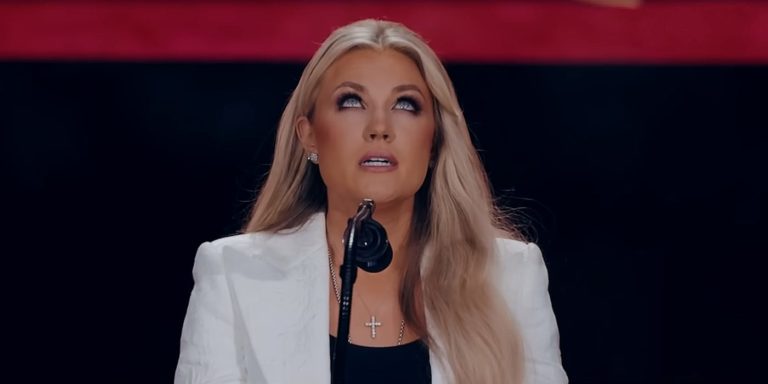
Erika Kirk softly spoke those words about the gunman accused of assassinating her husband, conservative activist Charlie Kirk, as she struggled to hold back tears last month during his memorial service.

Her public declaration inspired another. Hollywood actor Tim Allen said he was so moved by her words that he was forgiving the drunken driver who caused his father’s death 60 years ago. Barely two weeks after Charlie Kirk’s death, members of a Michigan congregation made public that they too were forgiving a gunman, the one who had just attacked their church, killing four people and injuring eight others.

Their high-profile acts of forgiveness are all the more remarkable given the politically charged and highly polarizing climate gripping the U.S. It has pushed people of faith to contemplate what forgiveness means, particularly in the face of violence, trauma and unspeakable grief, and whether it could shift public consciousness toward compassion.

While some see a glimmer of hope in this moment, others are skeptical. Miroslav Volf, professor of theology at Yale Divinity School, said he views President Donald Trump’s response to Erika Kirk’s words — that he hates his opponents — as the more typical sentiment.

“Erika Kirk’s gesture is the outlier,” he said. “It was an extraordinary act of courage. But it was also telling that (Trump’s) response got the bigger reaction from the crowd at the memorial. You have to wonder about these two very different responses. How do we find space for grace when we are so at odds that we cannot recognize humanity on the other side of the divide?”

Forgiveness, a mandate for Christians

California pastor Jack Hibbs, who leads Calvary Chapel Chino Hills and is a friend of the Kirks, called her words an “incredibly powerful” message of hope for the shooter, and in keeping with the family’s deep commitment to the Gospel, which commands Christians to forgive even their enemies.

“The Bible warns us that bitterness, when left alone, can grow up in and destroy your heart,” Hibbs said. “So forgiveness was given to us by God to set us free from what’s been done to us.”

The Rev. Thomas Berg, visiting professor at the McGrath Institute for Church Life at the University of Notre Dame, said he hopes Erika Kirk’s gesture “ignites some kind of meaningful national conversation about forgiveness.”

He said forgiveness is not a one-time event, but a process that takes time and work. Berg, who counsels victims of sex abuse in the Catholic Church, warns that it should never be coerced but authentically given — an act that he says has the power to heal the deepest wounds.

He would like to see more public expressions of forgiveness, which could serve as a balm for the country.

“I hope this is not a passing moment,” he said. “The dynamic of forgiveness throws a wrench into the dysfunction of our partisan divides and our inability to have a reasonable exchange of ideas.”

Dave Butler, a member of The Church of Jesus Christ of Latter-day Saints and science fiction writer based in Utah, believes forgiveness is a mandate for all Christians, as his church teaches. He started a crowdfunding initiative for the family of the Michigan shooter who opened fire on the Latter-day Saints congregation, which as of this week, had raised a little over $388,000.

Butler said he started it because — in addition to the grieving church members who had lost loved ones in this mass shooting — there was the family of the gunman that was also traumatized.

“They also did not choose this,” he said. “Nevertheless, they are now short a husband and a father. If we’re not really thoughtful, we might be inclined to see them more as antagonists rather than victims. More than 10,000 people have contributed and they understand what they’re doing is an act of forgiveness.”

Forgiveness from the perspective of Anabaptists

An often-cited modern example of forgiveness is the response of the Amish community around Nickel Mines, Pennsylvania, after a gunman killed five Amish schoolgirls and wounded five more in 2006 before taking his own life. Local Amish immediately expressed forgiveness for the killer and supported his widow.

Amish are part of the wider Anabaptist movement, which puts heavy emphasis on Jesus’ Sermon on the Mount, containing some of his most radical and counter-cultural sayings — to love enemies, live simply, bless persecutors, turn the other cheek and to endure sufferings joyfully. In it, Jesus says God will only forgive those who forgive others.

While many outside the Anabaptists’ world have endorsed their beliefs about forgiveness — which they also voiced for Haitian kidnappers of Anabaptist missionaries in 2021 — others say the picture is more complex. Advocates for victims of sexual abuse in Anabaptist communities say victims and their families are often forced to reconcile with abusers after the latter make a confession and undergo a brief period of discipline.

A complicated journey for trauma survivors

The Jewish perspective on forgiveness is different in that it requires the perpetrator to seek forgiveness from the person who has been wronged, said Rabbi Jeffrey Myers. He heads Tree of Life synagogue in Pittsburgh where 11 people from three congregations were killed after a gunman attacked it during Shabbat services on Oct. 27, 2018.

“For me, it’s complicated because there are 11 dead people who cannot be sought for forgiveness,” Myers said, adding that he cannot offer forgiveness because the perpetrator — who faces execution — did not show remorse.

“While the perpetrator has received a measure of justice as outlined by the judicial process, it didn’t give me closure because those 11 people are gone,” Myers said. “There is nothing that makes that pain go away.”

What gives him some comfort is being able to help other congregations that are going through similar trauma. Myers said he was grateful to have received that support from the Rev. Eric Manning, pastor of Mother Emanuel AME Church in Charleston, South Carolina, a historically Black church where a self-proclaimed white supremacist shot and killed nine congregants on June 17, 2015 — including the church’s pastor at the time.

“Today, as someone who belongs to that club no one should belong to, I view it as my sacred obligation to help,” Myers said. “Even if I can help one person, that’s gratifying, that feels healing.”

Peg Durachko, whose husband Dr. Richard Gottfried, a dentist, was one of the victims in the synagogue shooting, said that as a Catholic, she looked to Pope John Paul II for inspiration as she read about how he visited the imprisoned man who shot him and offered forgiveness.

“I recognize (the gunman) as a child of God who made bad choices to lead him in that direction,” she said. “I’m not his judge, God is. I want him to have eternal life. I don’t harbor hate or ill wishes to anyone, including him. I don’t want to carry this baggage of hate.”

Adapted from reporting by the Associated Press


Byron Donalds Eyes Impeachment of Obama Judge After GOP Spy Orders

(Luis CornelioHeadline USA) Rep. Byron Donalds, R-Fla., suggested Thursday that he would pursue the impeachment of Judge James Boasberg after declassified documents revealed he signed off on the FBI’s surveillance of GOP lawmakers’ phone records. 

Boasberg came under fire after files released by the Senate Judiciary Committee earlier this month showed he rubber-stamped former Special Counsel Jack Smith’s subpoenas targeting at least nine Republican lawmakers.

Worse, Boasberg signed a gag order blocking AT&T from informing Sen. Ted Cruz, R-Texas, of the subpoena, citing dubious concerns that Cruz might destroy evidence. 

“He needs to lose his seat as a judge,” Donalds said during an interview with Fox Business host Larry Kudlow. “They need to be called in to Congress. … We’ll do that stuff.”  

In follow-up posts on X, Donalds doubled down, saying Boasberg “must be REMOVED” and that “the American people deserve this.” 

Boasberg, appointed in 2013 by then-President Barack Obama, has become a central figure in the anti-Trump resistance, repeatedly issuing nationwide injunctions to block key Trump policies. 

The subpoenas drew sharp rebuke from targeted lawmakers, including Cruz, who at a press conference minced no words about Boasberg’s actions. 

“I am going to quote from that order James Boasberg signed: ‘The court finds reasonable grounds to believe such disclosure will result in destruction of or tampering of evidence, intimidation of potential witnesses and serious jeopardy to the investigation.’” 

Cruz added that “there is precisely zero evidence” to support Boasberg’s order. 

In addition to Cruz, those targeted included Rep. Mike Kelly, Pa., and Sens. Marsha Blackburn, Tenn.; Ron Johnson, Wis.; Bill Hagerty, Tenn.; Josh Hawley, Mo.; Cynthia Lummis, Wyo.; Lindsey Graham, S.C.; Dan Sullivan, Alaska; and Tommy Tuberville, Ala. 

The U.S. Constitution gives Congress the power to remove federal judges for “treason, bribery, or other high crimes and misdemeanors.” The House only needs a simple majority to impeach a judge, though the Senate requires a two-thirds majority to try and convict. 

Only 15 judges have been impeached in U.S. history, and just eight of those cases resulted in convictions. 

FBI Arrests Several Mississippi Law Dogs

(Headline USAA Mississippi deputy sheriff was arrested Thursday morning by the FBI, one of several arrests it made across multiple law enforcement agencies in the state, a local sheriff said.

Sunflower County Sheriff James Haywood confirmed the arrest of his deputy, Marvin Flowers, and said without giving details that the FBI has made other arrests among law enforcement. The county is in the northwest part of the state.

The FBI office in Jackson, the state capital, said it planned a major announcement later Thursday together with the U.S. Attorney’s Office of the Northern District of Mississippi. It did not elaborate on the nature of the planned announcement.

Multiple Mississippi law enforcement agencies have faced federal scrutiny in recent years.

In 2023, six law enforcement officers pleaded guilty to a long list of state and federal charges for torturing two Black men. “The Goon Squad,” as they called themselves, sparked an ongoing Department of Justice investigation into the Rankin County Sheriff’s Office.

A similar DOJ probe concluded last year that officers of the Lexington Police Department discriminated against Black people and repeatedly violated citizens’ civil rights.

Adapted from reporting by the Associated Press

Top Dem Candidate Quits Mid-Interview After Indictment Questions

(Luis CornelioHeadline USA) A top left-wing congressional candidate abruptly quit a live interview Thursday after independent journalist Tara Palmeri asked a series of questions about her federal indictment tied to an ICE protest. 

Kat Abughazaleh, a Democrat and self-described “Gen Z influencer,” appeared to lose patience after Palmeri made her watch the same anti-ICE footage she had posted online and that triggered a grand jury indictment. 

Abughazaleh is the frontrunner in the race to replace retiring Rep. Jan Schakowsky, D-Ill., a longtime progressive mainstay in Congress. Prosecutors allege that she and 11 others blocked an ICE vehicle, broke a mirror and scratched the word “PIG” into it. 

The interview quickly turned tense when Palmeri began reading from the indictment, to which Abughazaleh replied: “I’m not speaking to the specifics that is [sic] in the indictment right now. Like I said, I do plan on pleading not guilty, and the evidence will come out in court, and I plan on winning.” 

Palmeri doubled down on her line of questioning, noting the seriousness of the allegations before playing footage from the protest. 

“Let’s watch the video of what happened that day,” Palmeri said. As shared by Palmeri, the video shows Abughazaleh and others chanting, “Up, up with liberation, down, down with deportation,” as protesters hit the vehicle. 

“When you see that, what you think right now?” Palmeri asked as Abughazaleh appeared frustrated. 

Abughazaleh reiterated her earlier response before abruptly exiting the live-streamed interview. “Thank you so much for having me,” she said before storming out. 

Palmeri, initially unaware that her guest had left, continued speaking and asked whether the charges could derail Abughazaleh’s congressional ambitions. 

After several seconds, Palmeri realized she was alone. 

“Did she just sign off? Did she just leave the chat? I’m so confused,” Palmeri said before ending the segment.  

Moments later, Palmeri posted the footage on X, describing the bizarre encounter and questioning Abughazaleh’s fitness for office.  

If convicted, the Democratic activist could face up to eight years in prison.

SCOOP: U.S. Marshals Service Has System for Hiding Sensitive Records

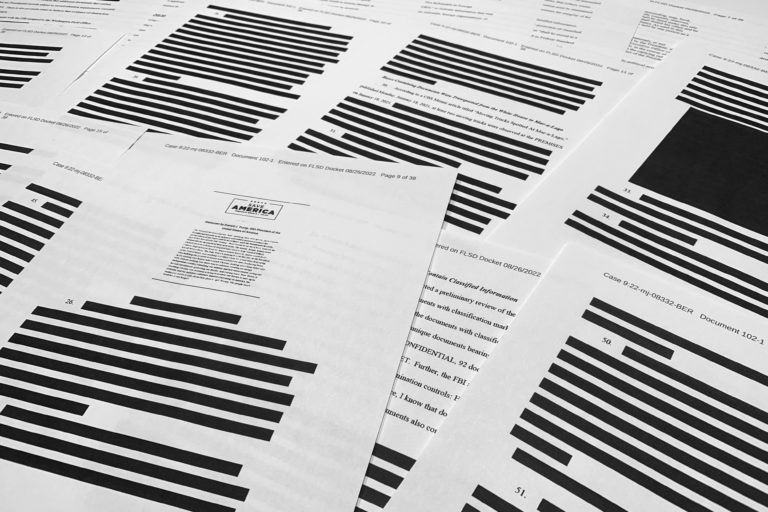
(Ken Silva, Headline USA) The U.S. Marshals Service has a secretive recordkeeping system akin to the one established by former FBI Director J. Edgar Hoover more than 80 years ago, according to a newly unearthed government document provided to Headline USA.

The newly unearthed document is an April 1997 FBI report about the bureau’s investigation into Oklahoma City bomber Timothy McVeigh. The FBI report was provided to this publication by Utah attorney Jesse Trentadue, who’s obtained thousands of FBI records via the Freedom of Information Act. It was first discovered by PhD historian Wendy Painting, who works with Trentadue.

According to the FBI report, agents were investigating whether McVeigh had sent “threatening letters” to former U.S. Marshals Director Henry Hudson. FBI agent Leslie Hahn wrote in the report that she spoke with a US Marshals “informational resource specialist” named David Turk, who told her that no such letters from McVeigh were found in the Marshals Service’s database. However, Turk also told Hahn that he didn’t search the Marshals’ “zero-files”—”which contain information received but not entered into the database,” the FBI report says.

The Marshals Service’s recordkeeping system described in agent Hahn’s report is strikingly similar to the FBI’s system, which was also called the “zero-files” in the 1990s. As has been widely reported, the FBI’s system entails agents putting evidence that would be used in court in an “official case file” but keep other records separate. The separate file, which has had various names, keeps potentially damaging and embarrassing records from both defense attorneys and the wider public.

But while the FBI’s “zero-files” have been public knowledge for decades, Trentadue said the newly unearthed report is the first time he’s seen anything about the Marshals also having something similar.

“If the Marshals have something like this, you can imagine that just about every agency does,” said Trentadue, who also provided an email suggesting that the ATF has a secret filing system, too.

The Marshals Service declined to comment on the matter, citing the government shutdown as the reason for its silence.

“During the lapse in appropriations, all public affairs functions are limited to mission essential and related to emergencies involving the safety of human life and the protection of property,” Marshals Service public affairs officer Brady McCarron said in an email.

HISTORY OF THE ‘ZERO FILES’

The FBI’s secretive recordkeeping dates back at least to the 1940s, when former director Hoover created what was known as “June Mail,” also known as the “June files.”

“All bureau records that were not required to be destroyed and that authorized illegal acts or were the fruits of illegal buggings, wiretappings, or burglaries were ordered to be designated as ‘June Mail,’” wrote civil rights attorney Alexander Charns in his book Cloak and Gavel: FBI Wiretaps, Bugs, Informers, and the Supreme Court. “‘June Mail’ was sent to a high-security safe called the Special File Room. These parallel filing systems were designed so that agents could plausibly deny knowledge of illegal tactics.”

According to an article in The Center for Public Integrity, the June files were ended in 1978. But that didn’t stop the secrecy. Instead, the FBI simply renamed its system the aforementioned “zero-files.” That monicker lasted through the 90s, until the bureau again renamed it to the “I-drive”—then, not long after that, to the “S-drive.” It’s not publicly known what name the FBI and other agencies have for their secretive systems today.

Trentadue, whose FOIA litigation helped bring the S- and I-Drives to light around 2011, told The Center for Public Integrity at the time that the various names would be humorous if not for the unconstitutionality of it all.

“You think you’ve exposed them and it’s over, and they set up another,” he said.

Ken Silva is the editor of Headline USA. Follow him at x.com/jd_cashless.

Harvard Law Professor Sparks National Debate Over Campus Anti-Zionism

(José Niño, Headline USA) A Harvard Law School professor has ignited a national debate over whether universities can legally exclude students who support Israel from campus life, arguing that anti-Zionism may constitute illegal discrimination under federal civil rights law.

Stephen E. Sachs, who holds the Antonin Scalia professorship at Harvard Law School, published an essay in the Harvard Law Review Forum titled “Zionism and Title VI.” 

In the essay, she argued that when universities make anti-Zionism a condition of participation in campus activities, they may violate Title VI of the Civil Rights Act. The law prohibits discrimination based on race, color or national origin in federally funded programs.

Sachs wrote the essay in response to criticism from fellow Harvard University professors Benjamin Eidelson and Deborah Hellman, who questioned whether Title VI could apply to campus anti-Zionism. His argument centers on the claim that Israel represents the Jewish national home in the same way Greece represents the Greek people or Czechia represents the Czech people.

“If made a condition of full participation in university life, anti-Zionism is a form of national-origin discrimination, creating a hostile environment for Israelis forced to abjure their national origin or Jews forced to abjure their nationhood,” Sachs wrote. He argued that requiring students to renounce Zionism is comparable to demanding they reject any other national identity, which would clearly violate federal law.

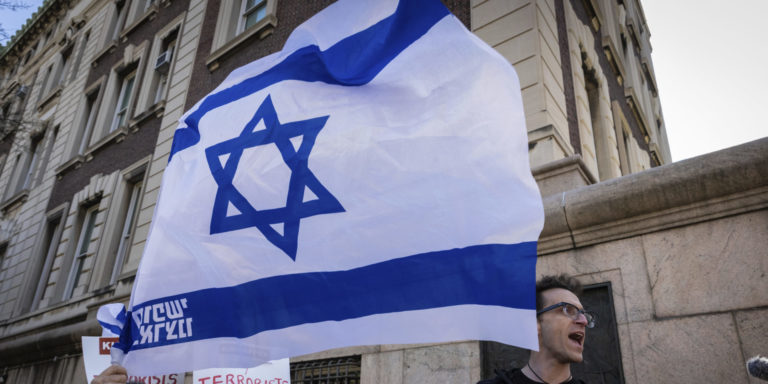
The controversy emerged after Oct. 7, 2023, when protests erupted across American campuses following the attack on Israel. Unlike earlier demonstrations focused on Palestinian statehood, these protests explicitly targeted Zionism itself. Campus protesters displayed messages declaring “Zionists not allowed” and chanted “Zionists not welcome here” outside classes and Jewish facilities at Columbia University and Harvard.

Sachs noted that at the University of California Los Angeles, protesters allegedly blocked campus passages to anyone unwilling to denounce Zionism, with university staff directing excluded students to alternate routes. Federal investigators accused the institution of creating a hostile environment for Jewish and Israeli students.

Sachs argued that universities cannot avoid responsibility by claiming protest activity falls under protected speech. “When a university abandons its ordinary rules, ceding to a protest movement the authority to deny access to campus spaces and resources, it bears greater responsibility for that movement’s actions and renders more menacing that movement’s demands,” he wrote.

The Department of Health and Human Services found Harvard in violation of Title VI earlier this year, determining the university showed “deliberate indifference” to harassment creating a hostile environment for Jewish and Israeli students. The finding came amid multiple federal investigations into how elite universities have handled campus tensions over Israel and Palestine.

Sachs acknowledged the tension between anti-discrimination law and free speech but insisted universities must protect students from exclusion based on their national identity or peoplehood. “The campus anti-Zionist movement needn’t be classified as antisemitism in law for it to be antisemitic in fact,” he wrote, suggesting that legal standards and moral judgments operate on different planes.

José Niño is the deputy editor of Headline USA. Follow him at x.com/JoseAlNino 


Maduro Accuses CIA of False-Flag Plot as Warships Surround Venezuela

(José Niño, Headline USA) On Sunday, President Nicolás Maduro announced that Venezuela has captured alleged mercenaries with CIA ties, accusing the United States and Trinidad and Tobago of coordinating military exercises designed to provoke armed conflict in the Caribbean.

In a statement from Vice President Delcy Rodríguez, the socialist government described what it called a “false-flag operation” planned from waters near Trinidad and Tobago “to generate a full-scale military confrontation” against Venezuela, the Miami Herald reported. 

The announcement coincides with President Donald Trump’s unprecedented military buildup in the Caribbean to combat drug cartels. The administration has hinted at possible ground incursions into Venezuela targeting the Cartel de los Soles, a narco-trafficking organization the United States alleges is led by Maduro himself.

Caracas also linked the supposed plot to military drills it claims Trinidad and Tobago is conducting this week “under the coordination, financing, and control” of U.S. Southern Command, calling them “a hostile provocation and a grave threat to the peace of the Caribbean.”

The statement accused Trinidad and Tobago’s Prime Minister Kamla Persad-Bissessar of having “renounced the sovereignty” of her country to become a “military colony subordinated to U.S. hegemonic interests.”

“By aligning herself with Washington’s militarist agenda, Persad-Bissessar not only seeks to attack Venezuela and break our historical bonds of brotherhood, but also violates the United Nations Charter, the CELAC declaration of Latin America and the Caribbean as a Zone of Peace, and the principles of CARICOM,” the statement read.

The Maduro government claimed the alleged maneuvers aim to “turn the Caribbean into a space for lethal violence and U.S. imperial domination.”

Venezuela compared the alleged plot to historical incidents like the 1898 USS Maine explosion in Cuba and the 1964 Gulf of Tonkin incident near Vietnam—both preceding major U.S. military interventions. The government accused Washington of seeking “a pretext for war” in the region.

Maduro warned that Venezuela “does not accept threats” and said its armed forces would remain “alert and mobilized in perfect civil-military-police unity.”

“Our Republic, heir of Bolívar and Chávez, will always defend its sovereignty, its territorial integrity, and its right to live in peace against foreign enemies and their vassals,” the statement concluded.

These accusations emerge amid deteriorating U.S.-Venezuela relations following Trump’s deployment of the largest American military presence the Caribbean has seen in decades. The task force has launched deadly strikes against boats allegedly transporting drugs from Venezuela, killing at least 43 people.

The Pentagon has deployed nearly 10,000 troops over two months—most based in Puerto Rico—along with Marines aboard amphibious assault ships. The U.S. Navy has positioned at least 10 warships and a submarine in the region, and last week Trump directed the USS Gerald R. Ford, the world’s largest aircraft carrier, into Caribbean waters.

Trump has also indicated the U.S. is considering ground operations, while his administration has quietly expanded CIA powers to conduct covert activities in Venezuela.

José Niño is the deputy editor of Headline USA. Follow him at x.com/JoseAlNino