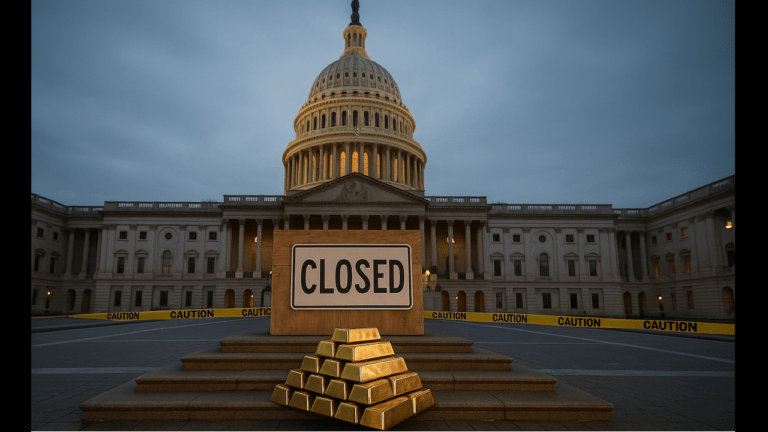
The judges in Massachusetts and Rhode Island ordered the U.S. Department of Agriculture to use emergency funds to provide SNAP disbursements.
In an announcement earlier this week, the USDA said the ongoing government shutdown made it so “the well has run dry” to fund SNAP.
Judge Indira Talwani, the judge in Massachusetts, said Congress appropriates $6 billion to SNAP to last through Sept. 30, 2026, in the 2024 Consolidated Appropriations Act.
“Defendants are statutorily mandated to use the previously appropriated SNAP contingency reserve when necessary and also have discretion to use other previously appropriated funds,” Talwani wrote.
Massachusetts, California and North Carolina were among dozens of states that filed lawsuits against the Trump administration over the suspension of SNAP benefits.
“The suspension creates a substantial risk that SNAP recipients will need to rely on, and potentially overwhelm, existing state resources and services” Talwani wrote in an order.
SNAP benefits that were scheduled to be distributed on Nov. 1 may be delayed due to the timing of the orders.
Nationally, more than 40 million American rely on SNAP to purchase food.
(Liam Hibbert, The Center Square) The Boring Co., an Elon Musk tunneling and transit company, has quietly bought land along a proposed 68-mile underground route for its Las Vegas Loop.
The loop, which connects city hubs via tunnels for Teslas to drive through, has eight stations in operation. With 104 stations already approved, recent real estate purchases could mean a boost to the project’s slow rollout. The project was approved by Clark County and the city of Las Vegas.
A report by Sunlight Research and The Nevada Independent found The Boring Co. had bought eight properties since the Las Vegas Loop opened in 2021, with all but one along the proposed expansion. Boring Co. affiliate company Object Dash bought six of the properties, as well as a $5.96 million plot of land next to Harry Reid International Airport.
The Boring Co. did not respond to The Center Square’s questions about the entire project’s cost or about affiliate Object Dash’s involvement in the real estate purchases.
The Boring Co. said its Las Vegas Loop’s expansion would span from south of Harry Reid International Airport to the north side of downtown Las Vegas at full operation. The company’s website added it would be able to serve 90,000 riders per hour with wait times between two and eight minutes.
But the project has already run into issues in its early stages.
Earlier this month Propublica reported how the company committed 800 environmental violations over the last two years. Workers have alleged burns, ankle-deep water in the tunnels and other injuries, according to Nevada’s Occupational Safety and Health Administration. Last month, a worker was crushed in a Las Vegas Loop tunnel and lifted via crane to be taken to the hospital.
One advantage is the Las Vegas Loop doesn’t cost taxpayers anything. Construction has been paid for by contracts such as the Las Vegas Convention and Visitors Authority’s $52.5 million pact for the convention center expansion. And The Boring Co. will hope to regain on investments by ticket sales – listed online between $5 and $12, depending on the segment of the route. That’s what motorists would pay.
Real estate purchases by The Boring Co. and its affiliates are potentially an indication of further investments into the loop, in development of land around transit hubs.
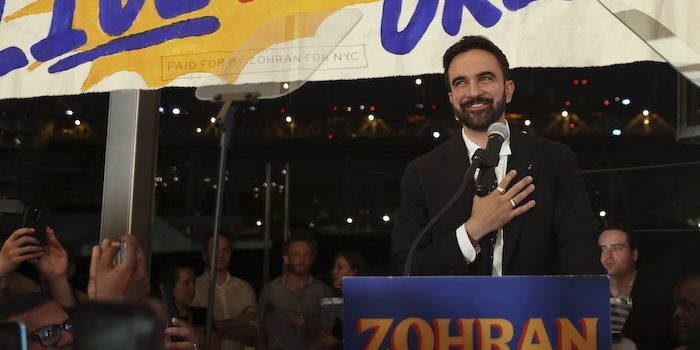
(Chris Wade, The Center Square) New York City mayoral frontrunner Zohran Mamdani’s plans to tax the city’s wealthiest to fund his policy initiatives could drive top earners out of state, according to a new report by a watchdog.
The Empire Center’s report looked at Mandani’s plans to set a new wealth tax on households making more than $1 million per year and increase corporate taxes to help fund his signature plans to provide free community college, bus service, and universal childcare. Mamdani’s campaign estimates both proposals would generate an additional $9 billion per year, which would amount to an 11% increase in tax revenues for the city.”
The report’s author said Mamdani’s wealth tax would only impact about one percent of New York City’s tax filers, while the proposed increase in corporate taxes would affect about 1,000 of the city’s 250,000 businesses.
“Before going ahead with these plans, city and state leaders should consider how much money those narrow groups are already pumping into government coffers – and the broader economy – and whether New York should risk chasing some of them away,” the Empire Center’s Bill Hammond wrote in the report.
New York City’s wealthiest residents currently pay the highest non-federal income taxes in the U.S., the report noted. The top marginal rate, applying to people with incomes of $25 million or more, is just under 14.8% – including a state tax of 10.9% and a city tax of 3.876%. That’s one-and-a-half points higher than the No. 2 state, California, and almost triple the national median of 5%, according to the report.
The report noted that the share of millionaires choosing to live in New York has been declining – from 12.7% of the national total in 2010 to 8.7% in 2022, the last year for which data are available from the Internal Revenue Service.
“A hypothetical taxpayer with $25 million in taxable income would potentially save $1 million a year by moving to New Jersey, almost $2 million by relocating to Connecticut and as much as $3.7 million by going to Florida or Texas,” the report said. “Mamdani’s proposed two-point hike would add another $500,000 to each of those amounts.”
Mamdani, a Queens assemblyman and democratic socialist, will face off against former Gov. Andrew Cuomo, a Democrat running as an independent, and Republican Curtis Sliwa in Tuesday’s mayoral election. Hundreds of thousands of voters have already cast ballots during the early voting, which wraps up Saturday. The latest polls show Mamdani with a comfortable lead over his two rivals in the race to City Hall.
The Empire Center’s report also panned Mamdani’s plans to hike the state’s top corporate tax rate by about half, up to 11.5% from its current maximum of 7.25%, which has caused concerns among New York City’s business community. If approved, that would match the corporate rate in New Jersey, which is the highest in the nation, the report noted.
For Mamdani, the wildcard is Democratic Gov. Kathy Hochul, who endorsed his mayoral campaign but has opposed wealth taxes, the report’s authors noted. Still, Hochul’s opposition is “not absolute” according to the report, which cited her support in the state budget for a five-year extension of “temporary” tax hikes on high-income taxpayers. Mamdani’s plans are likely to win support from progressive Democrats in the state Legislature, the report noted.
“A newly elected mayor seeking higher taxes on the wealthy would likely receive a warm reception from many of Albany’s ruling Democrats – many of whom have supported doing the same thing at the state level,” Hammond wrote.
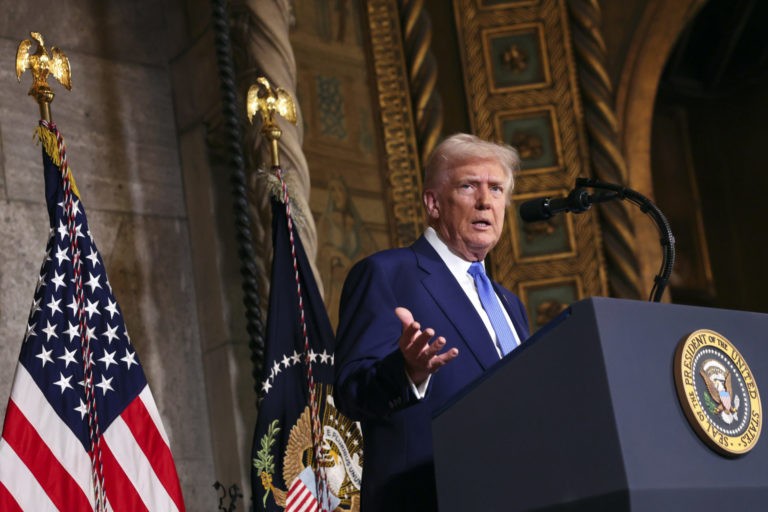
(Headline USA) Back from a week abroad, President Donald Trump is calling on the Senate to scrap the filibuster and reopen the government after a monthlong shutdown, breaking with majority Republicans who have long opposed such a move.
Trump said in a post on his social media site Thursday that “THE CHOICE IS CLEAR — INITIATE THE ‘NUCLEAR OPTION,’ GET RID OF THE FILIBUSTER.”
Trump’s sudden decision to assert himself into the shutdown debate — bringing the highly charged demand to end the filibuster — is certain to set the Senate on edge. It could spur senators toward their own compromise or send the chamber spiraling toward a new sense of crisis.
Trump has long called for Republicans to get rid of the Senate rule that requires 60 votes to overcome objections, dating all the way back to his first term in office. The rule gives Democrats a check on the 53-seat Republican majority and enough votes to keep the government closed while they demand an extension of health care subsidies.
Senate Majority Leader John Thune and most members of his Republican conference have strongly opposed changing the filibuster, arguing that it is vital to the institution of the Senate and has allowed them to halt Democratic policies when they are in the minority. Thune has repeatedly said he is not considering changing the rules to end the shutdown, and there would not be enough votes to do so, for now, even if he tried.
“The filibuster forces us to find common ground in the Senate,” Republican Sen. John Curtis of Utah posted on X Friday morning, responding to Trump’s comments. “Power changes hands, but principles shouldn’t. I’m a firm no on eliminating it.”
Debate has swirled around the legislative filibuster for years. Many Democrats pushed to eliminate it when they had full power in Washington, as the Republicans do now, four years ago. But they ultimately didn’t have the votes after enough Democratic senators opposed the move, predicting such an action would come back to haunt them.
Trump’s call comes as the two parties have made little progress toward resolving the shutdown standoff while he was away for a week in Asia. He said in his post that he gave a “great deal” of thought to his choice on his flight home and that one question that kept coming up during his trip was why “powerful Republicans allow” the Democrats to shut down parts of the government.
While quiet talks are underway, particularly among bipartisan senators, the shutdown is not expected to end before next week, as both the House and Senate are out of session. Democrats say they won’t vote to reopen the government until Republicans negotiate an extension to the health care subsidies while Republicans say they won’t negotiate until the government is reopened.
As the shutdown drags on, from coast to coast, fallout from the dysfunction of the shuttered federal government is hitting home: Alaskans are stockpiling moose, caribou and fish for winter, even before SNAP food aid is scheduled to shut off. Mainers are filling up their home-heating oil tanks, but waiting on the federal subsidies that are nowhere in sight.
Flights are being delayed with holiday travel around the corner. Workers are going without paychecks. And Americans are getting a first glimpse of the skyrocketing health care insurance costs that are at the center of the stalemate on Capitol Hill. Money for food aid — the Supplemental Nutrition Assistance Program, or SNAP — will start to run out this weekend.
“People are stressing,” said Sen. Lisa Murkowski of Alaska, as food options in her state grow scarce.
“We are well past time to have this behind us.”
The White House has moved money around to ensure the military is paid, but refuses to tap funds for food aid. In fact, Trump’s “big, beautiful bill” signed into law this summer, delivered the most substantial cut ever to the Supplemental Nutrition Assistance Program, known as SNAP, projected to result in some 2.4 million people off the program.
At the same time, many Americans who purchase their own health insurance through the federal and state marketplaces, with open enrollment also beginning Saturday, are experiencing sticker shock as premium prices jump.
“We are holding food over the heads of poor people so that we can take away their health care,” said Rev. Ryan Stoess during a prayer with religious leaders at the U.S. Capitol.
“God help us,” he said, “when the cruelty is the point.”
The House remains closed down under Johnson for the past month and senators departed for the long weekend on Thursday.
That means the shutdown, in its 30th day, appears likely to stretch into another week if the filibuster remains. If the shutdown continues, it could become the longest in history, surpassing the 35-day lapse that ended in 2019, during Trump’s first term, over his demands to build the U.S.-Mexico border wall.
The next inflection point comes after Tuesday’s off-year elections — the New York City mayor’s race, as well as elections in Virginia and New Jersey that will determine those states’ governors. Many expect that once those winners and losers are declared, and the Democrats and Republicans assess their political standing with the voters, they might be ready to hunker down for a deal.
“I hope that it frees people up to move forward with opening the government,” Thune said.
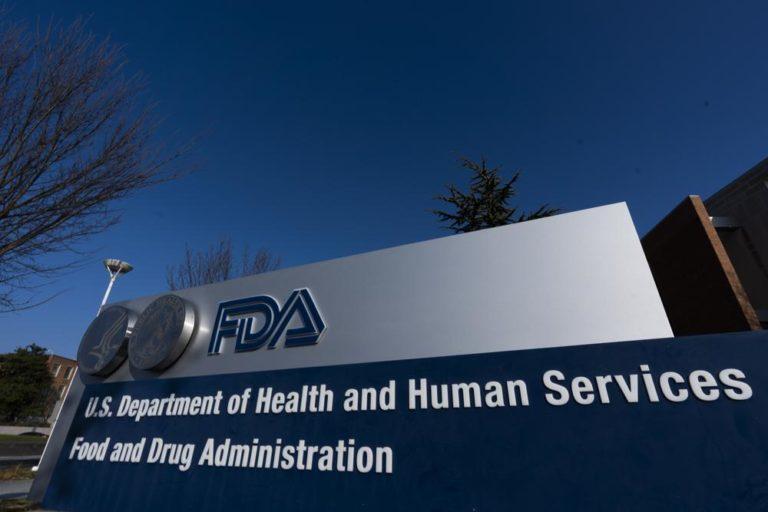
(Headline USA) The U.S. Food and Drug Administration says drugmakers have recalled more than a half-million bottles of the blood pressure medication prazosin hydrochloride over concerns it may include a cancer-causing chemical.
New Jersey-based Teva Pharmaceuticals USA and drugs distributor Amerisource Health Services issued voluntary nationwide recalls earlier this month of more than 580,000 bottles of various strengths of prazosine capsules, according to the FDA.
Doctors prescribe prazosin, which relaxes blood vessels, to help lower blood pressure. It also is sometimes prescribed for nightmares and other sleep disturbances caused by post-traumatic stress disorder.
The FDA said in enforcement orders posted online that it has given the affected lots of the drug a Class II risk classification because some of the recalled medication may have nitrosamine impurities that are considered potentially cancer causing.
According to the FDA, N-nitrosamine impurities are a class of potentially cancer-causing chemicals that can form during manufacture or storage of a drug.
(Thérèse Boudreaux, The Center Square) The ongoing government shutdown has dragged on for a month as Senate Democrats have blocked Republicans’ temporary funding bill more than a dozen times.
With senators heading home for the weekend and no end to the shutdown in sight, Republicans may have to rewrite the House-passed Continuing Resolution to push forward its original Nov. 21 funding end date.
The CR would have originally provided lawmakers a seven-week window to finish all 12 annual appropriations bills for fiscal year 2026 as federal funding remained on cruise control. But lawmakers have now wasted over half that time period due to the shutdown.
Republican leaders are accusing Democrats of “weaponizing” a normally bipartisan funding process, pointing out that the CR includes no partisan add-ons. Senate Majority Leader John Thune, R-S.D., said Thursday that Democrats are “grasping at straws.”
“The other day the Democrat leader came to the floor and tried to reboot the notion that the clean CR sitting before us here in the Senate is a partisan CR. … Apparently a bill with no partisan add-ons, strictly a bill to fund the government, is a partisan bill,” Thune quipped.
Democrats have countered that they cannot agree to a funding deal that fails to address the health care tax credits.
“Healthcare premiums are about to skyrocket. But Republicans have spent their entire shutdown with their heads in the sand,” Senate Minority Leader Chuck Schumer, D-N.Y., posted on social media Thursday.
“Republicans are ready to reopen the government today. And we’re not demanding a single thing in exchange. It’s the Democrats who are refusing,” Thune shot back.
All but three non-Republican senators have voted 13 times against reopening the government.
“Democrats are ready to continue this shutdown – I guess forever. Do Democrats have any – any – end date in sight?” Thune asked. “Are there any consequences bad enough to get Democrats to reopen the government again? Because things are getting pretty serious here.”
One of the most serious consequences of the shutdown involves food security for tens of millions of Americans, who won’t receive SNAP benefits for the month of November. It would mark the first time in modern history that SNAP benefits will have completely halted.
People say you can hear a woman faintly screaming in the old Reed Gold Mine in Midland, N.C.
Of course, there’s a back story. And it’s as creepy as you might imagine.
America’s First Gold Rush
Did you know that the first documented gold discovery in the U.S. was in North Carolina, and the state hosted the very first American gold rush in the early 1800s?
It all started in 1799 when 12-year-old Conrad Reed discovered a pretty yellow rock in a creek on his father’s farm. Reed had no clue that he had found a 17-pound gold nugget. Not realizing what they had, the Reed family used the rock as a doorstop for about three years until a Fayetteville jeweler saw the nugget and offered the family $3.50 in exchange for “the rock.”
Happy to earn a little coin by selling a rock and probably thinking they’d pulled one over on the crazy jeweler, the family accepted the offer. Unbeknownst to the Reeds, the nugget was worth about $3,500. That’s about $92,000 in 2025 dollars.
That horror story is bad enough – but there’s more…
Horror in the Gold Mine
Conrad’s father discovered more gold on the property, and by 1805, North Carolina was in the midst of a full-blown gold rush. The state produced over $1 million worth of gold before the California Gold Rush took the spotlight in 1848.
Conrad’s father, John, developed a partnership with three other men to mine on the property. The partners supplied labor and equipment to dig for gold in the creek bed. Reed provided the land. During the first year of operation, a slave named Peter unearthed a 28-pound nugget. Using only pans and rockers to wash the creek gravel, the part-time miners recovered about $100,000 worth of gold by 1824.
In 1831, Reed and his partners began underground mining on the property.
This is where things get spooky…
Eugene and Eleanor Mills lived on a farm neighboring Reed’s property. According to legend, Eugene and Eleanor got into an argument, and Eleanor fell down the stairs. It’s not quite clear whether it was an accident or if Eugene pushed her. At any rate, Eugene left the house, not realizing the fall had killed his wife. When he returned several hours later, he was horrified to discover his wife’s corpse – still screaming!
In a panic and unable to make the screaming stop, Eugene drug his wife’s dead body out of the house and dumped her down a mine shaft near Reed’s property. It is said Eleanor never stopped screaming.
Many people claim they can still hear the woman faintly screaming in the mine.
“I literally saw the ghost jump out with my own eyes and thought it was a visitor who jumped down a mine shaft out of sight, no one never showed up though.”
Even if you don’t believe in ghosts, the story is pretty creepy, right?
I mean, selling a huge gold nugget for less than $4… That’s scary!
And with that, all of us here at Money Metals wish you a fun and happy Halloween.
Photo by Sandy Harrington
Mike Maharrey is a journalist and market analyst for Money Metals with over a decade of experience in precious metals. He holds a BS in accounting from the University of Kentucky and a BA in journalism from the University of South Florida.
“This morning the FBI thwarted a potential terrorist attack and arrested multiple subjects in Michigan who were allegedly plotting a violent attack over Halloween weekend,” Patel posted on X Friday morning.
He said more details will be released.
A social media post from the Dearborn Police Department said it was “made aware that the FBI conducted operations” in the city early Friday morning. However, the FBI has not confirmed the location of the arrests or the alleged plot’s location.
(Mike Maharrey, Money Metals News Service) Gold demand grew by 3 percent year-on-year in Q3, hitting 1,313 tonnes, the highest quarterly level in history.
Third quarter demand was even more impressive in dollar terms, increasing by 44 percent to a record of $146 billion.
Year-to-date, gold demand is up by 1 percent at 3,717 tonnes, valued at $384 billion. That represents a 41 percent increase in value terms.
Third quarter demand grew even as the gold price surged 16 percent and set 13 new all-time highs. The gold price averaged $3,456 during the quarter, up 40 percent year-on-year and 5 percent from the last quarter.
Investment buying drove overall demand higher, accounting for over half of total demand so far in 2025.
Total third-quarter investment demand came in at 537 tonnes, pushing the year-to-date total to 1,566 tonnes, just 6 percent shy of the peak through the first three quarters of 2020 during the pandemic.
In terms of value, the World Gold Council called it “uncharted waters.”
“Investment for the first nine months of the year amounted to $161 billion – well over double that of the same period last year ($63billion) and 74 percent above the prior $92 billion record from 2020.”
Gold bar and coin demand hit 315.5 tonnes, a 17 percent year-on-year increase. It was the fourth consecutive quarter of bar and coin demand over 300 tonnes. The last time that happened was in 2013.
China and India both reported strong physical gold sales. Year-to-date demand of 184 tonnes in India was the strongest for the first nine-month period since 2013. It came in just shy of the average post-COVID full-year demand of 196 tonnes.
The only region with a decline in gold bar and coin demand was the U.S., coming in at a paltry 7 tonnes. That was the lowest quarterly total since the 2017-2019 trough. According to the World Gold Council, U.S. demand picked up in September as the price broke through the $4,000 level.
ETFs globally added 222 tonnes of gold to their holdings.
At the end of Q3, global ETF gold holdings totaled 3,838 tonnes, just 2 percent below the peak in November 2020.
A gold ETF is backed by a trust company that holds metal owned and stored by the trust. In most cases, investing in an ETF does not entitle you to any amount of physical gold. You own a share of the ETF, not gold itself. ETFs are a convenient way for investors to play the gold market, but owning ETF shares is not the same as holding physical gold.
The World Gold Council projects strong investment demand to continue through the rest of the year.
“The investment-friendly environment for gold that has persisted throughout the year so far remains in place for now, given still-heightened geopolitical uncertainty, ongoing U.S. dollar weakness and expectations for future U.S. rate cuts. Added to which, richly valued equity markets have not only highlighted gold’s role as a diversifier, but also its role as a hedge against potential equity market corrections. The stage therefore looks set for continued strength in investment flows, a trend that has been observed so far in Q4.”
While investment demand surged, higher prices put a damper on gold jewelry demand. The third quarter came in as the weakest Q3 since the pandemic low in 2020.
Globally, gold jewelry demand was 371.3 tonnes, a 19 percent year-on-year decline.
The drag created by higher prices was particularly evident in India, where jewelry demand fell by 31 percent through the first nine months of the year.
Despite the drop in sales volume, the higher prices benefited retailers, with the value of total demand rising 13 percent to $41 billion.
Central bank gold buying continued to support the broader market. Central banks globally officially added 220 tonnes of gold in Q3. That was up 28 percent from Q2.
Year-to-date, central bank gold buying is down from last year, coming in at 634 tonnes, compared to 724 tonnes through the first three quarters of last year.
To put the numbers into context, central bank gold reserves increased by an average of just 473 tonnes annually between 2010 and 2021.
The National Bank of Kazakhstan was the biggest gold buyer in Q3, adding 18 tonnes of gold to its reserves. Meanwhile, the Central Bank of Brazil added gold for the first time since 2021.
World Gold Council analysts expect the central bank gold buying trend to continue, with buying “close to the range seen over the past three years on continued elevated trade-related risks and uncertainty premia in U.S. assets.”
Interestingly, the World Gold Council estimates that 66 percent of the third quarter’s central bank demand remains unreported. This dovetails with work done by Money Metals researcher Jan Nieuwenhuijs. He estimates that the Chinese central bank is currently sitting on more than 5,000 tonnes of monetary gold located in Beijing – more than TWICE what has been publicly admitted.
Demand for gold in technology and industry fell modestly by 2 percent in Q3, coming in at 82 tonnes. Electronics demand was flat year-on-year at 69 tonnes.
Electronics demand generally gets a bump in the third quarter as companies launch new production. However, according to the World Gold Council,the prospect of U.S. tariff hikes encouraged a surge in demand during H1 as a pre-emptive move to avoid customs levies. As a result, Q3 demand was negatively impacted.
Gold supply was up by 3 percent in Q3, with mine output up 2 percent year-on-year. A 6 percent year-on-year surge in recycling also helped boost supply.
Mike Maharrey is a journalist and market analyst for Money Metals with over a decade of experience in precious metals. He holds a BS in accounting from the University of Kentucky and a BA in journalism from the University of South Florida.
(Headline USA) Authorities in Tennessee have dropped a felony charge against a man who was jailed for more than a month over a Facebook post he made about the assassination of conservative activist Charlie Kirk.
Whereas many people across the U.S. lost their jobs over social media comments about Kirk’s death, Larry Bushart’s case stood out as one of the few instances where such online speech has led to criminal prosecution.
His arrest — on a charge of threatening mass violence at a school — alarmed free speech advocates, who said Perry County Sheriff Nick Weems had targeted Bushart because of his political views. Bushart was released Wednesday after prosecutors sought to dismiss the charge.
Bushart, a 61-year-old former law enforcement officer, had posted numerous memes on Facebook making light of Kirk’s killing.
The one that got Bushart arrested was a meme featuring President Donald Trump and the words, “We have to get over it.” That quote, the meme explained, was said by Trump last year after a school shooting at Iowa’s Perry High School.
Posting the meme, Bushart wrote: “This seems relevant today…”
Weems told news outlets that most of Bushart’s “hate memes” were lawful free speech, but residents were alarmed by the school shooting post, thinking Bushart was threatening the local Perry County High School, even though Weems said he knew the meme was referencing a school in Iowa.
“Investigators believe Bushart was fully aware of the fear his post would cause and intentionally sought to create hysteria within the community,” Weems said in a statement to The Tennessean last month.
He said Bushart was arrested after refusing to delete the post. His bail was set at $2 million.
Bushart spent more than five weeks in jail before being released. Neither Weems nor Hans Schwendimann, the local district attorney, immediately responded to requests for comment on why the charge was dropped.
“Very happy to be going home,” Bushart told WOPC-FM after his release. “I didn’t seek to be a media sensation, but here we are.”