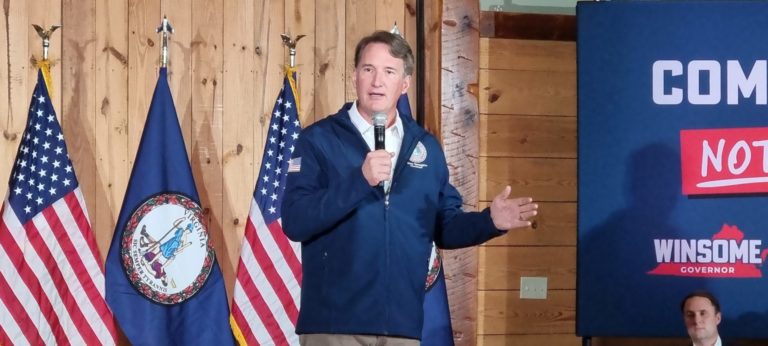
Calls for National Guard in Charlotte Growing

(Alan Wooten, The Center Square) Deployment of the National Guard to help “stabilize a crisis situation and protect innocent lives” has been requested of first-term Democratic Gov. Josh Stein by Republican U.S. Reps. Rev. Mark Harris, Pat Harrigan and Chuck Edwards.

The congressmen say the Charlotte-Mecklenburg Fraternal Order of Police’s request for guard members to assist law enforcement is of deep concern. Charlotte had one stretch of eight homicides in seven days and drew national attention for an Aug. 22 stabbing death on a light rail train.

The month of October in the Queen City included 18 homicides and 17 days of early voting. On the latter, residents stuck with Democrats for mayor and the four at-large City Council seats, even flipping one Republican seat.

Stein has not commented publicly on the request.

Second-term Republican President Donald Trump has sent the guard to the cities of Washington, Los Angeles and Memphis, with authorizations for Chicago and Portland blocked by judges.

“In Washington, D.C.,” the congressmen said, “when President Trump deployed troops under his lawful authority, the city promptly saw a reduction in crime, including 12 consecutive days without a single murder. Similarly, Tennessee Governor Bill Lee partnered with the National Guard to protect the citizens of Memphis and saw remarkable outcomes: 850 violent criminals arrested, 175 illegal firearms confiscated, and 44 missing children returned safely to their families.”

Decarlos Brown Jr. faces a murder charge in the stabbing death of Iryna Zarutska. He had been arrested 14 times previously since 2011. A Charlotte 15-year-old, according to a Police Department third quarter report, since August 2023 has been arrested 111 times, with seven charges of stolen property, 45 charges of larceny from an auto, and 55 charges of auto theft.

“What is most concerning is that city leaders, many of whom have served multiple terms, have failed to foresee these police shortages and build the ranks of CMPD at a time when attrition was manageable,” Daniel Redford, president of the Charlotte-Mecklenburg Fraternal Order of Police, said in a release. “The officers of CMPD are now tasked with the burden of their failures and they grow more and more exhausted as each day passes.”

The Police Department released a third-quarter safety report “showcasing a substantial decline in crime citywide.” The report says crime overall is down 8% and violent offenses are down 20%.

The report also says violent crimes in Charlotte from Jan. 1 through Sept. 30 number 4,506. Zarutska’s death is one of 62 homicides. Those numbers for the same time period in 2024 were 5,622 and 82.

Charlotte has had increases in commercial burglaries (1,824, up from 1,751) and larcenies from automobiles (7,716, up from 7,697). The congressmen tell Stein that aggravated assaults involving knives and guns has risen from 86 to 111 this year, and personal strong-arm robberies are up from 26 to 31.

“These are not just numbers – they represent North Carolinians whose lives have been lost or shattered by violent crime,” the congressmen say.

In an Elon University Poll released last month, roughly the same percentage of North Carolinians who opposed the president sending the National Guard to Charlotte or Durham worry about their safety when there.

Support or opposition of Trump sending guard members was 47% opposed and 42% in support. Also asked by about concerns for personal safety if spending time in particular cities, Charlotte and Durham were each at 49% for very or somewhat concerned, Winston-Salem was 42% and Raleigh and Greensboro each 41%.

Charlotte’s estimated population is 944,742, growing by 70,055 since the COVID-19 outbreak. The Queen City is 14th largest in the nation, second among the eight South Atlantic states, and 7th in the 16-state South as defined by the U.S. Census Bureau.

Congressional Perks: Luxury Cars and Mileage Result in Big Costs for Taxpayers

(Arthur Kane, The Center Square) U.S. Reps Darrell Issa, R-Calif., and David Scott, D-Ga., have each had taxpayers pay as much as $1,000 every month to Lexus financial so they can lease a vehicle for their offices, a review of House Members’ Representational Allowance records by The Center Square found.

Before he left Congress in 2023, longtime Illinois Democrat, U.S. Rep. Bobby Rush, was also spending $999 monthly to lease a Lexus, records show.

They are just three of about a dozen of members who spend the max of $1,000 – or nearly the max – allowed by the House members handbook to lease luxury vehicles for their offices.

Since 2019, taxpayers paid $3.5 million for automobile leases out of the MRA accounts, including to top luxury auto makers like Lexus, Volvo and Tesla along with less expensive leases for Ford, General Motors, Hyundai and Honda.

And when they weren’t leasing pricey vehicles, some lawmakers and staff put in for massive mileage reimbursements, MRA records show.

U.S. Rep. Kevin Hern, R-Okla., had taxpayer pay him $131,000 for personal car mileage since 2019, according to the data.

Hern spokeswoman Ashley Haines defended the reimbursements in an email to The Center Square.

“Every Member of Congress is eligible to receive reimbursement for mileage when conducting official business, including traveling between their districts and Washington, D.C.,” she wrote. “Rep Hern’s mileage reimbursement submissions have followed all House rules and guidelines and is a reflection of his commitment to meeting directly with Oklahomans and ensuring they’re represented in Washington.”

Longtime House staffer John Etue, who recently was hired by U.S. Sen. Ted Cruz, R-Texas, as his chief of staff, filed $130,000 in mileage reimbursements since 2019, when he worked in the House, an analysis of MRA data by The Center Square shows. He did not respond to messages left at Cruz’s office.

Sam Denham, a spokesman for U.S. Rep. Roger Williams where Etue worked before Cruz, sent a statement justifying the mileage reimbursements.

“The district Congressman Williams represents spans 13 counties across hundreds of miles of Texas, and our staff provides constituent services to every one of our constituents, often requiring long drives and many miles of commuting to be on the ground where called,” he wrote. “For the 13 years our constituents have entrusted us to serve them, we’ve held true to our commitment to meet them where they are.” 

Considering the earth circumference is nearly 25,000, each of those reimbursements were for enough miles that Etue and Hern could have circled the globe about eight times if there was a road along the equator.

Former U.S. Rep. Adam Kinzinger, an Illinois Republican who left Congress in 2023, filed for $95,000 in what was listed as private auto mileage reimbursements between 2019 and his retirement, including the largest single reimbursement of any member or staff on July 14, 2022, for $8,697.05, The Center Square analysis of data found.

Kinzinger told The Center Square that he wasn’t sure why his reimbursements were listed as private auto mileage because he was being reimbursed for flying his personal plane from Rockford, Ill., to D.C. and on other business-related trips.

“The reason I decided to fly myself is I had significant security concerns after Jan. 6,” he said in a phone interview. 

Data shows Kinzinger reimbursed himself about $30,000 before Jan. 6, 2021, ranging from more than $2,700 to less than $14.

He conceded he had taxpayers reimburse the use of his private plane before the Jan. 6 controversy when he took a strong position denouncing the sometimes violent protest at the U.S. Capitol and joining the committee that investigated the incident.

When asked whether it was appropriate to have taxpayers pay for his private plane at a rate about three times the amount for private car mileage and more expensive than commercial flights, Kinzinger said he followed the rules but did not know why staff submitted as private auto mileage.

David Williams, president of the Taxpayers Protection Alliance, said the spending found by The Center Square is an abuse of taxpayer resources and should be stopped.

“It’s outrageous that they would spend, you know, $1,000 a month on a lease, and especially if they’re leasing luxury cars,” he said. “We’re talking about a group of people who are driven around in the city, like, I mean, they have a staffer drive them to events.”

As for the massive mileage, Williams scoffed: “It almost begs for a CFO of Congress to look at the individual expenditures, and because apparently no one is watching right now, there’s no oversight on this, and when you’re spending more than $100,000 on mileage, I mean, … that’s got to be a red flag, but there’s no one there to see that red flag and to investigate so they’re taking advantage of a broken system, and until the system is repaired in any way, they’re going to continue to do so, because there’s no repercussions.”

Private auto mileage reimbursements for all members and staff cost taxpayers $30.1 million since 2019, the data shows.

JD Rackey, associate director of the Structural Democracy Project at the Bipartisan Policy Center, who defended much of the spending The Center Square exposed for this series, had trouble justifying the mileage and luxury leases.

“I can’t say whether there should or shouldn’t be a certain policy,” he said. “I think that there are probably a lot of members who would be open to … adopting such a standard (to limit the types and cost of vehicles leased).”

Rackey said there used to be more oversight from administrative committee staff and if members and staff are called out on questionable spending there will be more again.

“I think there are certainly things that can be done to improve the efficacy of these reimbursements, and things like updating how disbursements are released so that they’re machine readable and user friendly,” he added. “Right now, it’s set up that members are the final say on, you know, all reimbursements and expenses from their office.”

The House Committee on Ethics, which investigates allegations of abuses of MRA, informs members on their website that: “Federal law provides that official funds may be used only for the purposes for which they are appropriated. When funds are used other than for their intended purposes, the misused funds may be recovered by the government…” It also warns that submitting “a voucher for other than official expenses may involve a fraud against the government, in violation of 18 U.S.C. 1001.”

Tom Rust, staff director of the House ethics committee, emailed “no comment” in response to an inquiry from The Center Square about whether the committee has investigated any mileage reimbursements detailed in the data. Taxpayers pay Rust $206,100 in salary last year, according to Legistorm.

Scott and Issa, who is one of the wealthiest members of Congress with a personal net worth of nearly $300 million, did not return calls and emails to their staff seeking comment. Rush couldn’t be reached for comment with no working phone numbers available in public records data.

Criminal Case Against Boeing Over Deadly 737 Max Plane Crashes is Dismissed by a US Judge

(Headline USA)  A federal judge in Texas has agreed to dismiss a criminal conspiracy charge against Boeing in connection with two 737 Max jetliner crashes that killed 346 people.

In a written decision issued Thursday, U.S. District Judge Reed O’Connor approved the federal government’s request to dismiss its case against Boeing as part of a deal that requires the aircraft maker to pay or invest an additional $1.1 billion in fines, compensation for the crash victims’ families, and internal safety and quality measures.

The ruling came after an emotional hearing in early September when relatives of some of the victims urged O’Connor to reject the deal and instead appoint a special prosecutor to take over the case.

All passengers and crew members died when the planes went down off the coast of Indonesia and in Ethiopia less than five months apart in 2018 and 2019. Prosecutors had alleged that Boeing deceived government regulators about a flight-control system that was later implicated in the fatal flights.

The long-running case has taken many twists and turns since the Justice Department first charged the American aerospace company in January 2021 with defrauding the U.S. government, including a failed deal that would have required Boeing to plead guilty. That plea agreement fell through after O’Connor did not approve it.

Airlines began flying the Max in 2017. After the Ethiopia crash, the planes were grounded worldwide for 20 months while the company redesigned the flight-control software.

The Justice Department had said it believed the latest agreement served the public interest more effectively than taking the case to trial and risking a jury verdict that might spare the company further punishment. It also said the families of 110 crash victims either support resolving the case before it reaches trial or did not oppose the deal.

Meanwhile, more than a dozen relatives spoke at the Sept. 3 hearing, some of whom traveled to Texas from as far as Europe and Africa. They are among nearly 100 families who opposed the agreement.

Catherine Berthet, who traveled from France, had asked the judge to send the case to trial.

“Do not allow Boeing to buy its freedom,” she said. Her daughter, Camille Geoffroy, died when a 737 Max crashed shortly after takeoff from Ethiopia’s Addis Ababa Bole International Airport.

The yearslong case centers around a software system that Boeing developed for the 737 Max, which began flying in 2017.

In both of the deadly crashes, that software pitched the nose of the plane down repeatedly based on faulty readings from a single sensor, and pilots flying for Lion Air and Ethiopian Airlines were unable to regain control. After the Ethiopia crash, the planes were grounded worldwide for 20 months.

Investigators found that Boeing did not inform key Federal Aviation Administration personnel about changes it had made to the software before regulators set pilot training requirements for the Max and certified the airliner for flight.

Adapted from reporting by the Associated Press.

Officials Scour Charred Site of Kentucky UPS Plane Crash for Victims and Answers

(Headline USA)  The grim task of finding and identifying victims from the firestorm that followed a UPS cargo plane crash in Louisville, Kentucky, entered a third day Thursday as investigators gathered information to determine why the aircraft caught fire and lost an engine on takeoff.

The inferno consumed the enormous plane and spread to nearby businesses, killing at least 12 people, including a child and three UPS crew on the plane, and ending any hope of finding survivors in the crash at UPS Worldport, the company’s global aviation hub.

Louisville Mayor Craig Greenberg described the scene as “horrific,” with charred, mangled metal and “still some smoke rising from piles of debris.”

“You hear people say, ‘Oh, you only see that in the movies.’ This was worse than the movies,” Greenberg told reporters.

The plane had been cleared for takeoff Tuesday when a large fire developed in the left wing, said Todd Inman, a member of the National Transportation Safety Board, which is leading the investigation. But determining why it caught fire and why the engine fell off could take more than a year.

The plane gained enough altitude to clear the fence at the end of the runway before crashing just outside Louisville Muhammad Ali International Airport, Inman said. The cockpit voice recorder and data recorder have been recovered, and the engine was discovered on the airfield, he said.

The search at the crash site continued Thursday while the coroner’s office worked to identify remains and confirm whether everyone who was reported unaccounted for has been found, the Louisville mayor said.

“Our hope is that we have located all of the victims at this point. But again, we do not know,” Greenberg said.

The crash and explosion had a devastating ripple effect, causing smaller blasts at Kentucky Petroleum Recycling and hitting an auto salvage yard. The child who was killed was with a parent at the salvage yard, according to Gov. Andy Beshear.

University of Louisville Hospital said Wednesday that two people were in critical condition in the burn unit. Eighteen people were treated and discharged at that hospital and medical facilities.

People who heard the boom, saw the smoke and smelled burning fuel were stunned.

Stooges Bar and Grill bartender Kyla Kenady said lights suddenly flickered as she took a beer to a customer on the patio.

“I saw a plane in the sky coming down over top of our volleyball courts in flames,” she said Wednesday. “In that moment, I panicked. I turned around, ran through the bar screaming, telling everyone that a plane was crashing.”

UPS said it was “terribly saddened.” The Louisville package handling facility is the company’s largest. The hub employs more than 20,000 people in the region, handles 300 flights daily and sorts more than 400,000 packages an hour.

Jeff Guzzetti, a former federal crash investigator, said a number of things could have caused the fire as the plane, a McDonnell Douglas MD-11, made in 1991, was rolling down the runway.

“It could have been the engine partially coming off and ripping out fuel lines. Or it could have been a fuel leak igniting and then burning the engine off,” Guzzetti said.

The crash bears a lot of similarities to one in 1979 when the left engine fell off an American Airlines jet as it was departing Chicago’s O’Hare International Airport, killing 273 people, he said.

Guzzetti said that jet and the UPS plane were equipped with the same General Electric engines and both planes underwent heavy maintenance in the month before they crashed. The NTSB blamed the Chicago crash on improper maintenance. The 1979 crash involved a DC-10; the MD-11 UPS plane is based on the DC-10.

Flight records show the UPS plane was on the ground in San Antonio from Sept. 3 to Oct. 18, but it was unclear what maintenance was performed and if it had any impact on the crash.

Adapted from reporting by the Associated Press


UBS: Buy the Dips in Gold!

(Mike Maharrey, Money Metals News Service) Buy the dips in gold!

That’s the recommendation of UBS analysts after the recent correction in the gold price.

After peaking near $4,400 an ounce, gold was hammered lower, falling to below $4,000. Since then, the price seems to have consolidated around $4,000, but volatility continues to dominate the market with significant daily price swings.

It’s important to put the recent sell-off in perspective. Even with the recent dip, gold is still up over 50 percent on the year.

UBS analysts said the pullback is temporary and they still like gold in the $4,200 ounce range.

In a research note, UBS analysts said, “The much-anticipated correction has taken a breather,” noting that they don’t see any fundamental reason for the downturn.

“Outside technical factors, we see no fundamental reason for the sell-off.”

UBS Global Wealth Management strategist Sagar Khandelwal said he sees an upside of $4,700 in the first quarter of next year due to falling real interest rates, a weaker dollar, rising government debt, and continued geopolitical uncertainty.

“While the scale and speed of the gold rally may mean volatility could pick up from here, we maintain the view that gold is a valuable component of a resilient investment strategy.”

Khandelwal said with the Fed apparently committed to looser monetary policy, real interest rates could flip negative.

“We believe this will further undermine the appeal of the U.S. dollar and therefore boost investment flows into bullion.”

The UBS note emphasized that underlying demand remains strong, citing the World Gold Council’s third-quarter demand data. They say it confirmed “very strong and accelerated buying” by both central banks and individual investors.

Gold demand grew by 3 percent year-on-year in Q3, hitting 1,313 tonnes, the highest quarterly level in history.

Central banks alone have bought 634 tonnes of gold so far this year. UBS noted that while this is slower than last year’s pace, it is still on track to reach 900 to 950 tons.

Meanwhile, ETFs reported inflows of 222 tonnes of gold, while bar and coin demand surged to over 300 tonnes in Q3.

And despite higher prices, “Jewelry demand was also not as weak as feared.

Khandelwal said he thinks plenty of untapped investment demand remains.

“Coupled with still-elevated central bank purchases, global gold demand this year should, in our view, reach around 4,850 metric tons, the highest level since 2011. If private investors begin diversifying U.S. Treasury holdings into gold, which has been a trend among central banks, spot prices could be pushed even higher.”

UBS analysts say that even with the surge in demand, investors “remain underallocated” to the yellow metal.

“We like to buy the dip in gold.”

UBS analysts aren’t the only mainstream voices recommending more gold. In a seismic shift in investment strategy, Morgan Stanley CIO Michael Wilson recently recommended ditching the traditional 60/40 portfolio for a 60/20/20 ratio that allocates 20 percent to gold.

Charts and Parts Substack argued that this could lead the way to a broader institutional shift.

“Nobody likes to go first — not in markets, not in start-ups, not in fashion. But once the ice breaks, the floodgates can open. … This isn’t the avalanche. It’s a snowflake. But snowflakes can start a slide. Morgan Stanley broke the 60/40. Capital tilts toward gold.”


Mike Maharrey is a journalist and market analyst for Money Metals with over a decade of experience in precious metals. He holds a BS in accounting from the University of Kentucky and a BA in journalism from the University of South Florida.

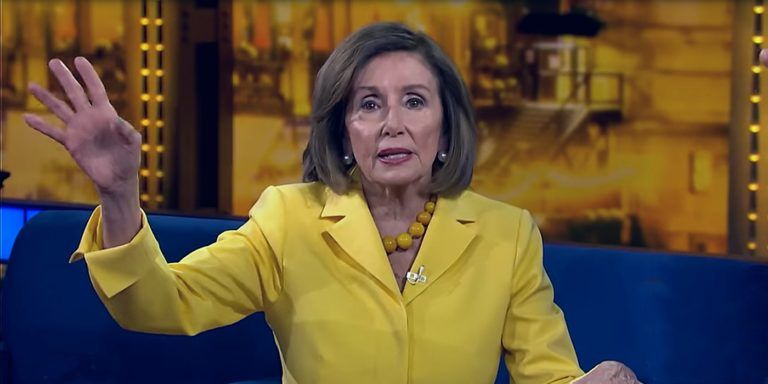
BREAKING: Nancy Pelosi Announces Retirement

(Ken Silva, Headline USA) Rep. Nancy Pelosi, D-Calif., will not seek reelection to the U.S. House, bringing to a close her career as one of most powerful but divisive women in American politics.

Pelosi, who has represented San Francisco for nearly 40 years, announced her decision Thursday.

“I will not be seeking reelection to Congress,” Pelosi said in a video address to voters.

Pelosi, appearing upbeat and forward-looking as images of her decades of accomplishments filled the frames, said she would finish out her final year in office.

“My message to the city I love is this: San Francisco, know your power,” she said. “We have made history. We have made progress. We have always led the way.”

Pelosi said, “And now we must continue to do so by remaining full participants in our democracy and fighting for the American ideals we hold dear.”

President Donald Trump, however, disagreed with Pelosi’s framing.

“She was evil. Corrupt. And only focused on BAD things for our country,” he reportedly said. “I’m very honored she impeached me twice and failed MISERABLY.”

Trump was referring to Pelosi leading impeachment efforts for holding up an arms deal to Ukraine, and for his role in the Jan. 6, 2021, Capitol Hill election protests. Pelosi’s efforts to impeach Trump stood in stark contrast to her declining to pursue former President George W. Bush over his illegal invasion of Iraq and his torture program.

While she couldn’t derail Trump, Pelosi did play a key role in ousting former President Joe Biden—force him to drop out of the 2024 election that July. According to Politico, she gave Biden three weeks to decide whether he would withdraw “the easy way or the hard way,” the latter of which entailed having his Cabinet invoke the 25th Amendment to declare him unfit for office.

Along with her political maneuverings, Pelosi’s final years in office have been embroiled in speculation about alleged insider stock trading.

For example, in June 2021, her husband, Paul Pelosi, exercised call options on 4,000 shares of Google parent company Alphabet, netting $5.3 million in profits just one week before the House Judiciary Committee voted on antitrust legislation targeting big tech companies, according to a report by Fortune. The timing proved fortuitous when the market determined the proposed regulations posed no real threat to tech giants, allowing share prices to continue rising.

More recently, tracking accounts flagged Paul Pelosi’s sale of 2,000 Visa shares worth between $500,000 and $1 million on July 1, 2024, just weeks before the Department of Justice filed a major antitrust lawsuit against the credit card company.

Pelosi’s decision, while not fully unexpected, ricocheted across Washington, and California, as a seasoned generation of political leaders is stepping aside ahead of next year’s midterm elections. Some are leaving reluctantly, others with resolve, but many are facing challenges from newcomers eager to lead the Democratic Party and confront Trump.

Pelosi remains a political powerhouse and played a pivotal role with California’s redistricting effort, Prop 50, and the party’s comeback in this month’s election. She maintains a robust schedule of public events and party fundraising, and her announced departure touches off a succession battle back home and leaves open questions about who will fill her behind-the-scenes leadership role at the Capitol.

Last year, she experienced a fall resulting in a hip fracture during a whirlwind congressional visit to allies in Europe, but even still it showcased her grit: It was revealed she was rushed to a military hospital for surgery — after the group photo, in which she’s seen smiling, poised on her trademark stiletto heels.

Pelosi’s decision also comes as her husband of more than six decades, Paul Pelosi, was gravely injured three years ago when an intruder demanding to know “Where is Nancy?” broke into the couple’s home and beat him over the head with a hammer. His recovery from the attack, days before the 2022 midterm elections, is ongoing.

Ahead of the 2026 midterm elections, Pelosi faced a potential primary challenge in California. Left-wing newcomer Saikat Chakrabarti, who helped devise progressive superstar Rep. Alexandria Ocasio-Cortez’s political rise in New York, has mounted a campaign, and state Sen. Scott Wiener is also reported to be considering a run.

While Pelosi remains an unmatched force for the Democratic Party, having fundraised more than $1 billion over her career, her next steps are uncertain. First elected in 1987 after having worked in California state party politics, she has spent some four decades in public office.

The Associated Press contributed to this report.

Ken Silva is the editor of Headline USA. Follow him at x.com/jd_cashless.

Senators Say Bondi and Patel are Being ‘Sabatoged’ on Epstein Files; Massie Isn’t Buying It

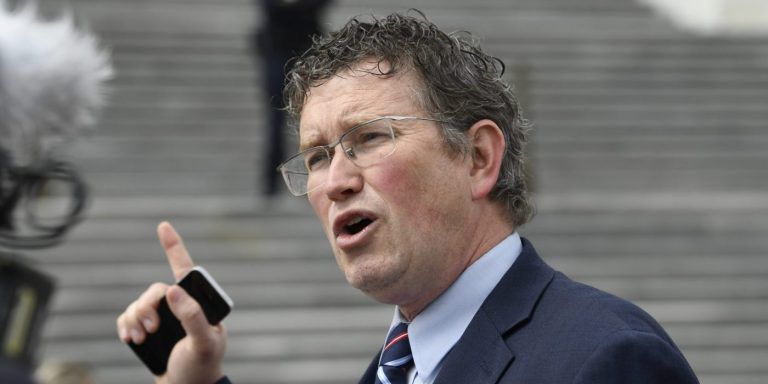
(José Niño, Headline USA) Rep. Thomas Massie, R-Ky., is challenging explanations that FBI Director Kash Patel and Attorney General Pam Bondi lack full control of their agencies nearly a year into the Trump administration, particularly when it comes to their handling of Jeffrey Epstein investigation files.

Sen. Ron Johnson recently suggested that Patel and Bondi face significant internal resistance. While discussing newly released Arctic Frost investigation documents late last month, Johnson emphasized that records came from whistleblowers rather than official channels.

“We need to do everything we can to assist Director Patel and AG Bondi in making sure they have the staff to take control over these agencies,” Johnson said per a report by Blaze Media. “I think they’re being sabotaged within.”

Johnson added that partisan actors remain embedded in both agencies. “Right now I think Kash Patel and Pam Bondi are overwhelmed by all the mess they’re trying to clean up,” he stated. “There’s still partisan actors burrowed in, trying to sabotage their efforts.”

Sen. Mike Lee, R-Utah., echoed these concerns, writing that Patel and Deputy FBI Director Dan Bongino are “undoubtedly being sabotaged from within the FBI.”

However, Massie questions whether internal sabotage explains the administration’s reversal on releasing Epstein files. “I also wonder why they flipped on the Epstein files,” Massie said. “We can’t chalk that up to sabotage or lack of resources.”

In February, Bondi publicly promised transparency, telling Fox News that the Epstein files were sitting on her desk and that she would release them, including what she described as a client list. But in July, the DOJ and FBI released an unsigned memorandum concluding their review and stating that no incriminating client list existed and no further files would be released.

The reversal sparked outrage among Trump supporters. During September congressional hearings. Massie confronted Patel about FBI documents detailing at least 20 men named by Epstein survivors, including high profile individuals in business, entertainment and politics. 

Patel claimed three separate U.S. Attorneys had assessed these allegations as not credible.

Massie and Rep. Ro Khanna, D-Calif., recently launched a discharge petition to force a vote on releasing all Epstein files. The petition gathered 217 signatures as of early November, one short of the 218 needed for a floor vote.

José Niño is the deputy editor of Headline USA. Follow him at x.com/JoseAlNino 

The Fed’s “Heroin on the Table”

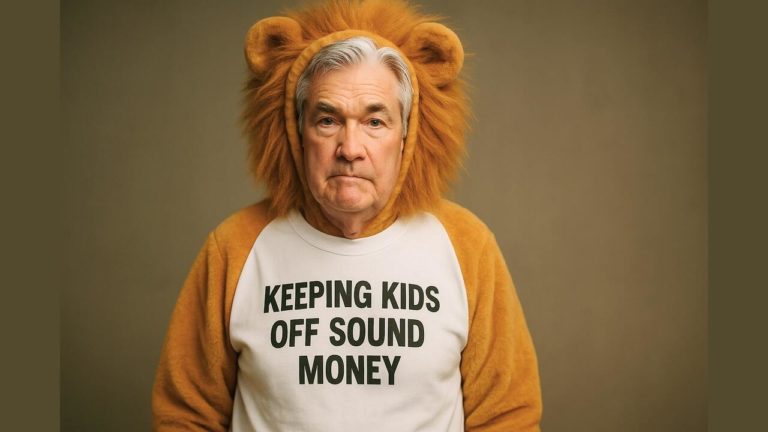
(Money Metals News Service) Mike Maharrey opens the Midweek Memo with a sharp analogy: if the D.A.R.E. officer lectured against drugs and then left heroin and syringes on the desk, that would mirror Jerome Powell’s performance. The chair talked tough, lowered expectations for future easing, and still delivered another hit of easy money.

The show centers on last week’s rate cut and the decision to end balance sheet reduction on December 1. Maharrey argues this combination abandons any pretense of fighting inflation and sets the stage for renewed money printing.

What The Fed Actually Did

The FOMC voted 10–2 to cut the policy rate by 0.25 percent, placing the federal funds rate in a 3.75 to 4 percent range. By historical standards, Maharrey notes, that is not high, yet the committee eased anyway while officially acknowledging that inflation has “moved up” and remains “somewhat elevated.”

More consequential is the halt to quantitative tightening on December 1. Instead of letting maturing Treasuries and mortgage-backed securities roll off, the Fed will replace them. That means it must buy bonds, boosting prices and suppressing yields, and in turn making it cheaper for the federal government to borrow.

Inside The Vote And The Message

Two officials dissented, but from opposite directions. Steven Myron, a newly appointed governor, wanted a half-point cut. Kansas City Fed President Jeffrey Schmidt wanted no cut at all. Everyone else sided with another 25-basis-point reduction.

The statement flagged rising downside risks to employment even as inflation remains elevated. Maharrey reads the tea leaves this way: the economy is wobbly under the weight of higher rates, and the Fed is already back to easing despite its rhetoric.

Powell’s Talk Versus The Tape

Powell tried to lean against hopes for a December cut, saying it is “not a foregone conclusion” and that some members want to “wait a cycle.” Markets listened. Implied odds for a December cut fell from 90 percent to 67 percent after his press conference. Stocks sagged. Gold and silver softened as traders priced a slower pace of easing.

Maharrey’s view is blunt: ignore the jawboning and watch the actions. The Fed cut in an inflationary environment and ended QT. The talk merely tries to keep the party from getting out of hand after refilling the punch bowl.

Inflation By Design

Powell suggested that inflation excluding tariffs is “not so far” from the 2 percent goal, offering examples such as 2.8 percent that imply core PCE around 2.3 to 2.4 percent without tariff effects. Maharrey calls this number-massaging and cites Ryan McMaken’s critique that “inflation-ex-tariffs” is a political ploy to declare victory.

The larger thesis is harsher. Two percent was always a made-up target. If three percent becomes the new normal, that simply formalizes the quiet devaluation needed to run a sprawling government on fiat money. In Maharrey’s words, inflation is the plan, not a policy error.

From QT Halt To QE Restart

The United States is already paying over $1 trillion per year in interest. With global demand for Treasuries softening, the Fed must lean in. Ending QT reduces net supply to private buyers, supports prices, and pushes yields down. Maharrey doubts that it will be enough and expects a return to outright quantitative easing within a year or two.

He quotes Ambrose Evans-Pritchard’s argument that the Fed is preparing the ground for a rapid return to net purchases, likely branded as open-market operations to “manage reserves.” Different label, same effect. Money printing.

What History Already Taught

Quantitative easing began after 2008 alongside zero rates. Ben Bernanke told Congress it wasn’t debt monetization because the assets would be sold later. They weren’t, at least not meaningfully. Rates didn’t lift off zero until December 2015, seven years on, and QT in 2017 sputtered by late 2018.

By 2019, the Fed had cut rates three times and ended QT before the pandemic. COVID then justified another giant balance-sheet surge, roughly $5 trillion. Subsequent QT removed about $2.4 trillion, still less than half the pandemic addition. Powell has no plan to return to pre-pandemic levels, effectively validating what Tim Congdon calls monetization of deficits, estimating around two-thirds of U.S. debt monetized in one form or another.

The Debt Black Hole

Decades of easy money bred a bubble economy that struggles with even modestly higher rates. Maharrey points to the Chicago Fed’s National Financial Conditions Index to argue conditions have been loose all along, and policy is getting looser.

In the Austrian business cycle framing, distorted rates fuel malinvestment, then busts, then more easing to paper over the damage. Addiction ends badly. The longer we suppress market signals, the bigger the comeuppance.

Gold, Silver, And The World’s Response

The World Gold Council’s third-quarter data shows demand up 3 percent year over year to 1,313 tons, the highest quarterly level ever. In dollar terms, demand jumped 44 percent to a record $146 billion, driven by investment as jewelry slowed under higher prices.

The United States was the outlier, with bar and coin demand at just 7 tons, the lowest since the 2017–2019 trough. Interest picked up when the price broke above $4,000, but many Americans used strength to book profits with gold at $4,500 and silver over $50. Maharrey warns that selling metals to hold dollars is a wager against an inflation regime the Fed keeps reinforcing.

A Dealer’s Eye On Opportunity

Maharrey highlights a limited-time deal on pre-1965 U.S. quarters, dimes, and halves that are 90 percent silver and priced five cents under spot. He notes the silver value of a pre-1965 quarter is currently well over $8, which is why they rarely turn up in circulation.

He frames dips as accumulation opportunities, adding practical avenues for investors: IRAs, installment plans to build a position over time, and vaulted storage in Eagle, Idaho. For personal guidance, he gives 800-800-1865 and points to MoneyMetals.com.

What It Means Right Now

If inflation is policy rather than an accident, holding cash becomes a slow, predictable burn. The QT halt suggests the Fed is prioritizing Treasury market function and federal financing costs over a clean break with inflation.

Maharrey expects a rebrand of QE rather than a repudiation of it. The debasement trade, as Evans-Pritchard put it, is still young. In that world, real assets endure in ways paper promises do not.

Mamdani Already Begging for Handouts to Build Socialist Transition Team

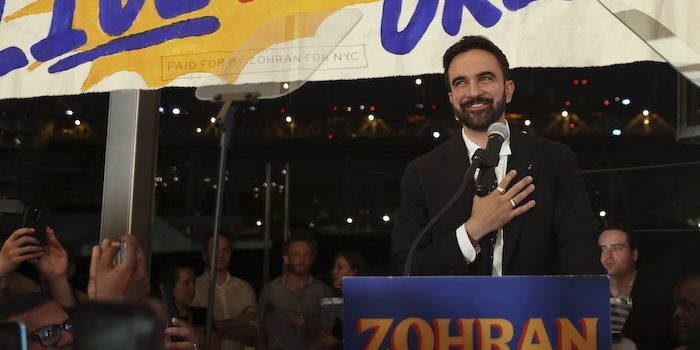
(Ben Sellers, Headline USA) A day after his resounding victory in far-left New York City, self-declared socialist Mayor-elect Zohran Mamdani was passing the hat around for donations from his billionaire backers.

“Oh, and uh, one more thing. Remember how I told you a few months ago to stop sending us money? You can start again,” Mamdani said in the roughly 85 second clip released Wednesday morning.

“This transition requires staff, research, and an infrastructure that can meet this moment,” he continued. “It’ll be made possible by the people who built and believe in this movement.”

Mamdani soared to victory over disgraced former New York Gov. Andrew Cuomo and Republican nominee Curtis Sliwa on the promise of free stuff—including rent-controlled housing, government-subsidized grocery stores and no-cost public transit.

But many have raised questions as to how he intends to cover the cost, particularly if wealthy residents and businesses opt to flee the state for more favorable economic conditions.

President Donald Trump has said he will only offer New York City the bare minimum in federal financial relief.

Critics have suggested that Mamdani, a hardline Muslim and native of Uganda, may be applying the concept of taqiyya, or the principle that it is OK for Muslims to lie in order to advance the cause of the religion.

He was previously caught in a false claim that his auntie had been afraid to take the subway following the Sept. 11 terrorist attacks. After it was revealed that his only biological aunt lived in Africa at the time, Mamdani clarified that he was referring to a distant cousin, now deceased.

A photograph of billionaire scion Alexander Soros posing with the mayor-elect further raised questions about whether the privileged foreign national was truly committed to the causes he preached.

Meanwhile, conservatives went so far as to slam Mamdani for having a cash bar at his election-night celebration.

“If you can’t get a free vodka from this guy something tells me the free food and buses ain’t coming. Congrats, suckers,” wrote Fox News host and comedian Jimmy Failla.

Mamdani, meanwhile, sought to reassure uneasy constituents who doubted his leadership experience by naming several alumna of former Mayor Bill de Blasio’s administration to his all-female transition team.

Among them were former First Deputy Mayor Maria Torres–Springer and former Federal Trade Commission Chair Lina Khan, Politico reported.

“What New Yorkers are looking for is an era of consistency, an era of clarity, an era of conviction, and that is what we will deliver to them,” he said Wednesday.

Mamdani’s promise to involve government in every facet of New Yorkers’ lives left some uneasy.

“We will prove that there is no problem too large for government to solve and no concern too small for it to care about,” he said in his victory speech.

He also claimed that his victory marked a dynastic upset in favor of the working class.

However, some poll-watchers noted that his victory was propelled not by blue-collar voters but by privileged elites.

Voters with a bachelor’s degree or higher favored Mamdani, while those with only some college experience or less opted to vote for Cuomo.

EXCLUSIVE: Youngkin Reflects on His Legacy as Va. Suffers Blue Relapse

(Ben Sellers, Headline USA) Virginia Gov. Glenn Youngkin offered reflections about his enduring legacy while on the campaign trail with now defeated Lt. Gov. Winsome Earle–Sears.

“I’m not a legacy guy. I just want to make sure Virginia is in much, much, much better shape than when I found it, and I think it is,” he said in an exclusive interview following a Sept. 28 rally in Halifax County. “… So listen, it has been an amazing time serving as governor, but I’ve still got about three months left. We’re going to finish strong.”

Led by Youngkin, the Republican ticket shocked the political pundit class with a 2021 upset after eight years of Democratic dominance cast questions as to whether the Old Dominion was still a purple state.

On Tuesday, however, the term-limited Youngkin saw his hopes of a GOP dynasty come to an abrupt halt after Democrats, led by former CIA operative Abigail Spanberger, routed the election for top three executive roles and gained a supermajority in the state legislature.

Despite remaining focused on the campaign and his final months in office, Youngkin did mention several highlights of his agenda that he hoped would not be unraveled by the incoming Democratic leadership.

“Listen, we have had incredible economic growth and job creation. Neighborhoods are safer. Parents are in charge of their kids again,” he said.

“Education has restored excellence. And we’re seeing a workforce prepared to take those great jobs,” he added. “All of that has enabled us to be financially stronger than we have ever been in the history of this commonwealth.”

Youngkin noted that the strength of his pro-business economy had helped to insulate Virginia from the D.C. dysfunction to the north.

“It allows us to do stuff like step in and provide these food assistance benefits when the federal government being shut down by Senate Democrats isn’t doing it,” he said.

The commonwealth has been particularly impacted by the Schumer Shutdown due to its proximity to the federal government.

Democrats’ attempt to force the restoration of healthcare subsidies for illegal immigrants that were excised as part of the One Big Beautiful Bill Act has now become the longest-running stalemate over a continuing resolution to fund the government in U.S. History.

Some have theorized that Youngkin may have purposefully put his weight behind Earle‒Sears, who was criticized for a lack of charisma and ran behind Spanberger for the entirety of the campaign, despite holding the advantage of incumbency.

Virginia governors are prohibited from holding office for consecutive terms, but are eligible to be reelected to nonconsecutive terms.

The 58-year-old also has been floated frequently as a presidential hopeful.

Following the election defeat on Tuesday, Youngkin held a press conference where he reiterated a similar message downplaying talk of any legacy.

“The answer is still the same,” spokesman Peter Finocchio told Headline USA. “He is focused on finishing out his term.”