Trump Says Marjorie Taylor Greene Has ‘Lost Her Way’ After She Criticized Him for Hosting Former Al-Qaeda Leader

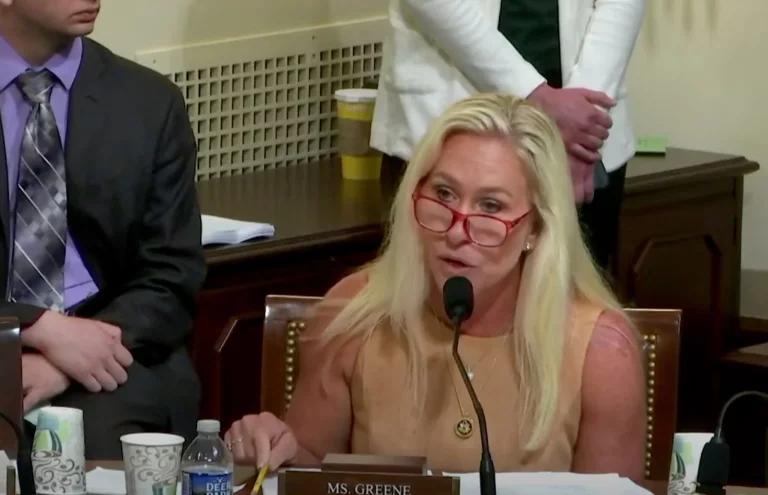
(Dave DeCamp, Antiwar.com) President Donald Trump on Monday said that Rep. Marjorie Taylor Greene (R-GA) has “lost her way” after the Georgia congresswoman criticized the president for hosting Syrian President Ahmed al-Sharaa, a former al-Qaeda leader, at the White House and focusing on foreign policy over domestic policy.

“I don’t know what happened to Marjorie. She’s a nice woman, but I don’t know what happened. She’s lost her way, I think,” Trump told reporters at the Oval Office when asked about Greene’s comments.

“But I have to view the presidency as a worldwide situation, not locally. I mean, we could have a world that’s on fire, where wars come to our shores very easily, if you had a bad president,” the president added.

In response to Trump, Greene told NBC News: “I haven’t lost my way. I’m 100% America first and only!”

Earlier in the day, Greene strongly criticized the president’s meeting with Sharaa in a post on X that included a picture of a State Department wanted poster for when the Syrian leader was known by his al-Qaeda nom de guerre, Abu Mohammad al-Julani.

“The new leader of Syria is a former Al Qaeda terrorist wanted by our government who is meeting with President Trump today at the White House on the US Marine’s 250th anniversary. He rose to power in Dec 2024, sanctions were lifted off Syria in June, and many Christians and minority groups have been killed before and after sanctions were lifted,” Greene said.

Syria is the oldest home of Christianity outside of Israel. The apostle Paul met Jesus on the road to Damascus. I pray the persecution ends, not only in Syria, but all around the world. However, I would really like to see nonstop meetings at the WH on domestic policy not foreign policy and foreign country’s leaders,” she added.

In recent months, Greene has emerged as a harsh critic of US support for Israel and became the first Republican member of Congress to label Israel’s military campaign in Gaza a genocide. For her stance, Greene has come under attack from the pro-Israel lobby group AIPAC and pro-Israel commentators in the US media.

This article originally appeared at Antiwar.com. 

Kushner Meets With Netanyahu in Israel To Discuss Future Plans for Gaza

(Dave DeCamp, Antiwar.com) President Trump’s son-in-law, Jared Kushner, met with Israeli Prime Minister Benjamin Netanyahu on Monday to discuss future plans for Gaza and the US-backed ceasefire deal.

Despite lacking a formal role in the Trump administration, Kushner has been acting as an advisor to US Middle East envoy Steve Witkoff and has been very involved in the negotiations and discussions on Gaza, a place he once said could have “very valuable” waterfront property.

Kushner and Netanyahu were joined by Israeli Strategic Affairs Minister Ron Dermer and Aryeh Lightstone, who has also served as an advisor to Witkoff. There have been no public comments about the meeting, but it came as the US is pushing for the UN Security Council to adopt a resolution that would give a US-led body governance over Gaza and pave the way for the deployment of an international force to the Palestinian territory.

Little progress has been made on deploying an international force, as countries willing to participate seek clarity on what their troops will be doing and don’t want to end up in a situation where they’re fighting Hamas. Israel has also rejected the idea of Turkey being involved.

According to a report from Israel Hayom, the US military-led task force operating in southern Israel has been in contact with leaders of Israeli-backed militias and gangs operating in the Israeli-occupied side of Gaza.

The largest group Israel is backing is a gang led by Yasser Abu Shabab, who admitted to looting aid trucks in 2024. Some members of the Abu Shabab gang, which is based in southern Gaza, have ties to ISIS, according to Israeli officials and Israeli media

The Israel Hayom report said that the US has made contact with Abu Shabab and that it’s considering using his gang and the other groups to “maintain order” in the Strip. Any effort by the Israeli-backed militias to assert authority in the Hamas-controlled areas of Gaza would likely lead to clashes between Palestinians.

Kushner and Netanyahu were also expected to discuss the fate of an estimated 150 Hamas militants who are trapped in Israeli-occupied territory in Rafah, southern Gaza. The US has reportedly been pushing for an arrangement that would involve the fighters being granted safe passage to the Hamas-controlled side of Gaza if they don’t bring their weapons.

Kushner has also suggested the idea of allowing reconstruction in only the Israeli-controlled side of Gaza as a way to pressure Hamas to disarm, but this plan has received pushback from Arab states who fear that such an arrangement could lead to a permanent Israeli occupation.

This article originally appeared at Antiwar.com. 

US Troops Train for Jungle Warfare in Panama for First Time in Decades

(Dave DeCamp, Antiwar.com) The US War Department has begun sending conventional ground forces to Panama for training in jungle warfare for the first time in more than two decades, ABC News reported on Monday.

News of the training in Panama comes amid a major US military buildup in the Caribbean and a push toward a potential war with Venezuela, a country with vast jungles. A US military official told ABC that the training in Panama is not intended to prepare troops for a potential mission in Venezuela, but President Trump has reportedly been reviewing options for attacking the country.

While the US hasn’t sent enough forces to the Caribbean for a full-scale invasion of Venezuela, US military planners reportedly do believe it has a sufficient force to seize strategic ports and airfields in Venezuela. According to a report from The New York Times, one of the options presented to President Trump would involve sending troops to capture airfields or oil infrastructure inside the country.

The ABC report said that US soldiers and Marines are participating in a three-week training course once called “Green Hell” due to the similarities to combat in Vietnam at the Base Aeronaval Cristóbal Colón, formerly known as Fort Sherman. The jungle training course at the base was shuttered in 1999 when the US pulled troops out of the country as part of a deal to cede control of the Panama Canal to the Panamanian government.

Earlier this year, President Trump was calling for the US to “retake” the Panama Canal, which led to the US signing a deal with Panama that allows US troop deployments to bases along the canal for training and military exercises.

Proponents of a regime change war with Venezuela to oust Venezuelan President Nicolas Maduro point to the 1989 US invasion of Panama that led to the arrest of Panamanian leader and former CIA asset Manuel Noriega. But a major difference between a potential invasion of Venezuela and the US invasion that ousted Noriega is the fact that the US had a long-established military presence in Panama at the time.

Maduro has vowed that Venezuela is ready to fight if the US attacks, and Russia has recently delivered air defenses to the country and is considering further support. The Venezuelan leader also says that a pro-government militia that has millions of members is also ready to take up arms against any invading force.

This article originally appeared at Antiwar.com. 

New Jan. 6 Committee Asks to Interview Kamala’s Secret Service Detail about Pipe Bomb Scandal

(Ken Silva, Headline USA) Around 8:30 a.m. on Jan. 6, 2021, at least 10 Secret Service agents conducted a sweep of the premises of the Democratic National Committee, where someone had allegedly planted a pipe bomb the night before.

For reasons that are still unclear, those agents didn’t find the pipe bomb. When then-Vice President-elect Kamala Harris traveled to the DNC around 11:25 a.m. that day, her convoy came within about 20 feet of where the pipe bomb was found by a plainclothes Capitol Police officer at 1:05 p.m.

For the next four years, Harris was oddly silent about her apparent brush with death. Now, the Select Subcommittee to Investigate the Remaining Questions Surrounding January 6, 2021, is seeking answers from the agents who served on her security detail.

“More than four years later, there remain more questions than answers surrounding who may have placed these devices and whether federal law enforcement entities have adequately investigated the matter,” subcommittee chairman Barry Loudermilk, R-Ga., said in a Monday letter to Secret Service Director Sean Curran.

“Given the presence of Vice President-Elect Kamala Harris’s Secret Service detail at the DNC when authorities discovered the pipe bomb, your agents may possess information that is necessary for our oversight and request your cooperation in this process.”

Loudermilk seeks all transcripts of the interviews the previous Democrat-controlled Jan. 6th Commission conducted with the Secret Service. He also wants to interview seven agents whose names are redacted.

Loudermilk asked Curran to respond by Nov. 20.

Some researchers have theorized that the pipe bombs weren’t planted the night of Jan. 5—as the FBI says they were—but a mere 15 minutes or so before they were discovered.

In August 2024, investigative reporter Julie Kelly released new footage showing an apparent law enforcement officer from Harris’s security detail exiting a DC Metro Police SUV at 12:51 p.m., and walking towards the area where the pipe bomb was found—with a bag in hand. Minutes later, the same officer walked back to the police vehicle with bag still in hand.

“What exactly was he doing? Did he set the device? And if he was acting on the up-and-up, how in the world did he not see a pipe bomb sitting right there?” Kelly asked.

Additionally, the woman who found the pipe bomb near the RNC told the FBI that she believed the device was planted there between 12 p.m. and when she found it at 12:40 p.m. on Jan. 6.

Rep. Morgan Griffith, R-Va., has explained how those series of events may make it impossible to successfully prosecute the pipe bomber, even if he or she is ever arrested.

“Here’s what a good criminal defense attorney’s going to say: If you identified the individual who’s believed to place the bomb, then hours go by, and you had a search by the Secret Service at the DNC and the dog didn’t find the explosive—so clearly, the device [the defense attorney’s] client might have left there wasn’t the device that was determined to be the pipe bomb, because it wasn’t picked up by the bomb-sniffing dog,” Griffith argued in March 2024.

Despite those apparent challenges, FBI Deputy Director Dan Bongino said earlier this year that the bureau is making progress on the case. FBI Director Kash Patel made similar remarks earlier this month at a congressional hearing.

Blaze Media published a story Saturday purporting to identify the bomber, but that report has yet to be confirmed.

Ken Silva is the editor of Headline USA. Follow him at x.com/jd_cashless.

Lawsuit Challenges TSA’s Ban on Transgender Officers Conducting Pat-Downs

(Headline USA) A Virginia transportation security officer is accusing the U.S. Department of Homeland Security of sex discrimination over a policy that bars transgender officers from performing security screening pat-downs, according to a federal lawsuit.

The Transportation Security Administration, which operates under DHS, enacted the policy in February to comply with President Donald Trump’s executive order declaring two unchangeable sexes: male and female.

According to internal documents explaining the policy change that The Associated Press obtained from four independent sources, including one current and two former TSA workers, “transgender officers will no longer engage in pat-down duties, which are conducted based on both the traveler’s and officer’s biological sex. In addition, transgender officers will no longer serve as a TSA-required witness when a traveler elects to have a pat-down conducted in a private screening area.”

Until February, TSA assigned work consistent with officers’ gender identity under a 2021 management directive. The agency told the AP it rescinded that directive to comply with Trump’s Jan. 20 executive order.

Although transgender officers “shall continue to be eligible to perform all other security screening functions consistent with their certifications,” and must attend all required training, they will not be allowed to demonstrate how to conduct pat-downs as part of their training or while training others, according to the internal documents.

A transgender officer at Dulles International Airport, Danielle Mittereder, alleges in her lawsuit filed Friday that the new policy — which also bars her from using TSA facility restrooms that align with her gender identity — violates civil rights law.

“Solely because she is transgender, TSA now prohibits Plaintiff from conducting core functions of her job, impedes her advancement to higher-level positions and specialized certifications, excludes her from TSA-controlled facilities, and subjects her identity to unwanted and undue scrutiny each workday,” the complaint says.

Mittereder declined to speak with the AP but her lawyer, Jonathan Puth, called TSA’s policy “terribly demeaning and 100% illegal.”

TSA spokesperson Russell Read declined to comment, citing pending litigation. But he said the new policy directs that “Male Transportation Security Officers will conduct pat-down procedures on male passengers and female Transportation Security Officers will conduct pat-down procedures on female passengers, based on operational needs.”

Skye Perryman, president and CEO of Democracy Forward — a legal organization that has repeatedly challenged the second Trump administration in court — called TSA’s policy “arbitrary and discriminatory,” adding: “There’s no evidence or data we’re aware of to suggest that a person can’t perform their duties satisfactorily as a TSA agent based on their gender identity.”

DHS pushed back on assertions by some legal experts that its policy is discriminatory.

“Does the AP want female travelers to be subjected to pat-downs by male TSA officers?” Homeland Security spokesperson Tricia McLaughlin asked in a written response to questions by the AP. “What a useless and fundamentally dangerous idea, to prioritize mental delusion over the comfort and safety of American travelers.”

Airport security expert and University of Illinois Urbana-Champaign professor Sheldon H. Jacobson, whose research contributed to the design of TSA PreCheck, said that the practice of matching the officer’s sex to the passenger’s is aimed at minimizing passenger discomfort during screening. Travelers can generally request another officer if they prefer, he added.

Deciding where transgender officers fit into this practice “creates a little bit of uncertainty,” Jacobson said. But because transgender officers likely make up a small percent of TSA’s workforce, he said the new policy is unlikely to cause major delays.

“It could be a bit of an inconvenience, but it would not inhibit the operation of the airport security checkpoint,” Jacobson said.

TSA’s policy for passengers is that they be screened based on physical appearance as judged by an officer, according to internal documents. If a passenger corrects an officer’s assumption, “the traveler should be patted down based on his/her declared sex.” For passengers who tell an officer “that they are neither a male nor female,” the policy says officers must advise “that pat-down screening must be conducted by an officer of the same sex,” and to contact a supervisor if concerns persist.

The documents also say that transgender officers “will not be adversely affected” in pay, promotions or awards, and that TSA “is committed to providing a work environment free from unlawful discrimination and retaliation.”

But the lawsuit argues otherwise, saying the policy impedes Mittereder’s career prospects because “all paths toward advancement require that she be able to perform pat-downs and train others to do so,” Puth said.

According to the lawsuit, Mittereder started in her role in June 2024 and never received complaints related to her job performance, including pat-down responsibilities. Supervisors awarded her the highest-available performance rating and “have praised her professionalism, skills, knowledge, and rapport with fellow officers and the public,” the lawsuit said.

“This is somebody who is really dedicated to her job and wants to make a career at TSA,” Puth said. “And while her gender identity was never an issue for her in the past, all of a sudden it’s something that has to be confronted every single day.”

Being unable to perform her full job duties has caused the Mittereder to suffer fear, anxiety and depression, as well as embarrassment and humiliation by forcing her to disclose her gender identity to co-workers, the complaint says. It adds that the ban places additional burden on already-outnumbered female officers who have to pick up Mittereder’s pat-down duties.

Adapted from reporting by the Associated Press


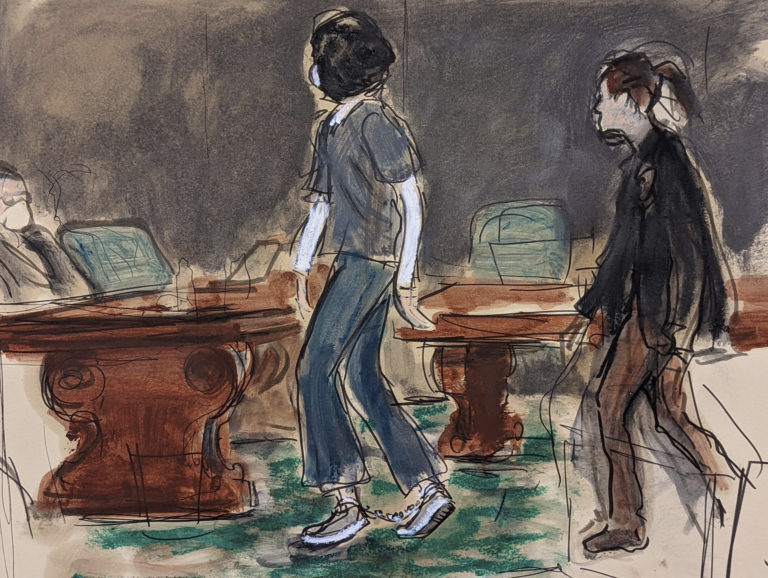
Whistleblower: Prison Official Admits to being Ghislaine Maxwell’s ‘Bitch’

(Ken Silva, Headline USA) A whistleblower has emerged with damning new information about how convicted sex trafficker Ghislaine Maxwell is being treated in prison, according to a letter House Oversight Committee ranking member Jamie Raskin, D-Md., sent to President Donald Trump.

Maxwell was transferred from a low-security prison in Tallahassee, Florida to a minimum-security prison camp in Bryan, Texas, in July, after she provided an interview to the Justice Department about her accomplice, Jeffrey Epstein. Because she said in that interview that she never saw Trump commit any wrongdoing, some speculate that her transfer was a reward for clearing the president’s name.

While in her new prison camp, she’s reportedly received highly preferential treatment. In his letter to Trump, Raskin listed some examples of that.

According to Raskin’s letter, “Maxwell’s meals have been customized and prepared by federal prison camp staff and then personally delivered to her in her cell by longtime federal employees.”

“An inmate who trains puppies to become service dogs was instructed to provide one to Maxwell for a time so she could play with the puppy, even though neither inmates nor staff are ordinarily allowed to pet the service dogs in training,” Raskin added.

“When Ms. Maxwell wanted to go to the prison exercise area, she was personally escorted there after hours by prison guards so she could work out by herself and was allowed to enjoy recreation time in staff-only areas.”

According to Raskin, the preferential treatment is so bad that one Bryan prison official has complained that he is “sick of having to be Maxwell’s bitch.”

Raskin also said in his letter that Maxwell is preparing a “Commutation Application” for the Trump administration to review.

“In light of these shocking revelations, I write to demand that you make your former personal attorney and now Deputy Attorney General, Todd Blanche, available for a public hearing immediately with our Committee to answer for this corrupt misuse of law enforcement resources,” Raskin wrote.

Raskin seeks answers by Nov. 24, and a response to his interview request for Blanche by Nov. 17.

His letter to Trump follows another one he wrote on Oct. 30 to FPC Bryan warden Tanisha Hall, also seeking answers about Maxwell’s treatment, as well as answers about other inmates who’ve been transferred after complaining about her.

That letter cited the case of Julie Howell, a 44-year-old inmate serving a 12-month sentence for theft. Howell was also transferred to FDC Houston after speaking about Maxwell to The Daily Telegraph. In response to her transfer, Howell’s lawyer reportedly said: “Nobody’s going to say anything about Ghislaine Maxwell now.”

Raskin asked Warden Hall to contact his staff by Nov. 13 to coordinate a visit to Maxwell’s prison camp. He also asked a series of questions, including about the identities of the unknown people who met with Maxwell while other inmates were locked down in August.

It’s unclear whether Warden Hall has responded.

Ken Silva is the editor of Headline USA. Follow him at x.com/jd_cashless.

Voters’ Anger at High Electricity Bills and Data Centers Looms Over 2026 Midterms

(Headline USA) Voter anger over the cost of living is hurtling forward into next year’s midterm elections, when pivotal contests will be decided by communities that are home to fast-rising electric bills or fights over who’s footing the bill to power Big Tech’s energy-hungry data centers.

Electricity costs were a key issue in this week’s elections for governor in New Jersey and Virginia, a data center hotspot, and in Georgia, where Democrats ousted two Republican incumbents for seats on the state’s utility regulatory commission.

Voters in New Jersey, Virginia, California and New York City all cited economic concerns as the top issue, as Democrats and Republicans gird for a debate over affordability in the intensifying midterm battle to control Congress.

Already, President Donald Trump is signaling that he’ll focus on affordability next year as he and Republicans try to maintain their slim congressional majorities, while Democrats are blaming Trump for rising household costs.

Front and center may be electricity bills, which in many places are increasing at a rate faster than U.S. inflation on average — although not everywhere.

“There’s a lot of pressure on politicians to talk about affordability, and electricity prices are right now the most clear example of problems of affordability,” said Dan Cassino, a professor of politics and government and pollster at Fairleigh Dickinson University in New Jersey.

Rising electric costs aren’t expected to ease and many Americans could see an increase on their monthly bills in the middle of next year’s campaigns.

Gas and electric utilities are seeking or already secured rate increases of more that $34 billion in the first three quarters of 2025, consumer advocacy organization PowerLines reported. That was more than double the same period last year.

With some 80 million Americans struggling to pay their utility bills, “it’s a life or death and ‘eat or heat’ type decision that people have to make,” said Charles Hua, PowerLines’ founder.

In Georgia, proposals to build data centers have roiled communities, while a victorious Democrat, Peter Hubbard, accused Republicans on the commission of “rubber-stamping” rate increases by Georgia Power, a subsidiary of power giant Southern Co.

Monthly Georgia Power bills have risen six times over the past two years, now averaging $175 a month for a typical residential customer.

Hubbard’s message seemed to resonate with voters. Rebecca Mekonnen, who lives in the Atlanta suburb of Stone Mountain, said she voted for the Democratic challengers, and wants to see “more affordable pricing. That’s the main thing. It’s running my pocket right now.”

Now, Georgia Power is proposing to spend $15 billion to expand its power generating capacity, primarily to meet demand from data centers, and Hubbard is questioning whether data centers will pay their fair share — or share it with regular ratepayers.

Midterm elections will see congressional battlegrounds in states where fast-rising electric bills or data center hotspots — or both — are fomenting community uprisings.

That includes California, Georgia, Michigan, Ohio, Pennsylvania and Texas.

Analysts attribute rising electric bills to a combination of forces.

That includes expensive projects to modernize the grid and harden poles, wires and substations against extreme weather and wildfires.

Also playing a role is explosive demand from data centers, bitcoin miners and a drive to revive domestic manufacturing, as well as rising natural gas prices, analysts say.

“The cost of utility service is the new ‘cost of eggs’ concern for a lot of consumers,” said Jennifer Bosco of the National Consumer Law Center.

In some places, data centers are driving a big increase in demand, since a typical AI data center uses as much electricity as 100,000 homes, according to the International Energy Agency. Some could require more electricity than cities the size of Pittsburgh, Cleveland or New Orleans.

While many states have sought to attract data centers as an economic boon, legislatures and utility commissions were also flooded with proposals to try to protect regular ratepayers from paying to connect data centers to the grid.

Meanwhile, communities that don’t want to live next to one are pushing back.

An Associated Press-NORC Center for Public Affairs Research poll from October found that electricity bills are a “major” source of stress for 36% of U.S. adults.

Now, as falls turns to winter, some states are warning that funding for low-income heating aid is being delayed because of the federal government shutdown.

Still, the impact is still more uneven than other financial stressors like grocery costs, which just over half of U.S. adults said are a “major” source of stress.

And electric rates vary widely by state or utility.

For instance, federal data shows that for-profit utilities have been raising rates far faster than municipally owned utilities or cooperatives.

In the 13-state mid-Atlantic grid from Illinois to New Jersey, analysts say ratepayers are paying billions of dollars for the cost to power data centers — including data centers not even built yet.

Next June, electric bills across that region will absorb billions more dollars in higher wholesale electricity costs designed to lure new power plants to power data centers.

That’s spurred governors from the region — including Pennsylvania’s Josh Shapiro, Illinois’ JB Pritzker and Maryland’s Wes Moore, all Democrats who are running for reelection — to pressure the grid operator PJM Interconnection to contain increases.

Drew Maloney, the CEO of the Edison Electric Institute, a trade association of for-profit electric utilities, suggested that only some states are the drivers of higher average electric bills.

“If you set aside a few sates with higher rates, the rest of the country largely follows inflation on electricity rates,” Maloney said.

Examples of states with faster-rising rates are California, where wildfires are driving grid upgrades, and those in New England, where natural gas is expensive because of strained pipeline capacity.

Still, other states are feeling a pinch.

In Indiana, a growing data center hotspot, the consumer advocacy group, Citizens Action Coalition, reported this year that residential customers of the state’s for-profit electric utilities were absorbing the most severe rate increases in at least two decades.

Republican Gov. Mike Braun decried the hikes, saying “we can’t take it anymore.”

Adapted from reporting by the Associated Press.

Slowing Credit Card Spending Likely Reflects Growing Consumer Debt Stress

(Mike Maharrey, Money Metals News Service) After barely rising in August, consumer debt grew modestly in September, likely reflecting growing debt stress on American households.

The U.S. economy depends on consumers buying stuff. Persistent price inflation forced Americans to blow through their savings and then turn to credit cards to make ends meet. Credit card spending has slowed significantly this year, indicating consumers may be maxing out the plastic.

Consumer debt grew by $13.1 billion, a 3.1 percent annual increase, according to the latest data from the Federal Reserve. That drove total outstanding consumer debt to $5.08 trillion.

The Federal Reserve consumer debt figures include credit card debt, student loans, and auto loans, but do not factor in mortgage debt. When you include mortgages, U.S. households are buried under a record $18.59 trillion in debt.

Revolving debt, primarily reflecting credit card balances, grew by just $1.6 billion in September, a 1.5 percent annual increase.

The growth of revolving debt has been slowing all year. It contracted in May and June, after a one-off surge in April, before suddenly surging once again in July. But in August, revolving debt contracted by 5.5 percent.

KPMG recently reported that the slowing growth of revolving credit likely reflects a drop in borrowing and spending by the bottom 80 percent of U.S. households “that are increasingly stressed.”

“The top 20 percent now account for nearly two-thirds of all consumption. The top 3.3 percent have increased spending the most. Spending has stagnated, adjusting for inflation, among the bottom 80 percent.”

The double whammy of rising debt and interest rates exacerbates the debt problem. The average annual percentage rate (APR) currently stands at 19.98 percent, with some companies still charging rates as high as 28 percent. The average is only slightly down from the record high of 20.79 percent set last August, despite Fed rate cuts.

High debt levels have created elevated levels of consumer stress.

LegalShield’s Consumer Stress Index (CSLI) increased by 3 points in the third quarter and was at the highest level since March 2020, when the economy was shut down during the pandemic.

The source of this stress: debt.

According to LegalShield, “The index has now increased for seven consecutive months, up 8.2 percent in 2025, signaling continued financial strain among American households. Legal inquiries related to bankruptcy rose sharply, while foreclosure and consumer finance issues remain elevated.”

Meanwhile, the New York Fed reported that overall delinquency rates remained “elevated” in the third quarter, with 4.5 percent of all debt in some stage of delinquency. Credit card and student loan delinquencies have increased at the fastest rate.

Overall debt flow into serious delinquency was 3.03 percent in the third quarter, up from 1.68 percent year-on-year.

Credit card delinquencies are rising, even among consumers with strong credit scores. According to VantageScore, there was a 47 percent year-on-year increase in late payments by people in the prime segment.

Tepid growth in non-revolving debt also signals consumer stress. Non-revolving credit, primarily reflecting outstanding auto loans, student loans, and loans for other big-ticket durable goods, grew by 11.4 billion, a 3.7 percent increase.

This was slightly above the trend of around a 2 percent growth in non-revolving credit over the last year, likely reflecting new student loans hitting the books. Generally, non-revolving credit growth has been tepid as consumers cut back on big-ticket spending to cover the increasing costs of day-to-day necessities.

Before the pandemic, revolving credit growth averaged 5 percent.

Borrowers are also struggling with their non-revolving loans – particularly their student debt. Seriously delinquent student loans surged to 10.2 percent in the second quarter as the government began requiring payments after years of forbearance in the wake of the pandemic.

Transitions of student loans into serious delinquency rose to 14.3 percent in the third quarter. That was up from 12.9 percent in the second, 8 percent in the first, and 0.8 percent in the fourth quarter of last year. It has been the fastest transition rate into serious delinquency since the data have been collected, going back to 2000.

Consumer stress is also evident in declining FICO scores.

The bottom line is that Americans have blown through the savings they accumulated during the pandemic and have run their credit cards close to the limit. An economy run on Visa and Mastercard simply isn’t sustainable. When Americans finally hit their credit limit, it will have major implications for economic growth.


Mike Maharrey is a journalist and market analyst for Money Metals with over a decade of experience in precious metals. He holds a BS in accounting from the University of Kentucky and a BA in journalism from the University of South Florida.

Silver Designated a “Critical Mineral” By U.S. Government

(Mike Maharrey, Money Metals News Service) U.S. Geological Survey (USGS) has officially added silver to its list of “critical minerals.” This could put further demand pressure on a metal already in short supply. It also increases the possibility of tariffs on silver.

The USGS critical mineral list was established in 2017, and it guides federal strategy, investment, and mine permitting decisions.

USGS defines a critical mineral as, “Those commodities which are essential to the economic or national security of the U.S.; have a supply chain that is vulnerable to disruption; and serve an essential function in the manufacturing of a product, the absence of which would have significant consequences for the economic or national security of the U.S.

The USGS also added copper, metallurgical coal, potash, rhenium, silicon, and lead to the list.

According to a Department of the Interior press release, “The List of Critical Minerals informs direct investments in mining and resource recovery from mine waste; stockpiles; tax incentives for U.S. mineral processing; and streamlined mining permitting.

The Bipartisan Policy Center said inclusion on the list can make projects eligible for federal funding, subject to a streamlined permitting process, or more competitive due to fees placed on imports.

The director of the minerals security program at the Center for Strategic and International Studies told the Financial Times, “This list is a signal to the market about what the US government is prioritizing. It will be easier to line up government support for a mineral designated as ‘critical.’”

Interior Secretary Doug Burgum said, “This draft list of critical minerals provides a clear, science-based roadmap to reduce our dependence on foreign adversaries, expand domestic production, and unleash American innovation.

Silver Supply Tightness

The declaration of silver as a critical mineral could increase demand in a market already burdened by tight supply.

About 60 percent of global silver offtake is for industrial purposes. Industrial demand for silver set a record last year, and it continues to grow.

Metals Focus Director of Gold and Silver Matthew Piggott told Kitco News, “There’s definitely going to be far more tightness in the silver market,” with the new designation.

The silver supply is already becoming increasingly tight. Demand outstripped the silver supply for the fourth consecutive year in 2024. The structural market deficit came in at 148.9 million ounces. That drove the four-year market shortfall to 678 million ounces, the equivalent of 10 months of mining supply in 2024.

Analysts forecast another supply deficit in 2025.

Sagging supply is likely one of the factors driving the decision to include silver on the list of critical minerals.

U.S. silver mine output was up by about 6 percent in 2024. The U.S. produced about 1,100 tonnes of metal. However, output has generally been flat over the last five years.

Globally, mine output has sagged since peaking in 2016.

Metals Focus forecasts that while we will see record silver prices over the next five years, “mine supply growth is likely to remain modest, with only minimal increases globally.”

Why won’t silver production ramp up to meet the demand and take advantage of these higher prices?

Metals Focus blames the price inelasticity on the fact that more than half of silver is mined as a byproduct of base metal operations.

“Although silver can be a significant revenue stream, the economics and production plans of these mines are primarily driven by the markets for copper, lead and zinc. Consequently, even significant increases in silver prices are unlikely to influence production plans that are dependent on other metals.” 

About 28 percent of the silver supply is derived from primary silver mines, where production is more tightly tied to price. But silver mines face their own challenges, including declining ore grades and rapidly rising mining costs.

Domestic silver miners could get a boost from the classification of silver as a critical mineral, but it won’t necessarily alleviate the fundamental issue in the silver market — rapidly increasing demand and structurally tight supply.

Tariff Worries

There are concerns that designating silver as a critical mineral could lead to import tariffs to protect and incentivize domestic silver production. Analysts say this threat could further complicate the silver market and the already fragile global supply chain.

Tariff worries led to a surge of metal into the U.S. last April, depleting London vaults. This set the stage for a silver squeeze in October. Demand surged as the price pushed toward $50. This coincided with the festival season in India, creating even more demand pressure. The squeeze was eventually alleviated by moving metal from New York; however, this didn’t resolve the underlying problem – there simply isn’t enough metal.

So far, silver and gold have been exempted from tariffs. However, some analysts think the critical mineral designation could put U.S. tariffs on silver back on the table. If domestic silver production becomes a priority, it could lead to trade restrictions.

Piggott said the only long-term solution to the supply problem is more silver to meet the demand.

“It’ll only be rectified if we end up with surpluses in the silver market going forward. Certainly, for this year, we’re going to end up with another deficit. Looking into next year, we’ll see the same because we won’t have significant industrial weakness to reduce silver consumption.”


Mike Maharrey is a journalist and market analyst for Money Metals with over a decade of experience in precious metals. He holds a BS in accounting from the University of Kentucky and a BA in journalism from the University of South Florida.

Gold $4K, Silver Squeezed: Philip Newman’s Take

(Money Metals News Service) On the Money Metals podcast, host Mike Maharrey sits down with Philip Newman, founding partner and managing director at Metals Focus in London. Newman explains that Metals Focus, launched in 2013, is a pure precious-metals research house; it does not trade.

The firm now fields 30-plus staff across eight markets. Analysts spend extensive time on the road with private and public players across the supply chain. Those insights feed historic and forecast supply-demand datasets and detailed mine cost models.

Metals Focus publishes a range of reports, including its latest Investment Focus, unveiled two to three weeks prior at the LBMA conference in Kyoto, Japan. Listeners can request copies directly.

(Interview Starts Around 6:37 Mark)

Gold and Silver: A Sharp Rally, A Needed Breather

Both metals cooled after a near-vertical run, particularly in September. Newman frames the pullback as healthy consolidation, not a trend break.

He calls it remarkable that gold appears comfortable around $4,000 per ounce, with levels north of $3,900 discussed as a soft “floor.” Silver holding above roughly $47 underscores resilience. With core drivers intact, Metals Focus expects those supports to push prices higher into next year.

What’s Driving the Trade: The Dollar, the Fed, and Geopolitics

Newman sees persistent pressure points on the U.S. dollar. Debt sustainability questions linger. A broader de-dollarization impulse accelerated after “Liberation Day” on April 2, when tariff moves rattled institutions; a related Supreme Court case remains live.

He flags market unease over Federal Reserve independence. After Governor Cook’s firing and with Chair Jerome Powell’s term ending around April–May next year, the nomination track matters. Any perceived erosion of independence could weigh on the dollar and buoy gold.

Add stretched U.S. equity valuations and a hotter geopolitical backdrop. Geopolitics channels more directly into gold than silver, yet spillovers are real. These drivers don’t look transitory to Metals Focus.

The London–New York Dislocation: Tight Float, Not Empty Vaults

London didn’t “run out” of silver; most of it was spoken for. By late September, only about 13–14% of London stocks were not allocated to ETFs—an unprecedentedly thin float.

At the same time, Indian demand in September was “incredibly strong,” even with local prices at record highs ahead of dollar-price peaks. India pulled metal from multiple hubs, including London. Then very short-dated lease rates spiked toward 200%. Few, if any, trades likely printed at the peak, but “eye-watering” levels cleared.

That shock encouraged metal to flow from the CME to London. Yet after two recent “black swans”—the COVID air-transport halt and this year’s ETP surge—risk managers were slow to re-route stocks. Tariff uncertainty reinforced the caution. Inventories were ample in aggregate; they simply weren’t in the right place to lend.

Tariffs, Air Freight, and a Perfect Storm

In April–May, metal moved by air from London and Europe into the U.S. on tariff worries, and “Loco U.S.” silver was posted to the exchange. That drained London’s lendable pool just as ETF demand rose.

As lease rates screamed, metal began flying back to London—mostly by air. With borrowing costs so steep, few wanted weeks of “underwater” shipping. Speed trumped freight cost.

Structural Deficits Since 2021: The Big Tightener

Logistics alone don’t explain the tension. Since 2021, the silver market has run structural deficits that Newman calls “eye-watering.” The first big shortfall in 2021 was ~89 million ounces. Later deficits exceeded 200 million ounces.

Including Metals Focus’ estimate for this year, cumulative deficits approach ~800 million ounces. Some drawdowns showed up in identifiable stocks, much came from off-exchange inventories. That backdrop magnifies any localized squeeze.

Industrial Demand Near $50: Where It Bends—and Where It Doesn’t

Around $50 with volatility, some industrial users will thrift silver loadings if performance isn’t compromised. Metals Focus expects selective pushback.

But secular pillars remain. AI’s data-center buildout is a fresh tailwind, with second-order gains as AI ripples across sectors. In autos, EV growth has slowed, yet market share still rises. EVs use more silver than hybrids, and hybrids more than ICE vehicles. The gradient still favors industrial demand.

On investment, U.S. retail bar-and-coin demand has been soft, though it could stabilize or improve next year. Since late 2023, Metals Focus has tracked “decent” retail liquidations for roughly two years. Crucially, what’s been sold back is a small fraction of cumulative U.S. buying.

Why U.S. Retail Looks Quiet on Paper

Referencing Q3 data, Maharrey notes the U.S. was the only region with a decline in gold bar-and-coin demand, just seven tons—the lowest quarterly total since the 2017–2019 trough. Newman emphasizes that Metals Focus reports net demand: gross purchases minus gross selling. Gross buying is higher than the headline suggests; concurrent profit-taking drags the net down.

Liquidations began around Thanksgiving 2023 and intensified. High prices beget profit-taking. Psychology matters, too. Metals Focus sees many U.S. retail buyers as Republican-leaning; after Trump’s victory and unified government plus a Supreme Court majority, some felt less urgency to hold hedges and booked gains. Anecdotally, Money Metals even shipped a pallet of 1,000-ounce silver bars to India amid the frenzy, illustrating how far metal moved to meet demand.

Dates to Watch: New York on November 13, World Silver Survey in April

Newman points listeners to metalsfocus.com. He flags a near-term milestone: on Thursday, November 13, Metals Focus presents an interim 2025 view at a Silver Institute dinner in New York, ahead of the World Silver Survey 2026 release next April.

The Silver Institute plans to post the presentation online the day it launches. Expect deeper dives on liquidity crunches, the industrial impact of high prices, and ETF-driven flows—exactly the puzzles that defined this year.

The Bottom Line

Metals Focus remains constructive. Gold consolidating around $4,000 and silver above ~$47 after a vertical run signals resilience, not exhaustion. Dollar headwinds, questions over Fed independence, geopolitical unease, and periodic equity froth keep the wind at bullion’s back.

Silver’s setup looks especially tight. With cumulative deficits near 800 million ounces since 2021, a London float shrunk to 13–14% unallocated, and lease-rate spikes up to 200%, inventories can exist yet be stranded. When policy shocks, ETF flows, and logistics collide, prices don’t need much of a spark.