Way Out of the Box: Pento’s Warning

(Money Metals News Service) In this Money Metals podcast episode, host Mike Maharrey talks with money manager Michael Pento of Pento Portfolio Strategies about what he sees as a dangerously distorted financial system. Pento jokes that he feels “better than terrific,” but admits he is “faking it” as he watches the middle class and buy-and-hold investors getting “flushed down the toilet.”

He points to runaway debt, embedded inflation, out-of-control central banking, and massive asset bubbles. In that world, he argues, gold is the ideal store of wealth, bonds are extremely risky, and the classic 60/40 portfolio is a trap for complacent investors.

(Interview Begins Around 10:36 Mark) 

Gold, Silver, and Liquidity Crises

Maharrey opens with the recent pullback in gold and silver and their quick rebound. Pento is not surprised. Gold, silver, and platinum went vertical, corrected, consolidated at lower prices, and are now climbing again.

He warns, though, that precious metals are highly vulnerable during true liquidity events. When markets crack, he says, correlation goes to one. AI stocks, energy, gold, silver, platinum, palladium, commodities like soybeans—all tend to be sold at once as investors scramble for cash.

In those moments, the things that usually work are short-term Treasuries, cash, short positions, and sometimes the U.S. dollar. He doubts the dollar will be as reliable this time. Anyone who owns only risk assets and no cash or high-quality short-term bonds, he says, can get wiped out in a liquidity crunch, even with metals in the portfolio.

Debt, Deficits, and Helicopter “Dividends”

Pento is especially irritated by new proposals for helicopter money in the form of tariff rebate checks. He highlights a plan to send 2,000 dollars to everyone earning under 100,000 dollars a year, a program he estimates at roughly 300 billion dollars.

Tariff revenues are only a little over 100 billion dollars. The gap must be borrowed. With the national debt around 38 trillion dollars and the annual deficit near 1.8 trillion dollars, Pento scoffs at political promises to “give a dividend,” balance the budget, and pay down the debt.

He argues this is not sharing surplus cash flow. It is layering more debt on top of an already unsustainable structure, dressed up as generosity. The real cost, he says, will be more inflation and a weaker financial system for everyone else.

The Fed’s Real Priority

When it comes to the Federal Reserve, Pento is blunt. Inflation has been above 2 percent for about four and a half years, yet policymakers are talking about a series of 50-basis-point cuts and an end to balance sheet reduction.

He argues the Fed is effectively back in quantitative easing already. QT is scheduled to end in December, but the balance sheet has stopped shrinking and is growing again. The Fed does not lower rates by decree, he says. It prints money, dumps reserves into money markets, and forces short-term rates down. That process creates more credit and more inflation.

Pento insists the Fed’s real priority is not the American public but the banking system. Stocks, bonds, mortgage-backed securities, and related assets on bank balance sheets must keep rising. If home prices, bond prices, and stock prices fall sharply, banks and shadow banks risk insolvency. Permanent inflation and repeated asset support, he concludes, are deliberate features of this regime.

Embedded Inflation and a Strained Middle Class

Pento stresses the difference between the rate of inflation and the level of prices after several years of high inflation. Headline inflation may have dropped from around 9 percent to roughly 3 percent, but the damage is already done.

He argues that the current level of prices has effectively bankrupted the middle class and much of the lower three or four income quintiles—the bottom 60 to 80 percent. Many households can no longer realistically afford housing, health insurance, taxes, and quality food. Corporate earnings increasingly reflect this stress as consumers run out of slack.

Even at 3 percent, prices are still rising from a much higher base and remain above the Fed’s 2 percent target. Pento rejects the idea that there is “no inflation” and sees fresh helicopter programs as direct attacks on what little purchasing power households have left.

Bonds, Rising Yields, and De-Dollarization

Maharrey notes that yields across the Treasury curve have risen even as the Fed cuts, suggesting the central bank does not fully control rates. Pento says bond buyers care about solvency and inflation. On both counts, he believes the United States is failing.

He describes the country as essentially insolvent with an intractable inflation problem. In that environment, bond prices must fall and yields must rise to reflect the risk. Higher yields then drive up interest on the national debt, mortgage rates, corporate borrowing costs, and many consumer loan ratesThe real economy, he says, gets washed down the toilet as debt service crowds out everything else.

Globally, he ties this into de-dollarization. Surplus countries once loved Treasuries because they offered a good yield in a stable dollar. Today, Treasuries are volatile, the dollar is steadily losing value, and the United States uses sanctions and asset seizures as policy tools. If you are Russia, China, or any surplus nation, he argues, it is rational to accept dollars, sell them, and buy gold stored in your own vault. Maharrey notes that reserve data already shows falling Treasury shares and rising gold holdings.

The QE Era and Gold’s Role

To show how extreme the current era is, Pento sketches the Fed’s balance sheet. At the end of 2007, it was about 700 billion dollars. Between 2008 and 2022, it swelled to roughly 8.3 trillion dollars. Even after some QT, it still sits around 6.5 trillion today, mostly Treasuries and mortgage-backed securities.

He sees this as debt permanently turned into money and removed from the public market into the warm and loving hands of the Fed. He expects the balance sheet to return to around 9 trillion dollars and likely move into double-digit trillions next time the system wobbles. That, he says, is why people are buying gold and why the case for gold will strengthen.

For Pento, gold is not primarily an investment. Gold does not truly go up; fiat currency goes down. Gold is the perfect parking place for someone approaching retirement who wants to preserve purchasing power and standard of living. If you want to earn a real return above inflation, you might look at gold mining shares or other assets. But gold itself, he says, functions as an inflation-adjusted savings account.

Asset Bubbles and the 60/40 Trap

Pento believes two decades of negative real rates have produced enormous bubbles. From the beginning of modern finance to about 2000, real rates were usually positive. From 2000 to 2022, and especially from 2008 to 2022, they were often negative and at times near minus 8 percent, with near-zero nominal rates and 8 percent inflation. Borrowing cheaply to buy assets became an easy trade.

He points to big institutions borrowing to buy land and single-family homes, then renting them out to people priced out of ownership. He notes that the total U.S. equity market cap is now around 220 percent of GDP, versus a historically rich level near 100 percent, and that home prices are above five times income instead of a more sustainable three.

He calls a grand reconciliation of asset prices inevitable. Bubbles built on leverage do not fade gently; they rise and then collapse when rates normalize. That is why he is so critical of the classic 60/40 portfolio. The 60 percent stock sleeve is heavily concentrated in expensive AI names, and the 40 percent bond sleeve is threatened by rising yields. When yields rise and stocks fall, both sides can be hit at once. The supposed ballast fails exactly when it is most needed.

Pento’s Model and the Cracked Building

Pento runs Pento Portfolio Strategies and manages long-short portfolios for qualified U.S. investors with at least $100,000. He also publishes a weekly podcast, the Midweek Reality Check, for $50 a year, where he highlights what he considers the most important developments and outlines his broad positioning.

His approach is built on an inflation-deflation and economic cycle model that tracks the second derivative of inflation in the context of growth. He aims to participate in bull markets but step aside or go short ahead of recessions, depressions, sharp deflation, disinflation, stagflation, or hyperinflation. He notes that major breakdowns in 2000, 2008, 2018–2019, 2020, and 2022 were all broadly predictable and that he is currently long with a solid gain this year.

He ends with an image. The financial system, he says, is like a tall building with a cracked foundation and a weakening frame. He will go inside, eat lunch, have dinner, and even attend a dance party. But he will not live there, because he knows it will eventually fall. His job is to spot the warning signs early enough to get out before the collapse.

Stay connected with Michael Pento at his website.
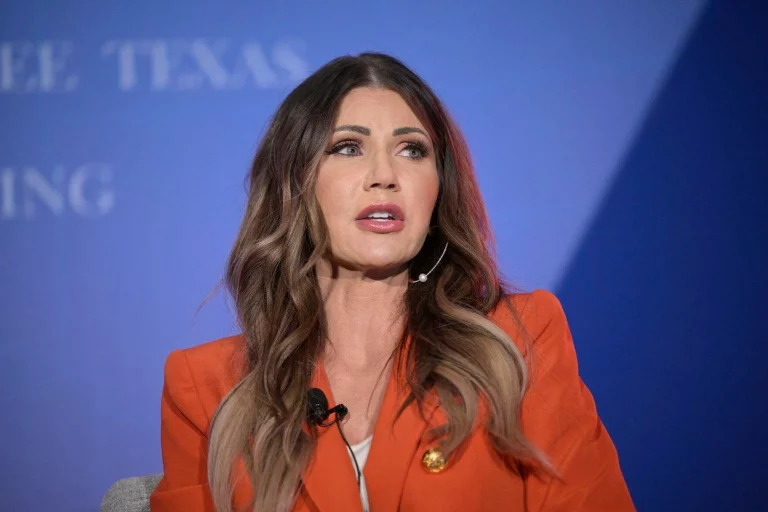
Kristi Noem Claims Trump Administration is Speeding Up Naturalization at Unprecedented Levels

(José Niño, Headline USA)  Homeland Security Secretary Kristi Noem just revealed something that might surprise Donald Trump’s immigration restrictionist base: More people are becoming naturalized American citizens under this administration than ever before.

“More people are becoming naturalized under this administration than ever before,” Noem said during a Fox News interview this week. “More people are becoming citizens because we’re not just streamlining and building some processes back into our immigration policies.”

Noem framed the increased naturalization rates as a success story, arguing the administration has simultaneously added “integrity” to visa programs while processing applications more quickly. “Under the Trump administration, we’ve sped up our process and added integrity to the Visa programs,” she stated.

The DHS Secretary outlined the administration’s position following recent controversy over H-1B work visas. “We’re gonna keep using our visa programs. We’re just gonna make sure that they have integrity, that we’re actually doing the vetting of the individuals who come into this country,” Noem explained. 

She specified three requirements for visa and green card applicants: They must not support terrorist organizations, they must intend to work and live legally in the United States, and they must not back groups hostile to America.

Noem contrasted the current approach with the Biden administration, accusing the previous administration of having “let thousands of terrorists into this country” and opening “the southern border.” She claimed Biden officials “abused our asylum programs, abused our protective programs and visa programs, and we fixed all of it.”

The DHS Secretary offered effusive praise for Trump’s leadership. “It’s remarkable what President Trump has done, and it’s because he is a great leader. He’s a visionary,” Noem said. “This man is gonna go down as a legend in history as our greatest president ever.”

José Niño is the deputy editor of Headline USA. Follow him at x.com/JoseAlNino 

Feds Launch Initiative to Conduct Welfare Checks on Unaccompanied Minors

(The Center Square) U.S. Immigration and Customs Enforcement has launched an initiative with state and local law enforcement 287(g) partners to locate roughly 450,000 “unaccompanied alien children” (UACs) who were illegally smuggled into the U.S. during the Biden administration and placed with unvetted sponsors.

The new UAC Safety Verification Initiative is focused on protecting UACs from sexual abuse and exploitation through a broader collaboration among 287(g) partners

“The primary focus of this initiative is to conduct welfare checks on these children to ensure that they are safe and not being exploited,” the Department of Homeland Security said.

The UAC Safety Verification Initiative launched in Florida on Nov. 10 and is rolling out in other states and localities nationwide.

So far, the Trump administration has located more than 24,400 UACs through visits and door knocks, DHS said in a Friday news release.

According to federal law, the care of UACs falls under the Office of Refugee Resettlement (ORR), within the U.S. Department of Health and Human Services’ Administration for Children and Families. For years, under multiple administrations, federal and state investigations have found UACs are being abused through the program, including at ORR-contracted facilities nationwide.

Under the Biden administration, ORR placed UACs with unvetted sponsors, background checks weren’t performed, UACs were released to alleged gang members, human traffickers, non-family members and sent to non-residential addresses, federal inspector general audits and a Florida grand jury found.

Inspector general reports uncovered that ICE officers were “incapable of monitoring” UACs released into the U.S., expressing alarm because “missing children are ‘considered at higher risk for trafficking, exploitation, or forced labor.’”

ORR initially lost track of roughly 100,000 children, according to the reports. That number later increased three-fold; UACs were being exploited in child labor situations, federal investigations found, and still are, most recently in Chicago, The Center Square reported.

Texas, California and Florida have historically received the most UACs; the number exponentially increased every year under the Biden administration, The Center Square first reported.

Many sponsors are illegally in the country, a U.S. House Judiciary report found, The Center Square reported.

DHS listed examples of recent ICE arrests of sponsors in multiple states. Each sponsor has been living in the U.S. illegally; many have criminal histories of crimes against children.

Despite their criminal histories, the illegal foreign nationals filled out applications with ORR, were approved as sponsors and took in UACs, authorities found.

In Arizona, ICE arrested a Guinean national who’d been arrested by Arizona law enforcement for felony aggravated assault.

In Florida, ICE arrested Hondurans convicted by Florida authorities of assault and arrested by Florida law enforcement on charges of larceny, fraud, and counterfeiting, and attempted robbery with a weapon. They also arrested a Guatemalan who’d been arrested by Florida law enforcement for felony hit and run and driving without a license.

In Georgia, ICE arrested a Guatemalan sponsor convicted of domestic violence; in Maryland, ICE arrested a Guatemalan who’d been arrested by Maryland law enforcement for rape of a UAC in his care.

In Massachusetts, ICE arrested an Ecuadorian for enticement of a child under 16 and possession of child sexual abuse material; in Michigan, ICE arrested a Salvadoran convicted of drug trafficking.

In Nevada, ICE arrested a Honduran who’d been arrested by Nevada law enforcement for assault; in New Jersey, ICE arrested a Guatemalan wanted for attempted aggravated homicide; in New York, ICE arrested a Venezuelan arrested by New York law enforcement for prostitution, possession of marijuana, and failure to appear.

In North Carolina, ICE arrested a Guatemalan who’d been arrested by North Carolina law enforcement on an attempted murder charge; in Ohio, ICE arrested a Honduran convicted on a felony weapon offense; in Pennsylvania, ICE arrested a Honduran previously deported who illegally reentered and was then arrested for aggravated assault with a deadly weapon.

In Texas, ICE arrested a Guatemalan for human trafficking and statutory rape. The 14-year-old UAC was pregnant with the sponsor’s baby.

Human trafficking of minors in Texas is commonly associated with sedating children with TCH- or melatonin-laced gummies or food to keep them quiet, using U.S. documents to claim UACs are their own, and kidnapping and selling infants, The Center Square reported.

Instead of ending the ORR UAC program plagued with decades of evidence of abuse, Congress allocated billions of dollars to continue funding it, The Center Square reported.

DOJ to Investigate Epstein-Clinton Ties

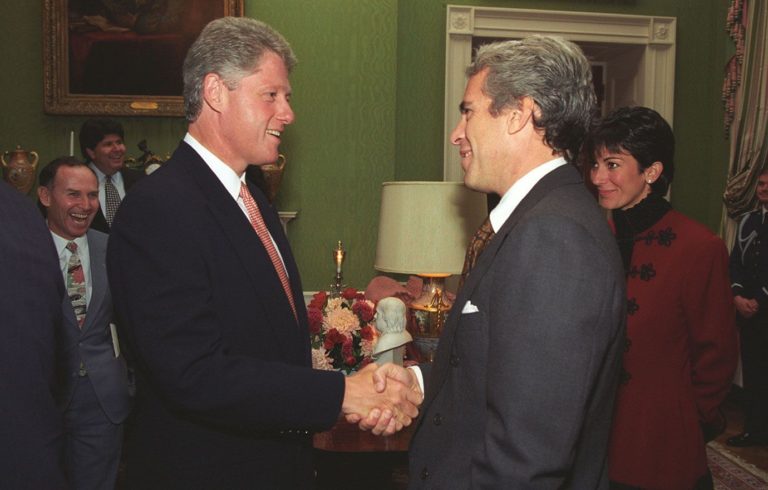
(Headline USAAttorney General Pam Bondi said Friday that she has ordered a top federal prosecutor to investigate sex offender Jeffrey Epstein’s ties to Trump political foes, including former President Bill Clinton.

Bondi posted on X that she was assigning Manhattan U.S. Attorney Jay Clayton to lead the probe, capping an eventful week in which congressional Republicans released nearly 23,000 pages of documents from Epstein’s estate and House Democrats seized on emails mentioning Trump.

Trump, who was friends with Epstein for years, didn’t explain what supposed crimes he wanted the Justice Department to investigate. None of the men he mentioned in a social media post demanding the probe has been accused of sexual misconduct by any of Epstein’s victims.

Hours before Bondi’s announcement, Trump posted on his Truth Social platform that he would ask her, the Justice Department and the FBI to investigate Epstein’s “involvement and relationship” with Clinton and others, including former Treasury Secretary Larry Summers and LinkedIn founder and Democratic donor Reid Hoffman.

Trump, calling the matter “the Epstein Hoax, involving Democrats, not Republicans,” said the investigation should also include financial giant JPMorgan Chase, which provided banking services to Epstein, and “many other people and institutions.”

“This is another Russia, Russia, Russia Scam, with all arrows pointing to the Democrats,” the Republican president wrote, referring to special counsel Robert Mueller’s investigation of alleged Russian interference in Trump’s 2016 election victory over Bill Clinton’s wife, former Secretary of State Hillary Clinton.

Asked later Friday whether he should be ordering up such investigations, Trump told reporters aboard Air Force One: “I’m the chief law enforcement officer of the country. I’m allowed to do it.”

In a July memo regarding the Epstein investigation, the FBI said, “We did not uncover evidence that could predicate an investigation against uncharged third parties.”

Adapted from reporting by the Associated Press


Major Landlord Owned by Israeli Firm Evicts Tenants at 9 Times National Rate

(José Niño, Headline USA) A corporate landlord owned by one of Israel’s largest companies has intentionally displaced an estimated 30,000 American tenants while its parent corporation does business in illegal Israeli settlements that have driven thousands of Palestinians from their homes.

According to Thomas Birmingham of The Nation, American Landmark, a major corporate landlord with roughly 34,000 units concentrated in 111 complexes across eight Southern states, is now America’s 34th largest landlord. 

A review by The Nation and Type Investigations of thousands of eviction records reveals the company files eviction notices at extraordinary rates. At Conrad at Concord Mills in Charlotte, American Landmark files evictions at nine times the national average.

The company’s CEO Joseph Lubeck confirmed that displacement is an intentional strategy in an interview that The Nation conducted with him. “When we take over a property, the first analysis we do is how much is the rent going to go up, and how many can afford to stay,” Lubeck said. “We typically raise the rent anywhere from $100 to $400, so some people are absolutely displaced.”

Based on company modeling, Lubeck said only “55 percent of existing residents stay,” while 45 percent “move out.” With roughly 70,000 tenants, that means around 30,000 people left their homes after American Landmark acquisitions.

These displaced American tenants share an unexpected connection with Palestinians living under Israeli occupation. 

As Birmingham reported, American Landmark is almost entirely owned by Elco, one of Israel’s largest corporations. For years, Elco’s Electra Super Brand has done extensive business in Israeli settlements in the occupied West Bank and East Jerusalem, which drive thousands of Palestinians from their homes and are considered illegal under international law.

The United Nations Office of the High Commissioner for Human Rights cited Electra Ltd. in its database of over 150 companies doing business in settlements. Birmingham highlighted that in 2024, the American Friends Service Committee listed Electra among companies that “directly facilitate and enable human rights violations and violations of international law as part of Israel’s prolonged military occupations, apartheid, and genocide.”

Electra maintains deep ties to the Israeli military. Electra Power has been “the exclusive gas supplier of the Israel Defense Forces and the country’s Police and Prison systems services for many years,” according to the American Friends Service Committee. In 2024, during the Gaza genocide, Electra Power’s CEO said on an earnings call, “The IDF is a major client. We stand shoulder to shoulder with them in facing challenges and fulfilling missions.”

The Nation and Type Investigations identified at least 29 American Landmark properties where eviction filing rates exceeded twice the national average in early 2025. At Celsius Apartment Homes in Charlotte, the rate reached 82 percent. One complex in Houston recorded 70 percent, while another in Summerville, South Carolina hit 58 percent.

Tenants reported surprise fees totaling at least $150 monthly, including a mandatory $100 technology package, according to interviews The Nation held. When tenants fall behind on rent, American Landmark disconnects internet and cable while continuing to charge for these services, then adds a $75 reconnection fee.

By December 2024, two of American Landmark’s investment funds had distributed a combined $890 million to investors, including money sent back to Electra itself.

José Niño is the deputy editor of Headline USA. Follow him at x.com/JoseAlNino 

Trump Shooter Thomas Crooks Linked to Neo-Nazi Terrorist Group

(Ken Silva, Headline USA) Conservative journalist Tucker Carlson released a bombshell report Friday about Thomas Matthew Crooks, the man who allegedly tried assassinating Donand Trump on July 13, 2024—revealing new information about Crooks’s internet profile, including that he may have been talking to someone from a foreign neo-Nazi terrorist group.

Carlson said he received a trove of internet data on Crooks from a source who was able to track down his YouTube account linked to his email, [email protected]. The source was also able to link the Crooks email to a dozen other of his accounts, including two foreign encrypted emails – [email protected] and [email protected] – as well as his GoogleDrive, SnapChat, Venmo, PayPal, Zelle, Discord, Quizlet, Chess.com, and two Quora accounts. Some of these accounts have already been reported on by Headline USA, which was the first publication to release his community college internet history.

While some of those accounts have been totally wiped from the internet, Carlson’s source was able to obtain all of Crooks’s YouTube comments from 2019 and 2020, when he was between 15 and 17 years old.

At first, Crooks’s posts reflected that he was a hardcore right-winger. For instance, on July 19, 2019, he posted that “Ilhan Omar and others are invaders and should honestly be killed and their dead bodies sent back.”

He also said on July 20, 2019, that Trump was the “literal definition of patriotism,” and that anti-Trump immigrants and congresswomen deserve a “quick, painful death.”

However, in early 2020 Crooks seems to have flipped. Commenting on a January 2020 video about Trump’s first impeachment, he said the only reason the public knows about the scandal is because “Trump’s stupidity.”

By the time the COVID-19 pandemic was in full swing that year, Crooks was supporting policies such as quarantining and mail-in voting.

“It seems that you people don’t understand that sometimes public safety comes before your personal rights,” he said in April 2020, commenting on a video about a World Health Organization announcement.

“OK here’s what I don’t understand, voting by mail will help more people vote so in fact Republicans should be standing up for that why aren’t they?” he commented a month later.

By August, Crooks’s tone was downright militant. In one comment, he described tactics for fighting the government.

“[In my opinion] the only way to fight the gov is with terrorism style attacks, sneak a bomb into an essential building and set it off before anyone sees you, track down any important people/politicians/military leaders etc and try to assassinate them,” he wrote on Aug. 4, 2020.

“Any sort of head to head fight is suicide and even ambush/surprise attacks likely aren’t going to end well.”

Crooks wasn’t alone in his discussion. Another YouTube user, @Willy_Tepes, was engaging with him.

“If a gun and a badge is all that is needed, then authority obviously comes from the barrel of a gun. We have more guns than they do 😉 There is no way we can avoid a war at this point, so you better just get used to the idea,” the @Willy_Tepes account said to Crooks.

Carlson said he looked into the @Willy_Tepes account, and found that it mentioned on a foreign Antifa site that tracks neo-Nazi activities. The @Willy_Tepes account is reportedly ran by a Norwegian named Bjørn Leif Hjelmerud, a member of the neo-Nazi group Nordic Resistance Movement.

According to a Google translation of the Antifa website, Hjelmerud has “previously stored firearms that have allegedly been seized by the police. He has an interest in homemade weapons and he enjoys ‘experimenting.’ Hjelmerud is missing two fingers on his right hand. Whether this is related to his interest in weapons and experiments is currently unclear. In any case, it is a sensitive matter for Hjelmerud, in photos he often has his hand in his pocket, or he wears a glove on his right hand.”

On June 14, 2024—less than a month before Crooks’s death—the Biden administration’s State Department designated the Nordic Resistance Movement as a foreign terrorist organization.

It’s unclear whether the @Willy_Tepes account that talked to Crooks is the same person as the Nordic neo-Nazi. Later on Friday, FBI Director Kashyap Patel posted on Twitter/X in response to Carlson’s report. He continues to insist that the alleged would-be assassin acted alone.

“The FBI’s investigation into Thomas Crooks identified and examined over 20 online accounts, data extracted from over a dozen electronic devices, examination of numerous financial accounts, and over 1,000 interviews and 2000 public tips,” Patel said.

“The investigation, conducted by over 480 FBI employees, revealed Crooks had limited online and in person interactions, planned and conducted the attack alone, and did not leak or share his intent to engage in the attack with anyone.”

Ken Silva is the editor of Headline USA. Follow him at x.com/jd_cashless.

Fetterman Hospitalized for Heart Episode

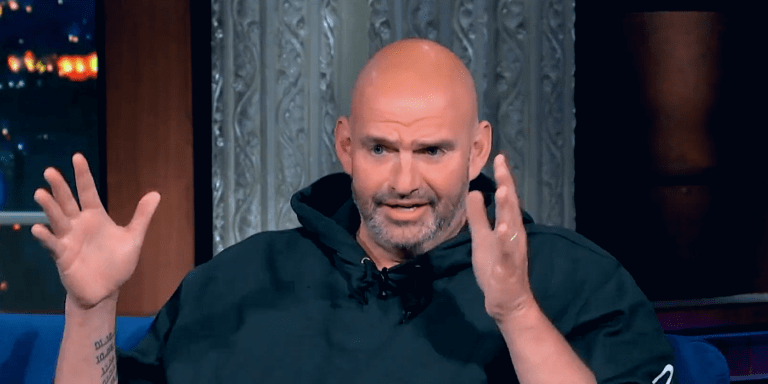
(Christen Smith, The Center Square) Pennsylvania Democratic U.S. Sen. John Fetterman remains under observation at a Pittsburgh-area hospital following a heart episode early Thursday.

The senator’s spokesman posted to his personal social media account, describing how Fetterman became light-headed, fell and injured his face while on a morning walk after suffering a “ventricular fibrillation flare-up.” He is under “routine observation” while doctors revamp his medication regimen.

“If you thought my face looked bad before, wait until you see it now!” Fetterman said, per his spokesman.

It’s just the latest in a string of health challenges the former Braddock mayor and Pennsylvania lieutenant governor has endured after having a major stroke while on the campaign trail in 2022. The lingering effects impacted his audio and language processing skills, making the first few months on Capitol Hill stressful.

In February 2023, Fetterman checked into Walter Reed National Military Center for six weeks for a severe bout of clinical depression.

In the years since, the senator’s mental health has been the subject of several reports, including an Associated Press leak earlier this year that claims he had an “outburst” while meeting with representatives from Pennsylvania teachers.

The reporting says that “Fetterman began repeating himself, shouting and questioning why ‘everybody is mad at me,’ ‘why does everyone hate me, what did I ever do’ and slamming his hands on a desk,” during a meeting with Pennsylvania State Education Association President Aaron Chapin and teachers representing the union.

The source who was briefed on the matter also indicated that a staffer ended the meeting and “broke down crying” in the hallway.

It wasn’t the first sign of trouble from Fetterman’s staff. The week prior, New York magazine published a troubling article quoting a letter from his former chief of staff, Adam Jentleson, who said he was worried about the senator and believed there were indications that he had swerved from his medical treatment plan.

Some say a high-speed crash he caused in Maryland last yesr was evidence of a larger pattern of reckless and erratic behavior, while many have questioned his fitness for office. Long before health issues surfaced, Fetterman was a divisive and iconoclastic figure, straining against political norms.

Fetterman responded to the piece in New York magazine by calling it a “hit piece” and said the meeting with teachers was “a spirited conversation about our collective frustration with the Trump administration’s cuts to our education system.”

Jan. 6 Panel Cost Twice Previous Estimates, Hiring TV Producers to Dramatize Attack

(Mark Stricherz, The Center Square) The U.S. House select committee that investigated the Jan. 6, 2021, attack on the U.S. Capitol cost almost twice as much as previously reported, including spending taxpayer funds for TV news producers and documentary filmmakers to create videos dramatizing its case against President Donald Trump, an investigation by The Center Square found. 

The Washington Post reported that the panel had a projected budget of $9.3 million in September 2022. According to a review of U.S. House disbursements, the select committee spent $17.4 million.

U.S. Rep. Troy Nehls, a Texas Republican who is on a new committee appointed by House Speaker Mike Johnson to investigate security failures on Jan. 6, said the original committee didn’t spend taxpayer money properly after The Center Square told him about the final costs of the panel’s investigation. 

“They wasted it, wasted it,” he said walking into his House office Wednesday before referring to two former GOP members of the panel. “That was a sham committee. (Liz) Cheney. (Adam) Kinzinger. It was a joke.” 

Dan Savickas, president of policy and government affairs at the Taxpayers Protection Alliance, a non-partisan nonprofit, said more than doubling of the budget was not appropriate.

“The median budget for a House committee is $6 million a year, so for the Jan. 6 committee to spend $17.4 million is excessive,” he told The Center Square in an interview. “And anytime a committee is grandstanding, specifically Jan. 6, to fit a narrative instead of holding people accountable and getting the story is bad. That’s why they hired documentary filmmakers.”

Rep. Bennie Thompson, a Mississippi Democrat and chair of the committee, declined an interview request.

“The work of the committee speaks for itself, and the chairman continues to stand by it,” Yasmine Brown, a press secretary and communications director, wrote in an email to The Center Square. 

An undetermined amount was spent on three dozen contractors and consultants. Many worked for a few months or less than a year, rather than all 18 months like full-time staff. They are listed in the committee’s report but do not show up in a list of expenditures the U.S. House posted online disclosing its spending.

Among them were the former president of ABC News, a longtime producer for ABC’s Nightline, an Emmy-award winning daily TV news producer, and a former documentarian for the Oprah Winfrey Network.  

“I was part of the first ever team of former television journalists brought in by the Select Committee to Investigate the January 6th Attack on the United States Capitol to produce the historic live hearings laying out the committee’s evidence to the country,” Melinda Arons, a former Nightline senior producer, wrote on her LinkedIn page.  

Brian Sasser, an Emmy-award winning daily TV news producer, noted on his LinkedIn page that his job was to “(m)anage constantly evolving rundown and scripts for live hearings” of the select committee and to “(c)oordinate with various U.S. House staffers and Committee investigators to ensure accuracy of all scripting.” 

James Goldston worked for ABC News for 17 years, including more than one year as the senior executive producer for Good Morning America and seven years as its president, according to his LinkedIn page. Ryan Mayers said on his LinkedIn page that he has been a freelance filmmaker for seven years and edited the documentary and interview series Oprah’s Next Chapter for the Oprah Winfrey Network. 

Hyatt Mamoun described herself on LinkedIn as an award-winning filmmaker with a focus on environmental design. “With a passion for conservation through education, I believe that through educating as many people as possible through the entertainment of film, we can change our future,” she wrote.

Jan. 6 different from other committees

Previous committees and commissions examined the Watergate scandal in the early-to-mid 1970s, the Jonestown massacre of 1978, and the Islamic terrorist attacks on September 11, 2001. They hired or used only congressional staff, lawyers, and investigators.  

By contrast, the Jan. 6 committee hired more than congressional staff, lawyers, and investigators. They also hired freelancers with backgrounds in producing and editing graphics as well as video and audio footage – prominent features of the committee’s 10 nationally televised hearings from June to December 2022.

The committee’s records do not disclose the amount the panel paid for each freelancer. 

Among the contracting companies was Innovative Driven Inc., an Arlington, Virginia-based firm that specializes in forensics, electronic data discovery and project management. The privately held company received $2.4 million. A company spokesperson did not respond to a request for comment. 

Another recipient was Polar Solutions Inc., a Gaithersburg, Maryland-based investigative firm of money laundering and cryptocurrency crimes. The company received $2.7 million. Polar Solutions’ president, Arthur Ahrens, declined to comment when called by The Center Square. 

Full-time committee staffers received more money in personal and other compensation than regular members of Congress, a tradition in line with recent history. While rank-and-file members earn $174,000 a year, Timothy J. Heaphy, the committee’s chief investigative counsel, was paid almost $190,00 in personal and other compensation in 12 months.

Election results challenged

The committee was formed after former Vice President Joe Biden, a Democrat, defeated President Donald Trump, a Republican, in the 2020 election. With 44,000 votes separating the candidates in Georgia, Arizona, and Wisconsin, Trump contested the results. 

He claimed voting fraud and irregularities were responsible for his margin, but 62 of his 63 legal challenges failed in court. On Jan. 2, Trump called Georgia Secretary of State Brad Raffensberger to help him “find 11,780 votes” so he could be declared the winner in the Peach State. 

On January 6, 2021, the day Congress gathered at the Capitol to certify Biden the winner, Trump led a “Stop the Steal” rally at the Ellipse in Washington at which more than 28,000 people passed through security. 

More than 2,000 broke into the Capitol, including Ashli Babbitt, who was shot to death by a Capitol Police officer while attempting to break into the House floor. Capitol Police Officer Brian Sicknick collapsed and died one day after the attack, while four other police officers at the Capitol that day died of suicide half a year later. 

The violence represented a break with tradition in which presidents transfer power to their successor peacefully. On Jan. 7, 2021, Trump conceded he would not serve a consecutive second term. 

That June, the House of Representatives voted to create a select committee, to be composed of 11 members “to investigate and report on the causes, circumstances, and causes” of the violent attack.”

The panel was controversial from the start. 

Previous select committees had members selected by leaders from both parties. House Minority Leader Kevin McCarthy, a Republican, nominated five House Republicans. In a break with tradition, then-Speaker Nancy Pelosi, a Democrat, rejected two of the members. 

Instead of suggesting alternatives, McCarthy declined to cooperate. Pelosi, then, chose two Republicans as replacements, Reps. Liz Cheney of Wyoming and Adam Kinzinger of Illinois. Both were outspoken critics of Trump for his conduct on Jan. 6.  

The other seven members of the nine-member panel were Democrats. The committee hired more than 60 full-time staff members, many with backgrounds in intelligence and investigations, and conducted more than 1,000 interviews in 18 months. 

Among the committee’s findings was that White House lawyers and senior Department of Justice officials told Trump early on that his claims of election fraud were baseless.

“From the beginning, Donald Trump’s fraud allegations were concocted nonsense, designed to prey upon the patriotism of millions of men and women who love our country,” the report concluded.

In addition, the committee found that Trump’s effort to overturn the election was multi-layered. He worked with a “handful of others” to prepare Trump slates of Trump electors in seven states that Biden won. He raised roughly $250 million between the election and Jan. 6 to support his claims. And as the attack on the Capitol unfolded, Trump watched the violence on television and did not tell his supporters to desist for 187 minutes.

Police without “sufficient assets”

At the same time, the Jan. 6 select committee was different from the Senate Watergate Committee of 1973 and 1974 and the 9-11 Commission, and not just because the panel hired contractors and consultants with backgrounds in television.

The panel also examined only one part of that day and the events leading up to it – the role of Trump, his administration, and supporters. In its report, the panel concluded Trump was “the central cause” of an attempted insurrection. 

In addition, the committee referred four criminal charges against Trump to the Department of Justice. While the Justice Department convicted more than 900 people for their actions on Jan. 6, special counsel Jack Smith was unable to prosecute Trump after Trump won the presidential election last year, bowing to longstanding department custom to not prosecute a sitting president. 

Further, the Jan. 6 committee devoted less attention to the role of federal, state, and local law enforcement in failing to deter or stop the attack. 

“Capitol police leadership did not have sufficient assets in place to address the violent and lawless crowd,” the report concluded.  

The committee’s conclusion has come into question.  

In an op-ed for Politico in January 2023, Georgetown Professor Donell Harvin, who oversaw the District of Columbia’s assessment of threat intelligence, wrote that “(t)he events of Jan. 6 represented the most telegraphed and predictable attack on the homeland in history.” Further, Harvin noted that the committee devoted only 44 pages in the annexes to the security and intelligence issues, roughly 5% of the 845-page report. 

In 2022, Denver L. Riggleman, a former GOP U.S. representative with a background in military intelligence, wrote in Esquire magazine that the committee group in charge of investigating law enforcement’s response, known as the “Blue team,” occupied a lower place in the panel’s pecking order. 

“The sensitivity of their investigation and the multiple moving parts – House leadership, the National Guard, DC and Capitol police, and the Pentagon – created a politically explosive finger-pointing extravaganza,” Riggleman wrote. “Several witnesses they tried to interview remained elusive, and the committee gave Blue no means to compel testimony.” 

Riggleman received at least $97,047 in personal and other compensation as a senior technical advisor to the committee for 10 months, House spending data shows. 

A February 2023 study from the General Accountability Office concluded that the attack on the Capitol cost taxpayers $2.7 billion. Most of the costs were for Capitol police and other law enforcement.  

In September, House Speaker Johnson, a Louisiana Republican, named eight members – five Republicans, three Democrats – to a select subcommittee under the authority of the House Judiciary Committee to “conduct a thorough review of the security failures that occurred on Jan. 6.”

The subcommittee’s chairman, U.S. Rep. Barry Loudermilk, a Georgia Republican, declined comment. Kinzinger, Cheney and other members of the committee did not respond to The Center Square’s requests for comment.

Epstein Emails Reveal Ties to Influential Figures Even After Conviction

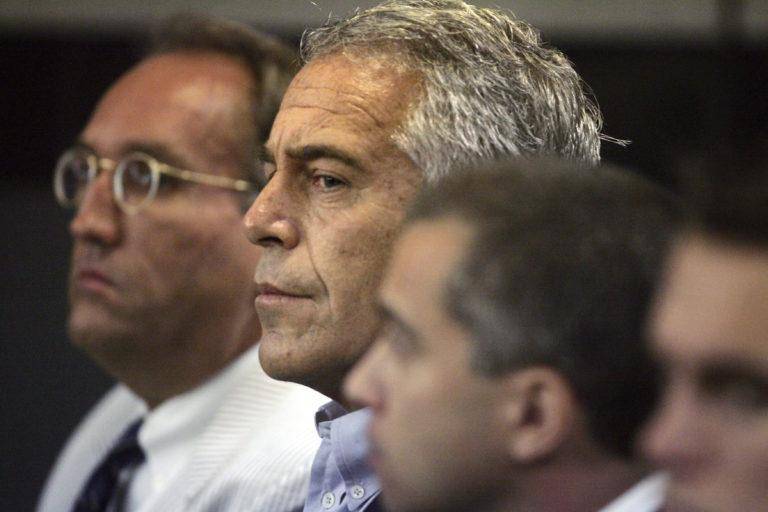
(Headline USA) Thousands of documents released by the House Oversight Committee offer a new glimpse into what Jeffery Epstein’s relationships with business executives, reporters, academics and political players looked like over a decade.

They start with messages he sent and received around the time he finished serving his Florida sentence in 2009 and continue until the months before his arrest on federal sex trafficking charges in 2019.

During that time, Epstein’s network was eclectic, spanning the globe and political affiliations: from the liberal academic Noam Chomsky to Steve Bannon, the longtime ally of President Donald Trump.

The emails don’t implicate his contacts in those alleged crimes. They instead paint a picture of Epstein’s influence and connections over the years he was a registered sex offender.

Trump posts social media complaints about Epstein focus, saying ‘I have a Country to run!’

The president kicked off his Friday with posts on social media complaining about Democratic lawmakers focusing on thousands of documents from Epstein’s estate released this week by the House Oversight Committee.

Trump called it a “hoax” and a distraction from Democrats’ policies and the “EMBARASSMENT” of the government shutdown and decried “Weak Republicans” who “have fallen into their clutches because they are soft and foolish.” Trump seemed to be referring to the House Republican who are joining Democrats in a push to release files related to the sex trafficking investigation into Epstein.

Trump said Epstein is “not the Republican’s problem” and “don’t waste your time with Trump. I have a Country to run!”

Epstein kept a diverse political network

Epstein emailed current and former political figures on all sides, sending news clips and discussing strategy or gossip often in short, choppy emails laden with spelling and grammatical errors.

In several emails in 2018, Epstein advised Bannon on his political tour of Europe that year after Bannon forwarded Epstein a news clip that the German media underestimated Bannon and that he was “As Dangerous as Ever.”

“luv it,” Epstein responded.

Epstein wrote that he’d just spoken to “one of the country leaders that we discussed” and that “we should lay out a strategy plan. . how much fun.”

Just a few months earlier, Epstein was insulting Trump — whose movement Bannon was a representative of — in emails to Kathryn Ruemmler, the former White House counsel under President Barack Obama.

Ruemmler sent a message to Epstein calling Trump “so gross.” A portion of that message was redacted, but Epstein replied, “worse in real life and upclose.”

Epstein said Trump ‘knew about the girls,’ but it’s unclear what he meant

Trump and Epstein were friends for years but at some point had a falling out, even before underage girls started to come forward to accuse Epstein of sexual abuse.

Journalists sometimes reached out to Epstein, perhaps hoping he might have dirt to spill on Trump. One of those writers was Michael Wolff, who has written extensively about Trump. In a 2019 email to Wolff, Epstein mentioned that one of his best-known accusers, Virginia Giuffre, had worked at Trump’s Mar-a-Lago club.

“She was the one who accused Prince Andrew,” Epstein wrote.

Giuffre, who died by suicide earlier this year, had said that Epstein’s longtime companion Ghislaine Maxwell recruited her from Mar-a-Lago to give sexualized massages to Epstein. And Trump had long claimed that he banned Epstein from coming to Mar-a-Lago.

Epstein said in an email to Wolff that Trump hadn’t asked him to resign from the club, because he hadn’t been a member.

“Of course he knew about the girls as he asked ghislaine to stop,” Epstein added.

Epstein emails reveal enduring ties with influential figures even after his sex crime conviction

By the time Epstein pleaded guilty in 2008 to soliciting prostitution from an underage girl, he had established an enormous network of wealthy and influential friends. Emails made public this week show the crime did little to diminish the desire of that network to stay connected to the billionaire financier.

Thousands of documents released by the House Oversight Committee on Wednesday offer a new glimpse into what Epstein’s relationships with business executives, reporters, academics and political players looked like over a decade.

During that time, Epstein’s network was eclectic, spanning the globe and political affiliations: from the liberal academic Noam Chomsky to Steve Bannon, the longtime ally of President Donald Trump.

Some reached out to support Epstein amid lawsuits and prosecutions, others sought introductions or advice on everything from dating to oil prices. One consulted him on how to respond to accusations of sexual harassment.

Epstein was charged with sex trafficking in 2019, and killed himself in jail a month later. Epstein’s crimes, high-profile connections and jailhouse suicide have made the case a magnet for conspiracy theorists and online sleuths seeking proof of a cover-up.

Adapted from reporting by the Associated Press

Opioid Settlement with OxyContin Maker Purdue and Sackler Family Could End Years of Legal Battles

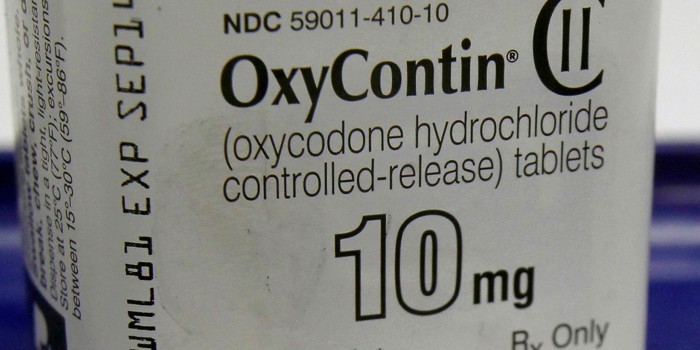
(Headline USA) Lawyers representing OxyContin maker Purdue Pharma, cities, states, counties, Native American tribes, people with addiction and others across the U.S. delivered a nearly unanimous message for a bankruptcy court judge Friday: Approve a plan to settle thousands of opioid-related lawsuits against the company and members of the Sackler family who own it.

If U.S. Bankruptcy Judge Sean Lane abides, it will close a long chapter — and maybe the entire book — on a legal odyssey over efforts to hold the company to account for its role in an opioid crisis connected to 900,000 deaths in the U.S. since 1999, including deaths from heroin and illicit fentanyl.

Friday’s closing arguments were wrapping up a three-day hearing over the bankruptcy plan for the company, which filed for protection six years ago as it faced lawsuits with claims that grew to trillions of dollars.

Marshall Huebner, a lawyer for Purdue, told the judge that he wishes he could “conjure up $40 trillion or $100 trillion to compensate those who have suffered unfathomable loss.” But without that possibility, he said: “The plan is entirely lawful, does the greatest good for the greatest number in the shortest available timeframe.”

The saga has been emotional and full of contentious arguments between the many groups that took Purdue to court, often exposing a possible mismatch between the quest for justice and the practical role of bankruptcy court.

The U.S. Supreme Court rejected a previous deal because it said it was improper for Sackler family members to receive immunity from lawsuits over opioids. In the new arrangement, entities who don’t opt into the settlement can sue them. Family members are collectively worth billions, but much of their assets are held in trusts in offshore accounts that would be hard to access through lawsuits.

This time, the government groups involved have reached an even fuller consensus and there’s been mostly subdued opposition from individuals. Out of more than 54,000 personal injury victims who voted on whether the plan should be accepted. just 218 said no. A larger number of people who are part of that group didn’t vote.

Unlike with other proceedings, there were no protests outside the courthouse.

A handful of objectors spoke Thursday at the hearing, sometimes interrupting the judge. Some said that only the victims, not the states and other government entities, should receive the funds in the settlement. Others wanted the judge to find the members of the Sackler family criminally liable — something Lane said is beyond the scope of the bankruptcy court, but that the settlement doesn’t bar prosecutors from pursuing.

A Florida woman whose husband struggled with addiction after being given OxyContin following an accident told the court that the deal isn’t enough.

“The natural laws of karma suggest the Sacklers and Purdue Pharma should pay for what they have done,” Pamela Bartz Halaschak said via video.

A flood of lawsuits filed by government entities against Purdue and other drugmakers, drug wholesalers and pharmacy chains began about a decade ago.

Most of the major ones have already settled for a total of about $50 billion, with most of the money going to fight the opioid crisis. There’s no mechanism for tracking where it all goes or overarching requirement to evaluate whether the spending is effective. Those hit the hardest generally haven’t had a say.

The Purdue deal would rank among the largest of them. Members of the Sackler family would be required to pay up to $7 billion and give up ownership of the company. None have been on its board or received payments since 2018. Unlike a similar hearing four years ago, none were called to testify in this week’s hearing.

The company would get a name change — to Knoa Pharma — and new overseers who would dedicate future profits to battling the opioid crisis. That could happen in the spring of 2026.

There are also some non-financial provisions. Certain members of the Sackler family would be required to give up involvement in companies that sell opioids in other countries.

Family members would also be barred from having their names added to institutions in exchange for charitable contributions. The name has already been removed from museums and universities.

And company documents, including many that would normally be subject to lawyer-client privilege, are to be made public.

Unlike the other major opioid settlements, individuals harmed by Purdue’s products would be in line for some money as part of the settlement. About $850 million would be set aside for them, with more than $100 million of that amount carved out to help children born dealing with opioid withdrawal.

All of money for the individual victims would be delivered next year. It would take up to 15 years for governments to receive their full allocations.

About 139,000 people have active claims for the money. Many of them, however, have not shown proof that they were prescribed Purdue’s opioids and will receive nothing. Assuming about half of the individual claimants would qualify, lawyers expect that those who had prescriptions for at least six months would receive about $16,000 each and those who had them more briefly would get around $8,000, before legal fees that would reduce what people actually receive.

People will have until March 1 to agree not to sue the Sacklers and apply for the funds.

One woman who had a family member suffer from opioid addiction told the court by video Thursday that the settlement doesn’t help people with substance use disorder.

“Tell me how you guys can sleep at night knowing people are going to get so little money they can’t do anything with it,” asked Laureen Ferrante of Staten Island, New York.

Christopher Shore, a lawyer representing a group of individual victims, said in court Friday that the settlement is a better deal than taking on Sackler family members in court. “Some Sacklers are bad people,” he said, “but the reality is that sometimes bad people win in litigation.”

Most of the money is to go to state and local governments to be used in their efforts to mitigate damage of the opioid epidemic. Overdose death numbers have been dropping in the past few years, a decline experts believe is partly due to the impact of settlement dollars.

Adapted from reporting by the Associated Press