

Report Finds UC San Diego Freshmen Not Prepared for College-Level Math, Writing classes

(The Center Square) A new report by University of California, San Diego found freshmen are nowhere near ready for college math and writing classes.

The problem isn’t isolated to new students at the southernmost University of California campus, either. The report by the university’s Academic Senate Working Group on Admissions shows that this is a persistent problem at most UC campuses.

“Admitting large numbers of underprepared students risks harming those students and straining limited instructional resources,” the report reads. “We can only help so many students, and only when the gaps they need to overcome are within reach.”

According to the report, the number of freshmen at UC San Diego who did not meet middle-school proficiency standards in mathematics increased nearly 30 times between 2020 and 2025, despite students having taken the required high school math classes.

The report goes on to say that in 2024, two out of five students who needed to take remedial math classes also have to take remedial writing classes.

“UC San Diego is proud to be a leading public university that serves not only the privileged few but the full spectrum of California’s population,” the report goes on to say. “If we take seriously our mission as an engine of social mobility, we must be prepared to support students who have been underserved by their prior schooling. But our capacity is not limitless. We can only help so many students, and only when the gaps they need to overcome are within reach.”

The report’s authors were not available to answer questions from The Center Square on Friday. Other officials who work at UC San Diego also did not respond to The Center Square’s request for comment.

Despite the gap between the student proficiency in math and writing and what is required of them to be successful in college, the California Department of Education issued a press release on Thursday that show that across the state, high school graduation rates have risen, up to 87.5%, more than four points over the 2017 statewide rate. Notably, the department also claimed that college and career readiness went up by 3.1% statewide, reaching 51.7% across the state.

The press release accompanied the publication of the state’s 2025 School Dashboard, which the state publishes every year, reflecting high school graduation rates and other key information for schools, school districts, cities and counties across the state.

“Seeing modest improvement on every dashboard indicator should encourage us to deepen our investments in every child’s progress,” said Tony Thurmond, state superintendent of public instruction, in the press release. “We can see that strategies like community schools and literacy coaches are making a positive impact for the whole child. I am proud of our work to narrow persistent achievement gaps in student outcomes like graduation rate, and we must not rest until all students’ outcomes represent their brilliance and potential.”

The California Department of Education did not respond to calls or emails from The Center Square asking for comment about why high school graduation rates and college readiness rates are up when proficiency in college classes is down.

The UC San Diego report released this month also found that chief among the reasons freshmen aren’t prepared for college is how much learning outcomes dropped amongst children who attended high school during the COVID-19 pandemic. The elimination of using standardized tests like the Scholastic Aptitude Test (SAT), the American College Test (ACT) for college admissions, grade inflation and expanding college admissions to include students from under-resourced high schools have all contributed to the rising number of college students not being prepared for college, the report found.

No school district with at least one high school in the San Diego area replied to The Center Square’s requests for comment.

Another report, this one compiled by the Public Policy Institute of Californiaalso found that college students in California are, by and large, underprepared for higher education. Their April 2025 report shows that students were not as college-ready in 2024 than they were five years before, pointing to a drop of three points from 2019 to 2024.

“Academic preparation is key to college readiness. Students who score ‘Standard Met’ for both reading and math on the grade 11 exams are defined as college ready,” the Public Policy Institute report reads. “In 2024, only 22% of California graduates were rated college ready based on their standardized test scores.”

Other colleges and universities throughout the state, including San Diego State University; the University of San Diego; University of California, Los Angeles; University of California, Berkeley; University of California, Santa Barbara; University of California, Irvine; University of California, Davis, and California Polytechnical State University, San Luis Obispo did not respond to The Center Square on Friday.

The California School Boards Association also did not respond to a request for comment.
Jeffrey Epstein’s Brother Clarifies ‘Trump Blowing Bubba’ Email

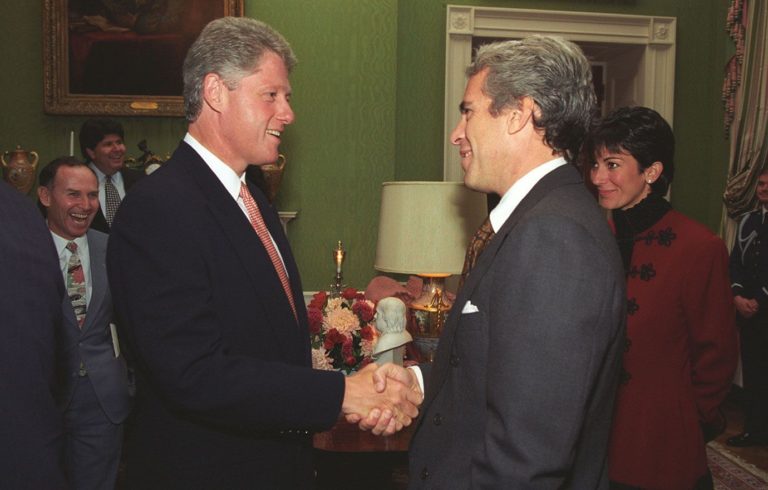
(Ken Silva, Headline USA) A newly released email from deceased sex trafficker Jeffrey Epstein’s brother, Mark Epstein, has taken the internet by storm for its salacious suggestion that “Putin has the photos of Trump blowing Bubba”—a comment that some have interpreted to mean that President Donald Trump gave a blowjob to former President Bill Clinton.

But Mark Epstein says the email’s not what it sounds like.

“Recently, emails from 2018 between my brother and me were made public. They were simply part of a humorous private exchange between two others and were never meant for public release or to be interpreted as serious remarks,” Mark said in a Saturday press release.

“For the avoidance of doubt, the reference to ‘Bubba’ in this correspondence is not, in any way, a reference to former President Bill Clinton. Any attempt to conflate that reference with President Clinton, or to read sweeping implications into them, misrepresents both the purpose and the tone of the original correspondence.”

The emails in question are from March 2018. On March 19 of that year, Mark emailed Jeffrey to ask how he was doing.

“What is your boy Donald up to now?” Mark asked, to which Jeffrey replied: “All good. Bannon with me.”

Jeffrey’s response was apparently referencing MAGA commentator Steve Bannon. It prompted Mark to tell Jeffrey: “Ask him if Putin has the photos of Trump blowing Bubba?”

Jeffrey then responded by saying, “And I thought I had tsuris”—a Yiddish word for aggravation. Mark further joked: “You and your boy Donnie can make a remake of the movie Get Hard.”

“You mean Donni TEE,” Jeffrey responded.

The email exchange, released as part of a trove of documents from the House Oversight Committee, has sparked widespread speculation online.

Conservative streamer Nick Fuentes—himself the subject to rumors of homosexuality—made light of the matter. He said he thinks Trump probably didn’t actually “blow Bubba,” but that the president’s chosen YMCA theme song doesn’t inspire confidence.

“The signs were there … His anthem is the YMCA by the Village People. That’s crazy that diehard Trump supporters call me gay, and then they went to the RNC where he was dancing with the Village People to the YMCA,” Fuentes joked. “Self-awareness much?”

Ken Silva is the editor of Headline USA. Follow him at x.com/jd_cashless.

Trump Rolls Back Tariffs on Over 200 Foods in Sharp Reversal

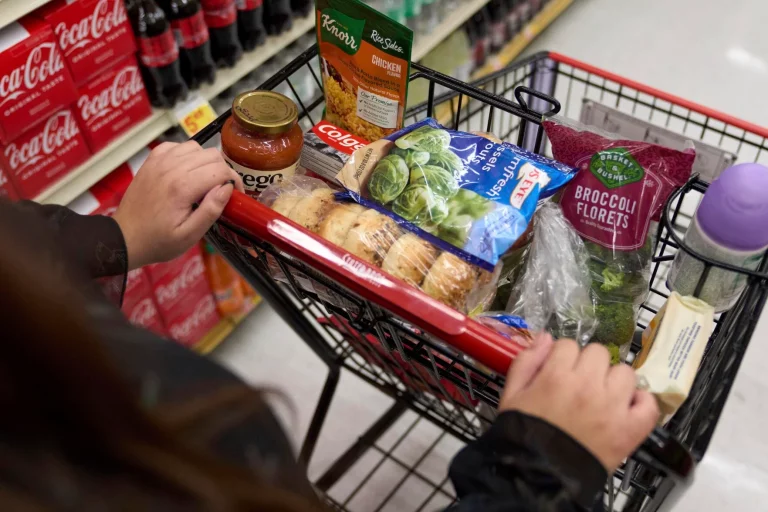
(The Center Square) Responding to Americans’ frustrations over high grocery prices, President Donald Trump issued an executive order Friday exempting more than 200 food products from tariffs.

“Certain qualifying agricultural products will no longer be subject to those tariffs, such as certain food not grown in the United States,” according to the White House.

The executive order includes coffee, beef and bananas. Prices for all three have increased significantly, at least in part due to Trump’s tariffs, which the exemptions are intended to address. The exemptions retroactively took effect at midnight Thursday.

The exemptions aim to address voter concerns about high prices. Trump promised in his 2024 campaign to lower grocery prices and other costs on his first day. Exit polls confirm voter frustration with ongoing high prices.

The White House said Trump’s progress on trade deals worldwide made it possible.

“Given the substantial progress in reciprocal trade negotiations – including the conclusion of 9 framework deals, 2 final agreements on reciprocal trade, and 2 investment agreements – current domestic demand for certain products, and current domestic capacity to produce certain products, among other things, President Trump has now determined that it is necessary and appropriate to further modify the scope of the reciprocal tariffs,” it noted.

White House spokesman Kush Desai said the groundwork for the reductions was laid back in September and additional exemptions are not expected.

“The Trump administration is committed to pursuing a nimble, nuanced, and multi-faceted strategy on trade and tariffs,” he said. “President Trump’s tariffs are levelling the playing field for American workers and securing trillions in investments to make and hire in America, and Americans can rest assured that our America First trade strategy will continue to help restore American Greatness.”

Trump upended global trade earlier this year by imposing a 10% base tariffs on imports from every country, plus additional specific nation-specific rates.

Some industry groups praised the decision, including FMI–The Food Industry Association,

“Today’s action should help consumers, whose morning cup of coffee will hopefully become more affordable, as well as U.S. manufacturers, which utilize many of these products in their supply chains and production lines,” FMI President and CEO Leslie Sarasin said in a statement. “FMI wholeheartedly applauds President Trump’s efforts to provide swift tariff relief on certain food products to help ensure they remain as affordable as possible and accessible for American consumers.”

She noted that tariffs, along with other factors, have contributed to increased prices.

“Tariffs are an important factor in this complex mix of supply chain effects,” she said. “President Trump’s proclamation to reduce tariffs on a substantial volume of food imports is a critical step ensuring continued adequate supply at prices consumers can afford.”

House Ways and Means Committee Ranking Member Richard Neal, D-Mass., said the move was overdue.

“The Trump Administration is finally admitting publicly what we’ve all known from the start: Trump’s Trade War is hiking costs on people,” he said in a statement. “Putting out a fire that they started and claiming it as progress … is not the victory the Administration is sure to claim it to be.”

Distilled Spirits Council President and CEO Chris Swonger said Trump’s decision not to include spirits in the exemptions will cost the U.S. money and jobs.

“Not including EU and UK spirits on the list of tariff modifications is yet another blow to the U.S. hospitality industry just as the critical holiday season kicks into high gear. EU and UK spirits, including Scotch, Cognac, and Irish Whiskey, are value-added agricultural products that cannot be produced in the United States,” he said.

He said the council’s analysis found a 15% tariff on EU spirits alone could result in $1 billion in lost U.S. sales and the loss of 12,000 U.S. jobs.

Trump’s orders followed the announcement of a deal to reduce tariffs on Swiss goods from 39% to 15% as part of a new trade framework agreement. Other framework trade deals announced on Thursday that will eliminate tariffs on certain foods and other items imported from Argentina, Ecuador, Guatemala and El Salvador, once deals are finalized.

A legal challenge to Trump’s authority to impose tariffs without Congressional approval remains pending before the Supreme Court. Justices appeared skeptical of the broad tariff authority Trump claimed during oral arguments in the case on Nov. 5.

For months, the White House has insisted that foreign nations would bear the costs of the tariffs, which are taxes on imports. However, more recent data suggests Americans are paying at least some of the costs.

A study from Duke’s Department of Economics found that, during a 2019–21 trade dispute, U.S. consumers paid prices for European wines that were higher than the tariff amount. This means consumers absorbed costs beyond what the federal government collected in tariff revenue.

A recent Goldman Sachs report found that U.S. consumers will pay 55% of the costs resulting from Trump’s tariffs, U.S. businesses will pay 22%, and foreign exporters will pay 18%. The report clarifies that most tariffs will be passed on to American consumers as businesses adjust prices in the coming months.

Exit polls from recent elections showed voters were focused on grocery prices. While gas prices have fallen since Trump took office, coffee prices are up 18.9% and ground beef has risen 12.9%. Democrats won most key races, frustrating Republicans ahead of the 2026 midterms.

4 Cops Shot in Rural Kansas

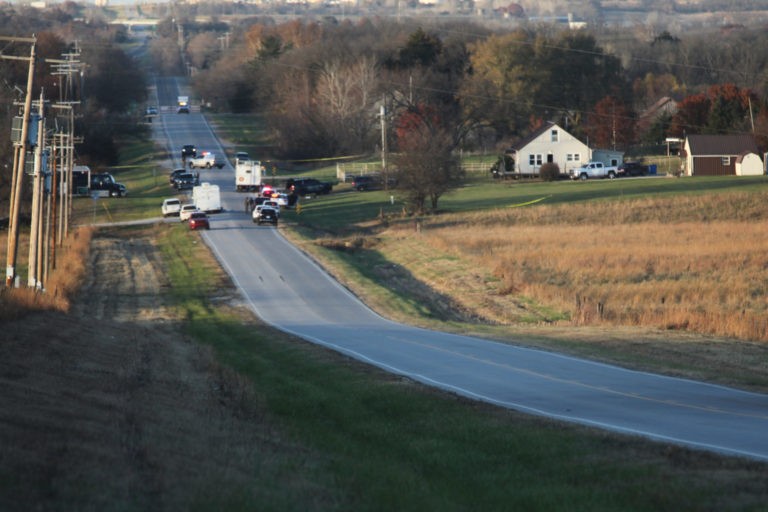
(Headline USAFour law enforcement officers were shot Saturday morning while responding to a domestic violence call at a home in a rural area south of Topeka, and a 22-year-old male suspect died of gunshot wounds at the scene.

The suspect’s 77-year-old grandfather also was wounded in the gunfire but he and the law enforcement officers are all expected to recover, the Kansas Bureau of Investigation said.

The shooting occurred around 10:30 a.m. Three Osage County sheriff’s deputies and one Kansas Highway Patrol trooper were shot, the KBI’s director and the patrol’s superintendent said.

Two deputies underwent surgery at a Topeka hospital and were in good condition, the KBI said, and the third deputy was discharged. The trooper was transferred from the same hospital to the University of Kansas Medical Center in Kansas City, Kansas.

“After being on scene less than 10 minutes, gunfire erupted,” patrol Superintendent Erik Smith said during a news conference at the Carbondale City Library.

Carbondale is a town of about 1,300 people about 16 miles south of Topeka, the state capital, off Interstate 75.

The shooting stunned neighbors John and Heather Roberts, who live about a mile north of where it occurred on the same two-lane road. They never sensed any problem in any of the family members, such as drugs, alcohol abuse or violence, and they said the suspect’s grandmother gave Christian books to area children she knew.

They said it is not uncommon to see law enforcement vehicles on the road outside their home because they live at the line between Osage County, home to Carbondale, and Shawnee County, home to Topeka, and vehicles turn around there or the counties exchange prisoners.

John Roberts said he was putting siding on his barn when two law enforcement vehicles flew down the road in the morning.

“Both of them were running, I would say, well over 100 miles an hour as they went by,” he said. “Then the city of Topeka officers started going by. That’s when I started to really get concerned.”

He said the suspect visited the shop he has at his home to return tools and was “a good kid.” Roberts added that many families in the area own guns because hunting is a common hobby, and that was the case with this family.

“I love the family. They’re great people,” Heather Roberts said, adding that she and her husband were praying for the wounded officers too.

She said every time the suspect visited their home, he would give her a hug and he was “very respectful.”

“I don’t know what snapped in him today, but his grandparents loved him very much,” she said.

Adapted from reporting by the Associated Press

Yet Another BBC Show Doctored Trump J6 Speech

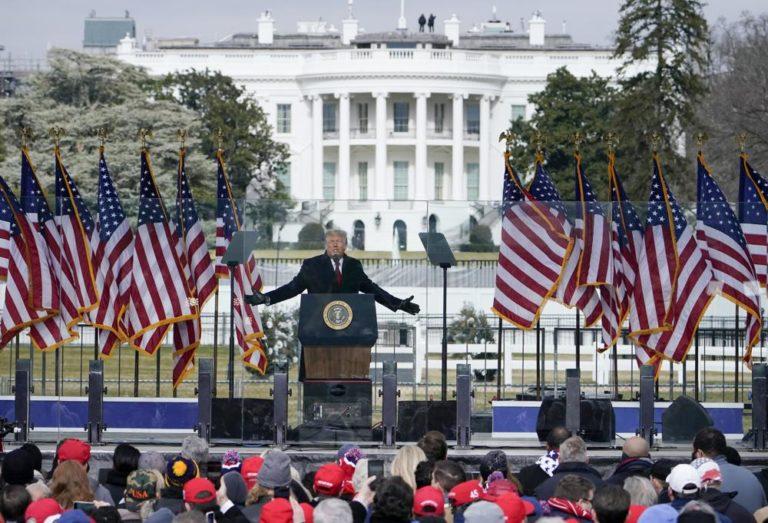
(Luis CornelioHeadline USA) The BBC is under fire after a new report found that a second program doctored footage of President Donald Trump’s Jan. 6 speech to make him appear violent and supportive of the riot that day. 

Worse still, program BBC Newsnight allegedly ignored internal concerns about the doctored footage and left-wing bias, The Telegraph reported on Thursday. 

The edited footage, which aired in 2022, makes it seem as if Trump encouraged supporters to riot to block Congress from certifying the 2020 election. 

The new revelation follows the BBC’s recent scandal involving Panorama, which selectively stitched together parts of Trump’s speech for its Trump: A Second Chance? documentary. 

The BBC issued a direct apology to Trump on Thursday after he threatened to sue the network for $1 billion. 

The broadcaster admitted its edit “gave the mistaken impression that President Trump had made a direct call for violent action.” 

“The BBC would like to apologise to President Trump for that error of judgement,” it added. 

BBC Chairman Samir Shah also wrote Trump a personal apology, acknowledging the doctored edit and claiming the program would not air again. 

In response to the latest editing scandal, a Trump attorney said it was “now clear that BBC engaged in a pattern of defamation against President Trump.”

Despite the apology, internal documents released by a whistleblower showed that the BBC dismissed a review warning of political bias. 

The review, which featured the doctored video as an example of bias, was later leaked to The Telegraph, triggering the internal meltdown.  

BBC director general Tim Davie and news CEO Deborah Turness both resigned in response to the backlash. 

The misleading edit occurred when the 2024 documentary featured video of Trump saying he would walk to the Capitol with supporters to “fight, fight like hell.” 

In reality, Trump said he would walk to the Capitol to “cheer on” lawmakers. Meanwhile, the “fight like hell” line came nearly an hour later. 

During the speech, Trump urged supporters to “peacefully and patriotically make your voices heard.” 

Headline Geopolitics: Derrick Broze on the “Mainstream” Alternative Media

(José Niño, Headline USA) In this Headline Geopolitics episode, José Niño interviews Derrick Broze, investigative journalist, activist, and founder of The Conscious Resistance Network. Broze discusses some of the many pitfalls of the “mainstream” alternative media and how these new institutions have caused major confusion among truth-seekers.

🎧 Watch the full interview here: https://youtu.be/zbRWy4rbSbE?si=c6JJZSReOk_hv2Al

Follow Derrick Broze:
🌐 theconsciousresistance.com
🐦 @DBrozeLiveFree

José Niño is the deputy editor of Headline USA. Follow him at x.com/JoseAlNino

ICE Agents Start Immigration Roundup in Charlotte

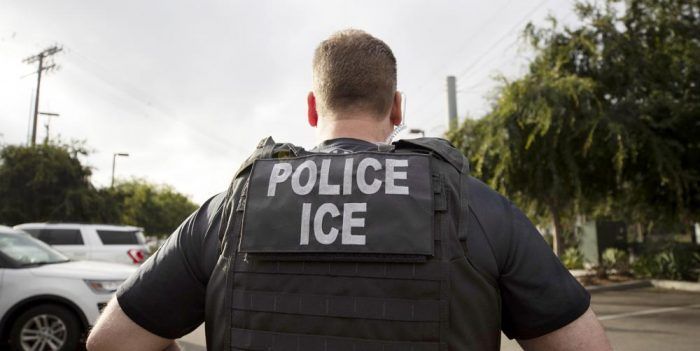
(Headline USAFederal officials confirmed that a surge of immigration enforcement in North Carolina’s largest city had begun as agents were seen making arrests in multiple locations Saturday.

“We are surging DHS law enforcement to Charlotte to ensure Americans are safe and public safety threats are removed,” Assistant Homeland Security Secretary Tricia McLaughlin said in a statement.

Local officials, including Charlotte Mayor Vi Lyles criticized such actions, saying in a statement they “are causing unnecessary fear and uncertainty.”

The federal government hadn’t previously announced the push. But Mecklenburg County Sheriff Garry McFadden confirmed earlier this week that two federal officials had told him that Customs agents would be arriving soon.

Paola Garcia, a spokesperson with Camino — a bilingual nonprofit serving families in Charlotte — said she and her colleagues have observed an increase in Border Patrol and ICE agents pulling people over since Friday.

“Basically what we’re seeing is that there have been lots of people being pulled over,” Garcia said. “I even saw a few people being pulled over on the way to work yesterday, and then just from community members seeing an increase in ICE and border patrol agents in the city of Charlotte.”

Willy Aceituno, a Honduran-born U.S. citizen, was on his way to work when he saw Border Patrol agents chasing people.

“I saw a lot of Latinos running. I wondered why they were running. The thing is, there were a lot of Border Patrol agents chasing them,” he said.

Aceituno, a 46-year-old Charlotte resident, said he himself was stopped — twice — by Border Patrol agents. On the second encounter, they forced him out of his vehicle after breaking the car window and threw him to the ground.

“I told them, ’I’m an American citizen,” he told The Associated Press. “They wanted to know where I was born, or they didn’t believe I was an American citizen.”

Finally he was allowed to go free after showing documents that proved his citizenship.

Charlotte is a racially diverse city of more than 900,000 residents, including more than 150,000 who are foreign-born, according to local officials.

Local organizations responded by having trainings, trying to inform immigrants of their rights, and considering peaceful protests. President Donald Trump’s administration has defended federal enforcement operations in cities like Los Angeles and Chicago as necessary for fighting crime and enforcing immigration laws.

Adapted from reporting by the Associated Press


Trump Says $2,000 Tariff Rebate Checks Won’t Come before Christmas

(The Center Square) Americans won’t get a $2,000 rebate check from the federal government before Christmas.

President Donald Trump said Friday that the proposed checks will not be distributed before the end of the year. Trump made the comments aboard Air Force One on his way to Mar-a-Lago, the president’s club in Palm Beach. It’s his 14th trip to Palm Beach this year.

Trump has proposed sending $2,000 checks to most Americans, excluding high earners. Earlier this week, Treasury Secretary Scott Bessent said no decision had been made on income limits. On the same day, the White House said it was “exploring all of its options” for sending tariff rebate checks even as the Supreme Court considers a legal challenge to the president’s tariffs.

Congress would need to authorize rebate checks, similar to those distributed during the COVID-19 pandemic.

Trump has addressed the issue of rebate checks multiple times this week.

“All money left over from the $2,000 payments made to low and middle income USA Citizens, from the massive Tariff Income pouring into our Country from foreign countries, which will be substantial, will be used to SUBSTANTIALLY PAY DOWN NATIONAL DEBT,” Trump wrote in a social media post earlier this week.

While Trump provided no details, early estimates suggest that the checks would cost more than the tariffs generate.

The Committee for a Responsible Federal Budget reported that if the payments were like the COVID-19 stimulus, the $2,000 dividend would cost about $600 billion – about twice what tariffs are expected to generate.

A Congressional Budget Office report from August estimated tariffs could bring in $4 trillion over the next decade. That CBO report came with caveats and noted that tariffs will raise consumer prices and reduce the purchasing power of U.S. families.

Congress Used Government Funding Bill to ‘Erase’ $3.4 Trillion in Deficits

(The Center Square) Quietly tucked inside Republicans’ funding deal to end the government shutdown is a provision wiping the congressional Pay-As-You-Go (PAYGO) scorecard, effectively forgiving nearly $3.4 trillion in deficits.

When Republicans passed their budget reconciliation bill in July, which included a permanent extension of the 2017 tax cuts, they broke precedent by operating under current policy baseline. This accounting method treats tax cut extensions as a continuation of current policy that costs nothing, rather than new policy that decreases federal revenues.

As a result, Senate Republicans were able to codify the tax cuts via a simple majority vote without having to fulfill reconciliation rules that require offsetting the deficit impact. Senators could not, however, bypass similar PAYGO rules unless they had 60 votes.

Under PAYGO, a law meant to ensure budget neutrality, the Office of Management and Budget records the deficit impact of legislation.

If Congress passes legislation that hikes mandatory spending or decreases revenue, and does not offset the deficits by the end of the year, automatic spending cuts to Medicare and other programs are triggered.

The tax cuts in the reconciliation bill added roughly $3.4 trillion to the PAYGO scorecard. But rather than finding offsets or accepting the automatic cuts to mandatory spending, Congress added a provision in the recent government funding bill – which fulfilled the 60-vote requirement – to reset the PAYGO scorecard to zero.

“That’s why this was included in the appropriations bill. It had nothing to do with appropriations,” Romina Boccia, director of budget and entitlement policy at the Cato Institute, told The Center Square. “It was all about getting those 60 votes, because that’s what PAYGO requires in order to eliminate those required spending reductions that would have been triggered by the Republicans’ reconciliation bill.”

This is hardly the first time Congress has wiped the PAYGO scorecard to avoid the consequences of a bill’s deficit impact.

In fact, Congress has never allowed the automatic spending cuts to take effect. Lawmakers wiped the PAYGO scorecard for the 2017 Tax Cuts and Jobs Act and the American Rescue Plan, while simply excluding both the CARES Act and the CHIPS and Science Act from the scorecard.

“There’s a lot of hand-waving when it comes to these deficits, but unfortunately, because Congress has pretty much consistently eliminated the spending cuts from the PAYGO scorecard in all instances – whether the Democrats put the deficits on there, or the Republicans – there’s been very little fight on it,” Boccia said.

“What it tells us is that PAYGO has become completely worthless, and that we should replace it and stop pretending like we have a deficit-controlling rule on the books when it’s pretty much understood that it will always be negated,” she added.

The U.S. racked up close to $2 trillion in net federal deficits during fiscal year 2025, according to the Congressional Budget Office, causing the national debt to top $38 trillion in October.

Trump Pardons Jan. 6er Who Was Still in Jail, Freeing Him Once and For All

(Headline USAPresident Donald Trump has issued two pardons related to the investigation into the Jan. 6, 2021 riot, including for a woman convicted of threatening to shoot FBI agents who were investigating a tip that she may have been at the Capitol, officials said Saturday.

In a separate case, Trump issued a second pardon for a Jan. 6 defendant who had remained behind bars despite the sweeping grant of clemency for Capitol rioters because of a separate conviction for illegally possessing firearms.

Suzanne Ellen Kaye was released last year after serving an 18-month sentence in her threats case. After FBI contacted her in 2021 about a tip indicating she may have been at the Capitol on Jan. 6, she posted a video on social media citing her Second Amendment right to carry a gun and she threatened to shoot agents if they came to her house.

An email seeking comment was sent to a lawyer for Kaye on Saturday. Kaye testified at trial that she didn’t own any guns and didn’t intend to threaten the FBI, according to court papers. She told authorities she was not at the Capitol on Jan. 6 and wasn’t charged with any Capitol riot-related crimes.

A White House official said Kaye suffers from “stress-induced seizures,” and experienced one when the jury read its verdict. The White House said this is “clearly a case of disfavored First Amendment political speech being prosecuted and an excessive sentence.” The official requested anonymity because they weren’t authorized to publicly discuss the case.

In a separate case, Trump pardoned Daniel Edwin Wilson of Louisville, Kentucky, who was under investigation for his role in the riot when authorities found six guns and roughly 4,800 rounds of ammunition in his home. Because of prior felony convictions, it was illegal for him to possess firearms.

Wilson’s case became part of a legal debate over whether Trump’s sweeping pardons for Jan. 6 rioters in January applied to other crimes discovered during the sprawling federal dragnet that began after the attack on the Capitol. The Trump-appointed federal judge who oversaw Wilson’s case criticized the Justice Department earlier this year for arguing that the president’s Jan. 6 pardons applied to Wilson’s gun offense.

Wilson, who had been scheduled to remain in prison until 2028, was released Friday evening following the pardon, his lawyer said on Saturday.

“We are grateful that President Trump has recognized the injustice in my client’s case and granted him this pardon,” attorney George Pallas said in an email. “Mr. Wilson can now reunite with his family and begin rebuilding his life.”

The White House official Saturday that “because the search of Mr. Wilson’s home was due to the events of January 6, and they should have never been there in the first place, President Trump is pardoning Mr. Wilson for the firearm issues.”

Wilson had been sentenced in 2024 to five years in prison after pleading guilty to conspiring to impede or injure police officers and illegally possessing firearms at his home.

Adapted from reporting by the Associated Press