Asian Funds Dominate as ETFs Add Gold for Sixth Straight Month

(Mike Maharrey, Money Metals News Service) Gold ETFs globally reported net inflows of gold for the sixth straight month, driven by a strong surge in Asian investment.

Globally, gold-backed funds reported a 38.5-tonne increase in gold holdings. The pace of metal inflows moderated from the torrid pace of the last two months but remained well above the 2024 monthly average. In fact, gold ETFs are on pace for their strongest year on record.

ETFs globally now hold 3,932 tonnes of gold, the highest month-end total on record.

Assets under management (AUM) by gold-backed funds increased by 5.4 percent to a month-end record of $530 billion.

American funds have driven inflows for the last several months, but that flipped in November, with Asian funds reporting the bulk of increased gold holdings.

ETFs based in Asia boosted their gold holdings by a net 23.6 tonnes, increasing AUM by $3.2 billion.

Chinese funds led the way, growing by $2.2 billion. Japanese funds also reported solid growth.

According to the World Gold Council (WGC), “Equity market weakness, a rebounding gold price and geopolitical tensions encouraged gold ETF investment in China and Japan.”

Chinese VAT policy changes may have also contributed to the increase in investor interest in gold in that country. According to the WGC, jewelry buyers with investment motives turned to gold ETFs to avoid additional taxes.

Meanwhile, Indian ETFs reported the sixth straight month of increased gold holdings.

Gold flows into North American funds slowed markedly in November but remained positive. North American ETFs added 7.3 tonnes of gold valued at $1 billion.

It was the sixth straight month of ETF gold inflows in North America.

According to the World Gold Council, three factors supported gold ETF investment last month.

  1. The upward-trending gold price ended the month with a 4.5 percent gain.
  2. Towards the end of the month, investor expectations of a Fed cut intensified, as softer inflation indicators provided reassurance.
  3. Geopolitical risks resurged amid rising U.S.-Venezuela tension.

Equity market swings created some headwinds for gold ETFs as investors took profits to cover losses in other sectors.

European funds flipped positive in November, reporting a 7.9-tonne increase in gold holdings valued at $978 million. Sagging equities and a surging gold price drew more investors into the gold market.

UK and German funds led the way. UK ETFs got a boost from a new budget that is expected to ease inflationary pressures, raising expectations that the Bank of England will deliver more rate cuts.

Funds in other regions, including Australia and Africa, reported modest gold outflows of -0.4 tonnes, with Australian inflows failing to offset outflows in South Africa.

ETFs are a convenient way for investors to play the gold market, but owning ETF shares is not the same as holding physical gold.

ETFs are relatively liquid. You can buy or sell an ETF with a couple of mouse clicks. You don’t have to worry about transporting or storing metal. In a nutshell, it allows investors to play the gold market without buying full ounces of metal at the spot price.

Since you are just buying a number in a computer, you can easily trade your ETF shares for another stock or cash whenever you want, even multiple times on the same day. Many speculative investors take advantage of this liquidity.

But while a gold ETF is a convenient way to play the price of gold on the market, you don’t actually possess any gold. You have paper. And you don’t know for sure that the fund has all the gold either, especially when the fund sees inflows. In such a scenario, there have been difficulties or delays in obtaining physical metal.

Gold Trading Volumes

After a record-setting October, gold trading volumes fell 26 percent to $417 billion per day, month-on-month, in November. This reflected lower price volatility as gold generally traded sideways throughout the month.

In tonnage terms, global gold market liquidity also fell by 26 percent month-on-month, averaging 3,167 tonnes per day in November.

Over-the-counter trading dipped by 24 percent to $188 billion per day.

Global gold ETF trading activity plunged 50 percent month-on-month to $8.4 billion per day. While a significant drop, it was still well above the 2024 average of $2.9 billion per day.

Data on COMEX money manager net longs has been delayed due to lingering government shutdown impacts. The last data showed a decline in net longs as of October 14.

Open interest trended up and down throughout the month, ending November at $179 billion, basically unchanged from the end-October level.


Mike Maharrey is a journalist and market analyst for Money Metals with over a decade of experience in precious metals. He holds a BS in accounting from the University of Kentucky and a BA in journalism from the University of South Florida.
Strong Black Friday Sales Sucked Into the Debt Black Hole

(Mike Maharrey, Money Metals News Service) It appears the holiday shopping season is being sucked into the massive Debt Black Hole floating through the global economy.

Based on preliminary data, the Christmas shopping season is off to a good start. According to data parsed by Mastercard, approximately 87.3 million Americans shopped online, and 81.7 million visited physical stores.

Black Friday and Cyber Monday sales were up a little over 4 percent this year. That exceeds last year’s 3.4 percent growth.

Mainstream pundits took this as a sign that consumers are still doing well despite negative sentiment. But a deeper dive into the data reveals consumers aren’t doing well at all.

They’re borrowing billions just to pay for Christmas.

A large percentage of those purchases were almost certainly made using traditional credit cards. However, many consumers have run their credit cards to the limit. Revolving debt, primarily reflecting credit card balances, has ballooned to over $1.3 trillion.

In recent months, credit card spending has slowed. This likely reflects growing stress on consumers and the fact that many have run up against their credit card limits.

So, how does somebody provide Christmas for the kiddos when they have no savings and their Visa is maxed out?

They turn to buy-now-pay-later (BNPL) programs.

For the first time, BNPL transactions eclipsed $1 billion on Cyber Monday, making up over 7 percent of total online sales.

On Black Friday, BNPL transactions accounted for $747.5 million in online spending, an 8.9 percent increase.

PayPal reported a 23 percent increase in BNPL sales.

As a Forbes article put it, “Consumers were eager to spend even if they didn’t necessarily have the cash to do so.

Buy-now-pay-later has its benefits. You can generally pay over the span of several months, and many programs offer loans interest-free if payments are on time. BNPL programs don’t generally require credit checks, so you can use these programs even if your credit cards are maxed out.

Stanford accounting professor Ed deHaan called BNPL “a pretty slick innovation.”

“It is convenient and it’s basically free credit if you pay it off on time.”

However, if you don’t have the money to pay for something now, what makes you think you’ll have it in a month?

Many consumers fall into this trap.

If the customer fails to make timely payments, they get hit with fees and interest charges. A Stanford Business study called it “Buy Now, Pain Later.

“We examined the changes in the BNPL users’ financial health before and after adoption and compared them to similar non-BNPL users. An analysis of more than 570,000 pairs of BNPL users and non-users revealed that users incurred 4 percent more overdraft charges, 1.1 percent higher credit card interest, and 2.3 percent more credit card late charges than their counterparts.”

Professor deHaan said that the study revealed the average effect of using BNPL is negative, calling the finding “surprising.”

“It’s a relatively small negative number, but likely meaningful for many people who live paycheck-to-paycheck.”

Incentives Matter

The rapid growth of buy-now-pay-later financing underscores an important economic reality – incentives matter.

As the saying goes, “Build it, and they will come.”

People want to have stuff, and if they are offered what appears to be an easy way to get it, they will avail themselves of those options.

The reality is that most people struggle to make realistic long-term financial calculations. If credit is available, they’ll use it with little thought about how they’ll pay the bills – especially if it is perceived as “cheap” credit (or, in the case of BNPL, free credit).

This is precisely why governments and central banks push interest rates down during an economic crisis. It incentivizes borrowing and spending.

And it’s how we ended up with a massive Debt Black Hole to begin with.

After the 2008 Financial Crisis, the Federal Reserve set rates at zero and left them there for over seven years. Even when the central bank started trying to normalize rates, the effort was short-lived. The Fed got rates to 2.5 percent before the economy got shaky and the stock market crashed. The central bank was already cutting rates before the pandemic. And of course, the Fed drove rates to zero again during the COVID era.

More than a decade of easy money incentivized a lot of borrowing and created the Debt Black Hole that now dominates the economy.

There’s nothing fundamentally wrong with using credit. But you can’t run an economy on Visa and Mastercard.

Credit can mask a failing economy. It enables people to keep spending even as they’re being squeezed by price inflation. However, the bills always come due.

Don’t be fooled into thinking that people buying Christmas presents proves a “strong” economy. It may well be the last gasp of Americans trying to find some happiness as the Debt Black Hole sucks the economy into it.


Mike Maharrey is a journalist and market analyst for Money Metals with over a decade of experience in precious metals. He holds a BS in accounting from the University of Kentucky and a BA in journalism from the University of South Florida.
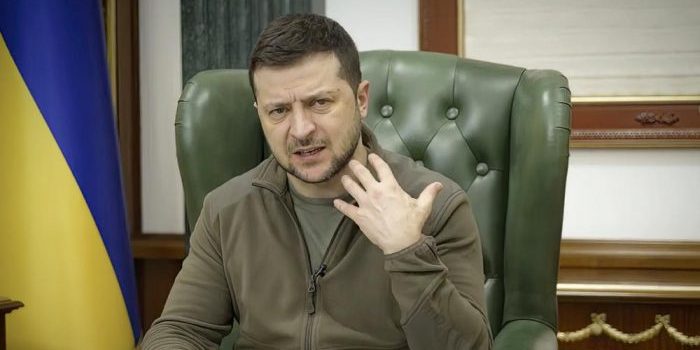
Zelensky Had ‘Difficult’ Discussion With Witkoff and Kushner on Territorial Lines for Potential Peace Deal

(Dave DeCamp, Antiwar.comUkrainian President Volodymyr Zelensky had a “difficult” conversation with US envoy Steve Witkoff and President Trump’s son-in-law, Jared Kushner, on the issue of territory during a two-hour call on a potential Ukraine peace deal, Axios reported on Saturday.

The call came at the end of three days of talks that Witkoff and Kushner held with Ukrainian officials in Miami following their meeting with Russian President Vladimir Putin in Moscow. While Kushner doesn’t hold an official position in the Trump administration, he has been serving as an advisor to Witkoff and has been deeply involved in talks on the future of the Gaza Strip and, more recently, Ukraine.

The Axios report said that Russia is still demanding Ukraine cede what territory it still controls in the Donbas, something Ukrainian officials refuse to do. A source told the media outlet that the US is trying to develop new ideas to bridge the issue, but it’s unlikely that Moscow will drop the condition, as Russia has momentum on the battlefield and continues to make gains in the Donbas.

The other main sticking point in the negotiations is the potential US security guarantee for Ukraine. The Axios report said that the US and Ukraine have made progress and neared an agreement on the issue, but it’s unclear what sort of arrangement the US is willing to commit to, and any deal that involves NATO-style security guarantees would likely be a non-starter for Moscow.

Zelensky, who has been under fire over his government’s widespread corruption, said in a statement on his call with Witkoff and Kushner that he is willing to continue “working in good faith” with the US to achieve a peace deal. “We agreed on the next steps and formats for talks with the United States,” the Ukrainian leader wrote on X.

Zelensky is set to meet with his two advisors who participated in talks with Witkoff and Kushner in Miami: Rustem Umerov, the head of Ukraine’s Security Council, and Andrii Hnatov, the chief of the General Staff of the Ukrainian Armed Forces. “Not everything can be discussed over the phone, so we need to work closely with our teams on ideas and proposals,” Zelensky said.

This article originally appeared at Antiwar.com.


HHS Switches Former Trans Secretary’s Name from ‘Rachel’ to ‘Richard’ on Official Portrait

(Luis CornelioHeadline USA) The Trump administration is done with preferred pronouns and gender ideology. 

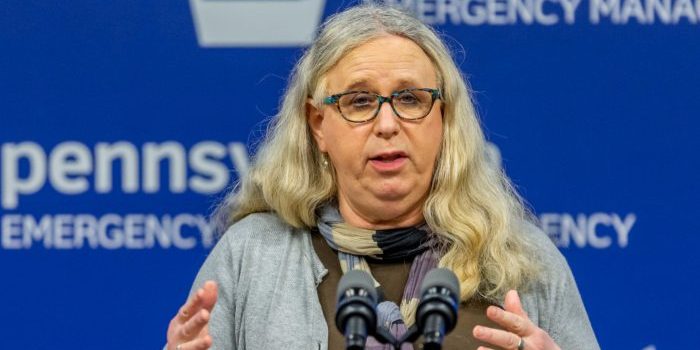
Official portraits of Rachel Levine, the Biden administration’s assistant secretary for health, will now use his birth name, “Richard L. Levine, M.D.” 

HHS spokesperson Gregory Angelo confirmed the change on X, sharing a photo of Levine’s portrait at the Washington, D.C., headquarters of HHS, which showed the original name behind a glass-covered frame. 

The Democratic Party has long championed Levine as a historic figure, celebrating him as the first openly transgender individual to secure a Senate-confirmed federal position. 

He led the Commissioned Corps of the U.S. Public Health Service and previously ran the Pennsylvania Department of Health from July 2017 to January 2021. 

During the Biden years, Levine was one of the loudest advocates for gender transition policies for children, calling so-called gender-affirming care medically necessary. 

“Accredited medical professional groups agree that gender-affirming care is medically necessary, safe, and effective for trans and non-binary youth,” Levine wrote on X in 2022. “States should translate this knowledge into more compassionate policies that protect rather than undermine youth mental health.” 

Levine began his gender transition in his 40s, after having two children and divorcing his wife, Dr. Martha Peaslee Levine. 

HHS spokesperson Andrew Nixon said the name change reflects “gold standard science.” 

“Our priority is ensuring that the information presented internally and externally by HHS reflects gold standard science,” Nixon said in remarks to NPR. “We remain committed to reversing harmful policies enacted by Levine and ensuring that biological reality guides our approach to public health.” 

In response, Levine spokesperson Adrian Shanker denounced the decision as an act “of bigotry,” noting it occurred during the government shutdown. 

Trump is Proposing a $12B Aid Package for Farmers

(Headline USAPresident Donald Trump is planning a $12 billion farm aid package, according to a White House official — a boost to farmers who have struggled to sell their crops while getting hit by rising costs after the president raised tariffs on China as part of a broader trade war.

According to the official, who was granted anonymity to speak ahead of a planned announcement, Trump will unveil the plan Monday afternoon at the White House.

Farmers have backed Trump politically but his aggressive trade policies and frequently changing tariff rates have come under increasing scrutiny because of the impact on the agricultural sector and because of broader consumer worries.

The aid is the administration’s latest effort to defend Trump’s economic stewardship and answer voter angst about rising costs — even as the president has dismissed concerns about affordability as a Democratic “hoax.”

Adapted from reporting by the Associated Press


FBI Was Investigating Man in Purported Iranian Trump Assassination Plot before He Entered Country

(Ken Silva, Headline USA) When the Justice Department announced that it busted an Iranian assassination plot against President Donald Trump last year, prosecutors said an unnamed person reported the plot to law enforcement and then agreed to become an FBI informant to help arrest an alleged Iran-backed operative, Asif Merchant. The informant did so by introducing Merchant to two undercover FBI agents posing as hitmen.

Merchant was arrested on July 12, 2024—the day before Trump was shot in Butler, Pennsylvania.

However, defense lawyers have revealed that the DOJ’s story is bogus. In fact, Merchant was under investigation before he even entered the country in April 2024.

“Discovery has revealed that Asif was under investigation before he arrived in the United States, and he was under surveillance from the moment he arrived in this country. In addition, Asif was the subject of electronic surveillance under the Foreign Intelligence Surveillance Act (FISA),” said Merchant’s lawyers in a letter last Wednesday to U.S. Judge Eric R. Komitee.

Merchant’s lawyers further complained that the DOJ hasn’t provided them with all the surveillance recordings of their client. Moreover, the FBI has heavily redacted interview reports with potentially exculpatory information, they said.

“All of the reports appear to memorialize interviews in connection with the government’s investigation into Asif’s activities prior to his arrest. The basis for the redactions is neither apparent from the context of the document, nor do they appear to apply a consistent standard for withholding information. For example, a report memorializing an FBI interview with Asif’s sister is redacted despite the fact that the interview appears to concern Asif,” the lawyers said.

“Similarly, in some reports the identity of an interviewee will be unredacted, but the name of the person that interviewee learned the information from is redacted.”

Merchant’s lawyers asked Judge Komittee to order the DOJ to provide them with all the discovery for the case. On Friday, the judge ordered the DOJ to respond to the letter by the end of this week.

The letter is the latest indication that the Merchant case was a highly controlled sting operation—or worse, a manufactured plot similar to the 2020 Whitmer kidnap case—and not the organic Iranian assassination attempt that the government has portrayed it to be.

According to whistleblower disclosures reported by investigative journalist John Solomon last year, Merchant was let into the country in April 2024 through a program called “Significant Public Benefit Parole,” which the U.S. Citizenship and Immigration Services’ website explains is for “law enforcement and national security reasons or foreign or domestic policy considerations.”

Merchant was admitted into the country despite being flagged at the George Bush Intercontinental Airport in Houston after showing up on a DHS terrorist watchlist. The FBI’s Joint Terrorism Task Force (JTTF) was called to the scene to fingerprint Merchant and inspect his electronic devices—discovering in the process that he had been to Iran.

Whistleblowers reportedly compared the decision to parole Merchant to the Obama-era “Fast and Furious” scandal, which entailed federal agents purposely allowing illegal gun purchases under the guise of tracking organized crime.

“The parole in Merchant’s case, the officials said, would allow agents to try to flip Merchant as a cooperator or try to determine why he was coming to the United States and who he might be working with,” Solomon wrote when he broke the story.

The U.S. government has imposed such strict lockdown conditions on Merchant despite Bureau of Prisons Director Colette Peters acknowledging in an internal memo that he had no known Iranian cohorts in the U.S. “Law enforcement has not identified any IRGC associates of Merchant operating in the United States who could continue to orchestrate violent acts,” states the Peters memo, which was submitted to the court by his lawyers.

Merchant faces trial in March.

Ken Silva is the editor of Headline USA. Follow him at x.com/jd_cashless.

Catholic Archbishop for US Military Speaks Out Against US Strikes on Alleged Drug Boats

(Dave DeCamp, Antiwar.comThe Catholic Archbishop for the US Military Services has spoken out against the US bombing campaign against alleged drug boats in Latin America and said it would be “illegal and immoral” to order the bombing of survivors on a boat that poses no threat.

Archbishop Timothy Broglio made clear in his statement that he was questioning the entire premise of the bombing campaign, not just the September 2 attack that involved multiple strikes to kill survivors.

“In the fight against drugs, the end never justifies the means, which must be moral, in accord with the principles of the just war theory, and always respectful of the dignity of each human person,” Broglio said in a statement released on December 3.

Archbishop Broglio celebrates Mass on Christmas Day, December 25, 2022, in Poznan, Poland (US Army photo)

“No one can ever be ordered to commit an immoral act, and even those suspected of committing a crime are entitled to due process under the law. As the moral principle forbidding the intentional killing of noncombatants is inviolable, it would be an illegal and immoral order to kill deliberately survivors on a vessel who pose no immediate lethal threat to our armed forces,” he added.

Broglio said due process must apply to everyone and called for the use of traditional law-enforcement tactics against drug shipments, such as Coast Guard intercepts. “Due process must apply to everyone, regardless of his or her role in illegal activity. The rule of law must guide all actions; abandoning due process undermines human rights, erodes public trust, and risks harming innocent people. True justice is achieved through transparent legal procedures, accountability, and respect for life—not through violence outside the law,” he said.

The archbishop, who also served as the head of the US Conference of Catholic Bishops from November 2022 to November 2025, called on US leaders to “respect the consciences of those who raise their right hands to defend and protect the Constitution by not asking them to engage in immoral actions.”

Catholic bishops in the Caribbean have also criticized the US bombing campaign, saying in a statement last month that it “violates the sacredness of human life.” Pope Leo XIV has said the US military buildup in the region is raising tension and has warned the US against the idea of launching a regime change war to oust Venezuelan President Nicolas Maduro.

According to numbers released by the Trump administration, since early September, the US military has blown up 23 boats and killed 87 people, whom it claimed were “narco-terrorists,” a term it uses to justify the extrajudicial executions at sea.

This article originally appeared at Antiwar.com.


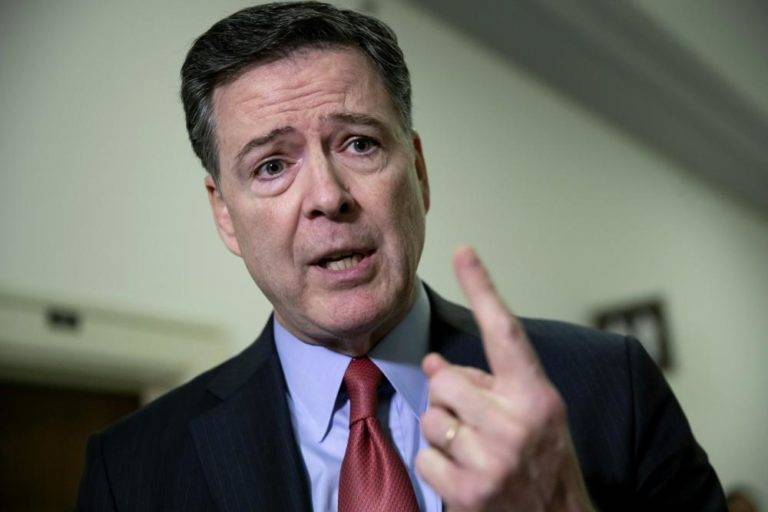
Judge Bars DOJ from Using Evidence Proving James Comey’s Guilt

(Headline USA) A federal judge has dealt a setback to Justice Department efforts to seek a new indictment against former FBI Director James Comey, temporarily barring prosecutors from using evidence they had relied on when they initially secured criminal charges.

The ruling Saturday night from U.S. District Judge Colleen Kollar-Kotelly does not preclude the department from trying again soon to indict Comey, but it does suggest prosecutors may have to do so without citing communications between Comey and a close friend, Columbia University law professor Daniel Richman.

Comey was charged in September with lying to Congress when he denied having authorized an associate to serve as an anonymous source for media coverage about the FBI. In pursuing the case, prosecutors cited messages between Comey and Richman that they said showed Comey encouraging Richman to engage with the media for certain FBI-related coverage.

The case was dismissed last month after a different federal judge ruled that the prosecutor who filed the charges, Lindsey Halligan, was unlawfully appointed by the Trump administration. But that ruling left open the possibility that the government could try again to seek charges against Comey, a longtime foe of President Donald Trump.

After the case was thrown out, lawyers for Richman sought a court order that would bar prosecutors from continued access to his computer files, which the Justice Department obtained through search warrants in 2019 and 2020 as part of a media leak investigation that was later closed without charges.

But Richman and his lawyers say that in preparing the criminal case against Comey, prosecutors relied on data that exceeded the scope of the warrants, illegally held onto communications they should have destroyed or returned and conducted new, warrantless searches of the files.

Kollar-Kotelly on Saturday night granted Richman’s request for a temporary restraining, instructing the department “not to access the covered materials once they are identified, segregated, and secured, or to share, disseminate, or disclose the covered materials to any person, without first seeking and obtaining leave of this Court.”

She gave the Justice Department until Monday afternoon to certify that it is compliance with the order.

A Justice Department spokesperson declined to comment Sunday on the ruling and what it meant for revived charges against Comey.

Adapted from reporting by the Associated Press

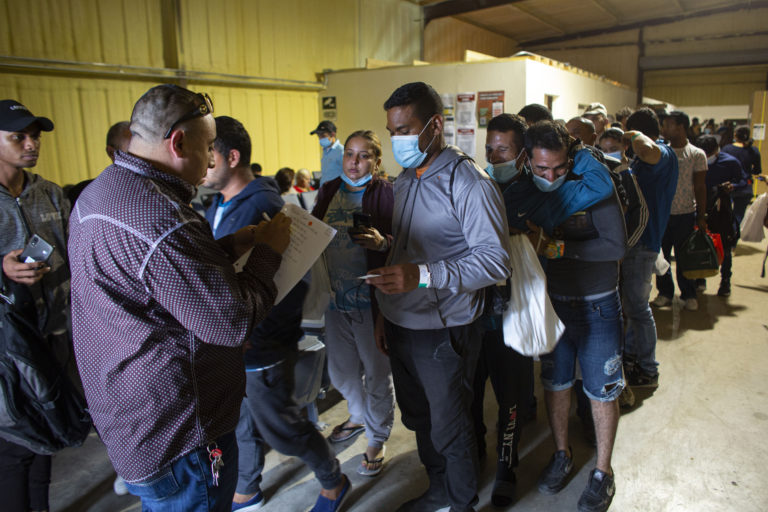
NYT Finally Admits Biden’s Open-Border Policy Was No Accident

(Luis CornelioHeadline USAThe New York Times admitted on Sunday what conservative outlets have reported all along: the Biden administration’s open-border policy was intentional. 

In a scathing report, the leftist newspaper acknowledged that former President Joe Biden ignored warnings from his advisers during the 2020-2021 transition that his immigration proposals would trigger “chaos” at the southern border. 

According to the report, the White House rebuffed those warnings amid concerns that Latino voters would be alienated. The Times noted:

“Mr. Biden’s record found that he and his closest advisers repeatedly rebuffed recommendations that could have addressed the border crisis faster, and eased what became a potent issue for Mr. Trump as he sought to return to the White House and justify the aggressive tactics roiling American cities today.” 

The paper added:

“Yet as public concern over border security grew, partly in response to Mr. Biden’s own actions, his administration proved catastrophically slow to change course, former aides said. The president and his closest aides treated immigration as a distraction from other issues, such as the coronavirus pandemic and the economy.” 

The consequences were nearly immediate, with Biden pausing deportations for 100 days, sending an amnesty bill to Congress, halting border wall construction, limiting law enforcement operations and canceling the Trump-era Remain in Mexico policy. 

At the same time, Biden’s team limited the use of Title 42, one of the tools used to allow rapid removals of foreign nationals during the COVID-19 pandemic. The Times also reported that Biden layered so-called legal pathways for illegal aliens to enter the country. 

Those initiatives included Operation Allies Welcome, which expedited the admittance of Afghan nationals after Biden’s disastrous 2021 withdrawal, and C.H.N.V., a parole program that allowed migrants from Cuba, Haiti, Nicaragua and Venezuela to enter the U.S. through sponsors and parole. CBP One app was central to these programs, the outlet added. 

These lenient policies caused Border Patrol to endure the highest numbers of border encounters in U.S. history. 

A staggering 3.2 million nationwide encounters occurred in Fiscal Year 2023, the highest number recorded. The worst month came in December 2023, when agents logged roughly 370,000 encounters. 

By contrast, the lowest monthly total occurred in June 2025 under Trump, when Border Patrol recorded 25,432 encounters nationwide. Fiscal Year 2025 ended with 237,565 total encounters. 

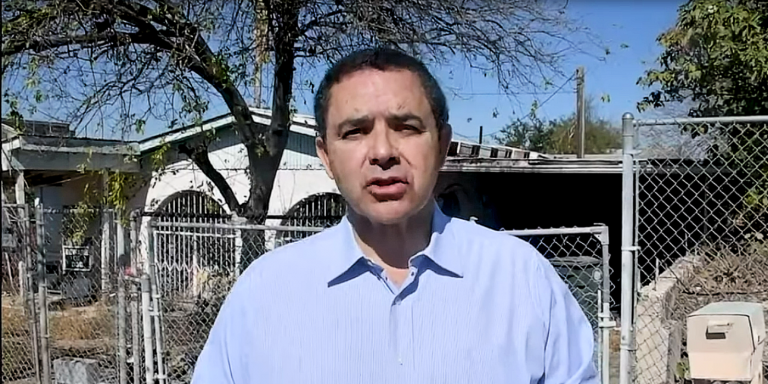
Trump Says He Regrets Pardoning Democrat Now Seeking Reelection

(Luis CornelioHeadline USA) President Donald Trump expressed buyer’s remorse Sunday after pardoning embattled Rep. Henry Cuellar, a Democrat now threatening the Republican Party’s House majority. 

In a lengthy Truth Social post, Trump blasted Cuellar for not switching to the Republican Party before re-election. He wrote that by running as a Democrat, Cuellar is “continuing to work with the same Radical Left Scum that just weeks before wanted him and his wife to spend the rest of their lives in Prison – And probably still do!” 

The president described the decision as a “lack of LOYALTY” and added that it is “something that Texas Voters, and Henry’s daughters, will not like.” He concluded with a warning: “Oh’ well, next time, no more Mr. Nice guy! PRESIDENT DONALD J. TRUMP” 

The remarks came after Cuellar announced on Dec. 3 that he would seek reelection as a Democrat. This was the same day Trump issued the pardon. 

The decision shocked many, including Trump, likely because Cuellar had previously accused President Biden of retaliating with the federal indictment after Cuellar criticized the administration’s open-border policies. 

In an interview with Fox News Sunday, Cuellar defended his choice, claiming his record is bipartisan and that he votes with Republicans more often than some Republican members of Congress. 

Cuellar’s claims of bipartisanship may do little to alter the political math ahead of the 2026 midterms. If he wins, his seat will count toward the party’s total in the House, potentially allowing Democrats to retain control of the Speaker’s office, committee leadership and subpoena powers.

House Majority Leader Mike Johnson and NRCC Chair Richard Hudson were reportedly blindsided by Trump’s pardon, as Republicans viewed Cuellar’s district as a potential toss-up due to the indictment. 

Cuellar and his wife, Imelda, received a full and unconditional pardon after being accused of accepting $600,000 in bribes and acting as foreign agents while Cuellar served in Congress.  

The charges, announced in 2024 by the Biden administration, alleged Cuellar worked on behalf of an Azerbaijani state-owned oil firm to promote favorable policies. 

The pardon followed a letter from Cuellar’s daughters to Trump, in which they argued the indictment was retaliation for their father’s criticism of illegal immigration in southern Texas, part of the district he represents.