(José Niño, Headline USA)In the wake of the mass shooting at Bondi Beach in Sydney, Australia, American Jewish Committee (AJC) CEO Ted Deutch embarked on a high profile media tour that framed the atrocity as a mandate for global action against online speech.
The shooting which Australian authorities classified as a terrorist attack targeting a Jewish event left at least fifteen people dead and dozens injured according to reporting from Reuters. As details emerged, Deutch used the moment to argue that social media expression now poses a direct threat to public safety.
Chris Menahan of Information Liberation first highlighted the campaign in a post on X where he noted that Deutch moved rapidly after the attack to demand what he called bold action to suppress antisemitism online. Menahan wrote that Deutch used the Bondi Beach killings as evidence that digital speech leads directly to real world violence.
American Jewish Committee CEO Ted Deutch embarked on a media tour in the wake of the Bondi Beach shooting to demand "bold action" to suppress "anti-Semitism" on social media. pic.twitter.com/IoX8QYDyMS
During a series of interviews Deutch insisted that rhetoric tolerated online creates conditions for violence offline. “We have to speak out against the kind of language that puts Jews at risk. We have to adopt policies that recognize that fighting antisemitism needs to be a priority, and we have to do more to make sure that on social media, what would never be tolerated on Main Street isn’t tolerated online,” Deutch said in an interview with CNN.
Australian officials described the Bondi Beach attack as an Islamic State inspired act of terrorism aimed at a Hanukkah gathering of roughly one thousand people. Police killed one attacker at the scene and charged the second with multiple counts of murder according toReuters. The scale and symbolism of the attack intensified global media attention and provided the backdrop for Deutch’s remarks.
Deutch repeatedly linked the shooting to online expression. “The kind of calls for violence that put Jews at risk and that lead to the kinds of atrocities like we just saw in Bondi Beach. That’s a horrible situation indeed,” he said. He urged audiences to accept a causal link between online discourse and physical attacks.
Since becoming AJC CEO after leavingCongress in 2022, Deutch has consistently pushed for stronger government involvement in policing speech particularly on digital platforms.
How many leaders of pro-Israel groups need to explicitly demand that social media be more policed before people understand this is their movement's main goal? Netnayhau said the same.
The TikTok ban was finally passed due to fear it was allowing too much anti-Israel content. https://t.co/kciLmXxZNX
(Money Metals News Service) In this recent episode of the Money Metals Midweek Memo, host Mike Maharrey argues the biggest takeaway from the Federal Reserve’s latest FOMC meeting wasn’t the widely reported 25 basis point rate cut. It was the quiet restart of balance-sheet expansion—what most people would recognize as quantitative easing—barely acknowledged by mainstream coverage.
He frames the entire discussion around “burying the lead,” the journalistic habit (sometimes accidental, sometimes deliberate) of hiding the most important fact deep in a story where most readers will never reach it.
The “Hawkish Cut” That Wasn’t Hawkish
Maharrey notes the Fed cut rates by 25 basis points, setting the federal funds rate in a range of 3.5% to 3.75%. Financial media also obsessed over the Fed’s dot plot, which projected just one more rate cut in 2026 and one in 2027, and treated this as evidence the Fed was turning “hawkish.”
He rejects that framing. Cutting rates again isn’t hawkish, he says, and neither is expanding the balance sheet. He argues the “hawkish” label was attached only because Jerome Powell tried to talk tough and tamp down expectations for further cuts.
The Fed’s Real Move: Balance-Sheet Expansion
Maharrey points to the official language in the FOMC statement: the committee judged reserve balances had declined to “ample” levels and would initiate purchases of shorter-term Treasury securities “as needed” to maintain an ample supply of reserves.
In his plain-English translation, that means the Fed is growing its balance sheet again—creating money to buy Treasury bills, increasing liquidity, pressing Treasury rates lower, and inflating risk assets. He emphasizes that the Fed won’t call it “quantitative easing” because the term carries negative connotations, preferring labels like “reserve management” or “technical operations,” but the effect is the same.
Why He Says QE Was Inevitable
Maharrey ties the pivot to the broader debt backdrop. He cites the federal government’s debt load at over $38 trillion, still running large deficits, and argues the system can’t tolerate higher rates for long because borrowing costs become politically and financially untenable.
He notes the Fed had already announced it would end balance sheet reduction effective December 1, following the prior (October) meeting. In his view, that was the tell, and the restart of asset purchases was the next step.
The Numbers, the Messaging, and the “Openmouth Operations”
Powell described the Fed as having reduced the policy rate by 75 basis points since September and 175 basis points since last September, putting the fed funds rate within a broad range of estimates of “neutral,” and claimed the Fed was now positioned to “wait and see.” Maharrey highlights Powell also calling the December cut a “close call,” with three dissenting votes—the first time, he says, there have been three dissents since 2019.
Maharrey argues this is part of what he calls “openmouth operations”—central banker rhetoric designed to steer expectations and move markets. He says investors react to the words in the short run, but the real story is always the actions, and the actions here were dovish.
Markets Reacted Like They Heard the Truth
He describes the market response as predictable: stocks rallied on the return of easier money. Gold posted modest gains as the dollar weakened, rising $88 from the post-meeting Powell press conference to the day he was prepping the show, with additional gains afterward. He says silver was trading over $66 an ounce.
His point is that inflation doesn’t only show up in consumer prices. It shows up in asset appreciation and bubbles as well.
The Money Supply Picture: Why He Says Inflation Is Re-Accelerating
Maharrey argues you don’t need a single CPI report to understand what policy is doing. He points to money supply growth as the clearer signal, noting the November CPI report was due “tomorrow,” and that October inflation data was missing due to the government shutdown.
Using the True Money Supply (TMS) measure associated with Murray Rothbard and Joseph Salerno, he says money supply grew 4.76% year-over-year in November, up from 4.06% in September, and far above the 1.27% year-over-year growth rate in October of last year. He highlights strong month-on-month TMS gains in August, September, and October of 1.18%, 1.4%, and 1.14%.
He adds that by the Fed’s M2 measure, year-over-year growth rose to 4.63% in October from 4.47% in September, with M2 at nearly $22.3 trillion, the highest level ever recorded. TMS, he says, is at a 34-month high even if it hasn’t revisited its 2022 peak—evidence, in his telling, that the money spigot is opening again.
The Catch-22: Inflation or the Debt Black Hole
Maharrey frames the Fed’s predicament as choosing between two bad outcomes: keep rates high to fight inflation and risk the debt-heavy economy cracking, or cut rates and expand liquidity to stabilize the system while letting inflation run hotter.
In his view, the Fed has already chosen. Whatever the rhetoric, the policy path prioritizes keeping the debt machine operating, even if that means persistent monetary debasement.
Deflation “Fear” and the Hard-Money Argument
He then challenges the conventional claim that deflation is inherently disastrous. He references economic historian Tom Woods, arguing that growing economies can function with a stable or inelastic money base because prices can fall as productivity rises, allowing the same money stock to handle more transactions.
Maharrey also cites a 2004 paper by economists Andrew Atkeson and Patrick J. Kehoe titled “Deflation and Depression: Is There an Empirical Link?” published in the Economic Review, saying their review of 17 countries over a 100-year period found virtually no link between deflation and depression.
His Practical Bottom Line: Protect Yourself With Real Money
Maharrey closes with what he presents as the actionable takeaway: you can’t vote away the structure of the current system, so you have to respond to it. He argues that if you save purely in dollars, those dollars will buy less in the future, and that the ongoing rise in gold and silver is a signal of continued currency devaluation.
He encourages listeners to contact a Money Metals precious metals specialist at 800-800-1865, or buy at moneymetals.com, including the option to store metals at the Money Metals Depository in Eagle, Idaho. He points people to moneymetals.com/news for more information and notes that next week’s Midweek Memo will be released on Tuesday instead of Wednesday because it falls on Christmas Eve.
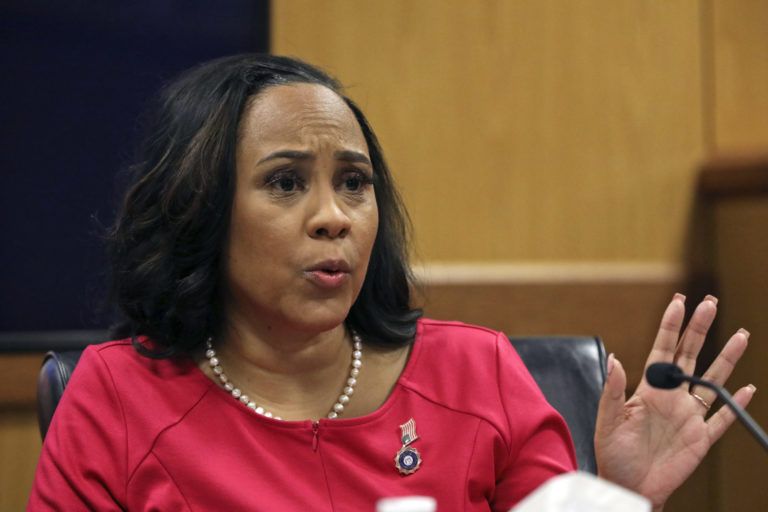
(Luis Cornelio, Headline USA) Fulton County District Attorney Fani Willis repeatedly barked at Georgia state senators during a Wednesday hearing investigating allegations of misconduct in her controversial prosecution of President Donald Trump.
Willis, a far-left Democratic prosecutor, lost her temper, swearing and smearing Republican investigators. One viral moment came when she defended billing issues at the center of the probe.
Fani Willis loses her damn mind when presented with documents showing how much money her office paid her lover Nathan Wade during the witch hunt against President Trump:
Investigators are examining potential conflicts of interest in how many hours Nathan Wade, her lover and the attorney she appointed to lead the Trump case, was able to bill Fulton County.
Willis’s case against Trump began unraveling after it was revealed she held a romantic relationship with Wade.
Critics questioned whether Willis benefited personally from Wade’s contract, noting that the two reportedly took vacation trips together. Willis has downplayed the accusations, claiming she reimbursed any expenses, though she has never provided evidence to back the claim.
During the hearing, Willis was shown an invoice from Wade on a projector. She admitted she had not seen the document before the hearing but claimed she allowed him to bill “160 hours a week,” 23 hours per day. She later corrected herself, but the video quickly went viral:
“What I can tell is that I allowed Mr. Wade to bill 160 hours a week and then Mr. Wade would be the first one in the office making sure that my staff arrived. He corrected their behavior. They thought that 8:30 meant 8:30. He taught them that 8:30 means 7:45.
“He got there before them. He left after. He taught them how to do this case. And he was a leader to that team and a public servant. And for that, him, like me, has been threatened thousands of times.”
Willis also claimed she has faced threats because she prosecuted Trump:
“You want something to investigate as a legislature, investigate how many times they’ve called me the n-word. Why don’t you investigate that? Why don’t you investigate them writing on my house? Why don’t you investigate the fact that my house has been swatted? If you want something to do with your time, that makes sense. And you can use all this in your campaign ad. You attacked Fani Willis. What have you done, sir? Nothing.”
In addition to the state investigation, Willis is facing probes from the House Judiciary Committee and the Department of Justice.
(Dave DeCamp, Antiwar.com) The House on Wednesday voted down a War Powers Resolution meant to block President Trump from launching a war with Venezuela without congressional authorization, as required by the Constitution.
The bill failed in a vote of 211-213, with nine representatives not voting. Just three Republicans joined Democrats in supporting the bill: Reps. Thomas Massie (R-KY), Marjorie Taylor Greene (GA), and Don Bacon (NE). One Democrat, Henry Cuellar (TX), voted against the legislation.
The legislation would have directed the president to remove “United States Armed Forces from hostilities within or against Venezuela that have not been authorized by Congress.”
Before the Venezuela bill, another War Powers Resolution aimed at stopping President Trump’s bombing campaign against alleged drug boats in the Caribbean and the Eastern Pacific Ocean also failed. That bill failed in a vote of 210-216, with two Republicans (Massie and Bacon) voting in favor and two Democrats (Ceullar and Vicente Gonzalez (TX) voting against.
The votes came a day after President Trump declared a “complete and total blockade” on “sanctioned” tankers going into and leaving Venezuela, an action that’s widely considered an act of war under international law. President Trump and his top officials have also been clear that their goal is regime change.
“If that cost is acceptable to this Congress, then we should vote on it as a voice of the people and in accordance with our Constitution,” Massie continued. “And yet today, here we aren’t even voting on whether to declare war or authorize the use of military force. All we’re voting on is a War Powers Resolution that strengthens the fabric of our Republic by reasserting the plain and simple language in the Constitution that Congress must decide questions of war.”
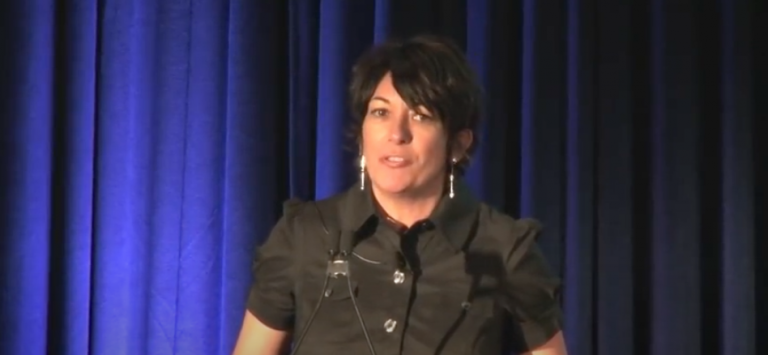
(Headline USA) Jeffrey Epstein’s criminal accomplice Ghislaine Maxwell asked a federal judge on Wednesday to set aside her sex trafficking conviction and free her from a 20-year prison sentence, saying “substantial new evidence” has emerged proving that constitutional violations spoiled her trial.
Maxwell maintained in a habeas petition she has promised to file since August that information that would have resulted in her exoneration at her 2021 trial was withheld and false testimony was presented to the jury.
She said the cumulative effect of the constitutional violations resulted in a “complete miscarriage of justice.”
A habeas petition (or writ of habeas corpus petition) is a legal request for a court to review the legality of someone’s detention, demanding that the custodian (like a prison official) bring the prisoner before a judge to justify the imprisonment, serving as a fundamental safeguard against unlawful confinement and arbitrary detention by ensuring due process. Filed by or on behalf of someone in custody, it challenges constitutional violations, such as ineffective legal counsel or unfair trials, and seeks release or other relief, often as a last resort after appeals are exhausted.
“Since the conclusion of her trial, substantial new evidence has emerged from related civil actions, government disclosures, investigative reports, and documents demonstrating constitutional violations that undermined the fairness of her proceeding,” the filing in Manhattan federal court said. “In the light of the full evidentiary record, no reasonable juror would have convicted her.”
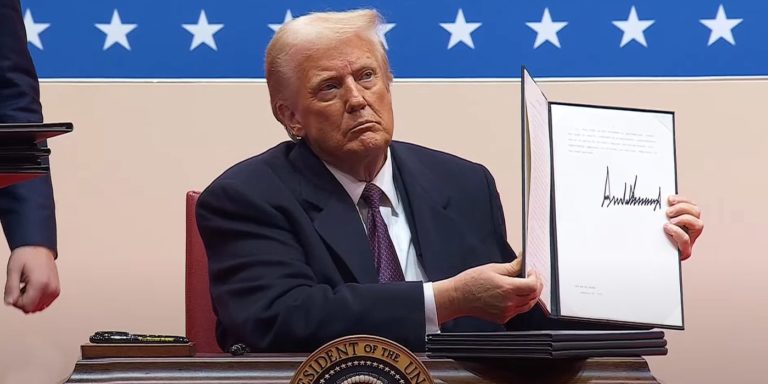
The filing came just two days before records in her case were scheduled to be released publicly as a result of President Donald Trump’s signing of the Epstein Files Transparency Act. The law, signed after months of public and political pressure, requires the Justice Department to provide the public with Epstein-related records by Dec. 19.
Forced to act by the new transparency law, the Justice Department has said it plans to release 18 categories of investigative materials gathered in the massive sex trafficking probe, including search warrants, financial records, notes from interviews with victims, and data from electronic devices.
Epstein, a millionaire financier, was arrested in July 2019 on sex trafficking charges. A month later, he was found dead in his cell at a New York federal jail. Maxwell, a British socialite, was arrested a year later and was convicted of sex trafficking in December 2021. She was interviewed by the Justice Department’s second-in-command in July and was soon afterward moved from a federal prison in Florida to a prison camp in Texas.
After the Justice Department asked a New York federal judge to permit grand jury and discovery materials gathered prior to her trial to be released publicly, attorney David Markus wrote on her behalf that while Maxwell now “does not take a position” on unsealing documents from her case, doing so “would create undue prejudice so severe that it would foreclose the possibility of a fair retrial” if her habeas petition succeeds.
The records, Markus said, “contain untested and unproven allegations.”
Last week, Judge Paul A. Engelmayer in Manhattan granted the Justice Department’s request to publicly release the materials.
On Wednesday, U.S. Attorney Jay Clayton said during a news conference on another topic that he would follow the law and the judge’s orders pertaining to the records.
Engelmayer, who along with other judges had previously rejected Justice Department unsealing requests before the transparency law was passed, said the materials “do not identify any person other than Epstein and Maxwell as having had sexual contact with a minor.”
(Luis Cornelio, Headline USA) The FBI said Wednesday it is not “leading” the investigation into the Brown University shooting, responding to growing social media criticism over law enforcement’s failure to make an arrest.
The shooting occurred on Monday near the Brown University campus in Providence, Rhode Island. The suspect, who remains at large, killed Ella Cook, a 19-year-old sophomore and vice president of Brown’s College Republicans chapter, and Mukhammad Aziz Umurzokov, an 18-year-old freshman who wanted to become a neurosurgeon.
As criticism mounted online, FBI spokesman Ben Williamson clarified on X that the bureau is not leading the probe. Instead, he said the bureau is supporting the Providence Police Department at the request of local authorities.
“FBI has been in a supporting role and Director Patel has surged resources based on whatever the locals request,” Williamson wrote.
The FBI is not leading the Brown University investigation – the Providence PD is the lead. FBI has been in a supporting role and Director Patel has surged resources based on whatever the locals request. https://t.co/bmbBtfZrvC
Williamson’s comments came in response to criticism from Meghan McCain, who questioned why the FBI had not provided updates on the case.
“So… is the FBI just not going to give us any updates on the Brown shooter? Or is Kash Patel still too busy with his girlfriend?” McCain wrote.
FBI Director Kashyap Patel has faced criticism after publicly referencing the arrest of a person of interest earlier in the investigation. This individual was later released without charges, leading to accusations that Patel boasted about detaining the wrong suspect.
The FBI Boston office, which has jurisdiction over Providence, is offering up to $50,000 for any “identification, arrest, and conviction of the individual responsible.”
The @FBI, in coordination with the @ProvidenceRIPD and @RIStatePolice, is releasing a video timeline showing the movements of a person of interest in the 12/13 shooting at Brown University.
The FBl is offering a reward of up to $50,000 for information leading to the… pic.twitter.com/JLC5Ywn3xn
The reaction to the Brown University shooting adds to existing scrutiny of Patel over his use of taxpayer-funded resources for personal benefit.
The attacks have centered on Patel’s relationship with singer Alexis Wilkins, including his use of a federal private jet to visit her in Nashville, Tennessee.
Patel has dismissed the criticism, noting that federal law prohibits the FBI director from flying commercially.
However, Patel is only required to pay the equivalent of commercial fare for his flights. The cost of operating FBI jets is exponentially more than that. For example, a Government Accountability Office report found in 2013 that then-Attorney General Eric Holder paid $420.90 for a flight that cost the taxpayers $15,894.
He has also defended the use of an FBI SWAT team to protect Wilkins, saying it is consistent with protections provided to partners of previous FBI directors. Patel does not live with Wilkins, and apparently only sees her a few times a month.
(Madeline Shannon, The Center Square) An arraignment for Nick Reiner, the son of actor/director Rob Reiner and Rob’s wife, Michele Singer Reiner, was postponed Wednesday to Jan. 7.
Reiner, 32, appeared in court Wednesday morning in a Los Angeles courtroom. He waived his right to an immediate arraignment and “Yes, your honor” when Judge Theresa McGonigle asked him if he understood he had the right to a speedy trial.
Reiner is charged with two counts of first-degree murder with the special circumstance allegation of multiple murders. He also faces a special allegation that he personally used a dangerous and deadly weapon, a knife, according to the Los Angeles County District Attorney’s Office.
Alan Jackson, a high-profile lawyer who has previously defended famous clients, is Nick Reiner’s lawyer.
“We ask that during this process, we allow this system to move forward the way it was designed to move forward,” Jackson said during brief statements made outside the courthouse on Wednesday morning after the arraignment was postponed. “Not to rush to judgment, not to jump to conclusions, but with restraint, dignity and respect for the system.”
Jackson did not take any questions from the press after his statements outside the Clara Shortridge Foltz Criminal Justice Center building in downtown Los Angeles.
Reiner is in custody and is being held without bail. Los Angeles authorities previously said Reiner’s bail was set at $4 million.
The Center Square previously reported that the Los Angeles Police Department’s robbery-homicide division is handling the investigation into the death, and that police have concluded that Rob and Michele Reiner were both stabbed to death. They were both found deceased in their home by a member of their family. Police responded to the Reiners’ home in Brentwood, an upscale neighborhood of L.A., on Sunday afternoon.
Habib Balian, assistant head district attorney with the Los Angeles County District Attorney’s Office, did not make comments to the press on Wednesday morning.
But District Attorney Nathan Hochman commented on the case in a statement Tuesday.
“Prosecuting cases involving family violence are some of the most challenging and heart-wrenching we face because of the intimate and often brutal nature of the crimes,” Hochman said. “Rob Reiner was one of the greatest filmmakers of his generation. His murder and his wife of more than 35 years, Michele Singer Reiner’s murder, are shocking and tragic. We owe it to their memory to pursue justice and accountability for the lives that were taken.”
If convicted, Nick Reiner could face a maximum sentence of life in prison without parole or the death penalty, Hochman told reporters Tuesday, but said his office hasn’t determined which punishment to pursue.
But there has been a moratorium on the death penalty in California since Gov. Gavin Newsom, who’s termed out by the end of 2026, signed an executive order in 2019.
Rob Reiner, who was part of the “All in the Family” cast and directed movies such as “The Princess Bride” and “When Harry Met Sally,” was 78. Michele Singer Reiner was 68.
(Dave DeCamp, Antiwar.com) President Trump is expected to announce plans to launch a war with Venezuela this evening when he addresses the nation at 9:00 pm EST, a high-placed source on Capitol Hill has told Antiwar.com.
Also, earlier in the day, Tucker Carlson told Judge Andrew Napolitano that he has heard from a member of Congress that Trump is planning war.
“Members of Congress were briefed yesterday that a war is coming and it will be announced in the address to the nation tonight,” Carlson said on the Judging Freedom podcast.
On Tuesday night, President Trump announced a “total and complete” blockade on “sanctioned tankers” going into and out of Venezuela, which came after US forces boarded and seized a tanker carrying Venezuelan oil.
The Trump administration has made clear that its goal is to oust Venezuelan President Nicolas Maduro. It’s unclear what kind of military action the president is preparing to take, but according to earlier media reports, he has been briefed on several options, including strikes on government targets, sending in a special operations force to kill or capture Maduro, or deploying a larger force to capture airbases and oil fields.
Any attack on Venezuela without congressional authorization would be illegal under the Constitution. The House is expected to vote on a bipartisan War Powers Resolution today aimed at blocking Trump from launching the war.
(Ken Silva, Headline USA) The man stabbed by an illegal immigrant on a Charlotte train earlier this month allegedly has a criminal history of his own.
The victim of the stabbing, Kenyon Dobie, had a warrant out for his arrest for assaulting his girlfriend in October.
According to court records, Dobie was arguing with the lady on Oct. 19, and knocked her unconscious, fracturing her face in the process. Dobie was initially hit with misdemeanors, but the charges were upped to felonies on Nov. 18, after detectives learned of the gravity of the injuries sustained by the girlfriend.
The train stabbing victim was initially charged with a misdemeanor when he allegedly assaulted his gf in Oct. He was initially charged with a misdemeanor, but that was upped to a felony when police realized how bad she was beaten. Police didn't locate him until after the stabbing https://t.co/UULGrnJpj2pic.twitter.com/DXQivdDInV
Dobie was stabbed on Dec. 5, and police arrested him after he recovered from his wounds. His first court appearance was last week.
The charges against Dobie undermine his story that he was protecting an old lady when he was stabbed by 33-year-old Oscar Solarzano-Garcia, an illegal immigrant from Honduras. Nevertheless, Dobie has raised over $115,000 on GuFundMe, presumably thanks to his claims of heroism.
Meanwhile, Solarzano-Garcia faces state attempted murder charges, as well as federal charges for committing an act of violence on a mass transit system.
An FBI agent’s affidavit supporting the federal charges described Solorzano-Garcia as a train passenger who appeared to be intoxicated. He and Dobie got into a verbal altercation, and the suspect pulled out a knife at least 12 inches long and stabbed Dobie, who then received aid from fellow passengers, the agent says. The defendant left the train and was arrested by police shortly after.
Solorzano-Garcia was transported out the country in both 2018 and 2021 — having been convicted in 2019 of illegal reentry into the U.S. and sentenced to 18 months in prison — and has recently resided in Charlotte, according to the FBI affidavit.
Attorney General Pam Bondi said in a news release that Solorzano-Garcia “should not have been in our country to begin with.” The suspect was convicted in 2013 of robbery in New Jersey, the affidavit said.
The Associated Press contributed to this report.
Ken Silva is the editor of Headline USA. Follow him at x.com/jd_cashless.
(Ken Silva, Headline USA) The New York Times published an investigation into deceased sex criminal Jeffrey Epstein’s business career, detailing how a man without a college degree became a multimillionaire with connections to the most powerful people in the world. In that story, the Times revealed that one of Epstein’s business partners went on to represent his alleged victims.
According to the Times, the lawyer in question is John Stanley Pottinger, who had just left the Justice Department before linking up with Epstein.
“Epstein and the Pottingers pitched tax-avoidance strategies to wealthy clients, including some whom Gold believes Epstein met through Bear Stearns,” the Times reported.
“The short-lived business partnership has not previously been reported — and is especially notable because decades later Pottinger would team up with Brad Edwards to represent scores of women who accused Epstein of sexually abusing them.”
The most significant revelation from this article, imo, is that Epstein was business partners with a lawyer who would go on to represent the alleged victims. https://t.co/QMsIEJzQvtpic.twitter.com/IIXsPUFTLx
Edwards reportedly said he knew that Epstein and Pottinger shared an office, but not that they were ever in business together. Pottinger reportedly said he met Epstein through a client.
The Pottinger-Epstein relationship isn’t the only conflict of interest involving the victims’ attorneys.
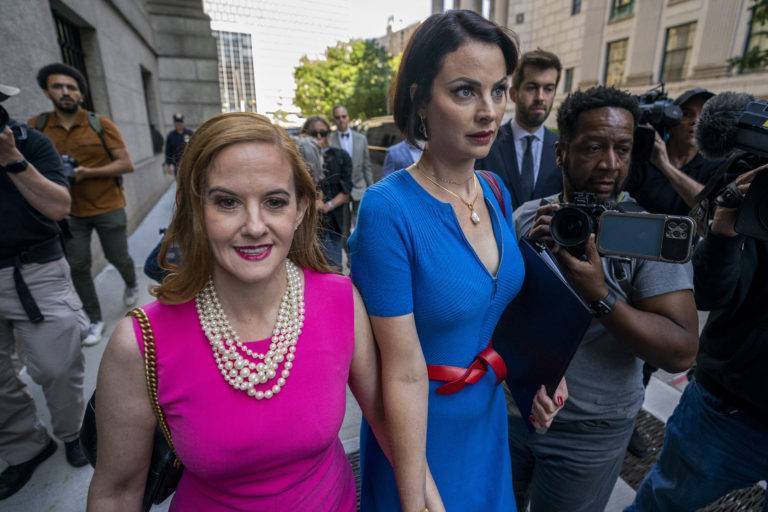
Plaintiffs’ attorney Adam Castellani also once represented former President and Epstein associate Bill Clinton, as well as Harvey Weinstein. Plaintiff Sarah Ransome first filed a complaint about Castellani with the U.S. Bar Association in 2022, but said nothing happened as a result.
Ransome also accused another plaintiffs’ lawyer, David Boies of maintaining a “cozy relationship” with Clinton and Weinstein. Additionally, she said that Simone Lelchuk, the administrator that the class attorneys and the defendants chose, served as an “independent” Claims Examiner to allocate funds to compensate the sex-abuse victims of Weinstein.
Ransome cited these perceived conflicts of interest in 2023, when she objected to a $290 million settlement with JPMorgan Chase in a class action lawsuit. Her objection was unsuccessful.
Ken Silva is the editor of Headline USA. Follow him at x.com/jd_cashless.