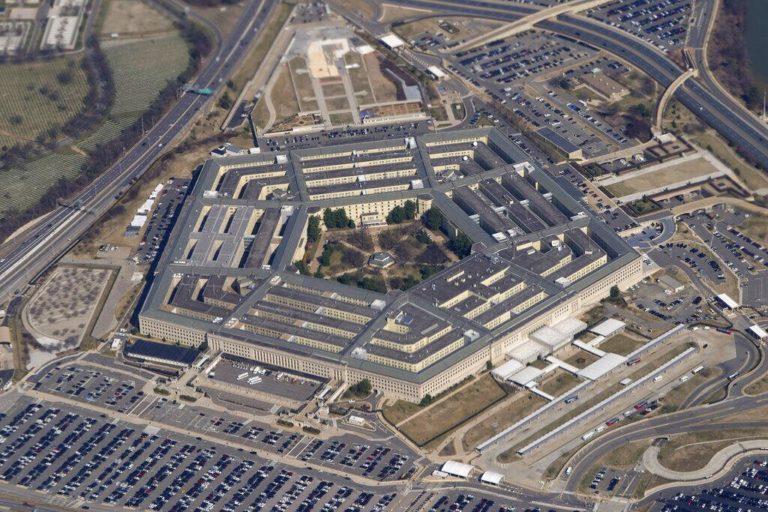
“After long and difficult negotiations with Senators, Congressmen, Secretaries, and other Political Representatives, I have determined that, for the Good of our Country, especially in these very troubled and dangerous times, our Military Budget for the year 2027 should not be $1 Trillion Dollars, but rather $1.5 Trillion Dollars,” the president said.
He added that $1.5 trillion would enable the US to build a “dream military” and claimed it would be possible thanks to his tariff policy.
“If it weren’t for the tremendous numbers being produced by Tariffs from other Countries, many of which, in the past, have ‘ripped off’ the United States at levels never seen before, I would stay at the $1 Trillion Dollar number but, because of Tariffs, and the tremendous Income that they bring, amounts being generated, that would have been unthinkable in the past … we are able to easily hit the $1.5 Trillion Dollar,” Trump wrote.
He also claimed that tariff revenue would also allow him to “pay down Debt, and likewise, pay a substantial Dividend to moderate income Patriots within our Country!”
When he first came into office in 2025, Trump suggested he could substantially cut military spending, but then went on to request the first-ever $1 trillion US military budget. He got it by combining the 2026 National Defense Authorization Act (NDAA), which Congress finalized at $901 billion, with a supplemental military spending bill worth about $150 billion that was included in the so-called “Big Beautiful Bill” passed earlier in 2025.
While 2026 marks the first time the US had an official military budget over $1 trillion, the true cost of annual US military and national security spending has exceeded $1 trillion for many years, when taking into account factors such as the budgets for the Departments of Homeland Security and Veterans Affairs, and the national security share of the interest accrued on the US debt.
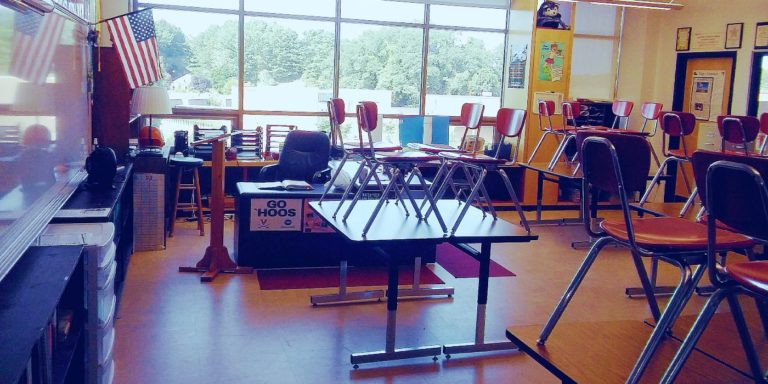
(José Niño, Headline USA) Minnesota school districts must finalize curriculum selections within weeks to satisfy ethnic studies requirements starting in the 2026–2027 academic year, per a report by The Epoch Times.
Few options exist beyond state teachers union-approved instructional content created using public funds.
Theprogramming developed by the University of Minnesota’s Center for Race, Indigeneity, Disability, Gender and Sexuality Studies directs sixth-grade students to study Black Lives Matter’s 13 guiding principles. Seventh graders learn about Disability Rights Movement activism against injustice.
An 11th and 12th-grade course titled Jim Crow of the North states students will “be able to explain how race is socially constructed and how that social construction has been used to oppress people of color, specifically in relation to Jim Crow, segregation, and racial covenants.”
The Center of the American Experiment, aneducation policy organization opposing partisan and race-focused curricula, assists districts seeking politically balanced alternatives resembling traditional history and social studies electives rather than social justice advocacy materials.
“The words ethnic studies have been hijacked,” Catrin Wigfall, a policy fellow with the center, told The Epoch Times. “But boards [of education] have more power in this than they might think.”
State regulations permit parents to examine curricula and remove their children from instruction they find problematic, requiring schools to supply alternative materials, Wigfall said.
The Minnesota Department of Educationcharacterizes ethnic studies as interdisciplinary instruction examining “how race and racism have been and continue to be social, cultural, and political forces, and the connection of race to the stratification of other groups.”
State regulations mandate public schools integrate ethnic studies lessons throughout required social studies classes at every grade level, plus provide standalone ethnic studies electives for high school juniors and seniors.
In 2023, the Minnesota Department of Education specified ethnic studies context should permeate additional subjects including math, physical education and health during periodic course revisions.
The Center of the American Experiment contends these standards cultivate angry, inaccurate and “identity-first” ideological and political viewpoints.
True ethnic studies should examine worldwide histories, cultures and religions, but Minnesota school instruction imposes a divisive and limited political perspective, Wigfall said.
“It’s been a bait and switch campaign,” she said.
The center supports theAmerican Experience curriculum created by the Foundation Against Tolerance and Racism, which Johns Hopkins validated as an ethnic studies model, as a viable substitute for University of Minnesota materials.
The 1776 Unites free curriculum emphasizeshistorical narratives that “celebrate black excellence, reject victimhood culture, and showcase African-Americans who have prospered by embracing America’s founding ideals,” its website states.
Wigfall said her organization assists school districts navigating curriculum decisions and deadlines for satisfying state mandates throughout various subjects.
The center does not advocate lawsuits challenging the mandate, but local education officials possess legal remedies under federal Title VI provisions if state requirements compel them to create hostile learning environments.
“It will be interesting to see what the rollout looks like,” she said. “When you emphasize tribalism, what does that do to knowledge development?”
José Niño is the deputy editor of Headline USA. Follow him at x.com/JoseAlNino
The speculator’s Polymarket account accumulated positions in contracts linked to Maduro’s removal under terms suggesting unlikely odds ahead of the weekend military operation. These bets, valued at roughly $34,000 before Maduro’s detention, skyrocketed following reports that U.S. forces had captured the Venezuelan leader, platform data reveals.
Following Monday’s developments, major stock indices climbed and oil pricesrose significantly, with energy sector shares posting substantial advances. Venezuela’sgovernment bonds—already in default—surged on expectations of a comprehensivedebt restructuring. Securities issued by both the Venezuelan government and state petroleum company PDVSA jumped as much as 10 cents per dollar, representing gains approaching 30%.
The suspicious timing of these trades will likely draw attention from legislatorswho have advocated for enhanced insider trading regulations, including bipartisan proposals to prohibit stock trading by members of Congress. Following Monday’s revelations, Democratic Representative Ritchie Torres announced plans to introduce legislation this week preventing elected officials, congressional members, and federal workers from participating on prediction platforms where they might exploit privileged information.
The anonymous profile was established last month, with the investor purchasing $96 worth of contracts on December 27 that would generate returns if the United States invaded Venezuela by January 31. Additional similar positions followed in subsequent days.
Platforms such as Polymarket provide tradable binary contracts enabling users to speculate on diverse real-world outcomes spanning sports, entertainment, political developments, and economic events. When contracts purchased for pennies ultimately pay out at one dollar, traders possessing nonpublic information can generate enormous returns within extremely short timeframes.
Last September, Polymarket obtainedregulatory clearance from the Commodity Futures Trading Commission to resume American operations following its $112 million purchase of QCEX, a CFTC-licensed derivatives exchange. The CFTC has not yet responded to inquiries regarding any investigation into Maduro-related transactions.
Previous concerns about potential insider trading have dogged Polymarket. Though Americans currently lack official access to the primary betting platform, numerous traders circumvent restrictions using VPN technology.
Polymarket declined to comment on the matter.
José Niño is the deputy editor of Headline USA. Follow him at x.com/JoseAlNino
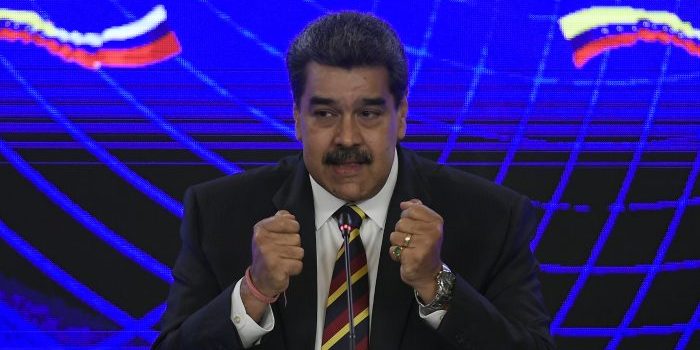
(Dave DeCamp, Antiwar.com) The White House on Wednesday claimed that the US would be “dictating” the decisions of the Venezuelan government moving forward, as the Trump administration is attempting to control Venezuela’s oil supply following the US abduction of Venezuelan President Nicolas Maduro.
“We’re continuing to be in close coordination with the interim authorities,” White House Press Secretary Karoline Leavitt told reporters, referring to Maduro’s government, which is now led by Acting President Delcy Rodriguez.
Leavitt added that “their decisions are going to continue to be dictated by the United States of America.” In Caracas, Rodriguez and other Venezuelan officials are putting a very different message.
“The government of Venezuela is in charge in our country, and no one else. There is no foreign agent governing Venezuela,” said Rodriguez, who has called for the US to free Maduro so he can return to his position.
In an interview with Fox News on Wednesday, Vice President JD Vance said that the US can control Venezuela by deciding where it’s allowed to sell its oil.
“We control the energy resources, and we tell the regime, you’re allowed to sell the oil so long as you serve America’s national interest, you’re not allowed to sell it if you can’t serve America’s national interest,” Vance said.
President Trump is also threatening to bomb Venezuela again and potentially send troops if the government doesn’t do the bidding of the US, and appeared to threaten Rodriguez’s life by saying she would have a fate worse than Maduro if she didn’t fall in line.
On Tuesday night, Trump said that Venezuela will be “turning over” between 30 million and 50 million barrels of oil to the US. He said the oil will be “sold at its Market Price, and that money will be controlled by me, as President of the United States of America, to ensure it is used to benefit the people of Venezuela and the United States.”
Venezuela’s state oil company, PDVSA, said in a statement that it was advancing an oil sale to the US and that it would be similar to deals with Chevron, the US oil firm that has continued to operate in the country. “The process … is based on strictly commercial transactions under terms that are legal, transparent and beneficial for both parties,” PDVSA said.
In a follow-up post on Wednesday, Trump claimed that under the deal, Venezuela will be purchasing US goods with the money made from the sale. “I have just been informed that Venezuela is going to be purchasing ONLY American Made Products, with the money they receive from our new Oil Deal,” he said.
The president continued, “These purchases will include, among other things, American Agricultural Products, and American Made Medicines, Medical Devices, and Equipment to improve Venezuela’s Electric Grid and Energy Facilities. In other words, Venezuela is committing to doing business with the United States of America as their principal partner – A wise choice, and a very good thing for the people of Venezuela, and the United States.”
(Money Metals News Service) In a recent episode of the Money Metals’ Midweek Memo podcast, host Mike Maharrey argues we are watching a familiar setup return. The financial system, he says, increasingly resembles 2019, when cracks began showing after the Fed attempted to tighten policy.
A New Year, Same Setup
He frames the episode around a simple premise. If the system is flashing the same warning lights it did back then, you should pay attention to what those signals typically lead to, and what they tend to mean for gold and silver.
Sign #1: The “Gold Bubble” Calls Keep Failing
Mike starts with the precious metals correction and rebound to show how fast sentiment flips. Each dip becomes a headline about the bull market ending. Each recovery forces the narrative to move the goalposts again.
His point is not that prices never fall. It is that the big move in gold and silver is not being driven by hype. It is being driven by the conditions underneath the markets, especially the system’s dependence on easy money and the strain that shows up whenever that support is reduced.
Sign #2: The Boom-Bust Cycle Has a Script
To explain the underlying stress, Mike leans on Austrian business cycle theory. The Fed pushes rates down, credit expands, and a boom follows. Then the Fed tries to normalize policy, and the bust emerges.
He argues this is not an occasional mistake. It is the structure of the modern system. Easy money encourages borrowing and spending today at the expense of the productive foundation that would make growth durable tomorrow.
Sign #3: You Can’t Print the Real Economy
Mike’s brick wall analogy does the heavy lifting here. Cheap credit lets people start projects that look profitable under low rates. Eventually, the economy hits limits, and the limits are not financial.
Resources, labor, and productive capacity are real constraints. When money expands faster than the ability to produce real goods, projects stall, malinvestments are exposed, and the boom loses its footing.
Sign #4: Debt Makes the System Fragile in a Higher-Rate World
Mike calls it a debt black hole. Years of easy money reward leverage, and leverage make the entire economy sensitive to the cost of borrowing.
When rates rise, servicing that debt gets expensive across households, corporations, banks, and the government. That is why, even with inflation still above target, there is constant pressure for rate cuts. He argues it is not just preference. It is a dependency.
Sign #5: Repo Stress Is the Canary That Looks Like 2019
The episode’s most concrete signal is the spike in the Fed’s standing overnight repo facility. Mike explains repo as short-term borrowing backed by collateral like Treasuries and mortgage-backed securities. It is where the system goes to keep daily liquidity moving.
He notes that repo usage often jumps at quarter-end or year-end because banks become balance sheet constrained and want their books to look stronger. But he emphasizes that the size of the spike matters, and so does the fact that usage persisted into early January.
In his view, heavy reliance on the Fed’s facility suggests private liquidity is either scarce or too expensive. When markets need the Fed as a backstop for routine short-term cash, that is a sign of strain, not calm.
The Missing Piece: The Fed Is Easing Again Without Saying So
Mike ties repo stress to what he sees as a quiet pivot back toward balance sheet expansion. He argues that officials can avoid the phrase quantitative easing, but the effect is the same if the Fed is adding liquidity and growing the balance sheet again.
He also points to the pattern from 2019. Tightening exposed fragility, stress appeared in funding markets, and the Fed reversed course while insisting it was merely managing “plumbing.” Mike believes we are watching a similar reversal unfold again.
Why the Pandemic Matters to This Story
Mike adds a crucial layer. He believes the system was already reaching a breaking point around 2019 and early 2020. The pandemic did not fix the cycle, in his view, but delayed the reckoning and made the imbalances larger.
That delay matters because it expanded the size of both the debt bubble and the asset bubble. In his telling, the cleanup that a recession normally forces was postponed, and now the pressures are returning with more weight behind them.
What This Means for Gold and Silver
Mike’s bottom line is that the Fed is trapped. Tighten to fight inflation and risk breaking a debt-heavy system. Ease to stabilize markets and keep liquidity flowing, and accept more inflation and currency debasement.
He argues that this dynamic is why gold and silver have remained strong despite corrections. The metals are responding to a system that cannot function without recurring intervention, and to a currency regime built around managed loss of purchasing power.
Plan Like You’re Not Going to Get a Gentle Outcome
Mike closes with practical advice framed as urgency. If inflation is policy, saving in dollars means saving in something designed to lose value over time.
His recommendation is to hold real money, and he points to gold and silver as protection against the next phase of the cycle he thinks is already underway. He also highlights junk silver as an efficient way to get silver exposure, referring to pre-1965 dimes, quarters, and half dollars with 90 percent silver content.
He directs listeners to MoneyMetals.com/news for show notes and encourages subscribing to the newsletter and podcast feed. The message is consistent with the title. The signs are already there, and he argues the cost of ignoring them will not show up all at once, but it will show up.
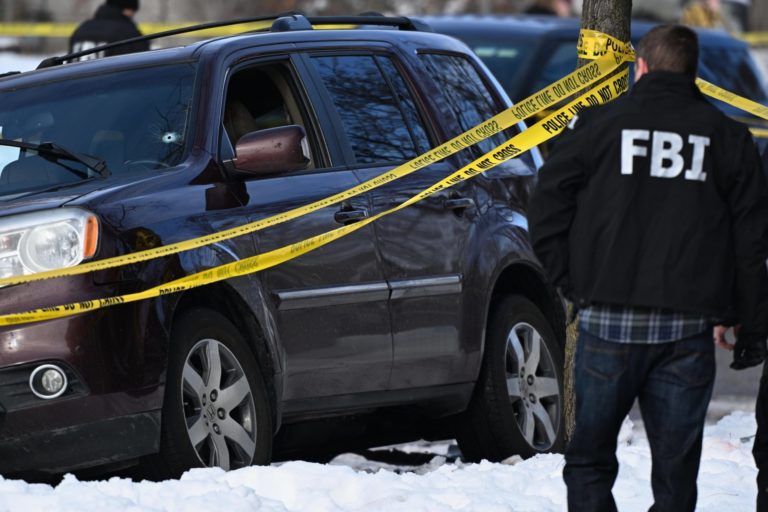
(Headline USA) An Immigration and Customs Enforcement officer shot and killed a Minneapolis driver who hit him with her vehicle on Wednesday, marking a violent start to the Trump administration’s latest illegal immigration crackdown.
The 37-year-old woman, identified as Renee Nicole Good, was shot during a traffic stop in a snowy residential neighborhood south of downtown Minneapolis, just a few blocks from some of the oldest immigrant markets and about a mile from where George Floyd overdosed while in police custody in 2020. Her killing quickly drew a crowd of hundreds of angry protesters.
BREAKING: Video Shows moment woman makes contact swiping Officer before he opens fire pic.twitter.com/8Jpw3SF6U0
Homeland Security Secretary Kristi Noem, while visiting Texas, described the incident as an “act of domestic terrorism” carried out against ICE officers by a woman who “attempted to run them over and rammed them with her vehicle. An officer of ours acted quickly and defensively, shot, to protect himself and the people around him.”
But Minneapolis Mayor Jacob Frey blasted that characterization as “garbage” and criticized the federal deployment of more than 2,000 officers to the Twin Cities of Minneapolis and St. Paul as part of the immigration crackdown.
“What they are doing is not to provide safety in America. What they are doing is causing chaos and distrust,” Frey said, calling on the immigration agents to leave. “They’re ripping families apart. They’re sowing chaos on our streets, and in this case, quite literally killing people.”
“They are already trying to spin this as an action of self-defense. Having seen the video myself, I wanna tell everybody directly, that is bullshit,” the mayor said.
Frey said he had a message for ICE: “Get the f— out of Minneapolis.”
A shooting caught on video
Videos taken by bystanders with different vantage points and posted to social media show an officer approaching an SUV stopped across the middle of the road, demanding the driver open the door and grabbing the handle. The Honda Pilot began to drive towards a different ICE officer standing in front of the vehicle. The officer pulled out his weapon and immediately fired at least two shots into the vehicle at close range, jumping back as the vehicle moves toward him.
Show this to anyone who says she didn’t hit the agent
A slowed down segment from the video shows that the vehicle made contact with the officer. The SUV then sped into two cars parked on a curb nearby before crashing to a stop. Witnesses screamed obscenities, expressing shock at what they’d seen.
After the shooting, emergency medical technicians tried to administer aid to the woman.
A large throng of protesters gathered at the scene after the shooting, where they vented their anger at the local and federal officers who were there, including Gregory Bovino, a senior U.S. Customs and Border Patrol official who has been the face of crackdowns in Los Angeles, Chicago and elsewhere.
In a scene that hearkened back to the Los Angeles and Chicago crackdowns, bystanders heckled the officers, chanting “Shame! Shame! Shame!” and “ICE out of Minnesota,” and blew whistles that have become ubiquitous during the operations.
(Sarah Roderick-Fitch, The Center Square) After the weekend strikes in Venezuela and the capture of Venezuelan President Nicolas Maduro, the U.S. continues to seize sanctioned vessels operating in the Caribbean and North Atlantic.
Two sanctioned ships were seized Wednesday morning in support of the U.S. operation to secure the Western Hemisphere.
U.S. European Command confirmed the seizure of the reported Russian-flagged tanker after a U.S. federal court issued a warrant after the vessel violated sanctions.
In a social media post, Secretary of War Pete Hegseth underscored that the “blockade of sanctioned and illicit Venezuelan oil remains in FULL EFFECT—anywhere in the world.”
Multiple reports claim the U.S. had pursued the now-seized vessel for two weeks.
The U.S. European Command confirmed that the Department of Homeland Security conducted the operation in support of the Department of War.
In addition, the U.S. Southern Command announced a “pre-dawn” operation conducted by the Department of War and Homeland Security, that “apprehended a stateless, sanctioned dark fleet motor tanker” accused of “conducting illicit activities in the Caribbean Sea.”
The Coast Guard is escorting the vessel, named the M/T Sophia, to the U.S. “for final disposition.”
Tuesday evening, President Donald Trump announced that Venezuelan interim authorities turned over “over 30-50 million” barrels of oil to the U.S., and officials have seized an oil tanker in the North Atlantic.
(Morgan Sweeney,The Center Square) Democratic Minnesota Gov. Tim Walz and the state attorney general were either “complicit” in the now-estimated $9 billion of social services fraud that has taken place in the state in recent years or “asleep at the wheel,” according to Republican Rep. James Comer, R-Ky.
“How could they allow this massive fraud to go on for years? This is why we’re here today. We must expose this theft of taxpayer dollars and hold everybody accountable who let it happen,” Comer said.
Comer chairs the House Committee on Oversight and Government Reform, which on Wednesday held the first of at least two scheduled hearings looking into the fraud that has occurred in Minnesota and how to respond.
The committee’s ranking member, Rep. Robert Garcia, D-Calif., agreed that defrauding the government and abusing taxpayer dollars should be punished, but he questioned the administration’s enforcement practices. The Wall Street Journal reported Monday on a $77 million welfare scheme that Garcia said hasn’t received as much attention from the administration because it’s a red state, Mississippi.
“Republicans like to talk about fraud in states with Democratic governors exclusively,” Garcia said. “Republicans aren’t calling in Governor Tate.”
Garcia also disagreed with the administration’s strategy of halting federal social services funding to states where fraud has been detected. Fraudsters should be held accountable, he said, but those in power should be careful not to punish innocent people for others’ crimes.
“What we should not do is use fraud as an excuse to rip away aid from innocent people who follow the rules and need help in our society,” Garcia said.
Collectively, the administration withholding social services funding from a number of states could affect hundreds of thousands of children.
“These kids didn’t commit fraud, so I want to know why they should be punished,” Garcia said.
Testifying Wednesday were Republican lawmakers Walter Hudson, Marion Rarick, and Kristin Robbins, the last of which announced a bid for governor in 2025. Democrats also called Brendan Ballou, former special counsel for the Department of Justice, to testify.
(Will Porter, Antiwar.com) Denmark’s premier has warned that US military action against Greenland would unravel the NATO alliance and the entire international order, after President Donald Trump reiterated hopes to take over the country.
Speaking to Danish broadcasters on Monday, Prime Minister Mette Frederiksen condemned “unacceptable pressure” by the Trump administration to acquire Greenland – an autonomous territory of Denmark – warning of catastrophic consequences should Washington opt to take the country by force.
“If the United States were to choose to attack another NATO country, then everything would come to an end,” Frederiksen said. “The international community as we know it, democratic rules of the game, NATO, the world’s strongest defensive alliance – all of that would collapse if one NATO country chose to attack another.”
The PM’s comments came soon after Trump doubled down on earlier statements about taking control of Greenland, telling reporters on Air Force One last Sunday that “We need Greenland from the standpoint of national security.” He added that the country was “covered with Russian and Chinese ships all over the place,” but offered no evidence for the claim.
On Tuesday evening, the White House escalated the matter further, issuing a veiled threat to seize the mineral-rich nation by force.
“The president and his team are discussing a range of options to pursue this important foreign policy goal, and of course, utilizing the US military is always an option at the commander in chief’s disposal,” press secretary Karoline Leavitt said in a statement, calling Greenland a “national security priority.”
Though senior Trump aide Stephen Miller had previously hinted that Washington could seize the territory, he downplayed the prospect for military action. Still, Miller challenged Danish rule over the country – which dates back to the 18th century – asking “by what right does Denmark assert control over Greenland?”
Along with the Danish PM, Greenland’s Prime Minister Jens-Frederik Nielsen and various European states have denounced the renewed push by the US administration, with the leaders of Britain, France, Germany, Italy, Poland and Spain publishing a critical joint statement earlier on Tuesday.
“Greenland belongs to its people,” the statement said. “It is for Denmark and Greenland, and them only, to decide on matters concerning Denmark and Greenland.”
Nielsen similarly deemed Trump’s rhetoric as “utterly unacceptable,” though added that “We are open to discussions. But this must happen through the proper channels and with respect for international law.”
The United States maintains a small permanent military presence in Greenland through the Pituffik Space Base, a Space Force installation operated under a Cold War-era treaty with the Kingdom of Denmark.
According to the military, the base “supports missile warning, missile defense and space surveillance missions.” Vice President JD Vance and then-National Security Advisor Mike Waltz toured the facility in March 2025. In comments to reporters at the base, the VP assured that “We do not think that military force is ever going to be necessary” to take control of Greenland, instead voicing hopes to “cut a deal, Donald Trump style.”
(Dave DeCamp, Antiwar.com) US forces on Wednesday boarded and took by force a Russian-flagged oil tanker in the North Atlantic Ocean that it initially tried to seize off the coast of Venezuela weeks ago, an action that drew condemnation from Moscow.
The tanker was named the Bella 1 when the US first tried to capture it, but it changed its name to the Marinera and began flying a Russian flag as it was being chased by the US Coast Guard across the Atlantic. Russia had reportedly asked the US to stop pursuing the ship.
“On December 24, 2025, the Marinera received a temporary permit to fly the Russian flag, issued in accordance with Russian and international law,” the Russian Transportation Ministry said in a statement on the seizure.
The Transportation Ministry said that the seizure violated international law. “In accordance with the 1982 UN Convention on the Law of the Sea, freedom of navigation applies in the high seas, and no state has the right to use force against vessels duly registered in the jurisdictions of other states,” the ministry said.
Russia’s Foreign Ministry also issued a statement, calling for the US to treat any Russian nationals on the crew “humanely” and for them to be allowed to return home as quickly as possible. A Russian warship and submarine were reportedly in the vicinity of the Marinera during the seizure, but there was no confrontation between US and Russian forces.
US European Command announced the seizure and said the ship was taken for “violating US sanctions,” though US economic sanctions don’t give the US government the legal right to capture a ship in international waters. US Secretary of War Pete Hegseth said the “blockade of sanctioned and illicit Venezuelan oil remains in FULL EFFECT – anywhere in the world.”
The US seized a second tanker on Wednesday near the coast of Venezuela, according to a statement released by Homeland Security Secretary Kristi Noem.
“In two predawn operations today, the Coast Guard conducted back-to-back meticulously coordinated boarding of two “ghost fleet” tanker ships— one in the North Atlantic Sea and one in international waters near the Caribbean. Both vessels —the Motor Tanker Bella I and the Motor Taker Sophia—were either last docked in Venezuela or en route to it,” Noem wrote on X.
The US has seized a total of four tankers since President Trump declared a “total and complete blockade” on all “sanctioned” tankers going into or out of Venezuela, though at least one ship was not under US sanctions. Secretary of State Marco Rubio has said the oil blockade would continue following the US attack on Venezuela that resulted in the abduction of President Nicolas Maduro and his wife and the killing of about 80 people.