

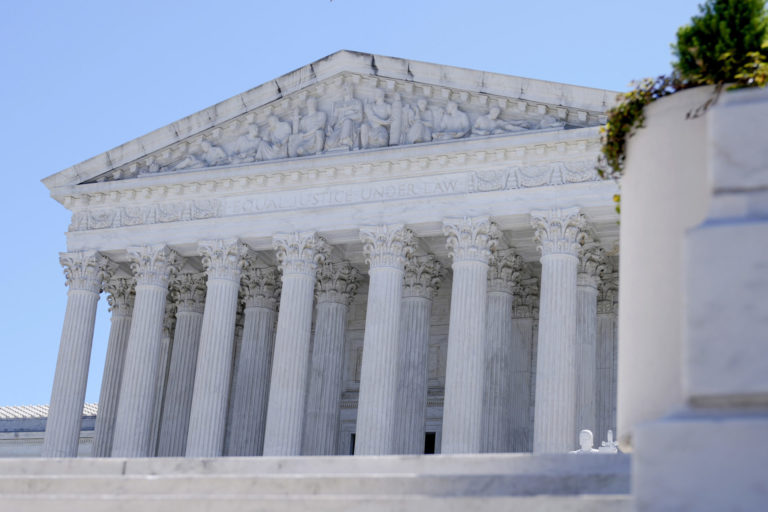
Supreme Court Could Rule on Trump’s Tariff Authority Friday

(Brett Rowland, The Center Square) The U.S. Supreme Court could issue a landmark ruling Friday on President Donald Trump’s authority to use tariffs, potentially reshaping presidential power.

Alan Morrison, a law professor at The George Washington University, said signs indicate a ruling on tariffs is expected on Friday.

“It seems highly unlikely that the court would come back for anything but a very, very important case three days before they’re going to come back anyway,” he told The Center Square.

Morrison said if Trump wins on tariffs, the scope of presidential power would grow significantly for the administration and all future presidents.

“If the court upholds these taxes, then essentially they’re telling the President he can do anything he wants to do, and the court is going to step aside,” Morrison said.

Trump has made tariffs, which are taxes on products imported from outside the U.S., central to both his domestic and foreign agendas during his second term. Last April, Trump imposed import taxes of at least 10% on every U.S. trading partner. Since then, the president has suspended, changed, increased, decreased and re-imposed tariffs under the 1977 International Emergency Economic Powers Act.

That law doesn’t mention the word “tariff” and had never been used to impose them before Trump did so last year. A group of states and small businesses challenged Trump’s tariffs under the 1977 law, winning in two lower courts before the Trump administration appealed to the Supreme Court.

The high court agreed to hear the case on an expedited basis, given the economic stakes at issue. The Trump administration could be forced to refund more than $133.5 billion in tariffs to importers if the Supreme Court sides with the states and small businesses in the case.

Trump has called the case one of the most important of all time and said that an unfavorable ruling could result in economic ruin for the U.S.

Phillip Magness, senior fellow at the Independent Institute, said Trump’s claims of ruin are exaggerated.

“Trump has made a number of wildly exaggerated economic claims,” Magness told The Center Square. “These numbers are nonsensical and appear to have zero basis in reality.”

More realistically, the U.S. would have to refund about $200 billion in tariff revenue it has collected so far, Magness said.

“While this is a loss of revenue to the government, it’s also a tax refund that will go to U.S. companies,” he said.

Those businesses could pass savings along to consumers, Magness added.

Magness said a ruling against the administration could lower consumer prices and end tariff uncertainty.

Companies have already started lining up for potential refunds. Hundreds of companies, including some big ones such as Costco, have filed for refunds with the U.S. Court of International Trade.

The scope of the Supreme Court’s ruling could determine what happens next, Magness said.

“The Supreme Court has wide leeway on how it will rule in this case,” he said. “One possibility is that they limit relief (i.e. a refund) only to the companies that are parties to the lawsuit in the case. That would precipitate additional litigation though at the U.S. Court of International Trade, which has already signalled that it will require the government to refund illegal IEEPA tariffs in other lawsuits going forward.”

Magness said other U.S. laws that allow the president to impose tariffs are “substantially more restrictive” than the authority Trump cites under the IEEPA to issue tariffs of any rate for any length of time.

Senate Rejects Trump’s Military Threats Against Venezuela with War Powers Vote

(Headline USA) The Senate advanced a resolution Thursday that would limit President Donald Trump’s ability to conduct further attacks against Venezuela, sounding a note of disapproval for his expanding ambitions in the Western Hemisphere.

Democrats and five Republicans voted to advance the war powers resolution on a 52-47 vote and ensure a vote next week on final passage. It has virtually no chance of becoming law because Trump would have to sign it if it were to pass the Republican-controlled House. Still, it was a significant gesture that showed unease among some Republicans after the U.S. military seized Venezuelan leader Nicolás Maduro in a surprise nighttime raid.

Trump’s administration is now seeking to control Venezuela’s oil resources and its government, but the war powers resolution would require congressional approval for any further attacks on the South American country.

“To me, this is all about going forward,” said Missouri Sen. Josh Hawley, one of the five Republican votes. “If the president should determine, ‘You know what? I need to put troops on the ground of Venezuela.’ I think that would require Congress to weigh in.”

The other Republicans who backed the resolution were Sens. Rand Paul of Kentucky, Lisa Murkowski of Alaska, Susan Collins of Maine and Todd Young of Indiana.

Trump reacted to their votes by saying on social media that they “should never be elected to office again” and that the vote “greatly hampers American Self Defense and National Security.”

Democrats had failed to pass several such resolutions in the months that Trump escalated his campaign against Venezuela. But lawmakers argued that now that Trump has captured Maduro and set his sights to other conquests such as Greenland, the vote presents Congress with an opportunity.

“It’s time for Congress to assert its control over military action of this kind, and it’s time to get this out of secrecy and put it in the light,” said Sen. Tim Kaine, D-Va., who forced the vote.

Republican leaders have said they had no advance notification of the raid early morning Saturday to seize Maduro and his wife, Cilia Flores, but mostly expressed satisfaction this week as top administration officials provided classified briefings on the operation.

The administration has used an evolving set of legal justifications for the monthslong campaign in Central and South America, from destroying alleged drug boats under authorizations for the global fight against terrorism to seizing Maduro in what was ostensibly a law enforcement operation to put him on trial in the United States.

Republican leaders have backed Trump.

“I think the president has demonstrated at least already a very strong commitment to peace through strength, especially in this hemisphere,” said Senate Majority Leader John Thune, R-S.D. “I think Venezuela got that message loudly and clearly.”

A vote on a similar resolution in November narrowly failed to gain the majority needed. Paul and Murkowski were the only Republicans voting in favor then.

Paul, an outspoken proponent of war powers resolutions, has acknowledged that Maduro is seen as a “bad guy” and “a socialist and an autocrat.” But he said that deploying troops to Venezuela is no longer a “hypothetical.”

“It’s interesting to see that more people, at least on my side, now are interested in who has the war prerogative, who was the prerogative to initiate or declare war,” he told reporters after Thursday’s vote.

Some progressive Democrats have suggested inserting language in a defense appropriations bill to limit certain military actions, but that idea met resistance from more pragmatic members of the caucus. Democratic leaders have tried to cast Trump’s foreign ambitions as a distraction from the issues that voters face at home.

“The American people are asking what the hell is going on in Venezuela and why is this president, who campaigned on ‘America First,’ now spending all his time and energy on escapades overseas?” Senate Democratic leader Chuck Schumer of New York said in a floor speech.

House Democrats were also introducing a similar resolution on Thursday.

Republican Sen. Lindsey Graham of South Carolina, a close Trump ally who traveled with the president aboard Air Force One on Sunday, said he would be comfortable with Trump taking over other countries without congressional approval, including Greenland.

“The commander in chief is the commander in chief. They can use military force,” Graham said.

Graham’s comments come as the administration weighs not only its next steps in Venezuela, but also Greenland. The White House has said the “military is always an option” when it comes to a potential American takeover of the world’s largest island.

Republicans have cited Greenland’s strategic value, but most have balked at the idea of using the military to take the country. Some favor a potential deal to purchase the country, while others have acknowledged that is an unlikely option when Denmark and Greenland have rejected Trump’s overtures.

Democrats want to get out in front of any military action and are already preparing to respond. Arizona Sen. Ruben Gallego said he expected to introduce a resolution “to block Trump from invading Greenland.”

“We must stop him before he invades another country on a whim,” Gallego wrote on social media. “No more forever wars.”

Kaine also said a resolution on Greenland would soon be filed, in addition to Cuba, Mexico, Colombia and Nigeria.

Greenland belongs to a NATO ally, Denmark, which has prompted a much different response from Republican senators than the situation in Venezuela.

On Thursday, Sen. Roger Wicker, chairman of the Senate Armed Services Committee, met with the Danish ambassador to the United States, Jesper Møller Sørensen. Also in the meeting were the top Democrat on the Senate Foreign Relations Committee, New Hampshire Sen. Jeanne Shaheen, and the head of Greenland’s representation to the U.S. and Canada, Jacob Isbosethsen.

“There’s no willingness on their part to negotiate for the purchase or the change in title to their land which they’ve had for so long,” Wicker, R-Miss., said afterward. “That’s their prerogative and their right.”

Wicker added that he hoped an agreement could be reached that would strengthen the U.S. relationship with Denmark.

“Greenland is not for sale,” Isbosethsen told reporters.Adapted from reporting by the Associated Press

China Is Weaponizing Silver Using Export Restrictions

(Mike Maharrey, Money Metals News Service) Silver now finds itself at the center of a geopolitical wrestling match over critical elements.

In what is clearly an effort to control the market, China recently announced export controls on silver. This could exacerbate global supply shortages already creating a significant silver squeeze.

Under the policy that took effect on January 1st, only large, licensed, state-approved companies with an annual silver production capacity of 80 tonnes and a credit line exceeding $30 million can export silver. According to analysts, the rules will lock hundreds of small and mid-sized exporters out of the system. These smaller firms are key suppliers to industrial users and silver refiners around the world.

The government recently released a list of 44 companies approved to export silver under the new rules. According to CNBC, a Chinese state news source quoted an unnamed industry insider who said the policy elevates silver from an ordinary commodity to a strategic material, placing its export controls on the same regulatory footing as rare earth metals.

The U.S. also recognizes the growing importance of silver. The U.S. Geological Survey recently designated silver a “critical mineral.” The USGS critical mineral list was established in 2017, and it guides federal strategy, investment, and mine permitting decisions.

Along with silver, the Chinese government slapped export restrictions on tungsten and antimony, elements critical in defense technologies.

Export controls are a standard move in China’s geopolitical playbook. The Chinese government has used similar rules to control the market for other rare earth metals. Analyst Faysal Amin said China uses export controls “to secure domestic industrial advantage and global pricing power.”

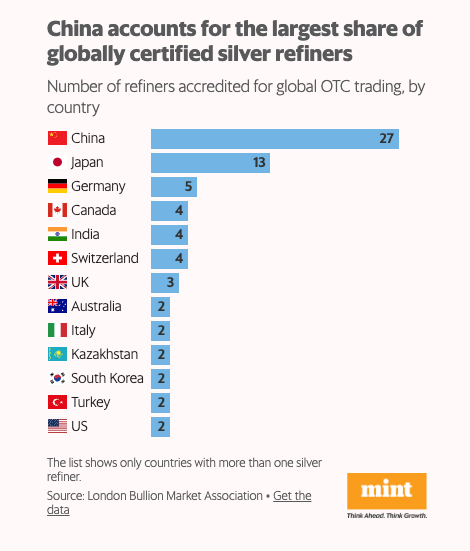
China ranks second in global silver mine production, but the Chinese dominate the silver market through their massive refining capacity. The country controls 60 to 70 percent of the world’s refined silver supply.

According to the London Bullion Market Association, China is home to 27 accredited silver refineries. The second largest number of refineries is in Japan, with only 13.

Weaponizing Silver

LiveMint.com said China’s huge refining capacity effectively makes the country “the gatekeeper of the refined silver supply.”

“The model is straightforward: China imports silver ore and base metal concentrates, refines them domestically, and exports the finished product.”

China exported 4,600 tonnes of silver through the first 11 months of 2025. Imports totaled just 220 tonnes.

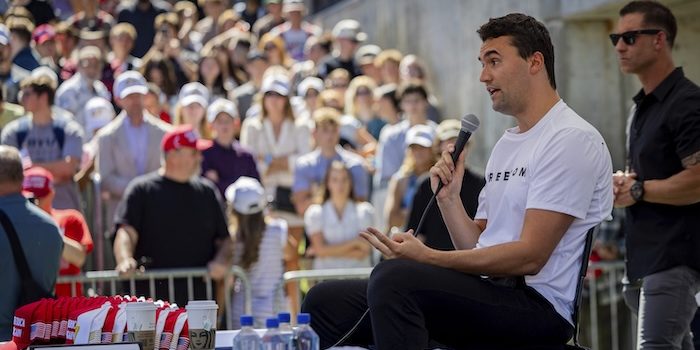
In an editorial published by MarketWatch, R360 founder Charlie Garcia put it bluntly.

“China just weaponized silver. And they did it while Americans were busy arguing about whether bitcoin is real money.”

Garcia explains how this is a common play from the Chinese playbook, one they successfully ran against rare earth metals.

“In 2010, Beijing started ‘licensing’ rare-earth exports. Not banning them, mind you. Just requiring paperwork. Approvals. Quotas that somehow never quite met demand. The effect was surgical; as prices spiked up to 4,500 percent, Western manufacturers discovered they couldn’t build smartphones or missiles without Chinese permission — and a generation of supply-chain executives learned Mandarin the hard way. The rare-earth squeeze wasn’t dramatic. It was bureaucratic. Death by a thousand forms filed in triplicate.”

The West escaped the rare earth noose by ramping up mining of these metals. But that’s easier said than done when it comes to silver. Even with higher prices, analysts say it will take years for silver production to rise to the level of demand.

Globally, mine output has sagged since peaking in 2016.

Metals Focus forecasts that while we will see record silver prices over the next five years, “mine supply growth is likely to remain modest, with only minimal increases globally.”

Why won’t silver production ramp up to meet the demand and take advantage of these higher prices?

Metals Focus blames the price inelasticity on the fact that more than half of silver is mined as a byproduct of base metal operations.

“Although silver can be a significant revenue stream, the economics and production plans of these mines are primarily driven by the markets for copper, lead and zinc. Consequently, even significant increases in silver prices are unlikely to influence production plans that are dependent on other metals.”

About 28 percent of the silver supply is derived from primary silver mines, where production is more tightly tied to price. But silver mines face their own challenges, including declining ore grades and rapidly rising mining costs.

U.S. silver mine output was up about 6 percent in 2024 at around 1,100 tonnes. However, U.S. mine output has also been flat in recent years.

Flat mine production is exacerbating tight supplies.

Silver demand has outstripped supply for four straight years. The structural market deficit came in at 148.9 million ounces last year. That drove the four-year market shortfall to 678 million ounces, the equivalent of 10 months of mining supply in 2024.

The Silver Institute projects a fifth straight supply deficit this year.

Garcia pointed out that it takes 10 to 20 years before an ounce of metal is mined from a newly discovered silver deposit.

“The supply cavalry isn’t coming. It’s geologically stuck in traffic.”

Garcia also took aim at the hope that copper can replace silver in critical tech applications, such as solar energy. While engineers have proven copper can replace silver in solar panels, that doesn’t mean you’re going to see copper-infused solar farms tomorrow.

“Here’s what the lab results don’t tell you: Converting a single solar-cell factory to copper takes 18 months. There are 300 such factories worldwide. Maximum parallel conversion capacity is about 60 factories per year. Do the math. That’s a minimum of four years to get halfway there, assuming unlimited capital and perfect execution. Solar manufacturers aren’t stupid. They’ve been absorbing silver’s 180 percent price increase all year. They keep buying because they have no choice.”

Garcia estimates that silver will have to rise to $134 an ounce before we see significant demand destruction in the solar sector.

Why is China seeking to corner the silver market? Garcia said it’s a matter of economic dominance.

“Beijing isn’t restricting exports because the government is worried about speculation. China is restricting exports because it needs the silver and has figured out something Washington hasn’t. The clean-energy transition runs on metals, and whoever controls the metals controls the transition.”

And don’t forget that the defense industry is also heavily dependent on silver. There are no hard figures on how much silver is used in defense applications due to the secretive nature of the industry. However, analysts say that it’s significant.

Garcia said the import restrictions send a message to the West.

“If you want to build the future of energy, you will need to negotiate with Beijing. Maybe your silver shipment will be approved. Maybe there will be delays. Maybe you’ll find yourself suddenly interested in Chinese joint ventures and technology transfers. Funny how that works. … China just told us something important, and it wasn’t complicated. Silver is no longer a commodity. It’s a strategic asset in a resource war that most Americans don’t know is being fought.”

Given the evolving dynamics, Garcia said it might not be a bad idea to hold on to some physical silver.

“There’s an argument for keeping metal in your possession. No counterparty risk. No margin calls. Just silver, sitting there, quietly appreciating while bureaucrats in Beijing shuffle export applications into the ‘pending’ pile.”


Mike Maharrey is a journalist and market analyst for Money Metals with over a decade of experience in precious metals. He holds a BS in accounting from the University of Kentucky and a BA in journalism from the University of South Florida.

Gold Tops Treasuries as World’s Biggest Foreign Reserve Asset

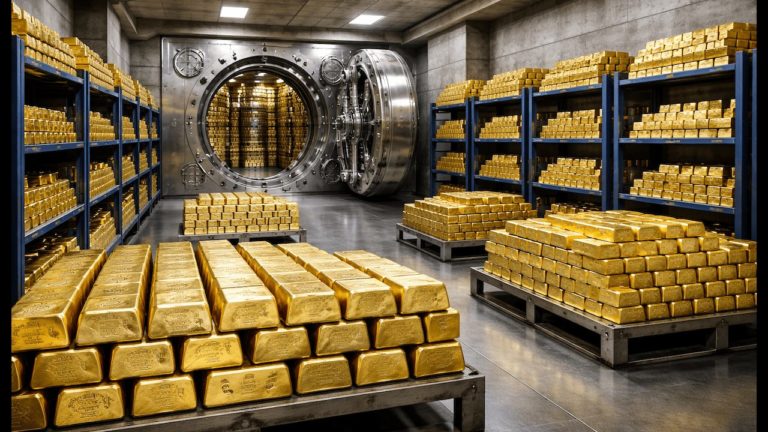
(Mike Maharrey, Money Metals News Service) Gold now ranks as the world’s top reserve asset. According to World Gold Council data, global gold reserves are approaching $4 trillion. Treasury holdings total approximately $3.9 trillion.

The last time central bank gold reserves topped Treasury holdings was in 1996.

The increase in gold reserves is a function of both rising gold prices and steady, strong central bank gold buying.

Gold was up over 64 percent in 2025. Since January 2024, gold has surged by over 115 percent.

At the same time, central banks globally have increased their gold reserves by over 1,000 tonnes for three straight years, and the World Gold Council projects that 2025 will be the fourth.

2024 ranked as the third-largest expansion of central bank gold reserves on record, coming in just 6.2 tonnes lower than in 2023 and 91 tonnes lower than the all-time high set in 2022 (1,136 tonnes). 2022 was the highest level of net purchases on record, dating back to 1950, including since the suspension of dollar convertibility into gold in 1971.

To put that into context, central bank gold reserves increased by an average of just 473 tonnes annually between 2010 and 2021.

World Gold Council analysts said, “Central banks are likely to continue their buying spree,” calling central bank purchases “surprisingly resilient” given the rapid price increase.

Meanwhile, global Treasury holdings have dipped modestly.

Mining.com notes the rapid increase of gold reserves is part of a broader de-dollarization trend as “foreign governments pivot away from dollar-denominated assets and into gold.

Why are so many countries spurning the dollar?

Many are concerned about the weaponization of the U.S. currency. In an article published by the Atlantic Council, Kimberly Donovan and Maia Nikoladze point out that “central banks that are worried about getting sanctioned, want to protect themselves from a potential global financial crisis, or both have been stacking up gold at record levels.

There are also growing worries about the U.S. government’s fiscal irresponsibility. In October, the national debt pushed above $38 trillion, and there is no sign that the borrowing and spending will slow down anytime soon. At some point, people become wary of loaning their fast-spending, drunk uncle more money.

As JP Morgan recently noted, “Increased polarization in the U.S. could jeopardize its governance, which underpins its role as a global safe haven.

Mining.com pointed out that gold doesn’t come with counterparty risk and is “traditionally seen as a much safer alternative to fiat currencies.

The de-dollarization trend shows no sign of abating. Many countries are implementing policies to minimize dollar dependence. For instance, Zambia recently authorized mine tax payments in yuan.

This is a growing problem for the U.S. because it depends on the global demand for dollars supported by its reserve status to underpin its massive government.

The only reason Uncle Sam can borrow, spend, and run massive budget deficits to the extent that it does is the dollar’s role as the world’s reserve currency. It creates a built-in global demand for dollars and dollar-denominated assets. This absorbs the Federal Reserve’s money creation and helps maintain dollar strength despite the Federal Reserve’s inflationary policies.

If the world needs fewer dollars, they will begin to return to the U.S., causing a dollar glut. This will increase inflationary pressure domestically as the value of the U.S. currency further depreciates. In the worst-case scenario, the dollar could collapse completely, leading to hyperinflation.


Mike Maharrey is a journalist and market analyst for Money Metals with over a decade of experience in precious metals. He holds a BS in accounting from the University of Kentucky and a BA in journalism from the University of South Florida.

Trump Assassination Plotter Pleads Guilty to Killing Parents

(Ken Silva, Headline USA) A Wisconsin teenager implicated in a plot to assassinate Donald Trump has pleaded guilty to murdering his parents.

The teenager, Nikita Casap, 18, was arrested last February for killing his mother, Tatiana Casap, and stepfather, Donald Mayer, at their village of Waukesha. The FBI learned of his assassination plot against Trump while searching his electronic devices.

According to Fox 6, Casap also had a three-page apparent manifesto entitled “Accelerate the Collapse.” That document reportedly called for a “a political revolution in the United States” to “save the white race” from “Jewish controlled” politicians. Casap was allegedly a follower of the Satanic accelerationist group Order of Nine Angles, which seeks to collapse Western civilization.

“An excerpt from the three-page document specifically referenced President Donald Trump and said ‘getting rid of the president and perhaps the vice president’ is ‘guaranteed to bring in some chaos.’ It later said: ‘Point being this manifesto is specifically for the attack that targets Trump,’” Fox 6 reported last year.

The search warrant further showed that FBI agents interviewed one of Casap’s classmates, who said he planned to kill his parents but didn’t have a gun. The classmate also reportedly told the FBI that Casap was in contact with someone in Russia and was “planning to overthrow the government of the United States and assassinate President Trump.”

Casap also allegedly wanted to escape to Ukraine afterwards.

At Wednesday’s hearing, Casap could be seen shaking in his chair as Wisconsin Judge Ralph Ramirez explained to him the implications of his crimes: He could spend the rest of his life in prison. Casap said he understood, and admitted to his guilt.

A sentencing hearing is set for March 5.

Casap is one of numerous shooters to have been investigated by the FBI before his attack.

According to court filings from defendant Nikita Casap’s case, the FBI visited his home in 2023 to investigate “unrelated IP internet activity.”

“The FBI interviewed the Casap family in November of 2023 for unrelated internet IP activity. All members of the family denied the IP activity and Agents were allowed to view devices and internet history and found no corroboration of the alleged internet activity,” states a March 18 search warrant for Casap’s electronic devices, which was unsealed earlier this month.

Casap later laughed about his encounter with the FBI while chatting with someone on TikTok.

“My parents don’t know lol, they would take my phone away if they did. Especially since last year FBI visited lol,” Casap told someone who was asking if his parents knew he was interested in the Order of Nine Angles.

Less than two months after that online discussion, Casap killed his mother and stepfather. Officers found the bodies of Casap, 35; and Mayer, 51, on Feb. 28. Family members requested a well-being check after Mayer didn’t report for work and Nikita Casap skipped school for about two weeks.

Other prominent examples of mass shooters and terrorists who were on the FBI’s “radar” include Sandy Hook shooter Adam Lanza, Orlando Pulse nightclub shooter Omar Mateen and Parkland shooter Nikolas Cruz.

Ken Silva is the editor of Headline USA. Follow him at x.com/jd_cashless.

Prosecutor Wants to Stay on Charlie Kirk Murder Case, Despite Being Related to Someone Who Was There

(Ken Silva, Headline USA) The Utah County Attorney’s Office is downplaying the fact that one of its prosecutors is related to a student who was at the infamous Turning Point USA event where conservative activist Charlie Kirk was assassinated last September at Utah Valley University.

Utah County Attorney Jeff Gray said in a Monday court filing that the unnamed prosecutor’s relationship with one of the attendees has no bearing on how he’ll handle the case. Gray’s Tuesday filing was in response to a motion from alleged assassin Tyler Robinson’s lawyers to disqualify the entire Utah County Attorney’s Office from prosecuting the case.

According to the Salt Lake Tribune, “The prosecutor’s loved one, who is a student, did not personally see the shooting … Gray added that the student was not in the line of sight of the gunman, who law enforcement says fired a single bullet from a rooftop.

“The student did not feel traumatized by the event, Gray wrote, and they have not missed classes or needed counseling,” the newspaper added.

Robinson’s attorneys beg to differ.

“There is no way to predict at this time what directions this case may take, what critical prosecutorial decisions will be required, and how they may be impacted by the experience Mr. [REDACTED] had with his both in real time and after the initial crisis,” their Dec. 10 motion says.

“These influences may be subtle. For example, Mr. [REDACTED] may be less inclined to believe a witness whose observations are not consistent with those of his [REDACTED]. Or he may make specific strategic decisions to avoid his [REDACTED] having to testify, even if that may not be in the best interests of the State’s case.”

Robinson’s lawyers don’t just want the specific prosecutor disqualified. They want the entire UCAO barred from the case on the grounds that the prosecutor shared his relative’s experiences with most of the office—something that may have influenced their decision to pursue the death penalty.

The prosecutors have yet to publicly respond to the motion. Robinson has not yet been arraigned. His next hearing is later this month.

Ken Silva is the editor of Headline USA. Follow him at x.com/jd_cashless.

8 People Shot Outside Mormon Church in Utah

(Headline USATwo people were killed and six others injured in a mass shooting outside a Salt Lake City church Wednesday night while mourners were attending a memorial service inside, police said.

The shooting took place in the back parking lot of a house of worship for The Church of Jesus Christ of Latter-day Saints, the Utah-based faith known widely as the Mormon church.

Authorities said no suspect was in custody Wednesday.

All the victims were adults. At least three of the injured were in critical condition, police said.

Police said they do not believe the shooter had any animus toward a particular faith. They also don’t think the shooting was random.

“We don’t believe this was a targeted attack against a religion or anything like that,” Salt Lake City Police Chief Brian Redd said.

The red brick church in the northwest Salt Lake City neighborhood mostly serves Tongan congregants and holds regular worship services in their native tongue, according to its website.

Upon hearing gunshots, residents from a low-income housing complex next to the church flooded outside to help victims and console dozens of people who had been attending a funeral for a person who was not identified.

Brennan McIntire said he and his wife, Kenna, heard several loud gunshots from their apartment next to the church parking lot while watching TV. He jumped off the couch and ran outside in flip-flop sandals to see what happened.

“As soon as I came over, I see someone on the ground,” he said. “People are attending to him and crying and arguing.”

Kenna McIntire came outside soon after and was rattled at the sight of first responders lifting an unconscious woman into an ambulance while people huddled around and sobbed.

The couple said they hear gunshots in their neighborhood almost daily, but never right outside their door.

“It was really heartbreaking to hear and see,” she said.

About 100 law enforcement vehicles were at the scene in the aftermath, and helicopters flew overhead. Neighbors huddled in blankets next to a taco truck, watching the officers work and waiting for updates.

Police said they were reviewing license plate readers and surveillance videos from nearby businesses in their search for a suspect.

“This should never have happened outside a place of worship. This should never have happened outside a celebration of life,” Mayor Erin Mendenhall said.

The church, headquartered in Salt Lake City, was cooperating with law enforcement and said it was grateful for first responders’ quick efforts.

“We extend prayers for all who have been impacted by this tragedy and express deep concern that any sacred space intended for worship should be subjected to violence of any kind,” church spokesperson Sam Penrod said.

About half of Utah’s 3.5 million residents are members of the faith. Houses of worship like the one where the shooting occurred can be found tucked into neighborhoods around the city and state.

The faith has been on heightened alert since four people were killed when a former Marine opened fire in a Michigan church in September and set it ablaze. The FBI found that he was motivated by “anti-religious beliefs” against Latter-day Saints.

Adapted from reporting by the Associated Press


Trump Says He Wants a $1.5 Trillion Military Budget

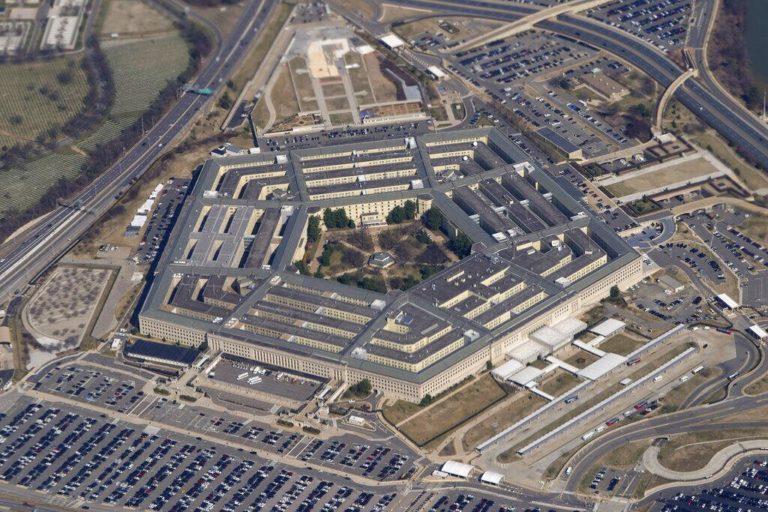
(Dave DeCamp, Antiwar.comPresident Donald Trump said in a post on Truth Social on Wednesday that he wants a $1.5 trillion military budget for 2027, a 50% increase from his $1 trillion budget for 2026.

“After long and difficult negotiations with Senators, Congressmen, Secretaries, and other Political Representatives, I have determined that, for the Good of our Country, especially in these very troubled and dangerous times, our Military Budget for the year 2027 should not be $1 Trillion Dollars, but rather $1.5 Trillion Dollars,” the president said.

He added that $1.5 trillion would enable the US to build a “dream military” and claimed it would be possible thanks to his tariff policy.

“If it weren’t for the tremendous numbers being produced by Tariffs from other Countries, many of which, in the past, have ‘ripped off’ the United States at levels never seen before, I would stay at the $1 Trillion Dollar number but, because of Tariffs, and the tremendous Income that they bring, amounts being generated, that would have been unthinkable in the past … we are able to easily hit the $1.5 Trillion Dollar,” Trump wrote.

He also claimed that tariff revenue would also allow him to “pay down Debt, and likewise, pay a substantial Dividend to moderate income Patriots within our Country!”

When he first came into office in 2025, Trump suggested he could substantially cut military spending, but then went on to request the first-ever $1 trillion US military budget. He got it by combining the 2026 National Defense Authorization Act (NDAA), which Congress finalized at $901 billion, with a supplemental military spending bill worth about $150 billion that was included in the so-called “Big Beautiful Bill” passed earlier in 2025.

While 2026 marks the first time the US had an official military budget over $1 trillion, the true cost of annual US military and national security spending has exceeded $1 trillion for many years, when taking into account factors such as the budgets for the Departments of Homeland Security and Veterans Affairs, and the national security share of the interest accrued on the US debt.

This article originally appeared at Antiwar.com.


Minnesota Schools Teaching Black Lives Matter’s ’13 Guiding Principles’

(José Niño, Headline USA) Minnesota school districts must finalize curriculum selections within weeks to satisfy ethnic studies requirements starting in the 2026–2027 academic year, per a report by The Epoch Times

Few options exist beyond state teachers union-approved instructional content created using public funds.

The programming developed by the University of Minnesota’s Center for Race, Indigeneity, Disability, Gender and Sexuality Studies directs sixth-grade students to study Black Lives Matter’s 13 guiding principles. Seventh graders learn about Disability Rights Movement activism against injustice.

An 11th and 12th-grade course titled Jim Crow of the North states students will “be able to explain how race is socially constructed and how that social construction has been used to oppress people of color, specifically in relation to Jim Crow, segregation, and racial covenants.”

The Center of the American Experiment, an education policy organization opposing partisan and race-focused curricula, assists districts seeking politically balanced alternatives resembling traditional history and social studies electives rather than social justice advocacy materials.

“The words ethnic studies have been hijacked,” Catrin Wigfall, a policy fellow with the center, told The Epoch Times. “But boards [of education] have more power in this than they might think.”

State regulations permit parents to examine curricula and remove their children from instruction they find problematic, requiring schools to supply alternative materials, Wigfall said.

The Minnesota Department of Education characterizes ethnic studies as interdisciplinary instruction examining “how race and racism have been and continue to be social, cultural, and political forces, and the connection of race to the stratification of other groups.”

State regulations mandate public schools integrate ethnic studies lessons throughout required social studies classes at every grade level, plus provide standalone ethnic studies electives for high school juniors and seniors.

In 2023, the Minnesota Department of Education specified ethnic studies context should permeate additional subjects including math, physical education and health during periodic course revisions.

The Center of the American Experiment contends these standards cultivate angry, inaccurate and “identity-first” ideological and political viewpoints.

True ethnic studies should examine worldwide histories, cultures and religions, but Minnesota school instruction imposes a divisive and limited political perspective, Wigfall said.

“It’s been a bait and switch campaign,” she said.

The center supports the American Experience curriculum created by the Foundation Against Tolerance and Racism, which Johns Hopkins validated as an ethnic studies model, as a viable substitute for University of Minnesota materials.

The 1776 Unites free curriculum emphasizes historical narratives that “celebrate black excellence, reject victimhood culture, and showcase African-Americans who have prospered by embracing America’s founding ideals,” its website states.

Wigfall said her organization assists school districts navigating curriculum decisions and deadlines for satisfying state mandates throughout various subjects.

The center does not advocate lawsuits challenging the mandate, but local education officials possess legal remedies under federal Title VI provisions if state requirements compel them to create hostile learning environments.

“It will be interesting to see what the rollout looks like,” she said. “When you emphasize tribalism, what does that do to knowledge development?”

José Niño is the deputy editor of Headline USA. Follow him at x.com/JoseAlNino

Anonymous Trader Scores Massive Payday Hours Before Venezuela Raid

(José Niño, Headline USA) An unidentified gambler has pocketed approximately $410,000 in profits after correctly wagering that Venezuelan President Nicolas Maduro would lose power, according to Reuters.

The speculator’s Polymarket account accumulated positions in contracts linked to Maduro’s removal under terms suggesting unlikely odds ahead of the weekend military operation. These bets, valued at roughly $34,000 before Maduro’s detention, skyrocketed following reports that U.S. forces had captured the Venezuelan leader, platform data reveals.

Following Monday’s developments, major stock indices climbed and oil prices rose significantly, with energy sector shares posting substantial advances. Venezuela’s government bonds—already in default—surged on expectations of a comprehensive debt restructuring. Securities issued by both the Venezuelan government and state petroleum company PDVSA jumped as much as 10 cents per dollar, representing gains approaching 30%.

The suspicious timing of these trades will likely draw attention from legislators who have advocated for enhanced insider trading regulations, including bipartisan proposals to prohibit stock trading by members of Congress. Following Monday’s revelations, Democratic Representative Ritchie Torres announced plans to introduce legislation this week preventing elected officials, congressional members, and federal workers from participating on prediction platforms where they might exploit privileged information.

The anonymous profile was established last month, with the investor purchasing $96 worth of contracts on December 27 that would generate returns if the United States invaded Venezuela by January 31. Additional similar positions followed in subsequent days.

Platforms such as Polymarket provide tradable binary contracts enabling users to speculate on diverse real-world outcomes spanning sports, entertainment, political developments, and economic events. When contracts purchased for pennies ultimately pay out at one dollar, traders possessing nonpublic information can generate enormous returns within extremely short timeframes.

Last September, Polymarket obtained regulatory clearance from the Commodity Futures Trading Commission to resume American operations following its $112 million purchase of QCEX, a CFTC-licensed derivatives exchange. The CFTC has not yet responded to inquiries regarding any investigation into Maduro-related transactions.

Previous concerns about potential insider trading have dogged Polymarket. Though Americans currently lack official access to the primary betting platform, numerous traders circumvent restrictions using VPN technology.

Polymarket declined to comment on the matter.

José Niño is the deputy editor of Headline USA. Follow him at x.com/JoseAlNino