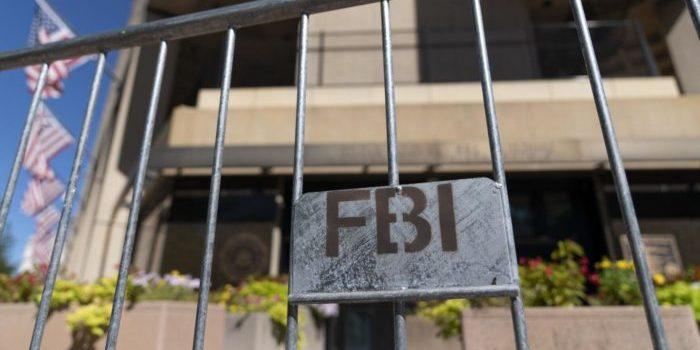
(Ken Silva, Headline USA) The Justice Department is concealing information about Southern Poverty Law Center informants who may have also worked for the FBI, according to a recently filed status report filed by the DOJ and the SPLC.
The joint status report was filed Friday in the DOJ’s case against the SPLC, which is accused of improperly raising millions of dollars to secretly pay leaders of the Ku Klux Klan and other hate groups. As part of its defense, the SPLC is arguing that its informants have provided valuable information to the FBI to help disrupt those hate groups. Accordingly, the SPLC is seeking FBI records about the information that SPLC informants have provided.
According to Friday’s status report, the names of specific SPLC informants appear in the FBI’s case-management system up to 4,197 times between 2007 and 2023. However, the FBI hasn’t searched—nor does it intend to—its “Delta” database, which is specifically designed to manage the bureau’s network of spies.
“The government represented to the defense that it has not searched the Delta database and thus does not know how many “hits” any of the search terms would return, and that it does not intend to search the Delta database, for any time period,” Friday’s status report says.
“The government’s position, as stated on September 9, is that [it’s not required] it to search the Delta database, even though it is where the FBI stores information about confidential human sources like the informants at issue in this case.”
The names of specific SPLC informants appear in the FBI's case-management system up to 4,197 times between 2007-2023, according to a new status report.
However, the FBI says it hasn't searched–nor does it intend to–its "Delta" database, which is specifically designed to manage… https://t.co/PNsKpqB2lH pic.twitter.com/Xn9I1YXTSy
— Ken Silva (@JD_Cashless) September 14, 2026
The status report says a court hearing will be necessary to resolve the dispute over whether the SPLC can obtain information from the FBI’s Delta database. That court hearing will likely take place in late October.
The FBI’s Delta database is one of many records-management systems—some of which are designed to conceal records from the public. Indeed, the bureau has a practice of putting evidence that would be used in court in an “official case file” but keep other records separate. Those separate files, which have had various names, keep potentially damaging and embarrassing records from both defense attorneys and the wider public.
The FBI’s secretive recordkeeping dates back at least to the 1940s, when former director Hoover created what was known as “June Mail,” also known as the “June files.”
“All bureau records that were not required to be destroyed and that authorized illegal acts or were the fruits of illegal buggings, wiretappings, or burglaries were ordered to be designated as ‘June Mail,’” wrote civil rights attorney Alexander Charns in his book Cloak and Gavel: FBI Wiretaps, Bugs, Informers, and the Supreme Court. “‘June Mail’ was sent to a high-security safe called the Special File Room. These parallel filing systems were designed so that agents could plausibly deny knowledge of illegal tactics.”
According to an article in The Center for Public Integrity, the June files were ended in 1978. But that didn’t stop the secrecy. Instead, the FBI simply renamed its system the aforementioned “zero-files.” That monicker lasted through the 90s, until the bureau again renamed it to the “I-drive”—then, not long after that, to the “S-drive.” It’s not publicly known what name the FBI and other agencies have for their secretive systems today.
Attorney Jesse Trentadue, whose FOIA litigation helped bring the S- and I-Drives to light around 2011, told The Center for Public Integrity at the time that the various names would be humorous if not for the unconstitutionality of it all.
“You think you’ve exposed them and it’s over, and they set up another,” he said.
Ken Silva is the editor of Headline USA. Follow him at x.com/jd_cashless.