Why Silver Is Not in a Bubble

(Jesse Colombo, Money Metals News Service) Amid silver’s recent surge following a long period of stagnation, a wave of articles and commentaries has emerged calling its rise an unsustainable bubble that’s about to burst and burn investors.

It’s worth noting that nearly all of those now calling silver a bubble failed to foresee its bull market years ago, unlike myself. In my view, they’re now heckling from the cheap seats, which reeks of sour grapes.

I firmly disagree with their assessment, and in this report, I will prove that silver is not in a bubble by examining a wide range of valuation metrics.

Let’s start with a look at silver’s performance over the past few years. The current bullish cycle in silver began when it bottomed in September 2022, and it has since surged 379%.

While some argue for different starting points to silver’s bull market, I believe September 2022 is the most accurate. This view is supported not only by silver’s price in dollar terms, but also by other valuation metrics I use, as well as the timing of gold’s bottom. I explained my reasoning in this report.
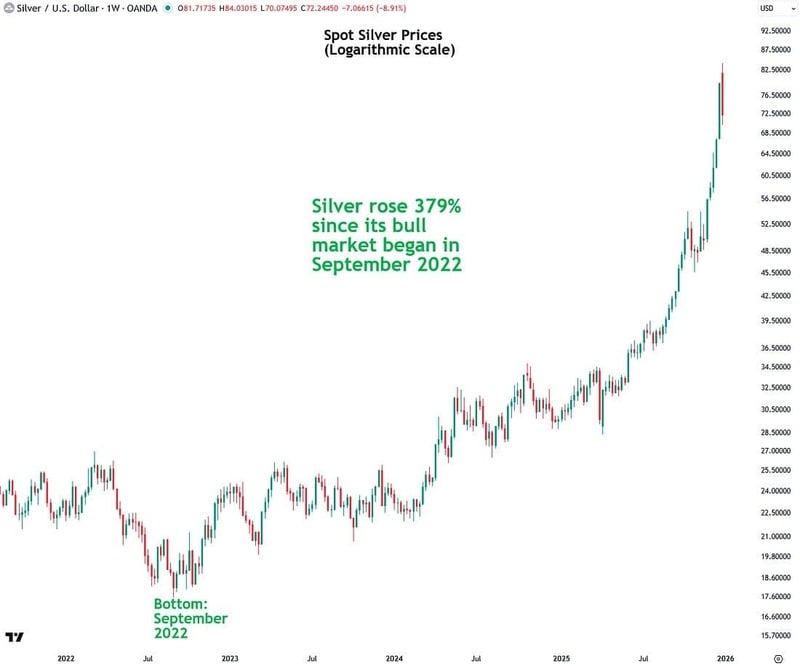
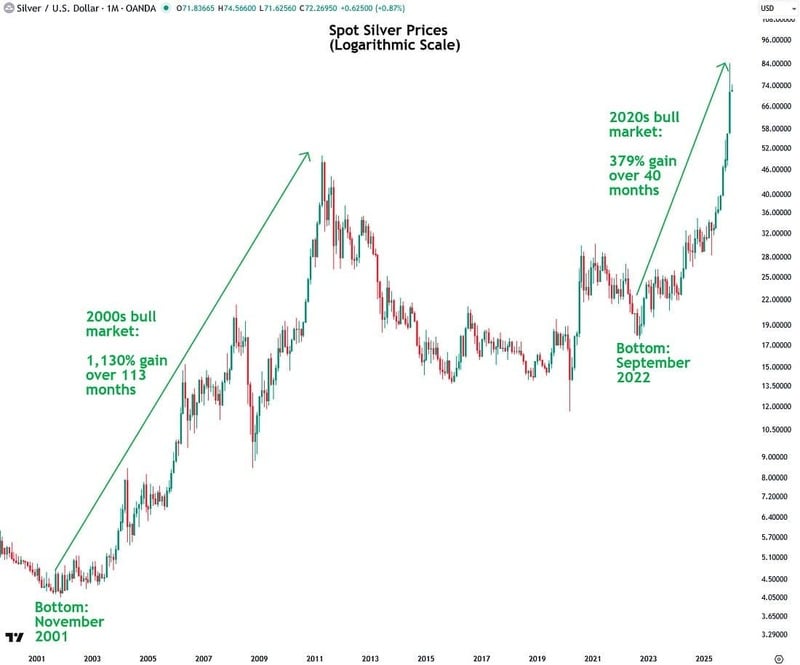
While silver’s 379% gain over the past 40 months is impressive, it remains in the early stages when compared to previous secular silver bull markets.

For example, during the 1970s bull market, silver rose 3,631% over 98 months, and in the 2000s bull market, it gained 1,130% over 113 months. The current silver bull market’s relative youth is just one of many reasons I believe it is premature to call for its end.
Silver’s sharp nominal price increase is the main reason behind recent claims that it is in a bubble, but that is a highly inaccurate and intellectually dishonest approach. A far better method is to evaluate silver against a range of different yardsticks to determine whether it is undervalued, fairly valued, or overvalued, which is what we’ll examine next.

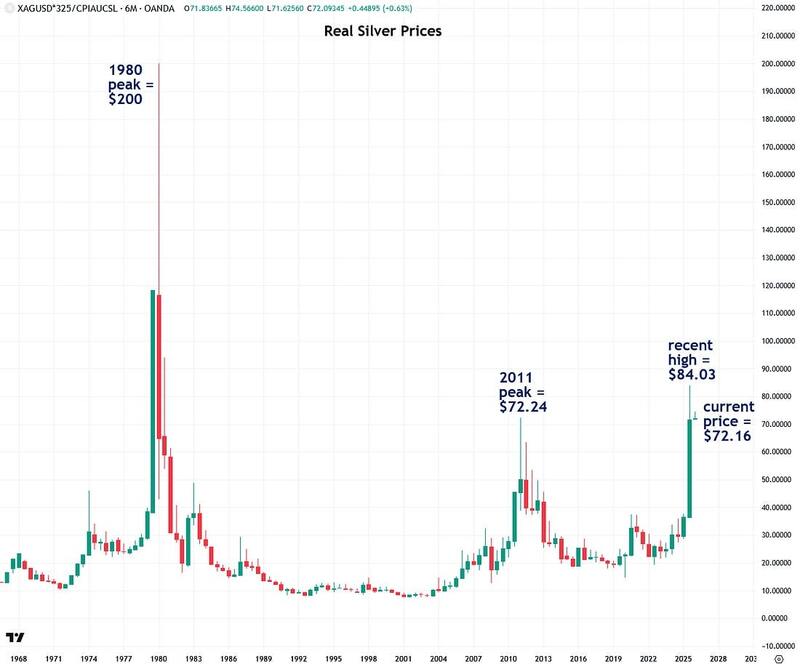
Let’s begin with the chart of silver’s real, or inflation-adjusted, price over the past six decades. At its 1980 peak, silver reached the equivalent of $200. In 2011, it climbed to an inflation-adjusted high of $72.24. At its recent peak last week, silver hit $84 before pulling back to its current level of $77.

This shows that the real price of silver is less than half of its 1980 peak and is currently roughly in line with its 2011 high. This indicates that silver has significant room to rise further over the course of its bull market.

I also want to point out that the current real price of silver matching its 2011 peak doesn’t concern me as much as it might seem, because at that time, gold, silver, and commodities in general were already more than nine years into a bull market that was clearly showing its age.

In contrast, the current precious metals bull market is only a few years old, and commodities overall have been stagnant for years, though I believe they are about to begin a supercycle of their own soon.
Now we will look at silver in relation to another measure of inflation: the U.S. M2 money supply. I believe that the money supply is an even better indicator of inflation than the Consumer Price Index (CPI) used in the prior chart, which is known to understate actual inflation (learn more).

Moreover, growth in the money supply is the underlying cause of inflation itself. As Milton Friedman, the Nobel Prize–winning economist, famously said, “Inflation is always and everywhere a monetary phenomenon.”

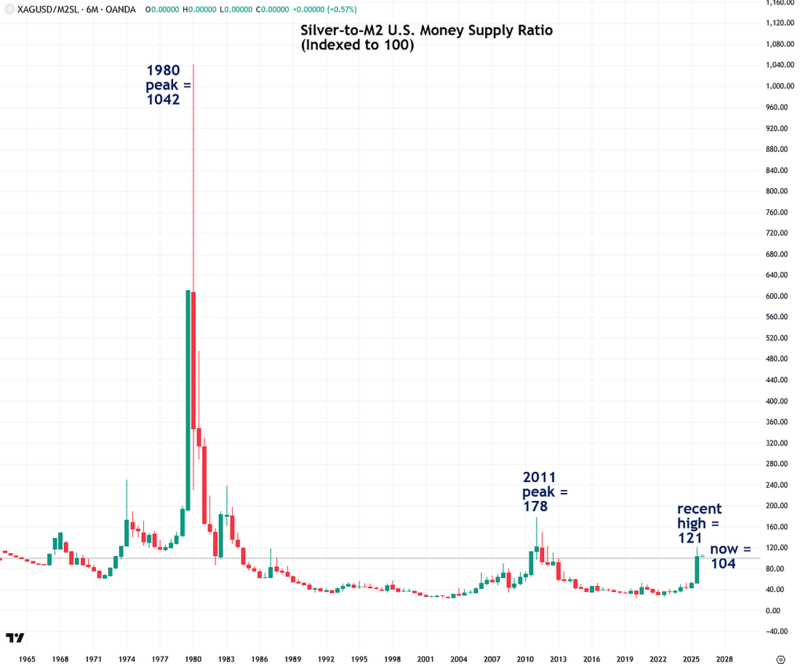
At its peak in 1980, silver measured against the M2 money supply reached 1,042. In 2011, it was 178. At last week’s high, it stood at just 121, and after the recent pullback, it’s now at 104.

This indicates that silver still has significant room to rise relative to the money supply before it could be considered in bubble territory.

On that note, I also recommend reading my report on how the U.S.  global money supply is growing at an alarming rate. I also suggest reading my other report, which explains how it is not so much that precious metals are rising in value, but rather that paper currencies are losing value.
Next, let’s move on to another metric that confirms that silver is still much cheaper today than it was at the peaks in 1980 and 2011, despite its recent gains. This time, we will look at the silver-to-gold ratio, which is a useful way to determine whether silver is undervalued or overvalued relative to gold, the leading benchmark in the precious metals market.

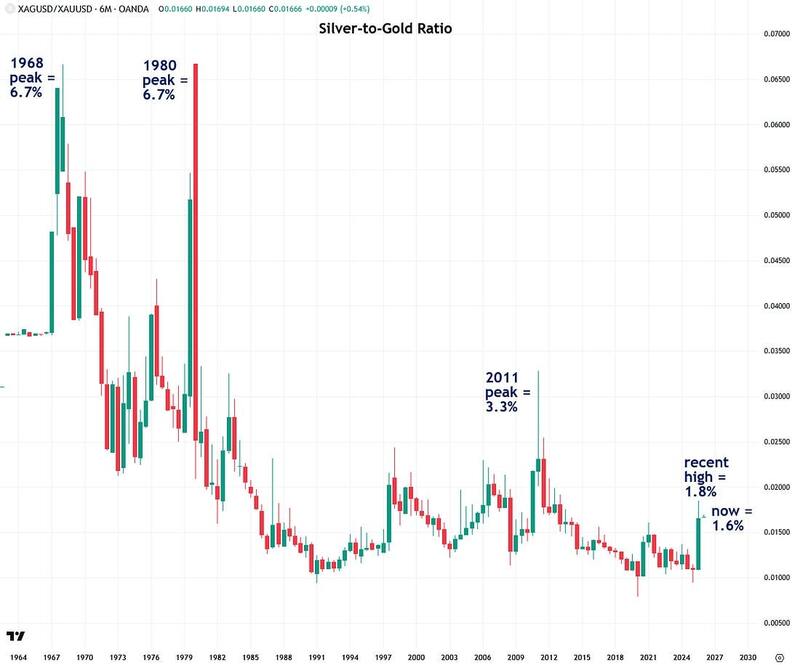
While gold has always been more expensive than silver throughout history, the gap between them has varied significantly. At both the 1968 and 1980 peaks, silver was 6.7% of the price of gold. At the 2011 peak, it was 3.3%. But now, silver is just 1.6% of gold’s price, which is far below historical levels.

This indicates that silver is extremely cheap by historical standards and still has substantial room for its bull market to continue.
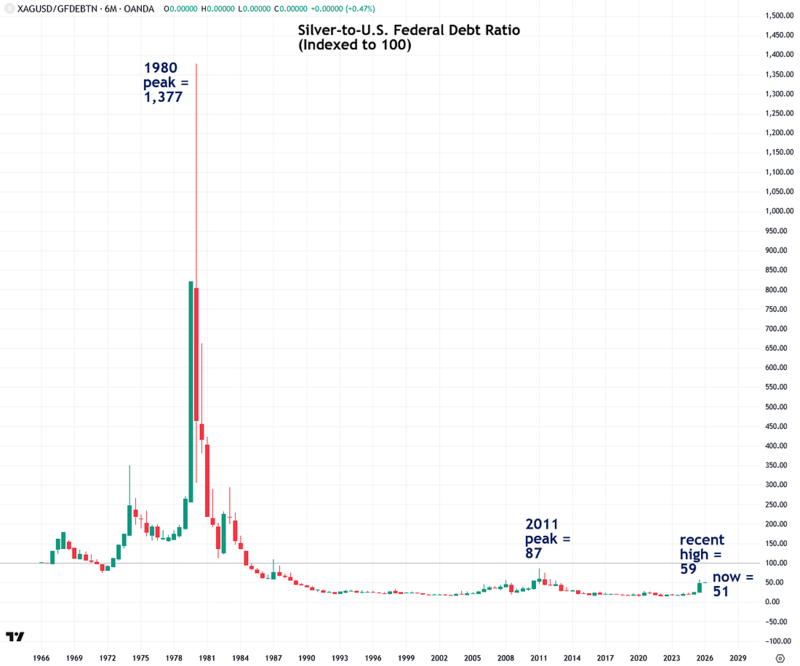
Another novel yardstick I have been experimenting with lately for comparing precious metals and commodity prices is the U.S. national debt. The chart, indexed to 100, shows that this ratio was 1,377 at the 1980 peak, 87 at the 2011 peak, and it’s in the mid-50s now.

This confirms that silver has substantial room to catch up to the soaring national debt. In that context, $75 to $80 silver is not expensive at all, and a move to $100 and beyond is far from inconceivable.

One reason why this ratio is so important is that the higher the federal debt rises relative to GDP, the closer we move to the inevitable breaking point where the government and the Federal Reserve will be forced to support the U.S. Treasury market and fund government operations by running the printing presses on overdrive. This will send inflation through the roof and ultimately destroy the dollar, causing gold and silver to reach prices that are difficult to even comprehend.

This will not be ordinary inflation, but full-blown hyperinflation like what my great-grandparents suffered through in Weimar Germany during the 1920s. It devastated the wealth and economy of Germany and was the reason they emigrated to the United States. Unfortunately, it also led to mass radicalization, which directly paved the way for the rise of Hitler.
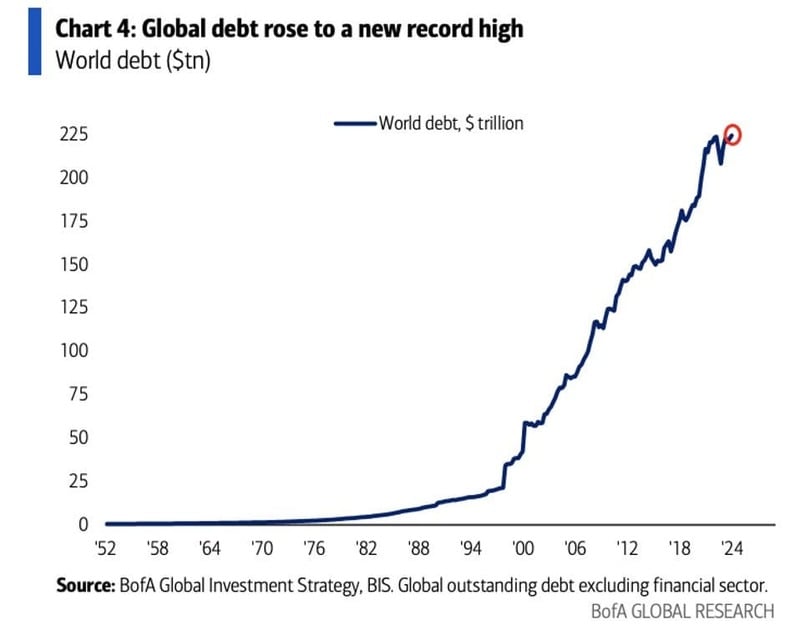
Unfortunately, this debt problem is truly a worldwide phenomenon, as global debt has surged more than tenfold since the mid-1990s, reaching an estimated $250 trillion. This towering debt burden is a ticking time bomb that will ultimately bring fiat currencies to their knees.

That is why it is of the utmost importance for everyone to acquire at least some physical gold and silver to protect themselves against what lies ahead. This fact alone guarantees that precious metals still have much further to rise.
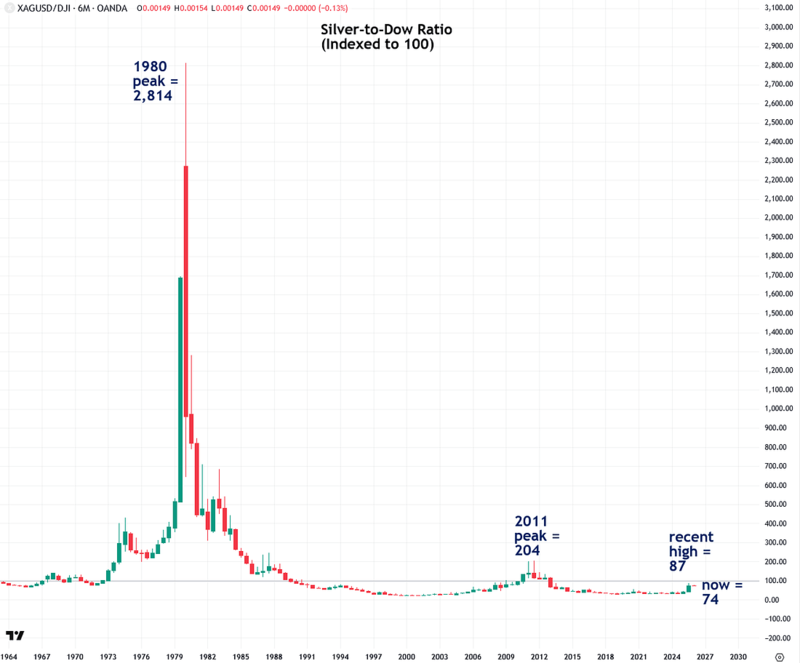
Another useful way to determine whether silver is cheap or expensive compared to its past is to measure it against another yardstick: the Dow Jones Industrial Average.

This comparison is valuable because there is a long-established relationship between precious metals and stocks, with capital rotating back and forth between them in secular phases. In many ways, they act as counterbalances to each other.

The chart of the silver-to-Dow ratio, indexed to 100, shows that silver at its 1980 peak reached an astounding 2,814. At the 2011 peak, it was 204. Today, it is only 74. This confirms that silver remains very cheap, even at $77.

The reason for this extremely low ratio is twofold: the U.S. stock market is highly inflated and expensive right now, while silver remains undervalued according to numerous metrics.

I believe this situation will reverse, with silver far outperforming as stocks decline and their lofty valuations return to more realistic levels. That reversal will benefit precious metals enormously, as trillions of dollars flow out of a sinking stock market and into a booming silver and gold market, sending them dramatically higher.
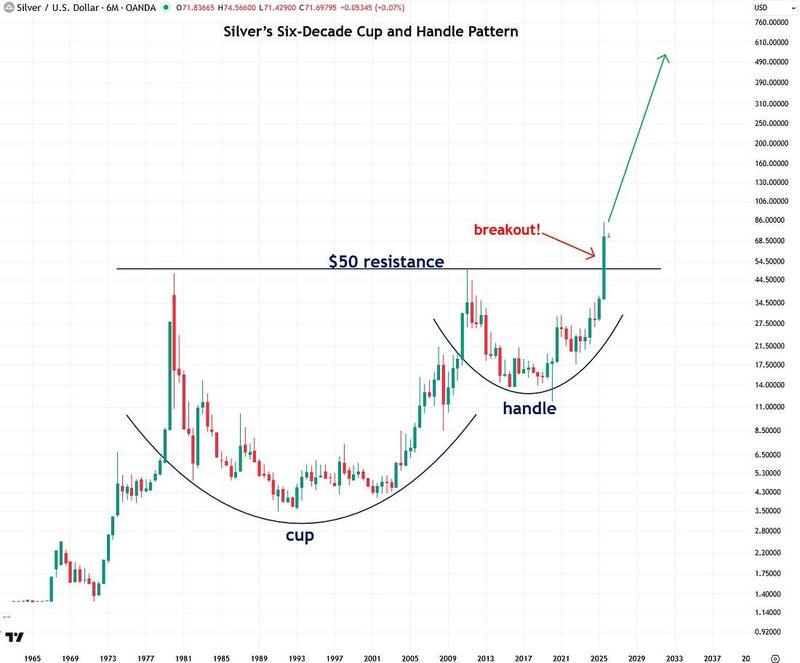
Valuations aside, one of the many reasons I am so bullish on silver is that it recently broke out from a six-decade-old cup and handle pattern, and based on the sheer duration and magnitude of that pattern, it projects silver surging to hundreds of dollars an ounce.

After a breakout from such a significant historical pattern, calling silver a bubble or betting against it is both foolish and ignorant. The best investors and traders in the world understand that you should never fight the trend, even if you don’t agree with it or fully understand it, and silver’s trend is clearly upward.
Another point I want to make regarding the valuation metrics I showed earlier in this report is that their denominators, such as inflation as measured by the CPI, the money supply, gold, and debt, continue to increase over time along with the price of silver.

If silver merely keeps pace with them, that alone supports the continued increase in its price. Silver would have to dramatically outpace their growth for an extended period of time to be considered in bubble territory, and while that will probably happen someday as the bull market reaches maturity many years from now, that is certainly not the case right now with silver at $77.

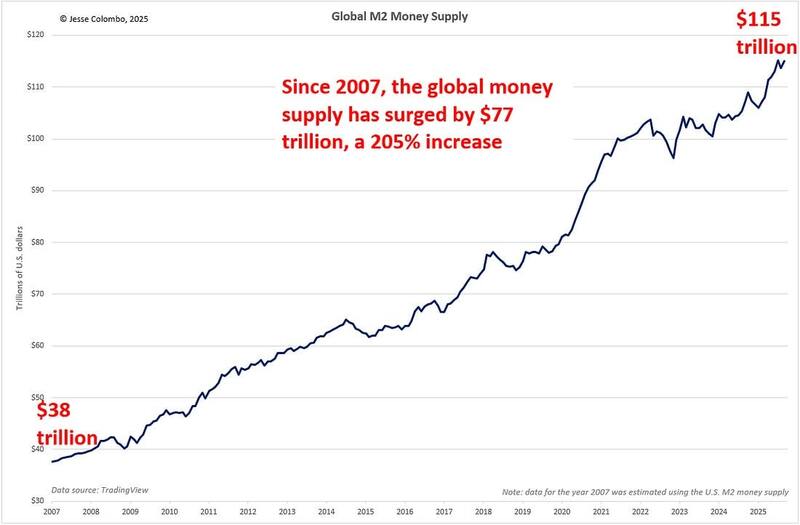
As you can see, the U.S. M2 money supply has surged an incredible fivefold since the year 2000, and that is the reason for our skyrocketing living costs and a major reason why precious metals have soared during that time period:
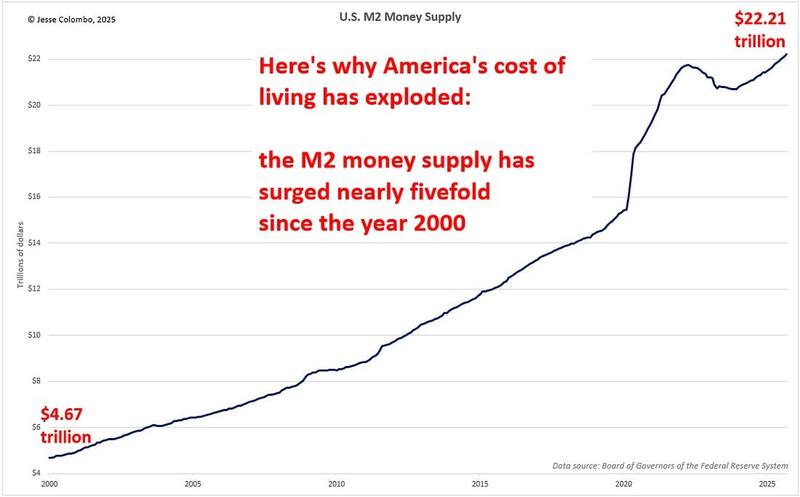
And it’s not just an American problem but a truly global one, as literally all fiat/paper currencies, including the euro, Canadian dollar, British pound, Australian dollar, and Japanese yen, race each other to the bottom.

This not only won’t stop anytime soon, but I anticipate it accelerating as we move toward the endgame of the fiat money regime that has been in place since 1971. That alone will ensure a continued tailwind for the precious metals bull market over the next decade.
In conclusion, I believe the many recent articles and commentaries claiming that silver is in a bubble are flat-out wrong. They are coming from people who did not foresee silver’s bull market in the first place, which indicates a lack of understanding of the dynamics driving it higher.

In addition, these shallow-thinking pundits are being misled by silver’s sharp nominal price increase, not realizing that silver has not actually risen anywhere near as much when compared to inflation, the money supply, debt, gold, and the stock market.

My advice is to tune out their negativity and not get spooked out of your wise investment in silver, which still has many years left to rise before its gains become excessive. And when that time comes, and silver does start to get too lofty and irrational, I will sound the alarm.

If you’ve enjoyed this report or have any questions, comments, or thoughts, please give this post a like and share your thoughts in the comments below—I’d love to start a conversation and hear your perspective.

If you found this report valuable, click here to subscribe to The Bubble Bubble Report for more content like it.


Jesse Colombo is a financial analyst and investor writing on macro-economics and precious metals markets. Recognized by The Times of London, he has built a reputation for warning about economic bubbles and future financial crises. An advocate for free markets and sound money, Colombo was also named one of LinkedIn’s Top Voices in Economy & Finance. His Substack can be accessed here.
US Attack on Greenland Would Destroy NATO, Danish PM Warns

(Will Porter, Antiwar.comDenmark’s premier has warned that US military action against Greenland would unravel the NATO alliance and the entire international order, after President Donald Trump reiterated hopes to take over the country.

Speaking to Danish broadcasters on Monday, Prime Minister Mette Frederiksen condemned “unacceptable pressure” by the Trump administration to acquire Greenland – an autonomous territory of Denmark – warning of catastrophic consequences should Washington opt to take the country by force.

“If the United States were to choose to attack another NATO country, then everything would come to an end,” Frederiksen said. “The international community as we know it, democratic rules of the game, NATO, the world’s strongest defensive alliance – all of that would collapse if one NATO country chose to attack another.”

The PM’s comments came soon after Trump doubled down on earlier statements about taking control of Greenland, telling reporters on Air Force One last Sunday that “We need Greenland from the standpoint of national security.” He added that the country was “covered with Russian and Chinese ships all over the place,” but offered no evidence for the claim.

The US president has repeatedly floated the idea since his first term in office, initially suggesting that Washington could simply purchase Greenland in 2019, a move he compared to “a large real estate deal.” While Frederiksen rejected the comments as “absurd” at the time, Trump has continued to push the proposal.

On Tuesday evening, the White House escalated the matter further, issuing a veiled threat to seize the mineral-rich nation by force.

“The president and his team are discussing a range of options to pursue this important foreign policy goal, and of course, utilizing the US military is always an option at the commander in chief’s disposal,” press secretary Karoline Leavitt said in a statement, calling Greenland a “national security priority.”

Though senior Trump aide Stephen Miller had previously hinted that Washington could seize the territory, he downplayed the prospect for military action. Still, Miller challenged Danish rule over the country – which dates back to the 18th century – asking “by what right does Denmark assert control over Greenland?”

Along with the Danish PM, Greenland’s Prime Minister Jens-Frederik Nielsen and various European states have denounced the renewed push by the US administration, with the leaders of Britain, France, Germany, Italy, Poland and Spain publishing a critical joint statement earlier on Tuesday.

“Greenland belongs to its people,” the statement said. “It is for Denmark and Greenland, and them only, to decide on matters concerning Denmark and Greenland.”

Nielsen similarly deemed Trump’s rhetoric as “utterly unacceptable,” though added that “We are open to discussions. But this must happen through the proper channels and with respect for international law.”

The United States maintains a small permanent military presence in Greenland through the Pituffik Space Base, a Space Force installation operated under a Cold War-era treaty with the Kingdom of Denmark. According to the military, the base “supports missile warning, missile defense and space surveillance missions.” Vice President JD Vance and then-National Security Advisor Mike Waltz toured the facility in March 2025. In comments to reporters at the base, the VP assured that “We do not think that military force is ever going to be necessary” to take control of Greenland, instead voicing hopes to “cut a deal, Donald Trump style.”

This article originally appeared at Antiwar.com.


Trump Anticipates Sending Troops to Occupy Venezuela

(Kyle Anzalone, Antiwar.comPresident Donald Trump said the US had no plans to hold elections in Venezuela. He said elections are currently impossible, and the country must first be helped by the US.

“We have to fix the country first. You can’t have an election. There’s no way the people could even vote,” Trump said about the possibility of a vote in the next month. “No, it’s going to take a period of time. We have — we have to nurse the country back to health.”

The President explained that the Secretary of State Marco Rubio, Secretary of War Pete Hegseth, Vice President JD Vance, and White House adviser Stephen Miller would be responsible for running Venezuela.

While Trump is laying out a massive nation-building project, he insisted that the US was not at war with Venezuela. “No, we’re not [at war],” Trump said. “We’re at war with people that sell drugs. We’re at war with people that empty their prisons into our country and empty their drug addicts and empty their mental institutions into our country.”

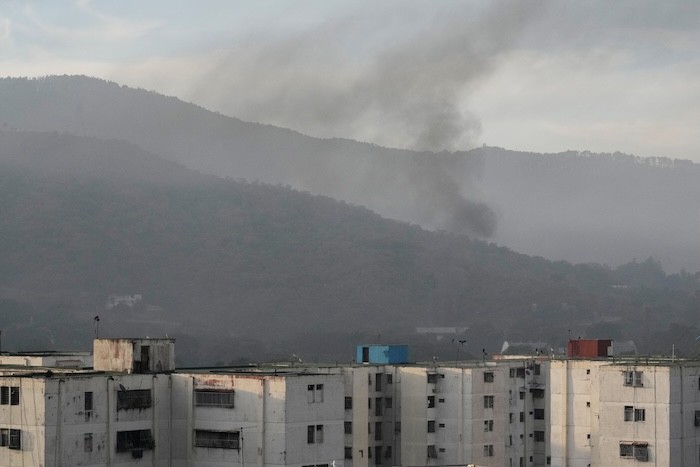
Since returning to office, Trump has ordered extensive sanctions on Venezuela, the seizure of two oil tankers carrying Venezuelan oil, strikes on Caracas, and the kidnapping of President Nicolas Maduro, all acts of war.

The President went on to say that he is anticipating sending US troops to occupy Venezuela and enforce his will on the country. The US continues to conduct surveillance flights near Venezuela.

Trump believes the rebuilding of Venezuela will take about 18 months and come at a massive cost to US energy firms. “It’ll be a lot of money.” The President continued,  “A tremendous amount of money will have to be spent, and the oil companies will spend it, and then they’ll get reimbursed by us or through revenue.”

Venezuela’s heavily contaminated crude oil is difficult to reach and expensive to refine. Oil prices need to exceed $100 per barrel to make for companies to see profits. Crude oil is currently under $58 per barrel.

This article originally appeared at Antiwar.com.


2,000 ICE Officers Sent to Minnesota in ‘Largest Immigration Operation Ever’

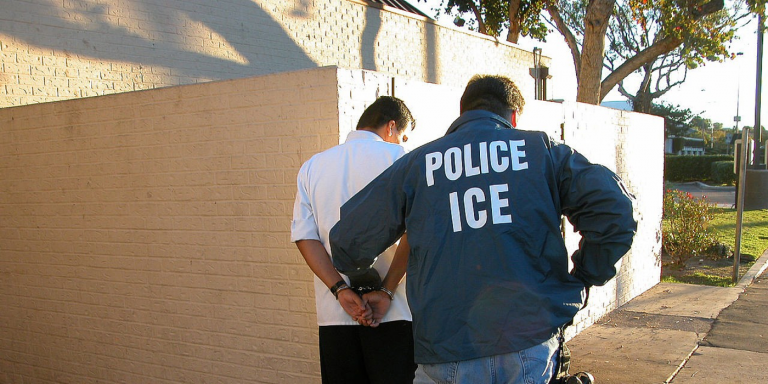
(Headline USAThe Department of Homeland Security said Tuesday that it launched what it described as the largest immigration enforcement operation ever carried out by the agency — with 2,000 federal agents and officers expected in the Minneapolis area for a crackdown tied in part to allegations of fraud involving Somali nationals.

“The largest DHS operation ever is happening right now in Minnesota,” the department said in a post on X, dramatically expanding the federal law enforcement footprint in the state amid heightened political and community tensions.

The government planned to send about 2,000 Immigration and Customs Enforcement agents and officers to Minnesota, according to a U.S. official and a person briefed on the matter. The agents are expected to be dispatched in the Minneapolis-St. Paul area, the person said. The people were not authorized to publicly discuss operational details and spoke with The Associated Press on the condition of anonymity.

Immigrant rights groups and elected officials in the Twin Cities reported a sharp increase Tuesday in sightings of federal agents, notably around St. Paul. Numerous agents’ vehicles were reported making traffic stops, outside area businesses and apartment buildings.

Homeland Security Secretary Kristi Noem was also present and accompanied U.S. Immigration and Customs Enforcement officers during at least one arrest. A video posted on X showed Noem wearing a tactical vest and knit cap as agents arrested a man in St. Paul. In the video, she tells the handcuffed man: “You will be held accountable for your crimes.”

DHS said in a news release that the man was from Ecuador and was wanted in his homeland and Connecticut on charges including murder and sexual assault. It said agents arrested 150 people Monday in enforcement actions in Minneapolis.

Adapted from reporting by the Associated Press


House Committee to Hold Hearing Today on Minnesota Fraud

(The Center Square) The U.S. House Committee on Oversight and Government Reform is set to hold its first of two scheduled hearings Wednesday on the “fraud and misuse of federal funds in Minnesota.”

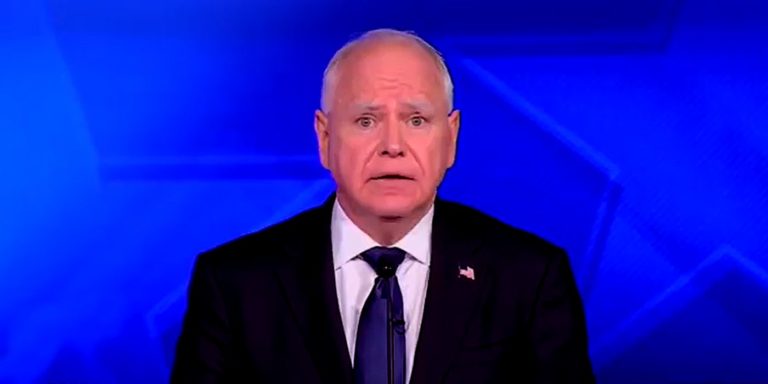
Three Republican Minnesota state lawmakers who “sounded the alarm” in the past on some of the rampant fraud of its social services programs have been called to testify. Minnesota Gov. Tim Walz – who just announced Monday that he’s dropping out of the 2026 governor’s race – and the state’s attorney general have been invited to testify at the second hearing, currently scheduled for Feb. 10.

“American taxpayers demand and deserve accountability for the theft of their hard-earned money,” said U.S. Rep. James Comer, R-Ky., the committee’s chairman. “The U.S. Department of Justice is actively investigating, prosecuting, and charging fraudsters who have stolen billions from taxpayers and Congress has a duty to… hold offenders accountable.”

Investigations have identified roughly $9 billion in government funds awarded to alleged fraudulent businesses or individuals posing as legitimate providers within Minnesota’s taxpayer-funded social services programs – and those investigations are still ongoing. The $250 million Feeding Our Future pandemic relief scheme was the first major case in what has since been revealed to be a suspected broader pattern of high-dollar fraudulent enterprises taking advantage of those programs.

The magnitude of the fraud, coupled with reports that concerns were raised internally but potentially dismissed for political reasons, pressured Walz to withdraw his bid for reelection.

“This misconduct cannot be swept aside, and Congress will not stop until taxpayers get the answers and accountability they deserve,” Comer said in a statement.

The committee hopes to uncover why this type of fraud has been so prolific in Minnesota and some potential solutions to prevent it going forward.

As numerous examples of fraudulent child care centers have been exposed, the Trump administration has halted federal child care funding to Minnesota.

CIA Spy Dies in Prison

(Headline USACIA turncoat Aldrich Ames, who betrayed Western intelligence assets to the Soviet Union and Russia in one of the most damaging intelligence breaches in U.S. history, has died in a Maryland prison. He was 84.

A spokesperson for the Bureau of Prisons confirmed Ames died Monday.

Ames, a 31-year CIA veteran, admitted being paid $2.5 million by Moscow for U.S. secrets from 1985 until his arrest in 1994. His disclosures included the identities of 10 Russian officials and one Eastern European who were spying for the United States or Great Britain, along with spy satellite operations, eavesdropping and general spy procedures. His betrayals are blamed for the executions of Western agents working behind the Iron Curtain and were a major setback to the CIA during the Cold War.

He pleaded guilty without a trial to espionage and tax evasion and was sentenced to life in prison without parole. Prosecutors said he deprived the United States of valuable intelligence material for years.

He professed “profound shame and guilt” for “this betrayal of trust, done for the basest motives,” money to pay debts. But he downplayed the damage he caused, telling the court he did not believe he had “noticeably damaged” the United States or “noticeably aided” Moscow.

“These spy wars are a sideshow which have had no real impact on our significant security interests over the years,” he told the court, questioning the value that leaders of any country derived from vast networks of human spies around the globe.

In a jailhouse interview with The Washington Post the day before he was sentenced, Ames said he was motivated to spy by “financial troubles, immediate and continuing.”

Ames was working in the Soviet/Eastern European division at the CIA’s headquarters in Langley, Virginia, when he first approached the KGB, according to an FBI history of the case. He continued passing secrets to the Soviets while stationed in Rome for the CIA and after returning to Washington. Meanwhile, the U.S. intelligence community was frantically trying to figure out why so many agents were getting discovered by Moscow.

Ames’s spying coincided with that of FBI agent Robert Hanssen, who was caught in 2001 and charged with taking $1.4 million in cash and diamonds to sell secrets to Moscow. He died in prison in 2023.

Ames’s wife, Rosario, pleaded guilty to lesser espionage charges of assisting his spying and was sentenced to 63 months in prison.

Adapted from reporting by the Associated Press


DOJ Walks Back Claim Maduro is the Leader of a Narco-Terrorist Cartel

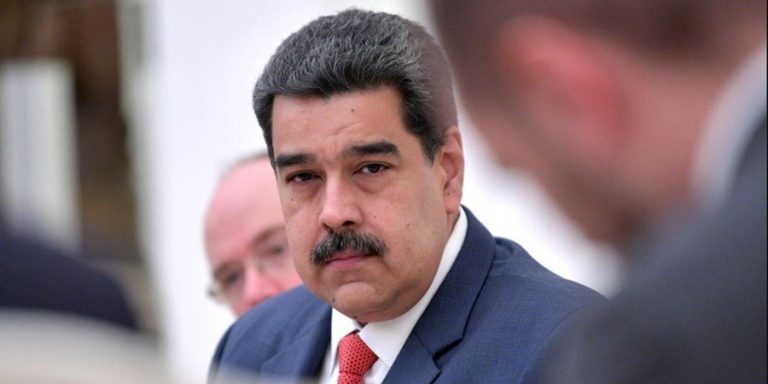
(Kyle Anzalone, Antiwar.comThe Department of Justice has significantly revised its indictment against Venezuelan President Nicolas Maduro. Maduro was kidnapped by US forces in Venezuela on Saturday, and pleaded not guilty to charges in a New York court on Monday.

The New York Times’ Charlie Savage reported that the Department of Justice had removed nearly all mentions of “Cartel de los Soles” from the indictment against Maduro. The White House previously designated Cartel de los Soles as a foreign terrorist organization and claimed Maduro was the leader.

However, experts have disputed the Trump administration’s assertions, arguing that Cartel de los Soles is not an actual group and that Maduro is not the leader of a cartel. The new indictment appears to be more in line with the expert assessment of Cartel de los Soles and Maduro.

Maduro appeared in court along with his wife earlier this week, and the couple pleaded not guilty to all charges.

Savage reports that the new indictment mentions Cartel de los Soles only twice, compared with 32 times in the initial charging document. Additionally, it no longer describes Maduro as its leader.

President Donald Trump and Secretary of State Marco Rubio have claimed that Maduro was responsible for smuggling narcotics into the US that were killing hundreds of thousands of Americans. But Venezuela is not a source of drug production, and only a small percentage of the cocaine that enters the US transits the South American nation.

Savage has a checkered history of reporting key national security issues. In 2020, Savage wrote that Russia was paying the Taliban to kill American soldiers in Afghanistan. While the claim was later debunked, it was used to attempt to prevent Trump from ending the pullout of US troops from Afghanistan.

This article originally appeared at Antiwar.com.


DOJ Releases Transcript of Brown/MIT Shooter’s Final Words

(Headline USAThe man identified by law enforcement as the shooter who killed two Brown University students and an MIT professor had been planning the attack for months and left behind videos in which he confessed to the murders, according to information released Tuesday by the U.S. Department of Justice.

Claudio Neves Valente, 48, a former Brown student and Portuguese national, was found dead in a New Hampshire storage facility after he killed two students and wounded nine others in an engineering building on Dec. 13. Two days later, he killed MIT professor Nuno F.G. Loureiro in his home in the Boston suburb of Brookline.

Justice Department officials said Tuesday that during the search of the storage facility where Neves Valente’s body was found on Dec. 18, the FBI recovered an electronic device containing a series of short videos made by Neves Valente after the shootings.

In the recordings, the shooter admits in Portuguese that he had been “planning the Brown University shooting for a long time,” according to a press release. In a transcript provided by the Justice Department, he said he had been working out details for at least six semesters. He did not provide a motive for targeting Brown or the MIT professor, with whom he attended school in Portugal decades ago.

He said he felt he had nothing to apologize for. He also complained in the videos about injuring his eye in the shootings.

“I’m not going to apologize because during my lifetime no one sincerely apologized to me,” he said.

Neves Valente said his “only objective was to leave more or less” on his “own terms” and to ensure he “wouldn’t be the one who ended up suffering the most from all this.”

“No, that cannot happen. So if you don’t like it, tough luck,” he said. Neves Valente called his execution of the murders “a little incompetent.”

“But at least something was done,” he said.

In the recording, he said he’d had the storage space where his body was found for about three years. Neves Valente mentioned his confrontation with the witness at Brown University that ultimately led to his identification days later.

Additionally, Neves Valente debunked rumors that he yelled “Allah Akbar” during his Brown University shooting spree.

“I do not remember having said anything. If I did say something … I must have made an exclamation like ‘Oh no!,’ or something like that,” he said, explaining that he initially thought the auditorium full of students was empty (students were actually hiding under their desks.

According to police, a witness had several encounters with Neves Valente before the attack at Brown. As police posted images of the person of interest, the witness began posting on the social media forum Reddit that he recognized the person and theorized that police should look into “possibly a rental” gray Nissan. Reddit users urged him to inform the FBI, and the witness said he did.

Up until that point, the police affidavit says officials had not connected a vehicle to the possible shooter.

“I actually was confronted,” Neves Valente said about the shooting at Brown, adding that the witness had seen his license plate.

“I honestly never thought it would take them so long to find me,” he said.

He said he had no hatred or love for the United States, where he first arrived around 25 years ago to study physics at Brown’s graduate program before leaving in the spring of 2001.

Neves Valente had studied at Brown on a student visa. He eventually obtained legal permanent residence status in September 2017. His last known residence was in Miami.

“It’s the same thing with Portugal, and most of the places where I have been,” he said, adding later that “I’ve been here without caring for a very long time now.”

Adapted from reporting by the Associated Press


BREAKING: Jan. 5/6 Pipe Bomb Suspect Federally Indicted

(Ken Silva, Headline USA) Brian Cole Jr., who’s accused of planting two pipe bombs near the RNC and DNC headquarters the night before the Jan. 6, 2021, Capitol Hill protest, was federally indicted on Tuesday—putting an end to the controversy over whether he’d be released from jail.

Cole’s attorneys had been trying to have him released from prison because Justice Department prosecutors didn’t secure an indictment before the DC federal grand jury closed for the holidays starting on Dec. 19. The DOJ did secure an indictment last week from the local DC Superior Court, but Cole’s lawyers said the local indictment was invalid because it circumvented the federal grand jury process.

In any event, that controversy is now moot now that Cole has been indicted federally on the first day the grand jury went back into session. He is set to have a status hearing Friday.

Cole was arrested on the morning of Dec. 4 at his Woodbridge, Virginia, house in what law enforcement officials described as a major breakthrough in their nearly five-year-old investigation. During a search of Cole’s home and car after his arrest, prosecutors say, investigators found shopping bags of bomb-making components. He at first denied having manufactured or placed the pipe bombs, but later confessed during an hour-long interview.

At Tuesday’s detention hearing, prosecutors urged the judge to keep Cole confined as he awaits trial. They said he’s a danger to the community, given his interest in explosives. Cole allegedly wiped his phone of data 934 times, showing that he has a pattern of hiding and destroying evidence, they added.

Cole’s attorneys begged to differ. They said he’s autistic and has OCD, and that the devices he allegedly built were duds. The defense lawyers said they have an expert witness who will testify that the so-called bombs “cannot explode and are not viable.”

The judge sided with the DOJ.

Pipe Bomb Case History

As Headline USA revealed in March 2024, the FBI had a suspect identified by Jan. 10, 2021 in the pipe bomb case, but didn’t make an arrest at the time.

FBI records released in September revealed that agents didn’t interview the woman who discovered a pipe bomb near the RNC around 12:40 p.m. on Jan. 6 until days later. That woman, former counterterrorism analyst and then-Commerce Department worker Karlin Younger, said she found the bomb while doing laundry.

Meanwhile, former Vice President Kamala Harris continues to be tight-lipped on the subject, despite the fact that her motorcade drove past the DNC pipe bomb on Jan. 6. Harris left the Capitol at 11:21 a.m. arrived to the DNC at 11:25 a.m., but the nearby pipe bomb wasn’t discovered until 1:07 p.m. by a plainclothes Capitol Police officer.

The bizarre circumstances have driven many to suspect that it may have been a false-flag attempt overseen by the feds themselves to divert law enforcement from the Capitol right as the Jan. 6 protest was turning violent.

Rep. Morgan Griffith, R-Va., has said that it may be impossible to successfully prosecute the pipe bomber.

“Here’s what a good criminal defense attorney’s going to say: If you identified the individual who’s believed to place the bomb, then hours go by, and you had a search by the Secret Service at the DNC and the dog didn’t find the explosive—so clearly, the device [the defense attorney’s] client might have left there wasn’t the device that was determined to be the pipe bomb, because it wasn’t picked up by the bomb-sniffing dog,” Griffith argued in March 2024.

Ken Silva is the editor of Headline USA. Follow him at x.com/jd_cashless.

Central Bank Gold Buying Momentum Continued in November

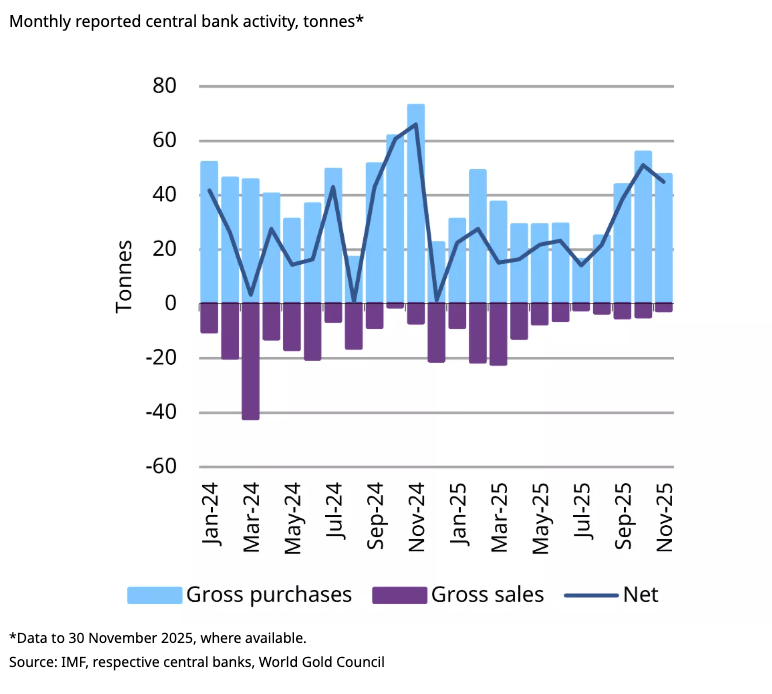
(Mike Maharrey, Money Metals News Service) Central bank gold buying picked up in September and gained momentum in October. That momentum carried into November with gold reserves continuing to climb.

Officially, central banks globally added 45 tonnes of gold to their reserves in November. That was down slightly from 53 tonnes the previous month but elevated compared to earlier in 2025.

October and November central bank gold buying built on a strong third quarter, with official reported purchases coming in at a net 220 tonnes. That was up 28 percent from Q2 and 6 percent above the five-year third-quarter average.

The World Gold Council said the pickup in central bank gold demand in Q3 “is evidence that central banks continue to add gold strategically, despite facing higher prices.”

For the second straight month, Poland ranked as the biggest buyer, adding another 12 tonnes of gold to its reserves. That increased the country’s official gold holding to 543 tonnes, representing 28 percent of its total reserves based on gold prices at the end of November.

In September, the National Bank of Poland announced plans to boost its gold holdings to 30 percent of its total reserve assets.

When he announced plans to further expand Poland’s gold reserves, National Bank of Poland Governor Adam Glapiński called gold “the only safe investment for state reserves,” in these “difficult times of global turmoil and the search for a new financial order.”

In an interview earlier this year, Glapiński emphasized that gold is not directly linked to any national economic policies, is a safe haven during crises, and retains its real value over the long term.

“It is a symbol of stability that enhances our credibility in the eyes of investors and foreign partners.”

To date, Poland ranks as the top central bank gold purchaser with a 95-tonne increase to its reserves.

For the third straight month, Brazil expanded its gold holdings in November, adding 11 tonnes to its reserves. Over those three months, Brazil grew its gold holdings by 43 tonnes. The Brazilian central bank now officially owns 172 tonnes of gold, representing about 6 percent of its reserves.

Uzbekistan’s central bank continued to expand its gold reserves for the second straight month, reporting a 10-tonne increase in November after a 9-tonne purchase in October. The Uzbeks were sellers in September.

It is not uncommon for banks that buy from domestic production – such as Uzbekistan and Kazakhstan – to flip-flop between buying and selling.

The National Bank of Kazakhstan was also in a buying mood, expanding its reserves by 8 tonnes.

The Czech National Bank has been growing its gold reserves at a slow and steady pace. It added another 2 tonnes in November, its 33rd straight month of gold accumulation. The Czech Republic now holds 71 tonnes of gold. Czech officials say they plan to increase gold reserves to 100 tonnes by 2028.

China has reported an increase in its official reserves for 13 straight months, adding another tonne in November. The People’s Bank of China has increased its official holdings by 401 tonnes in that span.

Total official Chinese gold reserves are now over 2,300 tonnes, making up around 7 percent of its total reserves.

Notice the emphasis on “official.”

China is among the central banks that are likely to hold significantly more gold than they publicly disclose. As Jan Nieuwenhuijs has reported, the People’s Bank of China is secretly buying large amounts of gold off the books. According to data parsed by the renowned Money Metals researcher, the Chinese central bank is currently sitting on more than 5,000 tonnes of monetary gold located in Beijing – more than TWICE what has been publicly admitted.

Mainstream reporting has finally picked up on this.

The National Bank of the Kyrgyz Republic (2 tonnes) and the Bank of Indonesia (1 tonne) were the other significant buyers.

The Bank of Tanzania reported the purchase of 15 tonnes of refined monetary gold in the first year of its Domestic Gold Purchase Program. The stated goal is to strengthen the country’s foreign reserves.

Jordan and Qatar were the only notable sellers in November.

Overall, central bank gold buying slowed somewhat in 2025 (the big jump in the last three months notwithstanding). Final numbers for the year will come out next month.

Higher prices have undoubtedly incentivized some central banks to slow the pace of gold accumulation. However, the World Gold Council said the pickup in central bank gold demand in Q3 and the first two months of Q4 “is evidence that central banks continue to add gold strategically, despite facing higher prices.”

Despite the modest slowdown in gold accumulation, the World Gold Council remains bullish.

“We maintain our view that central banks will continue to add gold to their reserves. Our Central Bank Gold Reserves Survey 2025 shows that respondents overwhelmingly (95 percent) expect global central bank gold reserves to increase over the next 12 months, while 43 percent believe that their own gold reserves will also increase over the same period. Notably, none of the respondents anticipate a decline in their gold reserves.”

You can read more details about that central bank survey HERE.

On net, central banks officially increased their gold holdings by 1,044.6 tonnes in 2024. It was the 15th consecutive year of expanding gold reserves.

Last year was the third-largest expansion of central bank gold reserves on record, coming in just 6.2 tonnes lower than in 2023 and 91 tonnes lower than the all-time high set in 2022 (1,136 tonnes). 2022 was the highest level of net purchases on record, dating back to 1950, including since the suspension of dollar convertibility into gold in 1971.

To put that into context, central bank gold reserves increased by an average of just 473 tonnes annually between 2010 and 2021.

World Gold Council analysts said, “Central banks are likely to continue their buying spree,” calling central bank purchases “surprisingly resilient” given the rapid price increase.

The WGC has also noted that “diversification” with “a reduction of U.S. assets” is one of the factors driving central bank gold buying. In other words, de-dollarization.

“We don’t see an end to this narrative unless there is a material shift in geopolitical tensions. The IMF has downgraded growth prospects in the U.S. more than in other major economies, citing policy uncertainty. This suggests that other countries may have leverage in negotiations, although these typically last months and years, not weeks. Hence, we don’t expect any near-term resolutions.”


Mike Maharrey is a journalist and market analyst for Money Metals with over a decade of experience in precious metals. He holds a BS in accounting from the University of Kentucky and a BA in journalism from the University of South Florida.