DOJ Charges 30 More People for Minnesota Church Invasion

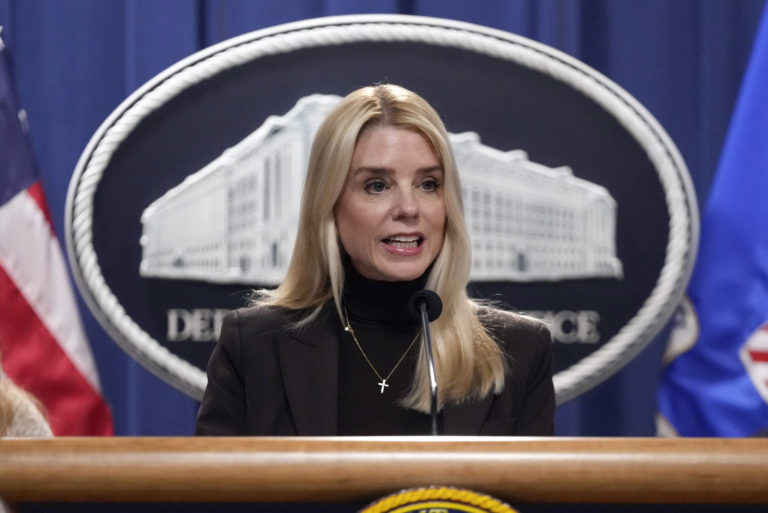
(Headline USA) ​​ Attorney General Pam Bondi announced charges Friday against 30 more people who are accused of civil rights violations in a January protest inside a Minnesota church where a pastor works for Immigration and Customs Enforcement.

Bondi said on social media that 25 people were in custody and more arrests would follow. The new indictment comes a month after independent journalists Don Lemon and Georgia Fort and prominent local activist Nekima Levy Armstrong were charged for their alleged roles in the protest at Cities Church in St. Paul, Minnesota.

“YOU CANNOT ATTACK A HOUSE OF WORSHIP. If you do so, you cannot hide from us — we will find you, arrest you, and prosecute you,” Bondi wrote in the post. “This Department of Justice STANDS for Christians and all Americans of faith.”

In total, 39 people now face charges of conspiracy against religious freedom and interfering with the right of religious freedom.

The new defendants will have an initial court appearance and a magistrate judge will set conditions for their likely release. Lemon and Fort said they were at the church as journalists covering news. Levy Armstrong was the subject of a doctored photo posted by the White House showing her crying during her arrest. The three have pleaded not guilty.

Protesters descended on Cities Church on Jan. 18 after learning that one of the church’s pastors also serves as an ICE official. The protest drew swift condemnation from Trump administration officials and conservative leaders for disrupting a Sunday service.

The indictment says the “agitators” entered the church in a “coordinated takeover-style attack” and engaged in acts of intimidation and obstruction.

“Young children were left to wonder, as one child put it, if their parents were going to die,” the indictment says.

A lawyer for the church praised the Justice Department for charging more people.

“The First Amendment does not give anyone — regardless of profession, prominence, or politics — license to storm a church and intimidate, threaten, and terrorize families and children worshipping inside,” Doug Wardlow said in a statement.

The revised indictment adds new allegations when compared to the original filed in January.

It says two people “conducted reconnaissance” outside the church a day before the protest and recorded their visit on video, with one saying, “My thoughts are to be able to close up this whole alleyway right here.”

The court filing quotes one protester as chanting in the church, “This ain’t God’s house. This is the house of the devil.”

Separately, a woman who was at the church service has filed a lawsuit against some people who were charged, alleging emotional trauma and an inability to exercise her religion that day.

The protest came at a tense time in Minnesota, where the Trump administration sent thousands of federal officers for Operation Metro Surge after a series of public fraud cases where the majority of defendants had Somali roots. Officers frequently deployed tear gas for crowd control in neighborhood clashes with residents, often detaining them along with immigrants.

On Jan. 7, a federal officer fatally shot Renee Good, 37, in Minneapolis. In another fatal shooting a week after the church protest, a federal officer killed 37-year-old nurse Alex Pretti.

Nationwide demonstrations erupted in response, followed by a change in Operation Metro Surge’s leadership and the eventual wind-down of the immigration enforcement operation. Roughly 400 ICE officers and Homeland Security agents were expected to remain in Minneapolis by early March, down from roughly 3,000 at the peak, according to a court filing.

Since then, the Twin Cities have grappled with the impact to communities and the local economy. The city of Minneapolis said it suffered an impact of $203.1 million due to the operation, with tens of thousands of residents in need of urgent relief assistance.

Adapted from reporting by the Associated Press

George High School Shooter’s Dad Testifies in Court

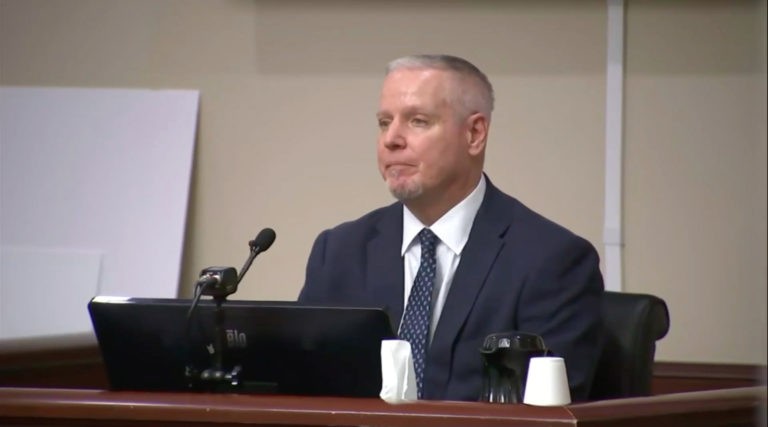
(Headline USA) ​​ The father of accused school shooter Colt Gray testified Friday that he gave his son the rifle that was used in the attack as a Christmas present in hopes of bonding with the boy over hunting and outings at the gun range.

In one of the latest cases in which parents are being put on trial after their children are accused in fatal shootings, defense lawyers called Colin Gray to the witness stand. Prosecutors say he should be held accountable for giving his son the weapon used in the shooting as a Christmas gift despite alleged threats and warning signs that the boy was mentally unstable.

After the family had opened presents, Colin Gray said he walked down the hallway and told Colt, “I have one more thing for you.” He presented the gun, hoping it would encourage Colt to succeed in school.

“This is a weapon that I want you to shoot when we go to the range, and if you keep doing really good in school, going to school and doing all the things you should, you graduate and you’re 18, this will be your gun,” Colin Gray said he told his son.

Colt, who was 14 years old at the time of the shooting, faces 55 counts, including murder in the deaths of four people and 25 counts of aggravated assault. He’s accused of carefully planning the Sept. 4, 2024, shooting at Apalachee High School that left two teachers and two students dead and several others wounded at the school in Winder, northeast of Atlanta.

The father faces 29 counts, including two counts of second-degree murder and two counts of involuntary manslaughter.

The trial of Colin Gray, now ending its second week, has included testimony from the boy’s mother, Marcee Gray, who testified that she urged her husband to lock up the guns so that Colt could not access them. But in the days before the school shooting, Colt kept the gun in his bedroom, witnesses have testified at his father’s trial.

Colin Gray became emotional after being asked by his lawyer whether there were any “red flags” that would have made him believe his son would ever be capable of a school shooting.

“No, I struggle with it every day,” the father said, trying to hold back tears.

“He’s a good kid,” he added. “He wasn’t perfect, and nor was I. But to do something that heinous, like I don’t know of anybody that can ever see that kind of evil. Like the Colt I knew and the relationship I had — there’s this whole other side of Colt I didn’t know existed.”

Gray took the stand a day after prosecutors showed surveillance video of the morning of the shooting. The video shows Colt getting on his school bus with a backpack that prosecutors contend carried the rifle. The weapon protruded from the backpack, and posterboard was used to conceal it, prosecutors have said.

In the video, Colt is seen entering the school with the backpack. He walks down several hallways past dozens of students and some employees who don’t take notice of the large size of the pack. Colt then begins classes, and later that morning spends several minutes in a bathroom moments before the shooting.

Video of the gunfire was played for jurors, but not shown to the general public watching the livestream of the trial.

The parents were separated for much of the time leading up to the shooting, and Marcee Gray was not charged with any crimes.

In dramatic testimony last week, several Georgia high school students testified in court about being shot during their algebra class. They recounted through tears seeing a classmate in a pool of blood, then seeing blood on their own bodies and fearing they might die.

There has also been testimony about what prosecutors describe as a “shrine” to a Florida school shooter that Colt kept on a wall next to his computer at home.

Colt had an interest in Nikolas Cruz, convicted of the 2018 shooting that left 14 students and three staff members dead at Marjory Stoneman Douglas High School in Parkland, Florida, Marcee Gray testified this week.

This is one of several cases around the nation where prosecutors are trying to hold parents responsible after their children are accused in fatal shootings.

Adapted from reporting by the Associated Press

Bill Clinton Says He Had ‘No Idea’ About Epstein’s Crimes

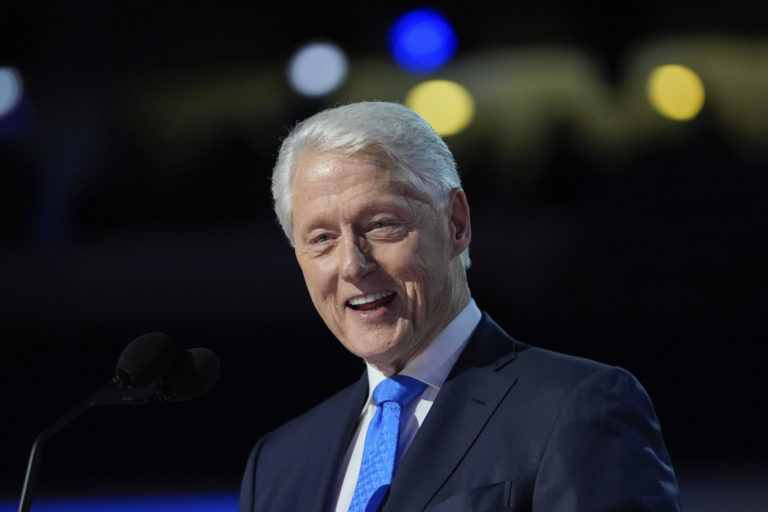
(Andrew Rice, The Center SquareFormer President Bill Clinton said he had “no idea” of the crimes convicted sex offender Jeffrey Epstein committed.

The U.S. House Oversight Committee questioned Clinton over his ties to Epstein in a closed-door hearing on Friday in New York.

“I had no idea of the crimes Epstein was committing,” Clinton wrote in an opening statement posted to social media. “I saw nothing, and I did nothing wrong.”

Rep. James Comer, R-Ky., chairman of the committee, said he plans to question former President Clinton on his inclusion in the Epstein files. He said Clinton flew on Epstein’s plane at least 27 times and Epstein was in the White House 17 times during Clinton’s presidency.

Comer also said he plans to ask about Clinton’s appearance in pictures released by the U.S. Department of Justice. Several photos released in the Epstein files show Clinton in close proximity with women whose faces are redacted.

“No matter how many photos you show me, I have two things that at the end of the day matter more than those 20-year old photos,” Clinton wrote in his opening statement.

Virginia Giuffre, a victim of Epstein, previously stated she saw and met former President Clinton on Little St. James, the island owned by Jeffrey Epstein.

Comer said Hillary Clinton deferred answers on at least a dozen questions to her husband during a deposition on Thursday. He said those questions, including Epstein’s ties to the Clinton’s charitable foundations, will be asked during Friday’s deposition.

“We had a big portfolio of questions for him, and that increased yesterday,” Comer said.

Hillary Clinton described the deposition as “repetitive” in a news conference on Thursday. Comer explained that many questions had to be raised due to apparent evidence in the Epstein files that Hillary Clinton had a relationship with Epstein.

“It may have seemed repetitive because there was a lot of documentation that would suggest that she had a relationship with Epstein,” Comer said.

Rep. Anna Paulina Luna, R-Fla., questioned whether Hillary Clinton was honest in her responses to questions during the deposition on Thursday. If an individual is found to knowingly make false statements before a congressional body in a deposition, they can be found guilty of perjury. Rep. Nancy Mace, R-S.C., described Hillary Clinton as “unhinged” during Thursday’s deposition.

“I hope that President Clinton is less unhinged today than his wife was yesterday,” Mace said.

House Democrats refuted Mace’s claim about Hillary Clinton’s behavior, calling it a “mischaracterization.”

Rep. Robert Garcia, D-Calif., pointed out that Hillary Clinton did not invoke the Fifth Amendment right against self-incrimination once during Thursday’s deposition. House Democrats called on President Trump to be subpoenaed over his knowledge and association with Jeffrey Epstein.

“Now we have the Clinton rule, which is that presidents and their families have to testify when Congress issues a subpoena, and that means that Donald Trump needs to come before our committee and explain what he knew about Epstein and explain why we have not had a full release of the documents,” said Rep. Ro Khanna, D-Calif.

Clinton said he might not be able to recall all of the details in his relationship with Epstein. He also said he saw “nothing that ever gave me pause.”

“I’m not going to say something I’m not sure of. This was all a long time ago. And I am bound by my oath not to speculate, or to guess,” Clinton wrote. “This is not merely for my benefit, but because it doesn’t help you for me to play detective 24 years later.”

“As someone who grew up in a home with domestic abuse, not only would I not have flown on his plane if I had any inkling of what he was doing – I would have turned him in myself and led the call for justice for his crimes, not sweetheart deals.”

FBI Informant in Trump Assassination Case Previously Worked for U.S. Army in Afghanistan

(Ken Silva, Headline USA) The trial of the man accused of working for Iran in an assassination plot against Donald Trump began this week. On Wednesday, the court heard testimony from an FBI informant who set up the defendant, Pakistani national Asif Merchant, with two undercover agents posing as “hitmen.”

Testifying under the assumed name “Nadeem Ali,” the FBI informant reportedly said he knew Merchant since 2017. Before that, the informant had served as a linguist for the U.S. Army in Afghanistan, according to the New York Post.

When Merchant arrived to the U.S. in April 2024—the government let him in despite him being on a terrorist watchlist—the FBI informant said a mutual friend from a mosque asked him to drive Merchant around. The FBI informant said that while he was driving, he noticed unmarked cars following him.

“At first, he called 911, getting mostly indifference and a ticket for a suspended driver’s license for his troubles. But he had an FBI agent’s card from back when a family member was killed, so he contacted the feds,” the New York Daily News reported Thursday.

“Ali met FBI agents in Manhattan twice in May 2024, who told him not to worry about being followed, then asked him to report what Merchant told him at future meetings, record him, and play along with anything he asked.”

The informant was reportedly paid $20,000 for his work, which included meeting Merchant in a hotel wired for surveillance on June 4, 2024. It was then and there that Merchant allegedly pitched his plot.

Nearly a week later, the informant arranged for Merchant to meet with the “hitmen,” who were undercover FBI agents.

The plan was ambitious, complex, and highly dangerous. For all the risk involved, one might imagine that Merchant had access to deep pockets. But according to the DOJ, he was only required to scrounge up an “advance” of $5,000.

The problem for Merchant was that he didn’t have $5,000. Instead, he had to beg for it from an unnamed “associate” in the U.S., promising to repay the debt either in Pakistan or through a “hawala” — an informal financial network used in the Greater Middle East and South Asia that relies on trust and personal relationships.

By Friday, June 21, 2024, the $5,000 was ready for pickup. Instead of getting it himself, Merchant acquired the money in a roundabout way: his cousin from overseas called the FBI informant to say that the money was ready. The informant then collected the $5,000 from the unnamed “associate” while Merchant took a bus from Boston to New York for the pickup. The FBI informant met Merchant at a New York City bus station and gave the cash to him. Merchant later went to Manhattan to give the money to the two undercover FBI agents posing as hitmen.

After that meeting, Merchant made flight arrangements to leave Houston for Pakistan on Friday, July 12—the day before Trump was shot in Butler, Pennsylvania.

The FBI raided his home before he could leave for the airport. Merchant allegedly refused to exit his residence for 20 minutes before surrendering.

During Wednesday’s trial, Merchant’s lawyer also cross-examined the informant—asking him about exactly when he saw cars following him, and what he told the FBI during his first four-hour interview with agents.

“[The informant] admitted that he noticed the cars following him as early as November 2023, after he came back from a shooting range in Kingston, N.Y., where he was living at the time, and that the cars would appear even when he wasn’t ferrying Merchant around,” the New York Daily News reported.

Merchant’s trial is expected to last until mid-March.

Ken Silva is the editor of Headline USA. Follow him at x.com/jd_cashless.

House To Vote on Iran War Powers Next Week as Trump Has US on Brink of a Major Conflict

(Dave DeCamp, Antiwar.com) Democrats in the House and Senate vowed on Thursday that they will hold a vote next week on War Powers Resolutions aimed at blocking President Donald Trump from launching an attack on Iran without congressional authorization, as required by the US Constitution.

Contact your representatives in the House and tell them to support H.Con.Res. 38 to prevent the president from conducting an illegal attack on Iran.

The resolution in the House was a bipartisan bill introduced by Rep. Thomas Massie (R-KY) and Rep. Ro Khanna (D-CA) during the 12-Day War in June 2025, but a ceasefire was reached before a vote was held. Khanna announced last week that he would bring the bill to the floor for a vote, and after initially delaying the vote, Democratic leadership is now on board.

“As soon as Congress reconvenes next week, we will compel a vote of the full House of Representatives on the bipartisan Khanna-Massie War Powers Resolution,” a group of senior House Democrats said in a joint statement. “This legislation would require the President to come to Congress to make the case for using military force against Iran.”

Sen. Tim Kaine (D-VA) also said on Thursday that he expects to vote on an Iran War Powers Resolution in the Senate “early next week.” Kaine’s resolution is also bipartisan since it has been co-sponsored by Sen. Rand Paul (R-KY).

There are signs that more Republicans could dissent to get the resolution through Congress, as the Trump administration has not made a coherent case for war amid what is said to be the largest US buildup of air and naval forces in the Middle East since the 2003 invasion of Iraq.

“I have asked for a classified briefing defining the mission in Iran,” Rep Warren Davidson (R-OH) wrote on X on Thursday. “In the absence of new information, I will support the War Powers resolution in the House next week. War requires Congressional authorization. There are actions short of war, but no case has been made.”

This article originally appeared at Antiwar.com.  


Hacker Gained Access to ‘Epstein Files’ During Super Bowl Sunday in 2023; 100 TB of Data Lost

(Ken Silva, Headline USA) The FBI’s New York office was hacked on Super Bowl Sunday in 2023, and intruders were able to access files about sex criminal Jeffrey Epstein, according to an explosive FBI record unearthed from the “Epstein files”—the trove of documents released by the U.S. government pursuant to congressional legislation.

Worse still, roughly 100 terabytes of data was lost as a result of the intrusion, the newly revealed FBI record says.

The record in question is a draft of a September 2024 sworn declaration from FBI agent Aaron Spivack, who was under an internal bureau investigation for being responsible for the February 2023 computer intrusion. The record has been reported on by a French publication and was posted on Reddit, but has otherwise remained unpublicized until now.

According to Agent Spivack’s declaration, the 2023 FBI computer hack stems from the bureau enabling remote internet access to the C-20 computer lab. The FBI’s C-20 squad is a group in the New York office that investigates child sex crimes by.

“I believe enabling remote access to the C-20 computer lab was a good initiative, but it was not executed properly,” Agent Spivak said in his declaration.

As a result, the FBI’s C-20 computer lab was hacked on Feb. 12, 2023, when the Chiefs played the Eagles in the Super Bowl. Agent Spivack said he discovered the intrusion the next day.

“Around 3:30pm or so we located the log files and began combing through, which is when we noticed strange IP activity that took place yesterday from two IP addresses. The activity included combing through certain files pertaining to the Epstein investigation,” he said.

“I reached out to one of the case agents to see if they were in the office yesterday, thinking that maybe they inadvertently changed a setting on the NAS or if they noticed anything strange about them.”

Additionally, Agent Spivack said that 500 terabytes of data went missing as a result of the intrusion. He said he was able to recover about 400 terabytes.

“I was told to Google how to recover the data,” he remarked in his declaration. “No one else tried to help us.”

Spivak said his team wasn’t able to identify the computer that hacked them—“but it had to have accessed our network either by being plugged into the network, or possibly by telnetting in virtually,” he added.

The ultimate outcome of the FBI’s internal investigation is unclear. Based on his apparent LinkedIn profile, it looks like Agent Spivack, who vigorously argued that he wasn’t responsible for the intrusion, is still employed by the FBI.

Neither the FBI nor Agent Spivack responded to messages sent Thursday night seeking comment on the matter, including whether any Epstein records were among the missing terabytes of data.

Rumors of missing or destroyed Epstein evidence have persisted ever since it was revealed that Epstein had removed computers from his Palm Beach home before police searched it in October 2005.

Last February, author Michael Shellenberger reported that FBI employees were destroying evidence on severs. Shellenberger’s source was FBI whistleblower Garret O’Boyle, who in turn heard the rumor from another agent inside the bureau.

Most recently, Rep. Anna Paulina Luna, R-Fla., made similar comments on CNN on Thursday.

“We had someone come forward and say there was destruction of evidence under the former deputy director of the FBI,” Luna said.

Ken Silva is the editor of Headline USA. Follow him at x.com/jd_cashless.

US and Iran Wrap Up Latest Nuclear Talks Without a Deal as the Risk of War Looms

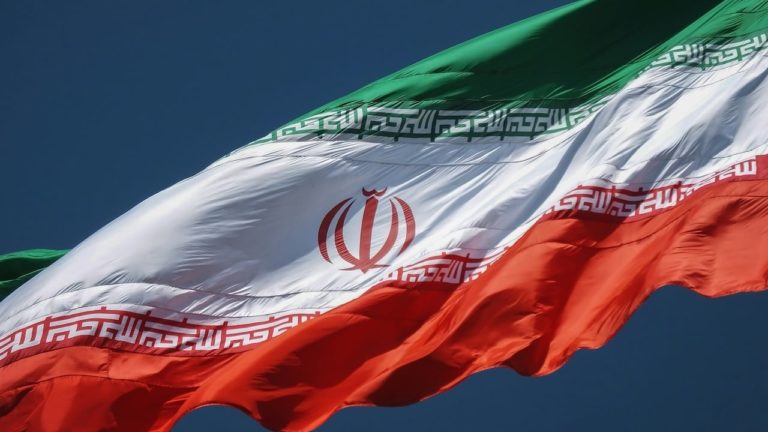
(Headline USA) Iran and the United States held hours of indirect negotiations Thursday over Tehran’s nuclear program but walked away without a deal, leaving the danger of another Mideast war on the table as the U.S. has gathered a massive fleet of aircraft and warships in the region.

Oman’s Foreign Minister Badr al-Busaidi, who mediated the talks in Geneva, said there had been “significant progress in the negotiation” without elaborating.

But just before the talks ended, Iranian state television reported that Tehran was determined to continue enriching uranium, rejected proposals to transfer it abroad and sought the lifting of international sanctions, indicating it was not prepared to meet U.S. President Donald Trump’s demands.

Trump wants a deal to constrain Iran’s nuclear program, and he sees an opportunity while the country is struggling at home with growing dissent following nationwide protests. Iran also hopes to avert war, but maintains it has the right to enrich uranium and does not want to discuss other issues, like its long-range missile program or support for armed groups like Hamas and Hezbollah.

Al-Busaidi said technical talks involving lower-level representatives would continue next week in Vienna, the home of the International Atomic Energy Agency. The United Nations’ atomic watchdog likely would be critical in any deal.

In an interview with Iranian state television, Iran’s foreign minister said the talks with the U.S. were some of the country’s “most intense and longest rounds of negotiations.”

Abbas Araghchi offered no specifics but said “what needs to happen has been clearly spelled out from our side.”

If America attacks, Iran has said U.S. military bases in the region would be considered legitimate targets, putting at risk tens of thousands of American service members. Iran has also threatened to attack Israel, meaning a regional war again could erupt across the Middle East.

“There would be no victory for anybody — it would be a devastating war,” Araghchi told India Today in an interview recorded Wednesday just before he flew to Geneva.

“Since the Americans’ bases are scattered through different places in the region, then unfortunately perhaps the whole region would be engaged and be involved, so it is a very terrible scenario.”

Ali Vaez, an Iran expert with the International Crisis Group, said it was a good sign that the Americans did not walk away immediately Thursday when Iran presented its latest proposal.

“There might still not be a breakthrough at the end of this day, but the very fact that the U.S. team is returning shows that there is enough common ground between the two sides,” he said.

The two sides held multiple rounds of talks last year that collapsed when Israel launched a 12-day war against Iran in June and the U.S. carried out heavy strikes on its nuclear sites, leaving much of Iran’s nuclear program in ruins even as the full extent of the damage remains unclear.

Araghchi represented Iran at the talks. Steve Witkoff, a billionaire real estate developer and friend of Trump who serves as a special Mideast envoy, headed up the U.S. delegation with Trump’s son-in-law Jared Kushner. The talks again were mediated by Oman, an Arab Gulf country that’s long served as an interlocutor between Iran and the West.

The two sides adjourned after around three hours of talks and resumed the discussions later.

During the break, Iranian Foreign Ministry spokesperson Esmail Baghaei said the Iranians felt there were “constructive proposals” offered on both nuclear issues and sanctions relief.

Trump wants Iran to completely halt its enrichment of uranium and roll back both its long-range missile program and its support for regional armed groups. Iran says it will only discuss nuclear issues, and maintains its atomic program is for entirely peaceful purposes.

U.S. Secretary of State Marco Rubio told reporters Wednesday that Iran is “always trying to rebuild elements” of its nuclear program. He said that Tehran is not enriching uranium right now, “but they’re trying to get to the point where they ultimately can.”

Iran has said it hasn’t enriched since June, but it has blocked IAEA inspectors from visiting the sites America bombed. Satellite photos analyzed by The Associated Press have shown activity at two of those sites, suggesting Iran is trying to assess and potentially recover material there.

The West and the IAEA say Iran had a nuclear weapons program until 2003. After Trump scrapped the 2015 nuclear agreement, Iran ramped up its enrichment of uranium to 60% purity — a short, technical step away from weapons-grade levels of 90%.

U.S. intelligence agencies assess that Iran has yet to restart a weapons program, but has “undertaken activities that better position it to produce a nuclear device, if it chooses to do so.” Some Iranian officials have spoken openly about the country’s readiness to produce a bomb if that decision is taken.

If the talks fail, uncertainty hangs over the timing of any possible U.S. attack.

If the aim of potential military action is to pressure Iran to make concessions in nuclear negotiations, it’s not clear whether limited strikes would work. If the goal is to remove Iran’s leaders, that will likely commit the U.S. to a larger, longer military campaign. There has been no public sign of planning for what would come next, including the potential for chaos in Iran.

There is also uncertainty about what any military action could mean for the wider region. Tehran could retaliate against the American-allied nations of the Persian Gulf or Israel. Oil prices have risen in recent days in part due to those concerns, with benchmark Brent crude now around $70 a barrel. Iran in the last round of talks said it briefly halted traffic in the Strait of Hormuz, the narrow mouth of the Persian Gulf through which a fifth of all traded oil passes.

Adapted from reporting by the Associated Press


Biden Admin ‘Invited’ Fani Willis to Get Lucrative Grant While She Prosecuted Trump  

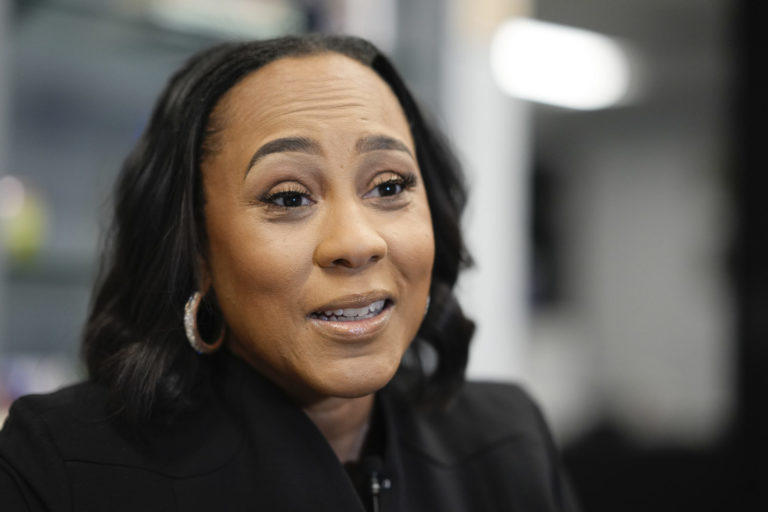
(Luis CornelioHeadline USA) The DOJ under the Biden administration “invited” disgraced Fulton County District Attorney Fani Willis to apply for a generous taxpayer-funded grant as she prosecuted President Donald Trump. 

The arrangement came to light after Willis referenced the grant in December 2022 correspondence with DOJ Senior Advisor Scott Pestridge of the Office of Justice Programs.  

The document was first revealed on Thursday by Just the News through open records requests filed by the outlet and nonprofit America First Legal. 

According to Just the News, Willis referenced the Office of Justice Programs’ Community-Based Violence Intervention and Prevention Initiative grant, which ultimately awarded her office $2 million. 

The timing of the award coincided with her office’s aggressive prosecution of Trump, who at the time was running for president against then-President Joe Biden. 

“I want to document your recognition of our progress and services provided with dynamic partners, as we complete sole source steps for our new grant award, a grant in which you invited us to apply,” Willis wrote to Pestridge, according to Just the News. 

Willis described the award as a “sole source” grant, indicating her office faced no competing applicants. 

The $2 million award was part of roughly $18 million the Biden DOJ provided to Willis’s office between 2021 and 2024.  

She claimed the funds would help “at-risk” youth avoid falling into crime or assist with reintegration into society, according to Just the News. 

Documents released by Willis’s office in response to open records requests show her office maintained consistent coordination with the DOJ after Trump left office in 2021, when she became one of several left-leaning prosecutors pursuing cases against him.  

She later charged Trump under Georgia’s RICO statute, accusing him of attempting to subvert the 2020 election results in the state. 

Her case ultimately unraveled after it was revealed that she had engaged in an affair with Nathan Wade, the special prosecutor she selected to lead the prosecution.  

Willis took vacations with Wade while her office paid him, later claiming she reimbursed him in cash, though she never produced receipts to substantiate those payments. 

Both Wade and Willis were ultimately disqualified from leading the case. After Trump returned to office in 2025, the prosecution was effectively nullified. 

‘Restored Sanity’: Kansas First to Retroactively Cancel Trans IDs

(Luis CornelioHeadline USA) Kansas has formally nullified the driver’s licenses of more than 1,000 transgender-identifying individuals following a state law requiring residents to list their biological gender on identification.

Roughly 1,700 individuals were notified Monday by the Kansas Department of Revenue that the new law bars government documents from listing a gender different from the birth certificate.

“Please note that the Legislature did not include a grace period for updating credentials,” the department wrote in a letter, according to the Kansas City Star.

“That means that once the law is officially enacted, your current credentials will be invalid immediately, and you may be subject to additional penalties if you are operating a vehicle without a valid credential,” the letter added.

The law, named the 2026 ID Revocation Law or Senate Bill 244, was passed by GOP veto-proof supermajorities in the state legislature on Jan. 18.

Kansas Gov. Laura Kelly, a Democrat, vetoed the bill on Feb. 13, calling it “ridiculous” and “poorly drafted.”

“Not only will this bill keep brothers from visiting sisters’ dorms and husbands from wives’ shared hospital rooms, it will cost Kansas taxpayers millions of dollars to comply with this very vague legislation,” Kelly claimed at the time.

“It is nothing short of ridiculous that the Legislature is forcing the entire state, every city and town, every school district, every public university to spend taxpayer money on a manufactured problem,” she added.

In response Republicans in the state Senate voted 31-9 to override the veto, followed by the House, which voted 87-37.

The law also limits transgender-identifying individuals to government bathrooms that correspond to their biological gender and imposes fines on government bodies that violate it.

Additionally, it criminalizes repeat offenders with potential misdemeanors and allows civil legal action against individuals who encounter transgender-identifying people in those bathrooms.

State Senate President Ty Masterson, a Republican, called the law “restored sanity.” He countered Kelly’s claims, stating her veto “would have forced our mothers, sisters, wives and daughters to share their bathrooms with biological men in government buildings.”

The law effectively makes Kansas the first state to retroactively cancel driver’s licenses and IDs it previously issued to transgender-identifying individuals, according to reports.

Florida Deputy Kills Man Who Drove into Him After Fatally Shooting 2 People, Sheriff Says

(Headline USA) A Florida sheriff’s deputy shot and killed a man suspected of killing two people at one location, firing shots at another and then wounding someone at a nearby store before striking the deputy with his SUV and dragging him some distance, authorities said.

The attacks happened Wednesday night in Pahokee, a city of about 5,500 people in South Florida.

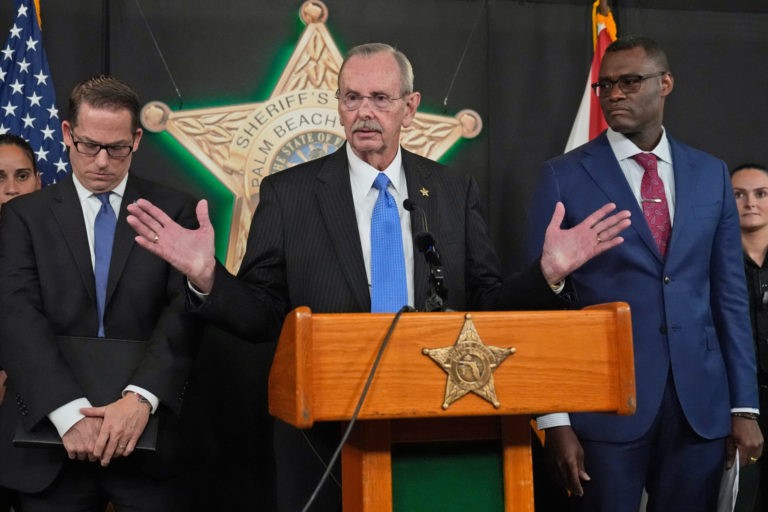
The Palm Beach County Sheriff’s Office responded to a report of two people being shot and found them dead, Sheriff Ric Bradshaw said at a news conference. A short time later, authorities received reports of shots being fired at a nearby home and convenience store, where someone was wounded, Bradshaw said.

As a deputy was putting crime scene tape up at the second shooting location, the suspect drove up and hit him, pushing the deputy about 40 feet (12 meters), the sheriff’s office said in a news release.

The man got out and tried to shoot the injured deputy, but the deputy shot and killed him, the sheriff’s office said. A second deputy also fired shots.

Authorities identified the suspect as 44-year-old Charles McCloud Jr. Bradshaw said detectives were trying to determine the motive for the attacks and whether McCloud knew the victims.

No one answered calls placed Thursday to numbers listed for possible relatives of McCloud.

“This guy went on one hell of a crime spree tonight, shooting people, killing them, and then obviously trying to kill our deputy,” Bradshaw said. “The deputy is very, very fortunate that the initial strike with the vehicle didn’t kill him. But he showed a great deal of courage, a great deal of stamina to be able to get his gun out and neutralize this guy before he could shoot him on the ground.”

The deputy, whose name has not been released, was taken to a hospital with serious injuries, the sheriff’s office said.

The sheriff’s office identified the people who were killed as 37-year-old Henry McClean Jr. and 40-year-old Francisco Pacheco. It identified the man who was wounded at the store as 54-year-old Anthony Brown, who remained hospitalized Thursday with injuries that weren’t considered life-threatening.

The deputy was placed on administrative leave, as per department protocol, the sheriff’s office said. The Florida Department of Law Enforcement, the Palm Beach County State Attorney’s Office and the sheriff’s office’s Violent Crimes Division are investigating.

Adapted from reporting by the Associated Press