Senate, House Key Leaders Briefed Ahead of Strikes

(The Center Square) The Gang of Eight was briefed ahead of the U.S.-Israeli joint strikes against Iran, according to House Speaker Mike Johnson.

In a social media post Saturday morning, the Louisiana Republican said the eight members of Congress were briefed in detail earlier in the week by Secretary of State Marco Rubio.

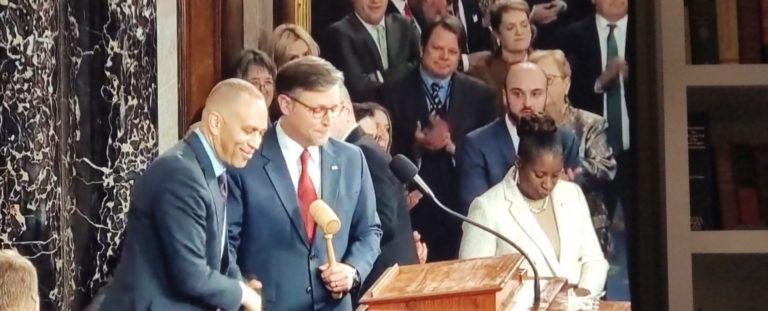
The  Gang of Eight is a reference to Johnson plus Sens. John Thune, R-S.D., Tom Cotton, R-Ark., Mark Warner, D-Va., and Chuck Schumer, D-N.Y.; and Reps. Rick Crawford, R-Ark., Jim Himes, D-Conn., and Hakeem Jeffries, D-N.Y. The are chairmen of pivotal committees – Cotton and Warner from the Senate Committee on Intelligence; Crawford and Himes the House Committee on Intelligence; and respective majority and minority party leadership of each chamber, Thune and Schumer in the Senate and Johnson and Jeffries in the House.

Johnson wrote in part the group “was briefed in detail earlier this week that military action may become necessary to protect American citizens in Iran. I received updates from Secretary Rubio thereafter, and I will remain in close contact with the president and the Department of War as this operation proceeds.”

Jeffries put out a statement criticizing second-term Republican President Donald Trump. He said Trump “failed to seek congressional authorization prior to striking Iran,” and said the administration “must seek authorization for the preemptive use of military force that constitutes as an act of war.”

Declaration of “war” has not been made by Trump or his senior-most leaders.

Warner echoed Jeffries’ message, while acknowledging that the Islamic Republic’s “leadership has long supported terrorism across the region, undermined regional stability, continued to advance its nuclear ambitions, and brutally repressed its own people.”

However, the senator says that Congress “must be fully briefed,” with the Trump administration to make “clear legal justification” for actions in Iran.

Cotton came out in support of Trump’s decision to strike Iran, citing Iran’s history of supporting terrorism against the U.S.

Writing on social media, Cotton said in part, “A nuclear-weapons program. Thousands of missiles. State sponsorship of terror. Iran has waged war against the U.S. for 47 years: the hostage crisis, the Beirut Marine barracks, Khobar Towers, roadside bombs in Iraq and Afghanistan that killed and maimed thousands of American soldiers, the attempted assassination of President Trump. The butcher’s bill has finally come due for the ayatollahs.”

FBI, Law Enforcement on Higher Alert Following Strikes on Iran

(The Center Square) The FBI is on high alert following the U.S.-Israeli coordinated strikes on Iran overnight.

FBI Director Kash Patel said that the FBI is “fully engaged on the situation overseas,” and he has directed the bureau’s counterterrorism and intelligence teams “to be on high alert and mobilize security assets needed.”

Patel said the FBI’s Joint Terrorism Task Force across the country is working to “address and disrupt any potential threats to the homeland.”

The announcement from the FBI comes as the U.S. Secret Service issued a statement saying that it is “actively monitoring the situation in Iran and remains in close coordination” with federal and local partners.

Other law enforcement agencies across the country, including the New York Police Department and the Washington, D.C. Metropolitan Police Department, released similar statements.

“At this time, there are no known threats to D.C. We are prepared to increase our presence as needed,” according to a statement from MPD.

NYPD said it is also increasing patrols across the city in response to Operation Epic Fury.

“As is our protocol and out of an abundance of caution, we will be enhancing patrols to sensitive locations throughout the city, including diplomatic, cultural, religious and other relevant sites,” according to a NYPD post on X.

2 Indicted for Last Month’s Mass Shooting in Utah

(Headline USA) A federal grand jury has indicted two men on firearms charges in connection with a mass shooting last month in a church parking lot in Salt Lake City that left two people dead and six more injured.

The indictment unsealed Friday charges 32-year-old Ryan Toutai with unlawful disposition of a firearm and 26-year-old Fineeva Maka with felon in possession of a firearm, the U.S. Attorney’s Office for the District of Utah said.

Investigators used cellphone videos and photos and GPS ankle monitor evidence to tie the two men to a pistol recovered from the Jan. 7 shooting, the U.S. Attorney’s Office said. Prosecutors allege the two men are gang members.

The violence took place in the back parking lot of a place of worship for The Church of Jesus Christ of Latter-day Saints, also known as the Mormon church. Investigators have said the shooting broke out from a dispute between people who knew each other and were attending a funeral. All the victims were adults. No one has yet been charged in the actual killings.

The church mostly serves Tongan congregants, its website says. In the 1890s, LDS missionaries brought their faith to Tonga, an archipelago in the South Pacific. More than 25% of the U.S. Tongan population resides in Utah, the headquarters of the church.

Toutai and Maka are scheduled to appear in court on Tuesday. It wasn’t clear if they had attorneys and The Associated Press could not immediately reach them for comment. The federal public defender’s office also could not be reached.

Police previously arrested Toutai for a charge of felony obstruction of justice in the case. He was in jail on Saturday. A third man also was arrested on the same charge.

Adapted from reporting by the Associated Press.

Iran Leader Ayatollah Ali Khamenei Reportedly Dead

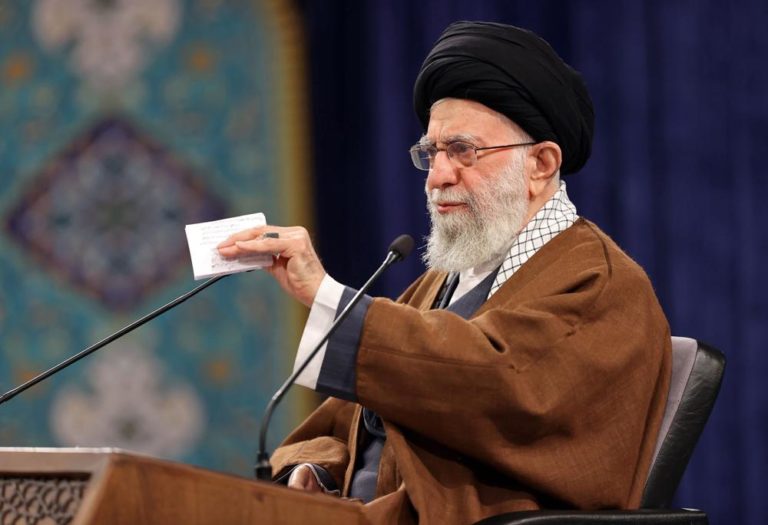
(Headline USA) Supreme Leader Ayatollah Ali Khamenei has died in a major attack on Iran launched by Israel and the United States, Israeli officials told The Associated Press on Saturday.

There was no immediate comment from the U.S. or Iran on his status. The assassination of the second leader of the Islamic Republic, who had no designated successor, would throw its future into doubt and raise the prospect of a protracted conflict given Iranian threats of retaliation.

In a nationally televised address, Israeli Prime Minister Benjamin Netanyahu said there were “growing signs” that Khamenei had been killed when Israel struck his compound early Saturday.

Shortly after the address, two Israeli officials said Israel had confirmed his death. The officials both spoke on condition of anonymity pending a formal announcement and gave no further details.

Khamenei succeeded Ayatollah Ruhollah Khomeini, the leader of the 1979 Islamic Revolution. He had the final say on all major policies, leading Iran’s clerical establishment and its paramilitary Revolutionary Guard – the two main centers of power in the country’s theocracy.

As the attack on Iran unfolded, President Donald Trump urged the Iranian public to “seize control of your destiny” by rising up against the Islamic leadership. In a video announcing the “major combat operations,” Trump told Iranians that “when we are finished, take over your government. It will be yours to take. This will be probably your only chance for generations.”

Iranian state media, citing the Red Crescent, on Saturday evening said at least 201 people had been killed and more than 700 injured. Iran retaliated by firing missiles and drones toward Israel and U.S. military bases in the region, and exchanges of fire continued into the night.

Some of the first strikes on Iran appeared to hit near the offices of the 86-year-old Khamenei. Before Israeli officials confirmed the death, Iranian Foreign Minister Abbas Araghchi told NBC News that Khamenei and President Masoud Pezeshkian were alive “as far as I know.” He called the attack “unprovoked, illegal and absolutely illegitimate.”

The strikes during the holy fasting month of Ramadan opened a stunning new chapter in U.S. intervention in Iran, marking the second time in eight months that the Trump administration has attacked the Islamic Republic during talks over its nuclear program.

About 12 hours after the attacks began, the U.S. military reported no U.S. casualties and minimal damage at U.S. bases despite “hundreds of Iranian missile and drone attacks.” It said targets in Iran included Revolutionary Guard command facilities, air defense capabilities, missile and drone launch sites, and military airfields.

The targets included various members of Iran’s leadership, according to a U.S. official and another person briefed on the attacks who spoke on condition of anonymity to discuss an ongoing operation. There was no immediate information on whether other top officials were killed.

Even if Iran’s top leaders are killed, regime change is not guaranteed.

Democrats decried that Trump had taken action without congressional authorization. White House spokesperson Karoline Leavitt said the administration had briefed several Republican and Democratic leaders in Congress in advance.

The U.N. Security Council said it would meet Saturday afternoon. The U.N.’s nuclear watchdog said on X it was closely monitoring developments and had seen “no evidence of radiological impact.”

Iran was in a “near-total internet blackout,” advocacy group NetBlocks said.

Adapted from reporting by the Associated Press.

Rep. Crockett Removes ‘White Girl’ from Event

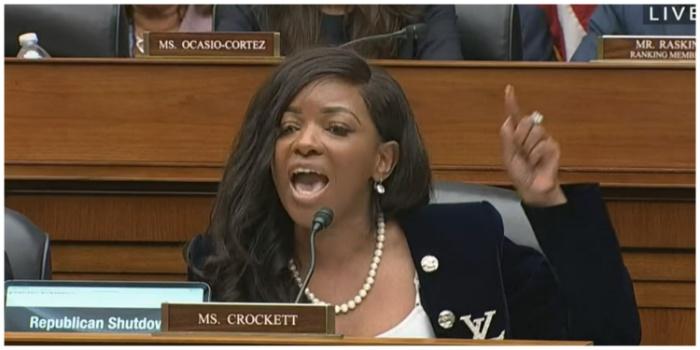
(Luis CornelioHeadline USA) Texas Senate candidate and Rep. Jasmine Crockett may have falsely claimed that her team did not have armed guards remove a “white girl” from an event Monday.

The controversy began when The Atlantic staff writer Elaine Godfrey reported Thursday that a woman wearing a badge at Crockett’s event asked security to remove her because she was a “top-notch hater.”

Godfrey suggested the removal stemmed from Democratic lawmakers’ frustration with her reporting, especially after she interviewed several of Crockett’s colleagues for a profile in The Atlantic.

In a piece for The Atlantic, Godfrey wrote that the woman said: “‘Elaine from Atlantic, white girl with a hat and notepad. She’s interviewing people in the crowd. She’s a top-notch hater and will spin. She needs to leave.’”

Godfrey added that security then escorted her out and made her wait outside while she ordered a cab.

In response, Crockett told CBS News that there was “no evidence” the journalist had been removed from the event. She also pointed to a “specific journalist” with a “history of being less than truthful,” alleging the reporter had previously faced a defamation suit.

Godfrey pushed back, saying she had never been accused of defamation. She also revealed she had an audio recording of the badged woman asking her to leave.

As published by The Atlantic, the transcript reads as follows:

Woman: Are you Elaine?

Elaine Godfrey: Yeah.

Woman: Okay, her team has asked you to leave.

Godfrey: Me to leave?

Woman: Can you get your stuff? (Speaking to someone else.) Her team wants her to leave, and they’re asking her to leave.

Godfrey: Why are you asking me to leave?

Woman: They just said, ‘Elaine from Atlantic, white girl with a hat and notepad. She’s interviewing people in the crowd. She’s a top-notch hater and will spin. She needs to leave.’ (Speaking to someone else.) I just told her to get her bag and go [unintelligible] that’s from her team.

Security guard 1 (to Godfrey): Can we get up and leave now?

Godfrey: Sure. That’s crazy. What are they afraid of?

The episode unfolded as Crockett campaigns for a promotion to the U.S. Senate. She is seeking the Democratic nomination in Texas and would square off against the Republican nominee in the general election.

Swalwell Takes $25k from CCP-Tied Attorney 

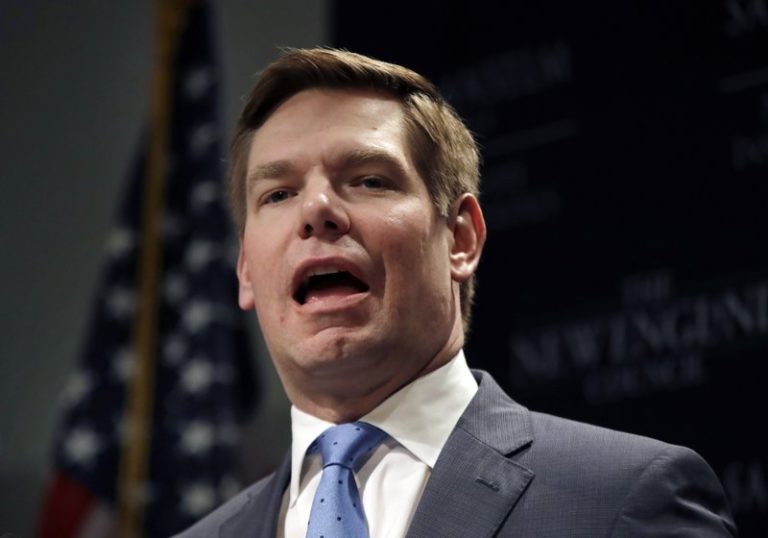
(Luis CornelioHeadline USA) California gubernatorial candidate and Rep. Eric Swalwell has received thousands of dollars from Keliang “Clay” Zhu, a Chinese American lawyer with ties to the Chinese Communist Party, according to a recent report. 

Zhu is a top attorney at DeHeng Law Offices, a major Beijing-based firm with “deep ties” to the CCP, according to Fox News. He appears to be the sole attorney in the law firm’s Silicon Valley office. 

Fox News reports that DeHeng Law was founded in the 1990s as “China Law Office,” a subsidiary of the CCP’s Ministry of Justice, before adopting its current name in 1995. 

Swalwell’s campaign for governor accepted $25,000 from Zhu in February, in addition to $5,000 in November and more than $10,000 previously donated to his congressional campaigns, according to Fox News. 

Michael Lucci, a China expert and founder of State Armor Action, said Swalwell “got caught with his hand in the CCP cookie jar,” referring to Zhu’s donations. 

“It’s simply outrageous that Congressman Swalwell would take even more money from Keliang Zhu after Zhu’s connections to the CCP were made public,” Lucci added. 

Fox News noted that DeHeng and its attorneys “continue to have longstanding cooperation with the Chinese government’s departments and major state-owned enterprises.” 

Zhu, for example, touts helping a “major state-owned enterprise in acquiring majority shares in one data analytics software company in the Silicon Valley.” He said this was worth more than $100 million. 

He also represented a Singapore subsidiary of a state-owned enterprise in acquiring a Texas “shale oil technology company” for more than $100 million, and represented major state-owned banks “in debt collection and foreign judgment enforcement cases in the U.S.” 

Additionally, he highlighted assisting CCP-linked WeChat in winning a lawsuit against President Donald Trump in 2020. 

In 2024, Zhu criticized Florida legislation banning Chinese nationals from owning or leasing property, calling the law “unfair, unconstitutional, and un-American” after an appeals court blocked the bill. 

Headline USA reached out to Zhu via email past midnight but had not received a response by publication time. 

Swalwell has also faced scrutiny over his past relationship with Christine Fang, also known as “Fang Fang,” a Chinese national who U.S. intelligence officials reportedly believed was a Chinese spy. 

CNN Panics Over New ‘Conservative’ Ownership

(Luis CornelioHeadline USA) CNN is reportedly in turmoil — not because of tanking viewership, but because it could soon be owned by an executive whom the left has portrayed as conservative, despite his support for Joe Biden. 

The anxiety stems from reports that David Ellison, CEO of Paramount Skydance, is poised to purchase CNN’s parent company, Warner Bros. Discovery, after Netflix walked away from negotiations to buy the network. 

Several media outlets have labeled Ellison an “ally” of President Donald Trump. However, in 2020, he donated nearly $1 million to the re-election campaign of former President Joe Biden. 

He even attended a private roundtable with Biden and other wealthy donors, helping Biden “raise more than $121 million in the first quarter of 2024,” according to CNBC.

Paramount Skydance is also the parent company of CBS News. The outlet is currently led by Bari Weiss, whom some media figures have likewise characterized as conservative, despite her record reflecting otherwise. 

According to blog site Status, one CNN staffer said the network was “doomed,” while another bluntly added: “We are f**ked.” 

A third individual reportedly said, “Everybody is reeling about the obvious things,” while an anonymous source claimed, “The panic at CNN right now is off the chart.” 

Amid the reported negotiations, CNN chief executive Mark Thompson urged staffers to remain calm. 

“The business, rather British, of keeping calm and carrying on is actually probably the most sensible thing for us all to do,” Thompson reportedly said during a morning call with editorial staffers, as quoted by The New York Times. 

In an email, Thompson added that “despite all the speculation you’ve read during this process, I’d suggest that you don’t jump to conclusions about the future until we know more.” 

At a Friday town hall, he continued, “We should be making the case that our audience’s expectations of CNN are absolutely rooted in that tradition of news which doesn’t come with some corporate spin to it.” 

Despite speculation, there is no public evidence that Ellison holds conservative political viewpoints. 

Reports instead suggest that he has simply sought to have CBS News hire more ideologically diverse staff, not steer the outlet in a conservative direction. So far, however, CBS has continued to showcase left-wing bias, according to reports. 

Silver, Strategy, and a Structural Deficit

(Money Metals News Service) In a recent episode of the Money Metals podcast, host Mike Maharrey sat down with Charlie Garcia, founder of R360, decorated veteran, former advisor to six presidents, and regular MarketWatch columnist, to unpack what he sees as a historic turning point in the silver market.

Garcia pointed to January 1st, when China implemented a new export licensing regime that effectively gives Beijing control over the majority of refined silver leaving the country. He noted that 60 to 70 percent of globally traded refined silver supply now requires Chinese permission to be exported. In his view, that shift alone changes the strategic landscape.

At the same time, he argued that the silver market has not reflected normal supply and demand for years due to heavy paper trading and manipulation. When the CME raises margin requirements and paper contracts multiply, the visible price can disconnect from physical scarcity. But Garcia believes that the disconnect cannot last forever.

He emphasized that silver is no longer just a precious metal. It is a strategic asset used in weapons systems, electric vehicles, solar panels, AI data centers, and 5G infrastructure. As silver becomes embedded in national security and industrial policy, he expects the tension between paper and physical markets to intensify.

(Interview Starts Around 4:46 Mark)

Five Years of Deficits and an 800 Million Ounce Drain

Garcia highlighted a structural deficit in silver that has persisted for five consecutive years. Since 2021, he said, the cumulative drain has approached 800 million ounces, nearly a full year of global mine production.

Industrial demand now represents roughly 60 percent of total silver consumption, up from about 50 percent a decade ago. He cited China’s rapid expansion of solar capacity, 216 gigawatts in 2023 and 277 gigawatts in 2024, as well as accelerating EV production. These are not discretionary purchases. They are foundational to energy transition and digital infrastructure.

Complicating the supply picture is the fact that 70 to 80 percent of silver is produced as a byproduct of mining for copper, lead, zinc, and gold. Higher silver prices alone do not automatically lead to higher silver output. Mining decisions are driven by entirely different economics.

Garcia argued that central banks have long sought to suppress precious metals prices because rising gold and silver expose currency debasement. He estimated that the dollar has been debased by roughly 7 percent per year over the past 20 years. In that environment, he sees silver as deeply undervalued and predicted that it could eventually reach the $200 range once physical realities override paper pressures.

Currency Debasement and the Case for Hard Assets

The conversation turned to inflation and the reliability of official data. Garcia dismissed CPI as an incomplete measure and framed inflation more simply. When more dollars are created, each dollar is worth less.

He described a world in which policymakers openly target 2 percent inflation, even if actual debasement exceeds that level. He compared it to a pickpocket who announces how much he intends to steal. Those living paycheck to paycheck suffer most, particularly the 20 percent of Americans living in poverty.

Garcia drew a direct line between money printing, the S&P 500, and rising asset prices. Stocks and real estate rise, but so do everyday costs. He illustrated the point with a generational example. A pre-1965 silver quarter that was once worth $0.25 now carries about $16 in silver value, while a 1965 paper dollar has lost the vast majority of its purchasing power.

In response, he favors hard assets. He owns physical gold and silver, as well as Bitcoin, which he called a deflationary asset due to its fixed supply. He believes Bitcoin could compound at 30 percent annually over the next 20 years, potentially reaching $10 million per coin. His strategy is long-term wealth preservation, not short-term trading.

Silver and National Defense

With his background as an intelligence officer and military advisor, Garcia offered perspective on silver’s role in defense. He confirmed that silver is critical in advanced weapons systems, AI-enabled platforms, and radar jamming technologies.

He referenced B2 bombers flying from Missouri to conduct strikes in Iran, enabled by systems that suppress radar in real time. Silver, he said, is embedded in these high-performance electronics. As geopolitical tensions rise, silver’s importance in defense manufacturing increases.

He also noted that China has been selling US Treasuries on a net basis and has considered alternatives to the dollar system. He speculated that China has been close for two years to introducing a gold-backed currency, an idea that has circulated alongside BRICS discussions.

In this environment, silver’s role is not limited to industrial demand. It intersects with national security, global trade, and currency strategy.

Kevin Warsh, the Fed, and the Limits of Control

The interview also explored President Trump’s appointment of Kevin Warsh as Fed chair. Garcia explained that Warsh’s resume made him confirmable. He served as a Morgan Stanley executive director, was a top economic advisor to George W. Bush, and became the youngest Fed governor in history from 2006 to 2011. During the 2008 crisis, he acted as the Fed’s primary liaison to Wall Street and represented the central bank at the G20.

Although Warsh has been known as an inflation hawk, Garcia said his current argument is that AI-driven productivity gains could help contain inflation. If productivity pushes GDP growth toward 5 percent, as some anticipate, it could offset some inflationary pressures.

Still, Garcia warned that the Fed cannot easily control long-term rates. With $38 trillion in debt and persistent deficits, long-term yields are influenced by market forces beyond central bank signaling. He referenced Stan Druckenmiller’s view that the long end of the curve will be difficult to manage regardless of short-term rate cuts.

Markets reacted negatively to Warsh’s nomination, partly out of uncertainty. Once confirmed, a Fed chair is difficult to remove, and policy independence, whether real or perceived, matters to investors.

Building Legacy Beyond the Markets

As the conversation drew to a close, Garcia reflected more broadly on wealth, legacy, and responsibility. For him, success is not measured only in net worth, but in what that wealth ultimately accomplishes.

He spoke about entrepreneurs who have created at least $100 million in value, many of them first-generation wealth builders. Some never attended college. A number did not even graduate from high school. Yet they built enduring businesses and reshaped industries.

What stood out in his description was not the size of the fortunes, but the mindset behind them. Many were motivated by early experiences with scarcity. They developed a determination not only to escape poverty, but to create something lasting.

Garcia emphasized that true wealth extends beyond financial capital. It includes intellectual, social, human, emotional, and even spiritual dimensions. In his view, money is a tool. What matters more is how it is deployed and whether it strengthens families, communities, and institutions over time.

After a wide-ranging discussion about silver deficits, currency debasement, $38 trillion in federal debt, and the shifting balance of global power, the interview ended on a more philosophical note.

Markets fluctuate. Policies change. But the pursuit of long-term value, resilience, and purpose remains constant.

To stay prepared, start acquiring silver and gold every month with the Money Metals monthly program.

U.S. and Israel Begin Regime-Change Operation in Iran

(Headline USAThe U.S. and Israel launched a major attack on Iran on Saturday, with President Donald Trump calling on the Iranian public to “seize control of your destiny” and rise up against the Islamic leadership that has ruled the nation since 1979.

Trump’s statement marked a drastic reversal for someone who long touted his record as a peace president. During the lead-up to his first presidential run, he predicted that Obama would start a war with Iran due to his poor negotiating skills.

His supporters long touted the fact that Trump never engaged in a regime-change war during his tenure—but that’s no longer the case.

Trump also admitted that his actions could cost the lives of Americans.

“I do not make this statement lightly: The Iranian regime seeks to kill. The lives of courageous American heroes may be lost, and we may have casualties,” he said. “That often happens at war.”

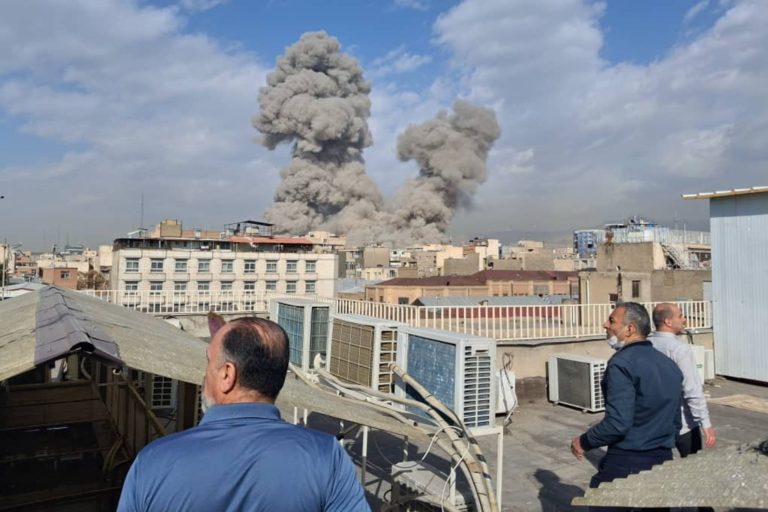
Some of the first strikes appeared to hit areas around the offices of Supreme Leader Ayatollah Ali Khamenei, and Iranian media reported strikes nationwide. Smoke could be seen rising from the capital. It wasn’t immediately clear whether the 86-year-old leader was in his offices at the time of the strike.

“When we are finished, take over your government. It will be yours to take. This will be probably your only chance for generations,” Trump said in a video announcing “major combat operations” were underway. “For many years, you have asked for America’s help, but you never got it.”

Israeli Prime Minister Benjamin Netanyahu echoed that sweeping goal. “Our joint operation will create the conditions for the brave Iranian people to take their fate into their own hands,” Netanyahu said.

The strikes opened a stunning new chapter in U.S. intervention in Iran and marked the second time in eight months that the Trump administration has used military force against the Islamic Republic. They also came just weeks after Trump ordered a military operation to capture Venezuela’s president, Nicolás Maduro, and bring him and his wife to New York to face federal drug conspiracy charges.

Tensions have soared in recent weeks as American warships moved into the region. Trump said he wanted a deal to constrain Iran’s nuclear program, which last year he said had been debilitated.

The immediate trigger for Saturday’s strikes appears to be the unsuccessful latest round of nuclear talks. But they also reflect the dramatic changes across the region that have left Iran’s leadership in its weakest position since the Islamic Revolution nearly half a century ago.

Israeli and American strikes last June greatly weakened Iran’s air defenses, military leadership and nuclear program. A regionwide war, sparked by Hamas’ Oct. 7, 2023, attack on Israel, has left Iran’s network of proxies across the Middle East greatly weakened. U.S. sanctions and global isolation, meanwhile, have decimated Iran’s economy.

Iran responded to the latest strikes as it had been threatening to do for months — first launching a wave of missiles and drones targeting Israel. It followed with strikes targeting U.S. military installations in Bahrain, Kuwait and Qatar. The United Arab Emirates and Iraq shut down their airspace.

Iran’s Foreign Ministry issued a defiant statement, saying that the country “will not hesitate” in its response. In a statement posted on X, the ministry said: “The time has come to defend the homeland and confront the enemy’s military assault.”

Forty people were reported killed at a girls’ school in southern Iran in the Israeli-U.S. strikes, according to Iran’s state-run IRNA news agency. At least 45 others were wounded in the attack in Minab in Iran’s Hormozgan province. The White House did not immediately respond to a request for comment on reported strike on the school.

In an indication of the scope of the conflict, air defense fire thudded over Dubai, the commercial capital of the United Arab Emirates, Saturday afternoon. Associated Press journalists saw the aftereffects of the blast from an interceptor.

Four people were also killed by an Iranian missile striking a building in Syria’s southern city of Sweida, according to Syrian state television.

Shrapnel from an Iranian missile attack on the capital of the UAE killed one person, state media said.

Attack was coordinated between Israel and US

The attacks came after weeks of the U.S. military massing forces in the region even as U.S. and Iranian envoys held talks in Switzerland and Oman aimed at finding a diplomatic solution to head off an American military operation.

Oman’s Foreign Minister Badr al-Busaidi, a key mediator in the U.S.-Iran nuclear talks, said in a post on X that he was dismayed that U.S. and Israel moved forward with the operation.

“Active and serious negotiations have yet again been undermined,” said al-Busaidi, who traveled to Washington on Friday to meet with Vice President JD Vance for talks. “Neither the interests of the United States nor the cause of global peace are well served by this. And I pray for the innocents who will suffer. I urge the United States not to get sucked in further.”

Israel said the operation was carried out as a “broad, coordinated, and joint operation against the regime” that has been planned for months between the Israeli and U.S. militaries.

Trump, in justifying the military action, claimed that Iran has continued to develop its nuclear program and plans to develop missiles to reach the U.S.

He also acknowledged that there could be American casualties, saying “that often happens in war.”

It was a notable call on Americans to brace themselves from a U.S. leader who swept into office on an “America First” platform and vowed to keep out of “forever wars” that had bogged down his recent predecessors.

Trump’s statement indicated the U.S. was striking for reasons far beyond the nuclear program, listing grievances stretching back to the beginning of the Islamic Republic following a revolution in 1979 that turned Iran from one of America’s closest allies in the Middle East into a fierce foe.

The U.S. president said he was aiming to “annihilate” the Iranian navy and destroy regional proxies supported by Tehran.

He also called on the Iranian Revolutionary Guard to lay down its arms, pledging that members would be given immunity, while warning they would face “certain death” if they didn’t.

“They’ve rejected every opportunity to renounce their nuclear ambitions, and we can’t take it anymore,” Trump said.

Iran currently has a self-imposed limit on its ballistic missile program, limiting their range to 2,000 kilometers. That puts all the Mideast and some of Eastern Europe in their range. There is no public evidence of Iran seeking to have intercontinental ballistic missiles, though Washington has criticized its space program as potentially allowing it to one day.

Iran had hoped to avert a war, but maintains it has the right to enrich uranium and does not want to discuss other issues, like its long-range missile program or support for armed groups like Hamas and Hezbollah.

The strikes could also have a huge impact on global markets, particularly if Iran is able to make the Strait of Hormuz unsafe for commercial traffic. More than 14 million barrels per day of oil passed through the strait in 2025, about a third of total worldwide oil exports transported by sea.

Strikes hit targets across Iran

Iranian media reported strikes nationwide. Roads to Khamenei’s compound in downtown Tehran had been shut down by authorities as other blasts rang out across the capital.

Khamenei has not made a public appearance in recent days and wasn’t immediately seen after. During the 12-day war in June, he was believed to have been taken to a secure location away from his Tehran compound.

In Tehran, witnesses heard the first blast by Khamenei’s office. Iranian state television later reported on the explosion, without offering a cause.

More explosions struck Iran’s capital after Israel said it was attacking the country. Authorities have offered no casualty information from the strikes.

Targets in the Israeli campaign included Iran’s military, symbols of government and intelligence targets, according to an official briefed on the operation, who spoke on condition of anonymity to discuss nonpublic information on the attack.

Iran retaliates

Hours after the strikes, Iran’s paramilitary Revolutionary Guard said it launched a “first wave” of drones and missiles targeting Israel, where a nationwide warning was issued as the military said it was working to intercept incoming Iranian missiles. There was no immediate word on any damage or casualties from the ongoing attack.

Meanwhile, Bahrain said that a missile attack targeted the U.S. Navy’s 5th Fleet headquarters in the island kingdom. Witnesses heard sirens and explosions in Kuwait, home to U.S. Army Central. Explosions could be also be heard in Qatar.

Iraq and the United Arab Emirates closed their airspace, and sirens sounded in Jordan.

Iraqi officials also reported a drone strike hit a headquarters of the Iran-backed Kataib Hezbollah militia in Iraq, killing two people and wounding three Saturday. The group had earlier threatened to enter the fray should Iran come under attack. An Israeli military official said Israel was not aware of any Israeli strikes on Kataib Hezbollah headquarters in Iraq.

The Iranian-backed Houthis in Yemen, meanwhile, vowed to resume attacks on Red Sea shipping routes and on Israel, according to two senior Houthi officials. They spoke on condition of anonymity because there was no official announcement from the Houthi leadership.

U.S. embassies or consulates in Qatar, United Arab Emirates and Israel posted on social media that they told staffers to shelter in place and recommended all Americans “do the same until further notice.”

Adapted from reporting by the Associated Press

 

DOJ Charges 30 More People for Minnesota Church Invasion

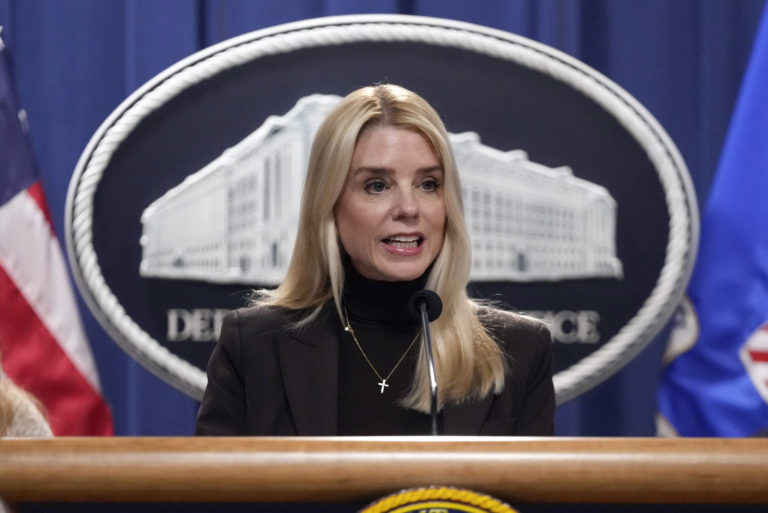
(Headline USA) ​​ Attorney General Pam Bondi announced charges Friday against 30 more people who are accused of civil rights violations in a January protest inside a Minnesota church where a pastor works for Immigration and Customs Enforcement.

Bondi said on social media that 25 people were in custody and more arrests would follow. The new indictment comes a month after independent journalists Don Lemon and Georgia Fort and prominent local activist Nekima Levy Armstrong were charged for their alleged roles in the protest at Cities Church in St. Paul, Minnesota.

“YOU CANNOT ATTACK A HOUSE OF WORSHIP. If you do so, you cannot hide from us — we will find you, arrest you, and prosecute you,” Bondi wrote in the post. “This Department of Justice STANDS for Christians and all Americans of faith.”

In total, 39 people now face charges of conspiracy against religious freedom and interfering with the right of religious freedom.

The new defendants will have an initial court appearance and a magistrate judge will set conditions for their likely release. Lemon and Fort said they were at the church as journalists covering news. Levy Armstrong was the subject of a doctored photo posted by the White House showing her crying during her arrest. The three have pleaded not guilty.

Protesters descended on Cities Church on Jan. 18 after learning that one of the church’s pastors also serves as an ICE official. The protest drew swift condemnation from Trump administration officials and conservative leaders for disrupting a Sunday service.

The indictment says the “agitators” entered the church in a “coordinated takeover-style attack” and engaged in acts of intimidation and obstruction.

“Young children were left to wonder, as one child put it, if their parents were going to die,” the indictment says.

A lawyer for the church praised the Justice Department for charging more people.

“The First Amendment does not give anyone — regardless of profession, prominence, or politics — license to storm a church and intimidate, threaten, and terrorize families and children worshipping inside,” Doug Wardlow said in a statement.

The revised indictment adds new allegations when compared to the original filed in January.

It says two people “conducted reconnaissance” outside the church a day before the protest and recorded their visit on video, with one saying, “My thoughts are to be able to close up this whole alleyway right here.”

The court filing quotes one protester as chanting in the church, “This ain’t God’s house. This is the house of the devil.”

Separately, a woman who was at the church service has filed a lawsuit against some people who were charged, alleging emotional trauma and an inability to exercise her religion that day.

The protest came at a tense time in Minnesota, where the Trump administration sent thousands of federal officers for Operation Metro Surge after a series of public fraud cases where the majority of defendants had Somali roots. Officers frequently deployed tear gas for crowd control in neighborhood clashes with residents, often detaining them along with immigrants.

On Jan. 7, a federal officer fatally shot Renee Good, 37, in Minneapolis. In another fatal shooting a week after the church protest, a federal officer killed 37-year-old nurse Alex Pretti.

Nationwide demonstrations erupted in response, followed by a change in Operation Metro Surge’s leadership and the eventual wind-down of the immigration enforcement operation. Roughly 400 ICE officers and Homeland Security agents were expected to remain in Minneapolis by early March, down from roughly 3,000 at the peak, according to a court filing.

Since then, the Twin Cities have grappled with the impact to communities and the local economy. The city of Minneapolis said it suffered an impact of $203.1 million due to the operation, with tens of thousands of residents in need of urgent relief assistance.

Adapted from reporting by the Associated Press