(Bethany Blankley, The Center Square) The U.S. has the most billionaires in the world – a record 989 with a combined fortune of $8.4 trillion.
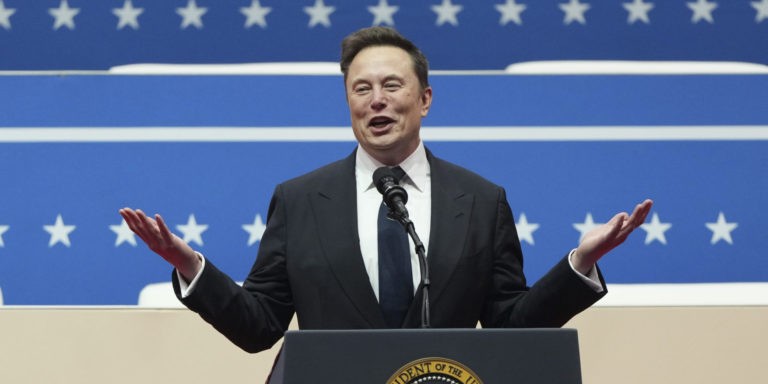
Eighty-eight of them are in Texas, including the world’s richest man, Elon Musk, who ranks first on Forbes’ new billionaire list. His net worth of $839 billion comes from his companies, Tesla and SpaceX.
“There has never been a better time to be a billionaire,” Forbes states. “Thanks to AI’s explosion, sizzling markets and favorable fiscal policies, a record 3,428 entrepreneurs, investors and heirs made this year’s World’s Billionaires list, 400 more than in 2025. They are richer than ever, worth a record $20.1 trillion, up $4 trillion from last year.”
The analysis counted a record 3,428 billionaires worldwide living in 80 countries and territories. More than half, 51%, live in three countries: the U.S., China and India.
China, including Hong Kong, has the second most billionaires of 610. India has the third most of 229. The analysis is based on data from stock prices and exchange rates from March 1, 2026, Forbes says.
Forbes provided a list of the 10 richest Texans on the list to The Center Square.
Following Musk is Michael Dell of Dell Technologies, ranking second with a net worth of $141 billion.
Ranking third and eighth are Walmart heiresses Alice Walton ($134 billion) and Ann Walton Kroenke ($14.6 billion).
Ranking fourth are Elaine Marshall and family, who amassed a net worth of $30.9 billion from Koch Inc., followed by Lundal Stephens Greth and family whose $30 billion fortune comes from oil and natural gas.
The sixth wealthiest Texan on the list is Stanley Kroenke, who amassed his $22.2 billion from sports and real estate investment. Dallas Cowboys owner Jerry Jones and his family are not far behind with a net worth of $20.3 billion.
Next is Ken Fisher, the ninth wealthiest Texan with $13.2 billion from money management.
Rounding out the top 10 is Richard Kinder with a net worth of $13 billion from his oil and natural gas pipeline company, Kinder Morgan.
Other notable Texans on the list include Houston Rockets owner Tilman Fertitta and now U.S. Ambassador to Italy, ranking 268th overall with a net worth of $11.7 billion.
Charles Butt, the owner of grocery chain H-E-B, ranks 289th with an estimated net worth of $11.1 billion. His sister, Eleanor Butt Crook, ranks 934th with a net worth of $4.6 billion. His nephews, Howard Butt III and Stephen Butt, with a tied ranking of 1,325, also each have a reported net worths of $3.2 billion.
Houston native Beyonce ranks 3,332 with a net worth of slightly more than $1 billion.
Texas ranks fourth for having the most billionaires in the country, behind California, New York and Florida, Forbes told The Center Square.
Of the top 20 billionaires in the world, 15 are in the U.S.
(Ioannis Vlahos, Antiwar.com) Secretary of Defense Pete Hegseth has approved a request from CENTCOM (U.S Central Command) to send additional Marines and warships to the Middle East, according to three U.S officials. CENTCOM, which is responsible for all U.S forces in the Middle East, requested an amphibious ready group and an attached Marine expeditionary unit, which generally consists of several warships and 5,000 Marines.
The request comes as Iran escalated its attacks on the Strait of Hormuz, including allegedly mining the Strait, which is a key waterway in the global economy. As a result, global trade has been disrupted, oil prices have risen and the situation has presented itself as a major political challenge for President Trump.
The Marine detachment, along with the Japan-based USS Tripoli, will be joining Marine forces currently present in the region in supporting the Iran operation, according to the officials. Despite the buildup, Hegseth dismissed Iran’s attacks on the Strait as “pure desperation” and responded to reporters asking about the safety of passing through the Strait that they “don’t need to worry about it” and that it’s “something we are dealing with.”
The 5,000 Marines will join 40,000 to 50,000 American soldiers already in the Middle East. Those soldiers are within range of Iranian missiles and drones. So far, at least 14 American soldiers have been killed since the US and Israel launched a surprise attack on Iran two weeks ago.
On Tuesday, Reuters reported speaking with US officials who said over 150 American troops have been wounded during the war, including several serious injuries.
While the role of the Marine expeditionary unit is unclear, the White House has floated drastically escalating the conflict by attempting to escort tankers through the Strait of Hormuz. The President has also refused to rule out placing boots on the ground in Iran.
(Headline USA) A pilot from Alabama had just been promoted to major in January and had been deployed less than a week when the refueling aircraft he was aboard crashed in Iraq this week, killing him and five others, his brother-in-law said Saturday.
Alex Klinner, 33, leaves behind three small children: 7-month-old twins and a 2-year-old son, his brother-in-law, James Harrill, said Saturday while confirming his death.
“It’s kind of heartbreaking to say: He was just a really good dad and really loved his family a lot — like a lot,” Harrill said.
Also aboard the aircraft was an Ohio man whose loved ones remembered him for his smile, his parents said.
Alabama airman and father of 3, Major Alex Klinner, identified as one of the six Americans who was killed when a KC-135 crashed in Iraq.
Klinner was a father to a two-and-a-half-year-old and seven-month-old twins.
His wife, Libby, posted the following on Instagram:
The Pentagon hasn’t yet revealed the identities of the six, but families began revealing who had died Saturday.
The aircraft was in “friendly” airspace, supporting operations against Iran, when an unspecified incident involving another aircraft occurred, according to U.S. Central Command. The other plane landed safety, U.S. military officials said.
The Ohio Air National Guard’s 121st Air Refueling Wing said in a Facebook post late Friday that three of the dead were airmen who served in the Columbus-based unit.
“We share in the sorrow of their loved ones, and we must not forget the valuable contributions these Airmen made to their country and the impact they have left on our organization,” according to the 121st Air Refueling Wing’s post.
A new father and a new major
Klinner, an eight-year U.S. Air Force veteran from Birmingham, Alabama, had just moved with his family into a new home, his wife, Libby Klinner, said in an Instagram post mourning his death.
An outdoorsman who enjoyed hiking, Klinner was also ready to help others. When Harrill last saw him in January, Klinner had shoveled Harrill’s vehicle out of the snow during a family wedding.
“Alex was one of those guys that had this steady command about him,” said Harrill, who helped set up a GoFundMe site for Klinner’s family. “He was literally one of the most kindest, giving people.”
Libby Klinner said in a post that her heart is broken for their children, who will grow up not knowing their father.
“They won’t get to see firsthand the way he would jump up to help in any way he could,” she wrote. “They won’t see how goofy and funny he was. They won’t witness his selflessness, the way he thought about everyone else before himself. They won’t get to feel the deep love he had for them.”
A man with a ready smile
Sgt. Tyler Simmons of Columbus, Ohio, also was among six service members who died Thursday in the crash of a KC-135 Stratotanker, his mother, Cheryl Simmons, confirmed on Saturday. Cheryl Simmons said she was making funeral plans for her son.
In a statement obtained by WCMH-TV in Columbus, Tyler Simmons’ family said it was saddened beyond measure to hear of the fatal crash.
“Tyler’s smile could light up any room, his strong presence would fill it. His parents, grandparents, family and friends are grief stricken for the loss of life,” they said.
The refueling aircraft is a mainstay in the US military
U.S. Central Command, which oversees the Middle East, has said the crash occurred on a combat mission but was over “friendly” territory in western Iraq. Military officials said it is being investigated and was “not due to hostile or friendly fire.”
The KC-135 aircraft refuels other planes in midair, allowing them to fly longer distances and sustain operations without landing. The plane can also be used to transport wounded personnel and conduct surveillance missions, according to military experts.
The Congressional Research Service says the Air Force last year had 376 KC-135s, including 151 on active duty, 163 in the Air National Guard and 62 in the Air Force Reserve. It has been in service for more than 60 years.
(Luis Cornelio, Headline USA) The Democrat-led DHS shutdown has forced one of the busiest airports in America to ask flyers to consider donating gift cards to TSA workers.
Denver International Airport — the third busiest in the United States and sixth busiest in the world — took to social media Tuesday asking for grocery store or gas gift cards for hundreds of TSA employees set to go a full month without pay.
“DONATIONS NEEDED,” the airport wrote, garnering nearly 1.5 million views. “Support the dedicated TSA employees working without pay by donating $10 and $20 grocery store and gas gift cards. Visa gift cards cannot be accepted.”
The airport said drop-off locations were set up at the Final Approach cell phone lot and inside the Jeppesen Terminal.
A blue-state airport has resorted to crowdsourcing gift cards for TSA officers because Senate Democrats are refusing to support the @DHSgov funding bill.
Our frontline workers shouldn’t have to rely on charity while Democrats play politics. https://t.co/BuA3EXACAs
The missed paychecks stem from Senate Democrats refusing to appropriate funding for DHS unless ICE and CBP — both agencies within the department — are reformed.
Congress passed a two-week DHS funding extension in early February, while negotiations for full funding continued.
Since then, Democrats have refused to pass a clean funding bill unless the DHS halts immigration enforcement.
The Democratic-led shutdown has already triggered long lines at airport security checkpoints as some TSA agents opt to miss work.
Democrats have blocked even a two-week funding package because it includes funding for ICE and CBP, according The Hill.
Sen. Katie Britt, R-Ala., who chairs the Senate Appropriations Committee’s Homeland Security Subcommittee and sponsored the partial funding proposal, said voters expect Congress to do its job.
“The people who sent us here expect more,” she said. “We would like that opportunity to continue funding the Department of Homeland Security in its entirety, while we have a conversation about the best pathway to move forward,” she added.
Britt’s proposal came after Sen. Patty Murray, D-Wash., introduced legislation that would fund only TSA, the Coast Guard, FEMA and the controversial Cybersecurity and Infrastructure Security Agency.
Republicans stand ready to fully fund DHS and pay EVERY hardworking man and woman protecting our nation and the American people. pic.twitter.com/veV9f2dyYG
— Senator Katie Boyd Britt (@SenKatieBritt) March 12, 2026
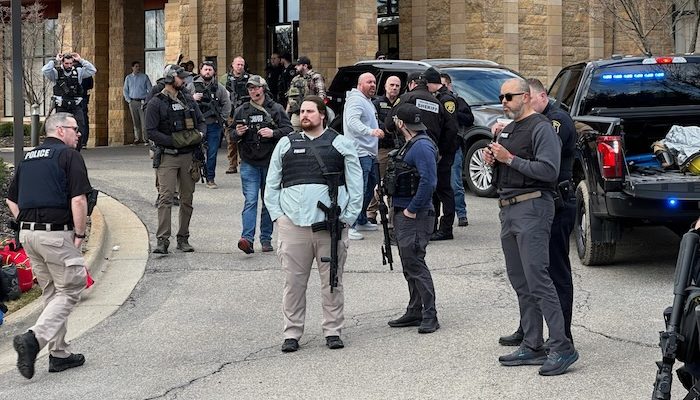
(Headline USA) The Michigan synagogue that came under attack this week when an armed man drove his car into the building had for months been strengthening its security apparatus by hiring a seasoned police lieutenant as its security director and holding active shooter training.
That beefed up security, which came in response to rising antisemitism and other attacks at places of worship, is being credited with saving lives in an event that ended with only the attacker dying.
An armed, private security guard shot back at the attacker after he opened fire through his windshield in a hallway inside the building. When the car barreled in, there were 140 students inside in an early childhood learning center. All were unscathed.
The car’s engine caught fire, and the gunman, Ayman Mohammad Ghazali, a Lebanese-born U.S. citizen, eventually used his own weapon to fatally shoot himself, according to Jennifer Runyan, the special agent in charge of the FBI’s Detroit field office.
One of Temple Israel’s rabbis said “it was only a miracle” that none of its members were hurt.
FBI Detroit led an Active Shooter Attack Prevention and Preparedness (ASAPP) training for the clergy and staff of Temple Israel in West Bloomfield. The FBI course combines lessons learned from years of research and employs scenario-based exercises to help participants practice… pic.twitter.com/qvtJIkClkS
The effort to bolster security at Temple Israel, outside Detroit, came as many houses of worship have undergone similar efforts, with leaders working to fortify facilities in the wake of deadly attacks. Synagogues around the world have increased protections after the U.S. and Israel launched a war with Iran.
The synagogue last June hired a former police lieutenant, Danny Phillips, to lead its in-house armed security guards as the head of security, with the temple saying it was taking a proactive step “in response to the evolving realities facing Jewish communities.”
Phillips served in law enforcement for almost three decades, including more than 20 years as his department’s advanced firearm instructor, according to the website of a local college where he teaches a police academy course on responding to active assailants.
And in January, Temple Israel’s staff and clergy participated in an active shooter prevention and preparedness training led by an FBI official, according to the synagogue’s social media accounts.
Oakland County Sheriff Mike Bouchard said on Thursday that he had contacted the head of security for the temple just two days before the attack. He credited the thorough preparation ahead of the attack as the reason that there weren’t casualties.
Ron Amann, a member of the safety team at CrossPointe Community Church in Wayne, Michigan, not far from the temple, is still recovering after being shot in the leg by a man who tried to attack the Christian church last June. The gunman was killed by another team member before he could enter a Sunday service.
Amann, who was armed, said he passed his grandson to his wife when he heard a woman yell, “There’s a man with a gun.”
“When you sign up for the safety team you have to be willing to stand up and fight, bluntly, rather than run the other direction,” said Amann, 64, who has a metal rod in his lower right leg.
“My alertness is just at a higher level than it ever was before,” he said. “The events at the synagogue just keep bringing it back to the forefront. I’m certainly saddened by all that.”
CrossPointe church is 30 miles (48.2 kilometers) from the synagogue. But Pastor Bobby Kelly said he and his staff sheltered in place Thursday when they heard about the attack. Police even drove around the church.
“When you hear of something happening,” Kelly said, “you don’t know where it’s going to happen next.”
(Money Metals News Service) In a recent episode of the Money Metals podcast, host Mike Maharrey sat down with Brien Lundin, president and CEO of Jefferson Financial, editor of The Gold Newsletter, and host of the long-running New Orleans Investment Conference. Their conversation explored the forces currently shaping the gold and silver markets, including geopolitical tensions, government debt, inflation, central bank buying, and shifting investor sentiment.
While headlines surrounding global conflict have dominated the news cycle, Lundin argues that the most important drivers of precious metals prices remain rooted in long-term monetary trends rather than short-term geopolitical events.
(Interview Starts Around 6:54 Mark)
War Headlines vs. the Real Drivers of Gold
At the time of the discussion, markets were reacting to escalating tensions involving Iran, which briefly pushed gold prices higher. According to Maharrey, gold surged to roughly $5,400 per ounce when the conflict began before pulling back toward $5,200 as markets absorbed the news.
Lundin emphasized that geopolitical shocks typically create only temporary moves in gold prices. Traders often rush into gold during the early days of a crisis, only to exit just as quickly once the initial excitement fades.
Instead, Lundin says the primary reason to own gold remains simple and consistent across history: protection against the loss of purchasing power in fiat currencies.
He argues that the current environment—marked by rising government debt, persistent deficit spending, and central bank intervention—represents the late stages of a long-running monetary cycle. According to Lundin, gold’s current rally reflects that structural reality more than any specific geopolitical event.
Long-Term Trends Still Favor Precious Metals
Despite headline volatility, Lundin believes the underlying bull market in gold remains intact.
He pointed out that the current gold bull market is now roughly two years old, and unlike previous cycles, it has experienced surprisingly few major corrections. Over that period, the market has seen only two drawdowns of roughly 10 percent, a relatively modest level of volatility for such a strong rally.
One major reason for this stability is persistent central bank demand. Governments around the world have been accumulating gold as a hedge against financial and geopolitical risks, particularly concerns surrounding the weaponization of the U.S. dollar in global politics.
Lundin also noted that the entry of Western investors into the market since late summer has introduced greater price volatility. When large institutional funds enter the sector, they tend to move in large waves—both when buying and when selling.
Even so, he expects the broader upward trend to continue.
Technically speaking, Lundin believes gold is currently trading sideways, consolidating gains before its next breakout. Based on recent price patterns and technical indicators such as Bollinger Bands, he suggested that the market could remain range-bound for two to three weeks before attempting another move higher.
Inflation, Debt, and the Real Monetary Problem
Much of the discussion focused on the deeper monetary forces driving the gold market—particularly the explosion of government debt.
Lundin highlighted a striking statistic: interest payments on U.S. federal debt now exceed the nation’s defense spending. With government borrowing continuing to rise, he sees little chance of fiscal discipline emerging in the near future.
If deficits continue to expand, the government will ultimately need to fund them through monetary creation.
From an Austrian economics perspective, Lundin stressed that inflation is fundamentally an increase in the supply of money and credit—not simply rising consumer prices. Price inflation is merely a symptom of that deeper monetary process.
This distinction helps explain why gold often moves before visible inflation appears.
For example, during the massive stimulus programs that followed the COVID-19 pandemic, gold prices surged rapidly as markets anticipated future inflation. Consumer prices did not rise significantly until roughly 18 months later, but gold had already responded to the coming wave of liquidity.
In Lundin’s view, gold acts as one of the most sensitive forward indicators of monetary instability.
Measuring Wealth in Gold Instead of Dollars
During the conversation, Lundin referenced insights from Robert Prechter, founder of Elliott Wave International, who highlighted an unusual market phenomenon.
According to Prechter’s analysis, major stock indexes reached both an all-time high and a 12-year low simultaneously in 2025, depending on how they are measured.
When priced in U.S. dollars, stock markets appear to be at record highs. But when priced in gold, they are far lower.
This contrast reflects the declining purchasing power of fiat currencies rather than genuine increases in wealth.
Lundin cited research showing that when prices are measured in gold, the S&P 500 currently trades at levels comparable to the 1930s and 1940s.
He also noted that the cost of an Ivy League education is roughly the same today as it was in the 1930s when priced in gold. Even everyday goods like a Big Mac have declined in gold terms since the 1980s.
These comparisons suggest that gold remains a relatively stable benchmark of value, while currencies fluctuate around it as governments expand the money supply.
Silver’s Unique Supply Dynamics
While gold is primarily a monetary metal, silver occupies a hybrid role that includes both investment demand and industrial consumption.
This dual nature complicates silver’s outlook, particularly during periods of economic uncertainty.
Maharrey noted that a prolonged global conflict or recession could weaken industrial demand, potentially creating headwinds for silver. However, Lundin believes the long-term fundamentals remain exceptionally strong.
For the first time in modern history, he argues that industrial users are competing directly with investors for limited silver supplies.
Historically, industries that used silver—such as photography—had little difficulty obtaining the metal because above-ground stockpiles were plentiful. Today, however, years of deficits have significantly reduced available inventories.
As a result, companies that require silver for manufacturing—especially in sectors like solar energy—must now compete with investors accumulating physical metal.
Because silver is essential for many industrial processes, manufacturers often have no choice but to pay whatever price is necessary to secure supply.
Lundin suggested that this structural shift could push silver prices significantly higher over time. Some industry reports indicate that prices in the range of $125 to $135 per ounce could begin affecting the economics of solar panel production.
The “Debasement Trade” and Institutional Money
One of the most powerful forces now entering the precious metals market is what Wall Street has begun calling the debasement trade.
After years of dismissing gold investors as fringe thinkers, institutional investors are increasingly acknowledging the risks associated with massive government debt and currency devaluation.
According to Lundin, global financial markets now contain roughly three times more investable capital than existed in 2008. Even a small shift in asset allocation toward precious metals could have a dramatic impact on prices.
Large funds do not need to allocate large percentages of their portfolios to move the market. A shift from 0 percent exposure to just 1 percent or 2 percent in gold and mining stocks can inject enormous capital into a relatively small sector.
This gradual rotation into precious metals, combined with continued central bank buying, could drive a powerful multi-year rally.
The New Orleans Investment Conference
Toward the end of the interview, Lundin discussed the New Orleans Investment Conference, which he hosts each year. Founded by gold pioneer Jim Blanchard in 1974, the event is the oldest investment conference in the world and has long been a focal point for precious metals investors.
The conference brings together more than 40 leading experts in fields ranging from macroeconomics to mining, markets, and geopolitics.
The 2026 conference will take place October 28–31 in New Orleans, concluding on Halloween. Lundin emphasized that attendees not only gain access to leading analysts but also have the opportunity to interact directly with speakers and fellow investors.
The event has developed a reputation for presenting ideas and perspectives that often appear months or years ahead of the mainstream financial narrative.
The Bottom Line
Although geopolitical conflicts may create short-term volatility, the long-term outlook for precious metals remains anchored in deeper economic realities.
Rising government debt, persistent monetary expansion, growing central bank demand, and increasing institutional interest are all converging to support the sector.
As Brien F. Lundin noted during the discussion, the precious metals market may simply be entering a phase where the broader financial world is finally recognizing trends that gold investors have been watching for decades.
In his words, gold has moved from being dismissed as “tinfoil” thinking to becoming what many investors now see as “TINA” — there is no alternative.
(Headline USA) A federal jury on Friday convicted eight people on terrorism charges over a shooting at a Texasimmigration facility that federal prosecutors tied to the violent leftist movement, antifa.
Jurors also handed down guilty verdicts on other charges, including attempted murder against one member of the group who prosecutors say opened fire last summer outside the Prairieland Detention Center near Dallas, wounding a police officer who was shot in the neck.
Sentencing was set for June.
The trial was closely watched beyond the Fort Worth courtroom as some legal experts and critics called it a test of the lengths the government can go to punish protesters.
Lawyers for the accused say they were not antifa members and had instead organized a “noise demonstration” that included fireworks to show support for immigrants who had been detained as part of the Trump administration’s mass deportation operations.
FBI Director Kash Patel has called the Texas case the first time a material support to terrorism charge has targeted people accused of being antifa members.
Exploding fireworks (explosives) thrown at the Prairieland facility by Antifa Cell members, captured by surveillance cameras. pic.twitter.com/eU4Satxn37
— U.S. Department of Justice (@TheJusticeDept) March 13, 2026
Attorney General Pamela Bondi said in a news release Friday: “Today’s verdict on terrorism charges will not be the last as the Trump administration systematically dismantles Antifa and finally halts their violence on America’s streets.”
Defense attorneys told jurors that there was no plan for violence on July 4 outside the facility in Alvarado.
There were nine defendants on trial in all, eight of whom faced a charge of providing material support to terrorists. The ninth defendant was charged with corruptly concealing a document and conspiracy to conceal documents. He was found guilty of both. Lawyers for the defendants said their clients were not members of antifa.
Prosecutor Shawn Smith told jurors during closing arguments that the group’s actions — including bringing firearms, first aid kids and wearing body armor — were all signals of the group’s intent. He said they practiced “antifa tactics,” and were “obsessed with operational security.”
“This was not a peaceful protest, this was a direct action,” Smith said.
Attorneys for the defendants have said there was no planned ambush and that protesters who brought firearms only did so for their own protection.
The case, defense attorney Blake Burns told jurors, is about the government trying to characterize protesters as terrorists in order to put them in prison.
After the verdict, MarQuetta Clayton, the attorney for defendant Maricela Rueda, told television station WFAA that she was feeling “very emotional for her.” She said she was thinking of Rueda’s 12-year-old daughter and what the future will look like for them.
The terrorism charges did not require a tie to any organization, and there is no domestic equivalent to the State Department’s list of foreign terror organizations. That’s in part because organizations operating within the United States are protected by broad First Amendment rights.
Attorneys for the defendants have said that most protesters began leaving when two guards from the center came outside. That was before any shots were fired.
Prosecutors said Song, a former U.S. Marine Corps reservist, yelled “get to the rifles” and opened fire, striking one police officer who had just pulled up to the center.
Though it was defendant Benjamin Song who opened fire, the prosecution charged several other protesters with attempted murder of a law officer and discharging a firearm but were found not guilty, arguing that from the group’s planning, it was foreseeable that a shooting could happen.
The officer who was shot, Alvarado Police Lt. Thomas Gross, testified that when responding to the scene he saw a person clad in all-black with their face covered and carrying a rifle. He told jurors he was shot with a round that went into his shoulder and out of his neck.
Song’s attorney, Phillip Hayes, told jurors during closing arguments that there wasn’t a call to arms within the group before Gross arrived on the scene and “aggressively” pulled out his firearm. Hayes suggested that Song’s shots were “suppressive fire,” and that the ricochet bullet is what hit the officer.
Leading up to the trial, several people pleaded guilty to providing material support to terrorists after being accused of supporting antifa.
They face up to 15 years in prison at sentencing.dddd
(Headline USA) The Justice Department on Friday charged a man who authorities say sold a gun to the Old Dominion University shooter despite the gunman’s previous conviction in a terrorism case.
Kenya Chapman is facing federal charges in connection to the sale of the weapon to Mohamed Bailor Jalloh, a former Army National Guard member who yelled “Allahu akbar” before he opened fire in a classroom at the Virginia school on Thursday, according to authorities. One person was killed and two others were injured in the shooting.
Jalloh was barred from possessing a gun given a previous felony conviction for attempting to aid the Islamic State extremist group.
Chapman told agents in an interview that he stole the gun from a car in Newport News, Virginia, about a year before the shooting and recently sold it to Jalloh. Chapman said he met Jalloh at work and that Jalloh told him he needed the gun for protection as a delivery driver, according to court papers. Chapman told agents he knew Jalloh had spent some time behind bars but denied knowing he had a previous felony conviction.
Chapman told agents he had no idea the man would commit the attack, the affidavit says.
Earlier Friday, a law enforcement official said that Jalloh used a gun with an obliterated serial number, potentially complicating investigators’ efforts to determine how he obtained a firearm.
The official said investigators would have to re-surface the number in order to trace the gun.
Jalloh was a former Army National Guard member who pleaded guilty in 2016 to attempting to aid the Islamic State extremist group.
Jalloh, who yelled “Allahu akbar” before opening fire, was subdued and killed by ROTC students, according to FBI officials who praised the students’ bravery for preventing further harm. The shooting killed an ROTC leader who was a professor of military science at ODU, and left two others hurt.
One of them, who was hospitalized in critical condition, has been upgraded to fair condition, according to Sentara Health. The other was treated and released.
Jalloh, who was sentenced to 11 years in prison in the Islamic State group case, was released from federal custody in December 2024. He was on supervised release, which is comparable to probation.
He was released about 2 1/2 years early after completing a drug treatment program. The person was not authorized to speak publicly and did so on condition of anonymity.
It wasn’t clear how Jalloh qualified for the program, which allows inmates to shave up to a year off their sentences. Inmates serving sentences for terrorism-related offenses typically aren’t eligible for such programs or other sentence-reducing credits.
A message seeking information about Jalloh’s incarceration and release was left with the federal Bureau of Prisons.
At a news conference Thursday, a reporter asked the special agent in charge of the FBI’s Norfolk field office, Dominique Evans, if there was a mention of the ongoing war in Iran. “None whatsoever,” she replied. The U.S. and Israel launched a war with Iran with missile strikes on Feb. 28.
The FBI has warned that Iranian operatives may be planning drone attacks on targets in California. Two men brought explosives to a far-right protest outside the New York mayoral mansion on Saturday. Investigators allege they were inspired by the Islamic State group.
And on Thursday, a man of Lebanese origin was fatally shot after driving his vehicle into a Detroit-area synagogue in what the FBI called a “targeted act of violence against the Jewish community.”
Evans on Thursday also requested the public’s help as authorities continue to investigate the shooting and Jalloh, saying no detail is too small.
Old Dominion University Police Chief Garrett Shelton said less than 10 minutes passed between when officers were called about a shooting in the university’s business school building and when responders determined the shooter was dead. Authorities have not said exactly how the ROTC students killed Jalloh, though Evans said they did not shoot him.
The U.S. Army Cadet Command has said on social media that three members of the U.S. Army ROTC program at Old Dominion were injured, including one who died.
ROTC is a program where students receive a scholarship to attend college while training to become commissioned officers in the U.S. military.
The victim who died was Lt. Col. Brandon Shah, a 42-year-old from Chesapeake who leaves behind a spouse and a child, the U.S. Army Cadet Command at Old Dominion said in a social media post.
Shah attended ODU as an ROTC student, according to his biography on the university’s website, and had returned in 2022 as a leader for the program. In the Army, Shah piloted helicopters over Iraq, Afghanistan and Eastern Europe.
“Above all else, Lt. Col. Shah embodied what it means to be a devoted family man, a revered leader, and heroic protector even in his final moments,” Old Dominion President Brian Hemphill said in a Friday message to the university community.
On Friday morning, in honor of his close friend Shah, Eddie Flack poured out a bottle of Wild Turkey on a lawn where flagpoles stand on campus across from Constant Hall.
Flack, also of Chesapeake, said the two became firm friends while enrolled at ODU.
“I love you Brandon. Rest well with the creator. I love you,” Flack said as he poured out the whiskey and looked up at the sky.
“Sorry Brandon. The world needs more love,” Flack said, weeping. “We need to spread more love and not this hatred.”
The shooter also had a background in military service. Jalloh, a naturalized U.S. citizen from Sierra Leone, served as a specialist with the Virginia Army National Guard from 2009 until 2015, when he was honorably discharged.
(Headline USA) The man accused of killing Charlie Kirk on a Utah college campus was back in court Friday as a state judge denied some efforts by his attorneys to limit public access to certain documents while not ruling out the possibility of closing portions of an upcoming hearing.
The outcome sets the stage for an April hearing in which attorneys for Tyler Robinson will make their case to exclude TV cameras, microphones and photographers from the courtroom.
Judge Tony Graf has been weighing the public’s right to know details about the case against concerns by defense attorneys that the media attention could undermine Robinson’s right to a fair trial. Prosecutors, Kirk’s widow and attorneys for news organizations have urged Graf to keep the proceedings open.
Prosecutors intend to seek the death penalty for Robinson, 22, who is charged with aggravated murder in the Sept. 10 shooting of the conservative activist on the Utah Valley University campus in Orem. They have said DNA evidence connects Robinson to the killing.
Robinson has not yet entered a plea.
Attorneys on Friday debated whether the defense’s written request to exclude cameras, which was classified by the court as private, should be made public.
Graf said the defense failed to make its case to keep the motion private but that he will continue “balancing all the factors” when deciding which portions of the upcoming hearing may be closed.
Staci Visser, an attorney for Robinson, told the judge that the defense is not arguing in the court of public opinion.
“There seems to be an idea that flooding the public sphere with information from this courtroom will somehow dispel conspiracy theories or shift public narratives. That, in and of itself, is concerning to the defense,” Visser said. “All we should be worried about is protecting what happens in this courtroom.”
Robinson’s defense team went on to say that the April hearing will involve discussions about prejudicial pretrial publicity — for example, evidence that has yet to be admitted, confessions, personal opinions about guilt or public statements that would otherwise be inadmissible in court.
“We don’t want to be in that position of bringing in front of the court all of this prejudicial information and having the press regurgitate it yet one more time, and reinflicting a wound that we’re seeking to avoid,” defense attorney Michael Burt said.
Christopher Ballard, a prosecutor with the Utah County Attorney’s Office, dismissed those arguments. He said careful questioning during jury selection and tools like expanding the jury pool can ensure a defendant gets a fair trial.
“So just saying that this a content tornado or there’s been a barrage of media coverage doesn’t necessarily mean that there is going to be prejudice to the defendant,” Ballard said.
Ballard noted that most of the evidence that will be discussed at the April 17 hearing is already public, so most of it should be open.
Coalitions of national and local news organizations, including The Associated Press, are fighting to preserve media access in the case.
Media access has been a focal point of several recent hearings, with the judge placing temporary restrictions on local TV stations for showing Robinson’s shackles in violation of a court order and filming close-up shots that might allow viewers to interpret what he was discussing with his attorneys.
The judge also has prevented full video recordings of Kirk’s shooting from being shown in court after defense attorneys argued the graphic footage would interfere with a fair trial. An estimated 3,000 people attended the outdoor rally to hear Kirk, a co-founder of Turning Point USA who helped mobilize young people to vote for President Donald Trump.
(Ken Silva, Headline USA) Sex criminal Jeffrey Epstein worked as a “financial bounty hunter” for the U.S. government, according to a memo included in the “Epstein files”—the trove of roughly 3 million documents released about the deceased multimillionaire pursuant to congressional legislation.
A financial bounty hunter refers to someone who tracks and recovers stolen assets.
“At some point in time, Jeffrey Epstein worked for the United States government as a financial bounty hunter,” states the unsigned and undated memo. “He has retained significant political connections with both Israel and the United States.”
Though the memo isn’t signed or dated, it does contain information suggesting that it’s a government document. For instance, the memo recommends obtaining information about Epstein from government agencies. It also accuses him of violating the “International Megan’s Law to Prevent Child Exploitation and Other Sexual Crimes Through Advanced Notification of Traveling Sex Offenders,” which requires sex offenders like Epstein to inform the government about his international trips.
Confirmed in the Files:
"At some point in time, Jeffrey Epstein worked for the United States government as a financial bounty hunter. He has retained significant political connections with both Israel and the United States." pic.twitter.com/GRjNPl5MpF
The memo may have come from the U.S. Marshals Service, which was investigating Epstein for violating the International Megans Law around 2019—shortly before he was arrested on sex trafficking charges.
Many Epstein researchers have argued that his government connections allowed him to commit crimes with relative impunity. The memo about him being a financial bounty hunter for the U.S. government appears to support that thesis.
Claims of varying plausibility have been made throughout the years that Epstein worked for a variety of government agencies, from the FBI and CIA to Mossad and KGB.
One of the most recent claims came from last September, when Glenn Prager—whose LinkedIn claims that he once worked on “sensitive investigations involving major DOJ components, including the FBI, DEA, Bureau of Prisons, U.S. Marshals Service, ATF, and the U.S. Attorney’s Offices”—was caught by an undercover journalist claiming that Epstein was a CIA asset.
“They [DOJ] didn’t want to go after him [Epstein] because he’s an asset for the United States and Israel,” Prager said.
“It’s not talked about yet but, it’s soon to come out that he [Epstein] was a CIA informant.”
As has been widely documented, Epstein had relationships with numerous high-ranking U.S. and Israeli officials, including former Israeli Prime Minister Ehud Barrack and former CIA Director William Burns. The father of his accomplice, Ghislaine Maxwell, was an Israeli intelligence asset.
Ken Silva is the editor of Headline USA. Follow him at x.com/jd_cashless.