(Headline USA) An airplane pilot died Wednesday after a violent collision with a Pennsylvania State Police helicopter near a runway at a small airport, but both state troopers aboard the helicopter survived, authorities said.
The plane was coming down on the runway and veered into the helicopter that was near the ground, Lt. Col. George Bivens, the state’s acting police commissioner, said during a news conference. The FAA and NTSB called it a midair collision but state police didn’t clarify if the plane was off the ground.
“When I say it was a very violent crash, that plane was cut into a lot of pieces,” he said, explaining that part of the investigation will be making sure the pilot was the only person on board. He said the helicopter lost its blades and tail boom and crashed onto its side.
The crash at the small airport in Carlisle, about 110 miles (170 kilometers) northwest of Philadelphia, involved the Bell 407 helicopter and the Cessna 150, according to the Federal Aviation Administration. The Cessna is a two-seat aircraft that is typically used as a trainer aircraft, according to Bivens.
Both of the pilots in the helicopter were trapped until one pushed out a window and helped the other out through it, said Bivens. The pilots, who are from the police’s elite aviation unit and had been performing a training exercise, are stable.
“Tonight could’ve been much worse,” said Gov. Josh Shapiro. “Tonight could’ve been much more tragic for our state police family.”
Officials are not releasing information about the person who died in the crash until the person’s next of kin are informed.
Photos and video on social media showed a helicopter on its side near aircraft debris in a field and a line of emergency vehicles near Carlisle.
The FAA and the National Transportation Safety Board were investigating.
Transportation Secretary Sean Duffy said he’s been in touch with the governor.
(Headline USA) Hundreds of Lindsay Clancy supporters, many wearing pink clothing emblazoned with phrases such as “Believe,” “She Needed Help” and “Peace For Lindsay,” gathered Thursday outside the courthouse where she is on trial in the killings of her three children.
Several of the 300 women, and a few men, said Clancy’s story resonated with them and that they wanted to raise awareness about how the mental health system treats women. Clancy’s lawyer does not dispute that she killed the children, but says she should not be held criminally responsible because she was mentally ill.
The livestreamed trial has sparked massive discussions online and has brought attention to postpartum psychosis, a rare mental illness Clancy’s attorney Kevin Reddington says she had that is linked to the stress, sleep deprivation and hormonal changes that follow childbirth. Reddington said she also has bipolar disorder. After strangling her children, Clancy jumped from a second-story window and remains paralyzed from the waist down.
Reddington says Clancy repeatedly sought help: She turned to multiple outpatient providers, tried various drugs they prescribed, called a suicide hotline, went to an emergency room, and even checked herself into a psychiatric hospital.
Prosecutors say the former labor and delivery nurse planned the Jan. 24, 2023, killings and contrived to get her husband out of the house by sending him to pick up medicine for one of their children and dinner for the family. They have also questioned the seriousness of her suicide attempt, and witnesses have testified that Clancy wouldn’t always take prescribed medications.
Thursday’s rally was the first time during the nearly monthlong trial that supporters have come out in such large numbers.
“Women are being dismissed, neglected and ignored when we speak up,” said April Vincent, a 52-year-old paralegal from Providence, Rhode Island. “We’re scared because nobody takes us seriously.”
The women stood silently for more than an hour ahead of Thursday’s proceedings, where a chaplain called by the defense testified about visiting Clancy in the hospital after the killings.
At the sight of Reddington outside the courthouse, the crowd broke into applause.
Rally organizer Renee Kimball implored the crowd to trust that Reddington “has Lindsay’s fight.”
Toward the end of their rally, supporters formed a circle, said the Lord’s Prayer, held up their arms and formed hearts with their hands. Some held flags from different countries to show that the support for Clancy was global.
Clancy, 36, has pleaded not guilty to murder charges in the deaths of Callan, Dawson and Cora Clancy, who ranged from 8 months to 5 years old. Researchers estimate that postpartum psychosis — which is more serious and less common than postpartum depression — afflicts 1 to 2 per 1,000 women after delivery.
Jeanne Zaborski, a 72-year-old retired nurse from Rockland, Massachusetts, said she hopes the case raises awareness about postpartum health. She and many others at the rally said they had been following the trial almost daily.
“It’s very sad,” Zaborski said. “I am a mother. I am a grandmother. I have a sister who had problems after birth and it’s just very sad. I hope Lindsay gets the care she needs and deserves and other women will come together like we did today.”
In court, Sheila Cavanaugh, a chaplain at Brigham and Women’s Hospital in Boston, testified that when she first visited Clancy, she was unconscious. By Jan. 31, 2023, Clancy was conscious and no longer connected to a ventilator, Cavanaugh said, but “her emotional state was very neutral – a flat affect.”
Cavanaugh said she “vividly remembers” one of the first things Clancy said to her.
“She said to me, as I held her hand to comfort her, ‘I’m so glad my children are safe,’” Cavanaugh said. “I replied theologically to Lindsay. I said, ‘Lindsay, your children are safe. They’re safe in heaven with God.’”
“We prayed for them,” said Cavanaugh, who saw Clancy more than 200 times and has visited her at the state mental hospital where she resides.
Cavanaugh said Clancy “alluded to hearing a voice, and the voice, according to Lindsay, told her that if she did not follow the command, neither she nor her children would be safe.”
Prosecutors questioned why Cavanaugh had not documented the disclosure about the voice in notes she made in Clancy’s hospital record.
“I’m not there to evaluate the patient; I’m there to bear witness to their suffering,” Cavanaugh said, noting that she is not medically trained and her notes aren’t meant to be verbatim transcripts of conversations.
Their last visit was right before the trial started. She said Clancy “talks frequently about her children.”
“She loves them deeply,” Cavanaugh said. “She carries immense grief.”
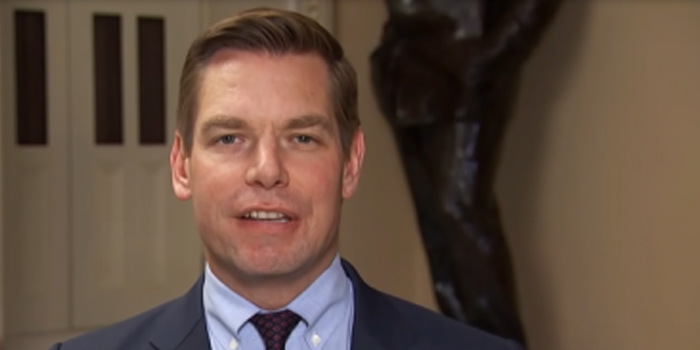
(Headline USA) Federal agents seized electronic devices from former Rep. Eric Swalwell and searched his Washington home as part of an investigation into allegations of sexual misconduct by the ex-Democratic congressman from California, according to The Associated Press.
Swalwell’s devices were reportedly seized at the San Francisco airport on Saturday and agents executed a search warrant at his home a day later.
Swalwell announced his resignation from Congress in April following allegations that Swalwell had sexually assaulted a woman twice, including when she worked for him. The San Francisco Chronicle, followed by CNN, first reported the allegations. CNN also reported that three other women alleged various kinds of sexual misconduct by Swalwell, including sending them unsolicited explicit messages or nude photos.
The seven-term lawmaker had been seen as one of the leading candidates in California’s gubernatorial race before dropping out after the allegations surfaced.
The office of Manhattan District Attorney Alvin Bragg confirmed in April that it was investigating Swalwell after a former staffer told CNN and the Chronicle that Swalwell raped her at a hotel while he was in New York City for a charity gala in 2024. In a statement, Bragg’s office encouraged “survivors and anyone with knowledge of these allegations to contact our Special Victims Division.”
Swalwell, an Iowa native, was elected in 2012 and represented a House district east of San Francisco. He launched a presidential run in April 2019 but ended it a few months later after failing to catch on with voters.
Swalwell was removed from the Intelligence Committee by then-House Speaker Kevin McCarthy, R-Calif., in 2023 based on Swalwell’s contact with a suspected Chinese spy, Christine Fang.
Fang was reported to have come into contact with Swalwell’s campaign as he was first running for Congress in 2012 and to have participated in fundraising for his 2014 campaign.
Federal investigators alerted Swalwell to their concerns and briefed Congress about Fang in 2015, at which point Swalwell says he cut off contact with her. He was not accused of wrongdoing and a House Ethics Committee investigation that was opened in 2021 closed two years later without any action.
(Mike Maharrey, Money Metals News Service) In a transparent effort to manipulate the bond market, the U.S. Treasury announced it would double the size of its “liquidity support” buybacks.
According to the announcement, the Treasury Department will increase buybacks of Treasury securities in the 10-20 and 20-30-year maturity sectors from a maximum of $2 billion to $4 billion per operation.
The expanded buyback operations will begin September 9 and run through November 4.
The Mechanics of the Bond Buyback
In practice, the Treasury will purchase older long-term bonds on the open market and retire them. This increased demand will raise prices and lower yields. This benefits the federal government by lowering interest rates on newly issued debt on the long end of the curve.
The Treasury will fund the buybacks by selling shorter-term notes and bonds. In effect, the Treasury will borrow money to buy debt from people who already lent it money so it can borrow more money from other people at a slightly lower interest rate.
The move worked. The 30-year Treasury yield closed on Tuesday (Aug. 18) and stood at 5.31. Intraday, it hit 5.34 percent, the highest yield since 2007. At close on Wednesday, it dipped to 5.19 percent.
What Are the Ramifications of Yield Curve Intervention?
To put the operation in simple terms, the market is saying, “We require a much higher yield to hold very long-term U.S. government debt.” The Treasury responded by becoming a larger buyer in exactly the section of the curve under the most stress.
In the big scheme of things, the $4 billion intervention is relatively small within a $32 trillion bond market. However, it sends a signal that the Treasury is willing to step in and manipulate the long end of the yield curve.
It also reveals that the Treasury Department is worried about the state of the bond market and its ability to continue funding the federal government’s borrow-and-spend binge.
Treasury describes the operation as a “liquidity intervention” to maintain “market plumbing.” However, we don’t have a “plumbing” problem, and the Treasury Department intervention doesn’t solve the fundamental issue.
Demand for U.S. debt has tanked.
Investors are demanding higher long-term yields due to ever-increasing federal deficits and inflation expectations.
Standard Chartered global head of research Eric Robertsen said he would not describe the increase in yields “as being a function of or exacerbated by irrational market conditions.”
“The only conclusion we can draw is that yields reached a level that they don’t like, and I think that suggests a willingness to try and control or intervene against natural supply and demand.”
The timing of the announcement was telling. The Treasury held a 20-year auction on Wednesday, as yields were coming down.
In other words, it pumped yields down before the auction and ostensibly sold the new bonds at a slightly lower rate than it otherwise would have.
In fact, the August quarterly refunding statement announcing upcoming bond issuance revealed the Treasury plans to sell $125 billion in 3-, 10-, and 30-year securities, including a $25 billion 30-year bond.
While buying back old long bonds while continuing to issue new debt can improve liquidity and market functioning, it can’t make the government’s financing requirement disappear.
In other words, the federal government must keep borrowing, and the world’s lenders seem to be saying, “no thanks!”
This is evidenced by the fact that the impact of the move seems to have been short-lived. On Thursday morning, the yield on the 30-year Treasury was back up to 5.24 percent.
This kind of yield curve intervention also comes with risks. The Treasury will likely issue more short-term debt to cover the buybacks. This exposes Uncle Sam to refinancing risk if rates on the short end of the curve begin to rise.
The move could also undermine confidence in the bond market if investors take this as a signal that the government cannot tolerate market-clearing long-term rates because of the rising interest expense on the $40 trillion debt.
The fact that the Treasury is willing to step in to suppress yields is bullish for gold and silver.
Since gold is a non-yielding asset, conventional wisdom holds that a higher rate environment is bearish for the yellow metal. Conversely, lower rates tend to create headwinds for gold.
The gold market reacted as one would expect. Gold soared on the news, pushing back above $4,500 an ounce on Wednesday. It was the first time gold rose above that level in two months.
Silver also experienced a strong gain, rising above $68 an ounce.
The optics of this operation matter more right now than the scope. If markets take the Treasury at face value and interpret this as a plumbing fix, it won’t likely have significant impacts. However, if the markets read between the lines and recognize it as transparent rate manipulation to control federal government buying costs, we could see a more significant pivot toward precious metals.
Mike Maharrey is a journalist and market analyst for Money Metals with over a decade of experience in precious metals. He holds a BS in accounting from the University of Kentucky and a BA in journalism from the University of South Florida.
That’s how long it took the Trump administration to add another $1 trillion to the national debt.
As of August 18, the national debt stood at $40,047,425,768,420.22.
Let’s try to put the debt into some perspective.
Over the last 22 weeks, the federal government has added roughly $6.5 billion in new debt every single day.
If the U.S. government folded the debt into a single 30-year bond at 5 percent, Uncle Sam would need to accumulate roughly $9.13 billion per day to pay off the bond at term.
According to the National Debt Clock, every U.S. citizen would need to write a check for $116,487 to pay off the debt.
Of course, many Americans don’t pay any federal income taxes. If only taxpayers foot the bill, they would each need to fork out $360,794.
The debt-to-GDP ratio stands at 122.71 percent.
At $30 trillion, the national debt is bigger than the combined annual GDP of China, Germany, India, Japan, and the UK.
The pace of debt accumulation over the last several years is truly astounding.
When President Trump took office in 2020, the debt stood at $36.2 trillion. In other words, the President has added around $3.8 trillion to the debt so far during his second term.
When Biden took up residence at 1600 Pennsylvania Avenue, the national debt stood at just under $27.8 trillion. Biden’s share of the debt totaled around $8.4 trillion. That’s just a little less than the $7.8 trillion piled on by Trump 1.0.
Since the beginning of Trump’s first term, Team Trump-Biden has roughly doubled the national debt!
Compare that to the former champion of overspending – President Barack Obama. He was pilloried as a big spender because he was the first president to generate $1 trillion deficits. He managed this feat three times during the Great Recession.
We can get a sense of the accelerating debt accumulation by looking at how many days it took to add another $1 trillion.
The national debt hit $34 trillion in January 2024. Ten months later, it eclipsed $35 trillion in November 2024.
From there, it took 188 days for the debt to grow from $35 trillion to $36 trillion.
It took another 265 days to reach $37 trillion. But don’t be fooled. The borrowing didn’t slow down between $36 and $37 trillion. It was just that the federal government bumped up against the debt ceiling on January 1, 2025. As a result, it couldn’t borrow any money until the enactment of the “Big Beautiful Bill,” which raised the debt ceiling by $5 trillion as of July 1.
At that time, the national debt stood at $36.2 trillion. It took less than two months for the federal government to borrow more than $800 billion, pushing the debt over $37 trillion. Barely two months later, we were at $38 trillion. Uncle Sam increased the debt by another trillion in 150 days, and here we are today, at $40 trillion, just 154 days later.
All this debt is expensive.
July interest payments pushed total interest expense to $1.17 trillion through the first 10 months of fiscal 2026. That was up 15.5 percent compared to the same period in fiscal ’25.
Interest on the national debt cost $1.2 trillion in fiscal 2025. That was up 7.3 percent over 2024.
If you wonder why I think the Fed won’t be able to hold interest rates higher for longer – this is the reason.
When you boil it all down, the federal government is functionally insolvent. Money printing is the only thing keeping the ship afloat.
Earlier this year, Forbes argued, “The reckoning, long deferred, is becoming impossible to ignore.”
And yet the mainstream continues to ignore it. As already noted, the Treasury released the data to the sound of crickets.
When we hit these milestones, a few people sit up and take notice, but most people shrug. They just continue as if everything were fine.
Ladies and gentlemen, everything is not fine.
Mike Maharrey is a journalist and market analyst for Money Metals with over a decade of experience in precious metals. He holds a BS in accounting from the University of Kentucky and a BA in journalism from the University of South Florida.
(José Niño,Headline USA) Michael Caruso, the suspended clerk of courts for Palm Beach County, remained behind bars for another night after authorities charged him with sexually abusing a young relative, according to a CBS Newsreport. Caruso, who previously oversaw the county’s clerk’s office, appeared in court restrained at the wrists and waist to face the accusations, the outlet noted.
Judge Donald Hafele opened Wednesday’s proceeding by clarifying he had no prior relationship with the defendant. “Let the record reflect that I have never met Mr. Caruso, nor do I know him in any capacity other than the fact that he’s now the suspended clerk of courts,” he said, according to CBS News.
Investigators arrested Caruso on Tuesday, and CBS News reported he is accused of molesting a family member younger than 12, with alleged incidents tied to both South Florida and the Orlando area. During the hearing, Judge Hafele noted that Orange County also wants Caruso and asked, “Mr. Caruso, you are wanted out of Orange County. Does the defense wish me to waive reading?” Caruso’s attorney answered simply, “Yes.”
The judge ultimately refused to set bond, leaving that decision for a judge in Orange County to reconsider later, CBS News reported. Ahead of any transfer, Caruso must abide by strict limits on who he can contact.
Judge Hafele instructed him directly, “Mr. Caruso, if you kindly sign that please. It bars you from any contact with the alleged victim, his family.” He continued, “This also includes no contact whatsoever with anyone under the age of 18. Do you understand?” Caruso replied, “Yes, sir.”
Caruso’s legal team maintains he did not commit the alleged crimes. His attorney told CBS News Miami’s West Palm Beach affiliate in a statement, “Mr. Caruso is innocent of these allegations and intends to vigorously defend himself against these charges.” The attorney added, “We look forward to his expeditious transfer to Orange County so that appropriate bond conditions can be set.”
Caruso had already been suspended from his elected role as clerk of courts before this latest arrest, as detailed in a related CBS News article on the governor’s decision to remove him from office.
José Niño is the deputy editor of Headline USA. Follow him at x.com/JoseAlNino
(José Niño, Headline USA) A precinct level analysis of Michigan’s Democratic Senate primary has drawn attention to a voting bloc that analysts say now supplies much of the energy behind progressive candidates in the Midwest, namely college graduates earning well below what their credentials once promised.
Ryan McComb, a data science fellow at VoteHub, summarized the finding in apost on X. “Much has been said about a ‘downwardly-mobile educated class’ powering progressive candidates, and Michigan makes it about as clear as it gets,” he wrote.
Much has been said about a "downwardly-mobile educated class" powering progressive candidates, and Michigan makes it about as clear as it gets. pic.twitter.com/ucwuAQvGRc
Abdul El Sayed defeated Rep. Haley Stevens, D-Mich., by roughly one percentage point on August 4. McComb reported that education alone did not predict the result. Among precincts with comparable college attainment, El Sayed ran 31 points ahead in those with household incomes under $75,000 and lost those above $150,000. McComb cautioned that the figures describe neighborhoods rather than individual voters. “Places, not people, people,” he wrote.
Columnist Michael Barone cited the analysis in a Townhallcolumn and added county results. Metro Detroit, long the center of the state’s blue collar Democratic vote, supplied less than half the primary electorate and favored Stevens 51 percent to 45 percent, he wrote. El Sayed drew his margin from Michigan’s college and university counties, roughly 14 percent of the vote, which he carried 59 percent to 37 percent. Barone described the bloc as the “graduate student proletariat,” a term he said he has used since Jesse Jackson won the 1988 Michigan presidential primary.
Barone described Michigan as one of three Midwestern primaries pointing the same direction. As Al Jazeera reported, Milwaukee County Executive David Crowley beat democratic socialist Francesca Hong by0.4 percentage points in a crowded Wisconsin field, and Lt. Gov. Peggy Flanagan beat Rep. Angie Craig 59 percent to 39 percent in Minnesota. Barone argued the results make a left flank drawing on educated but lower earning voters a serious contender for the 2028 presidential nomination.
José Niño is the deputy editor of Headline USA. Follow him at x.com/JoseAlNino
(José Niño,Headline USA) A Texas federal judge has struck down the Biden administration’s signature restriction on untraceable firearms, finding the regulation violates two separate constitutional guarantees roughly 17 months after the Supreme Court let it stand on narrower grounds.
Chief U.S. District Judge Reed O’Connor of Fort Worthruled that the 2022 measure breaches the Second Amendment and fails the Fifth Amendment’s due process requirement because its terms are impermissibly vague,Reuters reported.
The decision revives a fight the Supreme Court appeared to settle in March 2025. Justices voted 7 to 2 touphold the rule that spring, reversing an earlier O’Connor decision in the same litigation. As Reuters noted, that opinion turned entirely on a question of agency power, asking whether the Bureau of Alcohol, Tobacco, Firearms and Explosives had reached beyond what Congress authorized. The justices never took up whether the regulation squares with the Constitution.
Gun rights litigants moved into precisely that gap. The Second Amendment Foundation and Defense Distributed, an Austin company that sells equipment for completing unfinished firearm components, returned to O’Connor and asked him to halt enforcement on the constitutional theories the high court had left untouched.
The rule at issue treats partially finished frames and receivers as firearms under the 1968 Gun Control Act. Companies selling those parts and kits must stamp them with serial numbers, secure federal licenses and run background checks on buyers, the same obligations that already apply to conventional commercial gunmakers.
O’Connor, whom President George W. Bush placed on the bench, concluded that the requirements block Americans from obtaining the parts they need to build or fix their own weapons. The regulation, he wrote, “contradicts the actual historical tradition of personal gunsmithing.”
“Self-manufacture of firearms in America was common and indeed foundational to establishing our Nation,” O’Connor wrote.
The relief he granted is narrow rather than nationwide. The order bars enforcement against Defense Distributed and against Second Amendment Foundation members as to certain of the company’s products. Adam Kraut, the foundation’s executive director, welcomed the outcome and described the Biden era regulation as “a mess.”
Gun control advocates promised a fight. Eric Tirschwell, who directs Everytown Law, rejected the reasoning outright in a statement quoted by Reuters.
“There is no Second Amendment right to buy or sell an untraceable ghost gun kit without a background check. This decision is egregiously wrong, and we expect the Justice Department to promptly appeal,” Tirschwell said.
Headline USA reached out to Defense Distributed founder Cody Wilson for comment on this judicial action. “The court got it right. ATF did not respect Bruen. There is no history or tradition of regulating privately made firearms in this country,” Wilson said.
José Niño is the deputy editor of Headline USA. Follow him at x.com/JoseAlNino
(José Niño,Headline USA) The American Action Network, a leading outside group tied to House Republican leadership, plans to roll out a $22 million advertising push on Thursday spanning 41 congressional districts, according to an Axiosreport. The move signals how GOP strategists intend to lean on tax policy and cultural flashpoints to defend their slim House majority ahead of a challenging November election, Axios noted.
The commercials highlight provisions eliminating taxes on tips and Social Security income, drawn from the broader Republican legislative package enacted last summer, the outlet reported. They also accuse Democrats of embracing “extreme policies,” pointing specifically to gender affirming care for minors as an example.
According to Axios, the digital and television campaign will air from August 13 through September 3. This fresh investment builds on an earlier $40 million the group says it already devoted to promoting the tax legislation, which Republicans have renamed from the “One Big Beautiful Bill” to the “Working Families Tax Cut.” Combined, the $62 million total represents the largest sum American Action Network has committed at this stage of any election cycle, Axios reported. The organization operates alongside the Congressional Leadership Fund, the House GOP leadership’s main super PAC.
American Action Network President Chris Winkelman depicted the effort as a contrast in priorities. “Conservatives put working families first by delivering historic tax relief,” he said in a statement given first to Axios. He added, “Meanwhile, far left lawmakers are obsessed with radical ideas, like raising your taxes and making you pay for sex change surgeries for kids.”
Axios listed the full slate of 41 targeted districts. Among Republican held seats, the campaign covers Alaska’s at large district represented by Nick Begich, Arizona’s 6th held by Juan Ciscomani, and California’s 22nd under David Valadao, along with districts held by Jeff Hurd, Jeff Crank and Gabe Evans in Colorado.
Additional Republican targets include Maria Elvira Salazar in Florida, Mariannette Miller Meeks and Zach Nunn in Iowa, Bill Huizenga and Tom Barrett in Michigan, Brad Finstad in Minnesota, Tom Kean Jr. in New Jersey, Mike Lawler in New York, four Pennsylvania Republicans including Brian Fitzpatrick and Scott Perry, Monica De La Cruz in Texas, Rob Wittman and Jen Kiggans in Virginia, and Bryan Steil and Derrick Van Orden in Wisconsin.
On the Democratic side, the ads will also reach districts held by Adam Gray in California, three Florida Democrats including Darren Soto and Kathy Castor, Kristen McDonald Rivet in Michigan, two Nevada Democrats, Nellie Pou in New Jersey, Gabe Vasquez in New Mexico, three New York Democrats, Don Davis in North Carolina, two Ohio Democrats, two Texas Democrats, and Marie Gluesenkamp Perez in Washington, per the Axios list.
José Niño is the deputy editor of Headline USA. Follow him at x.com/JoseAlNino
(Money Metals News Service) The United States is closing in on a milestone that would have been almost unimaginable not long ago: $40 trillion in national debt.
That staggering figure framed the latest episode of the Money Metals Midweek Memo, as host Mike Maharrey examined what he calls the economy’s “debt black hole” and zeroed in on a relatively obscure corner of the financial system that could become a much bigger problem: the $1.4 trillion private credit market.
Maharrey’s central concern is that mounting defaults and deteriorating loans in private credit could spread into the broader financial system. Meanwhile, massive federal deficits and rapidly growing interest expenses are making the Federal Reserve’s inflation fight increasingly difficult.
And against that backdrop, central banks continue accumulating gold.
Putting $1 Trillion Into Perspective
Before considering a $40 trillion national debt, Maharrey tried to put just $1 trillion into human terms.
One million seconds equals about 11.5 days. One trillion seconds amounts to roughly 32,000 years. If somebody could count one number every second, reaching one trillion would take approximately 11.5 million days.
Even spending $1 million every day since the birth of Jesus Christ wouldn’t exhaust $1 trillion.
Dollar bills placed end-to-end could stretch to the moon and back about 203 times, or wrap around the Earth approximately 3,893 times. A stack of one trillion dollar bills would rise roughly 67,866 miles.
At $3 apiece, $1 trillion could buy roughly 333 billion cups of coffee, while distributing that money across the world would amount to approximately $125 for every person on Earth. Even one trillion grains of rice would weigh around 20,000 metric tons.
And the U.S. national debt is nearly 40 times larger.
The National Debt Approaches $40 Trillion
As of August 17, Maharrey reported the national debt at approximately $39.987 trillion, putting the government on the verge of crossing the $40 trillion threshold.
But federal debt represents only one piece of the problem. U.S. consumers carry another $5.17 trillion in debt, while corporate borrowing has also climbed to record levels.
Maharrey describes this accumulation as a “debt black hole” — a term he credits to Greg Weldon. Like a real black hole warping everything around it, Maharrey argues that excessive debt distorts monetary policy, bond markets, interest rates, and ultimately the wider economy.
It also helps explain his skepticism that the Federal Reserve can meaningfully raise interest rates and keep them elevated. Higher rates make servicing the existing mountain of debt progressively more expensive.
Washington Runs a $432 Billion Monthly Deficit
The July Treasury statement offered a dramatic illustration of the problem.
There was an important calendar distortion. Because August began on a weekend, approximately $99 billion in August benefits were paid during July. Adjusting for that shift lowers July’s deficit to approximately $333 billion.
Even then, the deficit was 18% higher than the prior year.
More significantly, July pushed the fiscal 2026 deficit to roughly $1.8 trillion, with August and September still remaining in the fiscal year. The deficit had already surpassed the total for the previous fiscal year, and Maharrey said Washington was on pace to eclipse $2 trillion.
That is occurring not amid a Great Recession or pandemic shutdown, but while the economy is ostensibly expanding.
Federal Spending Surges 22%
Tariff refunds contributed to July’s ugly numbers.
Following the Supreme Court’s ruling against tariffs imposed unilaterally by the Trump administration, the federal government refunded $33.38 billion in tariffs during July. That drove net tariff revenue to negative $8.55 billion for the month.
Earlier tariff collections of roughly $30 billion to $40 billion per month had helped mask Washington’s underlying spending problem. Once that revenue disappeared and refunds began flowing, the fiscal picture deteriorated.
The federal government spent $766.31 billion in July, a whopping 22% increase from July 2025. Even excluding the roughly $99 billion calendar adjustment, spending totaled approximately $677.31 billion.
That relentless borrowing brings another increasingly expensive problem: interest.
Interest on the Debt Tops $1 Trillion
Interest expense has become the second-largest category in the federal budget, trailing only Social Security. Washington now spends more servicing its debt than it spends on either national defense or Medicare.
The Treasury paid $117.57 billion in interest during July. That was actually below the roughly $185 billion record set in June.
Through the first 10 months of fiscal 2026, however, federal interest expense had reached approximately $1.17 trillion, up 15.5% from the comparable period in fiscal 2025.
This creates what Maharrey describes as a vicious feedback loop. Higher interest expenses enlarge deficits. Larger deficits require additional borrowing. That borrowing adds more debt that must itself be serviced at relatively high interest rates.
It is also why Maharrey remains deeply skeptical of predictions that the Fed can aggressively raise rates without creating serious consequences elsewhere in the financial system.
America’s $14.45 Trillion Corporate Debt Mountain
Government and consumer debt aren’t alone.
According to Federal Reserve data cited by Maharrey, total U.S. non-financial corporate debt reached $14.45 trillion in the first quarter, approximately 5% higher than a year earlier.
Within that enormous market sits a smaller but increasingly important category: private credit.
Private loans total approximately $1.4 trillion, equivalent to roughly 10% of non-financial corporate debt.
Unlike traditional bank lending, private credit generally involves non-bank lenders funded by institutional investors, pension funds, endowments, wealthy individuals, and other investors. These funds then lend directly to businesses and projects.
Private credit became increasingly important after the 2008 financial crisis, when tougher capital requirements and lending regulations made traditional banks less willing to finance riskier borrowers. Private lenders stepped into the gap.
Investors also poured money into the sector in pursuit of higher yields.
But higher yields generally come with higher risk.
Private Credit Starts Flashing Warning Signs
According to The Wall Street Journal analysis discussed by Maharrey, that risk is becoming increasingly visible.
High-profile defaults, allegations of fraud involving some funds, and concerns about loans made to software companies vulnerable to artificial intelligence disruption began rattling the industry last year.
Investors responded by asking for their money back. Some private credit funds, facing record redemption requests, subsequently restricted redemptions and limited withdrawals.
Despite assurances from fund managers that the problems were overblown, quarterly reports from some of the industry’s largest players indicated worsening loan health and investor returns.
Funds overseen by Ares Management, Blackstone, Blue Owl Capital, and Golub Capital reported loan defaults reaching their highest levels since 2021, according to the Journal analysis discussed during the episode.
At a Blue Owl fund, for instance, the default rate reached 2.8% during the second quarter, its highest level in at least five years. Nonperforming loans at other funds also reportedly reached five-year highs, surpassing levels experienced when the Federal Reserve was tightening monetary policy during 2023.
Meanwhile, Fitch Ratings put the overall U.S. private credit default rate at 6% at the end of May.
Fourteen Defaults in One Month
The problems have thus far been concentrated in certain industries.
According to Maharrey’s discussion of the data, private credit defaults have been particularly evident in healthcare, industrial and manufacturing companies, and business services, along with businesses heavily exposed to rising oil prices.
Fitch reported 14 defaults during May alone.
One example cited was Loparex, a manufacturer of plastic film that recently defaulted on its private loan.
But another industry could become particularly consequential: software.
Software companies account for 20% or more of outstanding debt at many private credit funds. If AI disruption produces severe financial stress across that sector, Maharrey warned that it could provide the proverbial bump that shakes an already unstable table.
Funds are also reporting increases in companies placed on internal watch lists — borrowers exhibiting signs of financial trouble before an outright default occurs.
Why a $1.4 Trillion Market Could Matter Much More
At roughly 10% of non-financial corporate debt, private credit might initially seem too small to threaten the broader economy.
History suggests otherwise.
Maharrey compared the situation with the subprime mortgage market before the 2008 financial crisis. At the height of the housing bubble, subprime mortgages represented only around 13% to 15% of all mortgages.
Yet when that relatively small segment collapsed, the damage spread through housing and financial markets, ultimately contributing to the Great Recession.
Financial crises are rarely contained neatly within the sector where trouble begins. Defaults create losses. Losses encourage investors to withdraw capital. Falling liquidity makes refinancing more difficult. That creates additional defaults, which produce still more losses.
Private credit is now facing what Maharrey called a “double whammy” of contracting liquidity and deteriorating loan portfolios.
Higher Rates Could Make Matters Worse
There is a potentially benign path out.
Losses could moderate if interest rates decline while economic activity remains strong enough to support borrowers — but without simultaneously reigniting inflation.
That’s a demanding combination.
Although CPI inflation has moderated, Maharrey noted that it remains above the Federal Reserve’s 2% target. He also argued that inflation cannot be understood through CPI alone, pointing to money supply and the Federal Reserve’s balance sheet as additional indicators.
If the Fed keeps rates higher for longer, financially stressed private borrowers receive little relief.
If the central bank actually raises rates, Maharrey believes private credit stress could intensify considerably.
And if rates fall substantially, inflation could again become a bigger concern.
Maharrey cautioned that geopolitical headlines, particularly developments surrounding the war in Iran, could produce substantial short-term volatility. Expectations surrounding interest rates also continue to weigh on precious metals.
More importantly, a serious financial crisis emanating from private credit or another overleveraged sector could accelerate investor demand for gold. Maharrey therefore characterized physical precious metals as both an inflation hedge and financial insurance that investors may want to own before a crisis becomes obvious to everybody.
Central Banks Bought 289 Tons of Gold in Q2
Individual investors aren’t the only ones looking toward gold.
Central banks have continued buying the metal, and Maharrey identified four major reasons for the trend: geopolitical risk, weaponization of the dollar, deterioration in the U.S. fiscal position, and what he called “regime uncertainty.”
Wars and geopolitical tensions traditionally bolster gold’s role as a safe-haven asset. Meanwhile, Western sanctions imposed after Russia invaded Ukraine, including restrictions involving the SWIFT financial system, demonstrated to other countries how dependence on the dollar can create geopolitical vulnerabilities.
That has helped accelerate the broader de-dollarization trend.
America’s fiscal trajectory provides another incentive. With federal debt approaching $40 trillion and enormous deficits requiring continual borrowing, foreign governments and central banks have reason to question their exposure to U.S. debt and dollars.
Finally, uncertainty surrounding tariffs, wars, regulations, and U.S. economic policy makes long-term planning more difficult. Gold provides central banks with an asset that doesn’t carry the same counterparty exposure.
Central-bank buying slowed during the first quarter amid pressure from high gold prices, but purchases accelerated beginning in April.
Central banks ultimately bought 289 metric tons of gold during the second quarter, nearly five times the Q1 total.
Financial journalist Jamie McGeever, writing in a Reuters opinion piece cited by Maharrey, argued that no single one of these factors necessarily explains gold’s resurgence. Taken together, however, they create a powerful case for central-bank diversification into gold.
Debt Doesn’t Stay Contained
The private credit market remains far from the levels of distress experienced during the pandemic or the 2015 oil-price collapse. Maharrey wasn’t arguing that a crash has already arrived.
His warning was about the conditions developing beneath the surface.
The United States is simultaneously dealing with a national debt approaching $40 trillion, $5.17 trillion in consumer debt, $14.45 trillion in non-financial corporate debt, a federal deficit headed toward $2 trillion, and annualized interest costs already exceeding the trillion-dollar threshold.
Within that environment, a $1.4 trillion private credit market showing worsening loan quality and rising defaults cannot necessarily be dismissed as an isolated problem.
Financial instability often develops gradually before reaching a tipping point. The subprime crisis demonstrated how quickly trouble in one seemingly contained corner of the credit system can spread once confidence and liquidity disappear.
That is the danger Maharrey sees in America’s growing “debt black hole.”