Report: US Considers Reducing Persian Gulf Military Presence After Iran War

(Dave DeCamp, Antiwar.com) The US military is considering reducing its military presence in the Persian Gulf, The Washington Post reported on Tuesday, as many of its bases in the region have been badly damaged by Iranian attacks.

Many of the US bases in the Gulf had been evacuated before the US and Israel launched the bombing campaign against Iran on February 28 due to their vulnerability, and some have been essentially abandoned following heavy Iranian attacks.

During the most recent round of strikes, the US pulled much of its forces back to Jordan, though Iran was able to strike US bases there and killed at least three US troops, injured more than 100, and destroyed military equipment.

The Post report said that the damage to US bases in the Gulf has “prompted a once-in-a-generation chance for the Pentagon to reconsider its presence in the region” and that the Pentagon had already signaled it may not rebuild its Gulf bases to how they were before.

Sources told the paper that Adm. Brad Cooper, the head of US Central Command (CENTCOM), has been involved in discussions about the future of the US military presence in the region and supports holding deliberations on potentially moving troops west from the Persian Gulf.

Notably, a pullback of US troops from the Persian Gulf has been one of Iran’s conditions for a deal to end the conflict. Iranian officials have frequently said that they believe this war will lead to a US “retreat” from the region.

This article originally appeared at Antiwar.com.  

Judge Removed from Karmelo Anthony Case

(Headline USA) The judge who presided over Texas teenager Karmelo Anthony’s murder conviction was removed from the case Wednesday ahead of a key hearing to decide whether to grant a new trial in the fatal stabbing of a 17-year-old athlete at a high school track meet.

The removal was a legal victory for Anthony, now 19, whose attorneys wanted the judge off the case following the June trial, in part because of a TV interview in which the judge said jurors “got it right” when they delivered a guilty verdict in the killing of Austin Metcalf.

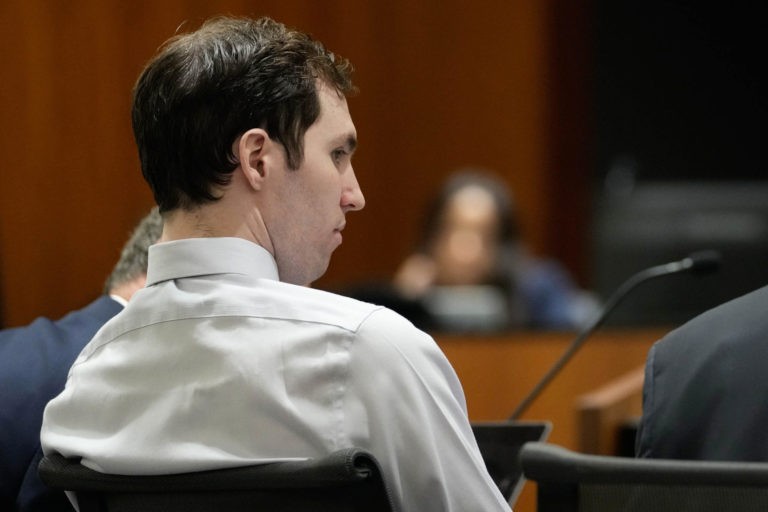
Anthony, who was sentenced to 35 years in prison, wore a green prison jumpsuit in a suburban Dallas courtroom when a visiting judge ordered state District Judge John Roach’s recusal. Judge Michael Chitty was later assigned to the case.

Outside the courtroom in McKinney, cheers erupted in the hallway while some Anthony supporters chanted “Free Karmelo!” in the parking lot.

“Today’s ruling answers a fundamental question: whether a reasonable fully informed observer would see Judge Roach’s conduct and believe that he could fairly and impartially consider a motion for new trial,” Anthony’s lawyers said in a statement.

On Thursday, Anthony was expected back in court for a hearing that will determine whether a retrial is warranted.

Jurors this summer had rejected Anthony’s claims of self-defense during a confrontation with Metcalf in the stadium bleachers last year. Anthony did not testify during the trial. Other students who took the stand described a heated exchange over Anthony’s refusal on a rainy spring day to leave a tent that belonged to Metcalf’s team.

The case attracted national attention in part because Anthony is black and Metcalf was white. Lawyers on both sides, however, told jurors the tragedy had nothing to do with race.

Anthony’s legal team has argued that a retrial is needed, in part, because Roach enforced strict courtroom rules that they said limited the public’s access to the proceedings. They also zeroed in on comments Roach made to a Dallas TV station after the trial ended.

In the interview, which was played as Wednesday’s hearing began, Roach was asked if the jury got “it right.”

“Yeah, they did,” Roach said, adding: “Whatever they say, they got it right.”

During the interview, Roach also defended his courtroom rules and spoke about the onslaught of online postings about the case.

Visiting Judge Sid Harle said he did not know Roach and he believed Roach would be fair in a hearing for a retrial, but was granting the defense’s request for a recusal because of how it might look to others. In his written order, Harle said the evidence was such that the judge’s “impartiality might reasonably be questioned” and ordered another judge to “preside over all further proceedings.”

Roach did not immediately respond to a request for comment following the ruling.

Prosecutor Bill Wirskye had urged the court to keep Roach. He said the judge “didn’t do anything wrong” and that his courtroom rules were meant to protect the integrity of the trial, which brought demonstrators outside the courthouse. Wirskye did not immediately respond to a request for comment following the ruling.

As national attention on the killing intensified last year, the families of both Metcalf and Anthony said they had been targets of harassment.

“We were all getting death threats,” Wirskye said.

Several schools were competing when Anthony sat under the Memorial High School tent that was perched in the bleachers. Metcalf and others had repeatedly told Anthony to leave, witnesses testified, leading to an escalating confrontation.

Prosecutors said Anthony provoked Metcalf, and witnesses testified that Anthony was the aggressor.

Anthony at one point reached inside a bag and replied: “Touch me and see what happens,” according to a police report.

Metcalf pushed Anthony, according to witnesses, who said Anthony then pulled out a knife and stabbed him in the chest.

Trump Immigration Crackdown Hits Another Milestone

(Bethany Blankley, The Center Square) A hurdle to adding the final country to the list of temporary protected status terminations has been eliminated as the Trump administration continues to crack down on immigration, with refugee numbers at a record low.

A Boston judge, Brian Murphy, lifted a final administrative stay, ending TPS for over 5,000 Ethiopians in the U.S. under the program, marking the 13th country with TPS status to be terminated in President Donald Trump’s second term.

Those countries include Afghanistan, Burma, Cameroon, Ethiopia, Haiti, Honduras, Nepal, Nicaragua, Somalia, South Sudan, Syria, Venezuela and Yemen.

The U.S. Department of Homeland Security argued in a social media post that the program “was used as a defacto amnesty program,” adding “those days are over” as the agency warns those with terminated TPS status are now in the country “illegally” and “they must leave now or be swiftly deported.”

The news comes as the Pew Research Center released a new report showing that the U.S. government has admitted the fewest refugees, potentially eclipsing COVID-era figures.

During the first 10 months of fiscal year 2026, the government has admitted 10,258 refugees: 10,255 from South Africa and three from Afghanistan. It’s down from 38,102 in fiscal year 2025 and 100,034 in fiscal year 2024. In fiscal year 2025, the majority of refugees were from Afghanistan; in 2024, the majority came from the Congo, followed by Afghanistan.

In addition to the lower numbers. The Trump administration has lowered the ceiling set for admissions to 17,500, meaning the administration could still admit over 7,000 refugees before the fiscal year ends Sept. 30. Pew notes the “ceiling is the lowest that the U.S. government has had since at least the turn of the century.”

Pew added that the U.S. has been the world leader in accepting refugees since World War II, with the U.S. “consistently ranked among the world’s top two countries for resettling refugees.”

However, the U.S. now admits fewer refugees than Canada and Australia, according to Pew, citing the United Nations High Commissioner for Refugees.

According to a 2018 report from the Federation for American Immigration Reform, at the time, the annual cost to taxpayers was $1.8 billion, ballooning to $8.8 billion over five years, attributing those numbers to refugees’ access to welfare and other government assistance programs, estimating the cost per refugee coming under $79,600 during their first five years as a refugee in the U.S.

The Center Square previously reported that many refugees qualified for over a dozen costly federal benefits, highlighting that hundreds of thousands of refugees admitted during the Biden administration from countries such as Afghanistan and Somalia resulted in skyrocketing funding for the Refugee and Entrant Assistance programs.

The funding rose from less than $2 billion in fiscal year 2021, the last year of President Donald Trump’s first term, to nearly $9 billion the next fiscal year – the first year of former President Joe Biden’s administration. The influx of Afghan refugees contributed significantly to the substantial increase in refugee funding.

The benefits refugees are eligible to receive include: Supplemental Security Income (SSI), Supplemental Nutrition Assistance Program (SNAP), Women, Infants and Children (WIC), HUD Public Housing and Section 8 housing vouchers, emergency Medicaid, Affordable Care Act health plans and subsidies, full-scope Medicaid, Children’s Health Insurance Program (CHIP), federal student aid and Pell grants, REAL ID, Workforce Innovation and Opportunity Act services, refugee resettlement programs through the Office of Refugee Resettlement and Temporary Assistance for Needy Families (TANF), according to the National Immigration Law Center.

For those who didn’t qualify for SSI or TANF, refugees were eligible for up to 12 months of Refugee Cash Assistance (RCA) through the ORR.

In addition, many refugees qualified for employment assistance through Refugee Support Services, which included: childcare, transportation, “employability services,” job training and preparation, job search assistance, placement and retention, English language training, translation and interpreter services, and case management, according to the Administration for Children and Families Office of Refugee Resettlement.

The ORR also noted that “some clients may be eligible for specialized programs such as health services, technical assistance for small business start-ups and financial savings.” Many refugees also qualified for “immigration-related legal assistance” to assist them “on their pathway to obtaining a permanent status.”

Abbott Pushes Back on Minn. Extradition Order, Says he Doesn’t Trust Walz

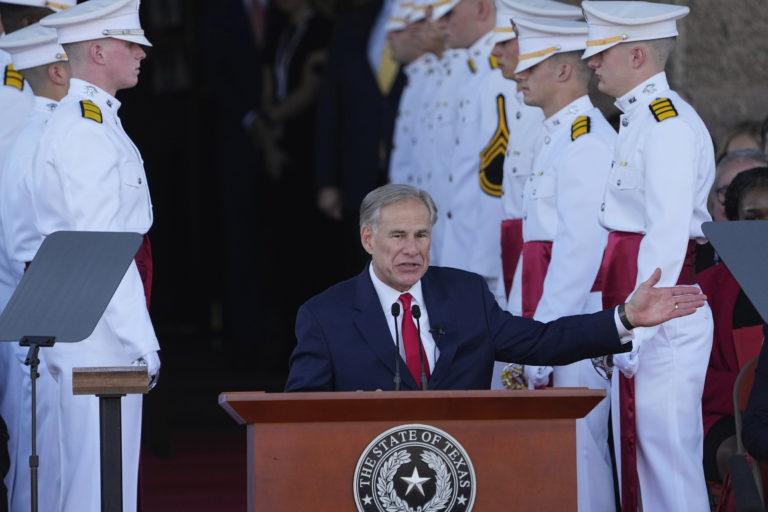
(Bethany Blankley, The Center Square) Gov. Greg Abbott is pushing back against a request to extradite a U.S. Immigration and Customs Enforcement officer in custody in Texas, saying he doesn’t trust Minnesota Gov. Tim Walz.

Abbott has been critical of Walz over the past year in response to extensive welfare fraud being investigated and prosecuted in Minnesota.

Walz issued an extradition request in June for ICE officer Christian Castro, who is in custody in Cameron County, Texas. The Texas Rangers arrested him in May after Minnesota prosecutors issued a warrant for his arrest. Castro faces four counts of second-degree assault and one count of falsely reporting a crime after being accused of firing into a Minneapolis home, striking a Venezuelan national’s leg.

Abbott didn’t respond to the extradition request, prompting Minnesota Attorney General Keith Ellison to sue. A lawsuit filed on Tuesday requests a federal judge to require Abbott to sign the extradition order. It also asks the judge to issue a temporary restraining order to require Cameron County Sheriff Manuel Trevino not to release Castro until he’s in custody in Minnesota.

“Gov. Abbott’s withholding of the rendition warrant threatens to deprive Minnesota of its constitutional right to Castro’s return,” Ellison’s office said in a statement, The Center Square reported. “Furthermore, because Texas law mandates Castro’s discharge from custody after 90 days, Abbott’s continued refusal to extradite creates a substantial risk that Castro will be released from custody and flee Texas to avoid prosecution in Minnesota.”

At a campaign event in Austin on Tuesday, Abbott said he wasn’t going to comply or respond.

“Well, first of all, I don’t trust Tim Walz on anything, let alone something like this. While they’re making demands, I have a demand of my own: it’s time for Minnesota to step up and repay the United States of America and Americans for all the fraud that they’ve committed in their state through federal programs,” he said. “I will not respond to them at all until they step up and do what’s right and they acknowledge their fault and the fraud that took place and they fully repay The United States of America for the fraud they committed.”

In January, Abbott directed state agencies to investigate the potential misuse of taxpayer money in Texas’ Child Care Services Program after billions of dollars worth of welfare fraud had been perpetrated against 14 Minnesota Medicaid-funded welfare programs, The Center Square reported.

At the time, at least 98 people had been charged, including 85 Somalians. Sixty were previously found guilty resulting from a multi-agency and multi-year federal investigation, The Center Square reported.

In another Minnesota fraud case, Haitian and Yemeni nationals were charged with stealing tens of millions of dollars from the Supplemental Nutrition Assistance Program during the Biden administration, The Center Square reported.

In response, Texas Republican U.S. Sens. Ted Cruz and John Cornyn filed a bill to make federal benefit fraud a deportable offense, including requiring citizenship revocation, The Center Square reported. The Trump administration began this process last year. The State Department has revoked more than 175,000 visas in 20 months, including for those who committed welfare fraud, The Center Square reported.

Earlier this year, Abbott directed state agencies to investigate potential Medicaid fraud in Texas “given the recent allegations of Medicaid benefits fraud” in Minnesota and other states. He also directed state agencies to assist with federal housing program fraud.

While several state-administered welfare programs in Texas do accept Medicaid funding, Texas does not have Medicaid-funded housing or similar programs that were created by the Walz administration. Texas is also one of several Republican-led states that chose not to expand Medicaid provisions.

After the fraud cases broke, Walz dropped his reelection bid for governor.

Minnesota has sent 11 extradition requests to Texas in the last five years, which Abbott has signed, according to the lawsuit.

Teacher Unions Funnel Funds to Democratic Lawmakers

(Esther Wickham, The Center Square) The nation’s two largest teachers’ unions directed thousands of dollars in campaign contributions to Democratic members of key congressional education committees, according to federal campaign finance records reviewed by The Center Square.

The congressional members whose campaigns received the money supported legislation favoring schools and teachers.

The National Education Association and American Federation of Teachers represent millions of educators nationwide and are among the most politically active labor organizations in the country. The NEA has about 3 million members, while the AFT represents roughly 1.8 million.

Lance Izumi of the Pasadena, Calif.-based Pacific Research Institute said teacher unions’ political spending can influence education policy at the federal, state and local levels.

This is the third in a series on teacher unions, their influence on elected officials and the cost to taxpayers.

Izumi described the national teachers’ unions as an “800-pound gorilla” in education politics and pointed to issues including charter schools and school choice as examples of areas where unions have sought to shape policy.

“They don’t want the competition,” Izumi, senior director of PRI’s Center for Education, told The Center Square during an exclusive interview.

Unions are funded with dues taken out of teacher paychecks, so critics say the taxpayers are basically funding the lobbying and campaign contributions.

The Center Square reached out to both the NEA and AFT multiple times for comments, but union officials did not respond.

The NEA spent more than $51 million on political activities and lobbying in 2025. The AFT spent more than $41 million. That’s according to data The Center Square obtained from Union Facts, a nonprofit that stresses accountability and transparency.

Federal Election Commission records reviewed by The Center Square show the NEA contributed about $5,000 to each of the 16 Democratic members of the U.S. House Committee on Education and Labor. The AFT contributed about $10,000  to each member during 2025 and 2026.

The election cycle for the U.S. House of Representatives is split into two separate elections: the primary and general elections. The maximum amount a PAC can contribute is $10,000 per candidate: $5,000 for the primary and $5,000 for the general election.

The Center Square did not find a single contribution from either the NEA or AFT toward any Republican member of a congressional education committee.

The combined contributions totaled about $192,000 for the Democratic members of the committee during the 2025-26 fiscal year, according to the records reviewed.

The lawmakers on the education committee include U.S. Reps. Robert Scott, D-Virginia; Joe Courtney, D-Connecticut; Frederica S. Wilson, D-Florida; Suzanne Bonamici, D-Oregon; Mark Takano, D-California; Alma S. Adams, D-North Carolina; Mark DeSaulnier, D-California; Donald Norcross, D-New Jersey; Lucy McBath, D-Georgia; Jahana Hayes, D-Connecticut; Ilhan Omar, D-Minnesota; Haley M. Stevens, D-Michigan; Greg Casar, D-Texas; Summer Lee, D-Pennsylvania; John Mannion, D-New York; and Adelita Grijalva, D-Arizona.

Each Democratic member of the Education Committee has received support from teacher unions because of their positions on issues such as higher teacher salaries and increased federal funding for public schools, according to Republican members of Congress and other critics of unions.

For example, Wilson introduced the American Teacher Act, which would provide grants to states to raise the minimum teacher salary to $60,000. The bill was cosponsored by several other Education Committee Democrats, including Adams, Norcross, Casar, Stevens, Omar, Hayes and Courtney.

Scott introduced the Rebuild America’s Schools Act, which called for $100 billion in federal investment to repair public schools. The AFT highlighted the legislation in a 2020 press release.

Hayes introduced the amendment, the Teacher Debt Relief Act, to the College Cost Reduction Act. In 2024, the NEA urged Congress to support Hayes’s amendment, saying it would help teachers access federal debt relief.

“Teachers are on the front lines of the cost-of-living crisis, spending hundreds of dollars every year on classroom essentials so their students can get ahead. It’s no wonder they want to turn the page from House Republicans who have made everything more expensive,” Democratic Congressional Campaign Committee spokesperson Aidan Johnson told The Center Square. “It’s not complicated: Teachers are supporting Democrats because Democrats support teachers.”

The Center Square reached out to the Republican Congressional Campaign Committee for a comment but did not receive a response.

The unions also provided financial support to Democratic senators serving on the Senate Committee on Health, Education, Labor and Pensions, according to Federal Election Commission records. Sen. Edward Markey, D-Massachusetts, received $17,000 from the NEA and AFT, while Sen. John Hickenlooper, D-Colorado, received $14,000, the records show.

Markey reintroduced the Paraprofessionals and Education Support Staff Bill of Rights, which calls for better wages, benefits and working conditions for paraeducators such as teacher’s aides. Markey has also opposed the Trump administration’s efforts to dismantle the U.S. Department of Education, a policy that teacher unions have also strongly opposed.

Hickenlooper cosponsored the PRO Act, legislation that would strengthen workers’ rights to organize and collectively bargain and increase penalties for employers who violate those rights. He has also advocated for increased federal public education funding and higher teacher pay.

AFT also contributed $1.25 million to the Senate Majority Political Action Committee and $1.25 million to House Majority PAC between June 2025 and March 2026, supporting Democratic efforts to protect and expand the party’s majorities in Congress, according to the FEC.

Union politics differs

Izumi argued that union political spending can also create a disconnect between union leadership and union members who may not share the same political views.

“The average union member who oftentimes doesn’t support all of these progressive policies … making them pay for it,” Izumi said.

He described the unions’ political and financial interests as being tied to efforts to increase education spending and protect their members’ interests.

“The kids are there basically to provide justification for what is essentially a huge grift by the unions to squeeze more money out of the taxpayers, to increase education budgets, so not only can they have more money for their members, but also to be able to fund their political priorities,” Izumi said.

According to graphs provided by OpenSecrets, teacher unions have contributed significant amounts of funding to Democratic candidates and committees over several decades, with contributions increasing during major election cycles.

Union members pay membership dues via payroll deduction from taxpayer-funded salaries. Many teacher union critics argue that these dues are critical taxpayer dollars.

In 2025, the NEA received almost $400 million in membership dues, and the AFT got over $270 million in dues.

Since 1990, teacher union contributions have remained significantly higher toward congressional Democratic members than compared to those in the Republican Party, according to this OpenSecrets graph below.

Rusty Brown, director of special projects at the Freedom Foundation, an organization that advocates against public-sector unions, said the federal government has a more limited role in education policy than state and local governments.

“There’s really not much that Congress can do to influence teacher unions other than try to help champion, you know, a more radical agenda, a more leftist agenda than what’s being pushed at the current moment,” Brown said.

Despite the federal government’s limited role, Brown said unions have an incentive to maintain relationships with members of Congress because federal lawmakers can influence funding and policy priorities.

“So why would a teacher union invest in Congress? Well, it’s for their pet projects,” Brown said.

One of the union’s projects was supporting sponsors of Colorado House Bill 25-1312, which seeks to protect transgender students from being misgendered. According to Section 2 of the bill, a court may consider “misgendering” as a type of “coercive control” during child custody disputes.

Brown told The Center Square that this bill effectively equated “misgendering” with parental child abuse.

All four sponsors of the Colorado bill were Democrats supported and endorsed by the Colorado Education Association teacher union. The sponsors were state Reps. Lorena Garcia and Rebekah Stewart and state Sens. Faith Winter and Chris Kolker. (Winter died Nov. 26 in a multi-car freeway crash.)

The legislation’s Section 2 was later removed from the final bill that was signed into law in 2025 after heavy opposition from parental advocacy groups.


Suspected Pipe Bomb Parts Were Found in Alleged Charlie Kirk Assassin’s Home

(Ken Silva, Headline USA) Law enforcement found possible pipe bomb parts when searching the residence of Tyler Robinson and his roommate, Lance Twiggs, two days after Robinson allegedly shot conservative activist Charlie Kirk on Sept. 10, according to newly publicized records.

The previously unpublicized information about the possible explosives components comes from a Utah County Sheriff’s Office affidavit for a warrant to search Robinson’s parents’ home. The warrant was apparently unsealed in March but is only now being publicized thanks to attorney Andrea Burkhart, who has been keeping an archive of all the court records involved in the Robinson case.

According to the warrant, law enforcement searched Robinson and Twiggs’s residence on Sept. 12, the day after Robinson turned himself in.

“While searching in the kitchen area, a blue backpack was located. While searching the backpack, investigators observed a PVC pipe that is approximately an inch in diameter. The pipe had PVC endcaps with black tape wrapping around the PVC. There were also port holes in the PVC. Investigators also observed wires throughout the bag with the PVC pipe. They also observed small “rasberry pie” [sic] computer chips in the bag,” the warrant says.

“These are commonly used to activate or set off explosive devices. The bag and surrounding area also had wire cutters, hammers and other tools.”

The warrant contains no further information about the suspected pipe bombs parts. No one was charged for having explosives.

The wire and computer chips described in the warrant do match a picture taken of Twiggs’s purported living space—a table shows wire and other items strewn across a table. Twiggs has since turned state’s witness and is testifying against Robinson, who has yet to enter a plea in the case.

Meanwhile, the prosecution and defense have filed dueling documents focused on whether the crime included aggravating factors that would make Robinson eligible for the death penalty if convicted. Those include political targeting and whether the shooting endangered thousands of others who attended Kirk’s Sept. 10 event at Utah Valley University.

Judge Tony Graf said he will decide if the case should advance to trial after he hears again from both sides.

The Associated Press contributed to this report.

Ken Silva is the editor of Headline USA. Follow him at x.com/jd_cashless.

Report: U.S. Debt Crisis will Directly Harm Families, Students, Retirees

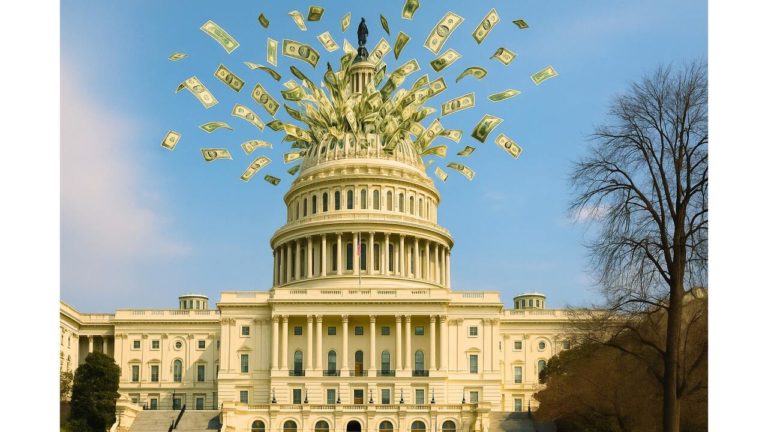
(Thérèse Boudreaux, The Center Square) As the national debt quickly approaches $40 trillion, economists warn that skyrocketing deficits will distinctly impact Americans of all generations, including students, families and retirees.

Global think tank The Conference Board analyzed how different levels of budget deficits will adversely impact student loan costs, mortgage rates, Social Security payments, and small business loans.

“High levels of debt require the Federal government to spend more on interest payments, leaving fewer resources available for infrastructure, education, national defense, and social programs,” the report, entitled “How the National Debt Affects All Generations of Americans,” notes.

The debt is already larger than the entire U.S. economy – the highest in history except for the years immediately following World War II – and will hit roughly 120% of GDP within the next decade if the government fails to rein in deficit spending.

If that spending continues as projected, an incoming college student in 2028 taking out an inflation-adjusted average student loan of $45,000 will ultimately owe $279,276 on a standard 10-year repayment plan.

Under an extreme interest shock scenario, similar to economic conditions in the 1980s, the student would owe $466,303 for the $45,000 loan.

For a family of four saving up to buy a home in five years, a standard 30-year fixed-rate mortgage and a 20% down payment on a $600,000 house will ultimately cost them $2,885,136. Under an extreme interest shock, that price tag jumps to $3,644,906.

Future retirees already face a grim outlook for Social Security payments, with trust fund insolvency projected to occur by 2032. That will trigger a 24% across-the-board benefit cut unless Congress sharply increases payroll taxes or cuts deficit spending by $2.7 trillion between 2032 and 2036.

“Backfilling some or all of this amount would directly increase the deficit absent additional revenue, leading to (or even accelerating) the precise dynamics present in the bad-case scenario with higher interest rates and costs for consumer loans,” the report warns.

Deficit spending at current or increased levels also spells hardship for small business owners looking for financing. An American taking out a small business loan of $100,000 in 2031 would ultimately owe $611,950. Under an extreme interest rate shock, the borrower would owe over a million dollars.

“The national debt is not just a number on the government’s balance sheet – it affects the financial decisions Americans make every day,” David Young, president of The CEO Center at The Conference Board, stated Tuesday.

“Higher debt can mean higher borrowing costs for families and businesses, fewer resources for national priorities, and greater uncertainty about programs Americans depend on in retirement.”

Yet despite continuous warning signs, congressional action on soaring federal deficits ultimately hasn’t progressed past vigorous handwaving from a small group of Republicans.

Congress sidestepped the automatic spending cuts to Medicare and other programs that are triggered by unpaid-for federal borrowing by wiping the Pay-As-You-Go (PAYGO) scorecard last November.

Most recently in March, U.S. lawmakers again dodged fiscal accountability when the U.S. House tanked a balanced budget resolution. If passed, the resolution would have capped federal spending each year at the average annual revenue of the previous three years, with exceptions for emergencies.

Young warned that if lawmakers continue to avoid taking the necessary but politically unpopular actions, the U.S.’s economic situation will only worsen.

“Policymakers have choices,” Young added, “but the longer action is delayed, the more difficult and costly those choices become.”

Former Meta Engineer Says Instagram Took a ‘Don’t Ask, Don’t Tell’ Approach on Kids Under 13

(Headline USA) A former engineering director at Meta who has testified before Congress about child safety on Instagram told jurors Wednesday at a landmark trial that the company took a “don’t ask, don’t tell” approach on kids under 13 on its platforms.

During his second day of testimony, Arturo Béjar said Meta consistently prioritized profits over safety in designing its products, focusing on how often and for how long people used them, even if it was detrimental to their mental well-being.

“If you step away from the product, they are not going to make any money,” he said.

The trial that began Tuesday in federal court in Oakland, California, pits Meta against the states of California, Colorado, Kentucky and New Jersey and is expected to last about six weeks. The four states were among 29 that sued the tech giant in 2023 over child safety and privacy — the other 25 will go to trial later. The company also faces lawsuits in state courts, including one underway in Tennessee.

The lawsuit accuses Meta of contributing to the youth mental health crisis by knowingly and deliberately designing features that addict children to its platforms and hide these harms from the public. It also argues that Meta routinely collects data on children under 13 without their parents’ consent, in violation of federal law.

“The attitude in particular on Instagram was ‘Don’t ask, don’t tell,’” Béjar said in response to a question about his perception of the company’s attitude towards users under 13.

The company has rejected the claims and said evidence at the trial will show its commitment to safety.

“You will hear over the course of this case a lot of important issues, issues like teen mental health, issues like social media, issues like how teens use social media,” Meta lawyer Paul Schmidt said Tuesday. “Those are important issues, and they’re issues where Meta believes that it has a responsibility. It has a responsibility to act on its own. It has a responsibility to try to work with teens and parents in partnership to try to address those questions.”

Béjar worked at Facebook from 2009 to 2015, attracting wide attention for his work to combat cyberbullying. He returned from 2019 to 2021 as a contractor to work on safety issues. He testified before Congress in 2023 about social media and the teen mental health crisis, saying that Meta executives, including CEO Mark Zuckerberg, knew about harms Instagram was causing but chose not to make meaningful changes to address them.

In his testimony Wednesday, Béjar said employee performance reviews and compensation for those who worked on user-facing products were mostly focused on user numbers and how long they spend with those products.

“In that context, safety was an afterthought,” he said.

The states are seeking changes to user experiences for Facebook and Instagram as well as financial damages, which could include billions of dollars in penalties. In a written statement, the office of California’s attorney general said if Meta loses, the amount of any damages would be set by the court.

“This case is about stopping Meta from offering a dangerous product to teens, and from lying to teens, families, and the public about the dangerousness of their platforms. The primary remedy under our state consumer protection law is an injunction,” the statement said.

Béjar walked through Meta features he said were designed for adults and are “inherently unsafe for teenagers.”

This includes video autoplay, which can mean teens see videos that may cause them harm even if they don’t click on them; as well as various counters that track how many people liked, viewed or commented on your content or how many followers you have.

Child development experts have noted teenagers are more susceptible to social comparison than adults, so products that reward popularity can be more harmful to their mental health.

Meta says users must be at least 13 years old to create an account, in line with federal child privacy laws.

But Béjar testified that he found “tens of thousands” of kids under 13 on Instagram through his research. He said it was “common knowledge” at the company that such young children were on Instagram.

“Meta has one of the most sophisticated infrastructures in the world to detect fake accounts,” he said. But despite that, he added, there were “no goals, no metrics” to detect and check kids’ ages who were suspected to be under 13.

Over the years, Meta has introduced features it says are designed to make the experience safer for young people. But Béjar said these did not work.

For instance, a tool called “Take a Break,” introduced in 2021, is a feature that is “designed to fail,” he said. First, it is a setting that people have to turn on if they want to use it. Béjar said that in his experience building settings, very few users actually go through the trouble of turning them on. He compared it to an airbag that drivers have to turn on every time they get in a car.

“A safety tool has to be on by default,” he said.

The feature can also be dismissed with a tap of a finger. If Meta was serious about wanting users to take a break, Béjar said, it would not be so easily swiped away.

Adapted from reporting by the Associated Press

No Punishment for FBI Official Who Pointed a Gun at Colleague

(Ken Silva, Headline USA) The DOJ Inspector General released a report Wednesday about a retired FBI special agent in charge who accepted a gift in violation of bureau policies, and who also pointed a gun at a colleague.

According to the DOJ Inspector General’s report, the special agent in charge retired before being contacted for an interview. He then declined the DOJ-OIG’s interview request. Only active FBI employees can be compelled to participate in an interview.

In any event, the DOJ Inspector General found that the special agent in charge “retained a gift intended for the FBI” and “pointed a weapon at a colleague.”

“The OIG did not find that the SAC intended to retain the gift but found that the SAC violated DOJ and FBI policies regarding the acceptance of gifts. The OIG also found that, on one occasion, the SAC violated FBI policies regarding the use and handling of firearms,” the report says.

No further details were provided about the gift, or the circumstances surrounding the agent pointing a weapon at a colleague.

Federal and state authorities declined to open criminal investigations, the report says.

Ken Silva is the editor of Headline USA. Follow him at x.com/jd_cashless.

Private Equity Money Swings Sharply Toward the GOP

(José Niño, Headline USA) Private equity has swung firmly behind Republican candidates this election cycle, breaking from its usual pattern of splitting donations evenly between the two parties, according to a Wall Street Journal report

Employees at buyout and investment firms sent roughly $60.2 million to congressional candidates and party committees through June, with 65% flowing to Republicans versus 35% to Democrats, a 30 point gap drawn from OpenSecrets tracking data cited by the WSJ.

The imbalance grows even wider when looking at donations to outside groups, which face no legal spending caps. The WSJ reported that private equity funneled about $90 million to conservative organizations while giving less than $17 million to liberal ones through the same period. 

This marks a sharp departure for an industry that leaned only slightly Democratic across the last four election cycles and hasn’t shown this strong a partisan lean since 2014, when Republicans also held a 30-point edge, the paper noted.

Part of the shift traces to business’s traditional preference for incumbents, which currently benefits the GOP given its control of the White House and both chambers of Congress. Republican fundraising has also outpaced Democratic efforts this cycle after major donors pulled back their support for Democrats, the Journal said.

James Maloney, founder of lobbying firm Tiger Hill Partners and former public affairs chief at the American Investment Council, told the Journal that ideology plays a role too. “The two main causes of the shift are the progressive profile of many of the Democratic candidates, and signs that current Democratic leadership plans to scrutinize the industry if they are in the majority,” he said.

This rightward drift extends beyond private equity. Andrew Mayersohn, a researcher at OpenSecrets, told the paper that most business sectors have shifted 10 to 15 percentage points toward Republicans compared with 2024, and that the broader finance, insurance and real estate sector now favors Republicans 58% to 42% after narrowly backing Democrats two years earlier.

Will Dunham, head of the American Investment Council, pushed back on the partisan framing, stating his group “is proud to partner on a bipartisan basis with members of Congress focused on driving Main Street investment, job creation and growth in states and districts across the country,” per the Journal.

Still, policy stakes loom large. The WSJ detailed how Trump has eased regulatory pressure on the industry, while Democrats like Sen. Elizabeth Warren, D-Mass., and Rep. Maxine Waters, D-Calif., both positioned to chair key committees if their party retakes Congress, have criticized buyout practices. Maloney warned that a Democratic majority would bring “direct oversight and investigations into their practices, and a much higher degree of reputational risk, particularly for the leading firms.”

Blackstone employees led all firms in spending at roughly $30.1 million, directed mostly toward Republicans, the WSJ reported, followed by Apollo Global Management at $9.1 million, Bain Capital at $5.6 million and KKR at $4 million.

José Niño is the deputy editor of Headline USA. Follow him at x.com/JoseAlNino