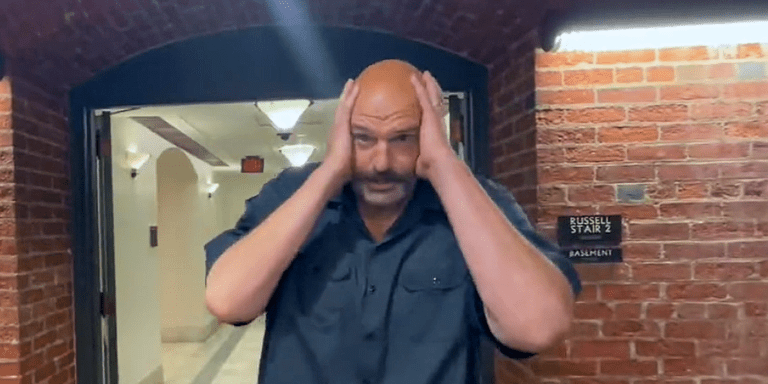
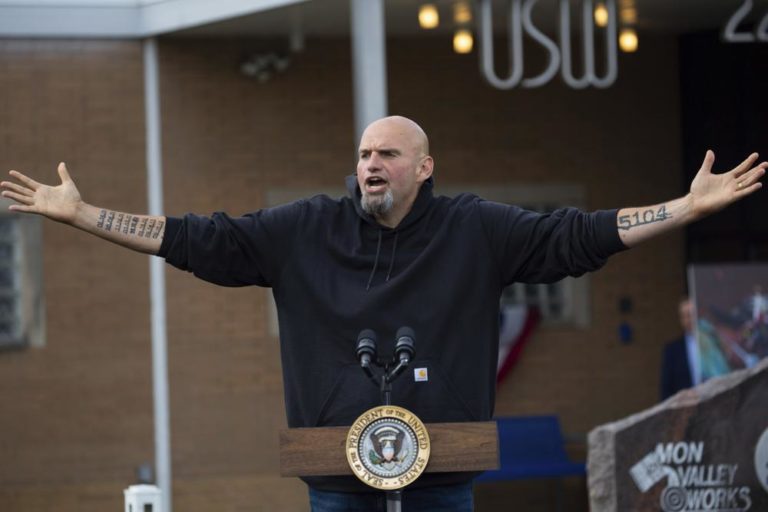
Republicans Put Slovenly Senator on Blast over New ‘Fetterman Rule’

(Luis Cornelio, Headline USA) Republican lawmakers and prominent conservative voices are up in arms over the recent Schumer-ordered relaxation of dress codes in the U.S. Senate, a move that has ignited a fiery debate about decorum and respect for Senate traditions.

Under the revised guidelines, unveiled by Senate Majority Leader Chuck Schumer, D-N.Y., on Sunday, some senators can now don whatever attire they please while others entering the Senate chamber are still expected to adhere to the traditional standards. 

As reported by Fox News, Criticism from Republicans was swift and forceful, with many of them asserting that Schumer announced the rules to accommodate Sen. John Fetterman, D-Pa.

Rep. Marjorie Taylor Greene, R-Ga., took to Twitter to express her dismay. “The Senate no longer enforcing a dress code for Senators to appease Fetterman is disgraceful,” Greene stated. “Dress code is one of society’s standards that set etiquette and respect for our institutions. Stop lowering the bar!”

In response to Greene’s criticism, Fetterman defended the rule, saying, “Thankfully, the nation’s lower chamber lives by a higher code of conduct: displaying ding-a-ling pics in public hearings.”

However, Fetterman’s response did little to placate other critics. Rep. Ryan Zinke, R-Mont., remarked, “If my interns can put on a suit so can a U.S. Senator.” 

Fox News contributor Joe Concha chimed in, saying, “The Fetterman legacy is now cemented. Not for improving the lives of the state he represents, of course, but because he dresses like a sophomore in summer school.” 

Former Trump advisor and America First Legal founder Stephen Miller joined the chorus of disapproval, questioning the Senate’s decision.

“So let me get this straight,” Miller wrote on Twitter. “The entire senate is jettisoning its storied history and debasing itself before the world to accommodate the slovenliness of one man, John Fetterman? Will a single Senator object to this humiliation?”

On a separate post, Miller added, “John Fetterman finds it hilarious that he’s turned the senate into a coddling daycare for an emotionally stunted man-child with severely arrested development.” 

In a statement to Axios, Schumer championed the new rule, claiming, “Senators are able to choose what they wear on the Senate floor. I will continue to wear a suit.” 

Woke Singer Goes on Unhinged Rant, Accuses Country Fans of Back-Woods Bigotry

(Corine Gatti, Headline USA) Nashville-based singer Maren Morris, known as much for her far-left virtue-signaling as for her music, declared that she was leaving country music because of her disgust of right-wing, Trump-supporting fans, whom she accused of various forms of bigotry, the Los Angeles Times reported.

The Texas-born performer complained to the news outlet that after Trump left office people became more biased against minorities, transgender people and gays.

The genre she amassed millions worth of sales in was crumbling under men and “weirdly dovetailing with this hyper-masculine branch of country music,” claimed the celebrated Grammy-award winner. “I call it butt rock.”

She seemed particularly chafed by the recent success of Jason Aldean’s recent hit Try That in a Small Town. Aldean said the song refers to the feeling of a community where people took care of our neighbors, regardless of differences of background or belief.

However, the Left was triggered by some of the lyrics thought to promote gun violence and also accused Aldean of dogwhistle racism based on the bizarre claim that there had been a lynching long ago at the courthouse where the music video was filmed.

Morris said the song was successful because people were streaming the song out of spite for censorious cancel culture.

“It’s to own the libs. And that’s not what music is intended for,” she complained. “Music is supposed to be the voice of the oppressed—the actual oppressed. And now it’s being used as this really toxic weapon in culture wars.”

However, Morris herself has been a party to that toxicity in the past, attacking Aldean’s wife, Brittany, over comments she made in opposition to transgenderism.

“It’s so easy to, like, not be a scumbag human? Sell your clip-ins and zip it, Insurrection Barbie,” Morris tweeted.

And in January, Morris again insulted conservatives and country-music fans when appeared on Ru Paul’s Drag Race and apologized for how the country music world treated the LGBT community.

“Coming from country music and its relationship with LGBTQ+ members, I just want to say I’m sorry,” she said.

Morris’s bizarre intolerance for country fans is ironic, given that she is, in fact, the one who is at odds with the genre’s longstanding cultural tradition and ties to conservative values.

Behind her lack of self-awareness may be a Potempkin pretense for what was always her underlying intention: to sell out country fans and gravitate into pop music as her mentor, fellow 33-year-old ex-country songbird turned left-wing golden-girl Taylor Swift did early in her own career.

Unlike Swift, however, Morris does not appear poised to make a graceful exit, leaving behind no hard feelings on Music Row in case her gambit falls flat.

“I thought I’d like to burn it to the ground and start over,” she said. “But it’s burning itself down without my help.”

Meanwhile, when asked if her departure was a loss for the libs, Morris shrugged it off, saying that people can think what they want.

“I can’t bail water out of this sinking ship anymore. It’s so futile. I choose happiness,” she said.

Despite her scorched-earth attack on country fans, Morris capped off her psychotic rant by claiming that she did not wish to burn bridges because she still felt a certain kinship with the genre.

“But it’s not a family member,” she added. “That’s the f—ed-up part, is that I’m talking about it as if it’s a person, but it’s not. So it’s a lot of deep deconstructing that I’m still unraveling.”

Headline USA’s Ben Sellers contributed to this report.

Oregon Judge to Decide Whether Voter-Approved Gun-Control Law Is Constitutional

0

(Headline USA) An Oregon judge is set to decide whether an extreme gun-control law approved by voters in November violates the state’s constitution in a trial scheduled to start Monday.

The law, one of the toughest in the nation, was among the first gun restrictions to be passed after a major U.S. Supreme Court ruling last year changed the guidance judges are expected to follow when considering Second Amendment cases.

Measure 114 has been tied up in federal and state court since it was narrowly passed by voters in November 2022, casting confusion over its fate.

The law requires people to complete a gun safety training course and undergo a criminal background check in order to obtain a permit to buy a firearm.

The measure also bans so-called high-capacity magazines holding more than 10 round, although critics argue that depending on the type of gun and the caliber of bullet, a standard-capacity clip may hold up to 30 rounds.

Circuit Court Judge Robert S. Raschio will preside over the trial this week in Harney County, a vast rural area in southeastern Oregon. Raschio temporarily blocked the law from taking effect in December after gun owners filed a lawsuit arguing it infringed upon the right to bear arms under the Oregon Constitution.

The Oregon measure was passed after a Supreme Court ruling in June 2022 created new standards for judges weighing gun laws and fueled a national upheaval in the legal landscape for U.S. firearm law.

The ruling tossed aside a balancing test judges had long used to decide whether to uphold gun laws. It directed them to only consider whether a law is consistent with the country’s “historical tradition of firearm regulation,” rather than take into account public interests like promoting public safety.

Since then, there has been confusion about what laws can survive. Courts have overturned laws designed to keep weapons away from domestic abusers, felony defendants and marijuana users. The Supreme Court is expected to decide this fall whether some decisions have gone too far.

In a separate federal case over the Oregon measure, a judge in July ruled it was lawful under the U.S. Constitution. U.S. District Judge Karin J. Immergut appeared to take into account the Supreme Court’s new directive to consider the history of gun regulations.

Immergut found so-called large-capacity magazines “are not commonly used for self-defense, and are therefore not protected by the Second Amendment.”

Even if they were protected, she wrote, the law’s restrictions are consistent with the country’s “history and tradition of regulating uniquely dangerous features of weapons and firearms to protect public safety.”

She also found the permit-to-purchase provision to be constitutional, noting the Second Amendment “allows governments to ensure that only law-abiding, responsible citizens keep and bear arms.”

The plaintiffs in that federal case, which include the Oregon Firearms Federation, have appealed the ruling to the 9th U.S. Circuit Court of Appeals.

Ten states have permit-to-purchase laws similar to the new Oregon measure: Connecticut, Hawaii, Maryland, Massachusetts, Michigan, Minnesota, Nebraska, New Jersey, New York and Rhode Island, according to data compiled by the Giffords Center to Prevent Gun Violence.

Eleven states and Washington, D.C. limit large-capacity magazines holding more than 10 rounds: California, Connecticut, Hawaii, Maryland, Massachusetts, New Jersey, New York, Rhode Island, Washington, Illinois and Vermont, according to the Giffords center. The bans in Illinois and Vermont apply to long guns.

Adapted from reporting by the Associated Press

Viral TikTok Meme Exposes Men’s Obsession w/ Roman Empire

(Corine Gatti, Headline USA) The Roman Empire known for being the most extensive political and social structure in Western civilization has been on the mind of modern men frequently—even reaching the level of obsession, according to a viral TikTok meme.

According to Rolling Stone, the trend started when a reenactor going by the name Gaius Flavius, who has played Roman legionnaires, shared an Instagram video in August with a caption that read, “Ladies, many of you do not realize how often men think about the Roman Empire.”


View this post on Instagram


A post shared by Gaius Flavius🌿🏛 (@gaiusflavius)

Women then started asking husbands or boyfriends if they thought often about the Roman Empire, and men were more obsessed with the ancient empire—which lasted from 27 B.C. to 476 A.D—than previously thought.

Soon after, the craze eventually moved to TikTok, and the answers stunned many women.

Ashley Lance’s TikTok post, which garnered over 3 million views asked her boyfriend, “How many times, like a week, or just how many times in general, do you think about the Roman Empire?”

He looked puzzled by the question and asked, “What about the Roman Empire?”

Moments later, he admitted that he last thought about the Roman Empire “maybe three or four times a month.”

@idkhowyoufoundmehe got so defensive😭😭 once a week is insane♬ original sound – ashley lance

Laine Bullinger, a popular TikToker, posted a video of her boyfriend answering a question about how often he thinks about the Roman Empire.

When Bullinger asked him why he thinks about the Roman Empire so frequently, he responded that they were the second most powerful empire in history. The video has since gone viral, garnering 3.5 million views.

@lainebullingerWhat does this mean…. Also why is he standing like robert pattinson🧍‍♂️♬ original sound – Laine Bullinger

One husband on a TikTok post with 1.2 million views responded about that turbulent period and responded: “Every boy you’ve ever met is like, ‘I wonder if I could survive in the Roman Legion,’ like, that’s a normal thing.”

@listenwithbritt #stitch with @HapaGirl learning new things after 13 years. #romanempire #husband #trend ♬ original sound – Listenwithbritt🎧📚

Mike Duncan, the creator of the popular History of Rome podcast, told Rolling Stone he was not overly surprised by the obsession because it’s the equivalent of military history, something many men had an interest in.

“It’s for the same reasons that we see a lot of dads getting super into World War II, or the Civil War, or the Napoleonic era—there is something that draws men to those kinds of military stuff,” he said.

Moreover, people like to romanticize the Roman Empire, said Duncan of the territory that existed 2,000 years ago and included regions of Europe, North Africa and Western Asia.

“More likely than not, they would have died at the age of 28 because of an undiagnosed kidney stone while they were trying to plow their lands,” he observed.

Meanwhile, the viral trend of the Roman Empire apparently was on the minds of many with good reasons—as it has disturbing parallels with America’s corrupted leaders selling out their influence and sovereign power to enemies for money and power.

In March, a shirtless former Rep. Madison Cawthorn, R-Calif., notably compared the Biden administration to the fall of Rome following former President Donald Trump’s first indictment.

“Now this is exactly what happened during the fall of the Roman Republic when you made it commonplace to start persecuting the tribunals, plebs, or any of the consuls whenever they left political office,” he said. “This is going to lead us down the exact same path that Rome followed and will lead to a dictatorship.”

Others have noted other overlapping factors, such as the open border, which is resulting in the gradual diminishment of American identity and culture, as was true following the sack of Rome in 410 A.D. at the hands of the Visigoths.

President Joe Biden also has drawn unflattering comparisons with the fifth Roman emperor, Nero—particularly for vacationing in Rehoboth Beach and Lake Tahoe while the residents of Lahaina, Hawaii, literally burned.

Headline USA’s Ben Sellers contributed to this report.

Calif. Woman Loses All Four Limbs after Getting Bacteria from Undercooked Fish

(Jacob Bruns, Headline USA) A California woman lost all four of her limbs after eating undercooked fish and contracting Vibrio vulnificus, a flesh-eating bacteria that has gained prominence in recent months, the Daily Mail reported.

Laura Barajas, 40, underwent a life-saving limb-amputation operation after months in the hospital battling the bacterial infection.

Barajas reportedly contracted the bacteria from eating undercooked tilapia, which she purchased at a local market in San Jose.

According to one of Barajas’s friends, Anna Messina, the infection could not have been anticipated.

“It’s just been really heavy on all of us,” Messina said. “It’s terrible. This could’ve happened to any of us.”

She also noted that Barajas nearly died, and was attached for some time to a respirator.

“She almost lost her life. She was on a respirator,” Messina added.

The symptoms of the disease, which has become increasingly prevalent in the United States, include nausea, stomach cramps, vomiting and blood infection, to go along with the flesh-rotting properties.

Messina noted that Barajas’s symptoms lined up with the general diagnosis: “Her fingers were black, her feet were black her bottom lip was black. She had complete sepsis, and her kidneys were failing.”

Natasha Spottiswoode, an infectious disease expert at the University of California, San Francisco, noted that Vibrio vulnificus can be contracted primarily in two ways:

“The ways you can get infected with this bacteria are, one—you can eat something that’s contaminated with it,” she said. “The other way is by having a cut or tattoo exposed to water in which this bug lives.”

The bacteria has proven particularly harmful to the immunocompromised, including a Texas man in his 30s recently died as a result of Vibrio vulnificus, which he contracted as a result of consuming raw oysters.

At least 12 Americans have died from Vibrio infections this year. A typical year includes zero to one deaths from the bacteria, all of them concentrated along America’s coastlines.

“I think everyone should be cautious and should be aware of their own personal risks,” said Iahn Gonsenhauser, chief medical officer for Lee Health System.

Vegas Teen Arrested after Video Shows Him Intentionally Hitting Cyclist

Editor’s note: Video contains graphic violence that may be unsuitable for some audiences.

(Jacob Bruns, Headline USA) A Las Vegas teenager was charged with murder after video evidence emerged suggesting he intentional hit and killed a 64-year-old bicyclist last month, the Daily Mail reported.

The 17-year-old driver fatally struck Andreas Probst, who was cycling in a northwest suburb of Las Vegas.

Probst, the former police chief in Bell, Calif.—outside of Los Angeles—had retired in 2009 after a 35-year career in law-enforcement and relocated to the area.

Because of the assailant’s age, his name was not released to the public, though he was arrested and will undergo a trial in juvenile court.

Initially, it was thought to have been an accident, but a video recently released from inside the vehicle revealed that the teenager and his friend had intentionally hit Probst.

Upon the discovery of the video, prosecutors noted that an additional open murder count would be added to the teenager’s list of charges.

On Saturday, the video made the social media rounds. “Ready?” the driver can be heard asking as the car approached Probst from behind.

“Yeah, hit his a**,” the passenger responded.

Probst was struck brutally and directly. He was taken to the hospital soon thereafter, but did not live for long.

Authorities have not yet announced whether the passenger in the vehicle will be charged.

Probst is survived by his wife, Crystal, and his daughter, Taylor.

“I come from law enforcement as well in my younger days,” his wife said soon after the hit and run, noting that she knew he was in serious trouble after she arrived at the scene.

“I was able to ascertain, there’s his bike, his helmet is way over there, his phone is way over there,” she said. “I’m like, ‘This is not good.'”

Fox News commentator Greg Gutfeld compared the video to the brutal ISIS beheading videos, calling it “a public execution. filmed” in a tweet that since appears to have been deleted.

According to Gutfeld, the incident signaled that “we need new leadership that sees that the new threat of terror is within, and put an end to this reign of evil.”

Rolling Stone Mag Co-Founder Implies Female and Black Artists Are Flighty, ‘Inarticulate’

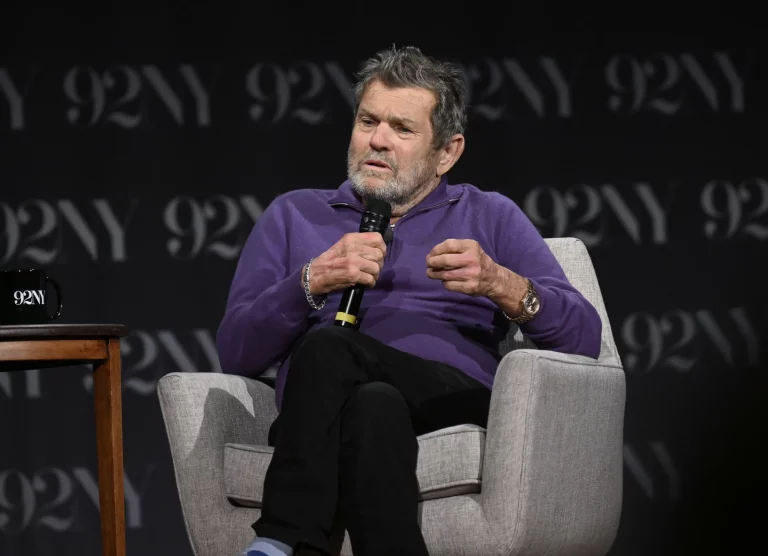
(Headline USA) Jann Wenner, who co-founded Rolling Stone magazine and also was a co-founder of the Rock & Roll Hall of Fame, has been removed from the hall’s board of directors after making disparaging comments toward black and female musicians. He apologized within hours.

“Jann Wenner has been removed from the Board of Directors of the Rock & Roll Hall of Fame Foundation,” the hall said Saturday, a day after Wenner’s comments were published in a New York Times interview.

Wenner created a firestorm doing publicity for his new book The Masters, which features interviews with musicians Bob Dylan, Jerry Garcia, Mick Jagger, John Lennon, Bruce Springsteen, Pete Townshend and U2’s Bono—all white and male.

Notably, all of the featured performers are also woke liberals—some of them notoriously insufferable for their socialist virtue-signaling—and it excludes more conservative counterparts such as Eric Clapton and Van Morrison, both equally distinguished in the classic rock genre as those listed.

However, it was a more superficial oversight that succeeded in getting Wenner canceled by the leftist though police—ironically so, given his and his magazine’s own troubled history of being on the accusatory end of such spurious identity-politics attacks in recent year.

Asked why he didn’t interview women or black musicians, Wenner responded: “It’s not that they’re inarticulate, although, go have a deep conversation with [Jefferson Airplane’s] Grace Slick or Janis Joplin. Please, be my guest. You know, Joni [Mitchell] was not a philosopher of rock ’n’ roll. She didn’t, in my mind, meet that test,” he told the Times.

“Of black artists—you know, Stevie Wonder, genius, right?” Wenner continued sarcastically.

“I suppose when you use a word as broad as ‘masters,’ the fault is using that word,” he continued. “Maybe Marvin Gaye, or Curtis Mayfield? I mean, they just didn’t articulate at that level,” Wenner said.

Late Saturday, Wenner apologized through his publisher, Little, Brown and Company, saying: “In my interview with The New York Times I made comments that diminished the contributions, genius and impact of [b]lack and women artists and I apologize wholeheartedly for those remarks.”

He added: “I totally understand the inflammatory nature and badly chosen words and deeply apologize and accept the consequences.”

Wenner co-founded Rolling Stone in 1967 and served as its editor or editorial director until 2019. He also co-founded the Rock & Roll Hall of Fame, which was launched in 1987.

In the interview, Wenner seemed to acknowledge he would face a backlash.

“Just for public relations sake, maybe I should have gone and found one black and one woman artist to include here that didn’t measure up to that same historical standard, just to avert this kind of criticism,” he said.

Last year, Rolling Stone magazine published yet another iternation of its its “500 Greatest Albums of All Time” and ranked Gaye’s “What’s Going On” No. 1, “Blue” by Mitchell at No. 3, Wonder’s “Songs in the Key of Life” at No. 4, “Purple Rain” by Prince and the Revolution at No. 8 and Lauryn Hill’s “The Miseducation of Lauryn Hill” at No. 10.

Rolling Stone’s niche in magazines was an outgrowth of Wenner’s outsized interests, a mixture of authoritative music and cultural coverage with tough investigative reporting.

However, it has since become a parody of its former self, with some even suggesting that the subversive counterculture magazine has been infiltrated by the CIA, with journalists being fed official government propaganda as part of its “Operation Mockingbird” effort to manipulate public opinion through media without technically violating the First Amendment.

Rolling Stone is known to have colluded with the Obama Justice Department in what amounted to one of its most humiliating moments to date—the publication of a 2014 rape hoax falsely accusing a fraternity at the University of Virginia of participating in a gang rape while also libeling an administrator at the school, who received a $3 million settlement afterward.

Adapted from reporting by the Associated Press

Schumer Rewrites Senate Dress Code to Accommodate Gym-Shorts-Wearing Fetterman

(Molly Bruns, Headline USA) Senate Majority Leader Chuck Schumer, D-N.Y., quietly requested that the Senate’s Sergeant at Arms no longer enforce the Senate dress code, allowing Sen. John Fetterman, D-Pa., to enter the chambers clad in his signature hoodie and gym shorts.

“Senators are able to choose what they wear on the Senate floor,” Schumer said of his decision. “I will continue to wear a suit.”

When first elected, Fetterman followed the dress code and wore suits to congressional meetings. According to a report by Axios, Schumer recently opted to relax the dress code after Fetterman’s bout with clinical depression.

The requested changes applied to only Senators; staff dress code retained its formal standards.

Under the old standard, business professional attire was expected, meaning a coat and tie for men at minimum.

Senators did have the option to vote with one foot still in the cloakroom without violating  the dress code. Fetterman and other senators voted this way previously.

There was some question as to whether the Senate dress code was an official rule, or just a custom enforced by the Sergeant at Arms.

Axios reporters were unable to obtain any written record of the rules.

The policy, written or unwritten, has frequent challengers.

Sen. Amy Klobuchar contested the dress code five years ago, asking the Sergeant at Arms to allow more relaxed standards for women, including sleeveless tops and bare shoulders.

Former Speaker Paul Ryan, R-Wis., requested the modernization of the dress code for the lower chamber as part of a response to outrage over the dress code for female reporters.

Rep. John Boehner, R-Ohio, took the opposite stance, advocating for the strict House dress code as Speaker from 2011 to 2015.

“Members should wear appropriate attire during all sittings of the House, however brief their appearances on the floor may be,” he said. “You know who you are.”

Fetterman returned to Congress this summer after weeks battling depression and recovering from a stroke.

Lawyer for Ex-DOJ Official in Fulton 19 Case Says He Was Acting in Scope of Duties

0

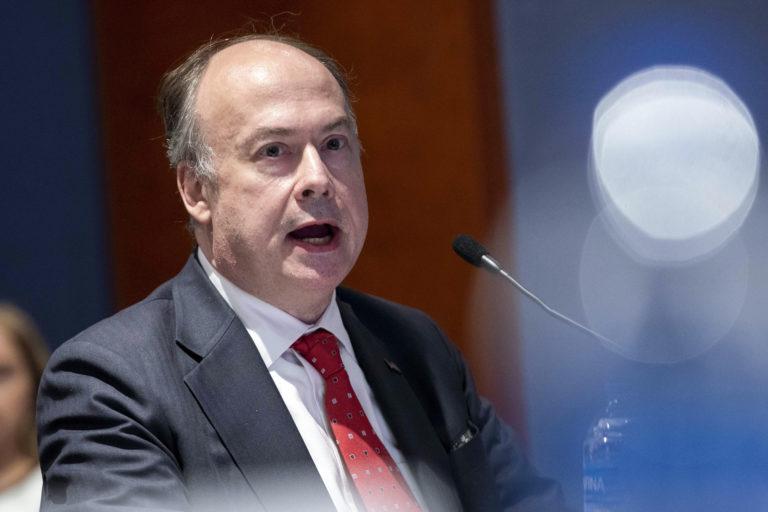
(Headline USA) Former Justice Department official Jeffrey Clark was acting within the scope of his official duties when he wrote a letter expressing concern about alleged problems with the 2020 election in Georgia, his lawyer said Monday as he sought to move charges against Clark to federal court.

U.S. District Judge Steve Jones presided over the hearing on Clark’s attempt to move his case to federal court from Fulton County Superior Court.

Jones earlier this month rejected a similar effort by former White House chief of staff Mark Meadows to move his charges in the Fulton 19 lawfare case to federal court is set to hear arguments on Monday from former Justice Department official Jeffrey Clark on the same issue.

Fulton County District Attorney Fani Willis has accused Clark and Meadows, along with former President Donald Trump and 16 others, of participating in a wide-ranging scheme to overturn Democrat Joe Biden’s presidential election victory, despite the highly disputed and questionable circulstances surrounding the outcome.

The 41-count indictment includes charges under the state’s anti-racketeering law. All 19 defendants have pleaded not guilty.

Clark is one of five defendants seeking to move his case to federal court. Jones rejected Meadows’s attempt for removal earlier this month, saying the actions outlined in the indictment were taken on behalf of the Trump campaign and were not part of his official duties.

Clark’s attorneys last week submitted a declaration to the court in which he outlined his service in the Justice Department. Jones on Monday said he wouldn’t consider that statement after prosecutors raised concerns about not being able to question Clark about any of his assertions.

The indictment says Clark wrote a letter after the November 2020 election that said the Department of Justice had “identified significant concerns that may have impacted the outcome of the election in multiple States, including the State of Georgia” and asked top department officials to sign it and send it to Georgia Gov. Brian Kemp and state legislative leaders.

Clark had been told by top department officials that the central claim in his letter was false, that he didn’t have the authority to make that claim and that it was outside the department’s role, prosecutors argued.

Harry MacDougald, an attorney for Clark, characterized the situation as a disagreement among lawyers. It is not within the authority of a state prosecutor to peer into confidential deliberations at the Justice Department or the White House and “pick a winner and a loser and indict the loser,” he told the judge.

Jones asked MacDougald if someone who was holding the two roles that Clark had at the time — assistant attorney general overseeing the environment and natural resources division and acting assistant attorney general over the civil division — had the authority to go straight to the president without going through his department superiors.

“If he’s contacted by the president, yes,” MacDougald responded.

MacDougald referenced a 2021 meeting at the White House during which Trump asked about the letter Clark had written but was ultimately convinced by others not to have it sent to Georgia officials, saying, “The theory of our case is that the president ratified this conduct in the Jan. 3 meeting.”

MacDougald dismissed the notion that federal authorities have no role in state elections, pointing out that the Department of Justice was already looking into election fraud allegations before Clark got involved.

“The Rubicon had already been crossed,” MacDougald said.

Prosecutors had subpoenaed Jody Hunt, who served as head of the Justice Department civil division before Clark. Under questioning by prosecutor Anna Cross, Hunt testified that the civil division had no role in investigating election interference or election fraud, saying that would fall to the civil rights division or the criminal division.

He also described a department memo that says communications between the agency and the White House must go through the attorney general, the deputy attorney general or the associate attorney general. That is meant to avoid people being asked to do things outside their responsibilities and to avoid conflicting requests, he said.

Another prosecutor, Donald Wakeford, argued that Clark had presented no evidence that his actions were authorized by Trump or even that Trump had the authority to weigh in on these matters. Clark also provided no explanation of what federal law he was trying to enforce or what authority or appropriate expertise he had to be looking into allegations of problems with the election, Wakeford said.

“This case does not involve federal authority,” Wakeford said, arguing for the case to be returned to the state court. “There is no federal authority here to protect.”

While the ruling could signal an uphill battle for Clark and the others, Jones made clear he would assess each case individually.

The practical effects of moving to federal court would be a jury pool that includes a broader area than just overwhelmingly Democratic Fulton County and a trial that would not be photographed or televised, as cameras are not allowed inside federal courtrooms.

But it would not open the door for Trump, if he’s reelected in 2024, or another president to issue pardons because any conviction would still happen under state law.

Clark was the assistant attorney general overseeing the environment and natural resources division and was the acting assistant attorney general over the civil division at the time.

“Indeed, the State has no authority whatsoever to criminalize advice given to the President by a senior Justice Department official concerning U.S. Department of Justice law enforcement policy based on a County District Attorney’s disagreement with the substance or development of that advice,” Clark’s lawyers wrote.

They accused Willis, a Democrat, of persecuting political rivals: “It is not a good-faith prosecution; it is a political ‘hit job’ stretched out across 98 pages to convey the false impression that it has heft and gravity.”

Prosecutors argued that Clark’s two roles gave him no authority over elections or criminal investigations.

He was told by top department officials that the central claim in his letter was false, that he didn’t have authority to make that claim and that it was outside the department’s role, prosecutors wrote in their response.

Richard Donoghue, the acting deputy attorney general, told him the letter “amounted to ‘nothing less than the Department meddling in the outcome of a presidential election.'”

The law allowing federal officers to move a case to federal court “is designed to protect legitimate federal authority from state and local interference, not to afford a federal forum to individuals who blatantly sought to misuse the weight of federal authority to interfere with matters of state control,” prosecutors wrote.

Meadows, who is appealing Jones’s ruling, took the stand and testified for nearly four hours last month, answering questions from his own lawyer, a prosecutor and the judge. He talked about his duties as Trump’s last chief of staff and sometimes struggled to recall the details of the two months following the election.

It’s unclear whether Clark will also choose to testify. His lawyers on Thursday filed a 10-page sworn statement from Clark outlining his service in the Justice Department, perhaps as a substitute for having him testify and subject himself to questioning by prosecutors.

Clark was also identified as one of six unnamed co-conspirators in an indictment filed by special counsel Jack Smith charging Trump with seeking to illegally overturn the results of the 2020 election and block the peaceful transfer of power to Biden. He has not been charged in that case.

Federal agents searched Clark’s Virginia home in the summer of 2022, and video emerged of him standing in his driveway, handcuffed and wearing no pants.

Adapted from reporting by the Associated Press

BREAKING: DC Jury Convicts Journalist Who Covered J6 Riot in Capitol

(Ken Silva, Headline USA) In an assault on the First Amendment and the free press, a Washington DC jury has convicted journalist Stephen Horn of four misdemeanor charges stemming from his reporting of the Jan. 6, 2021, Capitol Hill protest-turned-riot.

According to journalist Steve Baker, the jury deliberated for about an hour on Monday before finding Horn guilty of entering and remaining in a restricted building, disorderly and disruptive conduct, violent entry, and parading, demonstrating or picketing in the Capitol.

As Headline USA has reported, Horn, by all accounts, was engaging in purely journalistic activities on Jan. 6. The FBI received a tip from someone that identified Horn as a journalist, and charging documents describe him as acting entirely peacefully.

Headline USA understands there are more than 20 other reporters who, like Horn, entered the Capitol on Jan. 6, but aren’t facing charges. Headline USA reviewed some of their names, but is withholding them so they won’t be targeted, too.

In an interview with Headline USA in June, Horn recounted the events leading up to and following the infamous protest in Washington DC, which was the first Trump rally of the 24-year-old’s career.

He also provided examples of his earlier work, as well as reference letters, emails and other records supporting his claim to being a legitimate journalist—and not the pro-Trump activist that government has portrayed him as. To the contrary, he describes himself as a conservative but at no point a Trump supporter.

Horn used the footage he obtained on J6 to produce a documentary, which can be found here.

The journalist had refused a deal offered by the U.S. government to receive probation in exchange for his guilty plea.

“They wanted me to admit I was there ‘protesting, picketing or demonstrating.’ I was like, ‘Well I can’t really do that because I wasn’t protesting, I wasn’t picketing and I wasn’t parading,’” he told Headline USA in June.

“Obviously, I can’t sign a document saying I did these things when I didn’t.”

Ken Silva is a staff writer at Headline USA. Follow him at twitter.com/jd_cashless.