Kevin McCarthy Angling for Cabinet Post in Next Trump Admin.

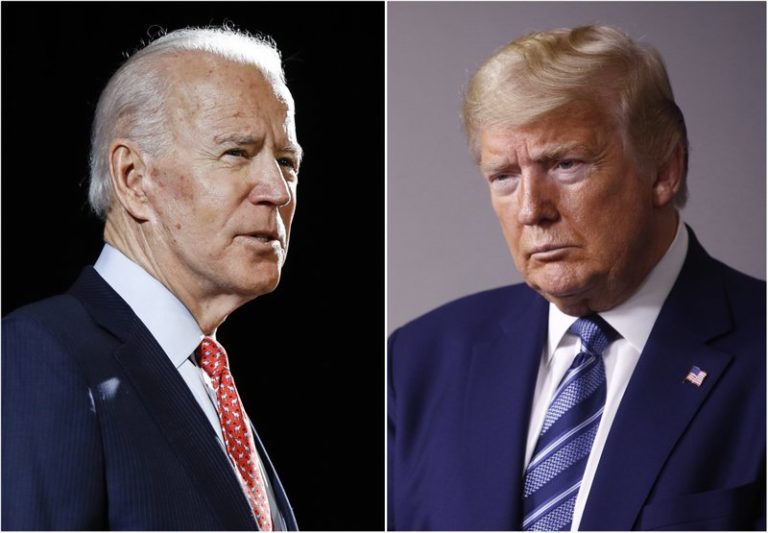
(Jacob Bruns, Headline USA) In an appearance on CBS Sunday Morning, former House Speaker Kevin McCarthy, R-Calif., hinted that he was posturing for a position in former president Donald Trump’s cabinet if Trump wins in 2024, RealClearPolitics reported.

McCarthy—who recently announced his plans to make an early retirement from the House after being forced out of his leadership position by a motion to vacate in October—opened the segment by suggesting that if incumbent President Joe Biden runs again, he will lose.

“If Biden stays as the nominee for the Democrats, I believe Donald Trump will win,” the former speaker noted. “I believe the Republicans will gain more seats in the House and the Republicans will win the Senate.”

While McCarthy also endorsed Trump, saying that he “will support” the former president if he wins, he also said he would serve in Trump’s Cabinet if he were “the best person for the job.”

McCarthy, who recently caught flak for a viral video in which claimed Democrats “look like America,” insisted that his bond with Trump remained strong.

“Look, I worked with President Trump on a lot of policies,” McCarthy continued. “We worked together to win the majority. But we also have a relationship where we’re very honest with one another.”

However, it follows a slight thawing of the relationship between the two. Although Trump had earlier sought to form an alliance with the House leader, both had kept their distance of late.

McCarthy had declined to endorse Trump in the GOP primary, and Trump, in turn, withheld support for McCarthy during his battle to retain the speakership.

Indeed, Trump may have been behind the effort to get a stronger speaker in place as he strives to fight the Democrats’ corrupt weaponization of the justice system and other government institutions.

Before the challenge to his speakership, McCarthy had indicated that, in his view, Trump lacked the strength to win a presidential campaign.

“Can he win that election? Yeah he can,” McCarthy said. “The question is, is he the strongest to win the election? I don’t know that answer.”

However, he subsequently tried to reverse course.

“I think President Trump is going to be our nominee and President Trump is going to win because President Trump’s policies made America stronger,” McCarthy said in an October interview, citing the lack of inflation and the more secure border during his term in office.

Watchdog: FISA ‘Reform’ Bill Would Mark Biggest Surveillance Expansion Since Patriot Act

(Ken Silva, Headline USA) Legislation purporting to “reform” the Foreign Intelligence Surveillance Act is set to go to a vote in Congress as soon as Tuesday, but a civil libertarian watchdog is warning that the supposed FISA fixes would actually mark the biggest expansion of domestic surveillance in America since the Patriot Act.

The bill in question is the FISA Reform and Reauthorization Act, which is coming out of the House Permanent Select Committee on Intelligence. According to the non-profit Brennan Center for Justice, the bill’s name does not match its contents.

The most insidious aspect of the bill is its changing the definition of “electronic communication service provider,” the Brennan Center warned.

“Going forward, it would not just be entities that have direct access to communications, like email and phone service providers, that could be required to turn over communications. Any business that has access to ‘equipment’ on which communications are stored and transmitted would be fair game,” the Brennan Center said.

“That means hotels, libraries, coffee shops, and other businesses that provide wifi could be compelled to serve as surrogate spies, structuring their systems so that they can give the government access to entire communications streams.”

The FISA Reform and Reauthorization Act is competing against a bill coming out of the House Judiciary Committee: the Protect Liberty & End Warrantless Surveillance Act, which made it out of committee earlier this month in a vote of 35-2.

The House Judiciary’s bill would require the FBI to obtain a warrant before they use FISA against a U.S. person.

Congress will likely have to pass one of the bills by the end of the year. Section 702 of FISA, which allows U.S. government agencies to target foreigners outside the U.S. for intelligence purposes, will sunset at the end of the year unless reauthorized by Congress.

FISA reform is one of the only issues in Congress that has broad, bipartisan report. But as Headline USA previously reported, top congressional lawmakers are trying to shoehorn the House Intelligence Committee’s version of the bill into the National Defense Authorization Act, which funds the military every year—meaning that Republicans would have to vote against military funding if they want to oppose the massive expansion of surveillance.

Along with current lawmakers, Former House Judiciary Committee Chairman Bob Goodlatte also spoke against this tactic.

“There is no reason to rush this process and give the Administration what it wants by sneaking HPSCI’s deeply flawed proposal into the NDAA,” Goodlatte said. “In fact, the current Section 702 FISA Court certification does not expire until April 10, 2024, which means Congress has several months to put together a package of real reforms that could justify extending Section 702.”

Ken Silva is a staff writer at Headline USA. Follow him at twitter.com/jd_cashless.

Dem. Voters Now Like Trump More than Biden

(Dmytro “Henry” Aleksandrov, Headline USA) Leftists who once enthusiastically voted for Joe Biden in 2020 now turned on the current Democratic nominee for the 2024 presidential election by admitting that Donald Trump was a much better president.

During his Dec. 8, 2023, appearance on CNN’s “Outfront,” political strategist Stan Greenberg said that he discovered in the results of his recently conducted poll that thousands of leftist voters who are located in the battleground states prefer Trump over Biden.

“Greenberg who teams up with James Carville at the Democracy Corps, found that among voters who usually make out the Democratic base – young voters, black voters, Hispanic voters, Asian voters, LGBTQ voters – get this, all of them collectively gave Donald Trump a higher approval rating than President Biden,” guest host John King said.

King then asked Greenberg why Biden faces such a “grim” situation. The answer indicated that the polls are showing that Biden does not have the support of his base for 2024.

“But the grim is in the fact that the base is the problem… I think we’re dealing with issues of prices and wages not keeping up with inflation. We’re talking about crime. We’re talking about the border. So, we’re dealing with — you were dealing with issues that are eroding our people on the issues,” Greenberg said.

He then tried saving Biden’s reputation by claiming that, despite the bad polling, there is “a path forward” for him.

However, it seems that it won’t be the case. In addition to CNN admitting the truth, the Wall Street Journal, the anti-Trump publication, has just released its own poll, in which it showed that Biden’s approval rating is at an all-time low, according to Slay News.

Currently, Biden’s approval is at only 37%, the Journal reported.

Real Clear Politics also released a poll that showed that Biden’s average approval rating is currently at 39.8%.

The Journal’s poll also revealed that Trump, in a hypothetical 2024 matchup with Biden, would beat the latter by a tally of 47% to 43%.

Harvard President Accused of Plagiarizing Ph.D. Thesis

(Jacob Bruns, Headline USA) Conservative watchdog Christopher Rufo has exposed Harvard University President Claudine Gay of plagiarizing portions of her doctoral thesis.

Rufo made the announcement in a Sunday tweet thread:

Gay made use of the writings of several other scholars in the writing of her thesis, though often including their texts without quotation marks and without proper citation, thereby skirting her own school’s plagiarism rules.

“When you paraphrase, your task is to distill the source’s ideas in your own words,” states the policy.

“It’s not enough to change a few words here and there and leave the rest; instead, you must completely restate the ideas in the passage in your own words,” it continues. “If your own language is too close to the original, then you are plagiarizing, even if you do provide a citation.”

According to Rufo, she lifted language “nearly verbatim” from a paper by Lawrence Bobo and Franklin Gilliam.

She also took language from scholar Carol Swain, copying a distinction Swain had made without any citation of Swain’s own writing.

Rufo concluded his remarks by calling on Gay to resign from her post as uiversity president.

“As an alumnus, I am calling on Claudine Gay to immediately resign from her position,” he wrote.

Doubtless if Rufo’s claims are validated, many on the Left will come to the defense of Gay, a woman of color, on the grounds that anti-plagiarism rules are racist.

Last June, for instance, a leftist professor at the University of Cincinnati, Antar A. Tichavakunda, published a paper arguing that such rules “disproportionately harm Black and Latinx students,” as reported by Campus Reform.

Gay, who assumed office earlier this year, was a diversity hire for the woke Ivy League university.

According to Harvard alumnus and billionaire Bill Ackman, the school did not consider any candidates who “did not meet the DEI [Diversity, Equity, and Inclusion] office’s criteria.”

Making matters worse, New Mexico Associate Psychology Professor Geoffrey Miller noted on Twitter that Gay’s resume is remarkably mediocre for a college professor, much less a president of a prestige university.

“Administrators function more like party political officers in communist Russian or Chinese universities,” Miller said, explaining how Gay attained her position. “I mean ‘party’ quite literally: the Democratic party.”

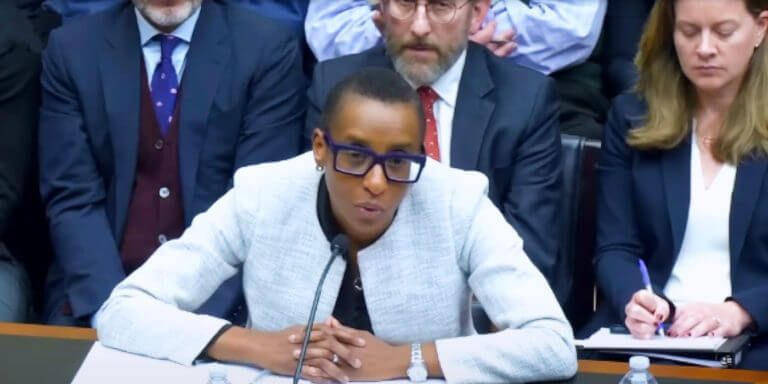
Following Gay’s controversial testimony before the House Committee on Education and the Workforce, during which she and two other college presidents refused to denounce hate speech that called for the genocide of Jews, billboard trucks parked outside the school have called for Gay’s resignation.

DHS-Funded Study Deems Andrew Tate, Pearl Davis and ‘Manosphere’ as Terrorism Threats

(Ken Silva, Headline USA) The Department of Homeland Security has funded a study that links popular social media personalities Andrew Tate, Pearl Davis and other “Manosphere” influencers to domestic terrorism, Headline USA has learned.

The study stems from the Targeted Violence & Terrorism Prevention Grant Program, or TVTP—an initiative where the DHS disperses millions of dollars in grants to think tanks and academic groups, which then attempt to identify potential terrorists based on behavioral indicators. TVTP has been aptly described by some researchers as a “pre-crime” program.

As part of TVTP, in 2022 the DHS gave $659,327 to fund Diverting Hate, a group of students and academics who were studying “incels,” or “involuntary celibates”—a term used to describe young men who can’t attract romantic partners. With terror attacks such as the 2014 Isla Vista killings coming from self-described incels, some researchers have  viewed the incel movement as a growing national security threat in recent years.

Apparently, Diverting Hate thinks that the social media “Manosphere”—a network of online influencers who promote masculinity and criticize feminism—is contributing to the incel terrorism threat.

In a report published in September and recently discovered by online researcher BX, Diverting Hate made the case that Manosphere influencers Tate, Davis and others are promoting views that lead to terrorism. Tate is the controversial online personality who promotes a course called “Hustlers University” to young men, while Davis is a woman in her mid-20s who recently took Twitter by storm with her anti-feminist views.

It’s not clear whether Diverting Hate’s report influenced policy at DHS, but it does provide insight into the group’s activities.

For instance, the report included a graphic pointing an arrow from Tate and other manosphere influencers towards “positive male influences.”

A graphic from a DHS-funded group explains that its goal is to divert internet traffic from influencers such as Andrew Tate, and towards DHS-approved influencers. PHOTO: Screenshot from Diverting Hate's report
A graphic from a DHS-funded group explains that its goal is to divert internet traffic from “toxic” personalities such as Andrew Tate, and towards DHS-approved influencers. PHOTO: Screenshot from Diverting Hate’s report

Given that Diverting Hate has boasted about using targeted advertisements to steer Twitter users away from “dangerous” content, the report raises the question about whether the group is using taxpayer money to divert internet traffic from “Manosphere” personalities towards DHS-approved influencers.

However, Diverting Hate didn’t respond to an email about the matter. In fact, after Headline USA emailed Diverting Hate, the group blocked public access to its report, which can still be found here.

From Tate to Terrorism?

Diverting Hate’s September report didn’t argue that incels will be directly radicalized to terrorism by the likes of Tate and Davis. However, the group argued that the “toxic” views promoted by Tate, Davis and the manosphere may lead to incel terrorism.

“Documented instances of violence committed by incels serve as inspiration for future events. These acts of violence are often fueled by violent fantasies, perceived challenges to one’s masculinity, and the manosphere’s attitude towards feminism,” the report said.

For Davis in particular, the report argued that her platform is a gateway to more violent ideologies.

“Her language, while not necessarily violent, is intentionally mainstream to reach a vast audience; however, her content’s misogynistic underpinnings have the propensity to appeal to communities purporting more aggressive anti-female narratives,” the report said of Davis.

The report further suggested that “pick-up artists” in the Manosphere pose a terrorism risk. That’s because when the strategies for picking up women don’t work for incels, they then become radicalized and turn to violence, according to the report.

“The incel movement grew directly out of the [pickup artist] fad, a storm cloud of disillusioned students who were ready to try more violent means of accessing female bodies,” the report said, quoting feminist author Jude Doyle.

The report concluded by lamenting that Tate and other manosphere influencers are allowed to operate on social media.

“It’s clear that these videos promote misguided perspectives vis-à-vis women, yet unless an explicit threat is detected, it is likely that YouTube will continue allowing such videos to be dispersed on their platform,” the report said.

Ken Silva is a staff writer at Headline USA. Follow him at twitter.com/jd_cashless.

Consumers Relying More on Installment Plans for Holiday Shopping

(Headline USA) Consumers are expected to use “buy now, pay later” payment plans heavily this Christmas season, a forecast that bodes well for retailers but that has credit experts again sounding alarm bells.

The short-term loans often come with consumer-friendly interest rates and allow shoppers to make an initial payment at checkout, then pay the rest in installments, typically over a few weeks, even months.

That can be appealing to a shopper buying multiple gifts for family and friends during the holidays, particularly if they’re balancing other debt such as student loans or credit cards.

Data showed younger consumers and those with difficulty accessing credit use the loans most frequently.

Used responsibly, the installment plans increase financial inclusion, according to the Federal Reserve Bank of New York. But the Fed and some analysts say key features of the plans can make borrowing too easy and saddle consumers with excessive debt.

Short-term installment loans drove $6.4 billion of online spending in October, up 6% year over year, according to a recent Adobe Analytics report on online shopping. Adobe expected usage to peak in November with spending of $9.3 billion, including a single-day record of $782 million on Cyber Monday.

Overall, Adobe estimates one in five Americans plan to use buy now, pay later plans to purchase holiday gifts.

Vivek Pandya, lead analyst for Adobe Digital Insights, said that “rising interest rates, inflation in food prices, and resuming student loan repayments” have increased costs for consumers, but “data has shown that the consumer remains resilient heading into the big holiday season and [they] are embracing every opportunity to manage their budgets in more efficient ways.”

‘Buy now, pay later’ loans tend to follow a shared model. The lender runs a soft credit check on applicants, then asks for a down payment at the time of purchase along with an agreement to make between four and six payments at two-week intervals, though terms vary. Zero-interest loans are common initial offerings.

If a customer pays late or misses payments, however, they can be shut out from using the app, or face interest or fees. Sometimes these are flat amounts, as much as $25, and sometimes they’re calculated as a percentage of the outstanding loan.

Pay-in-installment companies collect fees from merchants who are grateful for the increased business. Retailers have found that customers offered a buy now, pay later option are more likely to have bigger cart sizes or to convert from browsing to checking out. In its report, the Fed cites research that finds that customers spend 20% more when buy now, pay later is available.

Most of these short-term loans are not reported to the three main credit bureaus. Consumers appreciate that because the loans don’t affect their credit scores. But this is the feature of buy now, pay later that worries experts the most because it can lead to “loan-stacking”—when consumers take on debt with multiple lenders.

Demishia Alford, 26, of Greensboro, North Carolina, said she uses the short-term loans for household goods, clothes, and plane tickets. For the holidays, she plans to use the loans to buy a new crate for her puppy, electronics, and other gifts for her in-laws, nieces and nephews. She said the retailers she patronizes include Express, Shein, and Walmart.

According to Alford, her short-term loans average about $200 or less and help her walk a financial tightrope of sorts. She’s paying down student loans, a car loan, and several thousand dollars of credit card debt. Both her credit cards are nearly maxed out.

“I try to stay on top of it, especially in today’s economy,” she said. “Debt creeps up on you.”

Asked whether she thinks she’ll continue to use installment plans, Alford said, “Hopefully not. Hopefully I’ll be in a place where I don’t have to break up payments, and I’m not working on a budget soon.”

Kevin King, vice president of credit risk at LexisNexis Risk Solutions said that because pay-in-installment loans often go unreported to credit bureaus, and the companies don’t report to one another, lenders face an underwriting challenge. The opacity of the space, combined with the increasing number of companies offering the loans, compounds risk.

“Right now, it’s really tough for BNPL lenders to know that Kevin may have taken out a loan from four other BNPL lenders earlier this week,” he said. “That can let consumers trap themselves in debt.”

Alford—whose use of buy now, pay later loans at multiple companies is not reported to the credit bureaus, potentially masking her credit-worthiness—is an example of the type of borrower that King worries about.

LexisNexis Risk Solutions provides many buy now, pay later lenders with alternative credit scores for assessing consumers seeking loans, including those who may not have a traditional credit score.

In new research, the company found that pay-in-installment loans attract more non-prime (including subprime and near prime) credit applicants than traditional banking products and that the users are more than twice as likely to be under 35.

Jessica Sarceda, 28, of Santa Monica, California, said she’ll be using installment loans with four payments for her holiday shopping this year—mostly gifts of shoes and clothes for family and friends.

She said she decided to use Zip, another company that provides short-term loans, after using the app to update her wardrobe each season. She prefers spreading out the payments to using a credit card.

“I wouldn’t say I use it for large expenses,” Sarceda said. “Payments are hundreds of dollars, not thousands. And it’s usually event-based. If there’s a music festival, or a wedding—that’s typically where I’ll use Zip.”

Starting again last month, after a pandemic-linked pause, Sarceda has also begun paying down her student loan.

For the holidays, Allison Williams, 28, in Amelia, Ohio, said she’ll be using pay-in-four loans to get her two-year-old daughter a swing set for the yard. She also plans to buy Nike merchandise for her six brothers and sisters.

In the past two years, Williams has used buy now, pay later plans at stores including Target, BoxLunch, EyeBuyDirect, and Skims. She typically uses multiple lenders—Klarna, AfterPay, Sezzle, and PayPal’s Pay in 4—for larger purchases, she said, especially when buying many items from the same retailer.

Though Williams has a credit card, she says she uses it “for things like gas and groceries to make sure I’m keeping up with my credit. If I have extra money, I just pay off (the pay-in-four loans) early.”

Jinal Shah, Chief Marketing Officer for Zip, said pay-in-four lenders are able to see quickly when borrowers are missing or unable to make payments, as happened a year and a half ago, when inflation first took a toll, and the companies adjust their underwriting accordingly, including by removing users from the platform.

“Since payments are in two-week increments, it gives us an opportunity to be ahead of the pulse,” she said. “It has more built-in signals to help us manage than with credit cards.”

Adapted from reporting by the Associated Press

Biden’s Oil Policies Fueled $13B Spending Bonanza in New Mexico

(Headline USA) A windfall in government income from petroleum production is slowing down but far from over in New Mexico as the nation’s No. 2 oil production state grapples with how much it can effectively spend—and how to set aside billions of dollars for the future in case the world’s thirst for oil falters, or if a Republican president allows drilling in other parts of the country, thereby ending its relative monopoly.

The state is headed for a $3.5 billion general fund surplus for the year running through June 2025, according to a new forecast Monday.

New Mexico’s annual state government income has swelled by nearly 50% over the past three years, driven largely by oil an natural gas production in the Permian Basin, the most prolific shale-oil producing region in the country that extends across southeastern New Mexico and portions of western Texas.

The Biden administration’s closure of the Keystone Pipeline and other efforts to hinder the flow of fossil fuels from northern states with more conservative populations may have helped fuel the party in Santa Fe to some extent.

The state will draw in a record-setting $13 billion—exceeding annual spending obligations by one-third, economists from four state agencies said in a presentation to a legislative panel. Monday’s forecast anticipates 2.2% growth in state government income, on top of 10.2% growth during the current budget year.

The estimate of government income sets a baseline for budget negotiations when the Democratic-led Legislature convenes in January, and could extend efforts to set aside money to ensure critical programs endure when oil income falters.

The forecast cautions that slowing oil production and lower prices are expected to generate significantly less federal payments next year and beyond.

By the end of the decade, oil income is likely to begin a long, steady decline, “becoming a drag on revenue growth as global demand wanes,” the report states.

About half of the New Mexico’s general fund revenue can be traced to the oil and natural gas sector through an array of taxes and royalties on petroleum production that takes place largely on public lands—and distributions that flow from the state’s $28 billion land grant permanent fund for education, which is nurtured by oil income and investment earnings.

The state is looking for new revenue streams that shift the state’s dependence on oil, including Gov. Michelle Lujan Grisham’s proposal last week to help preserve freshwater aquifers with a $500 million initiative to underwrite the treatment of fracking wastewater. Early critics fear the plan might only spur more drilling for petroleum.

“We put a ton of money into funds,” Lujan Grisham said from the United Nations climate conference in the United Arab Emirates, where calls to phase-out the use of fossil fuels have been on prominent display. “But you also have to create revenue streams that go into those funds that are reliable.”

Meanwhile, the growth in government income has allowed the state to expand agency budgets, scale back taxes and offer new support to families, while bolstering spending on public education and colleges that account for roughly 58% of annual state general fund spending.

It’s more money in many instances than school districts and state agencies can effectively spend, as lawmakers push to bring average high school graduation rates and academic attainment up to national averages.

“All the resources have been there to pay the teachers more, to do the afterschool programing to provide the tutoring and support,” said Charles Sallee, director of the Legislature’s budget and accountability office, at a recent community presentation. “It’s the ability of the bureaucracy to organize and use those resources. In many cases it’s strained at capacity.”

Frustration boiled over at a recent legislative hearing that examined state spending on public education and stagnant average student performance at public schools.

Statewide, the share of students who can read at their grade level is 38%. Math proficiency is at 24%. The state’s high school graduation rate hovers at 76%—well below the national average of 87%.

Funding is increasing while the student population is declining, said Democratic state Sen. George Muñoz of Gallup, chairman of the lead state budget-writing committee at a November hearing.

“So we’re paying more for kids and we’re still not getting there,” Muñoz said. “What are we going to do to move the needle?”

New Mexico’s early childhood education trust, created in 2020, already holds roughly $6 billion. It’s designed to safeguard an ambitious expansion of public preschool, no-cost child care and home nurse visits for infants.

Last year, legislators agreed to set aside $150 million in a new land and water conservation fund and agreed to channeled more money from oil and natural gas into a savings account for construction projects—devoting $3 billion by 2027.

Legislators still are pushing to open new savings accounts. An emerging proposal would devote $100 million to a trust for Native American education including Indigenous language instruction among 23 tribal communities in New Mexico, including the Navajo Nation.

Adapted from reporting by the Associated Press

Military Aircraft Manufacturer to Get $35M in Funding from CHIPS Law

(Headline USA) The Biden administration announced the first of many coming federal investments in computer chip production, saying Monday that it would provide $35 million for BAE Systems to increase production at a New Hampshire factory making chips for military aircraft, including F-15 and F-35 jets.

The revelation is likely to fuel growing concerns over the military’s reliance on drone warfare, which could make the military less accountable in situations where an autocratic dictator were to encourage the use of weapons against U.S. citizens, where human troops might refuse to act.

The technology, paired with artificial intelligence, also has raised questions about whether the self-aware robots at some point could turn against humanity after seeing its creators as the greatest threat, or could be algorithmically manipulated to push a particular agenda, as has been the case with the government’s interference in social media.

The failure of an auto-piloting F-35 jet that crashed over the swamps of South Carolina following an emergency bailout this year also invited speculation as to whether the cockpits could be hacked—although that may be all the more reason for having them manufactured domestically.

The $35 million going to BAE would be the initial allocation of incentives from last year’s bipartisan CHIPS and Science Act, which provides more than $52 billion to boost the development and manufacturing of semiconductors in the United States.

The Commerce Department’s choice of a military contractor instead of a conventional chip manufacturer reveals the national security focus of the law, as more and more weapons systems depend on advanced chips that could be decisive in both preventing and fighting wars.

“We can’t gamble with our national security by depending solely on one part of the world or even one country for crucial advanced technologies,” said Commerce Secretary Gina Raimondo, who called the investments a “once-in-a-generation opportunity to advance our national and economic security and create a thriving, long-lasting domestic semiconductor manufacturing industry.”

President Joe Biden signed the incentives into law in August 2022 partly out of concerns that a military attack on Taiwan could deprive the world of advanced computer chips and plunge the U.S. into a recession.

The coronavirus pandemic revealed the fragility of computer chip supplies as a worldwide shortage curbed U.S. auto production and pushed up prices around the start of Biden’s presidency.

“Over the coming year, the Department of Commerce will award billions more to make more semiconductors in America, invest in research and development capabilities to keep America at the forefront of new technologies,” Biden said in a statement.

Biden also said the incentives his administration is providing have already led to more than $230 billion in planned investments in semiconductors and electronics.

Government officials said the investment in the BAE Systems’ facility will ultimately save money for taxpayers. The money being paid out as the company hits benchmarks will help quadruple the plant’s production capacity, helping to halve the price of making the chips and leading to net savings for the federal agencies buying the chips.

White House national security adviser Jake Sullivan said NATO allies and partners in Asia also will benefit from the increased capacity. But he stressed that an expanded manufacturing base was essential to protect the U.S.

“We do not want to be in a position where critical national security needs are dependent on faulty foreign supply chains,” Sullivan said. “We do not want to be in a position where another country can cut us off in a moment of crisis.”

Adapted from reporting by the Associated Press

Fired Groomer-Teachers Seek Legal Recourse for Moonlighting in Pornos

(Headline USA) At a small rural Missouri high school, two English teachers shared a secret: Both were posting adult content on OnlyFans, the subscription-based website known for sexually explicit content.

The site and others like it provide an opportunity for those willing to dabble in pornography to earn extra money—sometimes lots of it.

The money is handy, especially in relatively low-paying fields like teaching, and many post the content anonymously while trying to maintain their day jobs.

But some outed teachers, as well as people in other prominent fields such as law, have lost their jobs, raising questions about personal freedoms and how far employers can go to avoid stigma related to their employees’ after-hour activities.

It also raises question about whether certain positions, such as those involving young people, must necessarily have higher standards for moral conduct because of the nature of the work and the direct impact that such reputational hazards may have on their teaching ability.

This is particularly a concern in an era where the parents rights movement is growing in influence, led by groups like Moms for Liberty, as a backlash to so-called groomers in the classroom, or teachers who enter into the field of education with political activism and social engineering as their primary motives, who are actively pushing to indoctrinate students to be more sexually relaxed, often to satisfy their own prurient needs.

At St. Clair High School southwest of St. Louis, it all came crashing down this fall for 28-year-old Brianna Coppage and 31-year-old Megan Gaither.

“You’re tainted and seen as a liability,” Gaither lamented on Facebook after she was suspended. Coppage resigned.

In St. Clair, Coppage was the first to be outed after someone posted a link to her OnlyFans account on a community Facebook group. Superintendent Kyle Kruse said Coppage was not asked to resign, but she did anyway.

“I do not regret joining OnlyFans,” Coppage told the St. Louis Post–Dispatch in September. “I know it can be taboo, or some people may believe that it is shameful, but I don’t think sex work has to be shameful. I do just wish things just happened in a different way.”

Gaither, who also coached cheerleading, said she used her account to pay off student loans, although many public-school teachers who spend more than 10 years or make a defined number of payments on their loans automatically become eligible to have the balance of their loans erased.

She also was outed, although she wrote that she had an alias and did not show her face, evidently as the result of other identifying clues that made it less discreet.

Neither teacher responded to phone or email messages from he Associated Press seeking comment. But both women told other news outlets that their OnlyFans earnings soared from the publicity.

The district said little, but parents and even some students voiced concerns.

“As a society, if we’ve come to it to think that it’s OK for children to be seeing their teacher having sex, that’s outrageous,” said Kurt Moritz, the father of a 7-year-old boy in the district. “We shouldn’t be giving children an extra reason to fantasize over their teachers.”

Moritz and a former student said they were particularly alarmed when Coppage did a YouTube interview with an adult-content creator and said she would be willing to film with former students. Moritz said the remark went too far, and 17-year-old Claire Howard, who moved out of the district midway through last school-year, agreed.

“That’s something that shouldn’t be sexualized,” Howard said.

Whether fired adult content creators have a legal recourse is unclear. Employers have wide latitude to terminate employees. The question is whether firing people moonlighting in the adult entertainment industry has a disproportionate effect on women and LGBT people, said Derek Demeri, an employment law attorney at the Zeff Law Firm in New Jersey, which specializes in discrimination and civil rights cases.

Both groups are protected, and data from the Free Speech Coalition, a lobbying group for the adult entertainment industry, showed they were the ones who overwhelmingly produced adult content, he noted.

“If you have a policy that on its face is not about discrimination but ends up having a disparate impact on a protected community, now you’re crossing into territory that may be unlawful,” Demeri said, adding that this applies even in cases where the day job involves working with children.

Attorney Gregory Locke, who was fired in March as a New York City administrative law judge after city officials learned about his OnlyFans account, was contacted by a handful of adult content creators who were terminated from their day jobs. He hasn’t yet sued but said he agrees with Demeri’s legal reasoning.

Locke’s termination followed an online spat over drag queen story hours in which he used a profane remark in response to a councilmember who opposed the events. Locke, who is gay, said people need to stop treating sex work like such a big problem.

“We’re a gig economy now and millennials have more student debt than we know what to do with,” he said. “There’s all sorts of reasons why people would reach out for outside income like sex work, like OnlyFans.”

At least one lawsuit has been filed in a similar situation. Victoria Triece sued Orange County Public Schools in January, alleging she was banned from volunteering at her son’s Florida elementary school because she posts on OnlyFans.

“When you start getting the moral police involved in it, where does it stop? At what point does the school have the right to intervene in one’s private life?” asked her attorney, Mark NeJame.

In South Bend, Indiana, 42-year-old Sarah Seales said she was fired last year from her job teaching science to elementary school children through a Department of Defense youth program called STARBASE after she began posting on OnlyFans to make more money to support her twins.

A Department of Defense spokesperson said it was inappropriate to comment on matters of pending litigation.

Attorney Mark Nicholson, who specializes in revenge porn cases, interviewed Seales and hired her to work on his firm’s podcast. They ultimately decided against suing the blogger who drew attention to Seales’ side gig, he said.

“If we pay our teachers as much as we pay athletes,” Nicholson said, “maybe she wouldn’t have had to open up an OnlyFans.”

However, the argument may be a sort of chicken–egg paradox as many of the morally deviant teachers who are debasing the public’s view of the profession have led more parents to pull their children out of public schools, resulting in lower funding for the schools.

Overall, the problem may lie in teacher training and screening programs having too low a bar for allowing in teachers whose first priority is something other than the well-being and healthy development of their young charges.

Adapted from reporting by the Associated Press
Democrat Congresswoman Sued for Aiding Jeffrey Epstein’s Crimes

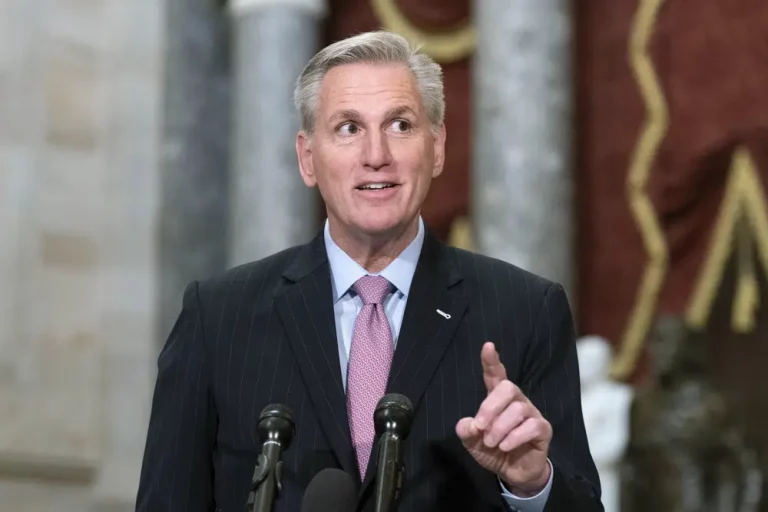
(Ken Silva, Headline USA) Several survivors of Jeffrey Epstein’s sex-trafficking network have sued multiple U.S. Virgin Islands officials for aiding and abetting Epstein’s criminal enterprise.

Among those officials being sued is the territory’s delegate to Congress, Stacey Plaskett, who is also the ranking Democrat on the House Weaponization Subcommittee.

According to the lawsuit, Plaskett and the other officials “knowingly aided and abetted, facilitated, and directly participated in Epstein’s illegal venture through financial and non-financial transactions.” Epstein’s network was based in Manhattan but frequently trafficked girls to his private island in the USVI.

Plaskett, for her part, visited Epstein at his New York mansion to request that he contribute to her political campaigns, and Epstein and his colleagues paid her campaigns $30,000, the lawsuit said.

“Plaskett also visited Epstein at his New York mansion to request a $30,000 contribution to the Democratic National Committee, which was ultimately declined because, Plaskett knew, Epstein failed their vetting,” the lawsuit added.

The lawsuit further cited Plaskett’s past as an attorney with Epstein’s longtime law firm, Kellerhals Ferguson Kroblin PLLC, as well as her stint as attorney for the USVI’s Economic Development Corporation when it approved over $300 million in tax breaks for Epstein’s companies.

“Plaskett was the attorney on the EDC responsible for, upon information and belief, recommending that the EDC provides these benefits to Epstein and his companies and enterprise,” the lawsuit said.

“These tax breaks amounted to $300 million in direct benefits to Epstein and his companies and enterprise.”

Headline USA reported many of the abovementioned allegations in March, when Plaskett was receiving attention for her antics on the Weaponization Subcommittee.

In response, her office distanced herself from Epstein, noting that she wasn’t working for the EDC when Epstein received the $300 million tax break, nor was she working for Epstein’s preferred law firm when he bought his private island, Little St. James.

 “Rep. Plaskett was not with the [EDC] at the time that Jeffrey Epstein was granted his [EDC] benefits. In 2016, Rep. Plaskett was not with [Kellerhals Ferguson Kroblin PLLC]. She was already a Member of Congress and did not engage in outside employment,” her office said.

Plaskett and the other defendants have yet to respond to the recent lawsuit. The case number is 1:23-cv-10301.

Ken Silva is a staff writer at Headline USA. Follow him at twitter.com/jd_cashless.