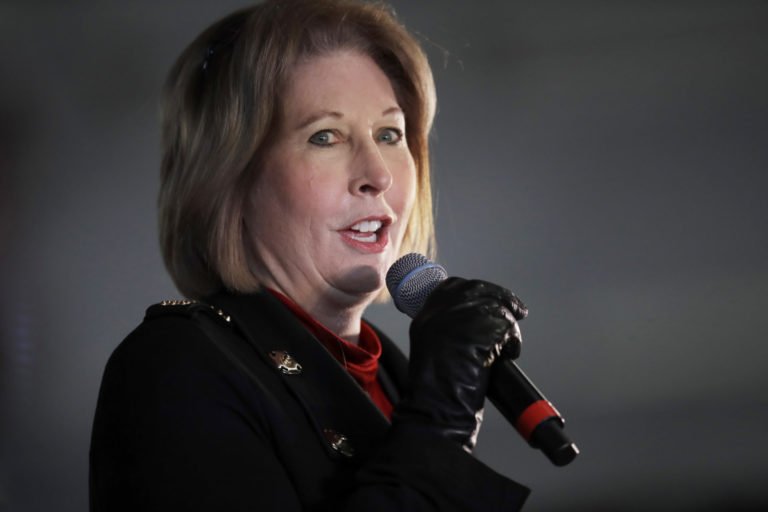
Powell, Chesebro Roil Leftists w/ 1-Sentence Apologies in Fulton Plea Deal

0

(Headline USA) The “apology” letters that Donald Trump-allied lawyers Sidney Powell and Kenneth Chesebro were required to write as a condition of their plea deals in the Georgia election interference case are just one sentence long.

The letters, obtained Thursday by the Atlanta Journal-Constitution through an open records request, were hand-written and terse.

Neither letter acknowledges the legitimacy of Democrat Joe Biden’s “win” in Georgia’s 2020 election nor denounces the claim that Trump was cheated out of victory through fraud.

“I apologize for my actions in connection with the events in Coffee County,” Powell wrote in a letter dated Oct. 19, the same day she pleaded guilty to six misdemeanors accusing her of conspiring to intentionally interfere with the performance of election duties.

“I apologize to the citizens of the state of Georgia and of Fulton County for my involvement in Count 15 of the indictment,” Chesebro wrote in a letter dated Oct. 20, when he appeared in court to plead guilty to one felony charge of conspiracy to commit filing false documents.

A spokesperson for Fulton County District Attorney Fani Willis, who brought the election interference case, declined Thursday to comment on the contents of the letters.

Powell and Chesebro were among four defendants to plead guilty in the case after reaching agreements with prosecutors. The remaining 15 defendants—including Trump, lawyer Rudy Giuliani and former White House chief of staff Mark Meadows—have all pleaded not guilty.

Each of the four who reached a deal with prosecutors received a sentence that included probation but no jail time. They were also allowed to plead guilty under Georgia’s first offender law, meaning that if they complete their probation without violating the terms or committing another crime, their records will be wiped clean.

The letters written by the other two defendants to plead guilty—Trump lawyer Jenna Ellis and bail bondsman Scott Hall—were longer and more specific.

Ellis read her letter in open court on Oct. 24, tearfully telling the judge that she looked back on her involvement in challenging the election results with “deep remorse.”

“What I did not do but should have done, Your Honor, was to make sure that the facts the other lawyers alleged to be true were in fact true,” she said. “In the frenetic pace of attempting to raise challenges to the election in several states, including Georgia, I failed to do my due diligence.”

Hall, who pleaded guilty Sept. 29, wrote in his five-paragraph letter to the citizens of Georgia, “I owe you an apology.”

“I wish I had never involved myself in the post-election activities that brought me before the court,” he wrote, explaining that he got involved after observing what he thought were some irregularities.

Powell was initially charged with felony racketeering and six other felony counts.

Prosecutors allege that she conspired with Hall and others to access election equipment without authorization and hired computer forensics firm SullivanStrickler to send a team to Coffee County, in south Georgia, to copy software and data from voting machines and computers there.

The indictment says a person who is not named sent an email to a top SullivanStrickler executive and instructed him to send all data copied from Dominion Voting Systems equipment in Coffee County to an unidentified lawyer associated with Powell and the Trump campaign.

Chesebro was initially charged with felony racketeering and six other felony counts.

Prosecutors allege that he unlawfully conspired with Trump and lawyers associated with his campaign to have the group of Georgia Republicans sign the alternate elector certificate and to submit it to various federal authorities.

He also communicated with Trump campaign lawyers and Republican leaders in other swing states to get those states to submit alternate slates of electors as well, prosecutors alleged.

Ellis pleaded guilty to one felony count of aiding and abetting false statements and writings. She had been charged with violating the state’s anti-racketeering law and soliciting the violation of oath by a public officer, both felonies.

The indictment in the sweeping case details a number of accusations against Ellis, including that she helped author plans on how to disrupt and delay congressional certification of the 2020 election’s results on Jan. 6, 2021, the day a mob of Trump supporters eventually overran the U.S. Capitol. And she’s accused of urging state legislators to back pro-Trump electors in multiple states.

Hall pleaded guilty to five misdemeanor counts for his role in accessing Coffee County elections equipment.

Adapted from reporting by the Associated Press
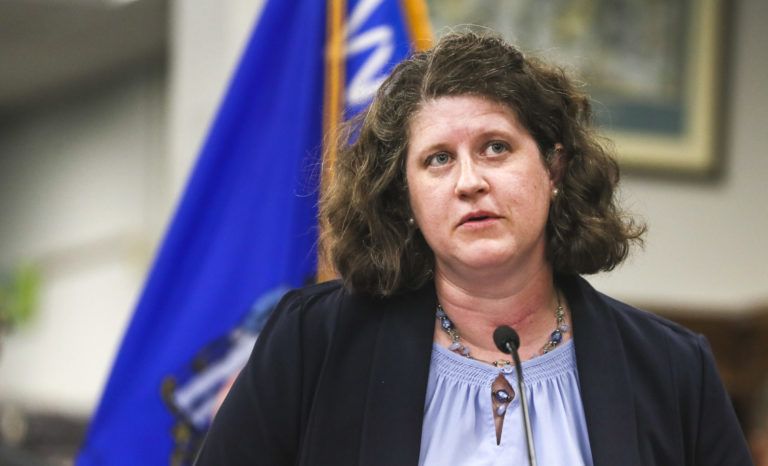
University of Wisc. Regents Agree to Limit DEI as GOP Funding Condition

(Headline USA) In a surprising about-face, the Universities of Wisconsin regents approved a deal Wednesday evening with Republican legislators to limit diversity positions at the system’s two dozen campuses in exchange for money to cover staff raises and construction projects.

Assembly Republican Speaker Robin Vos, who brokered the deal with Universities of Wisconsin President Jay Rothman, tweeted that the plan is the first step in a continuing GOP effort “to eliminate these cancerous DEI (diversity, equity and inclusion) practices on UW campuses.”

Democratic Gov. Tony Evers issued a lengthy statement after the vote saying the regents’ decision has left him disappointed and frustrated. He accused Vos of negotiating by bullying, saying the entire affair was motivated by his disdain for public education at every level.

The governor promised that he would “make damn sure” that UW campuses work for everyone.

The regents passed the plan 11-6 during a video conference, capping an ugly five-day episode. The board had previously rejected the deal on a 9-8 vote Saturday amid complaints from Democrats that it would sell out minority and LGBT students and faculty.

But after a closed-door regents meeting Tuesday led by Rothman, three regents who initially opposed the proposal voted for it Wednesday, including Karen Walsh, Amy Blumenfeld Bogost and Jennifer Staton.

They said ahead of Wednesday’s vote that they opposed the plan at first because it needed more deliberation. Since then they’ve had time to review and discuss the deal, they said.

“So why are we voting again? It was clear last Saturday that the board did not have sufficient time to discuss this document,” Walsh said.

Republican Chris Kapenga, president of the state Senate, had threatened not to confirm regents who voted against the deal. Bogost is the only one who flipped who is unconfirmed.

Regents who voted against the proposal lamented that making financial decisions outside of the state budget process sets a dangerous precedent. They questioned what concessions Republicans would demand next in exchange for dollars.

“The very premise of this deal is a nonstarter,” said Angela Adams, who voted against the plan twice. “I did not join this board to be thrust into political gamesmanship. Supporting DEI (diversity, equity and inclusion) on campus is not something we should be exchanging, in my opinion, for dollars.”

The deal’s supporters said campuses will remain committed to promoting diversity. But at the same time the system needs money to move forward and continue giving students opportunities.

“Politics is how the sausage is made, unless we prefer tyranny,” said Bob Atwell, who voted for the deal on Saturday and again on Wednesday.

The state budget that Republicans approved and Evers signed last summer called for a 6% raise for some 34,000 university employees over the next two years.

But Vos refused to allow the GOP-controlled Legislature’s employment committee to release the money in an attempt to force the regents to reduce the number of positions that work on diversity, equity and inclusion projects.

Vos has argued that such efforts only produce division. The dispute reflects a broader cultural battle over college diversity initiatives playing out across the country.

Evers has leveled intense criticism at Vos and Republicans for withholding the funding for raises. He filed a lawsuit with the Wisconsin Supreme Court in October arguing that lawmakers had overstepped their authority by blocking the money.

The deal the regents approved calls for lawmakers to release the money for the raises and various campus construction projects, including $200 million for a new engineering building at the system’s flagship campus in Madison.

The regents, in turn, will freeze hiring for diversity positions through 2026 and shift at least 43 current diversity positions to focus on “student success.”

Campuses also will have to eliminate statements supporting diversity on student applications. UW-Madison will have to end an affirmative action faculty hiring program and create an undefined position focused on conservative thought.

Rothman told reporters after the vote that the deal was a necessary compromise in a state with a Republican-controlled Legislature and a Democratic governor.

“We live in a political environment,” Rothman said. “It is not shocking to say we live in a polarized state … in that context, if you’re going to move forward, if you’re going to make progress, you have to find a way forward to find compromise. And I think that’s what we did in this process.”

Associated Students of Madison, UW-Madison’s student government group, said it was “disheartened” by the vote Wednesday and would hold accountable UW officials who promised diversity efforts would continue.

Democrats spent Wednesday trying to persuade regents to reject the deal again. State Rep. Dora Drake, chair of the Legislature’s Black Caucus, blasted the plan during a news conference at the state Capitol.

“This deal is part of a systematic racist deal and it is discriminatory,” Drake said. “It is discriminatory toward students, faculty and staffs of color because their experiences should never have a price tag and should never be bought out.”

She provided reporters with a memo from the Legislature’s attorneys that concluded that the regents’ closed-door meeting on Tuesday may have violated the state’s open meetings law because the meeting notice was too vague. She asked Attorney General Josh Kaul and District Attorney Ismael Ozanne to investigate.

Kaul spokesperson Gillian Drummond didn’t respond to an email inquiring about whether the attorney general would review Drake’s allegations. Ozanne also did not respond to an email.

State Department of Public Instruction Superintendent Jill Underly, who doubles as a regent by virtue of her position, didn’t vote Saturday or Wednesday. Her office has said she is vacationing in Europe with her elderly mother.

Underly asked regents Wednesday to reschedule the vote, saying she lacks reliable internet service, but the regents did not accommodate her request and she didn’t appear on the video conference.

Bogost appeared from Thailand and UW-Superior Chancellor Renee Wachter joined from an airport. Wachter didn’t say where she was.

Adapted from reporting by the Associated Press
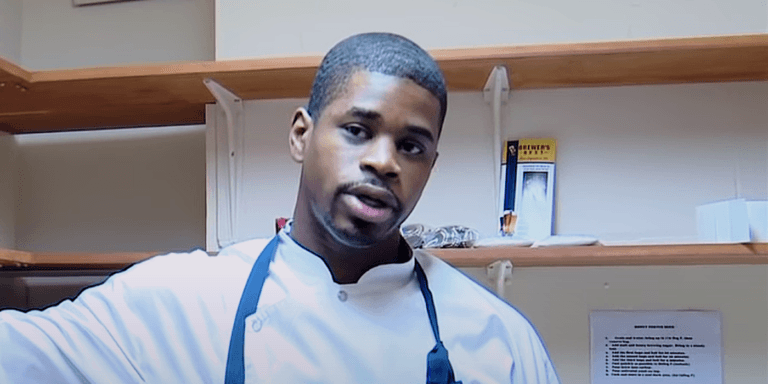
Mystery Woman’s Name Revealed in Obama Chef Drowning Investigation

(Luis Cornelio, Headline USA) Newly released documents unveiled the previously undisclosed last name of a woman present during the drowning incident of Tafari Campbell, the former chef of Barack Obama, at a lake near the former president’s Martha’s Vineyard home. 

Conservative watchdog Judicial Watch released 34 pages of DHS documents obtained through Freedom of Information Act requests. These documents revealed that a woman referred to as “Ms. Taylor” was present at the scene when Campbell drowned.

Details within the FOIA records shed light on the aftermath of the incident. A Secret Service report dated July 24 documented an interview with an agent, quoting Taylor’s account: “‘Ms. Taylor stated that Mr. Campbell was not wearing a life jacket and had no personal flotation devices aboard the paddleboard at the time of the incident.’”

Previously identified by the Daily Mail as a 26-year-old Obama staffer, Taylor’s recount of the tragic event had remained undisclosed, raising questions among commentators on social media.

Another document released by Judicial Watch detailed Taylor’s declarations, as quoted by a Secret Service agent. She reportedly fell to the grown and said that Tafari had drowned. “She stated that he fell in the water and struggled for a couple of seconds before giving up and sinking underwater,” the agent reportedly said, according to Judicial Watch.

Accounts from federal agents noted difficulties starting motorboats at the scene. One document recounted an agent’s testimony: “A similar issue occurred with the motor on the second boat. We jumped into a third boat belonging to the groundskeeper and it worked without issue.”

The documents further revealed that a federal agent had witnessed both Taylor and Campbell leaving the president’s home heading towards the water. Campbell subsequently fell into the water and drowned, despite Taylor attempting to push a paddle board towards him.

After Campbell disappeared under water, Taylor paddled between 50 to 70 yards to the shore and sought help from an agent, informing them about the incident.

In response to the tragic incident, Obama expressed his condolences via Instagram, saying, “Tafari Campbell showed us what true character looks like. He believed that actions speak louder than words… I’ll miss him every day.”

Univ. Did Illegal Research w/ Aborted Baby Parts, Faces Investigation

(Dmytro “Henry” Aleksandrov, Headline USA) The newly released emails revealed that the inspector general for the Department of Health and Human Services opened up an investigation into the University of Pittsburgh after the institution was accused of illegally harvesting fetal tissue from aborted babies for experimentation.

The documents were obtained as part of a public records request from Judicial Watch and the Center for Medical Progress, according to the Daily Wire.

The CMP was the organization that released footage in 2015 showing Planned Parenthood executives discussing the sale of body parts from babies who were murdered during abortion.

The new emails revealed that the university officials confirmed in November 2021 that they had been subpoenaed by the HHS Office of Inspector General agent.

“The University of Pittsburgh has been a center for some of the most barbaric experiments, government-funded experiments, on the body parts of late-term aborted babies. We now have the first confirmation with these FOIA documents that this is all subject of a formal federal law enforcement investigation of the OIG [Office of Inspector General],” CMP President David Daleiden said.

The CMP first reported on the gruesome experiments that were conducted at the university in 2019. Among those experiments were scalping five-month-old fetuses to stitch their scalps and back skin onto lab rats and transporting fetal kidneys to other researchers.

To defend its immoral and illegal practices, the university hired an “outside law firm.” In its report, the firm claimed that the university complied with state and federal law. The university itself also denied any wrongdoing.

“I think that the fact that a federal law enforcement agency like OIG thought that the information and allegations about the grant application were serious enough to open an investigation shows that the issue of fetal trafficking and selling aborted baby parts is not going away for the abortion industry,” Daleiden said.

Mom Uses Tracking App to Catch Son Having Sex w/ Teacher

(Dmytro “Henry” Aleksandrov, Headline USA) It was revealed that a mother from North Carolina caught her son having sex with his high school teacher in her car after she used a popular but controversial tracking app to catch him.

The anonymous parent installed the Life 360 app on her son’s phone and became suspicious one day when she was alerted that, instead of being at his rugby practice, he was spending his time near a local park, according to the New York Post.

Mother arrived at the location and found him having sex with his 26-year-old high school teacher Gabriela Cartaya-Neufeld.

The shocked mother took several photos of the teacher’s vehicle and license plate and called the police to the scene. The teacher was taken into custody.

She previously heard rumors of her son’s illicit relationship, so she was already on high alert, police said.

Prosecutors also added that Cartaya-Neufeld, a science teacher, had sex with the teenager not only in her car but also in the mother’s house and her own residence.

For months before the arrest, rumors of the affair had also been flying around the school, which prompted administrators to question both the teen and his teacher the district attorney said at Cartaya-Neufeld’s arraignment.

The teacher was hit with five counts of felony sexual activity with a student by a teacher.

Late last month, the teacher was taken to jail but has since made bail.

“We have many young adults, adolescents, teenagers who do believe they are in a mutually loving relationship, not recognizing that person has groomed them,” Ann Glaser who works for Pat’s Place Child Advocacy Center and helps young abuse victims said.

Life 360, the app that has Mark Zuckerberg’s sister Randi as a board member, has become increasingly popular with “helicopter” parents who want to monitor their children.

The app has roughly 50 million active monthly users and was expected to pull in earnings of $300 million this year.

However, even though the app is used by many people, many critics say that the app collects information about people who use it.

Human trafficking activists also said that victims are being tracked with the app. The company representatives said that those instances are outliers.

Rodeo Star Dies Due to Fluke Mishap on Duck-Hunting Trip

(Luis Cornelio, Headline USA) A rising rodeo star and Oklahoma State University graduate died tragically during a duck-hunting trip, as reported by the New York Post on Friday. 

Twenty-four-year-old Jackson Williams lost his life on Dec. 10 while attempting to retrieve a downed duck in Sooner Lake. Reports indicate that he went underwater during the attempt.

Williams apparently encountered a drop-off, causing water to fill his waders and weigh him down, leading to the tragic drowning. 

“They’re hard to get in and out of, even on dry land, and in a panic, in cold water, it can be really tough,” stated Capt. Ben Bickerstaff of the Oklahoma Game Wardens, as cited by KOCO. 

“Our hearts go out to the family and the friends and loved ones of this young man. We want to make sure everyone knows that our hearts and prayers are with them,” he added. 

The Oklahoma Highway Patrol’s Lake Patrol used side imaging technology to locate his body on the lake floor, according to reports from the outlet.


Williams, a graduate student in the Department of Plant and Soil Sciences at Oklahoma State University, was remembered by the institution, the NY Post reported. 

“We are deeply saddened by the sudden passing of Jackson Williams, who was a graduate student in the Department of Plant and Soil Sciences,” the university said in a statement. 

“In addition to being a student, Jackson served as the OSU Extension Agriculture and 4-H Educator in Logan County. He was a genuine and respectable young man, passionate about being a soil scientist, and loved rodeo and helping others,” the statement added. 

As recounted by the NY Post, Williams had achieved success in several rodeo events, including one stint under coach Jeff Collins at Panola College. 

Chicago City Council Rejects Referendum to Revoke Sanctuary Status

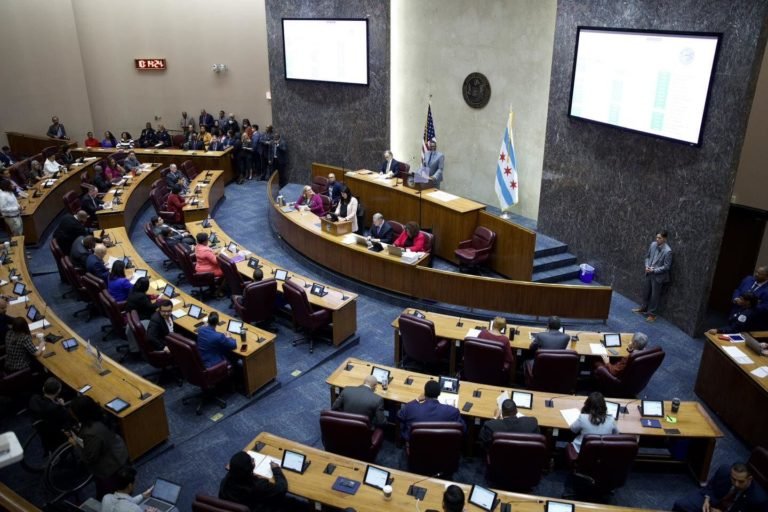
(Andrew Hensel, The Center Square) After much debate and pushback from the public, the Chicago City Council voted against asking voters to decide on the city’s sanctuary status.

A City Council meeting this week included public comments from Chicago residents seeking to end the city’s migrant crisis and end their sanctuary city status.

A proposed referendum would have given the public a chance to vote on whether or not they wanted to end or continue the policy of not enforcing federal immigration law, but aldermen voted against giving residents that choice.

Chicago Alderman Chris Taliaferro told the Center Square that people are “upset” due to the city refusing to end its status as a sanctuary city.

“My constituents are very concerned about whether or not we remain a sanctuary city and having that opportunity but before them on a ballot,” Taliaferro said. “A lot of our residents, particularly those in the black community, want to be heard as to whether or not we remain a sanctuary city.”

Nearly 25,000 migrants have come to Illinois from the U.S. southern border over the last year and a half. After public comments this week, city officials gave their opinions on the decision.

Alderman Byron Sigcho–Lopez and others focused on the handling of the flow of migrants from the southern U.S. border.

“We see a serious attack on our city, which we should all see for what it is,” Sigcho–Lopez said. “We see human trafficking. We see the buses of asylum seekers come inhumanely to the city. A 5-year-old little girl died in transit because of these inhumane policies.”

Alderman Raymond Lopez said the migrants are coming to this country illegally because they have no other options available.

“These individuals are, yes, using a backdoor to get into this country because, yes, the federal government has failed to fix the front door since 1987,” Lopez said.

Many, including Gov. J.B. Pritzker, have said that this problem can be relieved by offering work permits to the arrivals.

“We have had dozens of people sleeping at the 14th district police station up until recently,” Alderperson Daniel La Spata said. “We have businesses up and down Milwaukee Avenue and throughout Logan Square who are saying ‘all we want is to be able to hire these folks.’ Then, a quarter mile away, we have people who are saying ‘all we want to be able to do is work.'”

The referendum was rejected and will not go on the ballot for the upcoming election cycle.

City and state funds to deal with the crisis have totaled nearly $700 million this year alone.

Clinton Judge Blocks Oregon Republicans from Running for Office in 2024

(Headline USA) A federal judge has rejected a request from Oregon Republican state senators who boycotted the Legislature to be allowed on the ballot after their terms end.

U.S. District Court Judge Ann Aiken, an appointee of former Democrat President Bill Clinton, issued the decision Wednesday.

State Sens. Dennis Linthicum, Brian Boquist and Cedric Hayden were among the plaintiffs who filed the federal lawsuit to challenge their disqualification from running for reelection under Measure 113.

The voter-approved constitutional amendment, which passed by a wide margin last year, bars legislators from seeking reelection after 10 or more unexcused absences.

Each of the three senators racked up more than 10 absences during a record six-week walkout that paralyzed the 2023 legislative session. The boycott stemmed from bills on abortion, transgender health care and guns.

The lawmakers sought, among other things, a preliminary injunction to prevent the secretary of state’s office from enforcing their disqualification from the ballot.

The office in September disqualified Linthicum and Boquist from the 2024 ballot, court filings show. Hayden’s term ends in January 2027.

The senators argued that walkouts are a form of political protest protected by the First Amendment of the U.S. Constitution.

“The Senators were punished solely for exercising their First Amendment rights,” their attorneys said in court filings.

Aiken disagreed with their claims in her opinion.

“However, these walkouts were not simply protests—they were an exercise of the Senator Plaintiffs’ official power and were meant to deprive the legislature of the power to conduct business,” she wrote.

“Their subsequent disqualification is the effect of Measure 113 working as intended by the voters of Oregon,” she added.

The Oregon Senate and House of Representatives must have two-thirds of their members present in order to have a quorum and conduct business.

In recent years, Republicans have protested against Democratic policies by walking out of the Legislature and denying a quorum in a bid to stall bills.

The federal suit named Secretary of State LaVonne Griffin–Valade and Democratic Senate President Rob Wagner as defendants. The senators claimed, among other things, that Wagner violated their First Amendment right to freedom of expression and their Fourteenth Amendment right to due process by marking their absences as unexcused.

Attorneys from Oregon’s justice department representing Griffin–Valade and Wagner argued the First Amendment does not protect legislators’ refusal to attend legislative floor sessions.

“Under Oregon law, a senator’s absence has an important legal effect: without the attendance of the two-thirds of senators needed to achieve a quorum, the Senate cannot legislate,” they wrote in court filings.

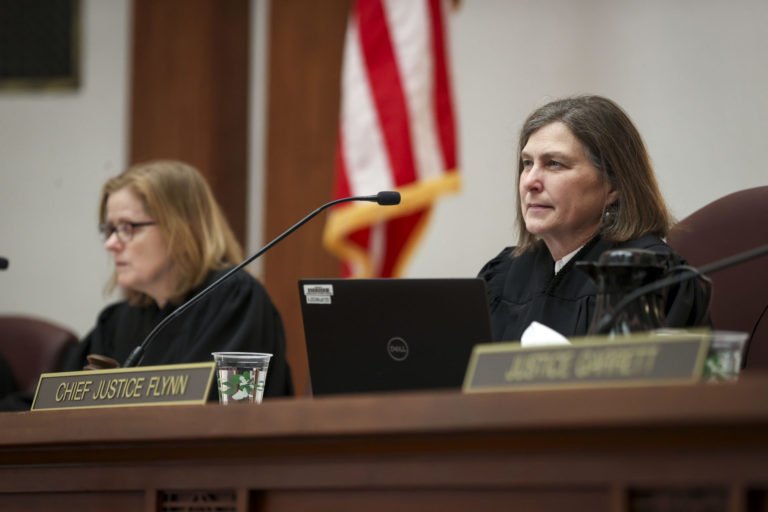
The federal court decision was issued one day before the Oregon Supreme Court heard a separate challenge to the measure.

In oral arguments before the state’s high court in Salem Thursday, a lawyer for a different group of Republican state senators argued that confusion over the wording of the constitutional amendment means that legislators whose terms end in January can run in 2024.

Griffin–Valade, the secretary of state, is also a defendant in that lawsuit. Earlier this year, she said the boycotting senators were disqualified from seeking reelection in 2024.

She directed her office’s elections division to implement an administrative rule to clarify the stance. She claimed the rule reflected the intent of voters when they approved the measure last year.

All parties in the suit are seeking clarity on the issue before the March 2024 filing deadline for candidates who want to run in next year’s election.

Adapted from reporting by the Associated Press
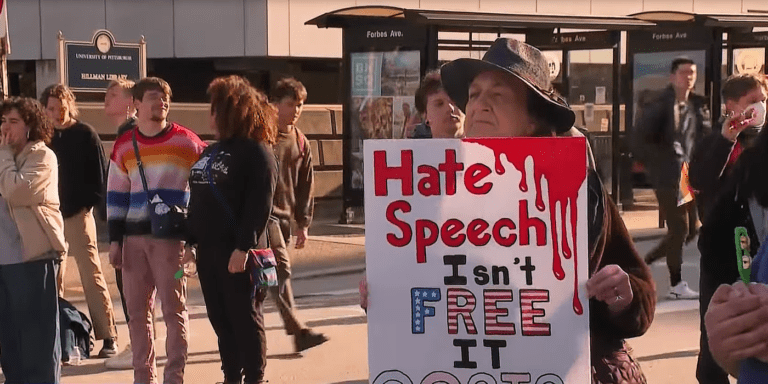
Ex-Editor: NYTimes Publisher Admitted to Conservative Double-Standard

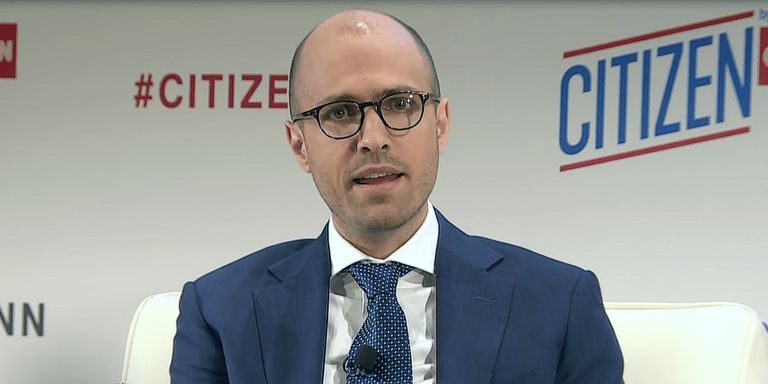
(Molly Bruns, Headline USA) New York Times publisher A.G. Sulzberger and top newsroom editors openly admitted to embracing a double-standard when it came to covering conservative issues, according to a former opinion editor.

Former Times Editorial Page Editor James Bennett published a column in The Economist in which he recounted the controversy over his publication of an op-ed by Sen. Tom Cotton, R-Ark., which ultimately cost him his job.

During his tenure, Bennett wrote that he received many complaints from conservative writers about their unfair treatment.

Throughout the Trump presidency, the once-latent left-wing biases of the staff at the Times became more and more evident to Bennett, with colleagues turning to the impulse to either discourage or shut down conservative voices altogether.

“Trying to be helpful, one of the top newsroom editors urged me to start attaching trigger warnings to pieces by conservatives,” he said. “It had not occurred to him how this would stigmatize certain colleagues, or what it would say to the world about the Times‘s own bias.”

After a similar incident he brought the complaint to Sulzberger, who responded by saying “that’s just how it was … and he should get used to it,” Front Page Magazine reported.

Bennett reluctantly relayed the message back to an irate conservative contributor.

“A publication that promises its readers to stand apart from politics should not have different standards for different writers based on their politics,” Bennett recollected in his Economist article.

“But I delivered the message,” he added. “There are many things I regret about by tenure as editorial-page editor. That is the only act of which I am ashamed.”

Bennett published Cotton’s piece in 2020, which was a reaction to George Floyd’s passing and Black Lives Matter riots erupting across the nation.

In publishing Cotton’s article, Bennett hoped that the Times could act as a platform “presenting debate from all sides.”

Until that point, the paper had stuck to articles condemning the idea of utilizing military force to stymie BLM’s violent rage and protect locals from violence, but Cotton held a contrary opinion.

Despite the controversy, Bennett was not the only employee of the paper who wanted the article to be published.

Dean Baquet, the executive editor of the Times, knew that Cotton likely made a similar argument in Congress—and possibly to Donald Trump, the president at the time—and believed Times readers deserved to know about it.

Bennett published the article, and received a call from Sulzberger three days later demanding his resignation.

Comparing his former paper to the Wall Street Journal, he wished that the Times kept the same wall between opinion journalism and news in order to maintain integrity through the political upheaval.

Bennett also assessed the current position of the Times as a precarious one, warning that its far-left bias and hypocrisy had dismantled its credibility—along with its false reporting on stories like the Russia-collusion hoax and Hunter Biden laptop scandal.

“It makes the Times too easy for conservatives to dismiss and too easy for progressives to believe,” he said. “The reality is that the Times is becoming a publication through which America’s progressive elite talks to itself about an America that does not really exist.”

GOP Sen. Claims Biden Can’t Be Impeached If Crimes Committed Pre-2020

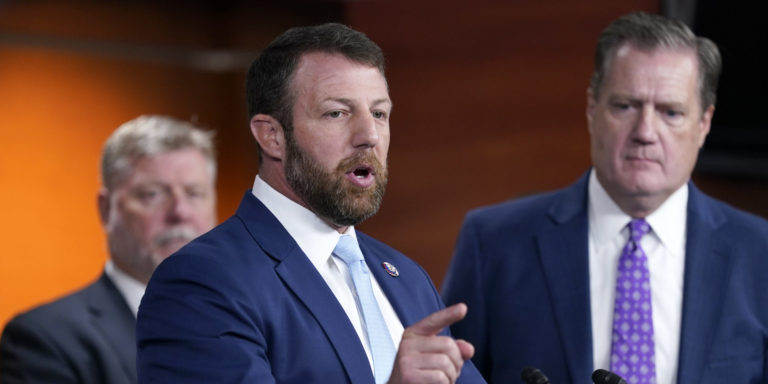
(Luis Cornelio, Headline USA) Sen. Markwayne Mullin, R-Okla., said President Joe Biden could not face impeachment over potential crimes committed before the 2020 presidential election. 

In an interview with Newsmax’s Rob Finnerty on Friday, Mullin cautioned House Republicans that impeachment criteria are stringent. He emphasized that any impeachable acts must occur during Biden’s tenure as U.S. president.

“The one thing that the Republican senators have told the House is, ‘Give us an airtight case,’ because we don’t want to play politics with impeachment a president like Democrats did with [former President Donald] Trump,” Mullin stated. He added a warning that any potential impeachment of Biden must be taken seriously.

Mullin added, “If they send us a case, make sure it’s convictable and the bar is really high, there’s no question about it: It’s gotta be a misdemeanor, high crime or treason. And the other part has to be committed while he was in office, the current office he holds. So, what he did as vice president and what he did in between the two may not be impeachable.” 

Finnerty responded to Mullin’s remarks by asking whether the Senate should prioritize other policy matters over discussing potential impeachment, especially during an election year.

“This could backfire on Republicans,” Finnerty told Mullin, to which the senator replied, “If the president of the United States used his office to benefit him to gain favor in other countries while they’re paying him, that could lead to treason.”  

Responding to Mullin’s allegations, Finnerty questioned whether Democratic senators had any “appetite” for impeachment, especially during an election year. 

Mullin cautioned that some moderate senators had indicated that if House Republicans identified impeachable offenses, they would consider the evidence fairly. 

“When you talk to some moderate leaning senators, they would tell you that if the House sends us an airtight case that completely, easily points to the president breaking the law in treasons or misdemeanor or high crimes, that they would try it just like they would any other case and go into without a partisan look,” Mullin claimed. 

Finnerty persisted with his question, inquiring whether any senator had assured Mullin they would fairly consider the impeachment case. Mullin responded affirmatively. 

The remarks from the Oklahoma senator follow House Republicans’ vote to formally launch an impeachment inquiry into Biden over allegations involving his family’s contentious business dealings. 

Biden has consistently dismissed these accusations, falsely asserting that congressional investigators have found no evidence linking him to these businesses.