Wokesters Push to Cancel Poinsettia Namesake, Rename It ‘Cuetaxochitl’

(Headline USA) Like Christmas trees, Santa and reindeer, the poinsettia has long been a ubiquitous symbol of the holiday season in the U.S. and across Europe.

But now, nearly 200 years after the plant with the bright crimson leaves was introduced in the U.S., attention is once again turning to the poinsettia’s origins and the checkered history of its namesake, a slaveowner and lawmaker who played a part in the forced removal of Native Americans from their land. Some people would now rather call the plant by the name of its indigenous origin in southern Mexico.

WHERE DID THE NAME POINSETTIA COME FROM?

The name comes from the amateur botanist and statesman Joel Roberts Poinsett, who happened upon the plant in 1828 during his tenure as the first U.S. minister to the newly independent Mexico.

Poinsett, who was interested in science as well as potential cash crops, sent clippings of the plant to his home in South Carolina and to a botanist in Philadelphia, who affixed the eponymous name to the plant in gratitude.

A life-size bronze statue of Poinsett still stands in his honor in downtown Greenville, South Carolina.

However, he was cast out of Mexico within a year of his discovery, having earned a local reputation for intrusive political maneuvering that extended to a network of secretive masonic lodges and schemes to contain British influence.

IS THE ‘POINSETTIA’ NAME LOSING ITS LUSTER?

As more people learn of its namesake’s complicated history, the name “poinsettia” has become less attractive in the United States.

Unvarnished published accounts reveal Poinsett as a disruptive advocate for business interests abroad, a slaveholder on a rice plantation in the U.S., and a secretary of war who helped oversee the forced removal of Native Americans, including the westward relocation of Cherokee populations to Oklahoma known as the “Trail of Tears.”

In a new biography titled “Flowers, Guns and Money,” historian Lindsay Schakenbach Regele describes the cosmopolitan Poinsett as a political and economic pragmatist who conspired with a Chilean independence leader and colluded with British bankers in Mexico. Though he was a slaveowner, he opposed secession, and he didn’t live to see the Civil War.

Schakenbach Regele renders tough judgment on Poinsett’s treatment of and regard for Indigenous peoples.

“Because Poinsett belonged to learned societies, contributed to botanists’ collections, and purchased art from Europe, he could more readily justify the expulsion of Natives from their homes,” she writes.

A CHRISTMAS FLOWER OF MANY NAMES

The cultivation of the plant dates back to the Aztec empire in Mexico 500 years ago.

Among Nahuatl-speaking communities of Mexico, the plant is known as the cuetlaxochitl (kwet-la-SHO-sheet), meaning “flower that withers.” It’s an apt description of the thin red leaves on wild varieties of the plant that grow to heights above 10 feet (3 meters).

Year-end holiday markets in Latin America brim with the potted plant known in Spanish as the “flor de Nochebuena,” or “flower of Christmas Eve,” which is entwined with celebrations of the night before Christmas. The “Nochebuena” name is traced to early Franciscan friars who arrived from Spain in the 16th century. Spaniards once called it “scarlet cloth.”

Additional nicknames abound: “Santa Catarina” in Mexico, “estrella federal,” or “federal star” in Argentina and “penacho de Incan,” or “headdress” in Peru.

Ascribed in the 19th century, the Latin name, Euphorbia pulcherrima, means “the most beautiful” of a diverse genus with a milky sap of latex.

SO WHAT IS ITS PREFERRED NAME?

“Cuetaxochitl” is winning over some enthusiasts among Mexican youths, including the diaspora in the U.S., according to Elena Jackson Albarrán, a professor of Mexican history and global and intercultural studies at Miami University in Oxford, Ohio.

“I’ve seen a trend towards people openly saying: ‘Don’t call this flower either poinsettia or Nochebuena. It’s cuetlaxochitl,’” said Jackson Albarrán. “There’s going to be a big cohort of people who are like, ‘Who cares?’”

Most ordinary people in Mexico never say “poinsettia” and don’t talk about Poinsett, according to Laura Trejo, a Mexican biologist who is leading studies on the genetic history of the U.S. poinsettia.

“I feel like it’s only the historians, the diplomats and, well, the politicians who know the history of Poinsett,” Trejo said.

THE MEXICAN ROOTS OF U.S. POINSETTIAS

Mexican biologists in recent years have traced the genetic stock of U.S. poinsettia plants to a wild variant in the Pacific coastal state of Guerrero, verifying lore about Poinsett’s pivotal encounter there. The scientists also are researching a rich, untapped diversity of other wild variants, in efforts that may help guard against the poaching of plants and theft of genetic information.

The flower still grows wild along Mexico’s Pacific Coast and parts of Central America as far as Costa Rica.

Trejo, of the National Council of Science and Technology in the central state of Tlaxcala, said some informal outdoor markets still sell the “sun cuetlaxochitl” that resemble wild varieties, alongside modern patented varieties.

In her field research travels, Trejo has found households that preserve ancient traditions associated with the flower.

“It’s clear to us that this plant, since the pre-Hispanic era, is a ceremonial plant, an offering, because it’s still in our culture, in the interior of the county, to cut the flowers and take them to the altars,” she said in Spanish. “And this is primarily associated with the maternal goddesses: with Coatlicue, Tonantzin and now with the Virgin Mary.”

A LASTING FIGURE IN HISTORY

Regardless of his troubled history, Poinsett’s legacy as an explorer and collector continues to loom large: Some 1,800 meticulously tended poinsettias are delivered in November and December from greenhouses in Maryland to a long list of museums in Washington, D.C., affiliated with the Smithsonian Institution.

A “pink-champagne” cultivar adorns the National Portrait Gallery this year.

Poinsett’s name may also live on for his connection to other areas of U.S. culture. He advocated for the establishment of a national science museum, and in part due to his efforts, a fortune bequeathed by British scientist James Smithson was used to underwrite the creation of the Smithsonian Institution.

Adapted from reporting by the Associated Press

Abandoned Puppy Gets Adopted After Viral Border Video

(Luis Cornelio, Headline USA) A saddened puppy went viral on Twitter after border reporters shared images depicting its apparent abandonment by its owner, a Venezuelan illegal immigrant. 

NewsNation correspondent Jorge Ventura initially shared a heartbreaking video of the puppy attempting to keep warm inside an abandoned rag.

“A migrant abandoned their adorable little puppy before crossing the Rio Grande. Little guy was terrified,” Ventura said, also sharing a brief video showing the abandoned puppy.

The puppy seemed to be on the Mexican side of the border. Ventura mentioned in the video that other immigrants informed him the dog’s owner had left him there before entering the U.S. illegally.

“This dog travelled with the migrants over seven different countries, through the Darian Gap, through Mexico. They just crossed and left this dog here,” Ventura said. 

The video garnered over one million views, with conservatives asking Ventura how they could help rescue the abandoned puppy. 

The puppy’s heartbreaking story found a happy ending after Ventura, along with independent journalist Julio Rosas, returned to Mexico in a bid to rescue the abandoned dog.

“Glad to report this little guy is headed to the sunshine state with [Rosas],” Ventura said in a Twitter post. 

The news of the adoption was celebrated by Twitter commentators, with Rosas sharing his Venmo account to raise funds for the dog’s veterinary visits.

“Happy to report I’m taking the puppy who was abandoned by a migrant back home with me,” Rosas said. “If you’re inclined to give to my venmo to help pay for vet visits, it would be appreciated. Anything that is leftover will go towards a no-kill dog shelter my Mom volunteers at.” 

On Christmas Eve, Rosas shared before-and-after photos of the dog, which he named “Bella.” 

“Merry Christmas from Bella! One week ago —> today,” Rosas said in a photo post featuring the newly adopted Bella wearing a red ribbon with a Christmas tree behind her.

Pro-Palestinian Agitators Disrupt Christmas Fundraiser for Blind Children

(Luis Cornelio, Headline USA) Pro-Palestinian hecklers disrupted a charitable fundraiser for blind children in Australia, aiming to protest Israel’s military actions in the Hamas-governed Gaza Strip, Fox News reported on Sunday. 

The annual Vision Australia’s Carols by Candlelight fundraiser, held on Dec. 24, serves as a gathering for families and friends to celebrate Christmas while raising funds for children in need. However, this year, the event gained viral attention after hecklers terrorized children who were performing Christmas carols.

Online video footage captured approximately 10,000 attendees witnessing hecklers storming the stage where children were set to perform. As reported by SkyNews, hosts David Campbell and Sarah Abo were on stage during the disturbing disruption. 

A woman’s voice can be heard shouting, “All the kids are dying in Gaza,” before security escorted her away. Although the broadcast cut away from the disturbance, viewers were able to listen to the protest. 

Additional footage from the event showed at least two individuals displaying Palestinian flags, causing alarm for the security of the children and prompting security intervention.

In the viral video, one of the hecklers seized the microphone from Campbell, prompting his reassuring response, “It’s OK, everybody, we are actually fine here. Okay, take it easy. It’s okay, no, no.” 

Attempting to calm the situation, Campbell addressed the crowd: “I’m so sorry…. Everyone’s allowed to have their time, their moment.” 

He further stated that security was ensuring the safety of the children who were on stage before the perpetrators broke into stage. 

“It’s a very hard time in this world… There’s a lot of pain out there that people are experiencing,” Campbell continued. 

The crowd responded with applause, likely to hail the hosts’ professionalism. 

This would not mark the first occurrence of pro-Palestinian disruptions during Christmas-related events. A similar incident unfolded at New York City’s popular Rockefeller Christmas lighting ceremony.

A flier shared online read, “FLOOD THE TREE LIGHTING FOR GAZA,” leading to at least seven arrests amid anti-Israeli chants and violent altercations with the NYPD, as captured in disturbing footage.

These protests have emerged following Israel’s military actions against Hamas, which invaded southern Israel and killed approximately 1,400 individuals, including U.S. citizens.

Jill’s Ex-Spox ‘Caught’ Bringing Gay Hook-Ups Near Joe’s Hotel Room

(Luis Cornelio, Headline USA) Michael LaRosa, the former press secretary to First Lady Jill Biden, attempted twice to bring gay hook-up dates near the secured room of President Joe Biden while on an overseas trip, according to an explosive Daily Mail report.

The report, citing White House sources, accused LaRosa of violating Secret Service protocol by bringing men he had just met to the heavily guarded floor where Joe Biden was staying during the 2022 NATO Summit in Madrid.

This behavior led to his “forced resignation” on July 2022, the Mail reported.

Such a move, a senior White House staffer said, placed the president and first lady at risk. “He was caught by Secret Service not once, but twice bringing dates to a secure floor, obviously putting the First Lady’s safety at risk because you’re not supposed to bring people in who are not fully vetted,” the staffer said, according to the Mail.

Responding to the report, LaRosa, who is gay, admitted that he only tried to bring a male staffer from a NATO country delegation.

Another Biden official said that LaRosa’s last six months at the White House were marked by a “long line of chaotic behavior, outbursts, unreliability, unpredictability, and lack of judgment.”

The report followed LaRosa’s scathing criticisms against the sinking Biden administration, giving the impression that the White House is purposely leaking information to retaliate against LaRosa for his criticism. 

LaRosa made headlines in November after condemning officials within the Biden administration over sinking polls, some showing Joe Biden trailing behind former President Donald Trump. LaRosa blamed White House officials for “failing to respond to smears, lies, conspiracies, and disinfo” against Joe Biden.

In a now-deleted tweet, LaRosa also claimed that only Jill Biden can “help change the people” around Joe Biden. LaRosa has also appeared on CNN and MSNBC to directly criticize his former boss’s husband.


One Biden aide dismissed LaRosa as a low-level staffer who never had a “seat at the table,” adding, “This whole idea that he was this very senior insider and was like very close to the president or First Lady, and focused on the campaign and political strategy, that could not be farther from the truth.” 

The aide continued, “He was never allowed into any senior White House strategy meetings, and the way he is portraying himself for media, for Twitter, for clicks, whatever, it’s not just an eyeroll. It’s truly wrong and it’s annoying to me personally.”

Rand Paul’s Annual ‘Festivus’ Report Reveals $900B in Gov’t Waste

(Luis Cornelio, Headline USA) Sen. Rand Paul, R-Ky., unveiled the Festivus Report 2023 to highlight the colossal $900,000,000,000 of taxpayer dollars “wasted” in government spending. 

The 25-page report marked the ninth consecutive year of the report, shedding light on how the federal government uses taxpayer money.

Among the most striking findings included a $2.7 million grant from the National Institutes of Health for the study of Russian cats walking on a treadmill and the use of Barbie Dolls as proof of ID for COVID-related Paycheck Protection Program. 

Additionally, the report accused the Department of Defense of wasting over $169 million in military equipment by leaving it unattended outside.

The U.S. Agency for International Development spent $6 million in taxpayer dollars to promote tourism in Egypt, and the Small Business Administration granted a hefty $200 million to some of the most popular music artists in the nation. According to the report, Post Malone, Chris Brown and Lil Wayne are among the SBA grant recipients.

Paul criticized his colleagues in both parties for voting to raise the debt ceiling, allowing the federal government to borrow “an unlimited amount of money until 2024.” 

He added, “The same big spenders teamed up, yet again, to continue sending Americans’ hard-earned money to foreign countries and funding endless wars, all while ignoring our porous southern border.” 

The senator also highlighted the national debt, which is approaching what Paul described as an “astronomical” $30 trillion. 

This amount is likely to increase, Paul noted, citing the Congressional Budget Office. 

“The Congressional Budget Office predicts we will add an average of $2 trillion in debt annually for the next decade. The U.S. government will add over $5 billion of debt every single day for the next ten years. We borrow over $200 million every hour, we borrow $3 million every minute, and we borrow $60,000 every second,” he continued. 

Other findings include “improper” federal payments ($236 billion), payments to “dead people” ($38 million), a reported “Monkey Island” led by Dr. Anthony Fauci ($32.2 million) and a study on transgender monkey ($477,121).

Carlson Stuns Many w/ ‘Frank Underwood’ Interview Featuring Kevin Spacey

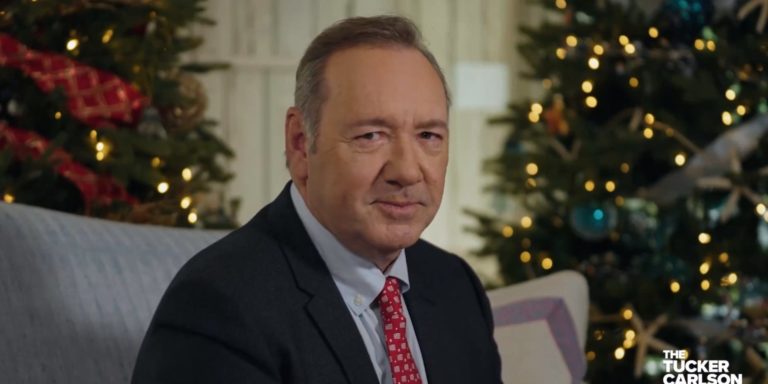
(Luis Cornelio, Headline USA) Tucker Carlson, a podcast host and owner of his own media company, released Saturday an unexpected interview with embattled actor Kevin Spacey. The actor has been embroiled in accusations of sexual misconduct, although he was acquitted. 

The Twitter interview, headlined “A Christmas Eve Election Surprise,” diverged from the previous Carlson interviews as Spacey appeared in the persona of Frank Underwood, the fictional character from the political thriller show House of Cards.

Carlson initiated the interview by discussing the 2024 presidential election: 

“Is there anyone, in this country of 350 million people, who can jump in at this late date and re-scramble the calculus of electoral politics?” Carlson questioned. “Well, there may be someone. In fact, you already know him. You know his face. And the question is will he get in this cycle and that’s my question for you.”

The camera then turned to Spacey. As he began speaking, it became evident that Spacey was portraying Underwood, showcasing the sober South Carolina accent that gained popularity in the since-cancelled Netflix show.

“Well, that’s really a decision for the people, Tucker. It’s not somebody that I think about or what to do,” Spacey said before turning to the camera House of Cards-style and adding, “And Merry Christmas to you, too.”

Spacey continued, “But I’ve always believed that nothing off the table… I think we both agree that we need to get some adults back in the room, so if that means taking on the chief executive role, well that’s a sacrifice I am willing to make for this great nation.” 

A smirking Carlson interjected, exclaiming, “‘Adults in the room,’ I love it. I can see it as a bumper sticker. Is that your campaign slogan?” 

Spacey shared the interview on his YouTube channel with the caption, “Being Frank With Tucker.” 

The interview surprised many, given Spacey’s history of disturbing accusations of sexual misconduct. In 2017, actor Anthony Rapp alleged he was sexually abused by Spacey in 1986 when Rapp was 16 and Spacey was 26. 

Following the accusation, Netflix canceled House of Cards. Spacey was later found not liable for the sexual assault claims. 

In the United Kingdom, Spacey faced four scathing accusations of sexual misconduct, including one from a man who claimed he was drugged by Spacey and woke up to Spacey performing oral sex on him.

Spacey was acquitted of all charges. 

It isn’t immediately clear whether the interview hints at the type of content Carlson intends to showcase for this Tucker Carlson Network, which recently announced paid subscriptions.

However, Carlson has previously interviewed unconventional personalities, including Larry Sinclair, a man who said he had “crack cocaine-fueled sex” with former President Barack Obama. Controversial influencer Andrew Tate was also interviewed by Carlson.

Ramaswamy Rips Colorado Anti-Trump Ruling, Calls Out DeSantis’ Response

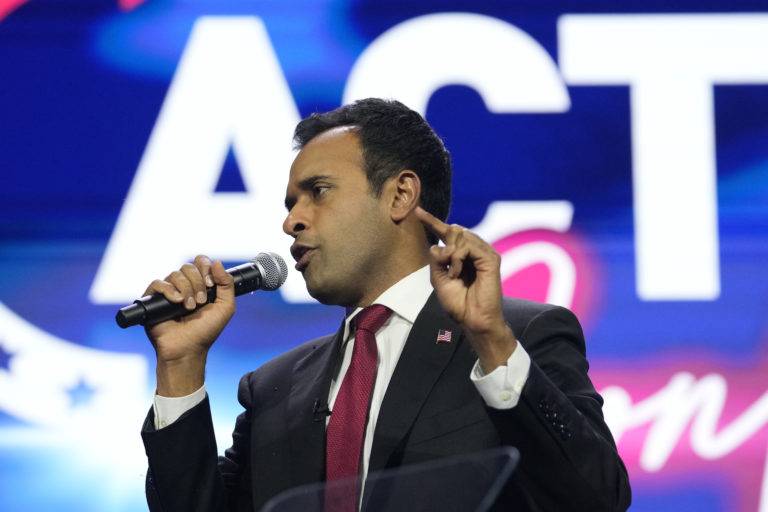
(Luis Cornelio, Headline USA) Republican presidential candidate Vivek Ramaswamy doubled down on his pledge to withdraw from the Colorado GOP ballot following the Colorado Supreme Court’s ruling on former President Donald Trump’s eligibility. 

During a Sunday interview on Fox News’s Sunday Morning Futures, Ramaswamy criticized the Colorado ruling that disqualified Trump from appearing on the ballot due to his alleged involvement in a so-called Jan. 6. insurrection and slammed his Republican opponents for not taking a strong position against the infamous ruling.

“It’s an up constitutional and flagrant violation of the way we conduct elections in this country,” Ramaswamy told host Maria Bartiromo. “This is not the way we do things in the United States of America. We, the people, are the ones who select our leaders, not unelected cabals of Democrat judges in back offices.” 

Following the ruling, Ramaswamy announced on Twitter his protest of the primary ballot in Colorado if Trump is barred from appearing. The ruling stemmed from a lawsuit filed by an anti-Trump voter group.

“If every Republican in the Colorado GOP primary also says, ‘We’re not participating,’ then this blatant act of interference has no impact,” Ramaswamy added, criticizing his Republican opponents for not echoing his stance. 

“I was disappointed to hear radio silence or worse from those other candidates who wanted to still collect their delegates,” he said, likely referring to Florida Gov. Ron DeSantis. 

DeSantis, also seeking the GOP nomination, told Newsmax that protesting the primary would be playing into the left’s strategy to take down Republicans. Reacting to Ramaswamy, DeSantis stated, “I think the case will get overturned by the Supreme Court, but I qualify for all the ballots. I’m competing in all the states and I’m going to accumulate the delegates necessary. That’s the whole name of the game.”

The Colorado Supreme Court based its infamous ruling on the 14th Amendment of the U.S. Constitution, which disqualifies anyone involved in an insurrection from holding public office. 

The judges, all appointed by Democrats, claimed that the Jan. 6 protest constituted an insurrection, contradicting the viewpoints of legal schools who argued that the events of Jan. 6 were far from an insurrection. 

Notably, Trump has neither been charged nor indicted on any insurrection charges.

Surprising Ways N.C. Has Shaped How the World Celebrates Christmas

(Joshua Glawson, Carolina Journal) Christmas is considered one of the most widely celebrated holidays in the world, and one that was clearly shaped by U.S. traditions.

Many people are unaware, though, that North Carolina has also heavily influenced Christmas celebrations worldwide. From decorations to days of observance, North Carolina has remained pivotal for this Christian holiday and secular day of jubilee.

Christmas Decorations

One of the major ways N.C. contributes to Christmas is through decorations, including Christmas trees, Christmas lights and poinsettias. Tar Heel products decorate homes, churches and businesses around the world.

CHRISTMAS TREES

North Carolina is the second-largest producer of Christmas trees in North America, after Oregon, and produces the signature North Carolina Fraser fir often preferred in iconic annual displays. It is estimated that one out of every four Christmas trees in the United States is from North Carolina.

An N.C. Christmas tree—generally, a Fraser fir—has been selected as the official Christmas tree of the White House over a dozen times and counting. With nearly 1,300 growers and over 40,000 acres for the North Carolina Fraser fir, N.C. has a dedicated market for Christmas trees that reaches people all over the country and beyond.

CHRISTMAS LIGHTS

Some of the most famous places to drive at Christmas for outdoor light display spectacles are in N.C. When safe outdoor Christmas lights became popularized around 1927, N.C. began leading the way.

By 1930, Forest City became one of the most prized small towns in the greater Asheville area for Christmas light enthusiasts.

For many, this charming town’s holiday displays remind them of simpler times and qualities of life hearkened in the Christmas movie “It’s a Wonderful Life.”

Also in the Asheville area, the Biltmore Estate is world famous for its Christmas displays, which recently featured in Hallmark’s “A Biltmore Christmas.”

Another popular Christmas light destination is the town of McAdenville, just west of Charlotte. Often referred to as Christmastown, USA, the small town displays over half a million festive lightbulbs and draws in hundreds of thousands of tourists during the Christmas season.

CHRISTMAS POINSETTIAS

As if the trees and lights weren’t enough, N.C. is also the second-largest source of poinsettias in the nation.

The poinsettia is a Mexican and South American shrub that has vibrant red and dark green leaves resembling a Christmas flower, although it does not have actual petals. Some falsely believe the poinsettia is poisonous, but it’s still likely not a good idea to eat the popular holiday plant.

The poinsettia plant was named after South Carolinian Joel Roberts Poinsett, who originally brought the plant from Mexico to the U.S.

In the early-to-mid 1800s, poinsettias were commonly used as interstate roadside decorations between western North Carolina, eastern Tennessee, and down through South Carolina. And, since the plant became popularized in the region, it has remained a Christmas tradition in North Carolina, which then supplies them for many regions of the country.

Christmas Celebrations 

North Carolinians have historically held unique ways of celebrating Christmas, including Moravian Christmas spiced cookies, leaving up decorations until Jan. 6, and celebrating Christmas in July.

OLD CHRISTMAS

Old Christmas, sometimes referred to as Little Christmas or Epiphany, is 12 days after Christmas Day. In fact, the Christmas traditional song “12 Days of Christmas” is about this period between the dates of Dec. 25 and Jan. 6.

Before the state adopted the Gregorian calendar in 1752, many North Carolinians celebrated Christmas around Jan. 6 if they celebrated at all.

This custom of celebrating Christmas on Jan. 6 has continued as a widely-held tradition throughout the state as a way to save money and as a separation of religious practices reserved for the Dec. 25 date for others.

For North Carolinians who moved out of the state, January is also typically a cheaper time to travel to the state to celebrate the holiday with their loved ones.

CHRISTMAS IN JULY 

On July 24 – 25, 1933, “Christmas in July” began at an all-girls camp called Keystone Camp in Brevard, North Carolina.

Although this is not recognized as a date for the traditional religious holiday, the deliberately ironic yet fanciful “Christmas in July” is widely celebrated as a time of fun and levity among friends, colleagues, and loved ones, throughout the world.

Other countries that have caught onto the North Carolina tradition of Christmas in July celebrations include Australia, New Zealand, Canada, South Africa, Denmark, and Brazil.

This Christmas, when you are sitting around the decorated living room with your loved ones, take a look around at the N.C. Christmas tree, the lights, the N.C. poinsettias and the N.C. food, and take the time to remember the amazing influences the state of North Carolina has had on the holiday celebrated around the world.

Feds Raided Giuliani Over Ukraine Suspicions, Unsealed Papers Show

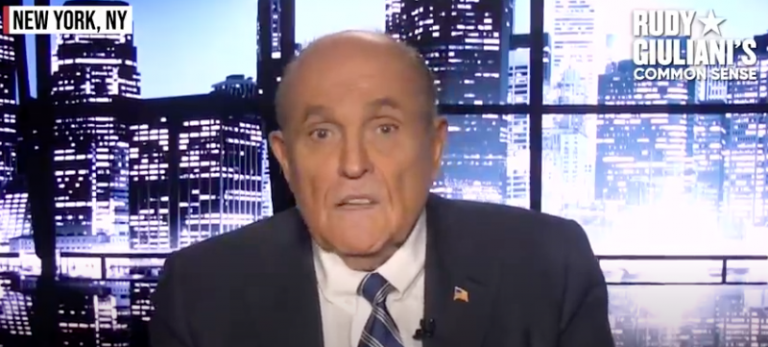
(Headline USA) Federal agents raided Rudy Giuliani’s home and office in 2021 because they suspected the former New York City mayor had sought the removal of the U.S. ambassador to Ukraine partly because of the prospect of a financial reward from a Ukrainian official, according to documents made public Tuesday.

The documents provide new detail on the since-concluded investigation into Giuliani’s dealings with Ukrainian figures in the run up to the 2020 presidential election. Giuliani, a longtime ally of President Donald Trump, was not charged with a crime as a result of the inquiry.

In a search warrant application, federal agents seeking to seize Giuliani’s cell phones, laptop and other electronic devices raised the possibility that he and three other people could be charged with acting as unregistered foreign agents.

The documents, unsealed at the request of The New York Times, confirmed past news reports that federal prosecutors in Manhattan were examining whether Giuliani had gotten anything of value in return for lobbying the Trump administration to fire then-U.S. Ambassador to Ukraine Marie Yovanovitch.

The warrant application said Giuliani had been “incentivized” to lobby for the ambassador’s removal in two ways.

First, it said, the prosecutor general in Ukraine who wanted the ambassador fired, Yuriy Lutsenko, had offered to hire Giuliani to lobby the Trump administration for help recovering Ukrainian assets he believed had been misappropriated by a U.S. investment firm.

“Giuliani was interested in being engaged to do that work, and proposed a retainer with a $200,000 upfront payment,” the warrant application said. “Thus, it appears that Giuliani took steps to cause the firing of the Ambassador to prove … what he could achieve.”

Secondly, the application said, Giuliani wanted Lutsenko’s help launching an investigation that might hurt Trump’s Democratic rival, Joe Biden.

Both Lutsenko and Giuliani have previously denied there was anything inappropriate about their interactions.

Prosecutors noted that the proposed $200,000 retainer was never paid, but federal agents wrote that they believed Giuliani’s worsening finances may have motivated him to consider the deal.

In their search warrant application, they cited bank records and other information showing he’d gone from having about $1.2 million in the bank and $40,000 in credit card debt in January 2018 to about $288,000 in cash and $110,000 credit debt in February 2019.

Giuliani has said he also never lobbied the Trump administration on Lutsenko’s behalf.

In November 2022, federal prosecutors revealed in a letter to a federal judge that Giuliani would not face criminal charges in the investigation.

“Based on information currently available to the Government, criminal charges are not forthcoming,” they wrote. They said the grand jury probe that led to the seizure of Giuliani’s electronic devices had concluded.

Giuliani tweeted soon afterward that it was a “COMPLETE & TOTAL VINDICATION.”

The contours of the investigation were broadly known even before its conclusion, but details of what evidence prosecutors were acting on when they sought to search Giuliani had not been revealed.

The Times wrote to the judge in October seeking copies of the search warrants, warrant applications, supporting affidavits and other documents.

Giuliani consented to releasing the search warrant documents, according to U.S. District Judge J. Paul Oetken’s order unsealing them.

The documents contained numerous redactions, with many names and other identifying information blacked out. Trump’s name appeared in the documents more than two-dozen times. There was no suggestion that investigators suspected Trump of wrongdoing.

Adapted from reporting by the Associated Press

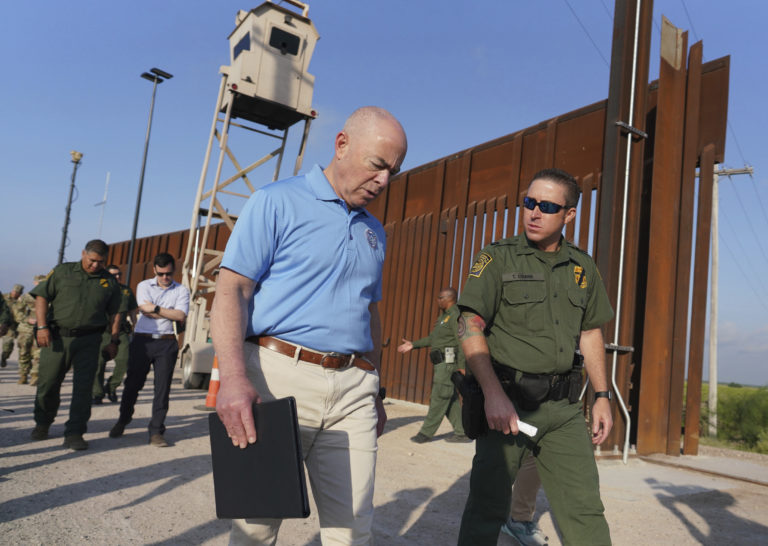
Border Patrol Chiefs: Homeland Isn’t Secure as Agents Pulled from Field

(Bethany Blankley, The Center Square) – As part of the U.S. House Committee on Homeland Security’s investigation into the “dereliction of duty” of U.S. Department of Homeland Security Secretary Alejandro Mayorkas, the committee interviewed U.S. Border Patrol chiefs and recently released transcripts of their testimony.

This is the second report on released transcripts. The first related to chiefs explaining how “illegal aliens are spreading the word the border is open,” incentivizing more illegal activity. 

“As some senior Border Patrol leaders told us, Border Patrol agents signed up for this job because they want to be in the field, helping secure the homeland and protect their families and communities. Under Secretary Mayorkas, however, that mission has been largely taken away from them,” committee chairman U.S. Rep. Mark Green, R-Tenn., said. “Processing and releasing illegal aliens into the interior is not the job they signed up for and it pulls them away from their vital frontline security mission. It goes directly against their law enforcement mandate to enforce consequences against lawbreaking, not reward it.

In the second batch of transcripts, chiefs described how agents are reassigned to process and release “illegal aliens into the country rather than patrolling the border between ports of entry,” which has negatively impacted agent morale and increased security risks. 

The interviews were conducted between April and September, prior to the current surges many sectors are experiencing. Since the interviews were conducted, more agents have been pulled from the field.

El Centro Chief Border Patrol Agent Gregory Bovino said a surge in his sector took agents away from their primary purpose to protect the homeland. “Any time there is a surge of individuals processing care, feeding and care of those individuals takes Border Patrol agents away from their primary job of preventing bad people and bad things from coming across the border,” he said. 

Tucson Sector Chief Border Patrol Agent John Modlin said 38% of his agents were processing and overseeing detention, up from 20% when he testified before the committee in February. He said that has impacted morale. 

“The challenge is when agents are performing duties that they don’t feel are part of the border security mission, that’s where it becomes potentially a morale issue.” 

This primarily involves overseeing detention, which he said “is detrimental to morale. The overwhelming majority of agents want to be out in the field. That’s why they became Border Patrol agents.”  

The chiefs of El Paso and Big Bend sectors said at the time that 12% and 16%, respectively, of their agents were assigned to processing, pulled from the field; “the majority want to be out doing standard Border Patrol work in the field.”

Rio Grande Valley Chief Border Patrol Agent Gloria Chavez explained the impact of surges, when large groups in the hundreds and thousands illegally enter between ports of entry and overwhelm agents. “The logistics, the personnel, the impacts are very similar,” she explained and have a “significant impact” on morale. “Agents, for the most part, want to be on patrol. They want to do the mission of border security. To us, it’s a concern everything that happens between those ports of entry,” she said.

Yuma Sector Deputy Chief Border Patrol Agent Dustin Caudle, who worked in the El Centro Sector in California before coming to Arizona, explained that Yuma has “a significantly higher daily encounter rate” and “capacity issues almost every day.”

Yuma agents “were overwhelmed with transportation duties. They were overwhelmed with processing duties. There were multiple support requests to get detailed personnel in there to assist with that. A large percentage of the Border Patrol agents were pulled off of their line functions and performing administrative or processing duties rather than performing that frontline law enforcement mission,” he said.

 Caudle came to Yuma in August 2022. Prior to his arrival, the sector saw roughly 1,624 encounters a month in 2021; one year later, it had over 20,000 a month. At the time of his interview, he said 20% of his agents were assigned to processing.

“When you have that type of volume, which is overwhelming for any law enforcement agency, it has an impact to operations because operations have to be shifted,” he explained. These include “a humanitarian-type mission in order to protect vulnerable populations, … transport duties, … processing to ensure that overcrowding capacity issues are kept at a minimum.” As a result of massive illegal entries, “operations will suffer, … will be impacted.”

San Diego Sector Chief Border Patrol Agent Aaron Heitke also explained that to alleviate inundated sectors, his agents would process people from full capacity and overwhelmed sectors of El Paso, Rio Grande Valley and Yuma. Modlin said he sent roughly 50 agents at a time to Del Rio and Rio Grande Valley sectors in Texas when they were experiencing surges, which “certainly … affected our level of border security.”

Former Del Rio Sector Chief Border Patrol Agent Jason Owens, who is now the Chief of Border Patrol, explained the process, saying agents are “detailed away from their permanent station. And that, of course, comes at the expense of what they’re supposed to be doing at their station.” Del Rio Sector received up to 75 agents a month from the northern border to help with an influx, he said.

In response, Green said, “It’s little wonder why agents continue to tell anyone who will listen … that morale has cratered, and many are questioning why they should continue on the job. This consequence of Secretary Mayorkas’ reckless disregard for the laws of this country will reverberate for as long as his policies remain in place.