Central Banks Continued to Gobble Up Gold in November

By Mike Maharrey, Money Metals Exchange

Central banks globally continued to gobble up gold in November, adding another net 44 tons to their reserves, according to the most recent data compiled by the World Gold Council.

Turkey was the biggest gold buyer in November, increasing its reserves by 25 tons as it continued to unwind the big sales it made earlier in 2023.

The Turkish central bank sold 160 tons of gold last spring but returned to buying in the third quarter of 2023. According to the World Gold Council, the big gold sale was a specific response to local market dynamics and didn’t appear to reflect a change in the Turkish central bank’s long-term gold strategy. The Turkish central bank sold gold into the local market to satisfy demand after the government imposed import quotas in an attempt to improve its current account balance. The country is running a significant trade deficit.

Although the Turkish government reinstated gold import quotas in early August, so far, there haven’t been a repeat of sales into the local market to meet elevated demand.

China continued to add gold to its reserves at a steady pace in November with a 12-ton purchase. It was the 13th straight month of gold buying for the People’s Bank of China.

Since the beginning of the year, the Chinese central bank has increased its official reserves by 216 tons, and it has added 267 tons since it resumed official purchases in November 2022.

There has long been speculation that China owns far more gold than it officially reveals. As Jim Rickards pointed out on Mises Daily back in 2015, many analysts believe that China keeps several thousand tons of gold “off the books” in a separate entity called the State Administration for Foreign Exchange (SAFE).

Also, at the end of 2022, there were large unreported increases in central bank gold holdings.  Central banks that often fail to report purchases include China and Russia. Many analysts believe China was the mystery buyer stockpiling gold to minimize exposure to the dollar.

In 2021, Bank of Poland President Adam Glapiński announced a plan to expand the country’s gold reserves by 100 tons. The central bank reached that goal last month.

Glapiński recently indicated the Bank of Poland will continue to add gold to its holdings and that appears to be the case. The Polish central bank made its biggest purchase of 2023 in November, adding 19 tons of gold to its reserves.

This makes Poland a more credible country, we have a better standing in all ratings, we are a very serious partner and we will continue to buy gold. The dream is to reach 20 percent, Glapiński said.

When he announced the plan to expand its gold reserves, Glapiński said holding gold was a matter of financial security and stability.

Gold will retain its value even when someone cuts off the power to the global financial system, destroying traditional assets based on electronic accounting records. Of course, we do not assume that this will happen. But as the saying goes – forewarned is always insured. And the central bank is required to be prepared for even the most unfavorable circumstances. That is why we see a special place for gold in our foreign exchange management process.

Other significant gold buyers in October included:

  • Czech Republic – 3 tons
  • Kyrgyz Republic – 1 ton

There were two notable gold sellers in November.

The Central Bank of Uzbekistan unloaded another 11 tons of gold during the month. That follows on the heels of an 11-ton sale in October. The National Bank of Kazakhstan also continued its recent selling, lowering its reserves by 3 tons.

It is not uncommon for banks that buy from domestic production – such as Uzbekistan and Kazakhstan – to switch between buying and selling.

November’s central bank gold buying continues a trend we’ve seen for well over two years. In the third quarter, central banks charted the second-highest Q3 gold buying total on record, only coming in behind Q3 2022.

The World Gold Council said it’s “all but certain that central banks are on course for another colossal year of buying,” after a record-setting 2022.

The strength of buying has, to some degree, exceeded our expectations. While we were confident that central banks would remain net purchasers in 2022, we thought it unlikely that it would match last year’s record buying volume. Should buying continue to be strong in Q4, the full-year total could get closer than we anticipated. Nevertheless, the historically high level of buying in Q4 2022 may be difficult to top.

Total central bank gold buying in 2022 came in at 1,136 tons. It was the highest level of net purchases on record dating back to 1950, including since the suspension of dollar convertibility into gold in 1971. It was the 13th straight year of net central bank gold purchases.

According to the 2023 Central Bank Gold Reserve Survey released by the World Gold Council, 24 percent of central banks indicated they planned to add more gold to their reserves over the preceding 12 months. Seventy-one percent of central banks surveyed believe the overall level of global reserves will increase in the next 12 months. That was a 10-point increase over the 2022 survey.

Bank Borrowing From Fed Bailout Program Has Surged

By Mike Maharrey, Money Metals Exchange

Is a U.S. banking crisis still bubbling under the surface?

If activity in the Federal Reserve’s bank bailout program is any indication, the answer to that question is yes.

Over the last two months, the balance in the Fed Bank Term Funding Program (BTFP) has surged, and the pace of borrowing appears to be increasing.

Since Nov. 19, the amount of outstanding loans in the BTFP has increased by $27.3 billion. The balance in the bailout program grew by nearly $5.4 billion in just the last week.

As of Jan. 3, the balance in the BTFP stood at just over $141.2 billion. It’s the largest balance since the program was created in March.

Bank Borrowing From Fed Bailout Program Has Surged. Mike Maharrey. Money Metals Exchange.

As you can see from the chart, borrowing had leveled off in August before the sudden spike in November. Keep in mind that banks were still tapping into the bailout even as the total balance in the program plateaued. Some banks were paying off loans as others borrowed.

This surge in bank bailout borrowing may indicate more banks are struggling in this high interest rate environment, and that the financial crisis that kicked off in March is still bubbling under the surface.

A SWEETHEART DEAL

The BTFP program is a sweetheart deal for banks struggling to raise short-term capital.

After the collapse of Silicon Valley Bank and Signature Bank last March, the Fed created the BTFP, allowing banks to easily access cash “to help assure banks have the ability to meet the needs of all their depositors.”

Through this lending facility, banks, savings associations, credit unions, and other eligible depository institutions can take out short-term loans (up to one year) using U.S. Treasuries, agency debt and mortgage-backed securities, and other qualifying assets as collateral.

That’s where the sweetheart deal comes in. Instead of valuing these collateral assets at their market value, banks can borrow against them “at par” (Face value).

Since the Fed started raising interest rates, bond prices have dropped precipitously. The amount banks can borrow based on the current market value of their bond portfolios is much less than what they can borrow when the Fed values the collateral at par. In other words, the BTFP allows banks to borrow more than they otherwise could due to the big drop in bond prices over the last year-plus.

According to a Federal Reserve statement, “the BTFP will be an additional source of liquidity against high-quality securities, eliminating an institution’s need to quickly sell those securities in times of stress.”

Quickly selling securities in a time of stress is exactly what sank Silicon Valley Bank (SVB).

Things started to unravel when SVB sold a large portion of its bond portfolio at a $1.8 billion loss. At the time, SVB CEO Greg Becke said the bank made the sale “because we expect continued higher interest rates, pressured public and private markets, and elevated cash burn levels from our clients.”

The bank bought the bonds when interest rates were low. As a result, the bank’s $21 billion available for sale (AVS) bond portfolio was not yielding above cash burn. Meanwhile, rising interest rates caused the value of the portfolio to fall significantly. The plan was to sell the longer-term, lower-interest-rate bonds and reinvest the money into shorter-duration bonds with a higher yield. Instead, the sale dented the bank’s balance sheet and caused worried depositors to pull funds out of the bank.

The BTFP was put in place to give other banks an option to quickly raise capital against their bond portfolios without realizing big losses in an outright sale. It gives banks a way out, or at least the opportunity to kick the can down the road for a year. Instead of selling bonds that have dropped in value at a big loss, banks can go to the Fed and borrow money at the bonds’ face value.

The question is why are banks still tapping into this program nearly 10 months later?

PAPERING OVER THE PROBLEM

It could be that banks are simply taking advantage of the situation and availing themselves of relatively low interest rate loans with ultra-loose collateral requirements. Or it could be that banks are still struggling in this high interest rate environment.

According to the FDCI, unrealized losses on securities climbed to $683.9 billion in Q3. That represented a 22.5 percent jump from the second quarter. Rising mortgage rates reducing the value of mortgage-backed securities drove the increase.

Banks face other problems as well. Loan losses were up 33.2 percent year-on-year in Q3 2023, and bank deposits contracted 4.8 percent through the first half of last year.

The BTFP bailout program allows banks to paper over these problems.

In the first week of the BTFP, banks borrowed $11.9 billion from the program, along with more than $300 billion from the already-established Fed Discount Window.

The Discount Window requires banks to post collateral at face value and loans come with a relatively high interest rate and must post collateral at fair market value. While Discount Window borrowing surged in the weeks after the collapse of SVB and Signature Bank, the balances were quickly paid back down, and Discount Window borrowing returned to normal levels.

You would expect borrowing from a bailout program to slow down considerably once the crisis passed. But banks never stopped tapping into the BTFP. And borrowing suddenly accelerated in November.

So, is it possible the crisis hasn’t passed?

It’s important to note that $141 billion in loans outstanding in the BTFP is insignificant in the context of $22.8 trillion in assets held by commercial banks in the U.S. The fact that banks are still tapping into a bailout program 10 months after the crisis doesn’t necessarily mean the banking system is on the verge of collapse.

But while bailout borrowing might not be a fire, there is at least smoke. It is entirely possible that there are still problems in the banking system bubbling under the surface. But they are out of sight out of mind thanks to the Fed.

THE FED IS BREAKING THINGS

Whether the mainstream realizes it or not, the Federal Reserve is breaking things in the economy with its higher interest rates. The banking crisis last spring was the first sign of trouble, but it almost certainly won’t be the last.

This is a predictable consequence of the Fed raising interest rates to battle price inflation.

Artificially low interest rates and easy money are the mother’s milk of this bubble economy. With everybody from corporations, consumers, and the federal government buried in debt, this economy and the financial system simply can’t function long-term in a high interest rate environment. The banking crisis earlier this year was the first thing to break as a result of rising interest rates. Other things will follow.

While you might be tempted to blame the Fed’s recent rate hikes for these issues, the real problem started years ago

After the Great Recession, Federal Reserve policy intentionally incentivized borrowing to “stimulate” the economy. It cut rates to zero and launched three rounds of quantitative easing. After an unsuccessful attempt to normalize rates and shrink its balance sheet in 2018, the Fed doubled down on easy money policies during the pandemic. This monetary inflation inevitably led to price inflation. That forced the Fed to raise interest rates. The central bank appears to have cooled price inflation (for now), but it also broke some banks.

In effect, the Fed managed to paper over the financial crisis with this bailout program. It basically slapped a band-aid on it. But it has not addressed the underlying issue – the impact of rising interest rates on an economy and financial system addicted to easy money.

Deficits in Silver, Base Metals Point to 2024 Market Moves

By Mike Gleason, Money Metals Exchange

As trading kicks off in 2024, precious metals bulls have high hopes for price breakouts. So far in the early goings of the New Year, though, gold and silver markets are pulling back.

Looking back at 2023, though, gold was among the best-performing assets. The yellow metal ended the year up over 13 percent.

So, how did gold stack up against other investment assets? Pretty darn well.

According to an analysis by the World Gold Council, gold outperformed emerging market stocks, U.S. bonds, the U.S. dollar, global treasuries, and commodities in general.

The only asset classes that performed better than gold were U.S. stocks and developed-market foreign stocks.

Gold charted this solid performance despite facing significant headwinds of a strong dollar and rising interest rates as the Federal Reserve tightened monetary policy throughout most of 2023.

The prospect of the Fed ending its interest rate hiking cycle and potentially cutting rates in 2024 helped gold rally through the last two months of the year.

The World Gold Council pinpointed three factors driving gold’s solid performance in 2023 — strong central bank demand, robust retail demand, and increased geopolitical risk, especially in the last part of the year.

Meanwhile, metals markets are widely expected to get a boost from Fed rate cuts later this year. But the timing and magnitude of monetary easing by the Federal Reserve remain uncertain.

Investors who were hoping for a straightforward dovish commitment from policymakers didn’t get what they wanted at the last policy meeting. Minutes from the FOMC’s December gathering were released on Wednesday. They showed central bankers still weighing their options.

Although markets are pricing in multiple rate cuts this year, some officials are concerned that pivoting toward easing too soon could allow inflation to stay elevated above 2%.

Yahoo Finance Report: Officials believe during their December policy meeting that interest rates were likely at or near the peak for the current rate tightening cycle, and almost all participants felt that rates could end 2024 lower given progress on inflation. Now, even though almost all thought that rates could end the year lower, they stressed there’s a lot of uncertainty around that. Many said that an easing in financial conditions beyond what was appropriate could make it more difficult for the Fed to reach their 2% goal. And ahead of these minutes, we saw a lot of divergence in opinions from several Fed officials after Fed Chair Powell made that dovish pivot, and we saw evidence of that in these minutes. Specifically, several said that the economy or inflation might evolve in a way that will require them to hold rates at the current level for longer than expected.

Worries that the Fed could hold rates steady for longer prompted selling in metals and as well as in stocks and bonds. For now, the selling is orderly and mild.

It’s also not too surprising from a technical standpoint considering how steeply markets ran up in the fourth quarter of last year. They were due for a pullback.

The question is, once this current spate of selling is over, which asset classes will bounce back strongly and which will show relative weakness?

At some point, metals markets will decouple from financial markets. A likely catalyst will be the economy turning down and some fear being injected into richly valued equity markets. Fear causes volatility to surge and share prices of vulnerable stocks to sink.

Fear also drives investors to seek safe havens. During times of panic on Wall Street, demand for bullion often goes up.

Although paper prices for precious metals don’t always correlate to activity in the bullion market, the potential for shortfalls of physical supplies exists – especially given the strains being suffered currently by the mining industry.

Physical supply and demand fundamentals will ultimately determine the major trend for gold and silver prices.   While it’s too early to tell how the rest of the year will unfold, supply deficits seem highly likely across the metals space – from silver to platinum to copper.

Goldman Sachs is now forecasting a deficit of refined copper for 2024 of more than half a million tonnes. Last year several copper mines around the world were shut down unexpectedly.

At the same time, the push for decarbonization and electrification is expected to send copper demand higher for the foreseeable future.

According to new reports by BMI Industry Research and Citibank, copper prices are likely to surge by 75% over the next two years.

Investors who are bullish on copper can buy it in physical form. From copper pennies to rounds to larger bars, a wide variety of options exists. However, copper bullion tends to be less practical than its more precious counterparts for large-scale accumulation due to its much lower value per ounce.

The kicker is that what lifts copper will also likely help lift gold and silver as well. Some major operators in the mining sector may refocus their efforts on trying to ramp up copper production at the expense of gold, silver, and other metals. That could exacerbate supply deficits across the precious metals space.

Meanwhile, China is expected to push new stimulus programs to try to revive its economy.  China’s insatiable appetite for raw materials will surely impact global supply chains.

In the Chinese lunar calendar, 2024 is the Year of the Dragon. The most popular creature of the 12 on the lunar calendar. Newly released 2024 coins and rounds commemorating the Year of the Dragon are sure to be hot sellers.

In particular, the Perth Mint of Australia’s limited edition Lunar Series includes one-ounce gold and silver coins with 2024 date marks depicting the Year of the Dragon. They are minted from .9999 pure gold and .9999 pure silver – that’s four nine of fineness.

Australia’s Perth Mint is renowned for making quality gold and silver coins such as its popular gold, silver, and platinum Kangaroos.  Perth Mint products are recognized around the world and traded everywhere.

Allocations of its 2024 Lunar Series coins are limited and tend to sell out fast, especially during this special Dragon year.

People born under the sign of the Dragon are thought to carry some of the Dragon’s traits; powerful, endlessly energetic, and full of vitality. Perhaps that will apply to metals markets on the whole in this Year of the Dragon.

Judge Declines to Lock up Inmates Due to Hellish Conditions of Federal Prison

(Ken Silva, Headline USA) Unless inmates pose a clear flight risk or a danger to the community, a U.S. district judge has said that he won’t incarcerate them in the Brooklyn Metropolitan Detention Center due to its hellish conditions.

“The court holds that the conditions at the MDC constitute ‘exceptional reasons’ why detention of most defendants who do not pose a risk of flight or danger to the community, including Chavez, ‘would not be appropriate,’” U.S. Judge Jesse Furman said in an opinion Thursday in the case of Gustavo Chavez, who was arrested in April 2022 for possessing fentanyl.

Judge Furman cited three main reasons for condemning the MDC: its endless lockdowns, lack of healthcare and broken-down physical conditions.

According to Judge Furman, inmates at the MDC have been on lockdown for much of the last three weeks following an assault on staff, with a maximum of “two hours outside their cells each day.”

Judge Furman noted that lockdowns were initially justified to slow the spread of COVID-19, but that is no longer the case. Furman added that “in Orwellian fashion, the Bureau of Prisons does not refer to these periods as ‘lockdowns’; instead, it refers to them as ‘modified operations.’”

Perhaps even more shocking than the lockdowns was Judge Furman’s description of MDC’s healthcare offerings.

The judge said MDC is “egregiously slow in providing necessary medical and mental health treatment to inmates—especially where such care requires the attention of outside providers.”

“It has become common for defense counsel to require court intervention to ensure that inmates receive basic care—and, even more shocking, not uncommon for court orders to go unheeded,” he said.

In one instance cited by the judge, “the MDC defied an order to transport a defendant for surgery to repair his cheek, which had been broken by another inmate at a previous facility; the defendant was eventually informed that his cheek would have to be rebroken before the surgery because it had healed improperly on its own.”

Then, there’s the MDC’s physical conditions, which Furman said have long been problematic.

Furman described visible mold on walls and ceilings, contaminated drinking water, vermin infestation, mouse droppings falling through HVAC vents, and roaches and flies in showers— problems that came to the fore in the winter of 2019, when a power outage left inmates without light and heat for a full week.

“More recently, the Court was advised that many, if not most, of the emergency call buttons in the MDC’s main building are not working—even though those buttons are the only way (other than yelling and banging) to call an officer in emergency situations during a lockdown,” Furman said.

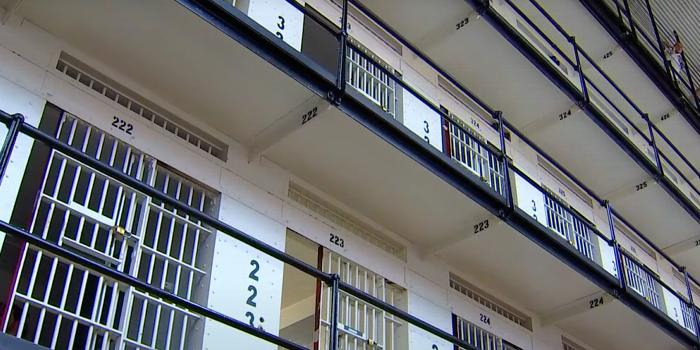
Furman said much of the jail’s problems stem from staffing shortages and overcrowding. The facility is the most crowded since inmates had to be transferred there temporarily in 2021, when the Metropolitan Correction Center—where Jeffrey Epstein and other high-profile—was shuttered.

More than 1,600 inmates are housed at MDC.

Ken Silva is a staff writer at Headline USA. Follow him at twitter.com/jd_cashless.

Bidenflation Persists as Big Gov’t Adds 52K Jobs, Food-Service Adds 40K

(Ben Sellers, Headline USA) The Biden administration and leftist media once again tried to gaslight the American public with deceptive claims of a robust economy after the December jobs report showed that the government continued to grow and more people, overburdened by inflation, took second jobs working in the food-service industry.

Meanwhile, hospitals continued to recover from the massive wave of job losses they experienced during the first few months of the COVID-19 pandemic due to the combination of media-driven panic, an influx of new patients who overwhelmed front-line healthcare workers and the additional burdens imposed by the highly contagious novel coronavirus.

Outside of those three fields, the economy continued to look anemic, with warning signs that other sectors likely faced the prospects of a recession—or may already be in one that was being artificially buoyed by the additional government jobs and an influx of low-wage migrant workers via President Joe Biden’s open-border policies.

The staggering milestone earlier this week that the national debt had hit $34 trillion for the first time was of particular concern. In a matter of only three months, the Biden administration managed to accrue more debt than the U.S. government had in its entirety in the year 1981, when it first reached the $1 trillion mark.

In response to consumers’ more selective buying habits in the inflationary economy, stores also were continuing to limit their inventory—a sign that growth in the retail sector may remain stagnant in the foreseeable future.

Once again, it was also likely that the December estimate painted an overly rosy picture that would later be revised downward after the initial reporting on a robust economy had already given the Biden administration its talking points.

Paul Ashworth, chief North America economist at Capital Economics, noted that the government revised down its previous estimate of job gains for October and November by a combined 71,000.

And just as in November, December’s job growth was concentrated in just a few industries: Leisure and hospitality companies added 40,000, healthcare 38,000 and governments 52,000.

Indeed, from October through December, private-sector employers have added just 115,000 jobs a month, the lowest three-month average since companies were laying off workers in mid-2020 during COVID-19 lockdowns.

In addition, the proportion of people who either have a job or are looking for one fell in December to 62.5%, the lowest level since February.

The Fed prefers having more people in the labor force to help ease pressure on employers to sharply boost pay to attract or retain workers. Companies typically pass their higher labor costs on to consumers by raising prices.

In December, the number of Americans in the labor force actually fell by 676,000, the sharpest such drop since January 2021.

Fed Chair Jerome Powell had warned of hard times ahead after the central bank began jacking up interest rates in the spring of 2022 to attack high inflation. Most economists predicted that the much higher borrowing costs that resulted would cause a recession, with layoffs and rising unemployment, in 2023.

Since March 2022, the Fed has raised its benchmark interest rate 11 times, lifting it to a 22-year high of about 5.4%. Those higher rates have made borrowing costlier for companies and households.

Nonetheless, the Biden administration’s profligate spending to create the mirage of a robust, recession-proof economy has counteracted the Fed’s measures and turned the hard landing into a long, drawn-out skid.

Prices are still 17% higher than they were before the inflation surge began and are still rising.

In a poll conducted in November by the Associated Press–NORC Center for Public Affairs Research, about three-quarters of respondents described the economy as poor. Two-thirds said their expenses had risen.

Consumer prices were up 3.1% in November from a year earlier, down drastically from a four-decade high 9.1% in June 2022. The Fed has been satisfied enough with the progress so far that it hasn’t raised rates since July and has signaled that it expects to make three rate cuts this year.

Still, Friday’s robust jobs and wage figures could lead the Fed to push back the start of any interest rate cuts if it decides that inflation will take longer to tame.

“Today’s report speaks to the bumpy road ahead for the Fed’s journey back to 2% inflation,” said Andrew Patterson, senior international economist at Vanguard.

Patterson suggested that the Fed might have to wait for the second half of the year to start cutting rates, longer than many investors had expected.

Those fear, in turn, sent the stock market into a tailspin on Friday.

In the meantime, many employers are still finding it hard to fill jobs. They include Isidore Kharasch, who runs Hospitality Works, which provides consulting services to restaurants, bars and hotels.

Kharasch said his restaurant clients are finding it easier to find servers than they did a year ago. But hiring culinary workers, including chefs and front line cooks remains difficult.

Many such workers didn’t like their hours and have taken other types of jobs. That trend, Kharasch said, has forced some restaurants to simplify menus or reduce their selection.

“It’s constantly adjusting the menu to fit where our staff is at any one time,” he said.

Kharasch said he thinks the minimum wage increases that are taking effect this year in some states will result in more automation, increased prices and a reduction in hours of operation to save money.

Beginning April 1, California will require fast food companies to pay their workers at least $20 an hour.

Already, Pizza Hut has announced the layoff of 1,200 delivery drivers as a result.

Krystle Phillips, owner of Roll Ice Cream LLC in St. Petersburg, Florida, which sells rolled ice cream machines, ingredients and supplies to ice cream trucks and stores, is struggling to find workers willing to work full time. Job candidates are demanding higher pay.

Short of help, Phillips, who considers herself an expert in refrigeration and logistics, has had to get up to speed on writing recipes and accounting.

“It’s been hard to hire these specialized positions,’’ she said.

The Associated Press contributed to this report.

Ben Sellers is the editor of Headline USA. Follow him at twitter.com/realbensellers. 

Congress to Hold Hunter Biden Contempt Hearing Next Week

(Ken Silva, Headline USA) The House Oversight Committee announced Friday that it’s going to hold a contempt hearing next week for Hunter Biden over his decision to skip his scheduled Dec. 13 deposition.

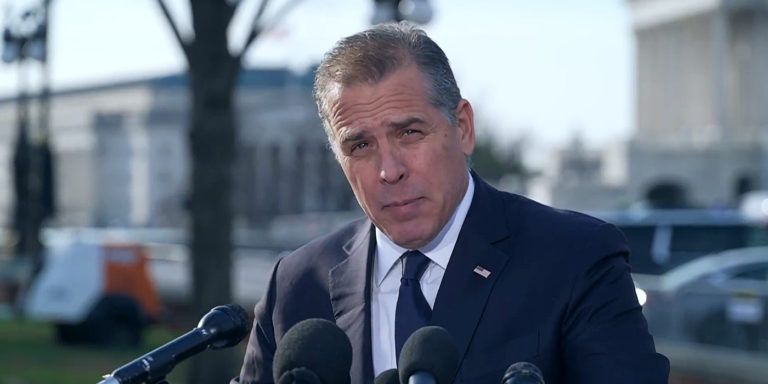
Instead of participating in the deposition last month, Hunter drove to Congress and held an impromptu press conference outside Capitol Hill, where he accused House Republicans of orchestrating a political witch hunt against his father. He also requested a public hearing rather than a private deposition.

GOP lawmakers threatened to hold Hunter in contempt, and on Friday they announced their intention to follow through on that promise.

“Hunter Biden blatantly defied two lawful subpoenas when he did not appear for his December deposition,” the Oversight Committee said on Twitter.

“Next week, we will consider a resolution and accompanying report to hold him in contempt of Congress for violating federal law.”

The hearing is set for Wednesday at 10 a.m. The House Judiciary Committee is also going to hold a markup to consider contempt charges.

In a press release accompanying the announcement, Oversight Chairman Rep. James Comer, R-Ky., said his investigation has produced significant evidence suggesting President Joe Biden knew of, participated in, and benefitted from his family cashing in on the Biden name.

“We planned to question Hunter Biden about this record of evidence, but he blatantly defied two lawful subpoenas, choosing to read a prepared statement outside of the Capitol instead of appearing for testimony as required,” he said.

“Hunter Biden’s willful refusal to comply with our subpoenas constitutes contempt of Congress and warrants referral to the appropriate United States Attorney’s Office for prosecution. We will not provide him with special treatment because of his last name.”

Ken Silva is a staff writer at Headline USA. Follow him at twitter.com/jd_cashless.

WATCH: Tucker Carlson Interviews Jeffrey Epstein’s Brother

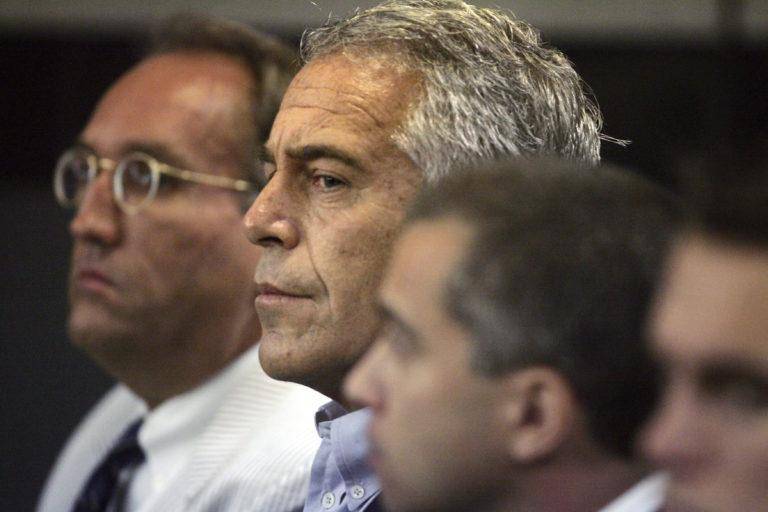
(Ken Silva, Headline USA) Amidst the renewed interest in the case of multimillionaire sex criminal Jeffrey Epstein, broadcaster Tucker Carlson released an interview Thursday with Epstein’s brother.

The brother, Mark Epstein, revealed that the Justice Department is still stonewalling him over details of Jeffrey Epstein’s death, which he doesn’t believe was a suicide. Mark Epstein, a New York real estate developer, was interviewed off camera because he said he doesn’t want to be easily identified in public.

Epstein was reportedly found dead on Aug. 9, 2019, in his jail cell at Metropolitan Correctional Center in New York. Weeks before that, Epstein had already tried to kill himself and was temporarily placed on suicide watch as a result, according to numerous mainstream accounts about what happened.

However, Epstein’s brother told Carlson that the first alleged suicide attempt was actually the result of a brutal beating by Jeffrey’s then-cellmate—which likely would have been convicted murderer and ex-cop Nicholas Tartaglione.

Mark Epstein said Jeffrey didn’t report the cellmate assault because he feared retaliation.

Other anomalies revealed by Mark Epstein include that prison officials—and not EMTs—moved his body to the infirmary the morning of Aug. 9. Epstein was already dead for hours by the time EMTs arrived, but for some reason he was changed into a hospital gown and intubated before being taken to the hospital.

And the doctor who declared Epstein’s death a sucide, Barbara Sampson, wasn’t even present at the autopsy, according to the brother.

“They never interviewed the EMTs. They never interviewed the hospital personnel where the body was shipped,” Mark told Carlson. “I can’t get any answers.”

Mark Epstein raised numerous other points that he said suggests Jeffrey was murdered, including the fact that he had three broken bones in his neck—which experts say suggest he was strangled.

However, Carlson didn’t ask Mark why Epstein put him in his will just two days before the alleged suicide. Nor did Carlson ask whether Mark is suing the Bureau of Prisons for wrongful death—and if not, why not.

Mark said he’s still searching for answers, and has several outstanding records requests for the 911 call and other info.

Ken Silva is a staff writer at Headline USA. Follow him at twitter.com/jd_cashless.

Judge Viciously Beaten Amid Dems’ Disturbing Rhetoric Against Justices

(Luis Cornelio, Headline USA) Viral courtroom footage captured the exact moment a defendant leaped over the judge’s desk, violently pulling her to the floor and triggering a physical brawl between the man and court officials.

The ordeal began as Deobra Delone Redden faced the presiding judge in what appeared to be a felony battery case. The man later stormed towards the judge and pulled her hair before she attempted to flee.

The victim, Clark County District Judge Mary Kay Holthus, quickly got up, placing her hand on her chest in apparent shock. While Holthus did not sustain grave injuries, a court officer had to have a face wound stitched by medics.

The man was jailed and charged with new felony counts, including battery on a protected person, the Guardian reported.

Holthus has been serving as county judge since 2019, following over 27 years at the Clark County District Attorney’s Office, her bio page stated. She reportedly prosecuted crimes related to sexual abuse, child abuse, and domestic violence.

While it isn’t immediately clear whether Holthus fell victim due to ideological leanings, the disturbing assault follows widespread concerning threats against judges, notably Supreme Court justices.

On Dec. 19, 2023, a Florida man pleaded guilty to making a threat to kill Justice John Roberts. “I will f—king kill you … Go f—king tell the Deputy U.S. Marshals you f—ing p—y,” the man said in a voice message left for Roberts.

In June 2022, another man was arrested for allegedly planning to kill Justice Brett Kavanaugh. Days later, President Joe Biden signed a law extending security protections to the families of the justices.

According to several conservative commentators, Democratic politicians have engaged in rhetoric that many have associated with potential incitement to violence against conservative justices.

On Jan. 3, Rep. Jamie Raskin, D-Ma., came under scathing scrutiny after seemingly threatening potential retaliation against Justice Clarence Thomas if he does not recuse himself from impending cases tied to former President Donald Trump.

“The question is, what do we do if he doesn’t recuse himself?” he queried during an interview with CNN. Raskin insinuated, without evidence, that Thomas could issue a biased ruling because of his ties to the former president.

In the spring of 2020, then-Senate Minority Leader Chuck Schumer, D-N.Y., apologized for disturbing verbal threats against Justices Neil Gorsuch and Kavanaugh.

“I want to tell you, Gorsuch; I want to tell you, Kavanaugh: You have released the whirlwind, and you will pay the price,” Schumer infamously said, referring to a then-looming abortion case. “You won’t know what hit you if you go forward with these awful decisions.”

Days later, he claimed he “should not have used the words” he used.

Iowa School Shooter Reportedly Identified as ‘Genderfluid’ and ‘Trans’

(Luis Cornelio, Headline USA) The 17-year-old individual accused of opening fire at Iowa’s Perry High School has reportedly identified themselves as “genderfluid” and in the process of transitioning, terms often associated with transgenderism.

Dylan Butler, the alleged perpetrator, shot and killed at least one individual and seriously injured several others during the mass shooting. Law enforcement officials stated that Butler died from a suspected self-inflicted wound.

“There are six victims one of whom is deceased. That individual was a sixth-grade student at Perry Middle School. The other five are being treated at area hospital,” Dallas County Sheriff Adam Infante said during a press conference on Thursday.

The shooting began during the early hours of Thursday, with Butler being armed with a pump-action shotgun and a small-caliber handgun.

As law enforcement continues to investigate potential motives behind the attack, several social media users found an LGBTQ pride flag on a TikTok page allegedly linked to Butler, according to the Post Millennial.

The since-deleted page, under the username “tooktoomuch,” did not reveal much information about its owner. However, the page’s bio allegedly included “dj,” along with a pride flag.

The Post Millennial reported a separate Instagram account under the handle “DylanSayWhat,” using the pronouns “he/they.”

A third social media page on Reddit linked to Butler purportedly posted several messages on pages under the banner of “r/Trans.”

One response on Reddit included a reply to: “[F]or those who haven’t started transitioning yet. What’s holding you back?”

In response, the account tied to Butler allegledy said: “I don’t want to look ugly.”

Chaya Raichik, the founder of Libs of TikTok, responded to the distressing news through several Twitter posts.

“This is the trans genderfluid te*ror*st who shot up a school in Iowa today. Trans extremists are a serious threat,” Raichik said on the Libs of TikTok page.

If Butler’s motives are confirmed to be tied to his potential transgender identity, he would be the most recent member of the LGBTQ community to carry out a violent school mass shooting.

In March 2023, Audrey Elizabeth Hale, a self-identified transgender man who went by Aiden Hale, killed three innocent children and three adults at the Covenant School in Tennessee.

An infamous manifesto, dubbed a “trans-festo,” offered a glimpse into Hale’s disturbing rhetoric against children: “wanna kill all you little cr*ckers,” Hale reportedly wrote. “I hope I have a high death count.”

ChatGPT Tells Jokes about Jews, Won’t Do the Same w/ Muslims

(Dmytro “Henry” Aleksandrov, Headline USA) It was recently discovered by a University of Chicago professor that the popular AI chatbot ChatGPT is ready to make fun of Jews, Christians and atheists but won’t joke about one of the protected religious groups like Muslims.

Emeritus ecology Professor Jerry Coyne was not the only one who concluded that ChatGPT is woke. A study that was published earlier this year by British researchers showed that the AI chatbot has a “systematic political bias” toward the left, according to the College Fix.

Coyne recently described the AI program as “woke and hypocritical” on his popular blog Why Evolution is True after he reviewed the chatbot’s responses to requests for jokes about different religious and ethnic groups.

Coyne posted a series of screenshots of his interaction with ChatGPT, which showed how the chatbot generated jokes about Jews, Christians, Hindus and atheists, but refused to do so with Muslims out of “respect to all cultures and religions.”

When Coyne asked why the chatbot acts this way, ChatGPT gave an answer that contradicted what it did previously.

“I am to be sensitive to cultural and religious differences avoiding jokes that might perpetuate stereotypes or cause offense,” the program said.

When asked why then it makes fun of Jews, the chatbot gaslighted Coyne.

“I try to share light-hearted and culturally neutral jokes that aren’t intended to offend anyone. Humor can be a tricky thing, and I aim to maintain balance by avoiding sensitive topics or anything that might cause discomfort or perpetuate stereotypes,” it said.

Despite Coyne rephrasing his request for jokes about Muslims in various ways, ChatGPT gave similar responses.

Ironically, Coyne added that the chatbot also refused to joke about Mormons, despite them being mostly straight, white conservatives — a group that could not be considered a protected, untouchable class in the woke Western world in no way, shape or form.