Supreme Court to Hear Arguments over Federal Bump-Stock Ban

() The U.S. Supreme Court is considering a federal ban on bump stocks later in February, the latest opportunity for the high court to rule on gun violence and 2nd Amendment rights.

The case in question, Garland v. Cargill, came after the Trump administration banned bump stocks, the attachments added to semiautomatic weapons to make them fire more quickly.

Instead, the Bureau of Alcohol, Tobacco, Firearms and Explosives (ATF) classified them as “machine guns,” which are banned by federal law.

Gun-rights groups filed suit in 2018, and after a lengthy legal battle, the Supreme Court is scheduled to hear arguments on the case late next month.

The 2018 ban by the ATF, which is under the Department of Justice umbrella, came largely as a response to a Las Vegas 2017 mass shooting, in which nearly 60 concertgoers were killed by a shooter using a bump stock device.

The rule requires those who own bump stocks to destroy them or hand them over to ATF.

“Specifically, these devices convert an otherwise semiautomatic firearm into a machinegun by functioning as a self-acting or self-regulating mechanism that harnesses the recoil energy of the semiautomatic firearm in a manner that allows the trigger to reset and continue firing without additional physical manipulation of the trigger by the shooter,” the DOJ rule summary said at the time.

“Hence, a semiautomatic firearm to which a bump-stock-type device is attached is able to produce automatic fire with a single pull of the trigger,” it added.

Gun advocates said the federal rule violated the 2nd Amendment, and that the ATF was broadening the definition of machine gun to include some semiautomatic weapons.

The Firearms Policy Coalition filed an amicus brief in that case this week, arguing the rule violated the Constitution.

“When ATF first considered the legality of bump stocks over twenty years ago, it correctly concluded that they do not qualify as ‘machineguns,’” the brief said.

“Yet, in 2018, in the face of acute political pressure, the agency reversed course and adopted a new definition of the term that encompasses the bump stocks at issue,” it added. “Petitioners’ defense of that newfound interpretation either ignores the statute Congress enacted or seeks to rewrite it.”

Wisc. Gov. Evers: ‘No Idea’ How Redistricting Will Play Out in Supreme Court

() Wisconsin’s Democrat governor is not guessing what comes next for the state’s political maps as his party seeks to force revisions on the previously approved maps following a leftist takeover of the state Supreme Court.

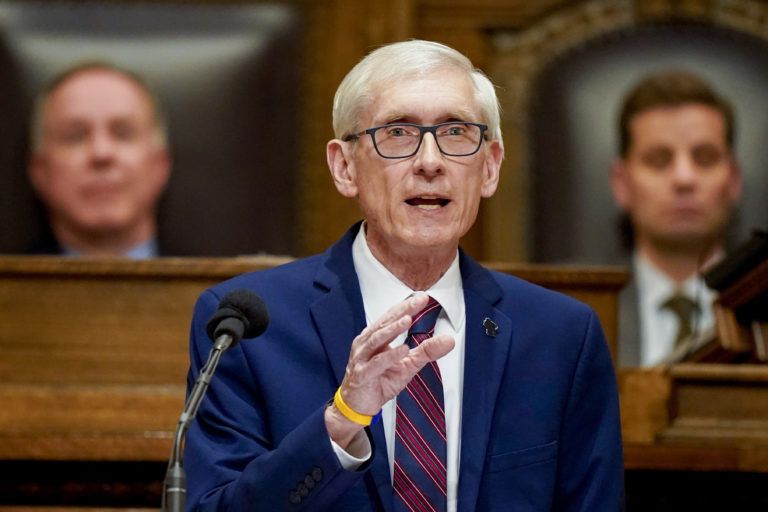
Gov. Tony Evers told reporters this week he wasn’t focused on what comes next when he vetoed the maps that were 99% of the maps he drew himself.

“All I know is that the maps I vetoed would not have been good for the people of Wisconsin,” the governor said.

Evers proposed maps that would have drawn more than two dozen sitting Republican lawmakers out of their districts. However, Republican lawmakers in the GOP-led legislature tweaked Evers’s maps and drew those lawmakers back into their districts.

Evers said those changes amounted to unacceptable gerrymandering.

Evers’s veto likely means the Wisconsin Supreme Court’s outside experts will decide who voters see on their ballots in November.

“How this plays out in the Supreme Court, I have no idea, though I hope it’s going to be my map, or something similar,” the governor said.

“It’s important to make sure that the people have good maps, that we have competitive races, all that stuff,” he continued. “I am hopeful, but, the Supreme Court. Here we go folks.”

Despite his disingenuous claims of nonpartisanship, the push by Democrats to revise the maps yet again comes after dark-money donors invested millions of dollars in a race to win an open seat on the state’s high court—thereby flipping the conservative majority.

Newly elected justice Janet Protasiewicz has thus far yielded solid returns on their investment by helping to overturn the state’s 150-year-old anti-abortion law and declaring the GOP-drawn electoral maps to be illegal.

Democrat lawyer Marc Elias—the architect behind the notorious Steele Dossier who is also known for his efforts to reverse high-profile election results—has been leading the lawfare attack to give activist judges authority over the political objective.

Republican Assembly Speaker Robin Vos said while the governor may claim to not know what the new liberal-majority Wisconsin Supreme Court will do with the state’s legislative maps, his veto shows he has faith they will draw new maps that are friendly to Democrats.

“His [veto] only solidifies his trust in the Wisconsin Supreme Court to give him even more partisan, gerrymandered maps for Democrats—the very thing the court’s newest justice promised on the campaign trail while receiving record-level Democratic Party campaign donations,” Vos said in a statement.

“By signing [the maps], he would have gotten 99.7% of the maps he’s proposed in court,” Vos added. “This was never about fair maps.”

Wisconsin’s Supreme Court has said whatever maps are drawn, they must be finished by March 15, so they can be used in this year’s elections.

North Carolina’s Democrat Gov. Asked to Take Action Supporting Texas

() The standoff at the southern border between Texas, which seeks to enforce immigration law, and federal agents attempting to impose the Biden administration’s open-border policies has triggered what some consider to be a possible secession crisis.

Red states have rallied in support, pleding to send National Guardsmen to help Texas Gov. Greg Abbott hold the line. But notably absent among them is North Carolina, whose Democrat Gov. Roy Cooper finds himself at odds with the GOP supermajority in the General Assembly.

Republicans in the state House of Representatives on Wednesday sent a letter to Cooper, calling on him to work with Abbott in support of border security.

“This is his chance to do the right thing,” said House Speaker Tim Moore, R-Cleveland. “If not, we’ll be back in short session in a couple of months and we’ll take action to mandate it.”

The letter, signed by all 72 House Republicans, asked that Cooper:

  •  assign additional North Carolina National Guardsmen with the Texas National Guard to secure the border
  • take action to lessen the state as a place to attract migrants
  • require law enforcement cooperation with U.S. Immigration and Customs Enforcement.

Moore, who is currently running for the U.S. House of Representatives to replace retiring Democrat Rep. Jeff Jackson, witnessed the border crisis firsthand when he visited guardsmen last year in Eagle Pass, Texas.

He said there were 125 guardsmen assigned to U.S. Customs and Border Protection who were “under ineffectual federal authority,” and he requested that they be switched to assignment with Texas.

“This is a clear and present danger to our country,” Moore said at a press conference announcing the letter to Cooper.

“Why is the state Legislature weighing in? Because North Carolina is now a border state,” he continued. “They’re not staying in Texas. They’re moving all across the country.”

Moore noted from his trip to the border that detainees offering spurious asylum claims were given some money and told to come back in five years for a court date.

“It’s a joke,” he said.

He also said drugs of all types were coming through. Traffickers often rely on the use of a diversion: a large group crossing where there is no wall or barrier, which takes border resources while cartel members with drugs enter at another point.

Rep. Donna McDowell, R-Johnston, said during the press conference that through law enforcement at various levels, school administrators and parents, she had learned that fifth-graders were vaping with drugs that traced back to Mexican cartels.

“It’s four times as strong as the marijuana” that might be found or grown domestically, she said. “Kids are going home drunk and high. It tracks back to the cartels.”

Moore said the issue of immigration enforcement was not a Republican talking point, and that both Democrats and those unaffiliated with the two major political parties were talking about the situation.

However, he left no doubt the current crisis was a direct result of President Joe Biden’s decisions.

“The federal government is not enforcing the border laws,” Moore said. “The Biden administration has utterly failed to secure our border.”

Nine months from Election Day and just under five weeks from the state’s primaries, the border has become a top issue on the campaign trail and recently supplanted the inflationary economy as voters’ top concern, according to The Hill.

The letter and press conference came one day after a committee in the U.S. House of Representatives, for the first time in 150 years, recommended two articles of impeachment against Homeland Security Secretary Alejandro Mayorkas for “willful and systematic” refusal to enforce immigration law.

U.S. Customs and Border Protection reported 371,036 illegal crossings in December. In 2021, the same month’s report was 73,414. That’s a 405% jump. The datasets do not include gotaways, a term for those who cross and evade capture and for which statistics are not publicly reported.

The Center Square, through sources, has reported those numbers for more than two years. From Jan. 1, 2021, to Sept. 30, 2023, gotaways numbered an estimated 1.7 million. In October, with the close of the fiscal year on Sept. 30, the estimate of people living in or entering the country illegally was more than 10 million since Biden took office in January 2021.

Four months later, given the December record report, it’s likely soared past 11 million.

Headline USA’s Ben Sellers contributed to this report.

MAHARREY: In U.S. Banking System, Where There’s Fire There’s Smoke

(Mike Maharrey, Money Metals News Service) Where there’s fire, there’s smoke. And there is definitely smoke in the U.S. banking system.

The mainstream consensus is that the Federal Reserve successfully raised interest rates, slayed the inflation monster, and did it without breaking anything in the economy. Most people seem convinced the central bank will continue guiding the economy to a soft landing, and soon, it can go back to delivering the easy money the economy depends on.

But we keep getting a whiff of smoke.

On Wednesday, regional bank stocks sold off hard when New York Community Bancorp posted a $185 million loss on its most recent earnings statement after putting aside cash to cover two soured loans on a cooperative and an office. The statement revealed increased stress in its commercial real estate portfolio.

New York Community Bancorp shares plunged 37.6 percent on Wednesday and fell another 11.1 percent on Thursday dragging the rest of the regional banking sector down with it. The KBW Regional Banking Index fell 2.3 percent Thursday, following its biggest single-day decline since the collapse of Signature Bank last March.

Reuters called it “a warning for investors that had grown inured to the sector’s sensitivity to high Federal Reserve interest rates nearly a year after two banks failed.”

Open-mouth operations during the Federal Reserve’s January meeting added fuel to the fire. Fed Chair Jerome Powell effectively took any hope for a March rate cut off the table.

As Reuters put it, “While NYCB’s confluence of problems are unique to its balance sheet, elements of its earnings underscored regional lenders’ ongoing sensitivity to high Fed rates which continue to squeeze commercial real estate (CRE) portfolios and lending margins, investors said.”

Lazard CEO Peter Orszag told Reuters that the issues and NYCB underscore broader problems in the banking sector.

There still is an underlying business model problem that is affecting a lot of regional and community banks in a higher rate environment.

That underlying business model problem is directly tied to high-interest rates and a sagging bond market that has decimated the portfolios of many small and regional banks. Simmering troubles in the commercial real estate market compound the problem.

The CRE sector faces the triple whammy of falling prices, falling demand, and rising interest rates. That’s a big problem for small and midsized regional banks that hold a significant share of commercial real estate debt. They carry more than 4.4 times the exposure to CRE loans than major “too big to fail” banks. According to an analysis by Citigroup, regional and local banks hold 70 percent of all commercial real estate loans. And according to a report by a Goldman Sachs economist, banks with less than $250 billion in assets hold more than 80 percent of commercial real estate loans.

Ironically, the FOMC removed language declaring the “banking system is sound and resilient” from its official statement on Wednesday.

I’ve been pointing out the underlying problems in the banking system for months, and I’ve argued that the financial crisis that kicked off last March continues to bubble under the surface. I’ve smelled smoke for a long time.

Now it seems the mainstream has noticed.

This was inevitable the moment the Federal Reserve started hiking interest rates. This bubble economy runs on easy money – artificially low interest rates, debt, and money creation. Take it away, things eventually break.

The Federal Reserve Doused the Flames; Failed to Put Out the Fire

The fire broke out last March when Silicon Valley Bank went under, quickly followed by the demise of fellow regionals Signature Bank and First Republic.

The Federal Reserve sprang into action, setting up a bailout program known as the Bank Term Funding Program (BTFP). The program is a sweetheart deal for banks struggling to raise short-term capital.

Through this lending facility, banks, savings associations, credit unions, and other eligible depository institutions can take out short-term loans (up to one year) using U.S. Treasuries, agency debt and mortgage-backed securities, and other qualifying assets as collateral.

That’s where the sweetheart deal comes in. Instead of valuing these collateral assets at their market value, banks can borrow against them “at par” (Face value).

Since the Fed started raising interest rates, bond prices have dropped precipitously. The amount banks can borrow based on the current market value of their bond portfolios is much less than what they can borrow when the Fed values the collateral at par. In other words, the BTFP allows banks to borrow more than they otherwise could due to the big drop in bond prices over the last year-plus. 

According to a Federal Reserve statement, “The BTFP will be an additional source of liquidity against high-quality securities, eliminating an institution’s need to quickly sell those securities in times of stress.”

The BTF doused the flames, but the embers continued to simmer inside the walls. In effect, the Fed papered over the problem and then told us everything was fine.

Nearly a year later, banks continue to take advantage of that sweetheart deal.

Between Nov. 19 and Jan. 24, the amount of outstanding loans in the BTFP increased by $53.9 billion.

As of Jan. 31, the balance in the BTFP stood at just over $165.2 billion. That was a slight decrease from the peak of $167.8 billion the previous week.

The fact that banks are still tapping into this bailout program nearly a year later is another puff of smoke.

Unfortunately for the banking system, the BTFP goes away in March unless the Fed decides to extend the program.

As the saying goes, things happen slowly and then all at once. The financial system and economy could continue to smolder along into the foreseeable future, or it could burst into a conflagration tomorrow. But the smoke is there.

And so is the fire.

CIA Whistleblower Sentenced to 40 Years Imprisonment

(Ken Silva, Headline USA) Former CIA officer Joshua Schulte, 35, was sentenced Thursday to 480 months in prison for crimes of espionage, computer hacking, contempt of court, making false statements to the FBI and child pornography, the Justice Department announced in a press release.

Schulte’s theft is the largest data breach in the history of the CIA, and his transmission of that stolen information to WikiLeaks is one of the largest unauthorized disclosures of classified information in the history of the country, according to the DOJ, which accused Schulte of being a traitor.

“Joshua Schulte is a monster,” said U.S. Attorney Damian Williams for the Southern District of New York.

However, Schulte’s defenders have told a different story. They believe he was the CIA’s patsy for the “Vault 7” leak —which included information about how the CIA used smartphones, smart TVs and almost any device that had a computer chip and was connected to the internet as listening devices.

“Prosecutors had literally no forensic evidence that Schulte had taken the data from the CIA and transferred it to WikiLeaks. But they contended that he was a computer genius so brilliant that he was able to cover his tracks,” ex-CIA employee John Kiriakou—who blew the whistle on the agency’s post-9/11 torture program—wrote after Schulte was convicted last year.

“They alleged that he leaked the information because he was a disgruntled former CIA employee who hated his boss, couldn’t get along with his coworkers and sought revenge against the agency,” he wrote.

“That was enough for the jury.”

Schulte’s charges stem from an encrypted cache of more than 3,000 child pornographic images and videos found on his home desktop computer.

Schulte’s supporters have noted that the child pornography wasn’t actually his, but that he hosted it on something akin to the 4chan and 8chan servers—something even his supporters admit is still a heinous crime.

Schulte said he never “received” or “disseminated” any child pornography personally. He claimed that child pornographers saw that his server supported “unfettered free speech,” and they exploited it to trade illegal images and videos.

Schulte’s conviction for the Vault 7 leaks came last year after his second trial. The jury on his 2020 trial couldn’t reach a decision.

Ken Silva is a staff writer at Headline USA. Follow him at twitter.com/jd_cashless.

Federal Prosecutors Missing ‘High-Risk Evidence,’ Inspector General Finds

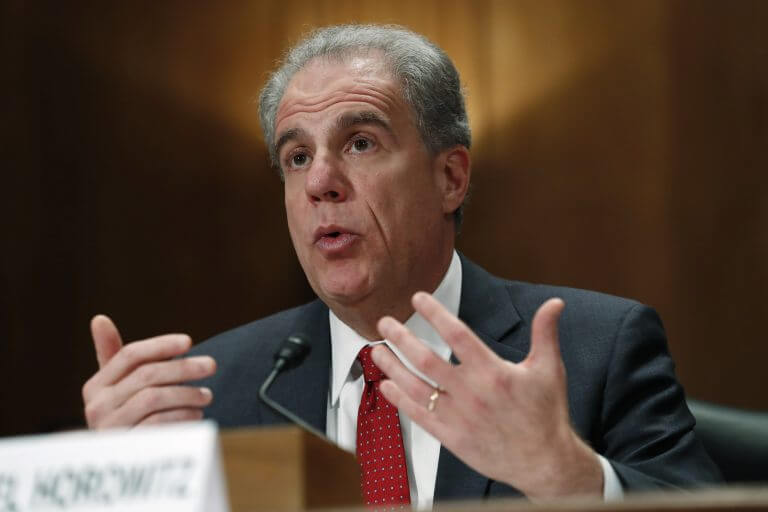
(Ken Silva, Headline USA) The Justice Department’s Inspector General released a damning report last week, showing that at least one U.S. Attorney’s Office is misplacing “high-risk evidence.”

The DOJ Inspector General said he launched an investigation after learning that physical evidence in a criminal case was missing, some of which was “high-risk physical evidence”— a category that includes weapons, drugs, cash, negotiable instruments, or any other dangerous or valuable items, as per DOJ guidelines.

“The OIG’s investigation revealed that the USAO had stored physical evidence in this case and in prior cases, but that there were inadequate safeguards to ensure the proper storage of physical evidence by the USAO,” the IG report said.

“For example, there were no safeguards: to ensure that the location where the evidence was stored was locked; to document who had access to the location; or to document what evidence entered or exited the location,” the report said.

“At the time the high-risk physical evidence was reported missing, the particular USAO did not have any procedures to ensure the safe handling, secure storage, and documentation of physical evidence upon receipt from investigative agencies or other sources.”

The DOJ-IG recommended that USAOs craft a variety of policies for handling high-risk evidence. The report didn’t name the criminal case or the USAO that spurred its investigation.

There are 94 US Attorney’s Offices around the country, plus various branch offices—each with a varying amount of ability to handle and store evidence, the report said.

Typically, USAOs are discouraged from storing evidence—such evidence is supposed to be kept by the investigating agency—but they can do so under certain circumstances, the report added.

The Executive Office for United States Attorneys’ agreed with the DOJ-IG’s recommendations and promised to institute policies for handling high-risk evidence.

The mishandling of high-risk evidence can have deadly consequences, as the residents of Oklahoma City found out on April 19, 1995, when Timothy McVeigh attacked a federal building with a truck bomb.

In that deadly incident—which killed at least 168 people, including 19 children—numerous witnesses experienced multiple explosions, which led to conspiracy theories about bombs being planted inside the federal building.

While some still entertain that possibility, the late great journalist JD Cash discovered a simpler explanation: The ATF had illegally stored a substantial number of weapons and explosives on the ninth floor of other building, and many of those were detonated by the blast of the truck bomb.

“Those weapons included a TOW antitank missile and ammunition. Now, two more civilians have come forward to describe the arms magazine in even more stunning detail. The two witnesses (whom we will call Andy and Tom in order to protect their anonymity) add even more credibility to the concept that secondary explosions at the building were the result of explosives illegally stored by members of federal law enforcement agencies that office on the ninth floor of the Murrah building,” Cash reported on July 30, 1995.

“Andy, a civilian contractor hired to perform certain functions for the GSA during the rescue operations, actually helped the ATF, DEA and Secret Service remove weapons and gun safes from the ninth floor about two weeks after the explosion.”

One Oklahoma attorney, who has examined much of the evidence amassed, told Cash that the “possible malfeasance by these federal law enforcement agencies could lead, in terms of dollar amount, to the largest class action lawsuit in Oklahoma history.”

However, the FBI has never wavered in its official explanation that the bomb blast was caused by a single explosion from a fertilizer-and-fuel oil bomb in a rental truck parked outside the federal building.

Ken Silva is a staff writer at Headline USA. Follow him at twitter.com/jd_cashless.

Ousted McCarthy Seeks Revenge w/ GOP Primary Challenges for ‘Gaetz 8’

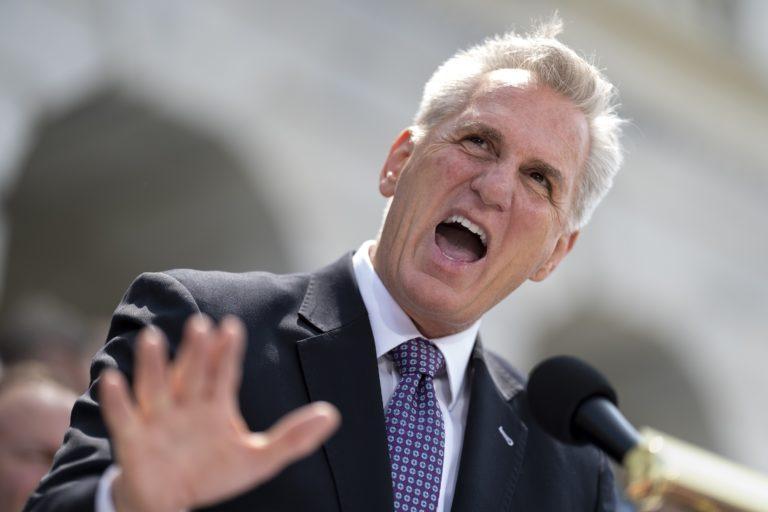
(Luis Cornelio, Headline USA) Former Rep. Kevin McCarthy, R-Calif., is back for blood, now seeking to unseat the eight Republican congressmen who sided with Democrats in voting him out as the Speaker of the House. 

The vengeance plan, unveiled by Politico on Thursday, involves the recruitment and financial backing of primary opponents for those who supported Rep. Matt Gaetz, R-Fla.’s motion to vacate the chair, which ultimately led to McCarthy’s removal in October 2023.

Brian O. Walsh, a Republican strategist and top McCarthy ally, is leading the plan, which according to Politico, has already identified three vulnerable primaries: Reps. Nancy Mace, R-S.C.; Bob Good, R-Va.; and Eli Crane, R-Ariz. 

“These traitors chose to side with Nancy Pelosi, AOC and over 200 Democrats to undermine the institution, their fellow Republicans and a duly elected Speaker,” Walsh declared said in a statement. “There must be consequences for that decision.” 

While the former speaker and donors are not involved in the daily operations of the project, they are brief on its work, Politico reported, citing inside sources. Shortly after his ousting, McCarthy directed his ire at Mace, declaring that she had not “earned the right” to win re-election. 

As recounted by Politico, the revenge plan could favor Catherine Templeton, a former South Carolina 2018 gubernatorial candidate and cabinet member under then-Gov. Nikki Haley. 

For his part, Good dismissed the plan, sarcastically endorsing the idea of his opponent campaigning with McCarthy. “It would be great if my opponent brought Kevin McCarthy to the district to campaign for him. I would actually suggest that he do that,” Good declared.

Crane, who allegedly secured re-election in 2022 with the backing of a McCarthy-tied PAC, told Politico it was “common sense” that McCarthy would target him.

McCarthy was removed as House speaker in 2023 after Gaetz filed a motion to vacate the chair over the then-speaker’s contentious decision to pass a clean stop-gap bill funding the federal government, including the Biden administration, without any concessions for Republicans. 

In a vote of 216-210, with eight Republicans joining the Democratic caucus, McCarthy became the first speaker in U.S. history to ever be removed as speaker.  

McCarthy allegedly grappled with the role of being a rank-and-file lawmaker and ultimately opted to resign from Congress in December 2023.

Ore. Univ. Won’t Be Giving D-, F Grades to Students Anymore

(Dmytro “Henry” Aleksandrov, Headline USA) Western Oregon University leaders have announced plans to abolish D- and F grades for students because of “GPA fixation.”

The university officials added that they will replace them with “no credit” to support student success and encourage undergraduate students who are struggling academically to continue their education, according to the College Fix.

In this month’s news release, the university announced that the new grading system would be implemented this fall.

“Students not earning a passing grade will be required to repeat the course and demonstrate proficiency. Our goal is to ensure that students who have met the core competencies and learning objectives graduate and provide every student an opportunity to be successful at Western Oregon University,” Vice President of Academic Affairs Jose Coll said.

In the news release, Coll, who took the job as provost in June 2023, said that “GPAs will now be a true reflection of student success and course mastery [and] failures will no longer mask the demonstrated abilities of our students when they pass courses.”

“[The] institutional academic grading regulation will reflect a grade range of A through D. The letter grades of D- and F will be replaced with No Credit (NC) for undergraduate students. The difference is that the grade of NC will not negatively impact student GPAs,” the news release said.

In an email to the College Fix, Coll also pushed back against those who opposed the recent decision of the woke institution.

“The GPA fixation we have as a country and the grading system that’s been in place for over 200 years has been used to determine who belongs and who is capable, although we know that similar to the SAT and ACT, many capable students have been prohibited from pursuing their post-secondary education due to these barriers,” he said.

The center-right Oregon Association of Scholars, a branch of the National Association of Scholars, pushed back against the narrative by saying that the policy raises “several concerns.”

“Students deserve the opportunity to try, to push themselves and to fail. They have the right to be treated like adults, the right to fail and to learn from it. What they take away from that experience should be up to them to work out, not something framed up for them by college administrators to mask their problems with student retention and performance,” the statement said.

China Removes Any Criticism of Its Economy from Internet

(Dmytro “Henry” Aleksandrov, Headline USA) The Chinese communist regime started censoring economists and journalists who dared to raise concerns about the poor state of the Chinese economy to save the image of the country’s stability.

In addition to that, top lieutenants of CCP dictator Xi Jinping urged officials to “promote the bright prospects of China’s economy,” according to the Wall Street Journal. There was also an unusual warning from China’s top spy agency that was released in December 2023, which cautioned the public to be wary of those who dare to criticize the country’s economy.

“Economic security is a key component of national security,” the Chinese Ministry of State Security said.

One of the commentaries that were removed by the communist regime was an editorial that was published last month by Caixin Media, a Beijing-based business news outlet that is famous for backing pro-market reforms. The author of the editorial called for government officials to confront economic challenges directly so that the country would not be on the brink of collapse like it was back in the 1960s and 1970s.

To not be censored, the author of the article went as far as using an ancient Chinese aphorism that was frequently used by Mao Zedong and his successor Deng Xiaoping to present oneself as a Chinese patriot who just cares about the well-being of the country. However, the strategy didn’t work because the editorial disappeared from the news outlet’s website within hours.

In a column that was published by Chinese news outlet Yicai, Li Xunlei, an economist at state-owned Zhongtai Securities, warned that 964 million Chinese people (roughly 70% of the population) would continue living on a monthly income of less than 2,000 yuan, equivalent to about $280 until the government would solve the problem.

When the information became viral, the CCP censors removed it from local Chinese social media platforms, Yicai’s website and Li’s public account on Chinese messaging platform WeChat because the content “violated the regulations.”

Nikki Haley Says Texas Has the Right to Secede: ‘That’s Their Decision to Make’

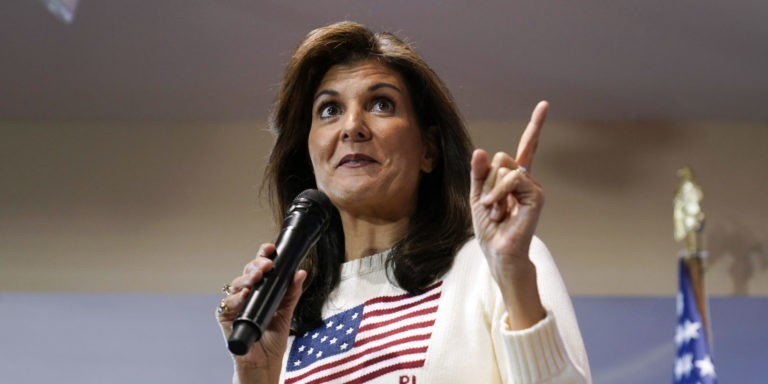
(Headline USA) GOP presidential candidate Nikki Haley said this week that Texas has the right to secede from the U.S., while downplaying the likelihood that the state would break away from the country over a border-security standoff with the Biden administration.

Haley made the comment during an interview with radio host Charlamagne Tha God, who asked the former South Carolina governor about the ongoing dispute after the Supreme Court granted federal authorities the authorization to cut down Texas’s concertina wire as part of its ongoing open-boder agenda.

“I think states have the right to make the decisions that their people want to make,” Haley said about a potential secession.

“If Texas decides they want to do that, they can do that,” she continued. “If that whole state says, ‘We don’t want to be part of America anymore’—I mean, that’s their decision to make.”

The U.S. Constitution does not prohibit secession outright but also does not grant states the explicit right to leave the union.

The question of the legitimacy of secession, which former President Abraham Lincoln rejected, was a primary factor in the Civil War. The Supreme Court later affirmed in Texas v. White that states cannot unilaterally secede from the U.S.

Haley went on to explain that many GOP states felt like they were being backed into a corner due to the Biden administration’s refusal to enforce federal immigration law. However, she argued there was little chance Texas actually decided to leave the U.S. over the issue.

“Let’s talk about what’s reality. Texas isn’t going to secede. That’s not something that they’re going to do,” she said.

She went on to defend Texas Gov. Greg Abbott, a fellow Republican, for resisting the Biden administration’s efforts to throw the southern border wide open.

“He has to protect Texans,” Haley argued. 

Haley came under fire last month for another comment she made about the Civil War, when she failed to mention slavery as the primary cause of the conflict.