Oregon Supreme Court Bans 10 GOP State Sens. Who Staged Walkout

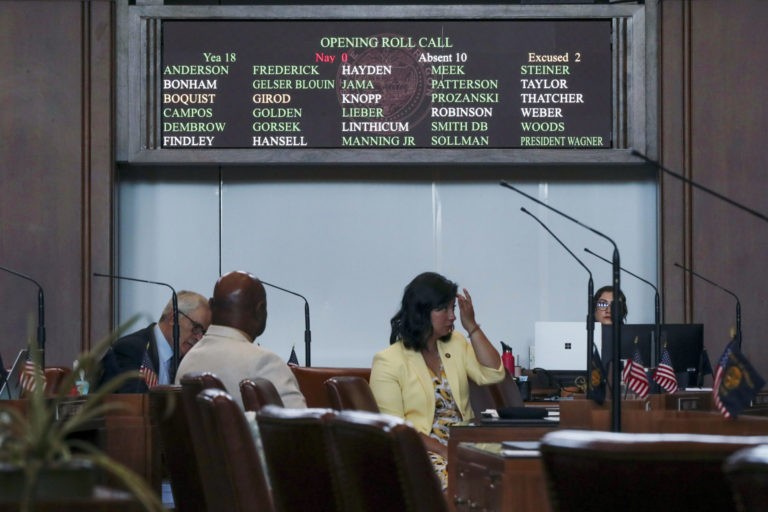
(Headline USA) The Oregon Supreme Court said Thursday that 10 Republican state senators cannot run for reelection after staging a six-week walkout last year to stall bills on abortion, transgender surgeries for minors and gun-control.

It is but the latest example of leftist weaponizing institutional power, such as the judiciary, to sway the outcome of elections in their favor. The Colorado Supreme Court and Maine secretary of state provided egregious examples recently by attempting to rule former President Donald Trump ineligible for the ballot under the 14th Amendment’s “insurrection clause.”

However, like many examples of left-wing hypocrisy, it may offer a road map for red states who face similar issues with defiant lawmakers on the other side of the aisle. Notably, a cohort of more than 60 Texas Democrats was widely celebrated by the mainstream media for staging a 2021 walkout.

The far-left Oregon court’s decision upholds the secretary of state’s decision to disqualify the senators from the ballot under a voter-approved measure aimed at stopping such boycotts.

Measure 113, passed by voters in 2022, amended the state constitution to bar lawmakers from reelection if they had more than 10 unexcused absences.

Five lawmakers sued over the secretary of state’s decision—Sens. Tim Knopp, Daniel Bonham, Suzanne Weber, Dennis Linthicum and Lynn Findley. They were among the 10 GOP senators who racked up more than 10 absences.

“We obviously disagree with the Supreme Court’s ruling,” said Knopp, the chamber’s minority leader. “But more importantly, we are deeply disturbed by the chilling impact this decision will have to crush dissent.”

During oral arguments before the Oregon Supreme Court in December, attorneys for the senators and the state wrestled over the grammar and syntax of the language that was added to the state constitution after Measure 113 was approved by voters.

The amendment says a lawmaker is not allowed to run “for the term following the election after the member’s current term is completed.”

The debate was over when that ineligibility kicks in: If a senator’s term ends in January 2025, they would typically seek reelection in November 2024. The “election after the member’s current term is completed” would not be until November 2028, the Republican senators argued, so they could run for reelection this year and then hold office for another term before becoming ineligible.

The court disagreed, saying that while the language of the amendment was ambiguous, the information provided to voters in the ballot title and explanatory statement made clear that the intent was to bar truant lawmakers from holding office in the next term.

“Those other materials expressly and uniformly informed voters that the amendment would apply to a legislator’s immediate next terms of office, indicating that the voters so understood and intended that meaning,” the justices wrote.

The senators’ lawsuit was filed against Secretary of State LaVonne Griffin–Valade, who last August said the boycotting senators were disqualified from seeking reelection. She directed her office’s elections division to implement an administrative rule based on her stance.

All parties in the suit had sought clarity on the issue before the March 2024 filing deadline for candidates who want to run in this year’s election.

The 2023 walkout paralyzed the Legislature for weeks and only ended after Republicans forced concessions from Democrats on two controversial bills.

Oregon voters approved Measure 113 by a wide margin following Republican walkouts in the Legislature in 2019, 2020 and 2021.

Adapted from reporting by the Associated Press
Successor Named to Assume Leadership Role of Ailing Jesse Jackson

(Headline USA) The activist group founded by the Rev. Jesse Jackson in the 1970s is elevating a new leader for the first time in more than 50 years, choosing a Dallas pastor as his successor to take over the Rainbow PUSH Coalition.

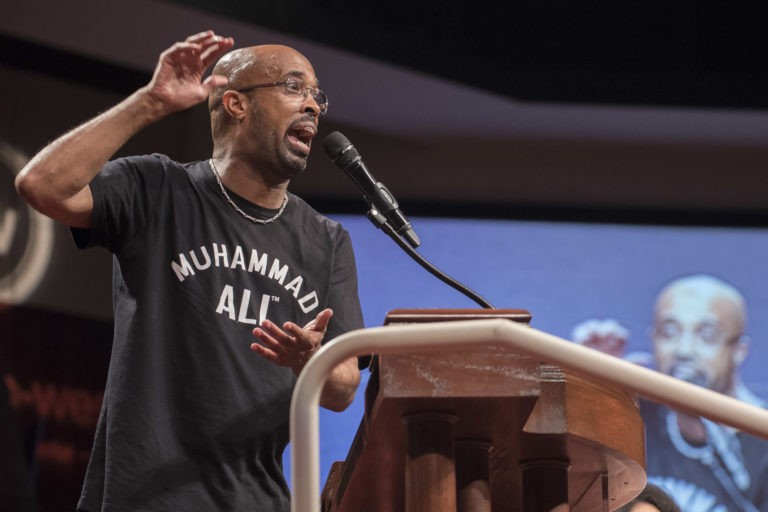
The Rev. Frederick D. Haynes III was formally installed as president and CEO in a ceremony Thursday in downtown Dallas, replacing Jackson, 82, who announced in July that he would step down.

Jackson, a firebrand—and often controversial—orator whose pragmatic ethos left an indelible mark on U.S. race relations in the decades following the civil-rights movement, has dealt with several health issues in recent years and has been diagnosed with Parkinson’s disease.

Haynes, 63, said he began working with Jackson on the transition in the fall.

“I’m appreciative of what he’s poured in to me, which makes me feel like I’ve been prepared for this experience and this moment,” he said.

“One of the things that we have shared with the staff is that we have been the beneficiary of the dynamism, the once-in-a-generation charisma of Rev. Jackson, and now what we want to do is institutionalize it, as it were, make the organization as dynamic and charismatic as Rev. Jackson,” Haynes said. “Whereas he did the work of 50 people, we need 50 people to do the kind of work that Rev. Jackson did.”

Haynes, who has been senior pastor at Friendship–West Baptist Church in Dallas for over 40 years, will remain in Dallas and continue in that role as he leads the Rainbow PUSH Coalition. He said his work at the justice-oriented church will serve as an expansion of the work done by the Rainbow PUSH Coalition, which will still be based in Chicago.

Jackson, a protégé of the Rev. Martin Luther King Jr., broke with the Southern Christian Leadership Conference in 1971 to form Operation PUSH, which initially stood for People United to Save Humanity. The organization was later renamed the Rainbow PUSH Coalition.

The group’s work ranges from promoting minority hiring in the corporate world to conducting voter registration drives in communities of color.

Before Barack Obama was elected president in 2008, Jackson had been the most successful black presidential candidate. He won 13 primaries and caucuses in his push for the 1988 Democratic nomination, which went to Massachusetts Gov. Michael Dukakis.

But Obama’s election proved to be a double-edged sword for Jackson. The ascendent president failed to show due deference to the fellow Chicagoan, instead distancing himself from Jackson’s divisive brand as he worked to assuage the lingering apprehensions of racist white liberals.

In a candid hot-mic moment during a Fox News interview, Jackson accused Obama of “talking down to black people” before murmuring to fellow guest Reed V. Tuckson of UnitedHealth, “I want to cut his nuts off.”

Jackson’s eldest son, Rep. Jesse Jackson Jr., who was the co-chair of Obama’s presidential campaign, rebuked his father, who would apologize for the comments, but found himself cast out of Obama’s inner-circle.

His son later was implicated in a “pay-to-play” scandal led by then-Gov. Rod Blagojevich to replace Obama in the Senate, which eventually went to former state Attorney General Roland Burris.

Jackson Jr. resigned his House seat in 2012 while facing allegations of fraud for misusing campaign funds, and later spent time in a federal prison.

Haynes said he first met Jackson when he was a college student in 1981. “He comes to campus as this larger-than-life, charismatic, dynamic figure, and immediately I was awestruck,” Haynes said.

He was inspired by Jackson’s runs for president in 1984 and 1988, and after the two connected in the 1990s, Jackson began inviting him to speak at Rainbow PUSH.

On Friday, Rainbow PUSH hosted a social justice conference at Paul Quinn College, a historically black college in Dallas. Jackson was expected to attend both the ceremony Thursday and the conference Friday.

“I’m just very excited about the future,” Haynes said. “I’m standing on some great shoulders.”

Adapted from reporting by the Associated Press

New Hints of Election-Year Market Interventions & Turmoil

(Mike Gleason, Money Metals News Service) After a sluggish January for precious metals, gold and silver markets saw a rally during the first day of February trading, only to see it reverse on Friday, February 2, after a strong U.S. jobs report.

Metals and equity markets had turned down on Wednesday following the Federal Reserve’s interest rate decision.  

Fed policymakers left rates unchanged as expected. They also confirmed that they are no longer considering further tightening.

They did disappoint doves looking for immediate rate cuts, however. Chairman Jerome Powell cast doubt on the possibility of easing in March. 

But there is no doubt that the central bank’s next policy move will be to lower rates. It’s just a question of when they start cutting and how many times they do so.

Of course, in an election year, any moves on the monetary policy front will carry political implications. A group of Senate Democrats led by Banking Committee Chair Sherrod Brown and Massachusetts ultra-liberal Elizabeth Warren are openly pressuring the Fed to ease.  

They penned a letter this week to Jay Powell pleading on behalf of Americans who are struggling to afford housing.

Reading between the lines, though, they plainly want stimulus because they think it will help the re-election chances of Joe Biden and other Democrat incumbents. 

Polls show Biden is in deep trouble with voters due to chaos at the southern border and general dissatisfaction with Bidenomics.

Even though the stock market is hitting records, millions of working-class and middle-class Americans feel left behind.  

Biden administration mouthpieces cite rosy unemployment statistics and GDP numbers as evidence that Americans should feel fine and happy about the economy. 

But official government economic data isn’t translating into actual improving standards of living. A big reason why is that food, housing, healthcare, and other consumer costs continue to increase at an elevated rate versus incomes. 

Although the inflation rate as reported in the Consumer Price Index has come down in recent months, it is still running above the Fed’s target. 

The CPI itself is a flawed measure of inflation. 

Households know when they aren’t coming out ahead at the end of the month regardless of what government statistics say. 

As for the “better than expected” GDP readings that supposedly indicate a soft landing rather than a recession, there’s something fishy going on there, too.  

The leading economic indicators are actually turning down. Businesses are pulling back from capital investment. The Philly Fed Manufacturing Index has been negative for 18 out of the past 20 months.

What is Propping up GDP? 

Well, the answer is massive injections of deficit spending by the federal government. 

It doesn’t matter whether it’s productive or sustainable. All that matters as far as GDP number crunchers are concerned is that trillions of dollars are being pumped into the economy by Uncle Sam.

But voters don’t seem too impressed by what they’re getting for all the new debt they are being saddled with. 

The political divisions in the country are only growing deeper. The current Constitutional showdown between the state of Texas and the Biden administration over border security is prompting calls by some for Texas to declare its own independence. 

Some pundits are also warning of a new Civil War if the 2024 election ends in turmoil. There likely won’t be any outcome that results in the announced loser conceding defeat and his supporters accepting it. 

If presumptive Republican nominee Donald Trump wins enough electoral votes to become President, Democrats will insist that he is not the legitimate winner because he shouldn’t have been allowed to run. Rioting and social unrest in the streets of Democrat-controlled cities will likely follow.

If Biden manages to eke out an apparent victory, it’s difficult to imagine Trump conceding defeat under any circumstance. His die-hard supporters will see it as another rigged election. 

They are already pointing to unprecedented efforts underway to rig the election. Some states have moved to remove Trump’s name from their ballots. And partisan prosecutors are dragging him through endless legal proceedings with the aim of getting convictions before the election.

There’s a chance the election may not take place with Donald Trump available as an option for voters, even if he is chosen as the Republican nominee.  

Some partisans eying Biden’s bleak poll numbers have openly stated they want to see Trump dead or imprisoned before the election.

Rising political instability in the United States is a threat investors are largely overlooking at the moment. Bulls see the stock market rising regardless of who wins the election.  

But they haven’t thought much about what could happen if there is no free and fair election and no peaceful transition of power.   

The risk is that confidence in the financial system and the U.S. dollar itself could plummet. If the states of America are no longer, in fact, united, then creditors may balk at continuing to lend to a central government that is already more than $34 trillion in debt. 

Foreign countries that currently hold large quantities of fiat Federal Reserve notes may ramp up efforts already underway to diversify their reserves into other currencies and into gold.

Main Street investors as well may suddenly wake up to the need to own gold. Of course, by the time a currency crisis makes headlines in the mainstream media, physical bullion will likely be much pricier and harder to come by than it is today. 

J6 Committee Admits Hearings Were a Publicity Stunt

(Jacob Bruns, Headline USA) Key members of the infamous J6 Committee have admitted that their hearings held in the lead-up to the 2022 midterm elections were a publicity stunt, the Federalist reported.

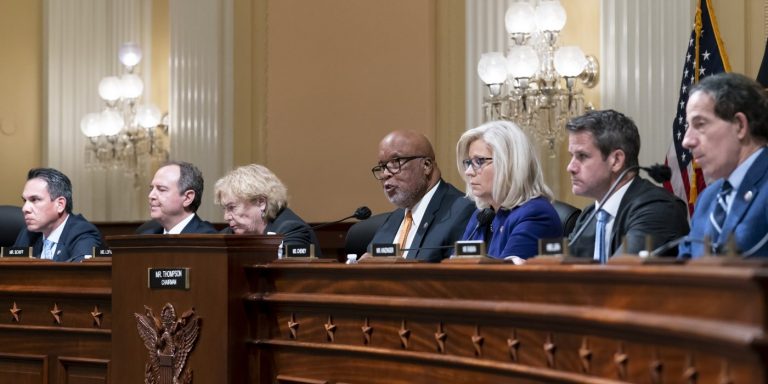
Former Rep. and current CNN commentator Adam Kinzinger, one of the J6 Committee’s most visible members, appeared in a in the Wednesday release of PBS’s J6 documentary, “Democracy on Trial,” remarking that the House committee had entertainment in mind when it conducted the investigation.

“The one thing that we knew was the information that we have is compelling,” said Kinzinger.

For Kinzinger, it was imperative that Americans not only know the facts, but that they be told the facts in a “compelling way.” So he and his colleagues decided to turn the trial into a TV show.

In order to boost the entertainment value of the production, the Committee turned to former ABC News President James Goldston to be the “producer” of the hearings, which took place in the months prior to the 2022 midterms.

“I got a call pretty much out of the blue from the January 6th committee,” Goldston told PBS. “They wanted a storyteller.”

In a moment of striking clarity, he also suggested that, while the Committee members were “brilliant lawyers,” they were unfit to engage in “storytelling for a mass audience.” That’s where he came in.

Robert Draper of New York Times Magazine told PBS that bringing in Goldston was a big hit, and added substantially to the rhetorical appeal of the literal show trials.

“To bring in a guy like this who would think outside the box really did prove to be fruitful,”  Draper said, noting that the ABC producer helped the Committee package the commentary in a way that would be properly entertaining to the American people.

“It was Golston who really began to envision this as in a way a kind of miniseries that there would be sort of nine episodes and that these episodes would tackle particular themes.”

Musk Polls Public on Transferring Corporate Registration to Texas

(Headline USA) Elon Musk wants Tesla investors to decide on moving the company’s corporate listing to Texas after a Delaware court decided he shouldn’t get a multibillion-dollar pay package.

The electric car company’s CEO said early Thursday that Tesla would get shareholders to vote on whether to switch its corporate registration to Texas, where its physical headquarters is located.

“Tesla will move immediately to hold a shareholder vote to transfer state of incorporation to Texas,” Musk wrote on Twitter.

He had polled Twitter users earlier on the same question, with 87.1% of 1.1 million respondents voting yes.

“The public vote is unequivocally in favor of Texas!” he wrote.

Musk, who has previously polled people on Twitter before making decisions, moved Tesla’s headquarters to Austin, Texas, from California in 2021.

His announcement comes after a judge in Delaware, where the company is currently registered, ruled Tuesday that Musk was not entitled to a landmark compensation package potentially worth more than $55 billion that was awarded by Tesla’s board of directors.

After the ruling, Musk took to social media to to express his displeasure.

“Never incorporate your company in the state of Delaware,” he wrote in one post.

He later added, “I recommend incorporating in Nevada or Texas if you prefer shareholders to decide matters.”

The ruling came five years after shareholders filed a lawsuit accusing Musk and Tesla directors of breaching their duties and arguing that the pay package was a product of sham negotiations with directors who were not independent of him.

The defense countered that the pay plan was fairly negotiated by a compensation committee whose members were independent and had lofty performance milestones.

Adapted from reporting by the Associated Press
Defense Sec. Claims He Never Told Staff to Hide Hospitalization from Biden

(Headline USA) Defense Secretary Lloyd Austin said Thursday he never directed anyone on his staff not to tell the White House he’d been hospitalized and took full responsibility for keeping President Joe Biden in the dark for weeks that he’d been diagnosed with prostate cancer.

“We did not handle this right and I did not handle this right. I should have told the president about my cancer diagnosis. I take full responsibility,” Austin said.

“The news shook me,” Austin, 70, said when he first got the diagnosis. “Frankly my first instinct was to keep it private.”

Despite his claim of taking responsibility, it is unclear whether Austin has been held accountable in any way for going AWOL, even as tensions in the Middle East have pushed America to the brink of war with Iran and its terrorist proxies.

Speaking to reporters in the Pentagon briefing room, Austin provided his most extensive comments to date on the secrecy surrounding his cancer diagnosis and struggles with complications since his surgery on Dec. 22.

It was the first time he had answered questions from reporters since being rushed back to the hospital on Jan. 1.

“I never directed anyone to keep my January hospitalization from the White House,” Austin said.

His lack of disclosure prompted changes in federal guidelines and triggered an internal Pentagon review and an inspector general review into his department’s notification procedures. Both reviews are ongoing, and members of Congress have called for hearings on the matter.

Austin was diagnosed with prostate cancer early in December and had surgery on Dec. 22. On Jan. 1, he was taken by ambulance to Walter Reed National Military Medical Center after experiencing extreme pain due to complications from the surgery and was admitted to the intensive care unit.

He transferred decision-making authorities to Deputy Defense Secretary Kathleen Hicks, but did not tell her why. And he did not tell Biden and other top officials about his diagnosis, his surgery or hospitalization until several days after was was in the ICU.

Asked about the matter earlier in January, Biden said it was a lapse in judgment for Austin not to tell him about his hospitalization, but he said he still had confidence in his Pentagon chief.

Austin, who worked from home for two weeks after his release from the hospital Jan. 15, returned to work in the Pentagon on Monday. He had not been in the building since Dec. 21.

Underscoring the secrecy surrounding Austin’s hospital visit, one of his aides asked first responders to avoid using lights and sirens when requesting an ambulance be sent to the secretary’s northern Virginia home on Jan. 1.

Adapted from reporting by the Associated Press

Hunter Biden’s Lawyers Say DOJ Prosecutors Should Go to AA Meetings

(Hunter Biden’s legal defense team went on the attack this week against federal prosecutors in his gun case, suggesting in a recent filing that they may benefit from attending Alcoholics Anonymous or Narcotics Anonymous meetings.

It was the latest in what promises to be a chain of awkward clashes between the President Joe Biden’s degenerate son and the Justice Department, which also answers directly to the president.

The DOJ and other agencies have long offered cover and protection for the Biden family’s dubious affairs—and those concerning Hunter in particular. However, Attorney General Merrick Garland’s hand was forced after congressional whistleblowers last year revealed that the investigators overseeing a criminal probe of Hunter’s abandoned laptop had been slow-walking the case, likely to allow a five-year statute of limitations to lapse.

A previous plea deal on gun and tax fraud charges fell apart in July 2023 after last-minute disagreements over the degree to which Hunter could face future charges for other alleged crimes still possibly under investigation.

That plea deal revolved around alleged tax crimes and a single gun charge. The new indictment includes three separate charges related to Hunter’s possession of the gun.

Two of thecounts involve allegations that he allegedly lied on a form attesting that he was not using illegal drugs when he bought a Colt Cobra 38SPL revolver in October 2018. The third count alleges that he possessed a firearm while using illegal drugs.

The recent filings in Delaware from Biden’s defense team picked up on previous claims that Hunter was the target of politically motivated federal prosecutors within the Biden DOJ.

In one lengthy footnote, the defense claimed Hunter’s 2021 book, Beautiful Things: A Memoir, was not a confession to using drugs while owning a firearm, but a cautionary tale designed to help Americans struggling with addiction.

“Perhaps the prosecution should visit an Alcoholics or Narcotics Anonymous meeting, where they will find that the sort of stories Mr. Biden recounts in his memoir are common,” defense attorney Abbe Lowell wrote in the filing, which seemed to be angling for a ruling that the de-facto confession should be inadmissible under the circumstances.

“These stories are not told to gloat,” Lowell continued. “Acknowledging the depraved actions that they have taken while in the throes of addiction and acknowledging responsibility for them is part of the healing process.”

In fact, he suggested that the book was intended to be a public service for those who may regard Hunter as a sort of aspirational role model.

The memoir “shows others who are coming to terms with their addiction that they are not alone, that there are others who understand them, and that there is a path forward,” Lowell claimed.

“Mr. Biden wrote his memoir as a cautionary tale to show that even a child born into great privilege can succumb to addiction and, perhaps more importantly, to show people that no matter how far you may have fallen, you can still pick yourself back up,”he added. “Mr. Biden has been proudly sober four years now—a fact the prosecution conveniently omits when it revels in discussing the more salacious details of his history of drug use.”

There are questions as to whether Hunter has, in fact, abstained from using illegal narcotics such as marijuana and cocaine over the past year.

During an Independence Day celebration last year, shortly after a bag of cocaine was discovered in the White House, Hunter was seen on a White House balcony with his family appearing to surreptitiously snort something concealed in his hand.

Not long after, he was photographed in California with his “sugar brother,” Kevin Morris, as Morris proceeded to smoke from a bong. Although marijuana is legal in California, it is still classified as an illegal substance under federal law.

Federal prosecutors, led by special counsel David Weiss, have said Hunter Biden’s claims that he is the victim of a vindictive prosecution in his Delaware gun case are “absurd” and don’t withstand scrutiny, especially with his father sitting in the White House.

In court filings, Weiss and his team revealed they had evidence beyond Hunter’s memoir detailed his drug use at the time he owned the Colt Cobra revolver at the center of the charges. Investigators found cocaine on the gun pouch.

Photos from Hunter’s now-verified laptop also show him wielding multiple handguns, as well as smoking from what appears to be a crack pipe.

“After the defendant’s then-girlfriend discovered and discarded his gun, and after he became aware that local authorities had seized his gun, speed loader, and ammunition, and after the defendant announced his awareness of a federal investigation of him in 2020, the defendant chose to author and sell a book in 2021 in which he made countless incriminating statements about his years-long drug usage, including during the time period he purchased and possessed the gun,” prosecutors wrote.

“He recounted his interaction with a drug dealer who pointed a gun at him during a drug deal before he decided to buy his own gun,” the continued. “Investigators also obtained messages from his Apple iCloud account in which he discussed buying thousands of dollars’ worth of crack while also taking videos of himself weighing crack and smoking it. Furthermore, a chemist was able to confirm the presence of cocaine residue on the brown leather pouch in which defendant stored his firearm.”

If convicted, Hunter Biden faces up to 10 years in prison on the first two counts and five years on the third count.

In addition to the Delaware charges, prosecutors have also filed felony tax evasion charges in California.

Headline USA’s Ben Sellers contributed to this report.

Twitter Censoring Posts about Anti-Trump Head-Chopper

(Ken Silva, Headline USA) Earlier this week, news broke about a self-purported militia leader who was arrested for allegedly murdering and decapitating his father.

Initially spun by mainstream media as another example of “right-wing extremism,” internet sleuths soon found that the alleged murderer, Justin Mohn, was anti-Trump.

Others found more signs of Mohn’s mental illness—as if decapitating his father wasn’t enough evidence—as well as his history of seeking employment with the Pentagon.

But none of that information is easily accessible to Twitter users, as the platform is censoring searches of Mohn’s name.

Some users speculated that the censorship stems from Twitter attempting to guard people from viewing the gruesome video where Mohn displays his father’s severed head.

But even more bizarrely, users can still view that footage if they click on the “media” tab when searching for Mohn.

Headline USA asked Twitter about the censorship, but didn’t receive an answer.

“Busy now, please check back later,” the company said in response to an email from this publication.

Arrested Wednesday, Mohn had released a roughly 15-minute video where—along with displaying his father’s apparent head—he declared himself President and called for a revolution in America.

“Earn your place in heaven by sending a traitor to hell early. I ask for the state police, National Guard and military veterans to join your fellow Americans against the traitors in the federal government, unless you want to see Philadelphia and every other major city turn into a lawless zone like Portland and San Francisco,” Mohn said, claiming to have $10 million to pay bounties for dead feds.

“Now is your last chance to reside from the side of the traitors and join your fellow countrymen in taking back your country, or else this is your fate,” he said, displaying his the decapitated head of his father, whom he said was a federal employee.

Ken Silva is a staff writer at Headline USA. Follow him at twitter.com/jd_cashless.

Will AI Cause Massive Deflation?

(Peter St. Onge, Money Metals News Service) Will we ever get durable deflation again? Or will grandma keep getting sucker punched at the check-out lane? Forever.

Last week, I joined Kevin Paffrath – MeetKevin on YouTube – for a wide-ranging interview about the economy and freedom.

During our chat, he asked about an ongoing beef between George Gammon and Cathie Wood about whether massive deflation is on the horizon.

The short answer is no: We will never again see durable deflation. Not until either the dollar dies or the Fed dies – whichever comes first.


The Tech-Led Deflation Debate


Now, if you don’t know George and Cathie, he makes financial videos on YouTube, and she’s the CEO of Ark Invest, which manages roughly $7 billion and focuses on disruptive high-tech plays like AI, robots, and biotech.

A couple of months ago Cathie gave a talk saying that investors were worried about the wrong thing. That we should actually be preparing for massive deflation.

Her reasoning is that technology is inherently deflationary, and we’re about to have an epic tech boom.

So is she right? Are we about to see plunging prices thanks to AI?

In short, no. Not because her reasoning is off – she’s 100% right that tech is deflationary because it lowers prices.

But the missing part is the central bank – the Federal Reserve. It soaks it all up.

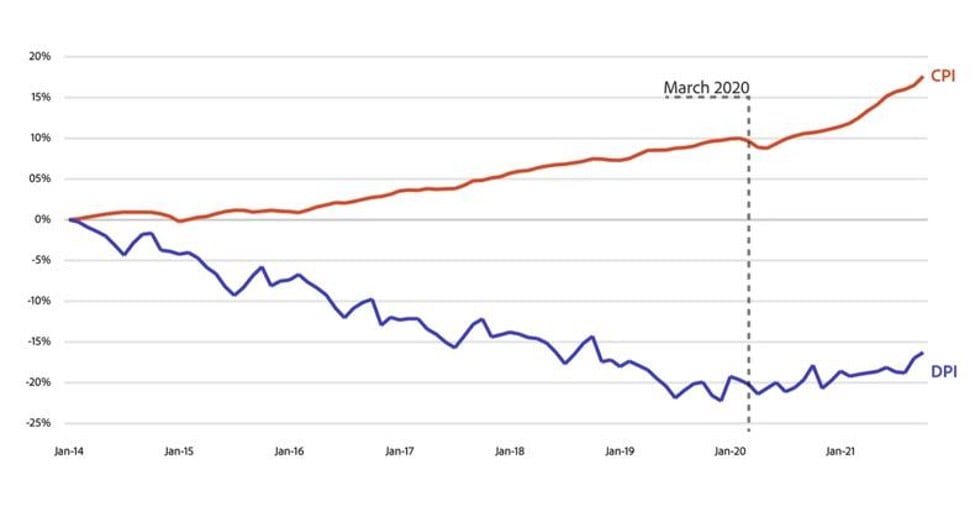
Digital Price Index vs Consumer Price Index | Digital Economy Index (U.S.)

Digital Price Index vs Consumer Price Index | Digital Economy Index (U.S.) Chart

Consumer Price Index is profiled against Adobe’s Data (cited as DPI for “Digital Price Index”)

To lay out the process, let’s say you make hand-made mugs – 10 a day. And you sell them for $20 to make ends meet. Now you install a machine and you can make 100 a day. Pay for the machine and you can charge, say, $10 and still turn a profit. Presto, a dollar buys more mugs.

Do that across an entire economy and you get generalized deflation – dollars buy more.

Indeed, before central banking this was the normal state of a healthy economy – technology advanced, capital – machines – were installed, and we got more stuff for the dollar.

The problem, of course, is that central banks are founded specifically to soak up all that deflationary goodness. In fact, they steal it and then some, turning deflation into inflation.


“Bad” Deflation — the Kind the Fed Makes


Now, there is a special type of deflation which is bad, which is when the dollar is getting stronger not because we make more stuff, but because a bunch of dollars suddenly disappeared. More specifically, they got pulled out of circulation and stored somewhere.

Why would that happen? It could happen because there’s World War 3 and everybody panicked. Or, more often, because the Fed crashed the banking system, a bunch of debt evaporated – it defaulted and got written off.

At which point everybody’s scrambling to save dollars to plug their balance sheets. They’re not spending the dollars, they’re storing them away. As if they buried them in the ground.

Meaning those non-circulating dollars are, at least temporarily, out of the inflation game.

That’s exactly what happened in 2008, it’s what happened in 1929, and it’s what happens in every financial panic.

In fact, that special case is precisely the excuse the Fed uses to steal the normal, good deflation. It’s pretty cute, really – using the special bank panic deflation the Fed itself causes to steal tens of trillions of healthy deflation year in, year out.

Sustained Deflation Is Not in the Cards


In short, there is zero chance we’ll have durable deflation. Because the Fed will soak it up and then some. In fact, China’s doing this as we speak, printing hand over fist to soak up its over-capacity-driven deflation.

That means whatever deflation windfall one expects from AI, robots, nanoassembly, or cold fusion will end up, like so much else, in the pockets of Congress. We will never again see durable deflation.

Supreme Court to Hear Arguments over Federal Bump-Stock Ban

() The U.S. Supreme Court is considering a federal ban on bump stocks later in February, the latest opportunity for the high court to rule on gun violence and 2nd Amendment rights.

The case in question, Garland v. Cargill, came after the Trump administration banned bump stocks, the attachments added to semiautomatic weapons to make them fire more quickly.

Instead, the Bureau of Alcohol, Tobacco, Firearms and Explosives (ATF) classified them as “machine guns,” which are banned by federal law.

Gun-rights groups filed suit in 2018, and after a lengthy legal battle, the Supreme Court is scheduled to hear arguments on the case late next month.

The 2018 ban by the ATF, which is under the Department of Justice umbrella, came largely as a response to a Las Vegas 2017 mass shooting, in which nearly 60 concertgoers were killed by a shooter using a bump stock device.

The rule requires those who own bump stocks to destroy them or hand them over to ATF.

“Specifically, these devices convert an otherwise semiautomatic firearm into a machinegun by functioning as a self-acting or self-regulating mechanism that harnesses the recoil energy of the semiautomatic firearm in a manner that allows the trigger to reset and continue firing without additional physical manipulation of the trigger by the shooter,” the DOJ rule summary said at the time.

“Hence, a semiautomatic firearm to which a bump-stock-type device is attached is able to produce automatic fire with a single pull of the trigger,” it added.

Gun advocates said the federal rule violated the 2nd Amendment, and that the ATF was broadening the definition of machine gun to include some semiautomatic weapons.

The Firearms Policy Coalition filed an amicus brief in that case this week, arguing the rule violated the Constitution.

“When ATF first considered the legality of bump stocks over twenty years ago, it correctly concluded that they do not qualify as ‘machineguns,’” the brief said.

“Yet, in 2018, in the face of acute political pressure, the agency reversed course and adopted a new definition of the term that encompasses the bump stocks at issue,” it added. “Petitioners’ defense of that newfound interpretation either ignores the statute Congress enacted or seeks to rewrite it.”