Bloomberg: Iran Destroyed Nearly $1 Billion Worth of US MQ-9 Reaper Drones

(Dave DeCamp, Antiwar.com) Bloomberg reported on Thursday that during the US-Israeli bombing campaign against Iran that began on February 28, Iranian forces destroyed more than two dozen US MQ-9 Reaper drones, or nearly $1 billion worth of the unmanned aircraft.

The number represents about 20% of the Pentagon’s MQ-9 inventory. The drones have been used for nearly two decades in strikes as part of the US “War on Terror,” which continues today in Somalia, Yemen, and now Nigeria, but when used against an enemy with air defenses, the MQ-9 is extremely vulnerable.

During the US bombing campaigns in Yemen in 2024 and 2025, the Houthis, officially known as Ansar Allah, shot down about 20 MQ-9s. The more than two dozen that were destroyed in the Iran war include drones that were shot down by Iranian air defenses and drones that were destroyed by Iranian attacks on US bases across the region.

In the war against Iran, previous reports have said that the MQ-9 was armed with 250-pound small-diameter bombs, which have a longer range than the Hellfire missiles the drones are usually equipped with, likely an effort to make them less exposed to Iran’s air defenses.

Despite the heavy loss of the MQ-9s, Gen. Kenneth S. Wilsbach, the chief of the US Air Force, dubbed the drones the “most valuable player” of the US-Israeli bombing campaign, which killed more than 3,400 Iranians, around half of whom were civilians.

“No other platform is even close to the MQ-9” in terms of the number of strikes launched in Iran, Wilsbach told Congress on Wednesday. “It’s an unmanned platform, so we get a lot of utility out of them, and don’t put our folks at risk,” he said.

According to Air & Space Forces Magazine, MQ-9s are still deployed against Iran, flying in the Strait of Hormuz to enforce the US blockade of Iranian ports and for surveillance.

This article originally appeared at Antiwar.com. 

House Republicans Block Vote on Iran War Powers Resolution That Was Expected To Pass

(Dave DeCamp, Antiwar.com) House Republicans on Thursday canceled a vote on a War Powers Resolution to end President Donald Trump’s war against Iran as it became clear they didn’t have the votes to defeat the measure. The delay means that the House won’t take up the bill until after lawmakers return from their Memorial Day recess.

“Republicans just prevented the House from voting on a War Powers Resolution because they knew it would pass,” Rep. Greg Casar (D-TX) wrote on X.

“Republicans can run from Trump’s disastrous war, but they can’t hide. Thousands are dead and gas and grocery prices are up, and progressives will not stop demanding votes on War Powers Resolution until the war is actually ended,” Casar added.

The last vote in the House on an Iran War Powers resolution was narrowly defeated in a 212-212 tie, as momentum to pass the bill continues to grow in both chambers of Congress. On Tuesday, the Senate advanced an Iran War Powers resolution in a 50-47 procedural vote, though the legislation still needs a final vote before the Senate version would be sent to the House.

Rep. Gregory Meeks (D-NY), who introduced the House War Powers Resolution, said the effort was receiving more support from Republicans because they’re facing pressure from constituents facing rising gas prices as a result of Trump’s war, which is extremely unpopular among Americans.

The cancellation of the vote comes as the US and Israel could restart the full-scale bombing campaign at any time and as the US continues to enforce the blockade against Iran, an act of war that a War Powers Resolution would direct Trump to end. The bill isn’t close to gaining a veto-proof majority, but its passage would mark a significant rebuke of the president and would make it more politically difficult for him to escalate.

Trump administration officials have been maneuvering to circumvent the 1973 War Powers Act, which was passed to rein in the Executive Branch’s disregard for the Constitution’s requirement that Congress has the sole power to declare war.

The law includes a 60-day deadline for the president to end any unauthorized military action or obtain authorization from Congress, which has been falsely reinterpreted to give the president 60 days to wage war without congressional authorization.

The 60-day deadline for the Iran war expired on May 1, and the administration has tried to claim that the ceasefire should have paused the clock, but the blockade means the US military is still engaged in hostilities against the country.

According to a report from NBC News, the Pentagon is considering renaming the war with Iran from “Operation Epic Fury” to “Operation Sledgehammer,” and the White House believes giving the conflict a new name would reset the War Powers clock. But all of the hostilities are clearly still part of the same war that the US and Israel launched on February 28.

This article originally appeared at Antiwar.com.  

Trump Says He’s Sending 5,000 Additional Troops to Poland

(Dave DeCamp, Antiwar.com) President Donald Trump said in a post on Truth Social on Thursday that he will send 5,000 additional troops to Poland, the same number of troops the Pentagon has announced it plans to pull out of Germany.

“Based on the successful Election of the now President of Poland, Karol Nawrocki, who I was proud to Endorse, and our relationship with him, I am pleased to announce that the United States will be sending an additional 5,000 Troops to Poland,” Trump wrote on Truth Social.

According to Briana Reilly, a reporter for Punchbowl News, House Armed Services Committee Chairman Rep. Mike Rogers (R-AL) said that the 5,000 troops would come from Germany

The Trump administration is reducing the US military presence in Germany in response to Berlin’s criticism of the US-Israeli war against Iran, and the move to put them in Poland will increase the number of US forces closer to Russia.

Rogers also said that the 5,000 additional troops heading to Poland are separate from the delayed deployment of 4,000 US Army soldiers to Poland. It’s unclear how many US troops are currently in Poland, but based on US State Department numbers from last year, there are at least 10,000, a level that was reached due to the Biden administration’s buildup in Eastern Europe that began right before Russia invaded Ukraine.

Polish officials made clear they were eager to absorb the 5,000 US troops being pulled out of Germany. The Trump administration has also reportedly canceled a planned deployment of the Typhon missile system to Germany, a move announced by the Biden administration in 2024.

The Typhon can fire Tomahawk missiles, which have a range of over 1,000 miles, meaning they can reach Russia from German territory. The system was developed after the United States withdrew from the Intermediate-Range Nuclear Forces (INF) Treaty in 2019, which banned Washington and Moscow from developing land-based missile systems with a range between 310 and 3,400 miles. It’s unclear at this point if the US wants to deploy the Typhon elsewhere in Europe.

This article originally appeared at Antiwar.com.  

Two Men Charged with Creating AI-Generated Porn Under New Law Targeting ‘Deepfakes’

(Headline USA) Federal prosecutors have charged two men with using artificial intelligence to create nude videos and photos of female celebrities under a newly enacted law meant to halt the spread of deepfake pornography.

Cornelius Shannon, 51, and Arturo Hernandez, 20, were both arrested Tuesday for generating sexually explicit AI content that drew millions of views online, according to criminal complaints.

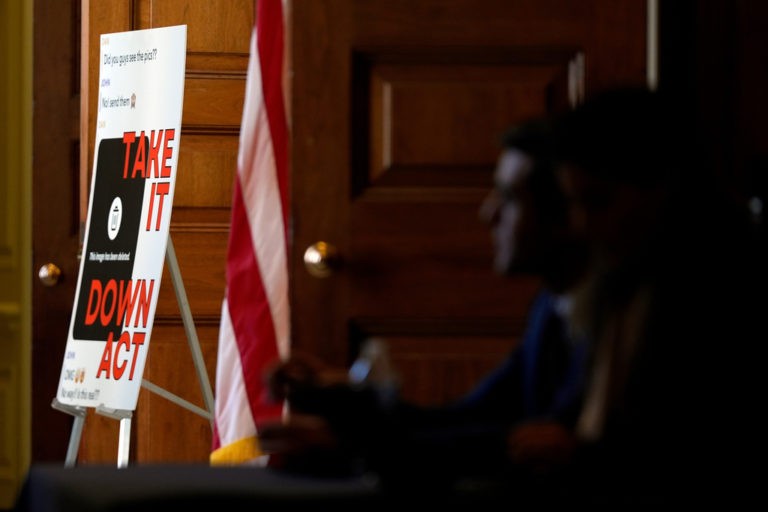
The men — who do not appear to be connected — are among the earliest defendants to face charges under the Take It Down Act, a law signed last year by President Donald Trump that adds stricter penalties for publishing AI-created deepfakes and “revenge porn.” The bill drew bipartisan support, as well as the public backing of first lady Melania Trump.

Under the new law, the men now face up to two years in prison.

Attorneys for Shannon and Hernandez did not immediately respond to a request for comment.

In a statement, Joseph Nocella, the U.S. attorney in Brooklyn, said the men had ”used cutting-edge digital technology to create images that degraded and violated” dozens of women. “This case makes clear that posting deepfake pornography is not a victimless crime,” he added.

Shannon, a resident of New Jersey, published at least 240 albums of AI-generated pornography featuring female politicians, musicians and singers, according to the complaint.

The deepfakes published by Hernandez, of Texas, included both celebrities as well as private women, including recent high school graduates, prosecutors said.

The arrests come as increasingly sophisticated generative AI tools have raised alarm about the online spread of sexually explicit fakes, often depicting minors.

Last month, an Ohio man became the first person convicted under the Take It Down Act after pleading guilty to using AI to generate child sexual abuse material.

In March, two teenage boys received probation for creating explicit AI images of their classmates at an exclusive private school in Pennsylvania.

And in a separate case filed earlier this year, three teenagers in Tennessee sued Elon Musk’s xAI, claiming the company’s Grok tools morphed their real photos into explicitly sexual images.

The high school students are seeking class-action status to represent what the lawsuit says are thousands of people who were similarly victimized as minors.

Adapted from reporting by the Associated Press

Woman at Center of Sprawling Minnesota Fraud Gets Nearly 42-Year Prison Sentence

(Headline USA) A judge on Thursday handed down an extraordinary prison sentence — nearly 42 years — to the former leader of a Minnesota nonprofit who was convicted in a staggering $250 million fraud case that helped ignite an immigration crackdown by the Trump administration.

Aimee Bock ran Feeding Our Future, which had claimed it helped provide millions of meals to needy children during the pandemic. The U.S. Justice Department, however, said she was atop the “single largest COVID-19 fraud scheme in the country.”

“I understand I failed. I failed the public, my family, everyone,” Bock, 45, said in federal court.

After the hearing, authorities announced charges against 15 more people accused of fraud in receiving federal payments for a variety of social services administered through Minnesota’s state government. The FBI said one man jumped from a fourth-floor balcony to avoid arrest.

“We will claw back every dollar you have stolen from the American people,” Assistant Attorney General Colin McDonald said, noting that the government sent more prosecutors and agents to Minnesota this year.

President Donald Trump used the fraud cases against Bock and many others to initially justify a massive surge of federal agents to the Minneapolis-St. Paul area last winter to target immigrants, leading to repeated confrontations between residents and those officers and the deaths of Renee Good and Alex Pretti.

COVID-19 brought changes to a federal program that typically fed children through schools. Restaurants could participate, and food distribution was extended to sites outside schools.

Investigators said Bock’s nonprofit was at the center of a crime network that included a web of partner organizations, phony distribution sites, kickbacks and fake lists of children. Feeding Our Future recruited people to create sites throughout Minnesota, and claims for reimbursement quickly followed, according to the government.

“Aimee was a god,” a witness testified at trial.

Bock had long proclaimed her innocence but was convicted of conspiracy, fraud and bribery. Investigators said she and co-conspirators enriched themselves with international travel, real estate, luxury vehicles and other lavish spending.

“This was a vortex of fraud and you were at the epicenter,” U.S. District Judge Nancy Brasel told Bock.

A co-defendant was sentenced last August to 28 years in prison. Abdiaziz Farah claimed to be serving meals to thousands of children per day, investigators said, but the sites turned out to be parking lots or empty commercial space.

Bock’s lawyer, Kenneth Udoibok, had argued for no more than three years in prison, saying she had provided key information to investigators. He said Bock, a former teacher, had been unfairly portrayed as the mastermind and insisted that two co-defendants were responsible for running the scams.

State auditors found that the Minnesota Department of Education received numerous complaints about Feeding Our Future, but often told the group to police itself. In January, Democratic Gov. Tim Walz said he would not run for reelection after being pounded by Trump about theft in programs that rely on federal cash.

Trump, who has long derided Somalis, last year blasted Minnesota as “a hub of fraudulent money laundering activity.”

“Somali gangs are terrorizing the people of that great State, and BILLIONS of Dollars are missing. Send them back to where they came from,” Trump wrote on social media.

Bock is white, and the U.S. Attorney’s Office says the overwhelming majority of defendants in the cases are of Somali descent. Most are U.S. citizens.

At least 65 people have been convicted in a series of overlapping food fraud cases. Investigations began during the Biden administration.

“This case has changed our state forever,” Joe Thompson, formerly the lead prosecutor in the case, said outside the courtroom. “Aimee Bock did everything she could to earn this long sentence.”

In a fresh batch of criminal cases filed this week in Minnesota, the government said alleged fraud involved $90 million across seven state-managed Medicaid programs.

The defendants include Fahima Mahamud, who was CEO of Future Leaders Early Learning Center, a childcare center in Minneapolis. Over three years, Mahamud’s organization was reimbursed approximately $4.6 million for services on behalf of people who didn’t make a required copayment, prosecutors allege.

A message seeking comment from her lawyer was not immediately returned Thursday. Mahamud earlier this year pleaded not guilty to fraud related to meals.

Two other people were charged with conspiring to get $975,000 in Medicaid subsidies for housing services that were not provided.

Two additional people were accused of receiving $21.1 million by billing Medicaid for autism therapy that was either unnecessary or not provided. Investigators said the two paid families as much as $1,500 per child per month to add their names to the program and get reimbursement.

Minnesota’s Department of Human Services said it helped build the cases. Inspector General James Clark said payments to more than 600 providers have been halted since 2025 because of fraud allegations.

Adapted from reporting by the Associated Press

BREAKING: Tulsi Gabbard Resigns as National Intelligence Director

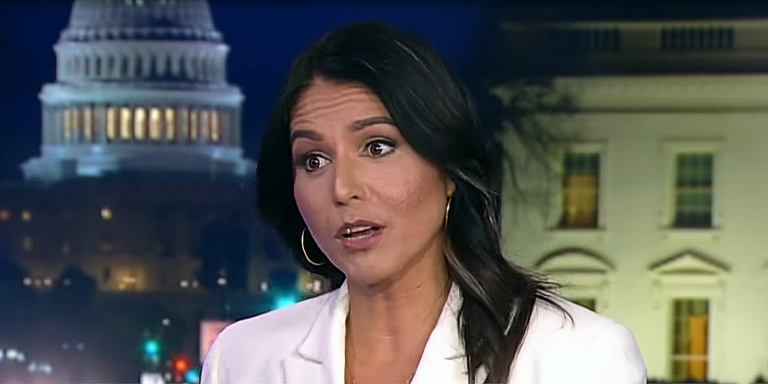
(Ken Silva, Headline USA) Fox News reported Friday that Director of National Intelligence Tulsi Gabbard has submitted her resignation due to her husband having a rare form of cancer.

“Unfortunately, I must submit my resignation, effective June 30, 2026,” she wrote, according to Fox. “My husband, Abraham, has recently been diagnosed with an extremely rare form of bone cancer.”

Gabbard reportedly notified President Donald Trump of her decision today.

Her resignation comes amidst a scandal in which the CIA is accused of spying on her “Director’s Initiatives Group,” which was investigating JFK, RFK, and MLK assassinations, the origins of COVID-19, Crossfire Hurricane, and several other possible deep state conspiracies.

Her resignation also comes about two months after her deputy, National Counterterrorism Center Director Joe Kent, resigning in protest of the Trump administration’s war in Iran.

Kent, whose wife was killed in 2019 by a terrorist in Syria, said on social media Iran “posed no imminent threat to our nation, and it is clear that we started this war due to pressure from Israel and its powerful American lobby.”

“Early in this administration, high-ranking Israeli officials and influential members of the American media deployed a misinformation campaign that wholly undermined your America First platform and sowed pro-war sentiments to encourage a war with Iran,” Kent said in an open letter.

Ken Silva is the editor of Headline USA. Follow him at x.com/jd_cashless.

Two Things Mainstream Pundits Get Wrong in Their Current Gold Narrative

(Mike Maharrey, Money Metals News Service) Gold has dropped more than 11 percent from its all-time high of just over $5,102 an ounce in January, and selling pressure continues to dominate the market. A well-established mainstream narrative is driving the bearish sentiment. However, while seemingly plausible on the surface, this mainstream storyline is missing two extremely important dynamics.

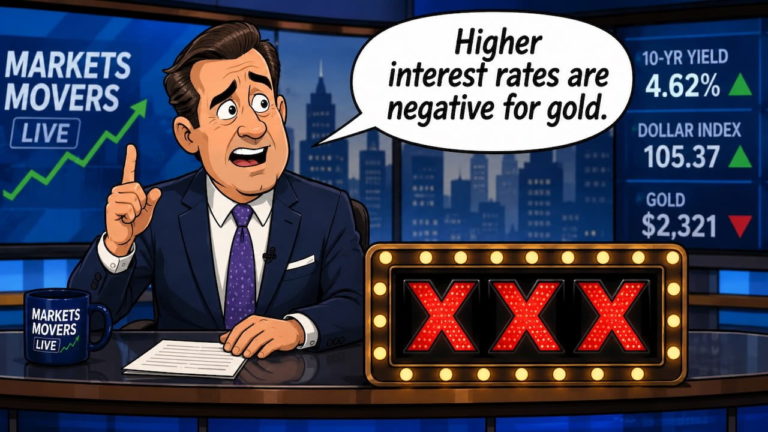
According to the prevailing narrative, the Federal Reserve will have to keep interest rates higher for longer to control inflationary pressures introduced into the economy by skyrocketing oil prices due to the U.S.-Iran war. The central bank may even need to raise rates this year to combat inflation. As the mainstream analysts typically put it, “higher rates are negative for gold because it is a non-yielding asset.” In other words, since gold doesn’t pay interest or dividends, investors will spurn the yellow metal to chase increasing yields in the bond market.

Sounds reasonable, right? However, the mainstream pundits aren’t telling the full story, and two key dynamics are missing from this mainstream narrative.

  1. It ignores real interest rates.
  2. It is far from certain that the Fed will keep rates higher for longer because of thw the Debt Black Hole.

Real Interest Rates

When mainstream analysts talk about rising interest rates, they almost always mean nominal rates. However, the real interest rate is far more important when determining the income-generating potential of an asset.

So, what is the “real” interest rate?

In simplest terms, the real interest rate is the stated rate you see on the news adjusted for price inflation. To calculate the real interest rate, you take the quoted nominal rate and subtract CPI. This tells you how much your investment will yield in real purchasing power over time.

For example, the 10-year Treasury bond is currently yielding just over 4.6 percent. That seems like a pretty good return. However, the CPI is running at 3.8 percent. That means the real interest rate on a 10-year Treasury is only 0.8 percent (4.6-3.8=0.8).

That’s hardly a reason to spurn gold (or silver).

Note that in a low-interest-rate environment or if price inflation is particularly high, real interest rates can go negative. So, if price inflation rises to 5 percent (certainly not an unreasonable target given the oil shock), the real interest rate would be -0.4 percent. In other words, you would lose money in real terms holding a 10-year Treasury.

Keep in mind, the actual inflation rate is higher than the CPI reveals. The government revised the CPI formula in the 1990s so that it understated the actual rise in prices. Based on the formula used in the 1970s, CPI is closer to double the official numbers. So, if the BLS used the old formula, we’d be looking at CPI closer to 6 percent. And using an honest formula, it would probably be worse than that.

That means the real interest rate is generally lower than the calculation indicates.

It should be obvious that a 0.8 percent real return, with the potential for negative yields in the near future, is not a good reason to dump gold for Treasuries.

Can the Fed Really Hold Rates Higher?

Most people just assume that central bankers at the Fed will see hot CPI data and hold rates higher or maybe even raise them. However, it’s not that simple. The economy is dominated by a Debt Black Hole, and it does not play well in a higher interest rate environment.

In other words, keeping interest rates elevated risks crashing this debt-riddled, bubble economy.

As I have put it over and over again, the Fed is in a Catch-22. And when push comes to shove, I believe the central bankers will abandon the inflation fight to rescue the economy.

In fact, the central bank is already struggling to control the yield curve (especially the long end). U.S. government borrowing costs are shooting through the roof. The Fed has restarted quantitative easing (although it will never use that term) to put its big fat thumb on the Treasury market.

So, what happens when the higher rate environment finally pops the bubble?

We know the Fed’s playbook because we’ve seen this movie three times already. (The dot-com bubble, the 2008 Financial Crisis/Great Recession, and the pandemic.)

What do the Fed people do in a crisis?

They cut rates.

They buy Treasuries and mortgage-backed securities.

They print money.

They create inflation.

The Fed ultimately has a choice. It can fight the inflation dragon, or it can surrender to inflation and try to keep the debt bubble inflated and the economy tottering onward. It can’t do both.

History tells us the Fed will pick inflation. It’s the fork they know.

The bottom line is you need to take this mainstream narrative about gold and inflation with a grain of salt. It’s not as cut and dry as your CNBC and Fox Business pundits would like you to believe.


Mike Maharrey is a journalist and market analyst for Money Metals with over a decade of experience in precious metals. He holds a BS in accounting from the University of Kentucky and a BA in journalism from the University of South Florida.

DOJ Health Fraud Bust in Minn. Led to Suspect Jumping From Roof

(Luis CornelioHeadline USA) Over $90 million in allegedly stolen health care funds. A major federal law enforcement operation in a Democratic-governed state. More than a dozen arrests. And one suspect allegedly jumping off a roof to evade arrest.

That was the chaotic scene in Minnesota on Thursday, where Trump administration officials announced charges against 15 defendants accused of participating in fraud schemes involving more than $90 million in intended losses.

The charges include what the DOJ described as two of the largest Medicaid fraud cases in Minnesota history. Some of the defendants are owners of childcare centers and other Medicaid providers, according to the DOJ.

One suspect, 32-year-old Muhammad Abdulqadir Omar, allegedly jumped off a fourth-floor balcony while attempting to evade federal agents trying to arrest him.

Omar faces a grand jury indictment on one count of conspiracy to commit health care fraud and four counts of health care fraud for allegedly submitting $3.3 million in fraudulent claims, according to Fox News. He remains at large, as of Thursday evening.

Two other defendants were charged in connection with a $46.6 million scheme to allegedly defraud a federally funded program for children with autism under the age of 21.

To underscore the scale of the alleged fraud, the DOJ said claims in Minnesota skyrocketed from $600,000 in 2018 to more than $400 million by 2025. Prosecutors claimed that the defendants paid kickbacks to parents in exchange for diagnosing children with autism even when not needed.

A third defendant was charged in a separate $1.4 million scheme involving allegedly fraudulent Medicaid billing for misrepresented services. The program tied to the scheme, named Minnesota’s Integrated Community Supports program, was intended to help recipients receive continuous services while living in their homes.

As alleged by the DOJ, one defendant submitted claims for an individual who had died a day after being billed for services that were reportedly never provided.

This program began in 2021 under a $4.2 million budget but skyrocketed to $183 million by 2025.

Acting Attorney General Todd Blanche said the charges are only “the tip of the iceberg” and warned that additional charges are expected.

“Today, we are holding scammers accountable who ripped off the American taxpayer and harmed those deserving legitimate assistance from these programs,” Blanche said. “These alleged con artists stole taxpayer dollars while providing substandard care for children and abandoning at least one Medicaid recipient as they passed away.”

Farmland Prime for Data Centers, But at What Cost?

(Lauren Jessop, The Center Square) Data center developers are increasingly targeting agricultural land for new projects, and residents in affected communities are mounting opposition, concerned about the industrialization of their farmland.

At the same time, Gov. Josh Shapiro’s administration is pursuing two priorities that can be difficult to balance: attracting data center investment while preserving Pennsylvania farmland. This creates a push-pull between the economic promise of data centers and concerns about farmland loss, local resource demands, and long-term community stability.

The question is whether both objectives can be met without compromising the agriculture industry or the rural character of the communities being asked to host these projects.

During Shapiro’s budget address in February, he announced GRID – the Governor’s Responsible Infrastructure Development standards – a policy framework that sets strict standards for large-scale infrastructure projects like data centers.

He stated, “If companies adhere to these principles, they will unlock benefits from the Commonwealth, including speed and certainty in permitting and available tax credits.”

The standards are intended to reassure communities that economic development will not come at the expense of local resources – a concern especially acute in a state where agriculture contributes billions to the state’s economy.

Pennsylvania leads the nation in preserved farms, Shannon Powers, press secretary for the Pennsylvania Department of Agriculture, told The Center Square.

Since voters approved the state’s Farmland Preservation Program in 1988, Powers said, Pennsylvania has protected 6,704 farms and 665,585 acres in 58 counties from future development, investing more than $1.84 billion in state, county, and local funds.

She noted the administration has continued that commitment, investing nearly $164 million to preserve 555 farms and 46,178 prime acres of farmland across the state – and that Pennsylvania agriculture supports over 48,800 farms, nearly 600,000 jobs, and contributes $132.5 billion annually to the state’s economy.

Powers said Shapiro recognizes agriculture as both part of Pennsylvania’s heritage and essential to its economic future, naming it one of five key industries in his 10-year economic development strategy – the first of its kind in over two decades.

“Over the years, the Shapiro Administration has made meaningful investments to help support business expansion and transition planning, soil and water conservation, and strengthening the workforce and infrastructure on those farms and in the food processing and other businesses that rely on, and in turn, support those farms.”

Those investments underscore the importance of preserving agriculture’s long-term viability as new economic pressures create competition for the same resources farms depend on.

The American Farm Bureau Federation says this current trend creates a dual reality of opportunity and risk – agriculture depends on data centers for innovation and efficiency, and data centers increasingly compete with agriculture for access to land, water, and energy.

Farmland is often cleared, flat, and available in large parcels, making it attractive to developers seeking sites near power grids, fiber routes, and favorable tax or regulatory environments. As more agricultural land is considered for rezoning, even unconverted farmland can gain speculative development value, raising land prices and rental costs for farmers.

The concern is that once farmland is converted to industrial use, it is rarely returned to production. In high-demand areas, data center development can drive land prices sharply higher, and tools like the use of Section 1031 of the tax code may further spread those price pressures as sellers reinvest proceeds into farmland elsewhere.

There are currently no comprehensive state regulations specific to data centers, and while communities like Lower Mount Bethel Township organize to keep hundreds of acres of farmland from being industrially zoned, local and state lawmakers are actively debating legislation to put guardrails in place.

Sen. Katie Muth, D-Royersford, has proposed legislation that would impose a statewide three-year moratorium on hyperscale data center development.

In Muth’s co-sponsorship memo, she said Pennsylvania cannot afford to repeat past mistakes of approving large-scale industrial development first and confronting the consequences later.

A moratorium would be a necessary step in protecting public health, safety, fiscal stability, and environmental integrity while ensuring decisions are informed, coordinated, and equitable, she said.

“In his budget address, the Governor said that we can play a leading role in winning the battle for AI supremacy – but we have to do it in a way that puts the good people of Pennsylvania first,” Muth said. “If state government officials truly want to put the people of Pennsylvania first, they will enact this moratorium to allow local governments a chance to protect their residents. The moratorium will also allow state regulators to use this thoughtful pause as an opportunity to update policies and regulations to protect our Commonwealth.”

Rubio Says Chance of a ‘Peaceful Agreement’ With Cuba Is ‘Not High’

(Dave DeCamp, Antiwar.com) Secretary of State Marco Rubio told reporters on Thursday that the chances of reaching an “agreement that’s peaceful” with Cuba are “not high,” comments that come after the US indicted a former Cuban president, setting up a pretext for a potential attack.

“They’re not going to be able to wait us out or buy time,” Rubio said, referring to the Cuban government.

“We’re very serious. We’re very focused. As I told you a moment ago in the context of Iran, the president’s preference is always a negotiated agreement that’s peaceful … That remains our preference with Cuba. I’m just being honest with you. You know, the likelihood of that happening, given who we’re dealing with right now, is not high,” he added.

The US has been holding negotiations with the Cuban government, which included a visit to Cuba by CIA Director John Ratcliffe, but it’s unclear what sort of deal would satisfy the Trump administration, as Rubio has made clear his ultimate goal is regime change.

When asked if the administration would use force against Cuba, “The president always has the option to do whatever it takes to support and protect the national interest and national security of the United States. He has the option to do that if there’s a threat to the national security of the United States. And he has shown his willingness to do that when he identifies such a threat.”

On Wednesday, the US Justice Department unsealed an indictment against 94-year-old Raul Castro, the brother of long-time leader Fidel Castro, suggesting the administration will follow a similar playbook as it did with its attack on Venezuela to abduct Venezuelan President Nicolas Maduro, though in Cuba, the US will likely try to topple the entire government.

Castro was targeted over his alleged role in the 1996 downing of two planes belonging to the Brothers to the Rescue, a Cuban exile group formed in the US by a CIA-trained Cuban exile involved in attacks on Cuba in the 1960s. At the time, US officials were concerned that Cuba would shoot down BTTR planes because of their frequent intrusions into Cuban airspace. The 1996 incident killed four Cuban Americans.

This article originally appeared at Antiwar.com.