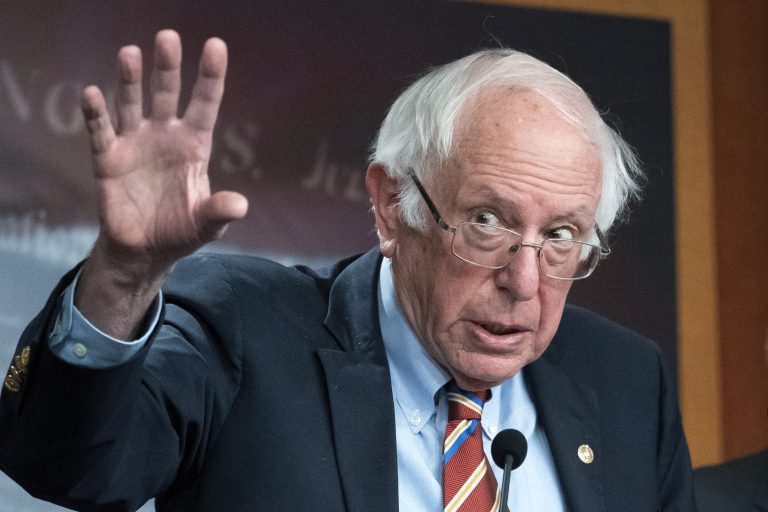
(Headline USA) Sen. Bernie Sanders, I-Vt., this week defended anti-Israel students on college campuses across the country, arguing they were protesting “for the right reasons.”
During an interview with CNN, Sanders admitted that some of the campus protests have gone too far, but he insisted there was a distinction between those intimidating Jewish students and blocking them from accessing certain spots on campus, and those protesting against the Israeli government.
“We don’t want protests that are violent. And we absolutely will not tolerate anti-Semitism, Islamophobia, homophobia or any form of bigotry,” Sanders said.
“But it is important to understand why these protesters are out there and they are out there not because they are pro Hamas,” he continued. “They are out there because they are outraged by what the Israeli government is now doing in Gaza.”
Sanders went on to praise the protesters for arguing against “U.S. continued military aid and money to a right wing extremist Netanyahu government, which is in a destructive war against the Palestinian people.”
Hundreds of students and outside agitators were arrested at Columbia University, the University of California, Los Angeles and other schools this week as local law enforcement cracked down on the illegal student encampments. Those arrested were charged with trespassing, harassment and other misdemeanors.
Sanders is not the only congressional leftist who has defended the protests. Rep. Alexandria Ocasio–Cortez, D-N.Y., also railed against law enforcement for removing the encampments, insisting that the protesting students were “peaceful” and that university officials were participating in “asymmetric crackdowns on Palestinian human rights protests.”
Rep. Ilhan Omar, D-Minn., whose daughter was one of the lead student organizers of the original Columbia University protests, actually joined the students at one point as they rallied against the school administration and demanded its divestiture in companies that were supporting the Israeli military response to Hamas’s Oct. 7 massacre.
However, other Democrats had reportedly begun to get nervous over the optics of the student acts of destruction and blatant hate speech, which drew unfavorable comparisons with the Jan. 6 uprising at the U.S. Capitol and other right-wing protests for which participants had faced serious consequences.
Despite fears that they may be reliant on the support of those radical student activists in the November election, Democrats are attempting to toe a delicate line lest moderate Americans be put off by the extremism and flock to the GOP in response.
Even President Joe Biden reluctantly condemned the behavior and rhetoric of the student protests in a statement on Sunday.
“This blatant anti-Semitism is reprehensible and dangerous—and it has absolutely no place on college campuses, or anywhere in our country,” Biden said.
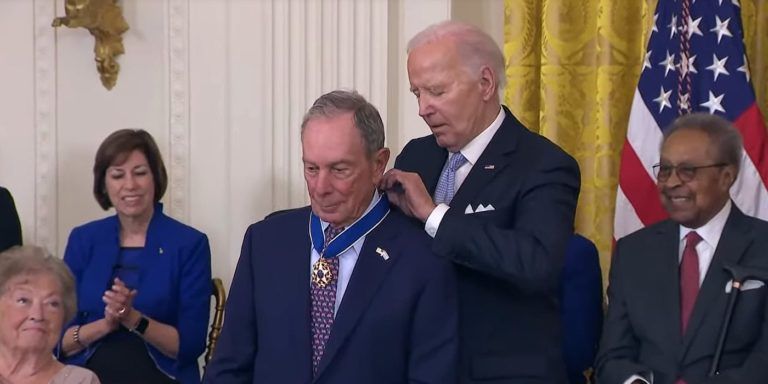
(Headline USA) At a ceremony Friday, President Joe Biden awarded the nation’s highest civilian honor, the Presidential Medal of Freedom, to billionaire Michael Bloomberg—who also happened to have been the top overall donor for Democrats during the 2020 election cycle in which Biden secured the presidency.
According to OpenSecrets, Bloomberg’s total contributions in the 2020 cycle amounted to $152,509,750.
Bloomberg, who initially ran in the Democratic primary against Biden as part of a crowded field of candidates, never gave any funding directly to the future president.
Bloomberg’s 2024 giving thus far has been more restrained, with only eight donations thus far in the cycle. Two of those went to his own super-PAC, Independence USA.
That hesitancy may explain the reason for the sudden recognition of his “exemplary contributions to the prosperity, values, or security of the United States, world peace, or other significant societal, public or private endeavors.”
Indeed, Friday’s ceremony featured a veritable a rat’s nest of corrupt Democrats who, evidently, were being put out to pasture by the 81-year-old president—at least one of whom, like Bloomberg, had a significant role in Biden’s odds-defying ascension to the presidency.
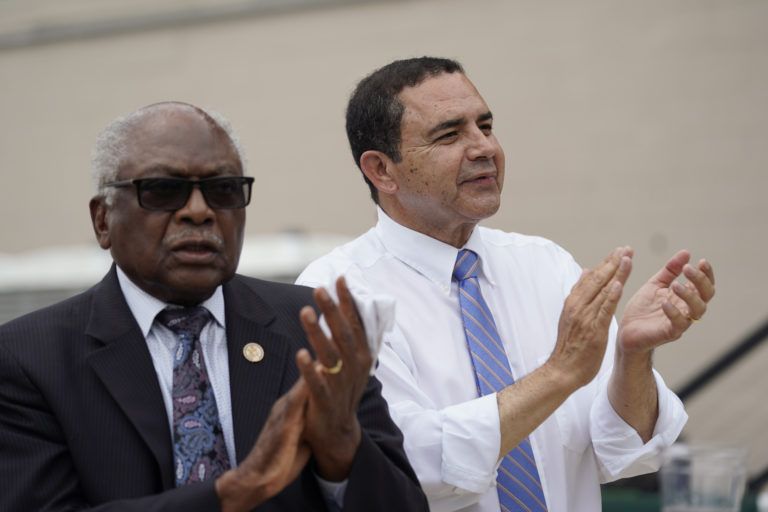
Rep. James Clyburn, D-S.C., bailed out the ex-vice president at a pivotal moment ahead of the 2020 South Carolina primary, which led to a brokered arrangement with several of the remaining candidates to drop out and endorse him ahead of Super Tuesday, leaving only Biden and socialist Sen. Bernie Sanders, I-Vt., who was easy to neutralize once isolated.
Other Democrat honorees at Friday’s ceremony included former House Speaker Nancy Pelosi, former Vice President Al Gore and recently retired climate czar John Kerry. In addition to their tireless work jetsetting around the globe to promote green-energy spending, the latter two both share the distinction of having lost presidential races to George W. Bush.
Honorees outside of the political sphere included talk-show host Phil Donahue, Olympic swimmer Katie Ledecky and Oscar-winning best actress Michelle Yeoh.
In total, Biden awarded 19 individuals with the Medal of Freedom.
“These nineteen Americans built teams, coalitions, movements, organizations, and businesses that shaped America for the better,” the White House said in a statement.
“They are the pinnacle of leadership in their fields,” it continued. “They consistently demonstrated over their careers the power of community, hard work, and science.”
It is not unusual for presidents to award the Medal of Freedom to supporters or allies.
Biden himself received the Medal of Freedom in 2017, when former President Barack Obama gave him the award a week before their administration ended.
Former President Donald Trump gave the award to conservative radio host Rush Limbaugh and Rep. Jim Jordan, R-Ohio.
However, none offered the promise of a direct financial benefit as Bloomberg undoubtedly does.
Headline USA’s Ben Sellers contributed to this report
After pointing out that the Biden administration failed to secure the southern border, Trump said that the White House has reportedly been considering importing Palestinians.
“It should be no surprise that in addition to the millions and millions of people invading our country from the border, crooked Joe is now reportedly planning… to bring massive numbers of Gazans from the Middle East,” Trump said.
He then suggested that by doing so, the Biden administration is effectively setting the scene for an “October 7-style attack” in the United States.
“Under no circumstances should we bring thousands of refugees from Hamas-controlled terrorist epicenters like Gaza to America. We do not need a jihad in the United States of America. We do not need our once-great cities to become hotbeds of terrorism,” Trump said.
After that, Trump said that he would restore his travel ban, suspend refugee admissions and keep the terrorists out of the United States so that this country would not become like the United Kingdom and France.
“I’m not sure if many of you here are big travelers or not, but we’ve seen what happened when Europe opened their doors to jihad. Look at Paris. Look at London. They’re no longer recognizable,” he said.
The Biden campaign shared an excerpt of Trump’s campaign speech on May 1, 2024, hoping that Americans would strongly disagree with Trump. Unfortunately for the far-left intern responsible for the official Twitter account of the Biden campaign, the reaction was completely opposite.
Trump: Look at Paris. Look at London. They're no longer recognizable. I'm going to get myself into a lot of trouble, but you know what? That's the fact, they are no longer recognizable. We can't let that happen here pic.twitter.com/sRr6pdU2rb
Libby Emmons, the editor-in-chief at the Post Millennial, agreed.
“This is an amazing self-own by the Biden-Harris HQ. Trump loves America and our culture and believes it’s worth saving, Biden doesn’t,” she wrote.
This is an amazing self-own by the Biden-Harris HQ. Trump loves America and our culture and believes its worth saving, Biden doesn't. https://t.co/iS5UJ0zKxD
Michael Seifert, the founder of Amazon alternative PublicSquare, also pointed out the delusion of the person who is responsible for the Biden campaign’s social media accounts.
“Does the intern who runs this account realize that the American people are completely behind Trump on this? He’s 10000% right here,” he wrote.
Does the intern who runs this account realize that the American people are completely behind Trump on this?
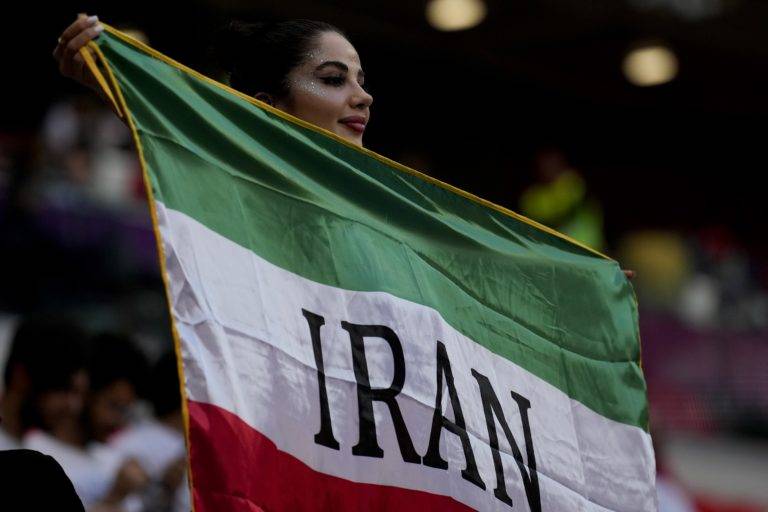
(Dmytro “Henry” Aleksandrov, Headline USA) A college in Iran has offered free tuition to American far-left students who were expelled for participating in anti-Israel protests, with one of the professors there calling the radicals “our people” who would take the side of Iran in a war with the United States.
The head of Shiraz University, Mohammad Moazzeni, made the scholarship proposal on state-run TV while discussing the widespread wave of Jew-hating protests on college and university campuses across the country, the New York Postreported.
“Students and even professors who have been expelled or threatened with expulsion can continue their studies at Shiraz University and I think that other universities in Shiraz, as well as Fars Province, are also prepared,” he told Iranian state-owned Press TV.
However, a professor at the University of Tehran went even further by saying that these pro-Hamas supporters are “our people.”
“These [American students] are our people,” Professor Foad Izadi said.
He then explained that the reason why Iran was thrilled about these college uprisings was because pro-terror students were more likely to support the country if it went to war against the U.S.
“If tensions between America and Iran rise tomorrow or the day after, these are the people who will have to take to the streets to support Iran. Sooner or later, this kind of support for the Zionist regime by the American regime will diminish. It might not stop completely, but its diminishing is important. This is why the demonstrations [on US campuses] are important,” Izadi said.
Academic and legal analyst Jonathan Turley responded to the recent news by making fun of far-left students who would not be even able to survive in Iran because the only belief these students and Iranians share is a pure hatred of Jews.
“Now this could truly be educational… This could be the single most transformative educational experience of their lives… Iranian universities are making the ultimate pitch to come for free education and stay for the free amputations,” he wrote.
(Mike Maharrey, Money Metals News Service) Central banks continued to steadily add gold to their reserves in March. On net, central banks globally increased their gold holdings by 16 tons, according to the latest data compiled by the World Gold Council. Buyers added 40 tons of gold to their reserves. This was offset by a net 25 tons in sales.
The Central Bank of Turkey was the biggest buyer in March, adding 14 tons of gold to its reserves. The Turkish economy is being ravished by high price inflation. In April, the Turks reported a 69.8 percent increase in prices on an annual basis.
Last year, Turkey was a net seller, liquidating 160 tons of gold in the spring of 2023. The central bank returned to buying in the third quarter of last year.
According to the World Gold Council, the big gold sale last year was a specific response to local market dynamics and didn’t appear to reflect a change in the Turkish central bank’s long-term gold strategy. The Turkish central bank sold gold into the local market to satisfy demand after the government imposed import quotas in an attempt to improve its current account balance. The country is running a significant trade deficit.
The Reserve Bank of India added 5 tons of gold to its stash in March. The Indian Central Bank has been buying gold since 2017. Over that period, India has increased its gold holding by over 260 tons.
An Indian economist told the Times of India that the push to accumulate gold was based on both political and economic reasons. He said that the “reliability” of the U.S. dollar has “diminished.” He noted the “noticeable decline” in the confidence in U.S. dollar assets. Another economist told the Times, “It makes a lot of sense (to invest in gold), given the increased volatility in the FX market, elevated interest rates in the U.S., and, of course, also as the central banks in each economy would like to diversify the asset classes in which they are parking their reserves.”
China also added five tons of gold to its official reserves in March.
The People’s Bank of China has increased its gold hoard for 17 straight months. China officially holds 2,262 tons of gold. The Chinese have added over 300 tons of gold to their reserve since they resumed reporting gold purchases in October 2022.
The People’s Bank of China increased its stash by 1,448 between 2002 and 2019, and then suddenly went dark until it resumed reporting in the fall of 2022. There is speculation that the Chinese were still adding gold to their holdings off the books during those silent years.
In fact, China may hold far more gold than it officially reports. As Jim Rickards pointed out on Mises Daily back in 2015, many analysts believe that China keeps several thousand tons of gold “off the books” in a separate entity called the State Administration for Foreign Exchange (SAFE).
The National Bank of Kazakhstan resumed buying gold in February and continued in March with a 4-ton increase in its reserves. Kazakhstan tends to shift back and forth between buying and selling.
Several other central banks added gold in March:
Singapore – 4 tons
Russia – 3 tons
Poland – 1 ton
Czech Republic – 1 ton
Kyrgyz Republic – 1 ton
Uzbekistan sold 11 tons of gold in March after reducing its holdings by 12 tons in February. It is not uncommon for banks that buy from domestic production – such as Uzbekistan and Kazakhstan – to switch between buying and selling.
Thailand reported a 10-ton decrease in its gold holding. According to the World Gold Council, the decrease was due to an adjustment in reporting only gold with a purity of at least 995/1,000.
Jordan was the other notable seller, reducing its gold reserves by 4 tons.
The World Gold Council summed it up this way:
“Buying strength has continued into 2024, with emerging market banks the main driving force for both purchases and sales.”
Earlier this year, the World Gold Council said the continuation of gold buying supports its expectation that “2024 will be another solid year of central bank gold demand.”
“Last year central banks placed great emphasis on gold’s value in crisis response, diversification attributes, and store-of-value credentials. A few months into 2024 the world seems no less uncertain meaning those reasons for owning gold are as relevant as ever.”
According to the World Gold Council, central banks net gold purchases totaled 1,037 tons in 2023. It was the second straight year central banks added more than 1,000 tons to their total reserves.
Central bank gold buying in 2023 built on the prior record year. Total central bank gold buying in 2022 came in at 1,136 tons. It was the highest level of net purchases on record dating back to 1950, including since the suspension of dollar convertibility into gold in 1971.
China was the biggest buyer in 2023.
Analysts at ANZ Bank recently said they expect central bank gold buying to remain hot for at least the next six years. According to these analysts, “Depleted trust in the U.S. fixed-income assets and the rise of non-reserve currencies are other themes that could support central bank gold buying.”
Mike Maharrey is a journalist and market analyst for MoneyMetals.com with over a decade of experience in precious metals. He holds a BS in accounting from the University of Kentucky and a BA in journalism from the University of South Florida.
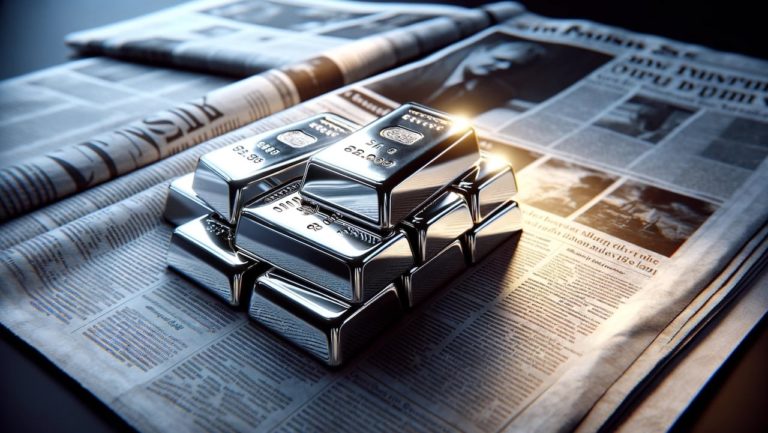
(Mike Maharrey, Money Metals News Service) Industrial demand for silver set a record in 2023 driven by a significant increase in silver offtake in the solar energy sector.
This was one of several stories on the silver market featured in the latest edition of Silver News published by the Silver Institute.
Industrial demand for silver came in at 654.4 million ounces in 2023.
According to the Silver Institute, “Higher than expected photovoltaic (PV) capacity additions and faster adoption of new-generation solar cells raised global electrical and electronics demand by a substantial 20 percent.”
Other green energy initiatives, including power grid construction and vehicle electrification, also boosted silver demand.
Chinese silver industrial demand rose by 44 percent to 261.2 million ounces.
Despite record industrial demand, overall silver offtake dropped 7 percent in 2023, but this was compared to record demand the previous year. Even so, with silver mine production declining by 1 percent, 2023 with a structural silver market deficit of 184.3 million ounces. It was the third straight year silver demand outstripped supply.
The Silver Institute projects silver demand will grow by 2 percent in 2024, with industrial demand posting another all-time high. This will likely lead to the fourth straight annual structural market deficit somewhere in the neighborhood of 215 million ounces.
According to the report, silver will be an important material in the development of AI.
This was just one of several interesting stories reported in the latest edition of Silver News.
Here are some of the highlights:
Scientists have discovered that short zaps of electricity can enhance silver’s ability to destroy cancerous cells. According to a journal article, extremely short electrical pulses at target cells enhance the ability of low levels of silver nanoparticles to enter the cells and destroy them. In simplest terms, the pulses open passageways for the silver nanoparticles to enter without having to fight their way through the tougher outside membrane.
A recently published article by Market Trends Report highlights the large number of factors that impact the price of silver. These include gold and copper prices, exchange rates, interest rates, inflation, and stock prices, not to mention overall economic conditions. “There is no magic formula or combination of factors that consistently and accurately explains either the level of or change in the silver price. While the silver price is not a random walk neither is its future path entirely predictable based on past trends.”
Researchers in Thailand have discovered a way to retrieve the silver in batteries in an environmentally friendly and scalable manner. This discovery is timely as many jurisdictions are requiring or considering steps to ensure that all batteries are recycled instead of ending up in landfills.
Researchers in China have discovered a process to create a thinner silver film for use in optoelectronics. This includes devices such as electronic light sensors. “The atomic-level surface smooth permits excellent visible transparency, electrical conductivity, and the lowest haze among all existing transparent conductors.
Mike Maharrey is a journalist and market analyst for MoneyMetals.com with over a decade of experience in precious metals. He holds a BS in accounting from the University of Kentucky and a BA in journalism from the University of South Florida.
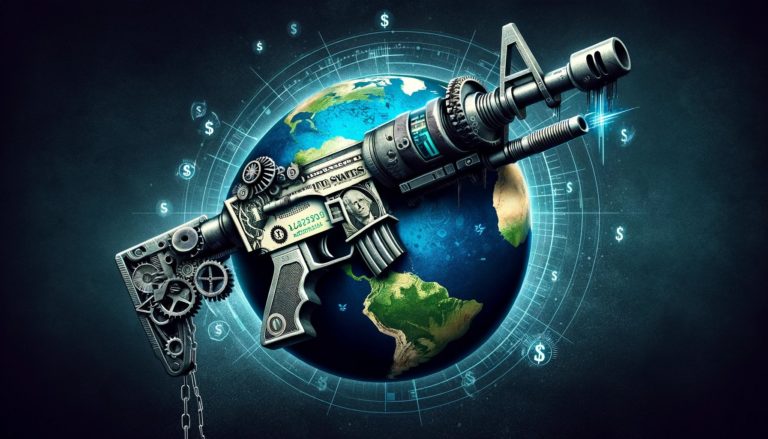
(Money Metals News Service) Money Metals’ Midweek Memo host Mike Maharrey recently interviewed Saleha Mohsin, a senior correspondent at Bloomberg News and author of the new book Paper Soldiers: How the Weaponization of the Dollar Changed the World Order.
The discussion delved into the motivations behind Mohsin’s book and explored key topics surrounding U.S. currency policy, the Treasury’s role in foreign and domestic policy, and the future of the dollar as a global reserve currency.
Who is Saleha Mohsin?
Saleha Mohsin / PHOTO: MoneyMetals.com
Saleha Mohsin is a highly respected journalist known for her expertise in covering economic and financial policy. With years of experience as a correspondent for Bloomberg News, she has specialized in reporting on U.S. government economic policies, particularly those related to the U.S. Treasury Department and currency regulations. Her in-depth understanding of these complex issues is reflected in her work and in her role as the host of the “Big Take DC” podcast, where she delves into policy-related discussions.
In addition to her journalism career, Mohsin is also the author of Paper Soldiers: How the Weaponization of the Dollar Changed the World Order. This book offers a comprehensive look at the influence of the U.S. Treasury and the global impact of the U.S. dollar. Her career began in Norway, where she gained insights into European economic policies before transitioning to the U.S., where she continued to expand her expertise in the country’s financial systems. Her background and experience have established her as a trusted voice on global economics and policy.
Exploring the Genesis of the Book
Mohsin shared that her interest in the dollar and the U.S. Treasury Department started in 2013 while covering currency policy in Norway. Later, after relocating to the U.S., she recognized the nuanced interplay between the Treasury and other institutions. She noted that there are many books on the Federal Reserve, but not many focused specifically on the Treasury. This gap inspired her to dive deeper into the Treasury’s role and uncover its influence on the U.S. and global economy.
Defining the Weaponization of the Dollar
Mohsin defined the weaponization of the dollar in two ways. First, the dollar’s value as measured by foreign exchange rates, and second, its hegemony as the world’s dominant reserve currency. The dollar’s unique position allows the U.S. to wield substantial influence over global financial transactions, giving it the power to impose economic sanctions on entities deemed counter to U.S. interests. Mohsin highlighted the exponential increase in U.S. sanctions usage over the last two decades, emphasizing that such frequent use has prompted allies and adversaries alike to consider alternatives to the dollar.
The Rise of Alternative Economic Blocs
Discussing the rising number of countries applying to join the BRICS economic bloc, Maharrey and Mohsin explored how U.S. currency policy has driven nations to seek alternatives. She pointed out that the BRICS group, consisting of Brazil, Russia, India, China, and South Africa, is looking to expand by including oil-rich countries like Saudi Arabia. This reflects a trend toward a multipolar world where other nations are striving to create their own financial systems, lessening their dependence on the dollar.
Domestic Threats to the Dollar
Contrary to initial assumptions about her book, Mohsin emphasized that domestic threats pose a greater risk to the dollar than external factors. She argued that the U.S. fiscal deficit, now over $34 trillion, and deep political divisions are the most significant dangers. The dollar’s strength relies on the global faith in the U.S. democratic system and its institutions. Should that faith waver, the dollar’s dominant position may weaken.
Impact of 9/11 on Dollar Weaponization
Mohsin traced the origins of the dollar’s weaponization to post-9/11 policies. The terrorists behind the attacks used the global financial system to move money, leading the U.S. to recognize the need to monitor and control financial flows more closely. The Treasury Department became instrumental in imposing economic sanctions as a tool of foreign policy, and the USA PATRIOT ACT established the Terrorism and Financial Intelligence Unit to strengthen Treasury’s capabilities in this regard.
Balancing Power and Responsibility
When asked how the U.S. can balance the responsible use of its financial tools, Mohsin stressed that while the U.S. has maintained its dominant position thus far, complacency is a risk. She remains optimistic that the U.S. can maintain its influence but cautioned that it will require vigilance and a commitment to maintaining a strong democracy.
Here are some key questions and answers from the interview between Mike Maharrey and Saleha Mohsin:
What motivated you to write this book?
Mohsin explained her background covering currency policy since 2013, starting in Norway and then moving to the U.S. She saw a gap in literature specifically focused on the Treasury Department and its influence on economic policy, which motivated her to write the book.
What does “weaponization of the dollar” mean?
The weaponization of the dollar can be understood in two ways. The first is its exchange rate value, and the second is its role as a global reserve currency. The dollar’s dominance allows the U.S. to influence global financial transactions and impose economic sanctions, which has been used increasingly over the last two decades.
How does the weaponization of the dollar impact global financial systems?
Mohsin highlighted that sanctions can restrict access to the dollar and the global financial system, significantly impacting economies. As the U.S. continues to use sanctions, countries seek ways to reduce their dependence on the dollar by finding alternative systems.
What are some downsides of economic sanctions as a policy tool?
Sanctions can significantly impact countries and companies by cutting them off from the global financial system, making it harder to conduct business. For the U.S. and its allies, overusing sanctions can encourage other nations to create systems that bypass the dollar.
How does the Treasury Department fit into this equation?
According to Mohsin, the Treasury plays a critical role in enforcing sanctions and tracking financial flows, especially post-9/11. The PATRIOT ACT expanded its responsibilities to include a specialized unit for terrorism and financial intelligence.
What are some domestic threats to the dollar?
She emphasized that domestic issues, such as the growing fiscal deficit and political polarization, are the greatest threats to the dollar. The strength of the dollar relies heavily on global trust in U.S. democracy and its institutions.
What impact did 9/11 have on the weaponization of the dollar?
9/11 significantly changed the Treasury’s role, as the first act in the war on terror was to give the Treasury authority to apply economic sanctions and track financial flows. This led to the development of more sophisticated sanctions tools.
How can the U.S. responsibly balance the use of financial tools?
Mohsin highlighted that the U.S. needs to avoid complacency and maintain its strong democracy to ensure the continued influence of the dollar. She expressed optimism that the U.S. can maintain its power, but this requires careful management of its financial policies and institutions.
Conclusion
(Interview Begins around 6:07 mark)
Saleha Mohsin’s Paper Soldiers provides an in-depth exploration of the complex role the dollar plays in the global economy, highlighting both its strengths and vulnerabilities. Her interview with Maharrey underscores the importance of understanding U.S. currency policy’s far-reaching impact and the challenges it faces domestically and abroad.
To buy Saleha Mohsin’s book, Paper Soldiers: How the Weaponization of the Dollar Changed the World Order, you can buy it here.
(Headline USA) Fears of Democrats taking over the House of Representatives ahead of the next congressional term may have waned slightly as one of the most politically vulnerable Democrats now faces serious criminal charges.
However, the indictment raises questions whether Rep. Henry Cuellar, D-Texas—a sometime critic of the Biden administration’s open-border and abortion policies—may have become the latest victim of political persecution at the hands of the corrupt Justice Department as the Left seeks to run a more radical candidate in his district.
Cuellar and his wife were indicted on conspiracy and bribery charges Friday in connection with a DOJ probe into ties between American business leaders and the former Soviet republic of Azerbaijan.
From 2014 to 2021, Cuellar and his wife accepted nearly $600,000 in bribes from an Azerbaijan-controlled energy company and a bank in Mexico. In exchange, Cuellar agreed to advance the interests of the country and the bank in the U.S., according to the indictments.
Among other things, Cuellar agreed to influence legislation favorable to Azerbaijan and deliver a pro-Azerbaijan speech on the floor of the U.S. House, the indictment states.
The longtime congressman said he and his wife, Imelda Cuellar, “are innocent of these allegations” in a statement Friday that echoed a similar scandal surrounding Sen. Bob Menendez, D-N.J.
“Everything I have done in Congress has been to serve the people of South Texas,” Cuellar said. “Before I took action, I proactively sought legal advice from the House Ethics Committee, who gave me more than one written opinion, along with an additional opinion from a national law firm.
“Furthermore, we requested a meeting with the Washington D.C. prosecutors to explain the facts and they refused to discuss the case with us or hear our side.”
Menendez stepped down from his position as chair of the Senate Foreign Relations Committee following his and his wife’s indictment last December related to a DOJ probe of bribery tied to Egypt and Qatar. However, he ignored widespread bipartisan calls to resign from his Senate seat altogether.
It is unlikely given the narrow margin in the House and the hopes Democrats have of regaining the majority that current House Minority Leader Hakeem Jeffries, D-N.Y. will issue any such demands of Cuellar under the circumstances.
Nonetheless, there is likely to be tremendous pressure on the centrist lawmaker to drop his reelection bid.
Cuellar, one of the last pro-life Democrats in Congress, narrowly defeated progressive challenger Jessica Cisneros, his one-time intern, by fewer than 300 votes in a primary race in 2022.
Neither Cuellar nor his attorney immediately responded to calls seeking comment on the matter. Officials with the U.S. Department of Justice declined to discuss the matter.
Cuellar was at one time the co-chair of the Congressional Azerbaijan Caucus.
The FBI searched the congressman’s house in the border city of Laredo in 2022, and Cuellar’s attorney at that time said Cuellar was not the target of that investigation.
That search was part of a broader investigation related to Azerbaijan that saw FBI agents serve a raft of subpoenas and conduct interviews in Washington, D.C., and Texas, a person with direct knowledge of the probe previously told The Associated Press. The person was not authorized to discuss it publicly and spoke on condition of anonymity.
Federal disclosures show that the nine-term congressman traveled to Azerbaijan in 2013. Two years later, Cuellar’s office announced an agreement between a Texas university and an organization called the Assembly of Friends of Azerbaijan for the purposes of collaborating on oil and gas research and education.
Quoting an unnamed senior Defense Department official, Reuters reported on Thursday that Russian forces were not mingling with U.S. troops, but were using a separate hangar at Airbase 101, which is next to Diori Hamani International Airport in Niger’s capital.
“The move by Russia’s military … puts U.S. and Russian troops in close proximity at a time when the nations’ military and diplomatic rivalry is increasingly acrimonious over the conflict in Ukraine,” Reuters reported.
“It also raises questions about the fate of U.S. installations in the country following a withdrawal.”
Responding to the report, Defense Secretary Lloyd Austin downplayed the development.
“The Russians are in a separate compound and don’t have access to U.S. forces or access to our equipment,” Austin reportedly told a press conference in Honolulu.
“I’m always focused on the safety and protection of our troops … But right now, I don’t see a significant issue here in terms of our force protection.”
Austin’s comments aside, Russians moving into a U.S.-occupied base is the latest indicator that the American empire is struggling to project power in Africa.
Indeed, Niger’s ruling junta ended an agreement last month that allows U.S. troops to operate in the West African country. The government of neighboring Chad in recent days also has moved to expel the U.S.
Niger apparently wants the U.S. out of its country so badly that it has stopped processing visas for them. Rep. Matt Gaetz, R-Fla., whose office investigated Army whistleblower complaints about the situation in Niger, revealed last month that troops there are also experiencing water and medicine shortages.
Right now in Niger, the government has stopped the U.S. from doing diplomatic overflight missions.
We have Army soldiers in Niger who aren’t getting their troop rotations, their medicine, or even their basic supplies. I currently have constituents there who can’t even get clean… pic.twitter.com/DpMXb2AThY
Gaetz accused Secretary of State Antony Blinken of covering up how bad the situation is in Niger because he called the country a “model democracy” last year—months before a coup took place.
Gaetz said he fears this coverup will lead to another Benghazi—the 2012 terrorist attack against two U.S. government facilities in Benghazi, Libya, which came after the Obama administration spearheaded a coup there.
“U.S. embassy Niger has been blocking the intelligence. I fear that as we speak, the conditions are forming for another Benghazi-style attack,” he said on the House floor this week.
Despite Gaetz’s seemingly valid concerns, the U.S. is now waffling on whether it will respect Niger’s sovereignty.
“There’s still negotiations underway,” Joint Chiefs Vice Chairman Adm. Christopher Grady, the nation’s second-highest-ranking military officer, said in an interview. “I don’t believe there is a final decision on disposition of U.S. forces there.”
It turns out that Biden not only was fabricating the claim in order to boost his political appeal—just as he often has dishonorably appropriated elements of the U.S. Civil Rights Movement into his personal history—but he also was using the bogus claim to cover up financial fraud after taking a personal vacation with his brother Frank on the taxpayer’s dime, the Washington Free Beacon reported.
In fact, legendary Secretary of State Henry Kissinger spent his final days in office examining then-Sen. Biden’s misuse of federal funds on his 1976 South Africa trip before Kissenger’s successor, Carter administration official Cyrus Vance Sr. took over. (Vance’s son, incidentally, would go on to launch the Manhattan lawfare investigation into then-President Donald Trump’s business records, which was prosecuted by his successor, Alvin Bragg.)
Kissinger, who fled Europe in 1938 to escape Nazi persecution, served as secretary of State under two Republican presidents—Richard Nixon and Gerald Ford—between 1969 and 1977.
In January 1977, just days before Kissinger was to leave office, he penned a cable indicating that he had been reviewing Biden’s receipts from that trip.
“Senator Joseph R. Biden Jr. Traveled with [Congressional delegation Rep. Charles Diggs ,D., Mich.] … Would appreciate embassy cabling amounts returned and pouching xeroxed copies of reciepts,” Kissinger wrote to several U.S. embassies in Africa.
Biden’s trip came under scrutiny because, in a now all-too-familiar scenario blending Biden family business with his official duties, the first-term Delaware lawmaker used federal tax dollars to bring his brother Frank—then a senior at San Francisco State University—along on the trip.
A little over a year later, Biden would justify the decision by saying that his brother was helping him conduct official U.S. business in Africa.
“I didn’t take my staff, so he [Frank] was my staff, and for company,” Biden claimed when explaining himself in 1978, before attempting to play the sympathy card about his first wife’s 1972 death in an automobile accident. “I wasn’t married then.”
Diggs, the House lawmaker who had led the expedition, ultimately was convicted on 29 federal corruption counts. However, by time the focus fell back on Biden, many of the Pentagon’s records of the trip had already been destroyed, noted a November 1978 article that ran on page 12 of Wilmington, Delaware’s Morning News, framing it as a meritless allegation from Biden’s GOP senatorial challenger in that year’s re-election race.
Years later, the future president would fabricate his arrest myth, which was so absurd that even the left-wing fact-checkers at Snopes do not believe his tale.
It is unclear who was caring for Biden’s two young sons, Hunter and Beau, as he went on the Africa junket with his younger brother, which included a sightseeing safari.
Frank Biden, an attorney and occasional con-man in Florida, has gone on to become the family black sheep, making the troubled Hunter seem like a Baptist minister by comparison.
Frank has rarely been included in the family business operations, but that hasn’t kept him from capitalizing on the family name and likeness to conduct his own influence-peddling schemes.
He notoriously was found liable to the orphaned daughters of a man who died as the result of a 1999 drunken-driving incident in a rented Jaguar. However, Frank thus far has refused to pay the $1 million he owes in judgment.