


Sound Money: The Enemy of Big Government and a Friend to Liberty

(Mike Maharrey, Money Metals News Service) We talk a lot about sound money around here. Primarily, we focus on the financial impacts of unsound fiat currency on the American people. It steals their wealth and robs them of purchasing power.

However, there is another pernicious aspect of fiat money that gets less attention.

It facilitates big government and erodes individual liberty.

Economist Ludwig von Mises believed it was imperative to understand this aspect of the fiat money regime. He said sound money is a bulwark for liberty in the same sense as constitutions and bills of rights.

“It is impossible to grasp the meaning of the idea of sound money if one does not realize that it was devised as an instrument for the protection of civil liberties against despotic inroads on the part of governments. Ideologically it belongs in the same class with political constitutions and bills of rights.”

In other words, sound money restrains governments. And without restraints, people will always use and grow government power for their own gain — to the detriment of the people.

Historian Tom Woods described how unsound money leads to a multitude of problems far beyond the realm of finances.

“The destruction of sound money around the world has laid the groundwork for the destruction of so much that is good and beautiful. There are so many bad trends — in fields as disparate as science, food, architecture, and family life, and a great many more besides — that can be traced back to bad money. And it is at the root of why no matter what we try, the world’s bloated regimes cannot be kept under control.”

This explains why inflation is so relentless.

Every once in a while, it becomes so bad that government policymakers have to make a show of bringing it down. But they don’t want to end inflation. In fact, inflation is the plan.

Simply put, the ability to print money is power.

I often say that the Federal Reserve is the engine that drives big government. That’s because in the U.S., the central bank facilitates money creation. Without the relentless money printing and its mechanizations within the bond market, the U.S. government wouldn’t be able to borrow and spend to the extent that it does. That means that without currency debasement, the government would be smaller and less intrusive.

The reality is, the American people wouldn’t accept the level of taxation necessary to maintain the warfare/welfare state. There would be a tax revolt. So, the government resorts to a less obvious tax.

The Inflation Tax!

Benjamin Franklin recognized inflation (or depreciation, as the founding generation called it) as a tax more than 200 years ago.

“The general Effect of the Depreciation among the Inhabitants of the States, has been this, that it has operated as a gradual Tax upon them. Their Business has been done and paid for by the Paper Money, and every Man has paid his Share of this Tax according to the Time he retain’d any of the Money in his Hands, and to the Depreciation within that Time. Thus it has proved a Tax on Money.

Gouverneur Morris was another influential founding father, and he made a similar observation.

“The Resources of the Country may be drawn forth by our Paper at the same Time it must be confessed that this Paper will thereby be less valuable. After all the Debt does not increase for a certain Sterling Sum which would have paid it one Year ago will pay it now. The Depreciation in the Interim hath operated as a Tax.”

Of course, in modern America, the government doesn’t just print off $100 bills and spend them. The process is much more complex.

First, the government borrows money by issuing bonds.

The central bank can lower those borrowing costs by keeping interest rates artificially low. This also incentivizes private borrowing, which expands the money supply in a fractional reserve system. Keep in mind, inflation is not merely “rising prices.” It is the increase in money and credit. Rising prices are one symptom of this monetary inflation.

During a crisis, the Fed can get even more aggressive by launching quantitative easing (QE) operations. The central bank buys some of those bonds on the open market, creating artificial demand for U.S. debt (debt monetization). That allows the government to borrow more at a lower interest rate than it otherwise could.

Here’s the catch.

The Fed buys those bonds with money created out of thin air, increasing the money supply and effectively raising the inflation tax.

This is why government people love fiat currency. And it’s why they hate gold and silver.

If you want an example of how fiat money facilitates government spending, look no further than the pandemic era. The Federal Reserve monetized nearly all of the massive debt the federal government ran during that period, with nearly $5 trillion in QE. We paid for that stimulus a few years later at the grocery store and gas station.

This monetary malfeasance would have been impossible in a sound money system.

Simply put, sound money checks government growth by restraining borrowing and spending.

If you want limited government, freedom, and liberty, you have to support sound money. In a fiat system, government will inevitably grow, swallowing up more and more of the private economy, crowding out liberty, and grinding the citizenry into poverty. In an unbacked paper money system, the only check on the growth of government becomes the ultimate collapse of the currency.

This unholy union between big government and unsound money trickles into every area of society. As economist Saifedean Ammous argued, the incentives inherent in a fiat system drive significant societal shifts that are overwhelmingly negative.

In a letter to Jabez Bowen of Rhode Island, George Washington may have summed up the long-term impact of fiat systems best.

“Paper money has had the effect in your State that it ever will have, to ruin commerce – oppress the honest, and open a door to every species of fraud and injustice.”


Mike Maharrey is a journalist and market analyst for Money Metals with over a decade of experience in precious metals. He holds a BS in accounting from the University of Kentucky and a BA in journalism from the University of South Florida.

US Military Says It Bombed Southern Iran

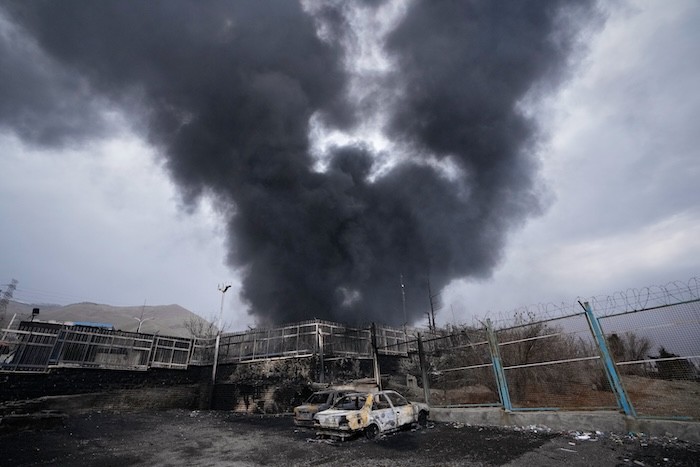
(Dave DeCamp, Antiwar.comUS Central Command on Monday took credit for attacks on Iran after Iranian media reported explosions in the southern port city of Bandar Abbas on the Strait of Hormuz.

In a statement to CNN, CENTCOM spokesman Timothy Hawkins framed the attack on Iran as “self-defense” even though the strikes come as the US is enforcing a blockade on the country that’s part of the same war of aggression the US and Israel launched against the Islamic Republic on February 28.

The USS George H.W. Bush sails in the Arabian Sea as it enforces a blockade on Iran on May 3, 2026 (US Navy photo)

“US forces conducted self-defense strikes in southern Iran today to protect our troops from threats posed by Iranian forces,” Hawkins said, adding that the US targeted missile launch sites and Iranian boats he claimed were attempting to lay mines. “US Central Command continues to defend our forces while using restraint during the ongoing ceasefire,” he said.

Unconfirmed reports say that four members of Iran’s Islamic Revolutionary Guard Corps (IRGC) were killed in the attack on Bandar Abbas. Fox News reporter Jennifer Griffin said on X that she was told the US strikes on Iran were “over for now,” but it’s unclear how Iran will respond, and the US attack could mean the resumption of full-blown war in the region, something President Trump has repeatedly threatened.

Since the US and Iran agreed to a ceasefire last month, the US has bombed Iranian ports at least one other time and has attacked several Iranian commercial vessels in its enforcement of the blockade, which Tehran says is a violation of the truce deal since it’s an act of war.

Atlanta Gave Muslim Action Group a $35k Donation, Didn’t Track How it Got Spent

(The Center Square) Atlanta’s city government gave a Muslim activist group that raised money for Gaza a $35,000 donation on top of $250,000 in federal grants, a continuing investigation by The Center Square has found.

The donation came from taxpayer funds and was among four payments made to the Chicago-based Inner-City Muslim Action Network and three other nonprofits in 2023. The City Council voted to approve, its resolution saying the money was to “support public safety patrols and other public safety initiatives” by aiding community organizations that hire off-duty police officers, organize neighborhood watches and take other steps to protect residents and businesses.

Each nonprofit signed a contract requiring them to submit detailed annual reports on how they spent the money, a combined $205,000. The Buckhead Public Safety Foundation ($100,000), the MLK-Ashby Merchants Association ($35,000), and the Cascade Business Association ($35,000) received the remainder.

The required spending reports could answer questions of how exactly nongovernmental organizations spent taxpayer money on public safety. But once the checks passed hands, the city apparently never followed up. The Center Square found no evidence the reports were ever collected – or that any city department was responsible for enforcing the requirement.

The missing records came to light through more than a half-dozen requests filed under the Georgia Open Records Act. According to the responses, the reports are not on file with the Mayor’s office, Contract Compliance, Finance, Procurement, the Law department, City Council, or the Atlanta Police Department.

City payment records describe the checks as donations – which a legal expert said raises questions about compliance with the Georgia Constitution’s prohibition against local governments giving away assets without receiving something of value in return.

“The job of enforcing the contract should be the city executives’ who entered into the contract,” said attorney Lester Tate, a former president of the State Bar of Georgia who has litigated cases involving the Gratuities Clause barring unconditional donations. “But it appears that they’re just not doing their job.”

Money for Muslims

The Center Square reported earlier this year how the Inner-City Muslim Action Network (IMAN) received a quarter-million more dollars from Atlanta in Federal Emergency Management Agency grants to accommodate “unhoused immigrants.”

Those payments went out later, during the final year of the Biden administration, when Washington was still doling out hundreds of millions of dollars to local governments and NGOs to shelter, feed, clothe, transport, and provide other services for migrants pouring through the U.S. border.

At least seven other nonprofits also received FEMA grants from Atlanta for that purpose totaling $5.7 million, city payment records show. The Center Square raised questions about payments to the Muslim group because, at the time, IMAN was itself raising money for a “Benefit Concert for Gaza” held in Chicago, which benefitted another NGO that has been accused by Israeli watchdogs of aiding Hamas.

That other nonprofit, Anera, strongly denies any links to the terrorist organization responsible for the Oct. 7 massacres.

IMAN’s founding Executive Director Rami Nashashibi did not respond to a request for comment, and the organization’s Chicago and Atlanta offices have not responded to multiple calls and emails this year, including a message left in person at the group’s Atlanta branch on Martin Luther King Jr. Drive. IMAN also did not respond to specific questions about the $35,000 donation or the missing spending reports.

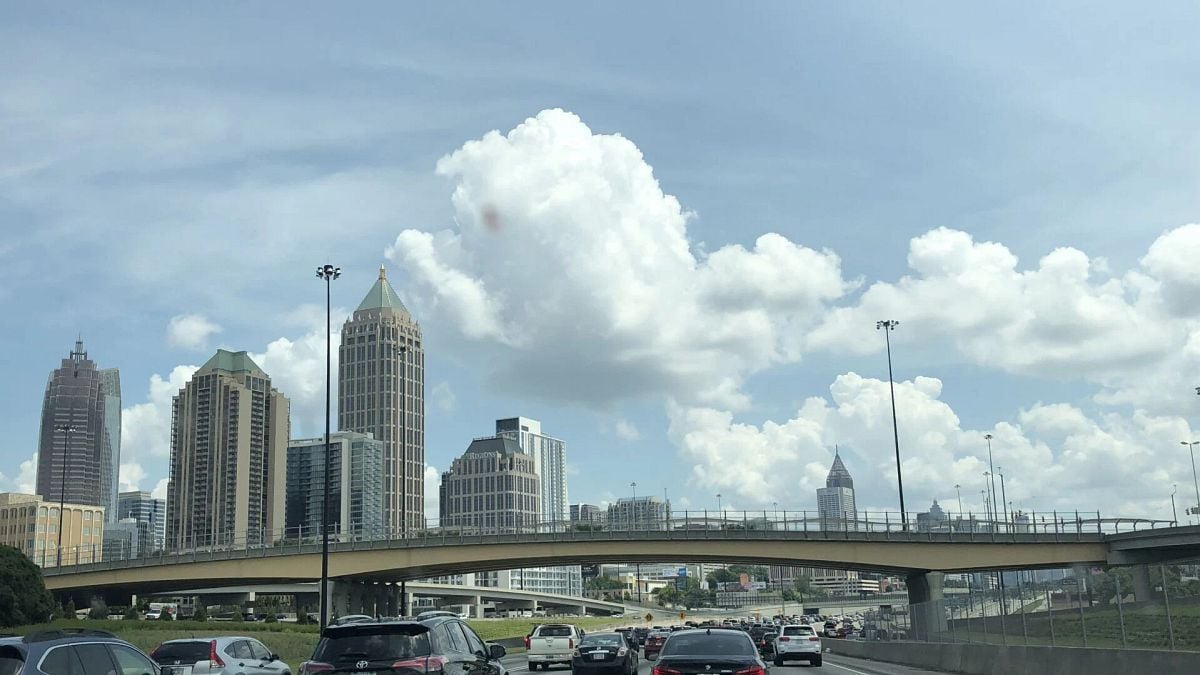
Atlanta skyline with cars on a busy highway

Written agreements

The city’s 2023 donations came out of general funds, with each recipient organization signing a contract titled a “Donation Agreement.”

On each, a page 2 stipulation required reports to be submitted before the end of each calendar year “detailing the use of all disbursed funds and work performed including but not limited to the allocation of funds, expenditures for programming, and other related costs.” The annual reports were to continue until the money was all spent.

With no evidence those reports were ever filed – and with only one of the four groups willing to speak with The Center Square – it’s difficult to trace how the donations benefitted the city.

Buckhead Public Safety Foundation Executive Director Debra Wathen signed an agreement “to make significant investments in improvements for off duty police patrols in APD Zone 2.” She was the only representative of any of the four nonprofits who would explain what that meant.

Wathen said the foundation combined the city’s $100,000 donation with $400,000 in other fundraising to pay off-duty officers to beef up patrols in the Buckhead section of Atlanta, using donated patrol cars. “The visibility was so much better” and crime went down, she explained.

She said she does not recall submitting any annual spending reports to the city.

“I don’t know if they ever asked for them,” Wathen said.

In the case of the Inner-City Muslim Action Network, the agreement required the group to “carry out all project activities” and “make significant investments in improvements to protect and enhance the quality of life for inner-city communities across the Atlanta area.”

The two other nonprofits that received donations, MLK-Ashby Merchants Association and Cascade Business Association, did not respond to phone or email messages from The Center Square. Representatives of those two groups also signed agreements to use the money for such work as “investments in improvements and employment opportunities for the youth and businesses” or “investments in improvements for minority and small business owners.”

The Georgia Constitution has a Gratuities Clause that bars local governments from giving away money or resources without receiving something of value in return. But Atlanta’s charter – approved by the Georgia General Assembly – allows the City Council to donate tax money “for purely charitable purposes.”

Tate, the former Bar president, said state law supersedes city charters, and that the donation agreements appear to have been drafted to keep the payments legally defensible. Without enforcement of the reporting requirement, he said, that defense weakens.

“I think if the city’s got the contract, and they’re not requiring that, then they’re complicit in just making a donation,” Tate said.

The Center Square found no city officials willing to talk about the donations, who at the city came up with the list of recipients, or the missing spending reports.

The city’s in-house lawyers wouldn’t talk about the Gratuities Clause, with attorney Amber Robinson saying in an email that “the Department of Law cannot provide legal advice to persons or entities outside of City government, or disclose legal advice provided to the City of Atlanta which is protected from disclosure under the Attorney/Client Privilege.”

The office of Atlanta Mayor Andre Dickens did not respond to The Center Square – his spokesman Michael Smith did not answer email or phone messages from a reporter. As an executive press secretary, Smith’s salary with the city is $155,000, according to 2025 personnel data.

Sign for the Inner-City Muslim Action Network outside a building in south Atlanta.

IMAN would get more money

The Center Square also reported this year that the Atlanta mayor’s office wouldn’t release records under the Open Records Act of how the Inner-City Muslim Action Network and other NGOs spent the FEMA grant money, unless the newswire paid production fees ranging from hundreds to more than a thousand dollars. The mayor’s spokesman said all records had to be reviewed to remove any personal or confidential information, which drove up the cost.

The Center Square has since obtained a limited tranche of records on IMAN’s spending, for a price of just $50.

Among the receipts and invoices produced, it showed taxpayers paying for landscaping work, heating and air system repairs, Home Depot purchases, restaurant bills, Instacart orders, gasoline costs, mileage, and Georgia Power bills.

States Strengthening Laws Protecting Worship after Minnesota Church Invasion

(Headline USAAt least four states have adopted laws this year making it a crime to disrupt worship services, a reaction to a leftist incursion of a Minnesota church earlier this year.

The Republican lawmakers sponsoring most of the legislation say those gathering at sacred sanctuaries deserve protection beyond what existing trespassing laws provide. They also say these new laws will prevent escalating clashes between congregants and protestors as many churches, mosques and synagogues remain on edge over recent mass shootings and acts of violence targeting religious groups.

“People should go to church to be able to sit in peace, worship as they please, without having to worry about people coming in and harassing them,” said Idaho Sen. Mark Harris, a Republican who co-sponsored legislation criminalizing protests inside places of worship. “I think the thing that happened in Minnesota was kind of a shock to some of us, that churches would be used as a place to berate people.”

Here’s a look at the situation.

The laws make it a crime to interfere with worship

Bills have been signed into law in Republican-dominated Idaho, Louisiana and Oklahoma. In Kansas, a bill is becoming law without the signature of Democratic Gov. Laura Kelly.

Similar bills have been introduced for this year’s legislative sessions in at least seven other states and in Congress. Nassau County, New York, passed a similar measure this year. In 1994, President Bill Clinton signed a law making it a federal crime to intentionally injure or interfere with or intimidate someone entering a place of worship or a reproductive health facility.

The details in the bills differ, but they all make it a crime to interfere with religious assemblies.

Laws against trespassing already apply to disruptions on the grounds of churches or other private property. But legislators say the new laws would boost penalties and bar other protest activity like holding signs near places of worship.

The penalties could be harsher than for trespassing. In some states, people could face up to a year in prison and fines as high as $10,000 for first offenses. The laws also give the states a way to prosecute cases if local authorities decline to do so.

A protest in Minnesota touched off the call for action

Thirty-nine people, including two journalists, were charged in February for roles in an invasive protest during a St. Paul, Minnesota, church service. The liberal church invaders had learned that one of the church pastors was also an official at U.S. Immigration and Customs Enforcement who had been overseeing an intensive Minnesota operation.

The U.S. Department of Justice charged the protesters with conspiracy against religious freedom and interfering with the right of religious freedom. They have pleaded not guilty and the cases are pending in federal court.

Louisiana Rep. Gabe Firment, a Republican, said he was inspired to introduce legislation that allows protestors to be forcibly removed from churches and other places of worship after seeing videos showing the fearful expressions of children at the Minnesota church.

“The first thought that came to my mind was those poor kids,” Firment said. “You certainly have a right to protest, but just like you don’t have the right to come into someone’s home and act like that, you don’t have the right to come into private church property to do that.”

Oklahoma Sen. Todd Gollihare, a Republican, wrote his bill after anti-abortion protestors disrupted his church service last year. His law bars blocking highways within one mile of a service or approaching someone to hand them a flyer within 100 feet of a place of worship.

His Republican colleague, Sen. Kendal Sacchieri, described the law as extreme and said she was afraid of the precedent it would set.

Court challenges could await the laws

The Nassau County ordinance is already facing a court challenge from the New York Civil Liberties Union, which says there’s no history of residents facing intimidation, harassment or violence outside places of worship — and that the statute denies people their constitutionally protected rights of expression in public places.

Kevin Goldberg, vice president at Freedom Forum, which advocates for First Amendment rights, said that if the laws are challenged in courts, governments would have to show there’s a need for them. “You can’t be guessing, you can’t be speculating,” he said. “There has to be some evidence that there’s an actual threat going on — that there’s been a problem there, that you can reasonably forecast there will be a problem.”

In Louisiana, Democrats raised concerns about mandatory jail time for disrupting services and warned that the laws were too arbitrary, suggesting that they could be applied against a congregant for singing out of turn as a pastor delivers a homily.

“If the spirit just hits me and I start singing during the middle of his homily, and it disrupts his homily in a way where he’s got to say ‘Hey, take a seat’, I mean that would materially disrupt his service and now I’m going to jail for 30 days,” Rep. Edmond Jordan said during a March hearing in the Louisiana Legislature.

The law’s proponents said police officers and judges would have discretion about how to apply the law.

Adapted from reporting by the Associated Press

San Diego Mosque Shooter Was on Law Enforcement’s Radar

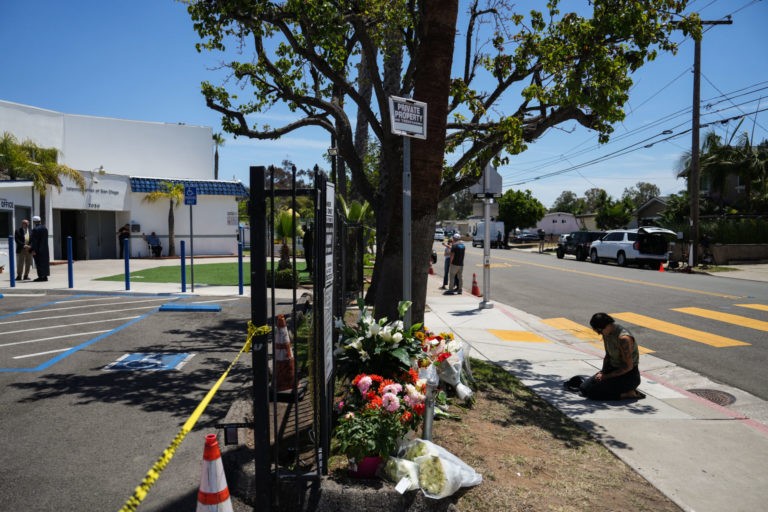
(Headline USAOne of the teenagers who killed three people at a San Diego mosque this week was flagged to law enforcement last year for exhibiting alarming behavior and idolizing Nazis, prompting police to confiscate his father’s guns, according to court records.

The officers who conducted a welfare check at the home of Caleb Vazquez wrote that he was “involved in suspicious behavior idolizing nazis and mass shooters,” and obtained a court order on Jan. 29, 2025, to remove 26 guns under a 2014 California law allowing the confiscation of firearms from people considered dangerous.

Vazquez’s father initially denied police entry into his home when they requested to see how he was storing his weapons.

Vazquez’s parents had voluntarily removed the guns from the house and placed them in a secure storage facility days earlier, according to an affidavit signed by Marco Vazquez, the father.

Authorities have said Vazquez, 18, met Cain Clark, 17, online, where they both were radicalized. Police haven’t shared more details about how they knew each other, or specified whose weapons were used in the shooting.

Cain Clark’s mother told law enforcement that weapons were missing from her home on Monday, kicking off an hourslong search for the teens before they committed the shooting at the Islamic Center of San Diego and then killed themselves, police said.

Court filings indicate mental health struggles

Court filings show Vazquez decided to “secure all sharp knives in the home” and removed from the house the firearms that they had previously kept in a secure gun safe into an outside storage facility. The affidavit also mentions unspecified serious allegations against their son, who was also previously committed to an involuntary psychiatric hospitalization. The court filings, first reported by The New York Times, didn’t say what he was admitted for.

The Vazquez family said in a statement released Thursday that Caleb Vazquez was on the autism spectrum and had grown to resent parts of his identity — but didn’t specify what aspects were challenging to him.

“Coming from a diverse family that not only includes immigrants but Muslims as well, we always taught the importance of acceptance, compassion, and love for one another. We are proud of the different backgrounds, cultures, ethnicities, and religions within our family and community,” their statement said.

“We believe this, combined with exposure to hateful rhetoric, extremist content, and propaganda spread across parts of the internet, social media, and other online platforms, contributed to his descent into radicalized ideologies and violent beliefs,” said their statement, released through their attorney Colin Rudolph.

His family said they tried to get him help

They encouraged him to seek help and he spent time in rehabilitation centers, the statement said. Vazquez’s parents did not immediately respond to calls seeking comment from The Associated Press. An attorney who represented Vazquez’s parents when their guns were confiscated also didn’t immediately respond to calls.

In writings by Vazquez and Clark that expressed white supremacist views, Vazquez wrote of having “some mental health issues” and being rejected by women. They suggest both teenagers idolized previous shooters who have died while carrying out mass shootings. The writings expressed hatred toward Jewish people, Muslims, Black people and a range of other groups.

Vazquez left the San Diego Unified School District in June 2018 after attending Washington Elementary up until the 5th grade, district spokesperson James Canning told The Associated Press. It’s unclear where he went to school after that.

Clark was enrolled in a virtual high school in the district, Canning said.

Police began searching for the teens on Monday after Clark’s mother called to say her son was suicidal and ran away. She told them he was dressed in camouflage, had taken multiple weapons from the home, and was with an acquaintance, San Diego Police Chief Scott Wahl said earlier this week.

Officers were still interviewing the mother about places the teens might be when the shooting began at the county’s largest mosque.

De-radicalizing people is becoming more difficult

Vazquez’s father said in a 2025 court statement that his family made a concerted effort to steer Caleb Vazquez back onto the right track. He said when they locked away their weapons, they were in communication with his school, were monitoring his social media presence closely and he was in therapy twice a week.

“We observe all of his online activities, who he talks to, what he talks about, and who he is friends with,” Marco Vazquez wrote, emphasizing that he didn’t support his son’s ideology.

Some experts say it’s increasingly difficult to help people drawn to the kind of radicalism Vazquez and Clark expressed.

Samira Benz works for the Violence Prevention Network, which conducts interventions when people are radicalized into believing in violent extremism. Benz said the work has become increasingly complicated as the internet blurs ideologies and creates niche, meme-based languages that can be fleeting and hard to decipher.

“Even if a parent is looking at the phone of their child, they don’t necessarily see something bad is going on,” Benz said.

Adapted from reporting by the Associated Press

White House Attacker Had Previous Encounter w/ Secret Service

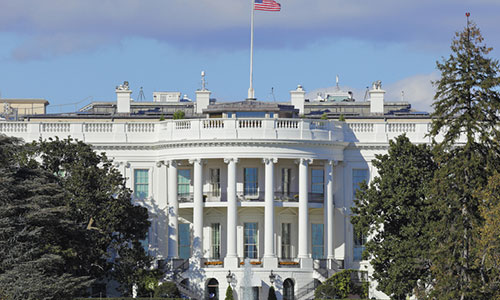
(Headline USAA bystander who was struck by gunfire after a man fired on a checkpoint outside the White House and was fatally shot by U.S. Secret Service officers remained in serious but stable condition Sunday.

The Secret Service said the bystander, who has not been identified, suffered a gunshot wound described as not life-threatening. It was not clear how he was shot.

Authorities have released few additional details about the early Saturday evening shooting. The District of Columbia Metropolitan Police Department said the suspect, identified as 21-year-old Nasire Best, started shooting toward a White House security checkpoint when Secret Service officers returned fire. Best, of Dundalk, Maryland, was later pronounced dead at a hospital.

In a Truth Social post, Trump said the suspect in Saturday’s shooting had a “possible obsession with our Country’s most cherished structure.” He also used the shooting to promote the ballroom he is seeking to build on the site of the White House’s former East Wing, saying the shooting “goes to show how important it is, for all future Presidents, to get, what will be, the most safe and secure space of its kind ever built in Washington, D.C.” Trump is asking Congress for $1 billion for security additions for the White House campus, including the ballroom.

Best had a previous run-in with law enforcement near the White House, according to District of Columbia court records. He was arrested last July for attempting to enter White House grounds near a different checkpoint. He failed to heed officers’ commands to stop, claimed to be Jesus Christ and said he wanted to be arrested.

Best was a track and field athlete at Dundalk High School, from which he graduated in 2023.

A woman who identified herself as Best’s mother told The Washington Post that she learned about the shooting on social media and was in disbelief. She said her son “was never violent, regardless of what people are posting.”

No officers were injured, Secret Service Director Sean Curran said in a statement posted on social media. “Our thoughts are also with the innocent bystander who was wounded during this incident,” Curran said. “The Secret Service is hopeful he will make a full recovery.”

President Donald Trump was in the White House at the time of the shooting.

It was the third shooting near the president in the past month, after a man stormed the White House Correspondents’ Association Dinner in April armed with guns and knives, and Secret Service officers shot and wounded a man who fired at them earlier this month near the Washington Monument.

Another Report Suggests that JD Vance Won’t Run for President in 2028

(Ken Silva, Headline USA) The Daily Mail reported Monday that Vice President JD Vance may not run for president in 2028—the second such report about Vance’s future in as many of months.

Citing an anonymous “insider,” the Daily Mail described Vance’s thought process as a “tactical decision.”

“The insider noted it may be better for him not to ‘own everything that’s gone on in the last couple of years,’” the outlet reported, referring to the Trump administration’s unpopular war in Iran.

The Daily Mail’s report comes about two months after the Washington Post published similar rumors. The Post also said Vance’s expected newborn could also influence his decision on whether to remain in public life.

“While the political impact of the war could be significant, Vance has maintained in recent private conversations that he hasn’t yet decided whether he will seek the presidential nomination for 2028,” the Washington Post reported on March 20, citing two people who’ve talked to Vance about the matter.

“One of those people cited Vance’s fourth child, due this summer, and said the vice president has put a priority on his family life and is unlikely to make a final decision until he and Usha Vance see how another baby affects their lives.”

Both the Daily Mail and the Post have suggested that Vance is becoming increasingly isolated in his skepticism towards the Iran war, due to the resignations of National Intelligence Director Tulsi Gabbard and counterterrorism official Joe Kent.

According to the Post, Vance had met with Kent and National Intelligence Director Tulsi Gabbard about Kent’s resignation. Vance reportedly asked him to “go quietly” and not make it a “big thing.”

“It was an example of how Vance has privately entertained criticisms of the conflict and acknowledged it is not popular among war skeptics but has made a point to avoid public rebuke of Trump’s decisions,” the Post said.

Ken Silva is the editor of Headline USA. Follow him at x.com/jd_cashless.

Cornyn and Paxton Flood Texas Airwaves in Final Day of GOP Senate Runoff

(Headline USA) Voters in Texas will see little of the Republican candidates for U.S. Senate on Monday. But that’s only if they stay away from screens.

There were no public campaign events scheduled for Sen. John Cornyn nor state Attorney General Ken Paxton on the final day of their more than yearlong quest for the GOP nomination. Instead, their fight for Tuesday’s runoff continues as it has for months — intense and unabated — through advertising that has topped $109 million, heavily from Cornyn’s side.

Cornyn is scheduled to host an annual, non-campaign event in San Antonio to recognize high school graduates attending the nation’s service academies. The senator seeking a fifth term held his last public campaign event in Corpus Christi on Friday, ahead of Tuesday’s voting.

Paxton headlined his last events Thursday in the Austin area and in San Antonio, content to let his campaign and a super PAC carry his primary message: that President Donald Trump endorsed him on May 19.

Trump’s announcement and accompanying dismissal of Cornyn, who has had an awkward public relationship with the president, came on the second day of early voting, which ended Friday.

Though the candidates were quiet over the weekend, Trump reaffirmed his support for Paxton on Sunday, and disparaged Cornyn as insufficiently loyal to him.

Paxton, Trump posted on social media, “was also very loyal to your favorite President, ME,” while calling Cornyn “VERY disloyal to me.” It was Trump’s strongest rebuke of Cornyn, who had dismissed his 2024 comeback chances, and echoed the president’s reproach of Louisiana Sen. Bill Cassidy before he lost in the May 15 GOP Senate primary.

After Trump’s jabs, Cornyn still leaned into his support for the president just before Monday’s event. The senator said that 99.3% of his votes aligned with Trump, that he “wants him to be successful” and then he referenced Trump’s previous comments “where he called me a good man and a friend.”

As for endorsing his opponent, “obviously the president is entitled to make his pick,” he said, but “Texans are a pretty independent breed and people will be making their own choices.”

Following Trump’s call for retribution, Republican voters in Indiana and Kentucky have also chosen GOP primary challengers over incumbent GOP officeholders who have crossed the president or opposed his agenda.

For a contest that is expected to draw a fraction of Texas’ 18.7 million voters, the two candidates’ campaigns and supporting groups were continuing to bombard all Texans with advertising, though more by Cornyn’s backers than Paxton’s.

“It’s just a slug fest, with the campaigns and third-party groups slugging it out,” said Wayne Hamilton, a former executive director of the Texas Republican Party.

The combination of Cornyn’s campaign and supporting super PACs has far outspent pro-Paxton groups over the past year, by almost nine-to-one. But the gap has shrunk as the runoff has approached. In the final week of the campaign, the combination of pro-Cornyn ad spending was less than twice that of Paxton’s group.

Cornyn’s network continued to air spots attacking Paxton over ethical and personal questions that have shadowed him with little effect throughout the campaign. The senator’s consequent argument to voters is that Paxton would struggle in the general election and threaten to flip the seat blue.

“Paxton’s flaws and the baggage he brings to the general election is going to be exploited to the fullest by James Talarico,” he told reporters, before heading into Monday’s ceremony and giving a speech devoid of campaign politics to the assembled graduates.

Cornyn’s campaign also had reprised an ad noting his tendency to vote in the Senate for Trump’s priorities.

Paxton’s campaign and groups supporting him transitioned midweek to all ads noting Trump’s endorsement, though Paxton’s primary super PAC, Lone Star Liberty Fund, began airing one over the weekend aimed at raising questions about state Rep. James Talarico, the Texas Democratic Senate nominee.

Adapted from reporting by the Associated Press


Trump Says It’s ‘Mandatory’ for Muslim Nations To Join Abraham Accords as Part of Iran Deal

(Dave DeCamp, Antiwar.com) President Donald Trump said in a long post on Truth Social on Monday that it should be “mandatory” for Arab and Muslim states to join the Abraham Accords to normalize relations with Israel as part of any Iran deal, and threatened that if the condition isn’t met, full-scale war will resume “bigger and stronger than ever before.”

Insisting on more Muslim countries joining the Abraham Accords as a condition for an Iran deal would likely ensure that an agreement won’t be reached, as the Gulf Arab states that haven’t normalized relations with Israel, which include Qatar, Oman, and Saudi Arabia, have long maintained they won’t do so unless the issue of Israel’s occupation of the Palestinian territories is resolved.

After Trump’s post, a Saudi official told CNN that Riyadh won’t normalize with Israel until an “irreversible pathway” toward a Palestinian state is established.

The president said in his post that a potential agreement with Iran will “only be a Great Deal for all or, no Deal at all — Back to the Battlefront and shooting, but bigger and stronger than ever before — And nobody wants that!”

Trump said that during talks on Saturday with the leaders of Saudi Arabia, the UAE, Qatar, Pakistan, Turkey, Egypt, and Jordan, he told them that “after all the work done by the United States to try and pull this very complex puzzle together, it should be mandatory that all of these Countries, at a minimum, simultaneously, sign onto the Abraham Accords.”

According to a report from Axios, when Trump made the proposal during the call, he was met with silence. “There was silence on the line and Trump joked and asked if they are still there,” an unnamed US official told Axios reporter Barak Ravid. CNN reported that Trump made the comment “in passing” and that it was not met with a response or acknowledgment from the leaders on the call.

Trump said in his post that the countries that he discussed joining the Abraham Accords include “Saudi Arabia, The United Arab Emirates (already a Member!), Qatar, Pakistan, Turkey, Egypt, Jordan, and Bahrain (already a Member!).” He said that it may be “possible that one or two have a reason for not doing so, and that will be accepted, but most should be ready, willing, and able to make this Settlement with Iran a far more Historic Event than it would, otherwise, be.”

Trump added that Saudi Arabia and Qatar should sign a deal to normalize with Israel “immediately” and that other countries should follow suit, and even suggested that Iran could join the Abraham Accords. “By copy of this TRUTH, I am asking my Representatives to begin, and successfully complete, the process of signing these Countries into the already Historic Abraham Accords. Thank you for your attention to this matter!” he concluded.

This article originally appeared at Antiwar.com. 

Russia Tells US It Will Start ‘Systematic Strikes’ on ‘Military Sites and Decision-Making Centers’ in Kyiv

(Dave DeCamp, Antiwar.com) Russian media reported on Monday that Russian Foreign Minister Sergey Lavrov spoke with US Secretary of State Marco Rubio and informed him that Russia will begin “systematic strikes” against the Ukrainian capital of Kyiv that will target “military sites and decision-making centers.”

According to Russia’s TASS news agency, Lavrov said the attacks were a response to “continued attacks against civilian population and infrastructure in Russia.” The Russian Foreign Ministry also issued a warning and said the attacks were a response to the May 22 Ukrainian drone attack that hit a college in Starobelsk in the Luhansk Oblast, killing 21 people.

The ministry said the attack was the “last straw” and that the attacks on Kyiv would target the “Ukrainian military-industrial complex,” including facilities where drones are made that are used by the Ukrainian military “with the assistance of NATO specialists responsible for supplying components, providing intelligence.”

Media reports have previously revealed that Ukraine relies on intelligence from the US and NATO to launch its long-range drone attacks inside Russia, meaning the attacks always risk an escalation between Russia and NATO countries.

The Russian Foreign Ministry also said it was warning “foreign citizens, including diplomatic mission and international organization representative office personnel, of the need to leave the city as soon as possible. We also warn Ukrainian capital residents not to approach Zelensky’s regime’s military and administrative infrastructure facilities.”

Russia already launched a major drone and missile attack on the Ukrainian capital and its surrounding regions on Sunday, which killed at least four people, according to Ukrainian officials. The Russian Defense Ministry said the barrage involved strikes using Russia’s advanced missiles, including the new Oreshnik hypersonic missile.

The escalation of the more than four-year-old war comes as there’s no sign of progress in negotiations to end the conflict, as the Russian and Ukrainian sides remain far apart on demands to end the conflict. One of Russia’s main demands is that Ukraine cede what territory it still controls in the Donbas, something Ukrainian President Volodymyr Zelensky refuses to do.

This article originally appeared at Antiwar.com.