Paxton Pushes Cornyn Out of Longtime U.S. Senate Seat

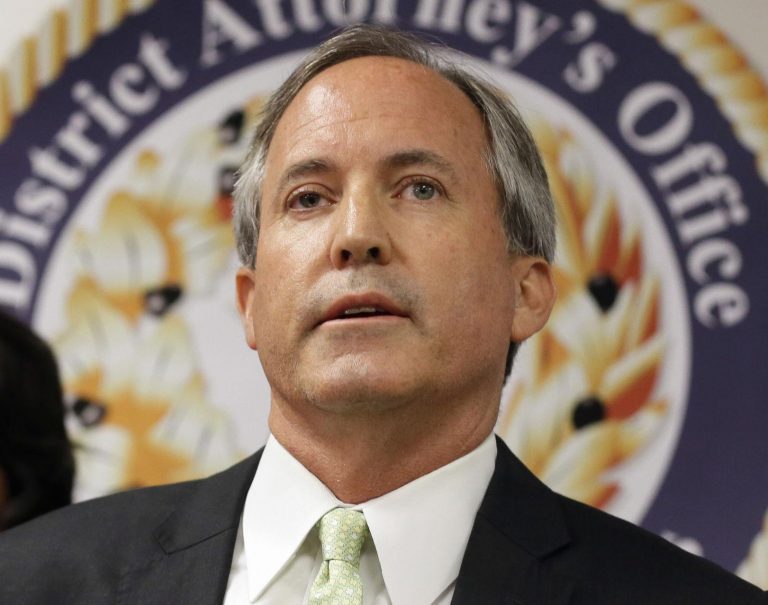
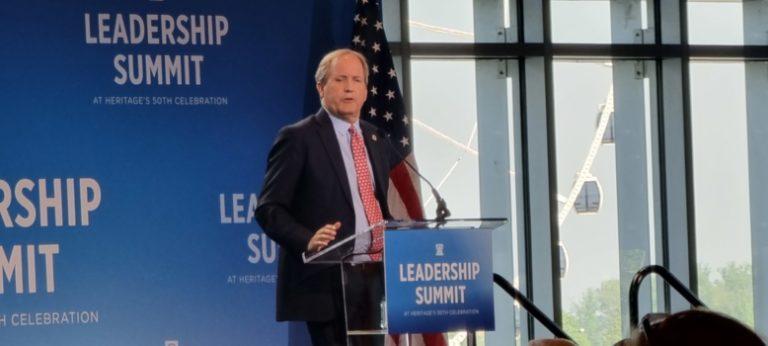
(The Center Square) Texas Attorney General Ken Paxton on Tuesday ousted four-term incumbent U.S. Sen. John Cornyn during a night of major upsets and a race that got national attention.

Paxton won the long anticipated Republican runoff for the Senate despite Cornyn, a former Senate Republican whip, getting endorsements from the majority of law enforcement, faith-based groups and conservatives.

After early voting started last week, President Donald Trump endorsed Paxton, aided by a flurry of posts in support made by paid social media influencers appealing to the far right. Primary and runoff elections normally have low voter turnout, as was the case in the March 3 primary, although Democrats outvoted Republicans by large margins, The Center Square reported.

Paxton won the U.S. Senate race, receiving more than 60% of the vote, according to unofficial resultspublished by the Texas Secretary of State’s Office with more than 60% of votes counted.

In the Republican runoff election for attorney general, state Sen. Mayes Middleton, R-Galveston, defeated U.S. Rep. Chip Roy, with 55% of the vote. Middleton has been ahead in the polls throughout the race.

In the Democratic race for attorney general, Middleton’s Texas Senate colleague, Nathan Johnson, won by more than 20 points, defeating former Galveston mayor Joe Jaworski, according to the unofficial results.

In key Democratic races, state Sen. Vikki Goodwin won her race for lieutenant governor and will be challenging Lt. Gov. Dan Patrick, a Republican, in November.

In Texas’ 18th Congressional District race, U.S. Rep. Christian Menefee, who won a special election, ran against incumbent U.S. Rep. Al Green, a Democrat who was redistricted, and won. Menefee declared victory not soon after the polls closed.

Other congressional races called within less than two hours of polls closing were Democrats Yolanda Prince in Congressional District 1 and Kevin Burge in Congressional District 24 and Republicans Tom Sell in Congressional District 19, Alexander Hale in Congressional District 7 and Alex Mealer in Congressional District 9 — all newly redistricted districts.

Other races appear to be too close to call.

The Texas Democratic Party reported ballot irregularities in Fort Bend County and issued a statement denouncing Paxton’s win.

Paxton, who was the only attorney general to be impeached in Texas history in 2023, “spent decades in office abusing his power to serve special interests and enrich himself at Texans’ expense – and in November, we’re going to put a stop to his corruption,” Texas Democratic Party Chairman Kendall Scudder said in an emailed statement. “As Attorney General, Paxton traded favors with lobbyists and his wealthy donors so shamelessly that even his own party tried to remove him from office for alleged bribery and abuse of his position.”

The Texas Senate acquitted Paxton of all charges, largely along party lines.

“We are sick and tired of this kind of corruption from self-serving politicians – and that’s why voters are going to elect James Talarico in November to represent all Texans, not just the rich and powerful,” Scudder said.

Talarico, a Democrat, earlier this year broke all fundraising records for any U.S. Senate candidate in U.S. history, The Center Square reported.

Ex-Sen. Bob Menendez’s Son, a Congressman, Snaps at Pro-ICE Protester

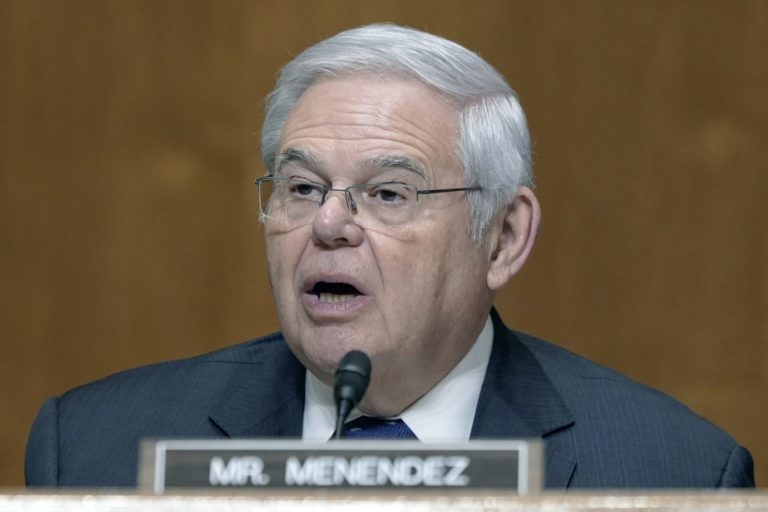
(Luis CornelioHeadline USA) Ex-Sen. Bob Menendez may be behind bars on corruption charges, but his son, Rep. Rob Menendez, appeared eager to defend the family name during a heated confrontation with a peaceful protester outside a New Jersey ICE facility over Memorial Day weekend.

Menendez, a Democrat representing the same New Jersey district his father held for over a decade before joining the Senate, was caught on tape verbally attacking and flipping off a pro-ICE protester after being confronted about his incarcerated father.

“Fuck you!” Menendez shouted while aggressively approaching the protester outside the Delaney Hall Detention Facility. Video of the incident was captured by independent journalist Yaakov Strasberg.

The protester was standing outside the facility holding a sign bearing the name of a New Jersey woman killed after an illegal alien allegedly crashed head-on into her vehicle while intoxicated. Cortes’s 11-year-old daughter, Maria, was also killed in the harrowing crash.

“How’s your dad, congressman?” the protester asked while Menendez spoke to reporters. “Congressman, you helped kill Dayanara Cortes.”

Menendez, seemingly agitated by the protester, abruptly stopped answering questions and confronted him directly.

“Do you believe pregnant women should be there right now?” Menendez asked, likely in reference to the detention center.

“Yes, you just have to sign a paper and go home,” the protester replied.

After a brief back-and-forth exchange, Menendez snapped, “Fuck you!” while raising his middle finger toward the man.

“How’s your dad? Tell me more,” the man fired back.

Menendez continued arguing with the man even as aides tried to calm him down. At one point, the congressman aggressively pointed at the protester while shouting: “You’re a liar!”

The altercation unfolded as anti-ICE activists and Democrat lawmakers demonstrated outside Delaney Hall to protest the Trump administration’s immigration policies.

Rob Menendez is the youngest son of the disgraced former senator, while Alicia Menendez, the left-wing MSNBC host, is the eldest sibling.

Bob Menendez is currently serving his sentence at LSCI Allenwood, a low-security federal prison in Pennsylvania, after being convicted on bribery, foreign agent and obstruction-related offenses.

Oops! Anti-ICE Hecklers Thought Hispanic ICE Agents Were Detainees

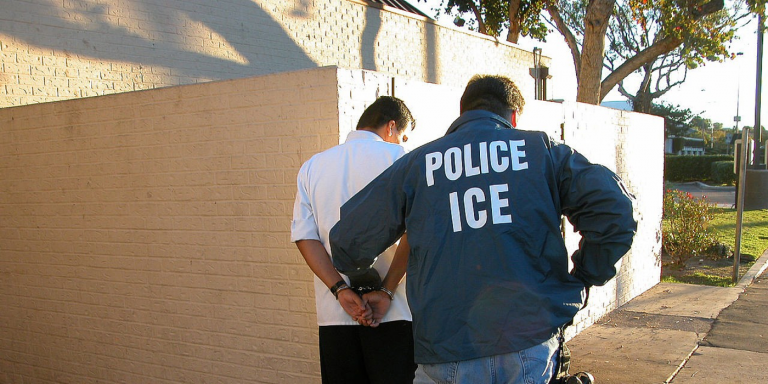
(Luis CornelioHeadline USAAn awkward moment unfolded outside an anti-ICE protest at a New Jersey detention facility when demonstrators loudly cheered two Hispanic men exiting the building — only to discover the pair were actually federal agents in plainclothes. 

“Welcome, brothers,” a protester said in Spanish, as two men emerged from Delaney Hall Detention Facility through a secured gate under guard supervision. 

“Wohoo! Yay!” other protesters cheered, as captured by Footage from FreedomNews.TV. 

Their celebration was short-lived as officers quickly pointed out the irony: the two men were federal agents outside their federal uniforms. 

“They work here,” one officer said, with another adding, “They work here, you dumbasses.”

The exchange played out as the agents laughed.  

Protesters had gathered outside Delaney Hall over allegations of human rights violations at the detention center during the Memorial Day weekend. 

Among those present were New Jersey Gov. Mikie Sherrill, Sen. Andy Kim, and Rep. Rob Menendez. 

Defeated Congressman Thomas Massie Hints at Presidential Run

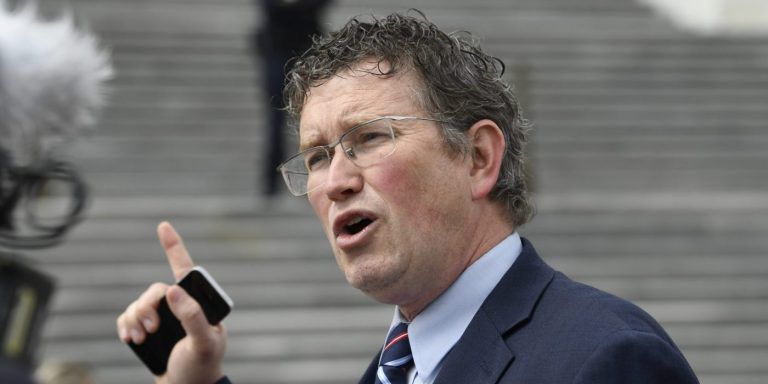
(José Niño, Headline USA) Rep. Thomas Massie (R-Ky.) signaled he is not walking away from politics just one week after losing his Republican primary to a Donald Trump-backed challenger, filing paperwork with the Federal Election Commission for a potential 2028 campaign while leaving open the possibility of running for president.

Massie posted on X on Memorial Day explaining his decision to file. “I filed with FEC for the 2028 House race. This allows me to raise funds to continue my political operations supporting my position as a current office holder and as a potential candidate for federal office,” Massie wrote. “I haven’t made a final decision about which office to seek, if I run.”

The filing arrived nearly a week after Ed Gallrein, a former Navy SEAL and dairy farmer personally recruited and endorsed by President Trump, defeated Massie by roughly nine percentage points in the May 19 primary. The contest became the most expensive House primary in American history, with over $32 million spent, largely by Trump-aligned and pro-Israel groups running ads against the incumbent.

Trump had waged a sustained campaign against Massie over several high profile clashes. The congressman co-led a bipartisan effort with Rep. Ro Khanna (D-Calif.) to pass the Epstein Files Transparency Act, forcing the Justice Department to release documents related to Jeffrey Epstein. 

Massie was also among the most vocal Republican critics of Trump’s military strikes on Iran and co-sponsored a war powers resolution requiring congressional approval for further action. He was one of only two House Republicans to vote against Trump’s major tax and spending legislation, citing concerns about the national debt, per a report by NBC News.

Trump repeatedly attacked Massie in personal terms, calling him a “pathetic LOSER,” “lightweight,” and “sick Wacko.”

The deliberately vague nature of Massie’s FEC filing has fueled speculation about his intentions. On NBC’s Meet the Press one day before the tweet, Massie stated he would “not rule out anything” when asked about a 2028 presidential campaign.

José Niño is the deputy editor of Headline USA. Follow him at x.com/JoseAlNino

GOP Hawks Slam Donald Trump’s Emerging Iran Ceasefire Deal

(José Niño, Headline USA) President Donald Trump’s emerging agreement to conclude the Iran war is drawing fierce pushback from hawkish Republicans who argue the deal risks squandering American military gains and leaving Tehran in a stronger position than before hostilities began, Fortune reported.

The proposed arrangement that Trump described as “largely negotiated” has prompted lawmakers, former Cabinet members, and conservative commentators to question publicly whether the terms would render the entire military campaign pointless.

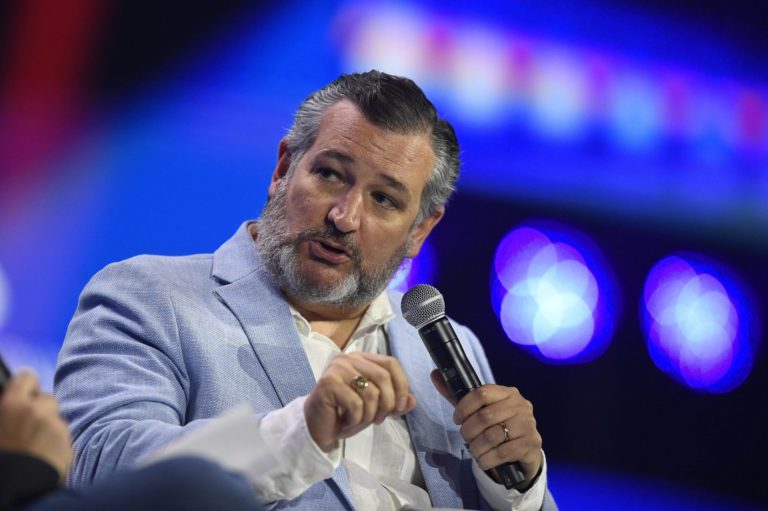
Sen. Ted Cruz (R-Texas) declared that the president’s decision to strike Iran ranked as the “most consequential” of his second term and urged Trump not to relent now. “If the result of all that is to be an Iranian regime—still run by Islamists who chant ‘death to America’— now receiving billions of dollars, being able to enrich uranium & develop nuclear weapons, and having effective control over the Strait of Hormuz, then that outcome would be a disastrous mistake,” Cruz wrote Saturday on X in response to Trump’s update following calls with Israeli and regional leaders.

Sen. Lindsey Graham (S.C), typically a close Trump ally, rejected any agreement that would allow Iran to emerge as a dominant regional force while retaining the capability to devastate Gulf oil infrastructure.

Sen. Roger Wicker (R-Miss.), who chairs the Senate Armed Services Committee, questioned the wisdom of a proposed 60 day ceasefire window. “Everything accomplished by Operation Epic Fury would be for naught!” Wicker declared, calling the proposal a “disaster.”

Trump swatted away the criticism, noting that the agreement had not been finalized. “So don’t listen to the losers, who are critical about something they know nothing about,” he wrote on his social media platform. The president insisted the deal he and his team are constructing represents “THE EXACT OPPOSITE” of the nuclear pact Iran signed under President Obama, which Trump abandoned during his first term.

“Both sides must take their time and get it right. There can be no mistakes!” Trump added, noting that a U.S. military blockade of Iranian ports would remain “in full force and effect until an agreement is reached, certified, and signed.”

Under the emerging proposal, the war would end and Iran would re-open the Strait of Hormuz and surrender its stockpile of highly enriched uranium, with specifics and timelines to be hammered out during a subsequent 60 day period, regional officials told the Associated Press.

Former Trump administration officials joined the chorus of skeptics. Mike Pompeo, who served as Secretary of State during Trump’s first term, argued Saturday that the emerging deal appeared indistinguishable from the Obama era agreement Trump had rejected. “Not remotely America First,” Pompeo wrote on X, drawing a profanity laden response from White House communications director Steven Cheung.

John Bolton, a former national security adviser who has become one of Trump’s most vocal critics, contended that the reported terms favored Tehran. “If news reports about the impending Iran deal are correct, the ayatollahs will have won a significant victory,” Bolton wrote Sunday on X. “They will be back on the road to nuclear weapons, supporting global terrorism and repressing their own people.”

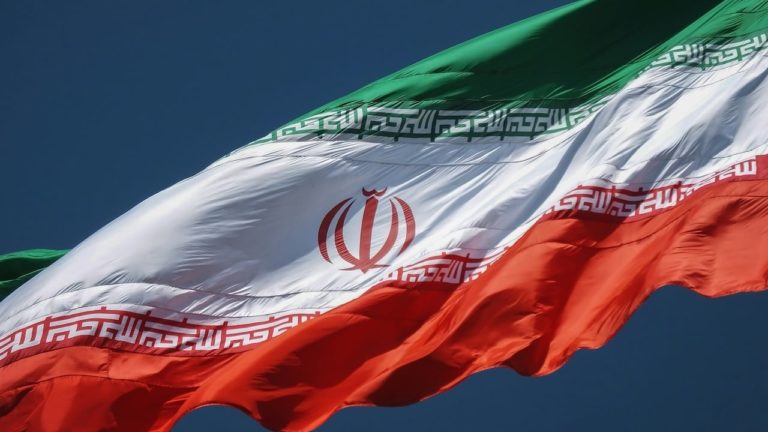
Iran Says US Violated Ceasefire and Vows It Will ‘Leave No Act of Aggression Unanswered’

(Dave DeCamp, Antiwar.com) The Iranian Foreign Ministry said in a statement on Tuesday that the United States committed a “flagrant violation” of the ceasefire between the US and Iran, a statement that came a day after the US military said that it launched strikes against targets in southern Iran.

The statement said that the US committed ceasefire violations over the past 48 hours in Iran’s Hormozgan province. US Central Command said that it struck Iranian missile launch sites in southern Iran after Iranian media reported explosions in Bandar Abbas, a port city on the Strait of Hormuz in Hormozgan.

The Iranian ministry said that it “strongly condemns” the US attacks and “holds the American regime fully responsible for all consequences arising from these aggressive acts.” The ministry also suggested Iran would respond.

“Without any doubt, the Islamic Republic of Iran will leave no act of aggression unanswered and will show not the slightest hesitation in defending the sovereignty and territorial integrity of Iran,” the statement said.

According to US officials, the US bombed Iranian boats that it claimed were laying mines in the Strait of Hormuz, and then targeted missile launch sites used to target US aircraft. Iran’s Islamic Revolutionary Guard Corps (IRGC) said in a statement that its air defense forces shot down a US MQ-9 Reaper drone over the Persian Gulf and also fired on an RQ-4 Global Hawk surveillance drone and an “intruding” F-35 fighter jet.

Iranian sources told Al Jazeera that several IRGC personnel were killed by the US attack on Bandar Abbas, but so far, the casualties haven’t been confirmed by Tehran. The IRGC said that it has a “legitimate and definite right” to respond to ceasefire violations by the “aggressor US military.”

The US attack came amid negotiations between Washington and Tehran that are being mediated by Pakistan and follows a pattern of Iran being bombed during talks with the US. 

“The perpetration of these aggressive actions, concurrent with the ongoing diplomatic process mediated by Pakistan, once again exposed the dishonesty and unreliability of the ruling establishment of the United States to the Iranian nation, the peoples of the region, and the international community,” the Iranian Foreign Ministry said.

This article originally appeared at Antiwar.com.  

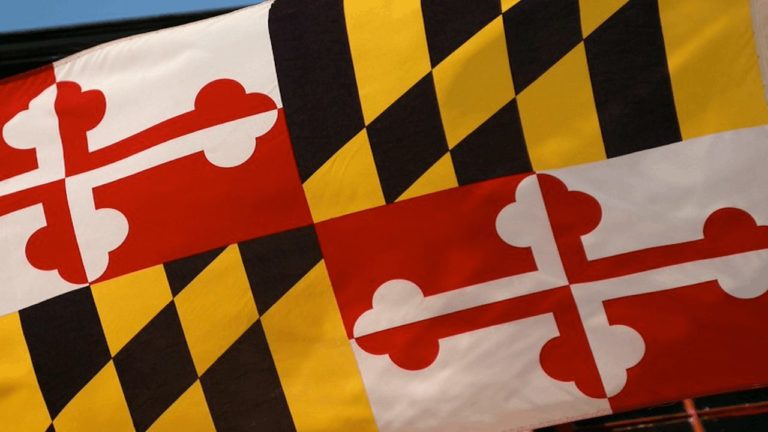
Maryland Reverses Course, Restores Sales Tax Exemption on Gold and Silver

(Sound Money Defense League, Money Metals News Service) Maryland Governor Wes Moore today signed a bill removing sales taxes from purchases of gold and silver, reversing course after a massive backlash over the past year from the public, precious metals dealers, and sound money experts.

In a highly controversial move that put Maryland at odds with 44 other U.S. states, lawmakers last year imposed a new tax on all gold and silver related transactions conducted outside of the Baltimore Convention Center. This new tax massively undermined a once-vibrant industry in Maryland.

Senate Bill 309 and House Bill 500, sponsored by Sen. Jennings (R-7) and Del. Hartman (R-38C), restore the state’s longstanding exemption on purchases of gold and silver coins, bars, and rounds.

Since the imposition of the tax last year, hundreds of local businesses have been adversely affected, some claiming losses of hundreds of thousands of dollars due to customers taking business to tax-free neighboring states (Pennsylvania, Delaware, and West Virginia).

Brett Stelfox, owner of Golden Eagle Coins in Laurel, Maryland, testified about the harmful impact the new tax had on his family business and the industry at large. Stelfox said, “Maryland’s tax on precious metals has severely impacted our industry, resulting in a 72% drop in showroom traffic almost immediately after it took effect.”

In response to the tax, Stelfox said, “Dealers across the state, including us, got together and formed the Sound Money Association of Maryland to lobby in strong support for SB309 and HB500 to help save the future of this industry in Maryland. Our business depended on it.”

The Sound Money Defense League worked to secure the introduction of the tax repeal measures, testified in support of the measures at hearings, and helped generate overwhelming grassroots support in favor of the bills.

Sen. Jennings noted, “In all honesty, this bill wouldn’t have passed without the people who showed up and testified. When the Budget & Taxation Committee heard from the business owners and the SMDL (Sound Money Defense League), it motivated the legislature to reverse its course.” 

Upon the signing of the bill, bill sponsor Del. Hartman mentioned, “I am proud to have sponsored House Bill 500 this session to save businesses in Maryland that sell precious metal bullion and coins.”

The House sponsor continued, “I appreciate all the businesses, citizens, and advocacy groups such as Sound Money Defense League for their strong support and favorable testimony for House Bill 500.”

Matthew Cortez, policy associate for the Sound Money Defense League, offered testimony explaining that the national trend is to remove, not impose, taxes on precious metals.

Including Maryland, 45 states now fully or partially exempt precious metals from their sales tax, a nationwide trend that has most recently been adopted by Kentucky, New Jersey, Florida, and Connecticut. That leaves only 5 states (Maine, Washington, New Mexico, Vermont, and Hawaii) and the District of Columbia as the primary jurisdictions that still unjustly penalize citizens seeking to protect their savings against the serial devaluation of the Federal Reserve Note.

Eliminating sales taxes on the monetary metals is good public policy for many reasons:

  • Levying sales taxes on precious metals is inappropriate. Sales taxes are typically levied on final consumer goods. Computers, shirts, and shoes carry sales taxes because the consumer is “consuming” the good. Precious metals are inherently held for resale, not “consumption,” making the application of sales taxes on precious metals inappropriate.
  • Studies have shown that taxing precious metals is an inefficient form of revenue collection. The results of one study involving Michigan show that any sales tax proceeds a state collects on precious metals are likely surpassed by the state revenue lost from conventions, businesses, and economic activity that are driven out of the state.
  • Taxing gold and silver harms in-state businesses. It’s a competitive marketplace, so buyers will take their business to neighboring states, thereby undermining in-state jobs. Investors can easily avoid paying $300 in sales taxes, for example, on a $4,800 purchase of a one-ounce gold bar.
  • Taxing precious metals is unfair to certain savers and investors. Gold and silver are held as forms of savings and investment. Maryland already does not tax the purchase of stocks, bonds, ETFs, currencies, and other financial instruments.
  • Taxing precious metals is harmful to citizens attempting to protect their assets. Purchasers of precious metals aren’t fat-cat investors. Most who buy precious metals do so in small increments as a way of saving money. Precious metals investors are purchasing precious metals as a way to preserve their wealth against the damages of inflation. Inflation harms the poorest among us, including pensioners, Marylanders on fixed incomes, wage earners, savers, and more.

Despite efforts to fully abolish the tax, SB 309/HB 500 ultimately restored the exact pre-existing exemption from last year, which included a “poor tax” provision that discriminates against small-time investors of precious metals who purchase below $1,000. Only three other states (California, Massachusetts, and New York) maintain such a provision.

Maryland’s score is expected to rise on the Sound Money Index after it had plummeted to 47th place after the imposition of the sales tax last year. Maryland’s new exemption will go into effect on July 1, 2026.

In the 2026 legislative season, the Sound Money Defense League has worked successfully in support of sound money in Maryland, Idaho, Wisconsin, Georgia, Kansas, Indiana, Kentucky, Tennessee, Mississippi, Colorado, Nebraska, West Virginia, and South Dakota.


Sound Money Defense League is a non-partisan project working nationally since 2014 to promote and defend gold, silver, and sound money policy at the state and federal level. The League, working in concert with Money Metals, also publishes the annual Sound Money Index.

Paxton Lawsuit: Dis­cord Expos­ing Chil­dren to Predators

(Phil Davidson, The Center Square) Attorney General Ken Paxton is suing Discord, a popular and free communications platform, for allegedly allowing child predators to groom and exploit kids while deceiving parents and the public about the safety of its platform.

In October 2025, Paxton opened an investigation into Discord after Charlie Kirk’s death, as well as reports that the platform is addictive and has exposed minors to sexual exploitation and extremist content.

“Discord has allowed and invited all kinds of nihilistic violence and evil,” said Paxton. “My office is taking action to protect our nation’s precious children from predators. We live in a time where the dangers children face online have never been greater, and every parent in Texas deserves to know their child is protected.”

According to the Office of the Attorney General, Discord lied by claiming that safety was “at the core of everything we do” and “fully integrated into our design process” while making deliberate product decisions that defaulted every account setting toward maximum exposure, staffed its most critical safety functions with unpaid volunteers, and built a platform architecture that federal prosecutors have described as “a hunting ground to find, manipulate, and extort our most vulnerable.”

Consequences of Discord’s design choices include a case in which a 13-year-old Texas girl was sexually assaulted in her home by a predator who groomed her on Discord over several years.

Additionally, a 15-year-old boy was coerced into producing explicit material through Discord’s messaging system and later died by suicide.

Despite direct notice from multiple federal agencies and the OAG, Discord has not changed the design choices that make exploitation possible.

Paxton is seeking to require Discord to default all safety settings to maximum protection for new accounts, implement age verification pursuant to the Securing Children Online through Parental Empowerment Act, and pay back all revenue derived from its unlawful conduct.

The state is also seeking civil penalties of up to $10,000 per violation of the DTPA, attorney’s fees, and costs.


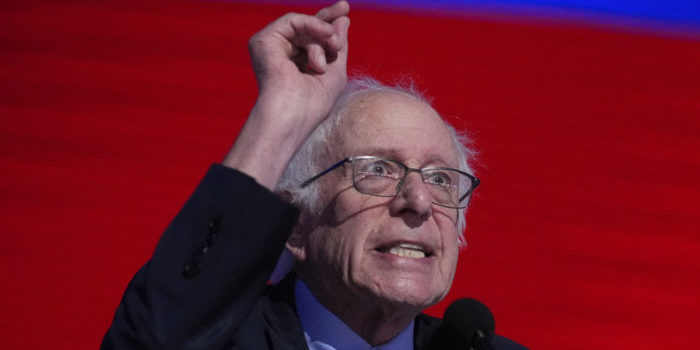
Bernie Sanders’ Anti-Oligarchy Tour Spent $608k on Elite Travel

(Mark Stricherz, The Center Square) Sen. Bernie Sanders, a self-described democratic socialist from Vermont, has spent nearly $608,000 on private jets, chauffeured cars, and upscale hotels since last year through his campaign fund, an investigation by The Center Square found.

Sanders is barnstorming the country on his “Fighting Oligarchy” tour, a series of rallies aimed at opposing President Donald Trump and supporting economic populism. To defray its cost, he is raising and spending money through his principal campaign committee, Friends of Bernie Sanders. Even as Sanders rails against billionaires’ political clout and economic inequality, his committee has relied on elite trappings more commonly associated with the wealthy.

The Center Square examined Friends of Bernie Sanders’ filings with the Federal Election Commission from the start of the tour in January 2025 through March, a 15-month stretch when Sanders was the featured speaker at 32 rallies at cities, university campuses, and small towns around the country. More than half a dozen other members of Congress, including Rep. Alexandria Ocasio Cortez, a New York Democrat, have also spoken at the rallies.

To travel, the committee paid $562,117 for 11 private jet trips and $16,633 for a chauffeured car or limousine service 11 times. For lodging, it paid $29,064 to stay at a four-star hotel 15 times.

Paul Dane, chairman of Vermont’s Republican Party, said Sanders is out of touch with ordinary state citizens.

“There’s an incredible disconnect between the average working Vermonter, who would never dream of being on a private jet – let alone making it through the Burlington airport without a hassle – and Senator Sanders flying around the country on private planes,” Dane told The Center Square in an interview.

A Sanders spokesman did not return two voicemails requesting comment. But Sanders has defended his use of private jet travel as necessary for logistical reasons.

“You run a campaign, and you do three or four or five rallies a week,” he said on Fox News last year. “[It is] the only way you can get around to talk to 30,000 people. You think I’m gonna be sitting on a waiting line at United … while 30,000 people are waiting?”

For travel by air, Friends of Bernie Sanders’ preferred private jet service is Ventura Jets LLC of Farmingdale, New York. From March 2025 to August, the committee paid $352,263 for six flights. “Ventura,” the company says on its website, “is the premier choice for private jet travelers who value reliability, safety, and a hassle-free experience.”

The committee also paid for private jet flights from N-JET of Wheeling, Illinois; Las Vegas-based Cirrus Aviation Services; and East Coast Jets Inc., of Allentown, Pennsylvania.

For travel on land, Friends of Bernie Sanders’ favorite boutique car service is Transporter Chauffeurs LLC of New York. Since September, the committee has used the business six times at a cost of $12,375. It also paid for the services of Royal Limousine Service of Missoula, Montana, and DC Livery of Alexandria, Virginia.

In addition, Friends of Bernie Sanders paid $29,064 to stay 15 times at 13 hotels rated as, or widely considered to be, four diamonds. The hotels included Renaissance Chicago Downtown Hotel, the Hotel Vetro in Iowa City, and the Westdrift Manhattan Beach Autograph Collection in Manhattan Beach, California. As The Center Square reported in February, fewer than 5% of all AAA-approved hotels in North America receive the rating, 1,750 in all – for featuring “upscale style and amenities with the right touch of service.”

In February, Friends of Bernie Sanders spent $868 for three rooms at the O. Henry Hotel in Greensboro, North Carolina, a four-diamond accommodation that urges guests to “(l)et elegance and tranquility restore your spirit.”

The campaign’s preferred boutique place to stay is The Bowery Hotel, a four-diamond accommodation that touts itself as “the standard for service, style, and sophistication in New York City’s Lower East Side.” Campaign staff have been guests three times since November, most recently on January 8. Their bill: $9,210.

As he did during his 2016 and 2020 presidential campaigns, both of which he lost, Sanders does not argue for austerity or criticize material success as such. Instead, he contends that the economy is organized in a way that benefits the wealthy at the expense of ordinary Americans – a structure that obligates elected officials to hike taxes on the wealthy and raise the minimum wage.

“Right now, at this particular moment in American history, we have more income and wealth inequality than we have ever had in the history of America,” he said at a rally on February 13 in Durham, North Carolina, before criticizing a famous tech entrepreneur and former supporter of President Trump. “Today in America, while Elon Musk is close to becoming a trillionaire, 60% of our people in Vermont and here in North Carolina are living paycheck to paycheck.”

Sanders, 84, connected the economic hardships of ordinary Americans with his own. He, his brother, and parents lived in a three-and-a-half-room, rent-controlled apartment in New York City.

“I grew up in a family that lived paycheck to paycheck,” he said. “And my memories of my childhood are the stresses in our house in a family that just didn’t have enough money to do things that my parents wanted us to do, and fights and arguments that trickled down to my brother and me. And all over this country, people are going through struggles that my family went through.”

Now a national figure, Sanders presents himself as a blunt, no-nonsense crusader. The characterization has been echoed by traditional media outlets such as Politico Magazine, which dubbed him “the ultimate political outsider” six years ago.

Unlike most national politicians, Sanders pays for his national campaigns through small-dollar donations rather than rich patrons or corporate political action committees.

In other ways, Sanders is also true to his image. Of the $11.3 million his campaign arm has spent since last year, $607,814 or roughly 5%, was for luxury travel and hotels.

For the most part, Sanders’ campaign has traveled on commercial aircraft – United Airlines, American Airlines, Delta, and Southwest. Or it has relied on commercial rental car companies such as Enterprise and National Car Rental, Amtrak train service, or ride-hailing services such as Lyft and Uber. Its staff stayed at three-diamond hotels such as the Residence Inn in Miami.

Yet Sanders’ own economic struggles have diminished. His net worth is $1.15 million, according to Quiver Quantitative, a site that tracks lawmakers’ fortunes. The figure ranks him 316th among 484 members of Congress. His wife, Jane O’Meara Sanders, is a former university president.

Further, Sanders’ use of upscale accommodations is not solely a matter of campaign logistics.

He has been a frequent guest at Two Bunch Palms in Desert Hot Springs, California, a gated, adults-only spa resort with sweeping views of the San Bernardino and San Jacinto mountains. In addition to his stay there earlier this year, Sanders was a guest while running for the Democratic Party’s presidential nomination in 2016. “Really nice vibe,” a Sanders spokesman said in a local newspaper. “He enjoyed it.”

Sanders seldom acknowledges how his own political operation now pays for upscale travel and accommodations.

A generation or two ago, Sanders might have embarked on his populist national campaign on a bus, as Democrats Bill Clinton and Al Gore did in their presidential runs in the 1990s and Republican John McCain did during his 2000 and 2008 bids for the presidency.

Yet that changed in 2000. Instead of buses, presidential candidates turned to private jets to hopscotch from city to city. As the internet sped up the news cycle with social media and smartphones, candidates increasingly sought to appear in multiple states in a single day.

Democratic strategist Joe Trippi, who worked as a top campaign aide to former Vermont Gov. Howard Dean in his 2004 presidential bid, said the campaign chartered two 727 planes. “It probably cost us $250,000 over two or three weeks,” Trippi told The Center Square.

By the 2016 presidential race, the shift to elite travel was all but complete. According to the Sherpa Report, an online publication, not only Sanders but also Republican Sen. Ted Cruz of Texas, then-Gov. John Kasich of Ohio, and surgeon Ben Carson used private planes as well.

Trippi echoed the report. “Look, I understand this is Bernie Sanders, but his travel is not unusual at all,” he told The Center Square. “It’s really hard to link up events in different cities … (Without a private plane), you can’t do a rally in Des Moines, Iowa, at noon and do one in Boise, Idaho, at 5 p.m., even on the tarmac.”

Trippi noted that President Trump owns and has traveled on a customized 757 Boeing, nicknamed Trump Force One, and that the royal family of the Middle Eastern nation of Qatar gave Trump a luxury Boeing 747 jetliner last year.

Yet even as Sanders’ movement is funded from below, it travels from above. His campaign committee’s spending reveals more than his own affluence. It shows the contradictions within his anti-elite movement: a national populist campaign that increasingly borrows tactics and infrastructure from the elites it condemns.


How Will Higher Import Taxes Impact Indian Gold and Silver Markets?

(Mike Maharrey, Money Metals News Service) Earlier this month, the Indian government hiked the import duty on precious metals from 6 percent to 15 percent in an attempt to moderate the country’s trade deficit and support the rupee.

How will this tax increase likely impact the gold market in India?

Not as much as you might expect.

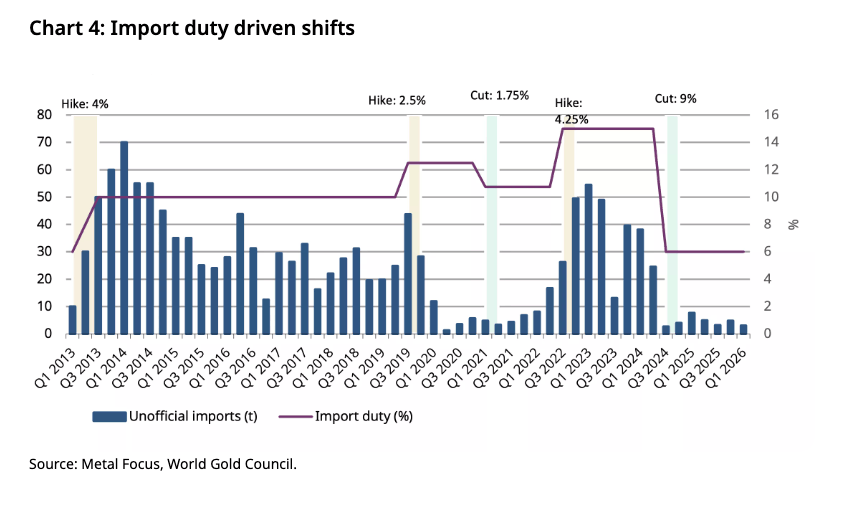
Historically, higher import duties have had a limited influence on official import volumes but have significantly increased inflows of “unofficial gold.”

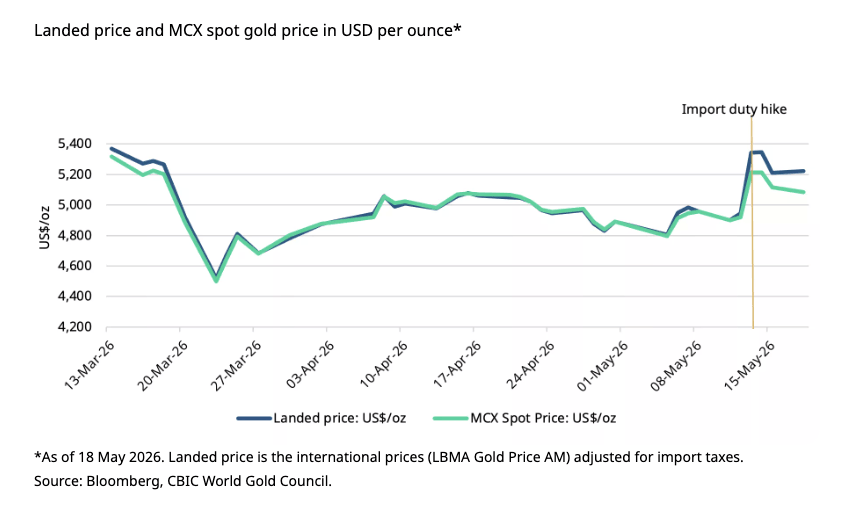
Unsurprisingly, domestic gold prices immediately increased with the implementation of the new import duty, but not as much as the 9 percent hike. Spot prices rose between 4 and 6 percent.

As the World Gold Council explained, tax increases tend to impact the market with a lag.

“Moreover, the increase came at a time of seasonally weak demand – summer wedding purchases are largely over, and the period from mid-May to mid-June is considered inauspicious for buying gold – thus limiting the full pass-through of the duty hike. Market feedback indicates that there is ample supply from the exchange of old gold jewelry for new, and the likely front-loading of imports, further limiting the rise in price.”

The duty increase also incentivized profit-taking by investors. Selling boosted supply as physical buying weakened. Meanwhile, dealers offloaded inventory imported at the lower duty rates. This led to some significant price discounts in local markets.

Long-Term Impact of Indian Gold Import Tax

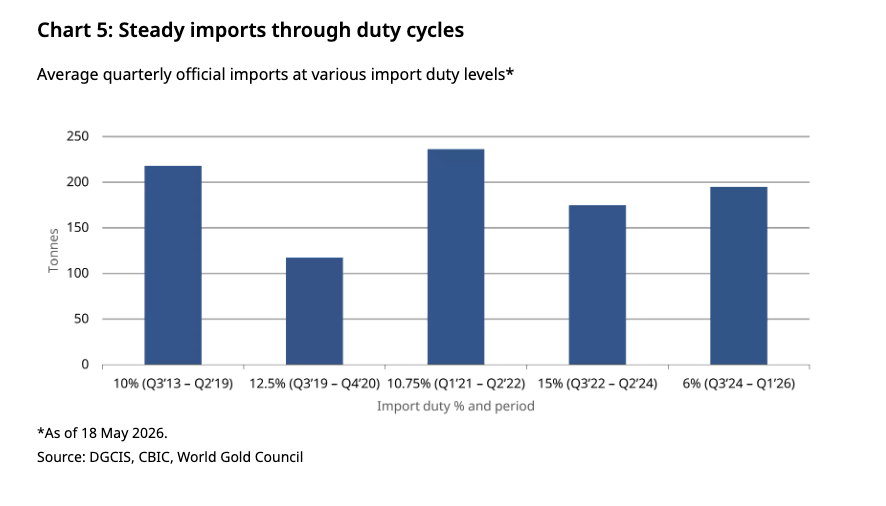
According to analysis by the World Gold Council, changes in import duties have historically had a “limited influence” on official import volumes over the last 13 years.

“Across duty regimes ranging from 6 percent to 15 percent, official imports remained relatively resilient, between 175 tonnes and 236 tonnes per quarter in most periods, excluding the COVID period in 2020.”

The overall correlation between duty rates and official imports comes in at – 0.17, indicating a weak relationship between the two. According to the World Gold Council, “This suggests that duty changes are not a key driver of imports; rather, broader demand conditions play a greater role.

And Indian gold and silver demand have historically remained resilient in a higher tax environment.

This reflects the fact that Indians have a deep cultural connection to precious metals, and they value them highly as a store of wealth. As the rupee depreciates, gold will become increasingly attractive.

Analyst Ross Norman pointed out that there is actually a bullish aspect to the higher import tax.

“The move signals that conditions are so severe the Prime Minister felt compelled to ask people not to buy gold one day and impose punitive taxes the next — and in doing so reinforces the fundamental reason for owning gold.”

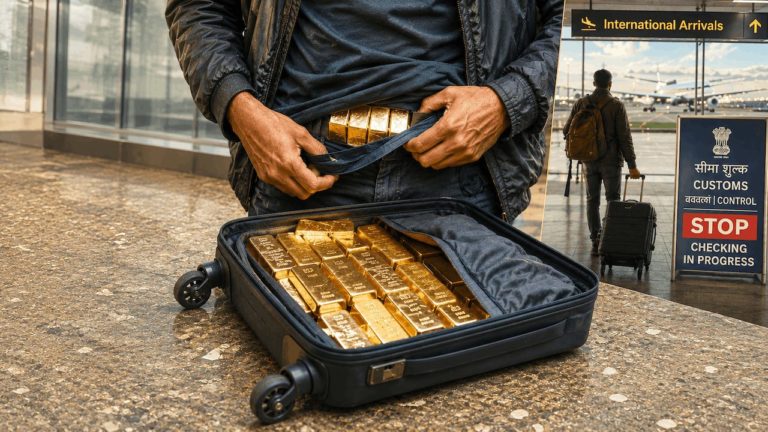
Meanwhile, while import duties appear to have a limited impact on imports, they do incentivize smuggling. According to World Gold Council analysts, “Between 2013 and 2026, increases in import duty were mostly followed by higher levels of unofficial or smuggled gold, while duty reductions coincided with sharp declines in such inflows.

For instance, when the government hiked the duty by 4 percent in 2013, “unofficial imports” surged from 10 tonnes in Q1 to 70 tonnes in Q1 the following year.

Even with a stable duty, smuggling remained elevated, averaging 34 tonnes a quarter until 2019.

“This suggests that once smuggling networks are established, they are difficult to unravel.”

Looking at the big picture, if the Indian market follows historical trends, the higher tax will likely become background noise after a short-term adjustment period.


Mike Maharrey is a journalist and market analyst for Money Metals with over a decade of experience in precious metals. He holds a BS in accounting from the University of Kentucky and a BA in journalism from the University of South Florida.