Manhunt Underway for Suspects Who Defaced Pride Memorial

(Luis Cornelio, Headline USA) A pro-LGBTQ mural painted on a Florida street has been defaced twice, prompting police to search for the culprits, reported WFLA Channel 8.

The mural, located at a St. Petersburg, Florida intersection, was created ahead of Pride Month, which runs from June 1 through June 30.

According to the St. Petersburg Police Department, surveillance footage captured a vehicle on Wednesday performing donuts on the street, leaving tire marks on the pride mural. 

On Friday, another vehicle sped through the mural, leaving additional tire marks. Police are actively seeking the individuals responsible. 

Although authorities have released no evidence suggesting the tire marks were intentionally targeted, St. Petersburg Mayor Ken Welch was quick to accuse the drivers of potential homophobia. 

“In light of the recent vandalism targeting our Progressive Pride flag mural, I want to emphasize that there is no place for hate in St. Petersburg,” Welch stated on Instagram. 

“We stand united in valuing and appreciating every resident, regardless of their orientation, gender identity, or expression,” he added. 

The mayor also announced that the mural would be “refreshed” ahead of Pride Month. 

“As we look forward to the Pride celebrations, let’s continue to spread the message of love and acceptance even further,” Welch said. “Together, we can show that love always wins.” 


View this post on Instagram


A post shared by Mayor Ken Welch (@mayorkenwelch)

Colorado Rancher Dies, Along w/ 34 Head of Cattle, in Lightning Strike

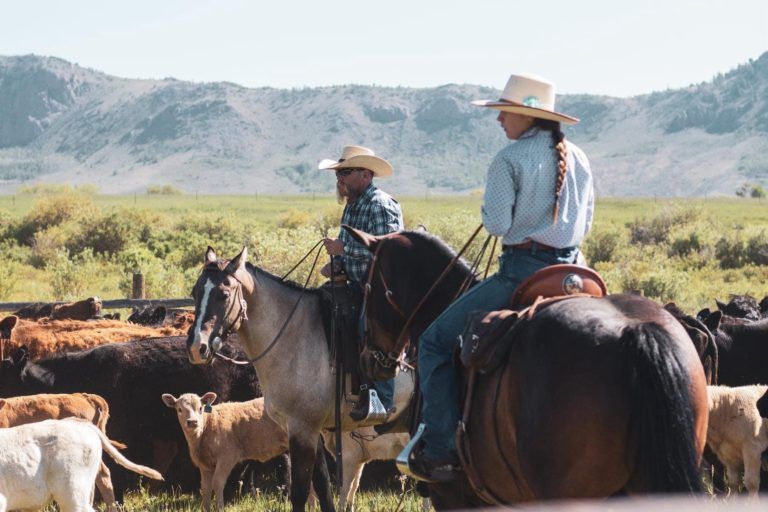
(Headline USA) A lightning strike killed a Colorado rancher and 34 head of cattle over the weekend, officials said Sunday.

Mike Morgan, 51, was feeding his cattle from a trailer when he was struck and died on the scene despite life-saving efforts, the Jackson County Sheriff’s Office said.

The lightning bolt struck on wide open pasture outside the town of Rand, about 80 miles northwest of Denver, said George Crocket, the county coroner.

The strike also bowled over around 100 head of cattle that had bunched around the trailer loaded with hay, said Crocket. “All but the 34 got up,” he said.

Morgan’s father-in-law and wife, Niki, were nearby but survived the blast, said Crocket.

The incident stunned the small, tight-knit community where most everybody knows everybody, Crockett said.

Family friend Jim Sandberg, who grew up with Morgan, shared his reaction and fond recollections in a CBS News article.

“Mike is a die-hard cowboy; he is cowboy through and through,” said Morgan

But despite the tough exterior, there was a warm, compassionate and fun-loving person to those who knew him.

“Just had a grin from ear to ear and a laugh that was irresistible,” Sandberg said. “Just a fun guy.”

Morgan’s wife of nearly 27 years, Niki, referred to him as her “best friend” in a March 13 Facebook post celebrating his 51st birthday. “I wouldn’t want to do this with anyone else,” she wrote.

The couple’s 17-year-old daughter, Dallas, also was close with her father, as revealed in photographs of the two riding out together on the ranch and sharing in many warm moments.

“They’ve been a great pair, of course, to be together since high school and have their daughter and everything,” Sandberg noted. “Amazing people, you’re never gonna find better people.”

Community members quickly gathered after the tragic accident to assist in burying the dead cattle, he said.

“Everybody that’s up there, they watch out for each other,” he said.

Adapted from reporting by the Associated Press

Indian Gold Demand Rebounds During Important May Festival

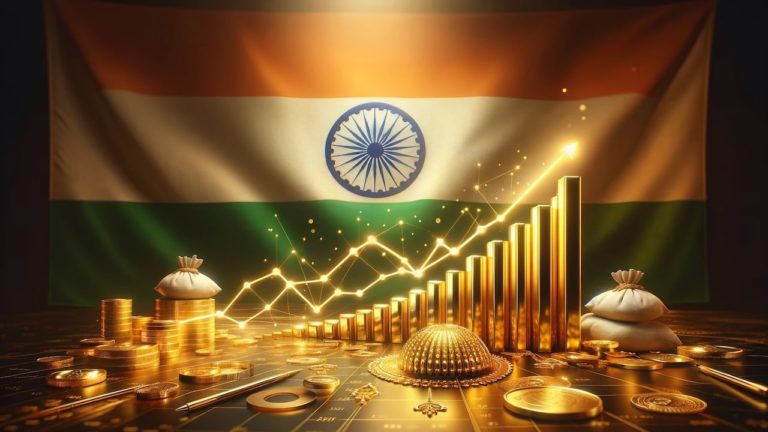
(Mike Maharrey, Money Metals News Service) After a tepid March and April, Indian gold demand surged during an important May festival. 

India ranks as the second-largest gold market in the world behind only China. 

Moderating prices helped drive a resurgence in gold demand ahead of and during the Akshaya Tritiya festival on May 10. According to the World Gold Council, anecdotal evidence indicates gold demand “exceeded expectations.”

Record gold prices in rupee terms have created headwinds for Indian gold demand in recent months. With some profit-taking in the market, the gold price moderated somewhat after a peak in mid-April. Even so, gold was up 4 percent last month after an 8 percent gain in March. The price of gold in rupees is up about 15 percent on the year. 

According to the WGC, festival gold buying was strong in both urban and rural areas. While official data isn’t in, there is an indication that there was record buying in rupee terms. This happened despite prices being 20 percent higher than in 2023 and a shorter festival than last year. A World Gold Council analyst speculated that “consumers likely accepted gold’s higher price and may have a positive view of its trend.”

“Anecdotal accounts from jewelers and various industry stakeholders suggest that there was significant pre-booking of gold jewelry, bars, and coins well before the festival, as consumers took advantage of the moderation in price from its April peak. Additionally, there was notable demand for wedding jewelry – typically heavier pieces – despite the busy wedding season being some months away.”

There was also a resurgence in Indian gold imports last month.

The country imported about 50 tons of gold in April, up from 34 tons in March. In dollar terms, April gold imports were double the prior month.

Meanwhile, the Reserve Bank of India has also gone on a gold-buying spree. According to the latest data released by the RBI, the Indian central bank increased its gold reserves by 24 tons through the first four months of the year. The RBI added 16 tons of gold to its holdings through the entirety of 2023.

Indians have historically had an affinity for gold. Indian households own an estimated 25,000 tons of gold, and that likely understates the amount given the large black market in the country. Gold is deeply interwoven into the country’s marriage ceremonies and cultural rituals. Indians have long valued the yellow metal as a store of wealth, especially in poorer rural regions. Around two-thirds of India’s gold demand comes from beyond the urban centers, where large numbers of people operate outside the tax system.

Gold isn’t considered a luxury in India. Even poor Indians buy gold. According to a 2018 ICE 360 survey, one in every two households in India had purchased gold within the last five years. Overall, 87 percent of Indian households own some gold. Even households at the lowest income levels in India hold some of the yellow metal. According to the survey, more than 75 percent of families in the bottom 10 percent of income managed to buy some gold.

The yellow metal was a lifeline for Indians buffeted by the economic storm caused by the government’s response to COVID-19. After the Indian government locked down the country, banks tightened credit to mitigate the default risk. Unable to secure traditional loans, Indians used gold to secure financing. As Indians endured a second wave of lockdowns, many Indians resorted to selling gold outright to make ends meet.


Mike Maharrey is a journalist and market analyst for MoneyMetals.com with over a decade of experience in precious metals. He holds a BS in accounting from the University of Kentucky and a BA in journalism from the University of South Florida.

Biden’s Surprise Visit to Daughter-in-Law Raises Witness-Tampering Questions

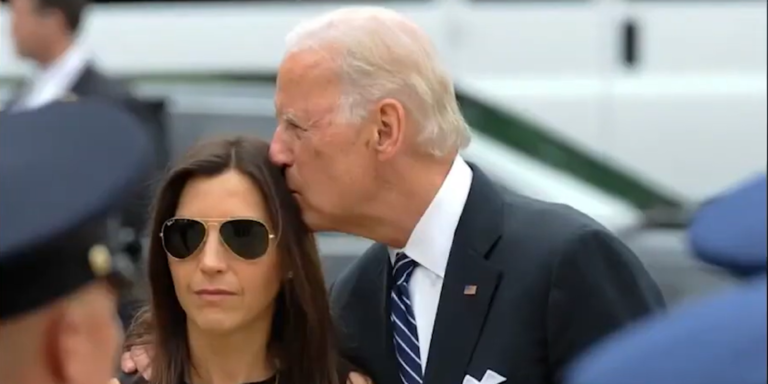
(Jacob Bruns, Headline USA) President Joe Biden‘s surprise visit to his son Beau Biden’s widow, Hallie Biden, has promoted speculation that the president may be tampering with a key witness before she testifies in Hunter Biden‘s upcoming trial related to the illegal acquisition of a firearm, the New York Post reported.

Hallie Biden was not only Hunter Biden’s in-law, but also his former lover for two years after Beau’s death. She is set to testify in his criminal trial for allegedly making an illegal gun purchase, which is scheduled to begin on June 3.

On Sunday night, one week before the beginning of the trial, Biden’s presidential motorcade took a 15 minutes stop at Hallie Biden’s Delaware home.

White House correspondent Simon Ateba noted via X that the visit took place around 8 p.m., saying that Hallie Biden is one of a dozen expected witnesses who will take the stand in court. Hunter’s ex-wife, Kathleen Buhle, is also expected to testify, as well as his ex-girlfriend Zoe Kestan.

But according to White House spokesman Andrew Bates, the upcoming trial did not come up in conversation with Hallie.

“He visited her because of the approaching 9th anniversary of Beau’s passing,” Bates suggested when asked about the visit and its purpose. Beau passed away on May 30, 2015.

It is rather surprising that the gun incident did not come up, particularly given Hallie Biden’s presence during that time of Hunter’s life.

Specifically, the younger Biden is under fire for the potentially unlawful purchase of a Colt Cobra 388PL revolver in October 2018, which he is said to have acquired by lying on a federal form, claiming to not be on any drugs despite being addicted to crack.

But his lawyers have argued that he did not break the law and suggested that the case is politically motivated.

Hunter also faces tax evasion charges in California, where it is alleged that he failed to pay $1.4 million over four years while living decadently.

Joe Biden has previously been accused of influence-peddling with Hunter’s business associates, calling in regularly to phone calls where, according to witnesses such as Devon Archer, he talked about “the weather.”

Nonetheless, the subtext of those conversations was abundantly clear, and the timing of the presidential visit undoubtedly made clear to Hallie that she was expected to remain loyal to the Biden family.

Price Inflation Isn’t an Accident; It’s a Policy

(Mike Maharrey, Money Metals News Service) If you listen to government officials and central bankers talk about price inflation, you might think they don’t have the foggiest idea of what caused it. It might have been supply chain problems, or perhaps it was Putin’s fault. Maybe greedy corporations are jacking up prices. Or it could be that consumer expectations are driving price inflation higher.

They can’t tell you exactly why prices keep rising, but trust them… they’re doing their best to stop it!

But this is all deflection and obfuscation. They’re causing price inflation. When they point fingers everywhere else, they’re either unforgivably ignorant or they’re lying.

Economist Milton Friedman was right – inflation is always and everywhere a monetary phenomenon.

Or as economist Daniel Lacalle put it, “The government’s destruction of the purchasing power of the currency is a policy, not a coincidence.”

But why? Why would the government devalue its own currency?

The answer is simple – it’s the only way they can keep making the government bigger without causing a revolt.

Nothing the government does is free. The citizenry ultimately forks over every penny the government spends. But the government people know they can only raise direct taxes so high before the people pull out the torches and pitchforks. To avoid this, the government borrows money.

But borrowing doesn’t really solve the problem. It just piles up debt, and debt has to be repaid.

The U.S. national debt stands at nearly $34.6 trillion. The Biden administration spends more than half a trillion dollars every single month, running massive deficits that push the debt higher at a staggering rate.

But that’s just a drop in the bucket compared to unfunded liabilities that the government will have to cover in the future. The estimated unfunded Social Security and Medicare liability alone amounts to $175.3 trillion. That’s six times the U.S. GDP.  As Lacalle put it, “If you think that will be financed with taxes ‘on the rich,’ you have a problem with mathematics.

So, how do politicians and government functionaries try to “fix” it?

With the inflation tax.

This is precisely why governments want to devalue their currency. As Lacalle explains, inflation is the equivalent of an implicit default.

“It is a manifestation of the lack of solvency and credibility of the currency issuer.”

But the average person doesn’t realize it. Because government people have effectively redefined inflation and can blame rising prices on “the reasons.” Inflationary policies allow government people to continue their borrowing and spending malfeasance out from under the cloud of blame.

As Lacalle explained, “Governments know that they can disguise their fiscal imbalances through the gradual reduction of the purchasing power of the currency.”

This allows them to achieve two things.

“Inflation is a hidden transfer of wealth from deposit savers and real wages to the government; it is a disguised tax. Additionally, the government expropriates wealth from the private sector, making the productive part of the economy assume the default of the currency issuer by imposing the utilization of its currency by law as well as forcing economic agents to purchase its bonds via regulation. The entire financial system’s regulation is built on the false premise that the lowest-risk asset is the sovereign bond. This forces banks to accumulate currency—sovereign bonds—and regulation incentivizes state intervention and crowding out of the private sector by forcing through regulation to use zero to little capital to finance government entities and the public sector.”

The result?

An ever-growing government at the expense of the private sector and the economic well-being of average people.

“When governments have exhausted their fiscal space, the crowding-out effect of the state on credit adds to the rising taxation levels to cripple the potential of the productive economy, the private sector, in favor of constantly rising government unfunded liabilities.”

Gold Tells the Story

Real money – gold – tells the story of government monetary malfeasance. 

Lacalle noted that financial asset reflects “evidence of currency destruction.” The dollar price of gold has gone up 89 percent in the past five years. Despite setting records, the S&P 500 is up slightly less – 85 percent. And government bonds? The U.S. aggregate bond index is up a paltry 0.7 percent.

Gold and equities continue to climb higher while bonds do nothing. Lacalle said, “It is the picture of governments using the fiat currency to disguise the credit solvency of the issuer.”

And even equities are getting a hidden boost from price inflation. Money Metals Exchange CEO Stefan Gleason pointed out that, yes, stocks do indeed continue to race higher – in terms of depreciating fiat dollars. But stocks are actually losing value when priced in gold. U.S. stocks haven’t hit a record in terms of gold in more than two decades.

Lacalle argues that gold isn’t expensive at all when viewed through the lens of price inflation. 

“It is exceedingly cheap. Central banks and policymakers know that there will be only one way to square the public accounts with trillions of dollars of unfunded liabilities. Repay those obligations with a worthless currency. Staying in cash is dangerous; accumulating government bonds is reckless; but rejecting gold is denying the reality of money.”


Mike Maharrey is a journalist and market analyst for MoneyMetals.com with over a decade of experience in precious metals. He holds a BS in accounting from the University of Kentucky and a BA in journalism from the University of South Florida.

Congress Moves against Totalitarian Central Bank Digital Currency

(Mike Gleason, Money Metals News Service) As hopes for rate cuts fade, metals markets are giving back some of their recent gains.

On Wednesday, minutes from the Federal Reserve’s latest policy meeting showed central bankers are frustrated by the lack of progress on inflation. After several months of official inflation readings coming in hotter than expected, the Fed has been forced to back off on previous plans to ease multiple times throughout the year. 

Remarks by Fed policymakers were widely interpreted as hawkish, with some even suggesting that rate hikes might be necessary.  

It’s not clear what the Fed’s next move might be or when it might occur.  What is clear is that the Fed lacks credibility when it comes to inflation forecasting.  

Chairman Jerome Powell failed to anticipate an inflation problem following the massive fiscal and monetary stimulus unleashed in response to the COVID pandemic.  Then after consumer prices shot up rapidly, he wrongly claimed elevated inflation would be transitory.  

He acted too late in raising interest rates. Then when inflation finally began to come down last year, he prematurely took a victory lap and projected it would continue to go down after the Fed stopped hiking. 

But Consumer Price Index readings started inching back up this year, making rate cuts impossible under the Fed’s own policy framework.  So, Jay Powell offered up a bizarre reimagining of the Fed’s longstanding 2% inflation target, declaring it could be met even if inflation stays elevated above 2%.   

Now he basically admits he doesn’t know where inflation will be headed in the months ahead or what he will do about it. 

In recent weeks, of course, gold and silver markets have been reflecting a lot of built-up inflation – which is just another word for currency depreciation. Gold made an all-time high in terms of fiat Federal Reserve notes, but it is pulling back here in this week’s trading.

In other news, the U.S. House of Representatives this week narrowly passed a bill to prohibit the Federal Reserve from issuing a central bank digital currency. The CBDC Anti-Surveillance State Act, as it has been named, now heads to the Senate where it faces an uncertain fate.

Democrats control the Upper Chamber. Just three lone Democrats in the House voted for the measure. 

Many politicians apparently like the idea of one day replacing paper notes and physical coins with a digital dollar. 

It could enable the IRS to track just about every transaction in the whole economy. That, of course, brings with it the prospect of more tax revenue for the government.  It also brings with it grave privacy concerns and the risk of authoritarian controls over what people are allowed to purchase using their digital wallets. 

And any new power handed over to central bankers that pushes the monetary system further away from sound money grounded in gold and silver enables larger scale depreciation of the currency. 

For example, a CDBC could enable the Fed to inject so-called stimulus into the economy more rapidly by crediting the digital wallets of individuals or institutions it deems worthy.

The leading privately circulated digital token, Bitcoin, has the virtue of being limited in terms of its supply. Yet while the number of Bitcoins that can ever be mined into existence is capped, scarcity alone doesn’t guarantee that Bitcoin will retain value over time. 

Since Bitcoin isn’t backed by anything and has no utility outside of its digital ecosystem, what its purchasing power will be years or decades from now is a matter of pure speculation. 

True, it has seen a meteoric rise unlike anything else in the financial universe. That has drawn the ire of many in government – including some of the same politicians and bureaucrats who dream of imposing a CBDC. Congressman Brad Sherman, for one, has pushed for a total ban on Bitcoin.

If people can’t legally trade Bitcoin or it falls out of favor for whatever reason, then there could be nothing left to support it having any value at all. Physical gold and silver, by contrast, will always have value even if in the future nobody chooses to recognize or hold them as money. They have real utility to industry, to jewelers, to artisans, and more.  

And they have a centuries-long track record of retaining their value better than any other form of money that has ever been produced. Will Bitcoin be the one exception, the thing that really is different this time — the “new gold” as its promoters believe? 

You can speculate on that happening if you wish.  But just in case it doesn’t, you’d be well served to hold onto at least some hard money in the form of physical bullion.


Mike Gleason is a Director with Money Metals Exchange, a precious metals dealer recently named “Best in the USA” by an independent global ratings group. Gleason is a hard money advocate and a strong proponent of personal liberty, limited government and the Austrian School of Economics. A graduate of the University of Florida, Gleason has extensive experience in management, sales and logistics as well as precious metals investing. He also puts his longtime broadcasting background to good use, hosting a weekly precious metals podcast since 2011, a program listened to by tens of thousands each week.


WHO Assembly Urges Pandemic Prep, Despite Stalled ‘Treaty’ Project

(Headline USA) Member countries kicked off the World Health Organization’s annual assembly on Monday with plans of improving global readiness for deadly outbreaks like COVID-19, after an ambitious—and highly controversial—“pandemic treaty” ran aground last week.

Health officials are racing to get the world to agree to new ways to prepare for and fight an inevitable future pandemic. That has fueled suspicious among many who question why the WHO did not do a better job with the power that was entrusted to it the first time around, instead offering a weak-kneed response that appeared to help China cover its culpability.

Now, however, COVID-19 is fading into history as elections and crises like the possible outbreak of World War III compete for the public’s attention.

A bold project to adopt a pandemic “treaty” at this week’s World Health Assembly was shelved on Friday as 2½ years of work ran into disagreements over sharing information about pathogens that cause pandemics and the technology used to fight them.

Experts say the best chance now to address pandemics at the assembly will be proposed changes to the WHO’s International Health Regulations, which were set up in 2004.

Amendments would urge countries to boost alert, detection and containment capacities and cooperate internationally.

One proposal would let the WHO director-general declare a “pandemic emergency.”

Envoys say a deal is close, but similar disagreements between rich countries and developing ones that set back the pandemic treaty negotiations linger. Issues remain over proposed “transfer of technology” and the creation of a new fund under WHO in 2030 that would help boost pandemic-fighting capacities “particularly in developing countries.”

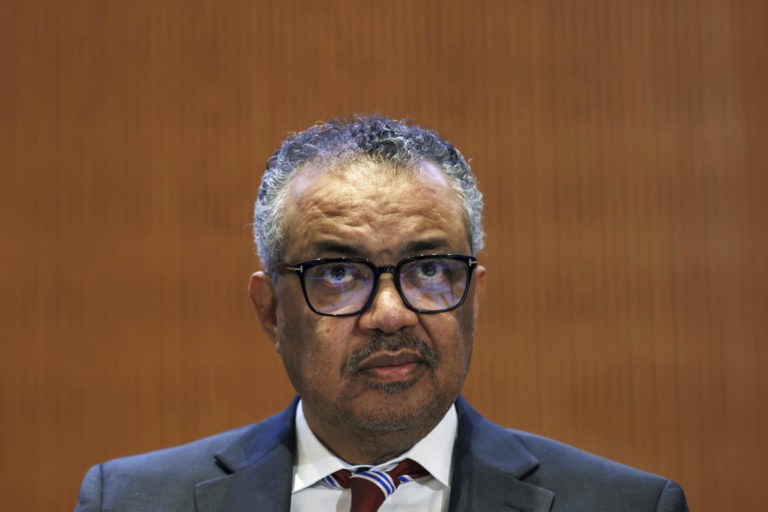
WHO Director-General Tedros Adhanom Ghebreyesus insists the stalled work on the pandemic treaty was not a failure, and acknowledged an “immense” task on a “very ambitious timeline”—alluding to the many years it usually takes for U.N. member countries to reach global treaties.

“Of course, we all wish that we had been able to reach a consensus on the agreement in time for this health assembly and cross the finish line,” Tedros said in opening remarks.

“But I remain confident that you still will—because where there is a will, there is a way,” he continued. “It’s now for this World Health Assembly to decide what that way is—meaning the solution is in your hands.”

The premise is that pathogens that have no regard for national borders require a united response from all countries. But decision-makers have struggled to balance national interest with the call from WHO officials to think more broadly in the interest of humanity.

Health ministers now have to try to overcome deep-set differences, including how the world can share information on emerging pathogens and scarce resources like vaccines when demand skyrockets.

“If nothing comes out of WHA [the assembly], it’s a huge missed opportunity,” said Yuanqiong Hu, a senior legal and policy adviser at Doctors Without Borders, “If they don’t come up with a clear road map, how are they going to finish this process?”

Adapted from reporting by the Associated Press

Libertarians Nominate Chase Oliver for President, Spurning both Trump and Kennedy

(Headline USA) The Libertarian Party on Sunday nominated party activist Chase Oliver for president, rejecting former President Donald Trump and Robert F. Kennedy Jr. after they each spoke at the party’s convention.

Oliver is an activist from Atlanta who previously ran for the U.S. Senate and U.S. House from Georgia. His campaign website calls for major cuts to the federal budget with an eye toward balancing the budget, the abolition of the death penalty, and the closure of all overseas military bases and ending of military support to Israel and Ukraine.

Although Oliver has long been the favored candidate among the diverse and extensive pool of Libertarian contenders, his selection was nonetheless ridiculed by several social-media influencers who doubted he was a serious candidate.

Third parties have rarely been competitive in U.S. presidential elections and the Libertarian candidate four years ago won 1% of the vote.

But the party’s decision is getting more attention this year due to the rematch between Trump and Democratic President Joe Biden, which could hinge again on small vote margins in a handful of contested states.

“We did it! I am officially the presidential nominee,” Oliver posted Sunday on X, formerly Twitter. “It’s time to unify and move forward for liberty.”

Trump appeared Saturday night in Washington at the convention to give a speech that received mixed reaction from the third-party stalwarts in the room.

However, his Republican allies on Sunday praised him for choosing to go before an unfriendly crowd, potentially showing would-be libertarian voters at home that he can make a strong case for winning their vote, even as the party’s hardcore devotees throw theirs away..

Kennedy got a friendlier reception when he spoke on Friday and attacked both Trump and Biden for how they addressed the COVID-19 pandemic.

He had talked up his support for the Libertarians and an endorsement could have helped him expedite the process of gaining ballot access in all 50 states, perhaps the biggest hurdle he faces in qualifying for the first presidential debate in June hosted by CNN.

Adapted from reporting by the Associated Press

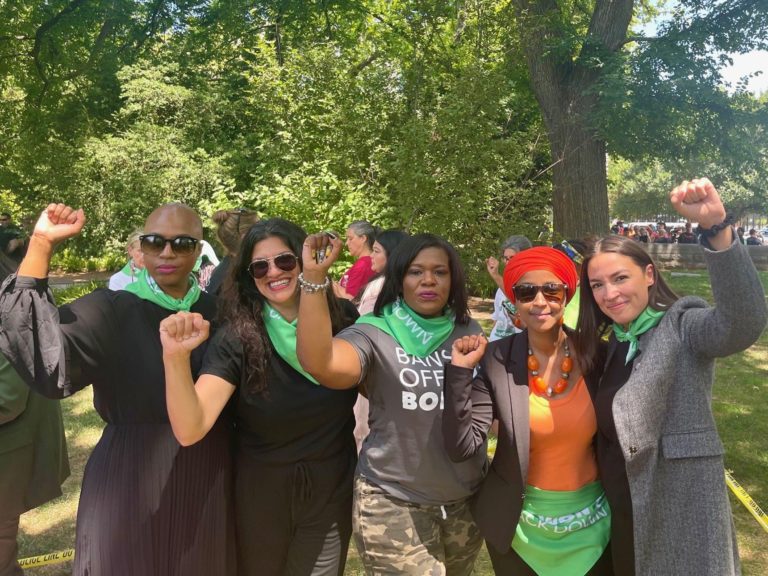
‘Squad’ Reps. Bush and Omar Push Agenda While Confusing Memorial Day and Veterans Day

(Matthew Doarnberger, Headline USA) Rep. Cori Bush, D-Mo., sent out a tweet attempting to honor members of the military on Memorial Day.

Unfortunately for the congresswoman, she happened to confuse Memorial Day with Veterans Day.

“This #MemorialDay & every day, we honor our veterans in St. Louis,” Bush tweeted. “We must invest in universal health care, affordable housing, comprehensive mental health services & educational and economic opportunities for veterans as we work to build a world free of war and violence.”

Similarly, Rep. Ilhan Omar, D-Minn., sent out a tweet displaying the same confusion and pushing similar political goals.

“On #Memorial Day, we honor the men and women who served our country,” she wrote. “We owe them more than our gratitude—they have more than earned access to quality mental health services, job opportunities, housing assistance, and the benefits they were promised.”

Memorial Day, of course, is the holiday where America honors the servicemen who have lost their lives fighting in our country’s wars. Veterans Day (celebrated in November) honors those who have served in the different branches of the military.

In addition to their confusion over who Memorial Day actually honors, critics slammed Reps. Bush and Omar for using their tributes to America’s fallen as an opportunity to push their agenda supporting various causes.

The problems with health care, housing, education and opportunities they cite would no doubt be undertaken by them via the significant increases in taxes and spending that they and the Democratic Party support.

Of course, had each representative accurately identified that fallen service members deserve to be honored on Memorial Day rather than veterans, there would be no opportunity to advocate for the government expansion they favor.

Deceased military members have no need for growing the scope of government services in this way. Veterans could be the recipients of these things, so shifting the focus of the holiday to them serves this purpose even if it is not accurate to do so.

Since making the inaccurate posts, both Rep. Bush and Rep. Omar have now deleted them.

Biden: Forget Inalienable Rights; Freedom Must Be ‘Earned’

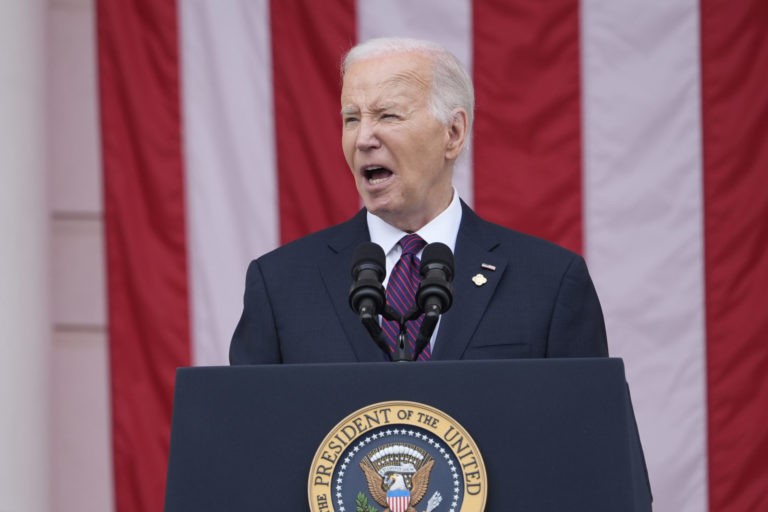
(Headline USA) President Joe Biden offered a tone-deaf commemoration of Memorial Day that echoed the political tensions of the day with little attention to honoring the fallen soldiers for whom the holiday is dedicated.

The weekend began with Biden paying special recognition to another fallen hero of the Left: George Floyd.

Other Democrats likewise sought to score political points, with Minnesota’s far-left Gov. Tim Walz declaring Saturday as “George Floyd Remembrance Day.”

Initially, Biden’s boilerplate speech on Monday, while delivering remarks at a solemn remembrance ceremony at Arlington National Cemetery, was inoffensive, if unremarkable.

Before the ceremony began, Biden, joined by Vice President Kamala Harris and Defense Secretary Lloyd Austin, placed a wreath at the Tomb of the Unknown Soldier.

In his speech, Biden pledged that the United States would continue the work of the nation’s fallen toward creating a more perfect union, “for which they lived, and for which they died for.”

He said each generation must ensure the sacrifice of the country’s service members is not in vain.

While others have said similar things about the idea the “freedom isn’t free” and must be fought for, the idea that American’s needed to “earn” it, as if it were a privilege to be revoked, may have struck some the wrong way in the context of Biden’s past proclivity toward despotism and demagoguery, both in word and deed.

“Freedom has never been guaranteed,” Biden said Monday under gray skies in the memorial amphitheater. “Every generation has to earn it, fight for it, defend it in the battle between autocracy and democracy, between the greed of a few, and the rights of many.”

The Democratic president added: “On this day, we came together again to reflect, to remember, and above all, to recommit to the future they fought for, a future grounded in freedom, democracy, opportunity and equality. Not just for some, but for all.”

Although the remarks may have seemed yet another attack on his Republican critics, just as many supporters of his Republican rival, Donald Trump, wondered if Biden wasn’t speaking about his own autocratic tendencies and exhorting them to stand up for America.

Biden also controversially invoked the death of his son Beau, who served in Iraq and later died from brain cancer.

Beau deployed with his National Guard brigade in 2008 and served in Iraq for nearly a year as a military lawyer, according to ABC News. He died in 2015.

Biden has been accused of stolen valor and lacking empathy on multiple occasions after bringing up Beau’s death at inappropriate times—including his meetings with grieving Gold Star families and with the victims of Hawaii’s Lahaina wildfire last year.

The president attributed Beau’s death to his time stationed near toxic burn pits, to highlight the importance of honoring the service of those who came home with injuries, in addition to the dead. In the past, however, he has made demonstrably false claims, such as saying that Beau died in Iraq.

Biden claimed that last year the Department of Veterans Affairs delivered more benefits and processed more claims than ever before.

He credited the PACT Act, which grants automatic coverage for certain health conditions suffered by veterans by presuming they result from their military service.

“For too long after fighting for our nation, these veterans had to fight to get the right health care, to get the benefits they had earned,” Biden said. “Not anymore.”

Critics have slammed Biden, however, for adding new layers of bureaucracy and shoddy treatment of those who do seek medical care. An inspector general’s report in May even suggested that some of the doctors treating veterans had been disqualified for safety reasons.

Adapted from reporting by the Associated Press