U.S. House Report: Minnesota Officials Failed to Stop Fraud

(The Center Square) A new U.S. House oversight report alleges Minnesota officials were aware of “rampant” fraud risks in taxpayer-funded social programs for years but failed to act, allowing potentially billions of dollars in taxpayer funds to be lost.

The 205-page report, released by the U.S. House Committee on Oversight and Government Reform and titled “The Cost of Doing Nothing: How Tim Walz and Keith Ellison Fueled Minnesota’s Fraud Explosion,”is culmination of a year-long investigation that included hearings, whistleblower testimony and document reviews.

It concludes that Minnesota state leaders had authority to suspend payments to providers suspected of fraud but often declined to do so without a final legal determination, even as warning signs grew across multiple high-risk programs.

The Republican majority committee asserts that:

“Testimony and documents obtained to date establish a consistent pattern: fraud warnings were elevated to the most senior levels of the Minnesota state government, meaningful corrective action was delayed or avoided, and payments continued long after credible signs of fraud emerged,” the report says.

House Oversight Committee Chairman James Comer, R-Ky, said in a statement accompanying the report that Minnesota Gov. Tim Walz and Attorney General Keith Ellison are responsible for one of the “most stunning oversight failures” ever examined by the committee.

“Today’s report is the culmination of months of investigative work and reveals hard evidence showing how the Walz Administration failed to stop widespread fraud, allowing criminals to enrich themselves at the expense of American taxpayers,” Comer said. “Billions of dollars were stolen because Minnesota state leaders turned a blind eye to rampant fraud and retaliated against state employees who dared to raise concerns. It is now clear the Walz Administration chose to protect the system rather than protect the taxpayer.”

The report alleges state officials were aware of credible fraud concerns as early as 2019 but did not take decisive action. It also claims that federal law enforcement agencies, including the FBI, did not instruct Minnesota officials to continue payments to suspected fraudulent providers, contradicting prior explanations offered by state leaders.

“Instead of trying to stop widespread fraud, Gov. Walz’s Administration retaliated against employees who tried to raise concerns, going to great lengths to keep them quiet, including intimidation through regular check-ins with high-level agency officials and threats of surveillance,” the report says. “Concern among senior officials within DHS only arose after they recognized it would receive negative media attention.”

The committee estimates roughly $300 million in federal child nutrition funds were lost in just the Feeding Our Future scheme, while broader taxpayer-funded fraud totals could be as much as $9 billion across multiple programs.

“Gov. Walz and Attorney General Ellison knew about the fraud in federal programs administered by the State of Minnesota much earlier than they admitted,” the report concluded. “Gov. Walz and Attorney General Ellison clearly did not protect taxpayer dollars, but it is still an open question as to whether this was incompetence, willful blindness, or worse.”

The findings build on an earlier report from Minnesota House Republicans, who conducted their own two-year investigation through the now-dissolved House Fraud Prevention and State Agency Oversight Committee.

As previously reported by The Center Square, that report also concluded that state agencies and Democrat officials failed created a “culture of fraud.”

Rep. Kristin Robbins, R-Maple Grove, who chaired the committee, highlighted similar concerns about Minnesota’s current political administration earlier this year.

“They weren’t just sort of unaware of the fraud,” Robbins previously told The Center Square. “They were aware of it and actively allowing it to continue or suppressing people who are trying to call it out.”

On Monday, Robbins quickly pointed to this new U.S. congressional report as validation of the state committee’s findings.

“[The] report confirms what our hearings and whistleblowers have been demonstrating for two years,” Robbins said in a post to social media. “Walz, Ellison and their admin knew about the fraud . . . failed to stop the theft of billions of taxpayer dollars . . . failed to hold anyone accountable . . . retaliated against whistleblowers.”

Along with the report, Comer sent a letter to U.S. Vice President J.D. Vance requesting a federal review of Minnesota’s social service programs through the federal Task Force to Eliminate Fraud, which was established by President Donald Trump in March.

In the letter, Comer urged a “thorough review of all of Minnesota’s social services program integrity measures, oversight processes, reimbursements, and enrollment from 2019 to the present.”

Comer’s letter added that:

“The state’s consistent failure to act decisively in the face of known fraud allowed brazen criminal schemes to flourish and diverted resources away from the vulnerable populations these programs were intended to serve.”

Additionally, the report urges the Department of Justice and “all relevant law enforcement and regulatory agencies” to conduct a “thorough review of Minnesota’s social services program reimbursements and enrollment verification processes and procedures from 2019 to the present.”

It further recommends that federal agencies, including the U.S. Department of Agriculture, Department of Health and Human Services and Centers for Medicare and Medicaid Services, look at implementing rules to strengthen program integrity requirements for state-run programs, including the federal nutrition program, Child Care and Development Block Grants and Medicaid.

“Further legislative efforts at the federal level are necessary to prevent this massive waste, fraud, and abuse of federal dollars from ever happening again,” the report states.

The Walz administration and Ellison’s office have previously disputed similar allegations. The Center Square requested comment from both the governor’s office and the attorney general’s office regarding the report’s findings. Neither office responded prior to publication, and, as of Monday afternoon, neither had issued a public statement addressing the report.

Silver Falls to Key Price Support Level as Bargain Hunters Swoop In

(Money Metals News Service) Retail bargain hunters stepped in significantly over the past few days as gold and silver markets suffered their sharpest setback in several months last week.

The selloff was driven less by any deterioration in precious metals fundamentals and more by a rapid repricing of interest-rate expectations following stronger-than-anticipated U.S. economic data.

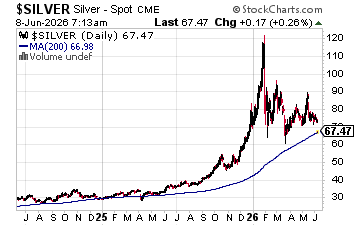
Silver Spot Chart (June 6, 2026)

Silver is testing its 200-day moving average, a key price support level.

Gold declined nearly 5% for the week, while silver plunged almost 9%, extending a correction that has gathered momentum since reaching multi-month highs earlier this quarter. Silver once again demonstrated its more volatile nature, amplifying gold’s downside move and causing the gold-to-silver ratio to widen significantly.

The primary catalyst was the May U.S. employment report. Non-farm payrolls increased by 139,000 jobs, surpassing expectations, while the unemployment rate held steady at 4.2%. The data reinforced the perception that the labor market remains resilient despite mounting concerns over slowing economic growth, which reduced expectations for near-term Federal Reserve rate cuts.

That shift pushed Treasury yields and real interest rates higher while boosting the U.S. dollar. Since precious metals compete with interest-bearing assets for investor capital, rising real yields tend to create headwinds for both gold and silver.

The payrolls report effectively removed a portion of the safe-haven premium that had accumulated in recent weeks and triggered widespread liquidation among leveraged futures traders.

Geopolitical risks offered little support. Ongoing hostilities in the Middle East and elevated energy prices failed to generate meaningful safe-haven buying. Instead, investors focused on the inflationary implications of higher oil prices and the possibility that sticky inflation could force the Federal Reserve to keep policy restrictive for longer.

From a technical perspective, the damage was significant. Gold broke below both its 20-week and 40-week moving averages while momentum indicators deteriorated.

Silver’s chart also weakened substantially, although the metal remains near important longer-term support levels and has not yet confirmed the same degree of structural breakdown seen in gold.

Despite the sharp decline in paper markets, physical demand remains relatively healthy.

Buyers in North America and Asia have stepped in to take advantage of lower prices.

Meanwhile, silver continues to benefit from strong long-term industrial demand tied to electrification, solar installations, grid upgrades, and data-center expansion.

Premiums on coins, bars, and rounds remain at the lowest point seen since last year.

ETF Gold Flows Flipped Modestly Negative in May

(Mike Maharrey, Money Metals News Service) Gold flows into ETFs reflected the range-bound gold price and were relatively flat in May. As the World Gold Council framed it, flows shifted “from a flood to a trickle.”

“Global gold-backed ETF investors remained largely sidelined in May as range-bound gold prices and renewed appetite for risk assets limited demand.”

Globally, ETF holdings fell by 16.2 tonnes. Europe was the only region to report positive flows.

At the end of May, ETFs globally held 4,121 tonnes of gold, slightly below the record high of $4,176 reached on Feb. 26 this year.

In dollar terms, global ETFs shed a modest $2 billion. Net outflows dropped total assets under management (AUM) by the gold-backed fund to $604 billion, a 2 percent decline.

North American ETFs reported an 8.5-tonne decrease in gold holdings, valued at $1.1 billion.

North American ETF flows have been muted since the March drawdown. According to the World Gold Council, this suggests “investors have moved to the sidelines while awaiting a clearer catalyst.

“Beyond price action, the opportunity cost of holding gold has also risen amid U.S. dollar strength, higher rates, and adjusted expectations for the future path of U.S. rates. Inflation concerns linked to the U.S.-Iran conflict have added to uncertainty around the rate outlook, with some market commentators suggesting the Fed may need to remain restrictive for longer.”

As I have noted, this mainstream narrative seems to be ignoring the Debt Black Hole. It’s not going to be as easy to keep rates restrictive as some analysts seem to think.

World Gold Council analysts pointed out that tech ETFs have pushed gold ETFs aside in North American markets.

Europe was a different story. Gold-backed funds in the EU reported a 1.2-tonne increase in gold holdings, valued at $334 million last month.

Positive flows in the UK and Germany offset weakness in other European countries.

According to the World Gold Council, safe-haven demand supported by political uncertainty and concerns about the government’s fiscal situation drove gold ETF investment in the UK last month.

“At the same time, the second half of the month saw lower Gilt yields – helped by softer inflation and falling oil prices – which reduced the opportunity cost of holding gold and encouraged local ETF demand.”

There were similar dynamics in play in Germany. Lower oil prices drove optimism that the ECB will not hike interest rates.

Asian funds shed 8.8 tonnes of gold valued at $1.2 billion. It was the first decline in Asian ETF gold holdings since last August.

China drove outflows with a stronger yuan and weaker local gold prices, coupled with optimism about equities, weighing on gold.

Indian funds also reported modest outflows, ending a 12-month streak of gold accumulation. The majority of May’s outflows happened after the Indian government hiked the gold import tariff.

Gold holdings by funds in other regions, including Australia and Africa, were virtually unchanged. Outflows from Australia offset inflows from countries including South Africa.

ETFs are a convenient way for investors to play the gold market, but owning ETF shares is not the same as holding physical gold.

ETFs are relatively liquid. You can buy or sell an ETF with a couple of mouse clicks. You don’t have to worry about transporting or storing metal. In a nutshell, it allows investors to play the gold market without buying full ounces of metal at the spot price.

Since you are just buying a number in a computer, you can easily trade your ETF shares for another stock or cash whenever you want, even multiple times on the same day. Many speculative investors take advantage of this liquidity.

But while a gold ETF is a convenient way to play the price of gold on the market, you don’t possess any gold. You have paper. And you don’t know for sure that the fund has all the gold either, especially when it sees inflows. In such a scenario, there have been difficulties or delays in obtaining physical metal.

Trading Volumes

Gold trading volumes increased by 3 percent month-on-month in May to $243 billion per day. Volume remains about 15 percent above the 2025 average. According to the World Gold Council, this signals ample gold market liquidity, despite gold’s recent range-bound performance.

Exchange-traded activity increased 6 percent to $175 billion per day. According to the World Gold Council, “This modest improvement was driven by higher COMEX activity but partially offset by a decline in Shanghai Futures Exchange volumes.”

Over-the-counter volumes inched higher by 1 percent to $243 billion per day. OTC activity is well above last year’s average of $180 billion per day.

There was a marginal 2.5 percent reduction in COMEX longs last month. Meanwhile, managed money positions increased in three of the four weeks in May. According to the World Gold Council, “Positioning continues to hover in neutral territory as investors await a clear near-term catalyst, while the long-term fundamental story remains intact.”


Mike Maharrey is a journalist and market analyst for Money Metals with over a decade of experience in precious metals. He holds a BS in accounting from the University of Kentucky and a BA in journalism from the University of South Florida.

Metals Focus: Gold Bull Market Still Has Legs

(Mike Maharrey, Money Metals News Service) Metals Focus has released its Gold Focus 2026 report. It includes comprehensive historical supply and demand data for 2017-25 and its 2026 forecast.

Despite the recent selling pressure in the gold market, that 2026 forecast remains bullish.

Looking Back

Investment inflows drove gold to the strongest gain in decades in 2025. The yellow metal’s price rose 44 percent last year and topped $4,500 for the first time late in the year. It was the best year for gold since 1979.

“Central to this rally were exceptionally strong investment inflows, driven by the new U.S. administration’s marked divergence from established norms on trade and domestic and foreign policy, alongside its continued loose fiscal stance. Pressure on the U.S. dollar, coupled with concerns over its future role as a de facto reserve currency, also supported prices.”

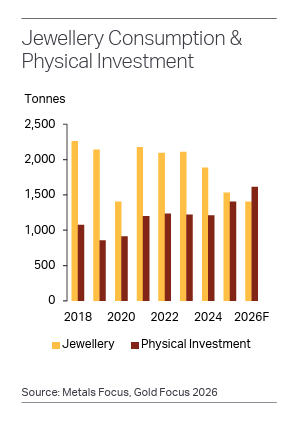
Physical gold investment rose by 16 percent to a 12-year high, reflecting bullish price expectations and heightened economic and geopolitical uncertainty. China (+28 percent) and India (+17 percent) led the surge in physical gold investment.

Concerns about the dollar drove central bank gold buying, another key dynamic supporting the gold bull market.

Many countries are worried about the weaponization of the dollar and the rapidly deteriorating fiscal situation in the U.S. This has driven a modest de-dollarization trend as these countries seek to minimize their dependence on the greenback.

The pace of central bank purchases moderated in 2025 but remained far above the recent historical average. Official net full-year buying came in at 863.3 tonnes. That was down 21 percent year-on-year, charting the lowest level since 2021.

However, while central bank gold purchases declined last year, they remained well above the 2010-2021 annual average of 473 tonnes.

To put that into context, central bank gold reserves increased by an average of just 473 tonnes annually between 2010 and 2021.

Strong investment demand and central bank buying mitigated a sharp drop in jewelry sales due to higher prices. Jewelry demand fell by 18 percent to a five-year low of 1,542 tonnes.

Despite higher gold prices, supply remained constrained last year.

Mine production rose by a modest 2 percent, supported by ramp-ups, project expansions, and stronger artisanal and small-scale mining. While the increase in gold production was small in percentage terms, it did set a record at

Meanwhile, recycling increased by a similar 2.8 percent but remained well below its 2012 peak.

Looking Ahead

The gold rally continued into the first weeks of 2026, with gold cracking $5,000 and approaching $5,500 before a sharp correction in late January.

Just a few weeks later, the U.S. and Israel launched a war on Iran, shaking up markets and putting further downward pressure on gold. The yellow metal has been rangebound between around $4,300 and $4,800, but there has been steady downward pressure.

According to the mainstream narrative, the Federal Reserve will have to keep interest rates higher for longer, or possibly raise rates, to deal with the price inflation driven by rising oil prices. Higher rates are considered a headwind for gold, a non-yielding asset.

However, Metals Focus remains bullish. Its analysts say they expect the bull run to resume in the second half of the year, once uncertainty surrounding the war is resolved.

“This view is premised on the assumption that the economic and political costs of a prolonged conflict will likely drive a relatively swift resolution, limiting the risk of a sustained oil crisis. While inflationary pressures are expected to persist, the consultancy does not subscribe to the growing consensus that U.S. rate hikes are likely over the next 12 months, as policymakers may tolerate higher inflation to avoid an economic slowdown.”

Metals Focus analysts are hinting at the Catch-22 the Fed finds itself in.

The central bankers at the Federal Reserve face a tough choice. They can either keep monetary policy tight – holding rates higher for longer or even raising rates – to tamp down price inflation, or they can ease monetary policy to take pressure off this debt-riddled bubble economy.

They can’t do both.

While the mainstream consensus seems to be that the Fed will keep rates higher, they seem to be ignoring the Debt Black Hole. If they do hike rates, they must know it will put additional strain on an economy buried in debt.  Credit to Metals Focus analysts who seem to understand this conundrum and realize maintaining a higher interest rate environment isn’t the slam dunk many in the mainstream seem to think.

Metals Focus analysts said that despite the noise in the markets created by war headlines, the fundamentals that drove gold higher last year remain firmly in place.

“Crucially, the drivers from 2025 remain intact: ongoing U.S. policy uncertainty, persistent concerns about the dollar’s long-term outlook, elevated geopolitical risks, and stretched equity valuations. Together, these factors reinforce gold’s role as a safe haven and portfolio diversifier.”


Mike Maharrey is a journalist and market analyst for Money Metals with over a decade of experience in precious metals. He holds a BS in accounting from the University of Kentucky and a BA in journalism from the University of South Florida.

Only 12% of Americans Believe the Iran War Has Benefited the Nation

(Kyle Anzalone, Antiwar.comA new poll found that just over one in ten Americans believe President Donald Trump’s war against Iran has been beneficial for the nation.

A poll conducted by Brookings, released on Friday, found that just 12% of Americans said the war against Iran has had a positive impact on the country. Notably, just one in four Republicans believes the war has been more positive than negative, while 33% said that the war was more negative than positive.

Overall, 56% of Americans said that war had a negative impact on the nation.

Multiple polls have found that President Trump’s war against Iran is unpopular with Americans. The conflict has caused the shutdown of the Strait of Hormuz, leading to surging gas prices in the US.

The US and Israel attacked Iran in February as negotiations to avert the war were still ongoing. Trump and Israeli Prime Minister Benjamin Netanyahu initially predicted a quick victory that would eliminate the threats from Iran’s nuclear and missile program.

However, Iranian forces have performed better than expected in Washington and Tel Aviv. Tehran seized control of the Strait of Hormuz and limited tanker traffic to vessels from “friendly nations.”

Iran was able to successfully attack several American bases in the region, killing 13 soldiers, injuring hundreds, and destroying advanced aircraft and radar systems. Additionally, Iran has conducted strikes against US allies in the region, including Israel and the Gulf Arab states.

Tehran is demanding that any end to the conflict recognize Iranian control over the Strait of Hormuz and the unfreezing of Iranian assets.

This article originally appeared at Antiwar.com.

Researchers Put a Number on How Much Debt U.S. Can Carry

(The Center Square) The United States has about 20 years to change course on its national debt before it reaches the estimated limits of its debt capacity, according to new research from the Penn Wharton Budget Model.

Researchers estimate the outer limit of U.S. debt capacity at about 210% of gross domestic product. At that point, even a 100% tax on labor income would not generate enough revenue to cover interest costs, making the debt impossible to stabilize through labor-tax increases alone.

Waiting until that threshold is reached would carry a steep cost. According to the model, stabilizing the debt at that point would require a permanent increase of about 15 percentage points in taxes on all labor income, more than Americans currently pay toward Social Security and Medicare Part A combined.

Federal debt held by the public equals about 101% of GDP. The federal government is projected to spend more than $1 trillion servicing that debt in fiscal year 2026, more than it spends on discretionary defense. The Congressional Budget Office projects debt will climb to 175% of GDP by 2056 under existing law.

The 2025 reconciliation act, known as the One, Big, Beautiful Bill Act, added an estimated $4.7 trillion to projected deficits over the coming decade, according to the Congressional Budget Office, further increasing the debt burden.

How quickly the nation approaches its debt limit depends largely on the growth of federal health care spending. Under assumptions consistent with the CBO’s baseline projections, the debt limit would be reached around 2051. Under a scenario with historically higher health care cost growth, the deadline moves up to 2045. In that case, Penn Wharton researchers estimate a 25% chance the limit could be reached within 14 years.

Financial challenges could emerge before the government reaches the model’s theoretical ceiling.

Darrell Duffie, a Stanford finance professor who studies the Treasury market, said investor confidence could erode before debt reaches its estimated maximum. He noted that foreign central banks and other reliable buyers are unlikely to absorb much more U.S. debt, leaving a growing share in the hands of discretionary investors such as hedge funds and mutual funds whose appetite for Treasuries is less predictable.

“The vulnerability of market functioning to the increasing quantity of Treasuries held by discretionary investors just keeps growing with the total supply of Treasuries,” Duffie told The Center Square.

Will McBride, chief economist at the Tax Foundation, said he sees signs of that pressure already building. He cited interest rates rising above what CBO projected, decreased foreign government ownership of U.S. debt, credit downgrades by all three major rating agencies over the past 15 years, and inflation reaching a 40-year high after the federal government sharply increased borrowing during the pandemic.

“The debt trajectory is unsustainable and tax-only solutions would require unprecedented tax hikes that would create large economic distortions and slow economic growth,” McBride told The Center Square.

The Penn Wharton analysis assumes investors continue to believe Congress and the president will eventually take steps to stabilize the nation’s finances. The model’s “required closure year” represents the latest point at which policymakers could still enact a feasible solution. Acting earlier would result in significantly lower costs.

Kent Smetters, the Penn Wharton Budget Model’s faculty director and the report’s lead author, said the risk of an earlier crisis is real but impossible to time precisely.

“As soon as capital markets start believing that Congress will never get its act together, things unravel immediately,” Smetters told The Center Square. “It’s no different than a bank run problem: a solvent bank can become insolvent simply because people believe it is insolvent.”

The Treasury Department did not respond to requests for comment before deadline.

The federal government has not recorded a budget surplus since 2001. The federal deficit has exceeded 3% of GDP every year since 2015. Treasury Secretary Scott Bessent warned lawmakers last year that the nation’s debt path is “unsustainable when and if the markets were to rebel.”

Sen. Steve Daines, R-Mont., echoed those concerns at an American Enterprise Institute panel discussion Wednesday on the national debt.

“We’re running a very dangerous experiment here in the United States,” Daines said. “We’re living on borrowed time because we got a heap of borrowed money.”

Daines added that he is concerned Congress “lacks the will to ever do anything” to address the problem.

The Penn Wharton researchers estimate that under current trends, policymakers have about two decades to implement fiscal changes before the available options become significantly more costly and potentially insufficient to stabilize the nation’s finances.

SAVE Act Picks Up a Vote in Senate, Now Has a Simple GOP Majority

(Ben Sellers, Headline USA) President Donald Trump’s push to secure the nation’s elections through mandatory voter ID and other proof-of-citizenship safeguards drew a step closer last week with a key defection from his RINO opposition.

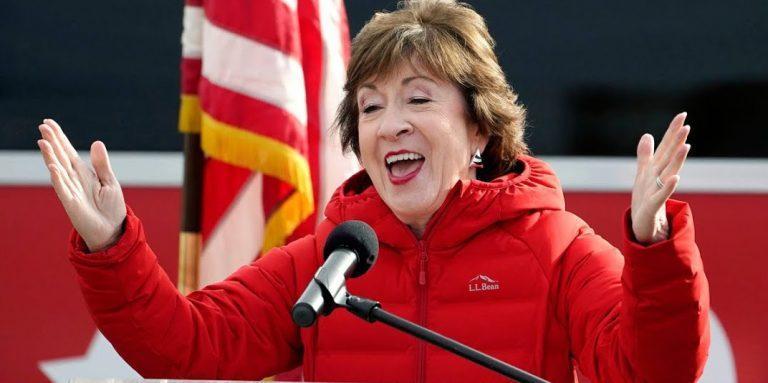
During a Thursday night voting spree, Sen. Susan Collins, R-Maine, said yes to passing the House version of the election-integrity bill known as the SAVE Act, giving the Republican-led measure the 50-vote majority it would need under budget-reconciliation procedures.

However, because the Senate parliamentarian ruled it ineligible to be included in the reconciliation bill, it still failed to pass.

With Democrats universally opposed, the bill cannot clear the 60-vote threshold needed under normal Senate rules due to the longstanding filibuster tradition. Budget bills require only a simple majority, but the Budget Act’s “Byrd Rule” prevents items deemed non-budgetary from inclusion in them, unless the Senate votes to suspend the act altogether.

Collins opposed an earlier measure by Sen. Lindsey Graham, R-S.C., that would have added portions of the SAVE Act into an immigration funding bill, along with other items like federal restrictions on transgender athletes in women’s sports.

But after Sen. Mike Lee, R-Utah, took up the motion to use the cleaned-up House version of the SAVE Act, she symbolically shifted her position, signaling her provisional support for the election-integrity measures.

The SAVE Act continues to face opposition from three other RINO lawmakers: retiring Sens. Mitch McConnell of Kentucky and Thom Tillis of North Carolina, as well as Sen. Lisa Murkowski of Alaska. Meanwhile, Senate Majority Leader John Thune, R-S.D., has thrown up procedural hurdles to stymie its passage.

Opposition has proven politically costly for Republicans, with Texas Sen. John Cornyn’s recent primary loss having been, in large part, attributable to the Republican establishment’s refusal to take up the bill. Collins is currently trailing in polls to Democrat Graham Platner, an alleged Nazi apologist and rape enthusiast.

Meanwhile, California’s recent primary — which saw early leads by Republican gubernatorial candidate Steve Hilton and Los Angeles mayoral candidate Spencer Pratt eroded after the fact — has underscored the necessity of implementing federal voting reforms that would prevent blue states from simply continuing to count late mail-in ballots until they reach a favorable outcome.

Without Democrats’ support, Republicans have several other options to pass the SAVE Act, none of them ideal:

  •  Vote to end the filibuster. However, Collins has long opposed ending the filibuster and voted against doing so early in Trump’s first presidential term, meaning any attempt at a rules change likely could not get the simple Republican majority needed without added pressure.
  •  Force a talking filibuster. Thune has declared this a nonstarter due to the time required to allow Democrats (and other opponents) to voice their opposition on the floor, which would likely tie up the Senate through the summer. It nonetheless remains the most practical option under current Senate rules.
  •  Attach the SAVE Act to other must-pass legislation. An earlier proposal to add it to a bill renewing the Foreign Intelligence Surveillance Act’s controversial eavesdropping powers was disregarded. It is unclear what other pending legislation it might be added to before the November election that would compel Democrats to vote for it.
  • Pressure the parliamentarian into including it in a budget bill. It is unlikely that Republicans will succeed in swaying Elizabeth MacDonough, a powerful but unelected official first appointed by Democrats in 2012. She has made controversial decisions in the past, often clearing the path for a Democrat agenda while blocking a GOP one. However, she did hold the line on Democrats’ 2021 “Inflation Reduction Act” monstrosity, during which they were unable to include measures like mass amnesty for illegal immigrants in a reconciliation bill. Thune has the power to fire MacDonough but is unlikely to do so.

Ben Sellers is a freelance writer and former editor of Headline USA. Follow him at x.com/realbensellers.

Ex-CIA Officer Reportedly Created Fake Spy Program to Siphon Hundreds of Gold Bars

(Ken Silva, Headline USA) The ex-CIA official who was arrested last month after being found with some $40 million in gold bars reportedly siphoned that loot from the government by creating a fake spy program.

The ex-officer, David Rush, fabricated a “special access program” (SAP), which the Washington Post described as a “black box” for the nation’s most secret intelligence operations. Rush’s phony program reportedly had to do with “continuity of government”—how to keep the government running during a nuclear attack or other major disaster.

“Even intelligence personnel with the highest security clearance cannot access an individual SAP, as they are known, without specific authorization,” the Post reported Friday, citing anonymous sources.

According to the Post, Rush “read in,” or initiated, two colleagues into the highly secretive sham program.

“He persuaded one of them to transfer millions of dollars to the program via a government contract that was also fraudulent,” the Post said.

Further details about Rush’s fake spy program are still not public.

“It remains unclear, for example, how Rush could single-handedly create a ‘black box’ for a fictional spy program without sign-off from his superiors. It is also unclear whether the two colleagues Rush brought into the fake program knew it was fraudulent,” the Post said.

Rush, who faces one count of stealing public funds, was ordered to remain in custody on Friday after a detention hearing. Part of the hearing was held in secret due to the top-secret information being discussed.

Rush was first put under federal investigation due to him allegedly lying on his job resume—he allegedly obtained $77,000 in military leave by falsely claiming to be in the Navy, even though he was discharged in 2015.

As the FBI’s investigation into Rush progressed, agents found that he allegedly made several requests to the government to obtain a “significant quantity” of foreign currency, as well as tens of millions of dollars in gold bars, for “work-related expenses” from last November to March.

“During the search, FBI agents seized approximately 303 gold bars, each of which weighs approximately one kilogram,” court records say. “Based on the current price of gold, the estimated value of the gold exceeds $40 million.”

Ken Silva is the editor of Headline USA. Follow him at x.com/jd_cashless.

Iran Strikes Israel, Risking a Collapse to Peace Talks

(Headline USAIran launched missiles at Israel in the first such bombardment since a fragile ceasefire took effect in early April, raising the possibility of a return to heavy fighting and complicating mediation efforts to end the war.

Iran’s state broadcaster confirmed the launches, and Iran closed its western airspace to brace for a possible response. Tehran had warned of retaliation after Israel struck Beirut’s southern suburbs without warning earlier Sunday in defiance of Washington’s request days ago to stand down. Israel said the Iranian-backed Hezbollah fired at northern Israel earlier in the day.

“Should these acts of aggression be repeated, the responses will be broader in scope and will encompass all American and Zionist targets throughout the region,” Iran’s Revolutionary Guard said in a statement that referenced attacks in Lebanon and on Iran’s coast and vessels around the Strait of Hormuz.

Sirens sounded in several areas of Israel, sending millions running for shelter. Israel’s military said it intercepted the missiles, and multiple explosions were heard in the north. Less than an hour later, the military said people could leave areas reinforced against missile attacks.

“Iran has made a grave mistake,” Israel military spokesperson Brig. Gen. Effie Defrin said. The military’s chief of staff, Lt. Gen. Eyal Zamir, said it will “strike the enemy with determination as soon as the order is given.”

But Israel’s public broadcaster, Kan, said U.S. President Donald Trump told it that he doesn’t think Israel needs to respond further. And Trump told the Financial Times: “I call all the shots. He (Netanyahu) doesn’t call the shots.”

U.S. official: Netanyahu to hold off attack ‘for the time being’

A senior U.S. official said Trump had called Netanyahu to urge him not to retaliate immediately for the Iranian missile attack. The official, who spoke on condition of anonymity to describe a private phone call, said that Trump believed he had convinced Netanyahu to wait.

Trump “got Bibi to hold off for the time being,” the official said. The official would not offer any other details of the call, and there was no immediate comment from Netanyahu’s office.

Iran had warned that an attack on Beirut would renew full-scale war across the Mideast, even as Pakistan and other mediators try to restart talks between Tehran and Washington.

“U.S. forces across the Middle East remain vigilant and ready,” the U.S. Central Command posted on X shortly before the missile launches. The U.S. Embassy in Israel later directed employees and family members to shelter in place.

Israel’s attack on Beirut came a few days after the Lebanese and Israeli governments agreed to a ceasefire in U.S.-hosted talks, though Hezbollah rejected the deal. The strike on a residential building killed two people and wounded 20, Lebanon’s health ministry said.

“The army will continue to act in all of Lebanon,” the Israel military spokesperson said.

Israel’s strikes and ground invasion in Lebanon in pursuit of Hezbollah, and the militant group’s resistance to disarming, have complicated an overall deal to end the war in the Middle East.

Iran says any deal must include an end to fighting in Lebanon.

Trump told a Fox News Channel reporter that he wanted the Iranians to stop firing missiles and return to the negotiating table. He also said that Israel’s strikes earlier Sunday were not coordinated with the U.S. and “I’m not happy about it.”

Israel last week had announced it would strike the southern suburbs of Lebanon’s capital, but urgent talks via Washington halted that on the condition that Hezbollah stop targeting Israeli border towns.

Hezbollah, which claimed responsibility for firing at Israel earlier Sunday, wants the direct talks between Lebanon and Israel to end. Instead, it supports Iran’s stance that an overall ceasefire deal between Tehran and Washington include the situation in Lebanon.

Netanyahu, who seeks reelection later this year, is under heavy domestic pressure to respond to both Iran and the Hezbollah threat, which has paralyzed life for thousands of residents along Israel’s northern border.

But Trump has made clear he does not want to see the war resume.

Trump said earlier Sunday in an interview with NBC’s “Meet the Press” that he would like to see a “more surgical attack on Hezbollah.” He also said he was “not demanding” that Lebanon be part of an overall ceasefire deal in the Iran war.

Iran continues to assert its grip on the Strait of Hormuz and the U.S. continues its blockade of Iranian ports, with shipments of oil, natural gas and fertilizer affected and the global economy in pain.

Iran since the ceasefire took effect has launched missiles and drones at Gulf nations and said it was targeting the U.S. military presence. After its launches against Israel, Iraq’s Civil Aviation Authority announced that the country’s airspace would close for 72 hours and Syria’s aviation authority announced a 12-hour airspace closure.

All flights from Tehran’s main international airport were suspended, the civil aviation authority said, according to the official Mizan news agency.

Diplomacy continues before and after missile launches

Pakistan’s interior minister, Mohsin Naqvi, was in Tehran on Sunday delivering a message to Iranian Supreme Leader Ayatollah Mojtaba Khamenei from Pakistan’s army chief Field Marshal Asim Munir, according to Iran’s state-run IRNA news agency. There were no details on the message’s contents.

Khamenei has not been seen in public since he was named the Islamic Republic’s ruler after his father was killed on Feb. 28 as Israeli and U.S. strikes sparked the war.

Pakistani authorities have said Islamabad, with support from regional countries including Qatar, Turkey and Egypt, is working to help bridge differences.

In Cairo, the Egyptian and Qatari foreign ministers discussed “proposed elements” of a potential agreement between the U.S. and Iran, the Egyptian foreign ministry said, without details.

And after Iran’s missile launches at Israel, Iranian Foreign Minister Abbas Araghchi spoke with counterparts in France, Qatar, Saudi Arabia, Britain, Egypt and Turkey as well as Pakistan’s army chief, Iran’s state TV said.

Adapted from reporting by the Associated Press

Va.’s Gun Ban Backfires on Spanberger as Sales Surge

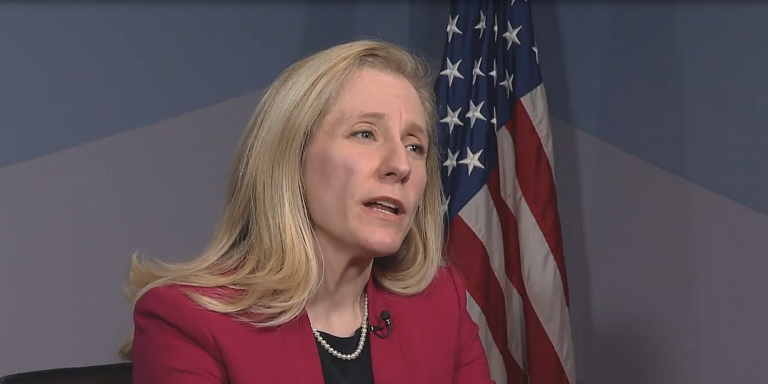
(Ben Sellers, Headline USA) As overreaching Democrats inflict a tyrannical reign of terror on the right-leaning, rural citizens of Virginia, gun owners hope to stave off a proposed ban by Gov. Abigail Spanberger the only way they know how: with more guns.

Spanberger, a former CIA operative, announced her extreme crackdown on Second Amendment rights in April, notably targeting any weapons with more than 15 rounds of ammunition. Most standard rifle magazines hold double that, while 15 rounds marks the lower threshold of a typical handgun clip.

The laws also appeared to go after all semi-automatic weapons, which Spanberger referred to vaguely as “assault” weapons.

Gun owners in violation could face a Class 1 misdemeanor charge, although the law does permit those who owned their weapons before July 1 to be grandfathered in.

As a result, data suggested that purchases in May were more than double those of May 2025, when Republican Gov. Glenn Youngkin was in charge. Background checks surged last month from a monthly average of around 37,000 to around 75,000.

Journalist Eric Daugherty noted that the spike undermined Spanberger’s stated goal of reducing gun ownership in the commonwealth through costly gun-buyback programs.

“Virginia is turning out to be a total failure since Spanberger took over,” he wrote. “The people need to wake up and vote red!”

The ban also faces a likely challenge from the federal Justice Department, which has said it violates the U.S. Constitution.

“This letter provides formal notice that the Civil Rights Division will commence litigation in the event the Commonwealth of Virginia enacts certain bills that unconstitutionally limit law-abiding Americans’ individual right to bear arms,” wrote Assistant Attorney General Harmeet Dhillon, who oversees the DOJ’s Civil Rights Division, in an April letter to Spanberger.

“President Trump issued Executive Order 14206 making clear that this Administration will take affirmative steps to ensure that Second Amendment rights ‘must not be infringed,’” Dhillon added.

The ban echoes an earlier gun-grab attempt by Virginia Democrats in 2020 under then-Gov. Ralph Northam, which faced similar backlash. However, Northam’s bill failed to clear the state Senate after some moderate Democrats defected.

Spanberger currently holds legislative majorities in both branches of the state General Assembly and, despite having campaigned as a moderate, has used them controversially to pursue an aggressive left-wing agenda.

Notably, Democrats’ attempt to gerrymander four GOP-held congressional seats failed after the state Supreme Court determined they had violated the state Constitution.

But another possible cause for the spike in firearm sales may tie to Spanberger’s assault on public safety by refusing to cooperate with federal immigration-enforcement officers.

Critics have highlighted the rise in violent crimes, including some high-profile murders by illegal immigrants in areas like Fairfax County, where George Soros-sponsored district attorney Steve Descano refuses to prosecute non-citizens.

Spanberger addressed the issue of ICE cooperation in her gun-ban announcement as part of a separate newly passed bill.

“[W]hen masked agents operate on Virginia’s streets, our citizens have no way of distinguishing them from bad actors, and that is unacceptable,” she wrote.

“These amendments simply set the terms of our ongoing collaboration,” she added. “Keeping Virginians safe has always been a two-way street, and when we work with our federal law enforcement partners, we will do it the right way.”