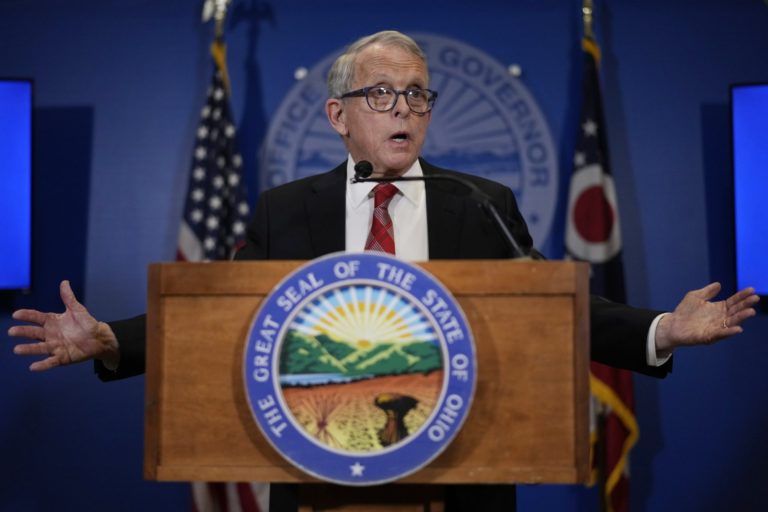
(Dmytro “Henry” Aleksandrov, Headline USA) On Sept. 10, 2024, Gov. Mike DeWine, R–Ohio, announced that he would send the Ohio State Highway Patrol and $2.5 million to the community of the town of Springfield that became infamous after Haitianillegal aliens started committing crimes and eating pets there.
“I want the people of Springfield and Clark County to know that as we move forward, we will continue to do everything we can to help the community deal with this surge of migrants. The federal government has not demonstrated that they have any kind of plan to deal with the issue. We will not walk away,” DeWine stated.
🚨BREAKING: Ohio Governor Mike DeWine is now sending State Troopers into Springfield, OH along with millions in funding to address the Haitian migrant crisis there, saying:
"The federal government has not demonstrated that they have any kind of plan to deal with the issue."… pic.twitter.com/Bewr4tH6g5
The Daily Mailreported that even though the governor said that he doesn’t oppose the influx of 20,000 illegals from Haiti who have flooded the city since 2020, DeWine said the federal government should do more to help Americans who have been living in this town and are affected by the disastrous immigration policy.
The news source added that Ohio State Highway Patrol troopers have been sent to the city to assist local law enforcement after the town’s residents started to complain about the fact that the illegals are not able to comprehend basic driving rules in the United States.
“Beginning tomorrow morning, OSHP troopers will patrol local roads with the highest crash rates and hold accountable any driver who drives erratically and risks the safety of others,” a press release said.
DeWine said that the state will send $2.5 million over two years to provide more community healthcare.
On Sept. 9, 2024, Attorney General Dave Yost, R-Ohio, also mentioned Springfield’s problems by telling his office to find a legal response to stop the federal government from dumping “an unlimited number of migrants to Ohio communities.”
The Post Millennial reported that even though DeWine previously provided emergency funding to the town for driver education, more vaccines for kids and schools and translation services, it didn’t help.
The news came as residents of the town filed a petition to recall the entire city’s commission because it allowed the invasion of illegals from Haiti.
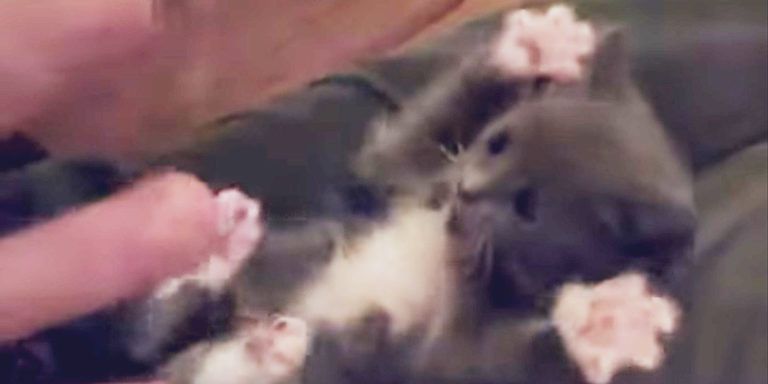
(Ben Sellers, Headline USA) One of the greatest cat memes in meme history to this date would have to be “Surprised Kitty,” the adorable little newborn kitten that would respond to its owner’s hand retracting from a tickle with something bordering on bewilderment or surrender.
It worked on many meme-able levels because its simplicity made it the perfect pictorial expression of an emotion for which words could not do justice, while its cuteness made it a must-share cultural touchstone.
Whatever became of “Surprised Kitty” (now a fully grown cat of about 12 years old), I sure hope it did not make its way to Springfield, Ohio.
The midwestern Everytown, overrun by some 20,000 Haitian refugees during the Biden–Harris administration as part of its cynical Great Replacement strategy, is no place for cats, nor for peace-loving American citizens.
It was first put on the national map last year after Hermanio Joseph, a 35-year-old Haitian illegal, veered into the wrong lane of traffic, causing a school bus to flip over while ferrying children to their first day of the new school year.
Sadly, Aiden’s father threw him figuratively under the bus, for lack of a better term, at a recent town meeting, where he lamented the fact that it wasn’t a white man who killed his son so that GOP nominee Donald Trump could not invoke him as a political talking point.
The father of Aiden Clark tells the Springfield city commission his family wishes Aiden had been killed by a 60-year-old white guy so that his death is not used to spew hate toward migrants.
Yet, it is the Biden–Harris administration that sees Aiden as little more than collateral damage—a calculated risk to be written off in its vision of making Ohio a blue state, as it has done in small towns—and big cities alike—throughout the nation.
FELINE FRENZY
Ironically, it took a series of cat memes to force the issue back into the public eye.
Following reports from Springfield residents that the Haitian refugees had been killing and eating domestic pets (and quasi-domesticated ducks from municipal parks), the story took on a life of its own, with a viral trend of artificial intelligence-generated images that depicted Trump rescuing cats and ducks.
Although the only evidence of the atrocities may be the eyewitness accounts of the residents themselves—which are disputed by city officials—and a few photos and videos posted online that lack the necessary context, Sen. JD Vance, R-Ohio, Trump’s running mate, observed that the memes served a greater purpose in raising awareness of the broader impact that Biden–Harris open-border policies were having on communities.
By contrast, far-left, China-compromised Rep. Eric Swalwell, D-Calif., all but declared the memes to be a national-security threat on Tuesday after House Judiciary chairman Jim Jordan, R-Ohio (whose district lies just north of Springfield), re-posted one of the AI-generated pictures on the committee Republicans’ X account.
During Tuesday night’s debate between former President Trump and Vice President Kamala Harris, the current Democratic nominee, the pet-eating allegations again resurfaced.
After Harris falsely suggested that people were leaving Trump rallies en masse out of boredom, Trump sought to hammer the current administration’s catastrophic border policies and the outrage that working-class Americans were feeling as a result.
“In Springfield, they’re eating the dogs,” Trump said.
“The people that came in, they’re eating the cats. They’re eating—they’re eating the pets of the people that live there,” he continued. “And this is what’s happening in our country. And it’s a shame.”
"In Springfield, they're eating the dogs. The people that came in, they're eating the cats. They're eating — they're eating the pets of the people that live there. And this is what's… pic.twitter.com/7M7gZQs3U3
It was one of several points Trump made over the course of the night that received a snidely intoned fact check from ABC News moderators David Muir and Linsey Davis.
“I just want to clarify here: You bring up Springfield, Ohio,” Muir said. “ABC News did reach out to the city manager there. He told us there have been no credible reports of specific claims of pets being harmed, injured or abused by individuals within the immigrant community.”
In addition to a barrage of blatantly loaded questions designed to provoke or entrap Trump, while teeing up Harris for her rehearsed talking points, the litany lopsided fact-checks clearly was intended to send a subtle signal that Trump was pushing disinformation and Harris was presenting wholly accurate statements.
That was far from the reality. Indeed, Trump himself called out several of Harris’s more bald-faced lies, and The Federalist helpfully compiled a list of 25 of them.
For analysts on both the Right and Left, the moderators’ bias has since become the biggest takeaway of the night.
“The debate will instead be remembered as a three-on-one pile-on, given the unprofessional and biased team of ABC moderators David Muir and Linsey Davis,” wrote Hoover Institution scholar Victor Davis Hanson. “Rather than refuting pre-debate fears that their past anti-Trump biases would warp the debate, they only confirmed them.”
The Candy Crowley Debate
What do we remember, if anything now, about the second presidential debate of 2012?
Not whether Obama or Romney won.
But only how CNN’s Candy Crowley blew up her career and embarrassed CNN—by outrageously hijacking the debate, and as a partisan,…
Nonetheless, Hanson’s post touches on an important detail, which is that the moderators’ brazen bias came as no surprise to anyone.
In fact, many were shocked with how neutral CNN’s moderators were during the initial June 27 debate between Trump and President Joe Biden, given the unbelievably favorable terms Trump had agreed to.
With those same conditions in place at the ABC News debate—a network with which Trump is currently pressing an active lawsuit for defamation—he should have been fully loaded for bear.
And considering the outcome of the first debate—in which the left-leaning moderators played it straight and the candidate ultimately dropped out of the race as a result—no partisan radicals in the news media would dare risk taking the high road again, reputation be damned.
Fortunately for ABC News, the reputational risk may be minimal due to the chronic amnesia that news consumers at large—and Republicans especially—seem to have when it comes to contextualizing mainstream-media narratives.
Few, for example, seem to recall that prior to becoming the clueless, do-nothing border czar, Kamala Harris was, in fact, one of the most vicious interrogators in Senate Judiciary hearings for Justice Brett Kavanaugh, then-Attorney General William Barr and others.
She traded in her resting-bitch-face scowl and became the cackling joymonger we now know following a 2019 reboot of her foundering primary campaign. Nonetheless, she exited the race just three months later—the first major candidate to do so, despite having entered as one of the most buzzed-about.
“This is my third presidential campaign, and I have never seen an organization treat its staff so poorly,” said Harris’s Iowa operations director, Kelly Mehlenbacher, slamming the rampant disorganization, according to the far-left Talking Points Memo.
Harris’s brutal, race-baiting attack on then-candidate Joe Biden in the Democrat primaries, and her collection of “Pinocchio” awards, signaling her willingness to lie shamelessly, should likewise have been common knowledge during debate prep.
SNAKES IN THE GRASS
As for the media’s tendency to rig the debates, there are ample examples, including a notorious 2012 debate between GOP candidate Mitt Romney and then-President Barack Obama, during which CNN’s Candy Crowley inserted a false fact check to favor Obama.
In 2016, Democrat operative Donna Brazile—who, for some reason, was entrusted with the debate questions before another CNN-hosted event, between Trump and Democrat nominee Hillary Clinton—was busted for having leaked the questions to Clinton surrogate John Podesta after the later had his hacked emails published on Wikileaks.
Brazile—who went on to become the interim head of the Democratic National Committee, although she lost her job as a CNN analyst—expressed no remorse.
“My conscience—as an activist, a strategist—is very clear,” she told SiriusXM host Joe Madison, according to the Washington Post. “… [I]f I had to do it all over again, I would know a hell of a lot more about cybersecurity.”
Finally, in the 2020 debates, the failure to challenge Biden in any way on his outright lie—which his own campaign surrogate, and future secretary of State, Tony Blinken, had helped to orchestrate—that Hunter Biden’s laptop was Russian disinformation will go down as a moment of ignominy from which the mainstream media should never be allowed to recover.
The body of evidence all points to one conclusion: There is absolutely no reason to entrust the fake news to act in good faith in its coverage and refereeing of election politics, nor to be indignant about its refusal to be evenhanded—which it has come to regard as a moral imperative, supplanting the ethical obligations that left-wing activist–journalists long ago shrugged off.
In his recitations of “The Snake,” Trump himself has pointed out many times, “You knew damn well I was a snake before you took me in.”
WATCH: President Trump reads “The Snake” in wake of American border crisis during speech in Clive, Iowa pic.twitter.com/mp5KDHNfiM
Still, for whatever reason, with each new election cycle there seems to come a narrative reset, as if Sergey Lavrov were sitting in the Kremlin and pushing his magic button to wipe away the memories of U.S. voters.
🇷🇺🇺🇸 2009. At the beginning of the meeting, Hilary Clinton presented Sergey Lavrov as a gift a red button with the inscription RESET. However, in Russian, a completely different word was written on the button – OVERLOAD. Apparently, the US State Department did not have a decent… pic.twitter.com/N15Q2WaoiB
(Luis Cornelio, Headline USA) ESPN personality Shannon Sharpe, known for his infamous anti-Trump commentary, accidentally went live on Instagram Wednesday while having sex.
Sharpe, an NFL Hall of Famer with over 3 million Instagram followers, initially claimed his account had been hacked but later apologized for his blunder.
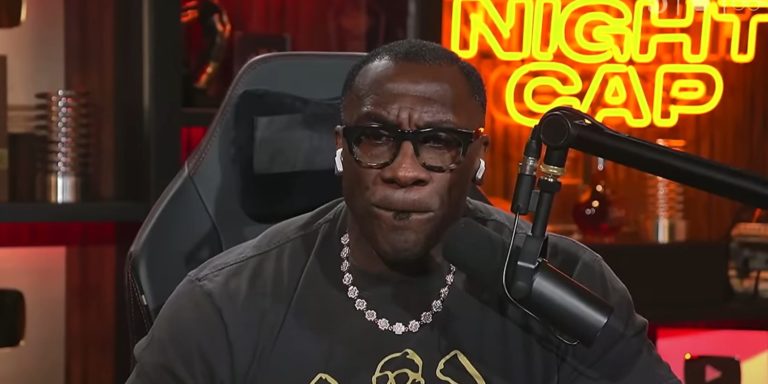
“Obviously I am embarrassed. Someone that is extremely, extremely private and to have one of your most intimate details, the audio, heard for the entire world to hear, I’m embarrassed for a number of reasons,” Sharpe said on his Nightcap podcast.
While screen recordings of the live stream do not show Sharpe directly, the sounds of him and a woman can be heard in the background. These recordings have since been widely shared on X.
While grunting, Sharpe identified the woman as “my Michelle” in one of the clips. In others, she is heard groaning, “Papa, I love you,” to which Sharpe, breathing heavily, responded, “Yes, baby.”
During his apology on the podcast, Sharpe explained how the incident occurred.
“I threw my phone on the bed, engaged in an activity,” he proclaimed. “I did not know IG live. I’ve never turned IG live on, so I don’t know how it works and all of sudden my other phone started going off.”
Sharpe said his heart dropped when he answered the phone and was informed his phone had been live-streaming his intimate.
Sharpe, a retired NFL player and a member of the Hall of Fame, won three Super Bowls—two with the Broncos and one with the Baltimore Ravens.
He has since signed a multi-year contract with ESPN, following his appearances on First Take in August 2023. ESPN clarified that he will not be suspended for the live-streaming incident and will return on Monday.
In addition to his ESPN work, he co-hosts the Nightcap podcast with former NFL player Chad “Ochocinco” Johnson.
Sharpe has viciously criticized Trump on both ESPN and social media. In 2020, Sharpe lamented Trump had not been held accountable for what he claimed were controversial remarks.
When whites say something bad in the NFL, they get Tony Dungy to clean it up. Where is the person in the Jewish community that will come to our defense?
I'm not excusing DeSean, but whites never have to disavowal. Jerry Jones & Mr. Kraft stand lock-stock-and-barrel with Trump. pic.twitter.com/H5Bk0vMPb6
His harsh social media commentary included remarks like, “I’d rather pay 20 bucks a gallon than have Trump in office. Hope that answers your question.”
I’d rather pay 20 bucks a gallon than have Trump in office. Hope that answers your question https://t.co/zdL1hgZ17P
(Headline USA) At an impromptu party in the office to celebrate his 50th birthday, a veteran CIA officer got drunk, reached up a colleague’s skirt and forcibly kissed her in front of stunned co-workers, prosecutors alleged in the latest case of sexual misconduct to spill from the spy agency into a public court.
An Associated Press investigation found Donald Asquith’s alleged assault last year happened just days after the CIA promised to crack down on sexual misconduct in its ranks — even as the agency has refused to disclose details on the extent of the problem. A recent 648-page internal watchdog report that found systemic shortcomings in the CIA’s handling of such complaints was classified as “secret,” shielded as a potential threat to national security.
“It is inconceivable that sexual misconduct could be considered a state secret,” said Kevin Carroll, an attorney who represents several women in the agency who have made complaints.
The watchdog report followed an earlier AP investigation that found at least two dozen women in the CIA came forward to authorities and Congress with accounts of sexual assaults, unwanted touching and what they described as a campaign to silence them.
Many were emboldened by a CIA officer trainee who went to police in 2022 after the agency failed to take action against a colleague she accused of assaulting her with a scarf in a stairwell at CIA headquarters. Some of those women now say they have faced retaliation, including the victim of the stairwell attack, who was terminated less than six months after suing the agency.
“I believed in the institution implicitly and I also believed all of the things the agency said it was doing to rectify what I saw as an epidemic,” said one of those women, who was not named because the AP does not typically identify people who say they are victims of sexual assault. “I realize now that was just lip service.”
Asquith’s case could prove even more embarrassing to the CIA given his lengthy clandestine service overseas and the brazenness of the alleged conduct. It also happened in June 2023, less than a month after CIA Director William Burns announced sweeping reforms intended to keep women safe, streamline claims and more quickly discipline offenders. “We must get this right,” he said.
Asquith was charged in April in suburban Washington’s Loudoun County, Virginia, with misdemeanor assault and battery following a monthslong sheriff’s probe into the boozy party in an off-site CIA office attended by at least a dozen people.
His accuser, a CIA contractor, told authorities that she repeatedly rebuffed Asquith’s advances but that he kept pulling closer, rubbing her leg without her consent and making a series of inappropriate sexual comments, as well as “grunting noises and thrusting motions.”
Asquith then “placed his hand up her skirt to her thigh numerous times causing her skirt to lift up, possibly exposing her underwear,” said court documents.
The woman told investigators she slapped Asquith’s hand away and got up to leave, but that he intervened as she approached the door and asked for a “booby hug” before grabbing her with both hands around her back and rubbing his groin and chest on her. She said Asquith then “forcibly hugged her and kissed all over her face and mouth without her consent.”
Asquith did not respond to repeated requests for comment. His lawyer, Jon Katz, hung up when called by the AP.
“CIA takes allegations of sexual assault and harassment extremely seriously,” the agency said in a statement, adding that within days of the incident it restricted Asquith’s contact with the alleged victim and he retired three months later.
Asquith’s case comes amid a flurry of activity surrounding sexual misconduct accusations at the CIA, including ongoing state and federal criminal investigations into an undercover officer in Europe suspected of knowingly infecting at least three CIA colleagues with an incurable sexually transmitted disease. The agency has not explained why that officer remains overseas.
Just a week before Asquith’s trial begins this month, a federal judge in Washington will sentence another former CIA officer who drugged and sexually abused at least two dozen women he met on Tinder and other dating apps. Prosecutors are seeking a 30-year sentence for Brian Jeffrey Raymond, calling him a serial predator who caused “immeasurable” harm during various overseas postings between 2006 and 2020.
And next month, a now-former CIA officer trainee faces a second trial on charges stemming from the 2022 stairwell attack in the agency’s headquarters in Langley, Virginia. Ashkan Bayatpour has admitted wrapping a scarf around the woman’s neck but says it was intended as a joke. The woman says it was an attack in which he also attempted to kiss her against her will.
“He made a face like he was trying to really hurt me,” the woman testified last year during a bench trial in which Bayatpour was convicted of misdemeanor assault and battery. Under Virginia law, the former Navy intelligence officer is entitled to a jury trial after appealing that conviction.
Former CIA case officer Lindsay Moran, author of a 2005 memoir on her life as a spy, said sexual misconduct has long been a problem in the male-dominated agency and became worse after the Sept. 11, 2001, attacks, when the agency’s focus shifted to deploying clandestine combat units to Afghanistan and Iraq.
“They brought their own brand of male toxicity that was like gasoline on the old-boys network that already existed,” Moran said. “National security is used as an excuse to brush these concerns under the carpet.”
When asked why the watchdog report was classified, keeping secret an accounting of the problem and case histories, CIA said that decision was made by its inspector general, which conducted the inquiry and did not respond to a request for comment.
Also, the CIA has yet to fulfill AP’s longstanding Freedom of Information Act request seeking internal records detailing its response to the Raymond scandal, and why it took so long to uncover assaults he documented in nearly 500 videos and photos that in some instances showed him groping or straddling naked, unconscious victims.
Florida Republican Marco Rubio, vice chairman of the Senate Select Committee on Intelligence, told AP that lawmakers will continue to “hold agency leaders accountable” after pushing for reforms in the CIA’s misconduct reporting process.
“How far does someone have to go before the agency will step in and say enough is enough?” Barbara Gray, a former CIA officer, told AP last year after making an internal complaint accusing her manager of getting into her hotel bed as she slept during a work trip.
CIA assured Gray the supervisor was being “appropriately punished,” she said, but then promoted him and featured him in a career development video shown to junior officers. Gray, meanwhile, resigned after her career “seemed to grind to a halt.”
“What culture is CIA nurturing when it promotes some of its most egregious offenders?” she said. “I believe the agency is making an effort to improve its reporting processes and procedures, but my question is: What comes next?”
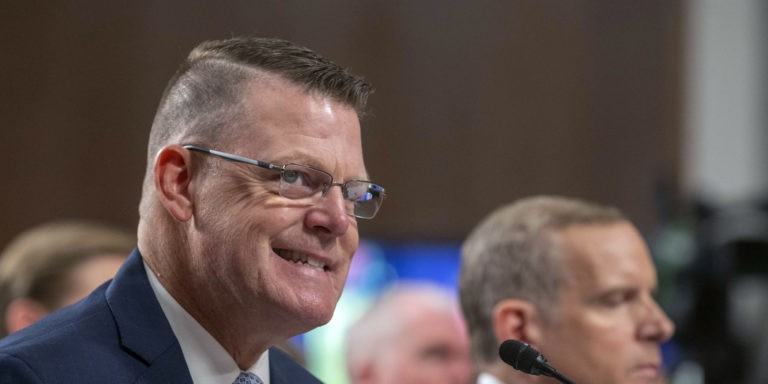
(Ken Silva, Headline USA) The Secret Service held another closed-door briefing with Senators on Thursday about the July 13 assassination attempt on Donald Trump—and lawmakers from both sides of the aisle were reportedly “appalled” by what they heard.
“I think the American people will be shocked, astonished and appalled by what we will report to them about the failures of the Secret Service in this assassination attempt of a former president,” Sen. Richard Blumenthal, D-Conn., told reporters after the briefing.
“But I think they also ought to be appalled and astonished by the failure of the Department of Homeland Security to be more forthcoming, to be as candid and frank as it should be to them in terms of providing information,” he added, according to the New York Post.
Sen. Ron Johnson, R-Wisc., also was among those frustrated with Secret Service Acting Director Ronald Rowe.
“There is a lot that we don’t know yet, and I think there is some frustration that was voiced, I think with Acting Director Rowe,” Johnson told reporters. “He’s making the commitment to provide more information.”
Meanwhile, Sen. Gary Peters, D-Mich., told Fox News that the Senate is set to issue an interim report on the assassination attempt “shortly.” According to the Post, Johnson said he expects the preliminary document to be released before the end of this month, when Congress breaks for the election races.
However, it looks like Peters wants a lot more info before releasing a preliminary report.
“It will be coming out shortly. And it’ll only be an interim report because there’s a lot more information that we need to find,” Peters told Fox News.
“And we hope once this report comes out and we can get the additional information necessary to have a complete report of what happened, as well as steps of what we need to do in the future to make sure that this never happens.”
Sen. Rand Paul, R-Ky., reportedly said that the report will “identify very specific errors.”
“To me, it’s still inexcusable that a guy for 90 minutes before a rally has a rangefinder and you don’t stop the proceeding,” Paul said.
(Ken Silva, Headline USA) The Pennsylvania Office of Open Records has ruled in favor of Headline USA’s appeal for the autopsy records of alleged Trump shooter Thomas Crooks—determining that Butler County must disclose such records pursuant to the state’s Coroner’s Act.
“The County is required to provide autopsy reports, toxicology reports, inquisition or coroner’s reports, and any other ‘reports or documents’ which are made expressly public by 16 Pa.C.S. § 13952 upon the payment of the fees set forth in the Coroner’s Act,” Pennsylvania Senior Appeals Officer Jordan Davis wrote in his Thursday decision.
“The County is required to provide any responsive reports … within 30 days upon payment of the Coroner’s Act’s authorized fees.”
🚨 We have won our appeal for the autopsy records of would-be Trump assassin Thomas Crooks!🚨
The Butler Coroner must provide the records within 30 days of receiving our payment for fees! We've sent payment.
Headline USA has sent payment to the Butler County Coroner Office, and is awaiting a response.
Appeals Officer Davis’s decision was also in favor of disclosing records that document the chain of custody of Crooks’s body from the crime scene to the Allegheny County Office of the Medical Examiner. As has been previously reported, Crooks’s body was reportedly kept on the rooftop until 6 a.m. the day after the shooting. There, Butler County coroner William F. Young III allegedly examined Crooks’s body before sending him to the Allegheny County Medical Examiner for the autopsy.
Coroner Young had claimed in a sworn statement indicating that no records exist about Young being sent to Allegheny. Appeals Officer Davis accepted Young’s sworn statement that no records exist about the decision, but Davis said there could be other records about the transportation.
“The County has provided no evidence that it does not possess any record of the transportation, merely that the County Coroner’s office does not possess any internal communications related to the matter. Because the County has not met its burden to show that these records do not exist, it must conduct a search for such responsive records,” Davis said.
“If the agency completes its search for records responsive to the Request and determines that no records exist, it must provide the Requester with an attestation explaining the search and affirming that no additional responsive records exist within its possession, custody or control,” Davis said.
That OOR’s ruling doesn’t necessarily close the matter, however. Butler County has the right to appeal the OOR’s decision to the Butler County Court of Common Pleas within 30 days of today.
Appeals Officer Davis also didn’t give this publication a total victory. He said other records requested by Headline USA don’t fall under the Coroner’s Act, such as scene images, exam images, lab analysis reports, and histology slide recuts.
“Histological slides are tissues from the decedent which have been prepared for microscope study—a ‘histology slide recut’ refers to new tissue samples which have been prepared from the same site as the original. Although there is no specific reference to histology slides in the RTKL, they are facially the record of an autopsy,” Davis explained.
“Moreover, requiring the agency to scan and provide images of a tissue slide would certainly constitute photographs “of the body or any portion of the body” and therefore be expressly exempt under Section 708(b)(20) of the RTKL. Because histology slides appear to be subject to that exemption and not subject to the Coroner’s Act, the appeal must be denied as to any such slides.”
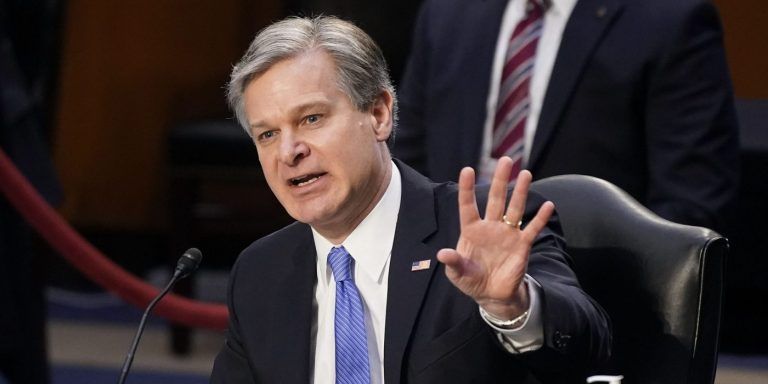
(Ken Silva, Headline USA) The FBI is apparently stonewalling the House Oversight Committee’s attempts to investigate Minnesota Gov. and Democratic candidate for vice president Tim Walz over his ties to the Chinese Communist Party.
The House Oversight Committee launched an investigation into Walz on Aug. 16, asking FBI Director Chris Wray to hand over documents and communications related to Walz and his partnerships with CCP-linked entities.
The FBI has ignored that request, according to another letter Oversight Chairman James Comer wrote on Thursday.
“The FBI’s silence regarding Mr. Walz’s documented relations with CCP affiliates is inexcusable,” Comer said in his letter to Wray.
NEW: The FBI is being pressed by House Oversight Chair James Comer to promptly turn over information on a China-linked research institute that Tim Walz helped secure funding for and—as I reported at @dcexaminer —is a partner of the CCP-run Wuhan Institute of Virology. 🧵 pic.twitter.com/G0QALfQJg5
“The Committee must understand the full extent of Mr. Walz’s ties to the CCP.”
Comer recounted Walz’s 30-some trips to China, including at least one funded by the CCP. He also cited recent reports about Walz having “helped secure over $2 million” and “pushed for a $5 million federal earmark” for the Hormel Institute, which has a history of working with the infamous Wuhan Institute of Virology in China.
“The Wuhan Institute of Virology is closely connected to the CCP and has been implicated in the origins of the COVID-19 pandemic,” Walz reminded Wray in his letter, adding that the Hormel Institute has also worked with the Beijing Genomics Institute—a group labeled by the Pentagon as a “Chinese military company.”
“The Committee is concerned that Mr. Walz’s involvement with Chinese entities and officials may have allowed the CCP to influence his decision-making as a congressman and governor and potentially would allow the CCP to influence the White House should Mr. Walz be elected vice president,” Comer said.
Comer reiterated his request for documents from the FBI, including records from its Foreign Influence Task Force’s, regarding any Chinese entity or individual with whom Walz may have engaged or partnered.
Additionally, Comer requested all documents and information in the FBI’s possession regarding the Beijing Genomics Institute, the Hormel Institute and Dr. Zigang Dong.
Dong is the former executive director of the Hormel Institute, who “abruptly stepped down from his post” in 2019, around the same time it was revealed that the FBI was investigating his “possible failure to report foreign backing,” Comer said.
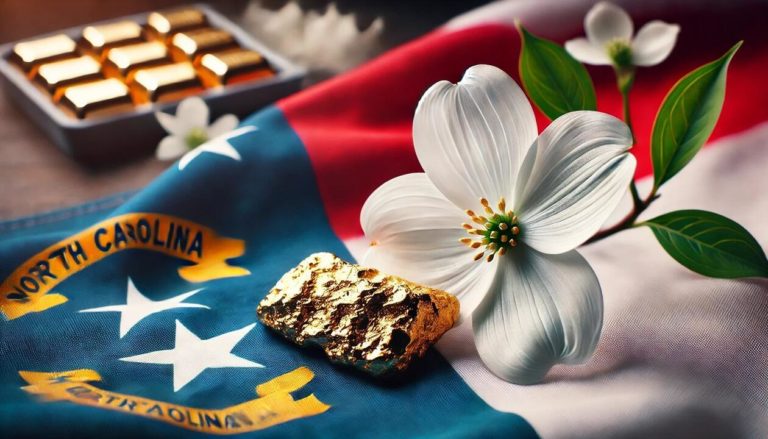
(Money Metals News Service) In a recent episode of Where the Dogwood Blooms podcast, host Cassie Clark interviewed Joshua D. Glawson, a writer with expertise in politics, philosophy, economics, and precious metals.
Glawson, the Strategic Communication Adviser for the Libertarian Party of NC and Content Manager for Money Metals Exchange, offered an in-depth look at NC’s pivotal role in America’s gold history during the Carolina Gold Rush.
The Start of America’s Gold Rush: Conrad Reed’s Discovery
It all began in 1799 when Conrad Reed, a 12-year-old boy, stumbled upon a shiny 17-pound rock in a creek near his family’s farm in Cabarrus County, N.C. Unbeknownst to the Reeds, the rock was solid gold, and for years, it served as a doorstop. Eventually, the nugget was sold for $3.50—a fraction of its estimated $4,000 worth at the time.
This discovery, at the location now known as the Reed Gold Mine, marks the beginning of The North Carolina Gold Rush, preceding even the famous California Gold Rush. The gold of NC was now on the map, drawing attention from settlers and prospectors alike.
Reflecting on this monumental discovery, Glawson stated, “Not only was it North Carolina, but this was the first gold rush in North America. This is what actually inspired the gold rush in California years later.”
Peter’s Nugget and the Gold Boom
In 1803, another significant find occurred when Peter, an enslaved man working for Reverend James Love, uncovered a 28-pound gold nugget in Little Meadow Creek. Valued at $8,700 back then (over $1 million today), Peter’s discovery underscored the rich potential of the gold of NC. Despite not being able to keep the nugget, his find remains one of the largest east of the Mississippi River.
“This 28-pound nugget,” Glawson shared, “was worth about $8,700 back then, but today it would exceed a million dollars. Sadly, Peter did not get to keep that gold nugget.” The story of Peter and his discovery continues to captivate historians and treasure seekers alike.
The rush to NC grew as more gold was discovered, and by the early 1800s, settlers, particularly German immigrants, were flocking to the area. These finds not only sparked a localized economic boom but also set the stage for larger gold rushes in other parts of the United States. The Carolina Gold Rush played a crucial role in drawing attention to the untapped wealth in the region.
The Impact of Gold on N.C.’s Economy
By the 1830s, the gold of NC was a significant economic driver, and the local economy thrived on the influx of settlers and businesses tied to mining. At the time, transporting gold to the U.S. Mint in Pennsylvania for coining was difficult and dangerous, given the poor road conditions and the threat of robbery. To address this, a German immigrant family, the Bechtlers, set up a private mint near Charlotte, coining gold and even creating the first gold dollar in the U.S.
“The Bechtler family took the entrepreneurial decision to mint gold here in North Carolina,” Glawson said, “and they created the first dollar gold coin in the U.S., which really helped the local economy.”
The Bechtler Mint’s success eventually led the U.S. government to establish the Charlotte Mint in 1837. This marked a turning point for N.C., as the state became a hub for gold production, minting the majority of the nation’s gold coins through the mid-1800s. The North Carolina Gold Rush established the state as an important player in gold mining history, with Charlotte’s role in this era a precursor to its current status as a financial powerhouse in the United States.
The Decline of Gold Mining During the Civil War
The gold of NC experienced a significant decline during the Civil War, as many of the mines were shut down or abandoned. Some believe that gold was hidden away during this time, and rumors of hidden Confederate gold persist to this day. The Charlotte Mint, a symbol of N.C.’s gold boom, was repurposed by the Confederacy, but its operations ceased entirely by 1861.
Despite the decline in mining, the legacy of The North Carolina Gold Rush remains strong. Today, some enthusiasts still pan for gold in the state’s rivers and creeks, and areas like Cabarrus County and Gold Hill hold historical significance as former mining hotspots. “There’s still gold in North Carolina,” Glawson remarked, “and people can still find it in creeks and rivers today by panning.”
The Long-Term Economic Impact
N.C.’s early dominance in gold mining left a lasting impact on its economy and infrastructure. The influx of wealth from gold mining helped build towns and cities, created jobs, and laid the groundwork for Charlotte’s rise as a banking center. Even though the gold rush moved westward, the gold of NC’s reputation as a state rich in natural resources persisted.
Glawson highlighted the enduring importance of gold and sound money principles, noting how investing in gold and silver can serve as a hedge against inflation and preserve wealth over time. He emphasized that understanding the state’s history with gold, particularly The Carolina Gold Rush, can offer insights into economic strategies for today.
Gold Today: Is There Still Gold in NC?
While large-scale mining operations no longer dominate N.C., there is still gold to be found. Glawson explained that the state has remaining gold deposits, though the cost of extraction may outweigh the benefits for large companies. However, individual prospectors can still find gold through panning in rivers and streams, and small-scale gold exploration remains a popular hobby.
“People need to start getting back into panning for gold,” Glawson recommended. “You can go out to the rivers and creeks in North Carolina and potentially find gold flakes. It’s a fun and possibly profitable activity.”
He also encourages North Carolinians to consider investing in gold as a way to preserve wealth. “Start looking at gold as a hedge against inflation,” Glawson advised, “and Money Metals Exchange offers a reliable way to begin investing in precious metals.”
Conclusion
The North Carolina Gold Rush is a testament to the state’s resourcefulness and its pivotal role in shaping America’s early economy.
From the discovery of the first gold nugget by Conrad Reed to the entrepreneurial spirit of the Bechtlers, NC has left a golden mark on the nation’s financial history.
Here are the key questions and answers from the Where the Dogwood Blooms podcast interview with Joshua D. Glawson on the history of gold in North Carolina:
Where did the first gold rush in America occur?
Joshua D. Glawson explained that the first gold rush in America took place in North Carolina in 1799, not California, as many believe. Conrad Reed, a 12-year-old boy, found a 17-pound gold nugget in a creek near his family’s farm, marking the beginning of The North Carolina Gold Rush. This find eventually led to the establishment of the Reed Gold Mine, which ignited the gold mining boom in NC.
“Not only was it North Carolina, but this was the first gold rush in North America. This is what actually inspired the gold rush in California years later.”
What impact did gold discovery have on North Carolina’s economy?
The discovery of gold had a huge economic impact on NC. In the early 1800s, gold mining became a major industry, and the establishment of the Charlotte Mint helped keep much of the wealth local. Gold became a driving force in the state’s economy, and businesses flourished as a result. German immigrants, including the Bechtler family, helped create private mints that made the first dollar gold coin in the U.S., helping local trade and economic stability.
“The Bechtler family took the entrepreneurial decision to mint gold here in North Carolina, and they created the first dollar gold coin in the U.S., which really helped the local economy.”
Was there another significant gold find in NC?
Yes, in 1803, an enslaved man named Peter discovered a 28-pound gold nugget in Little Meadow Creek, which was one of the largest gold nuggets found east of the Mississippi River. The nugget was valued at around $8,700 at the time, and over $1 million today. Unfortunately, Peter was not allowed to keep the nugget, as it was taken by his owner, Reverend James Love.
“This 28-pound nugget was worth about $8,700 back then, but today it would exceed a million dollars.”
Is there still gold in NC today?
Glawson confirmed that gold still exists in NC, though it’s often found in smaller quantities and through panning in rivers and streams. While large-scale mining operations have declined, individual prospectors can still find gold in the state’s waterways.
“There’s still gold in North Carolina, and people can still find it in creeks and rivers today by panning.”
How can people invest in gold today?
Joshua D. Glawson recommends investing in gold as a hedge against inflation and to preserve wealth over time. He highlighted Money Metals Exchange as a trusted platform for buying gold and silver, offering North Carolinians a way to hold sound money in their portfolios.
“Start looking at gold as a hedge against inflation, and Money Metals Exchange offers a reliable way to begin investing in precious metals.”
These key questions and answers capture the historical significance of The North Carolina Gold Rush and how its legacy continues today through gold panning and investing.
(Money Metals News Service) In the latest episode of the Money Metals Midweek Memo, host Mike Maharrey dives deep into pattern recognition and its crucial role in both ice hockey and investing.
Drawing fascinating parallels between the two, Maharrey highlights how goalies rely on pattern recognition to make split-second decisions, a technique that can also be applied to the financial world.
While hockey goalies anticipate puck movements based on player behavior, investors can anticipate market shifts by recognizing patterns in financial data.
CPI Data and Inflation: Decoding the Signals
Maharrey’s analysis begins with the latest Consumer Price Index (CPI) data, which showed a monthly increase of 0.2% and an annual inflation rate of 2.5%.
While this headline figure suggests inflation is cooling, core CPI—excluding volatile food and energy prices—rose 0.3%, bringing annual core inflation to 3.2%. This higher-than-expected core inflation raises questions about whether the Federal Reserve will move forward with aggressive interest rate cuts.
The market reacted predictably: gold dipped by $7, and silver saw minor movement. Maharrey emphasizes the importance of taking government inflation figures with a grain of salt, noting that the CPI formula was changed in the 1990s to understate price inflation. Using the 1970s CPI formula, real inflation would likely be double the official numbers.
The Case for a September Rate Cut
Maharrey predicts that the Federal Reserve will cut rates during its September meeting due to the economy’s growing dependence on easy money.
He points out that while current interest rates are near historical norms, the modern economy—burdened with massive debt—is unable to function under these higher rates.
While many expect a “soft landing” for the economy, Maharrey is skeptical, citing historical patterns that suggest a bust often follows an easy money-fueled boom.
Silver’s Underperformance: The Calm Before the Storm?
Despite gold’s impressive performance this year—hitting $2,500 per ounce—silver has lagged behind. While silver has gained roughly 20%, its price remains far below its all-time high of nearly $50 an ounce, last reached in 2011. The current price of silver hovers between $28 and $30, leaving many to wonder why silver isn’t keeping pace with gold.
One important factor is the gold-silver ratio, which stands at around 88:1. Historically, this ratio has averaged between 40:1 and 60:1.
The current wide ratio suggests that silver is significantly undervalued compared to gold, leaving room for potential price corrections.
Silver’s Role as Both a Commodity and a Monetary Metal
Maharrey explains that silver’s dual role as both an industrial commodity and a monetary metal complicates its price movements.
Over 50% of silver demand comes from industrial uses, particularly in the rapidly expanding green energy sector. This demand is expected to continue growing, with silver playing a crucial role in solar panels, electric vehicles, and electronics.
At the same time, silver’s role as a monetary metal—used as currency for thousands of years—means its price often follows gold during bull markets. Historically, silver has outperformed gold during the latter stages of precious metals bull runs, providing an opportunity for significant upside.
A Bullish Pattern for Silver
One of the most exciting developments in the silver market is the emergence of a long-term “cup and handle” pattern in silver’s price chart, spanning 50 years. This pattern is a bullish indicator that typically signals an impending breakout.
The pattern began with twin peaks of nearly $50 in 1980 and 2011, forming the “cup.” The “handle” has been forming since 2011, and a breakout above $50 could lead to significant price gains.
This cup-and-handle pattern mirrors a similar long-term pattern in gold, which recently broke out to all-time highs earlier this year. Maharrey suggests that silver may be on the verge of following gold’s lead, potentially pushing prices to new highs.
Demand and Supply Imbalance: A Recipe for Higher Prices
On the supply side, silver has been in a market deficit for the past three years, with more silver consumed than mined. In 2024, the market deficit is projected to be 215 million ounces, the second-largest silver deficit on record. Industrial demand hit a record 654.4 million ounces in 2023 and is expected to set another record this year.
The Chinese and Indian markets are playing a significant role in driving this demand. Chinese silver imports have surged, reaching a three-year high of 390 tons last December, and exceeding 400 tons in both June and July of this year.
Meanwhile, Indian silver imports are expected to double, driven by the country’s expanding solar power sector and demand from the electronics industry.
This increasing demand, combined with limited supply, creates a bullish environment for silver. Maharrey notes that we could see a “silver squeeze” similar to the 1980 surge, which drove silver prices to record highs.
Conclusion: Is It Time to Buy Silver?
Maharrey concludes that silver appears to be significantly undervalued compared to gold. With strong technical patterns and robust supply-demand fundamentals, silver is poised for a potential breakout.
He encourages investors to consider adding silver to their portfolios, especially given its historical performance during the latter stages of precious metals bull markets.
Investors looking to capitalize on silver’s potential should act before the anticipated breakout. As Maharrey notes, “you want to have your position in place before things start playing out—not after.”
For more in-depth analysis and silver investment options, listeners can visit MoneyMetals.com or consult a Money Metals specialist.
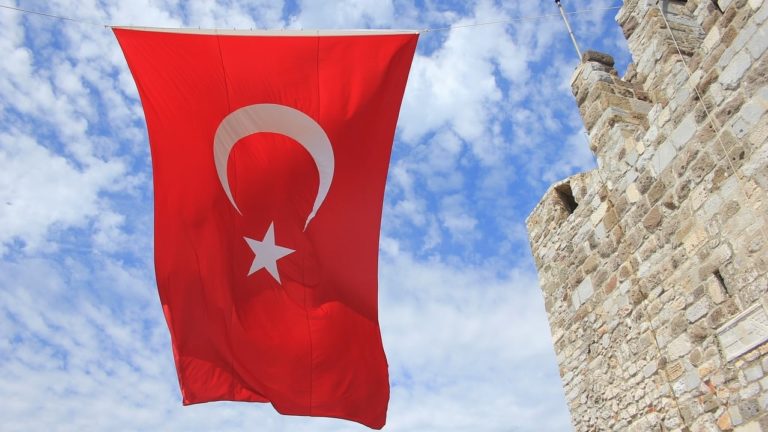
(Mike Maharrey, Money Metals News Service) Turkey has formally applied to join the BRICS economic bloc. The move came as something of a shock given that Turkey is a member of NATO and is generally perceived to be oriented toward the West.
Turkey has also been cozying up to the Shanghai Cooperation Organization, a Eurasian political, economic, international security, and defense organization established by China and Russia in 2001.
Turkish membership in BRICS would be another boost to an economic cooperation bloc that many see as a potential challenge to Western economic hegemony.
BRICS was originally made up of Brazil, Russia, India, China, and South Africa. As of Jan. 1, 2024, the bloc expanded to include Saudi Arabia, Egypt, the UAE, Iran, and Ethiopia.
More than 40 other nations have expressed interest in BRICS membership.
The expanded BRICS has a combined population of about 3.5 billion people. The economies of the BRICS nations are worth over $28.5 trillion and make up roughly 28 percent of the global economy. BRICS nations also account for about 42 percent of global crude oil output.
The Turkish population stands at around 85 million people, and its economy ranks 18th in the world, although it has struggled in recent years.
A foreign policy expert told CNBC that Turkey’s quest to join BRICS is “in line with its broader geopolitical journey,” and the country is positioning itself “as an independent actor in a multi-polar world.”
“Turkey wants to foster as many trading ties as possible and pursue opportunities unilaterally without being constrained by Western alignment.”
The Turks seem to be trying to “diversify” their alliances. This is a growing trend globally, as many countries seek to extract themselves from under the thumb of Western influence. We see this specifically in diversification away from the dollar. The U.S. has effectively weaponized the dollar, using its status as the world reserve currency as a foreign policy tool. As a result, a lot of countries are trying to rely less on dollars to curb American influence.
The CNBC report noted that “being part of BRICS allows its members to trade in currencies other than dollars. This aims to reduce dependency on the U.S.-led system and usher in a more multi-polar world.”
With Russia taking the lead, the BRICS bloc is talking about creating a new payment system that isn’t controlled by the United States and that is not dependent on the dollar.
Such a system could accelerate de-dollarization.
There have also been discussions about a BRICS currency, possibly backed by gold.
Such a system could raise gold’s role in the international monetary system. The BRICS countries own a lot of gold. Since just before the 2008 financial crisis official gold reserves held by BRICS nations have grown from just over 1,500 tons to over 6,600 tons today.
Interestingly, the Turkish central bank has been one of the biggest gold buyers over the last year.
The Turkish government has also refused to participate in economic sanctions against Russia.
Turkey’s bid to join BRICS has certainly ruffled some feathers. The Middle East Forum, a publication that “promotes American interests in the Middle East and protects the West from Middle Eastern threats,” suggested Turkey should be ejected from NATO. It went on to assert that being affiliated with both NATO and the Shanghai Cooperation Organization simultaneously “would be like sharing membership in the National Association for the Advancement of Colored People (NAACP) and the Ku Klux Klan,” noting “BRICS may not be as extreme as the Shanghai Cooperation Organization, but it is quickly moving in that direction.”
BRICS isn’t currently positioned to meaningfully challenge Western economic power, but it is slowly growing in influence. The BRICS bloc doesn’t have to become dominant to create problems for the West and the U.S. in particular. Any diversification away from the dollar will further erode the value of the greenback. This could be a big problem for the U.S. because it depends on demand for dollars to maintain its profligate borrowing and spending.
The only reason the U.S. can borrow, spend, and run massive budget deficits to the extent that it does is the dollar’s role as the world reserve currency. It creates a built-in global demand for dollars and dollar-denominated assets. This absorbs the Federal Reserve’s money creation and helps maintain dollar strength despite the Federal Reserve’s inflationary policies.
But what happens if that demand drops leading to a dollar glut? What happens if BRICS nations and other countries decide they don’t want to hold dollars?
A de-dollarization of the world economy would cause the value of the U.S. currency to crash and likely spark a currency crisis. Americans would feel the impact through more price inflation eating away at the purchasing power of the dollar. At the extreme, it could even lead to hyperinflation.
This won’t likely happen overnight, but the de-dollarization trend is accelerating. And to whatever extent it occurs is a problem for the U.S.
Mike Maharrey is a journalist and market analyst for MoneyMetals.com with over a decade of experience in precious metals. He holds a BS in accounting from the University of Kentucky and a BA in journalism from the University of South Florida.