Kamala Appears Confused When Asked How She’ll Pay for Her Policies

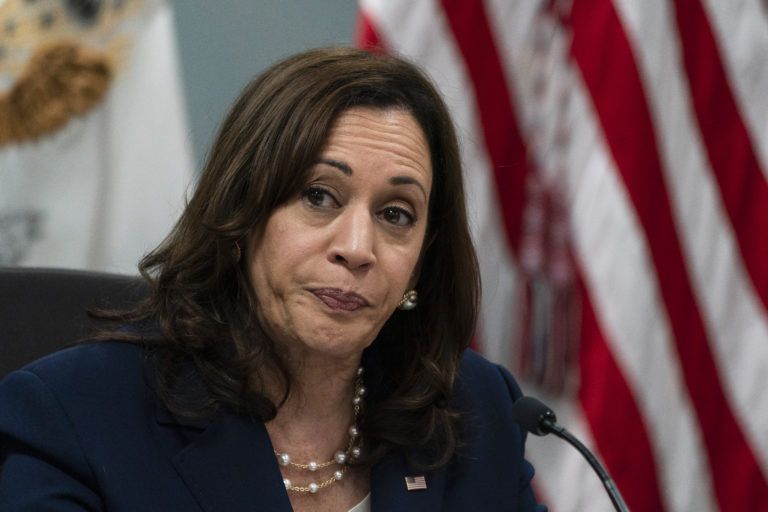
(Headline USA) Vice President Kamala Harris appeared genuinely confused when asked this week how she would secure funding for her proposals if Republicans still control Congress after November’s election.

Harris sat down with MSNBC’s Stephanie Ruhle on Wednesday for her second ever solo interview. At one point, Ruhle asked Harris how she would find the spending for an increased child tax credit or downpayment assistance for first-time homebuyers if she’s unable to pass legislation.

“If you can’t raise corporate taxes, or if the GOP takes control of the Senate, where do you get the money to do that? Do you still go for those plans and borrow?” Ruhle asked.

“Well…but, we’re going to have to raise corporate taxes,” Harris replied, with a look of confusion.

“We’re going to have to make sure that the biggest corporations and billionaires pay their fair share,” she continued. “That’s just it. It’s about paying their fair share.”

She did not explain how she plans to raise the corporate tax rate without congressional support.

Harris also dodged a question from Ruhle on how she plans to ensure U.S. businesses hit with an increased corporate tax rate stay in the U.S.

“Well, listen, I work with a lot of CEOs,” Harris said. “I have spent a lot of time with CEOs. And I’m going to tell you that the business leaders who are actually part of the engine of America’s economy agree that people should pay their fair share.”

Ruhle admitted afterwards that Harris didn’t give clear or direct answers to her questions, but argued those non-answers don’t really matter.

“It’s complicated, right?” Ruhle told MSNBC’s Chris Hayes afterward.

“We’re a country of 330 million people, our economy is complicated,” she continued. “… And one could watch that and say, ‘Well, she didn’t give a clear, direct answer.’ That’s OK, because we are not talking about clear or direct issues.”

Harris’s critics, however, offered a different explanation.

“She’s just an idiot,” wrote commentator Drew Hernandez.

Sen. Tommy Tuberville, R-Ala., agreed, arguing Harris doesn’t even seem to know basic economics.

“Kamala Harris is the first ever AI presidential candidate,” he wrote on X. “It’s embarrassing.”

Anti-Cop Democratic Socialist Could Become Acting NYC Mayor if Eric Adams Resigns

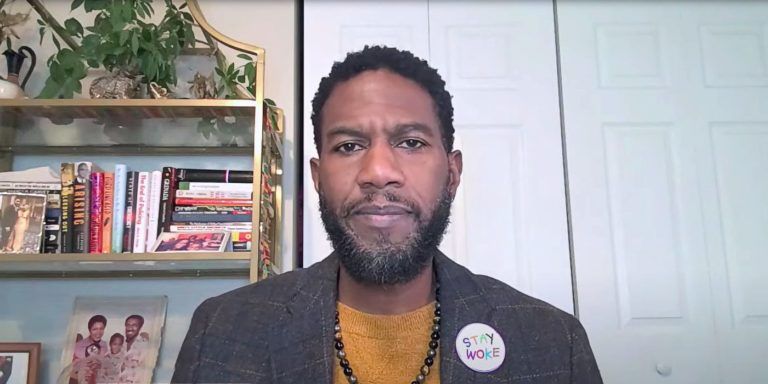
(Headline USA) A radical Democratic socialist who sought to defund New York City’s police department could take over the reins of the city’s government if Mayor Eric Adams resigns or is forced out of office.

Adams was indicted on federal corruption charges this week, leading several high-ranking city officials and Democrats to demand his resignation. Adams rebuffed those demands on Wednesday, arguing he was being unfairly targeted.

However, if Adams were to step down or if he were forced out, the line of succession in New York City means his office would temporarily go to Public Advocate Jumaane Williams, who would then set the date for a special election and serve as mayor until a new mayor is elected.

As public advocate, Williams is a non-voting member of the City Council, but he can introduce and co-sponsor bills. 

Williams and Adams frequently clashed over Williams’s far-left proposals, including a police reform bill Williams sponsored earlier this year that would have slashed the New York Police Department’s budget.

Williams, a vocal Black Lives Matter supporter, has also advocated ending solitary confinement in city prisons and is a prominent anti-Israel activist.

“A wounded Eric Adams, a weakened Eric Adams remaining in office, is better than the socialist Jumaane Williams,” former New York City mayoral candidate Curtis Sliwa told the Daily Mail. “That will open up the floodgates to socialism, and we will become Chicago.”

One of Williams’s closest allies is Rep. Alexandria Ocasio–Cortez, D-N.Y., who has also butted heads with Adams over his more moderate policies.

In a statement on Wednesday, before the federal charges against Adams were even announced, Ocasio–Cortez called on the mayor to resign over federal investigations into other members of his administration.

“I do not see how Mayor Adams can continue governing New York City,” Ocasio–Cortez wrote on X. “The flood of resignations and vacancies are threatening gov function. Nonstop investigations will make it impossible to recruit and retain a qualified administration. For the good of the city, he should resign.”

Hillary Clinton Says ‘Deplorable’ Is ‘Too Kind’ of a Word For Trump Supporters

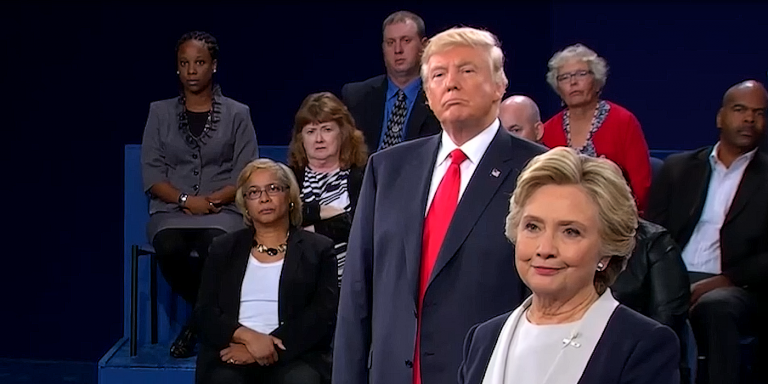
(Headline USA) Failed presidential candidate Hillary Clinton defended calling supporters of former President Donald Trump “deplorables” during the 2016 campaign, arguing the term was actually “too kind.”

In an op-ed for the Washington Post on Wednesday, the sociopathic ex-secretary of State said she struggles to empathize with “radicalized individuals,” including Trump supporters. That’s why, in 2016, she felt so comfortable insulting them.

Clinton claimed that half of Trump’s supporters—approximately 32 million Americans, or a tenth of the total U.S. population at the time—fit her definition of “radicalized.”

And although she initially apologized for the comment, Clinton said she now stands by it.

“I was talking about the people who are drawn to his racism, sexism, homophobia, xenophobia, Islamophobia—you name it. The people for whom his bigotry is a feature, not a bug,” Clinton wrote.

“It was an unfortunate choice of words and bad politics, but it also got at an important truth,” she claimed. “Just look at everything that has happened in the years since, from Charlottesville to Jan. 6.”

It is now clear that “if anything, ‘deplorable’ is too kind of a word for the hate and violent extremism we’ve seen from some Trump supporters,” Clinton added.

The Democrat then reiterated her previous suggestion that Trump supporters needed to be “deprogram[med] and rehabilitate[d]” in order to “pull [the country] out of the madness.”

However, Clinton said she worries it’s no longer possible to save them.

“Talking about the ‘deplorables’ in 2016, I said, ‘Some of those folks, they are irredeemable.’ Part of me would still say this is objectively true,” she wrote.

“Just look at the lack of remorse from many of the Jan. 6 insurrectionists who’ve been convicted of sedition and other crimes,” she continued. “But another part of me wants to believe something else. I’d like to believe there’s goodness in everyone and a chance at redemption, no matter how remote.”

As Trump put it during his final presidential debate against Clinton in 2016, “Such a nasty woman.”

Biden Forgets Which City He’s In During Speech to World Leaders

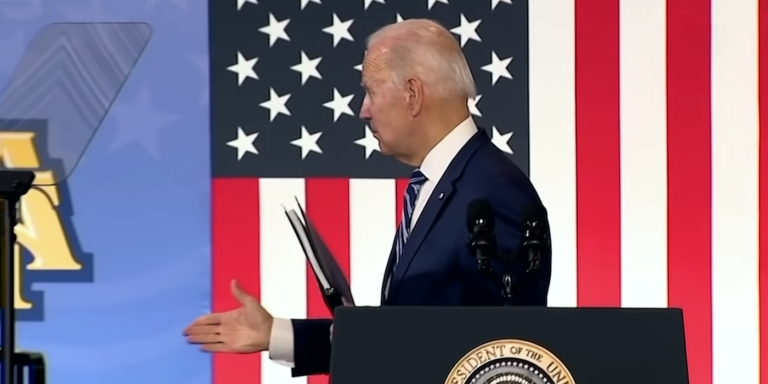
(Headline USA) President Joe Biden appeared to forget which city he was in this week while addressing world leaders in New York City.

“Thank you, thank you, thank you. Welcome to Washington,” Biden said as he took the stage at the InterContinental New York Barclay hotel on Wednesday.

The 81-year-old then immediately launched into the rest of his speech, apparently not realizing his mistake.

“Fellow leaders, friends, for 944 days [Russian President Vladimir] Putin has waged his vicious onslaught against Ukraine,” he continued.

The event was timed to coincide with the annual meeting of the United Nations General Assembly, which Biden addressed on Tuesday. That speech was similarly marked by Biden stumbling over his own words, though it didn’t feature any embarrassing factual gaffes.

In his address to the UN assembly, Biden hinted at being forced out of the 2024 race due to concerns over his age and mental acuity.

“Being president has been the honor of my life,” Biden said. “There’s so much more I want to get done. As much as I love the job, I love my country more. I decided, after 50 years of public service, it’s time for a new generation of leadership to take my nation forward.”

Prior to his exit, several world leaders had also raised concerns about Biden’s mental fitness at the annual Group of Seven summit in Italy. Several sources admitted that the other G7 leaders were shocked at how diminished Biden appeared, both mentally and physically.

Despite having more than a week afterward to recover and prepare for his debate against former President Donald Trump, Biden blamed his jetlag for the fiasco. Meanwhile, his handlers faulted themselves for missing a major red flag, and vowed, reportedly, not to let another one slip past.

“Leaders were dismayed by Biden’s performance—they told themselves they should have realized at the G-7 … and came to the conclusion that he cannot win in November,” a source told the Washington Post.

Biden will be in office until Jan. 20, 2025.

BREAKING: Journalist Publishes Trump Campaign Documents Hacked by Iran

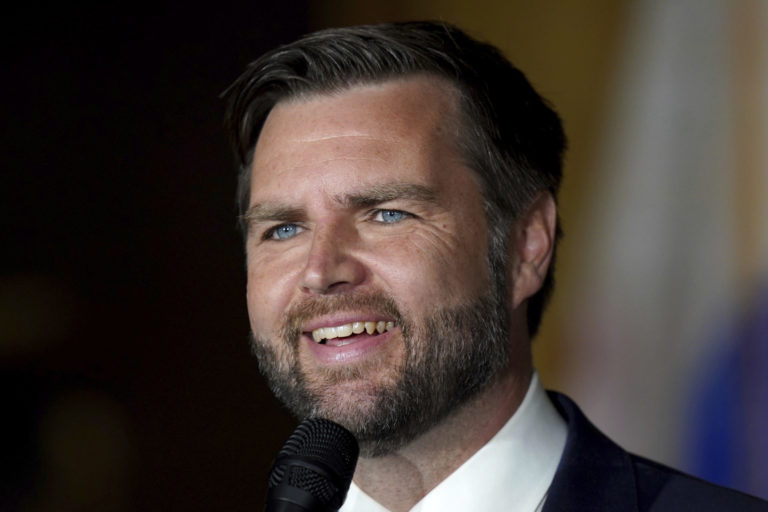
(Ken Silva, Headline USA) Independent reporter Ken Klippenstein has published information that Iran’s government allegedly stole from Donald Trump’s campaign in a hack—including an internal dossier the campaign put together about JD Vance when considering him to be Trump’s running mate.

Klippenstein’s Twitter was suspended after his decision to publish the dossier, which included some of Vance’s personal info, such as his phone number and address.

The FBI announced the Iran hack earlier this month, alleging that the hackers sent information to major media outlets as well as the Biden-Harris campaign.

There’s no indication that any of the recipients responded, officials said, and several media organizations who have said they also were approached with stolen material did not publish it. Kamala Harris’ presidential campaign called the emails from Iran “unwelcome and unacceptable malicious activity” that were received by only a few people who regarded them as spam or phishing attempts.

However, Klippenstein said he’s choosing to publish the information because it’s in the public interest to do so.

“The dossier has been offered to me and I’ve decided to publish it because it’s of keen public interest in an election season. It’s a 271-page research paper the Trump campaign prepared to vet now vice presidential candidate J.D. Vance. As far as I can tell, it hasn’t been altered, but even if it was, its contents are publicly verifiable. I’ll let it speak for itself,” Klippenstein wrote on Substack.

Unlike the Steele Dossier of 2016, the dossier the Trump campaign wrote on Vance doesn’t contain solacious sexual allegations. Instead, Trump officials compiled what they apparently viewed as policy weaknesses and liabilities Vance may present.

The Trump campaign’s perceived weaknesses against Vance included his opposition to funding the war in Ukraine, his criticism of Black Lives Matter, and his opposition to Trump assassinating Iranian General Qasem Soleimani.

“VANCE APPEARS TO HAVE EMBRACED NON-INTERVENTIONISM,” the title of one section of the dossier reads, explaining that Vance supports a “negotiated peace” between Ukraine and Russia.

Other concerns included the fact that Vance once worked with Joe Biden’s chief-of-staff, Ron Klain, at the venture capital firm Revolution LLC.

“So the document is clearly newsworthy, providing Republican Party and conservative doctrine insight into what the Trump campaign perceives to be Vance’s liabilities and weaknesses. Those perceptions provide clues about what a campaign of remarkably little substance might actually think,” Klippenstein concluded.

“While the news media has paraphrased some of the contents of the dossier, what they haven’t done is provide the American people with the underlying document, in the language in which it appeared, so they can decide for themselves what they think. You decide for yourself.”

Ken Silva is a staff writer at Headline USA. Follow him at x.com/jd_cashless.

House GOP Caves Again, Passes Continuing Resolution to Fund Gov’t w/ No SAVE Act

(Headline USA) Congress on Wednesday passed a temporary measure that keeps government agencies funded into December, avoiding a shutdown for now while punting final spending decisions until after the Nov. 5 election.

The Senate approved the measure by a vote of 78-18 shortly after the House approved it without the SAVE Act, which would have helped to shore up election integrity ahead of the November election.

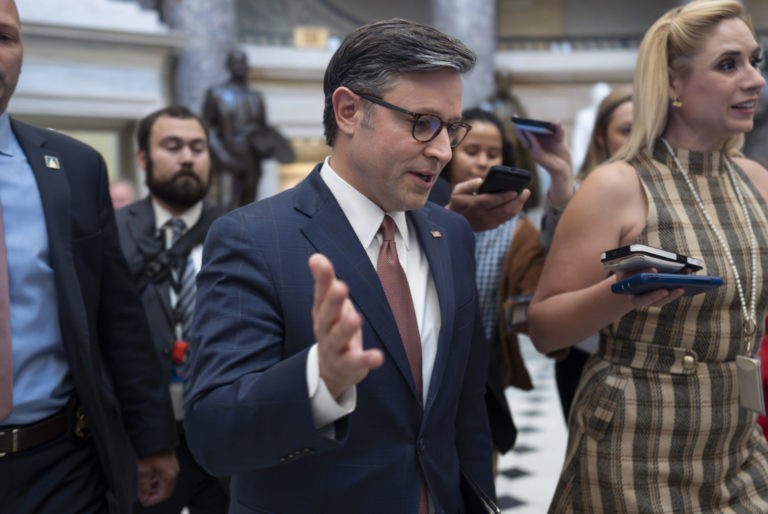
It marks another awkward defeat for House Speaker Mike Johnson, R-La., who was hoisted into power amid Republican infighting over a similar capitulation by his predecessor, former Rep. Kevin McCarthy, R-Calif.

As a result, the Republicans may find themselves in a tougher spot overall for trying to retain their narrow margin in the House, not only coming off the heels of a deflating political defeat, but one that will let Democrats retain illegal immigrants on their voting rolls with little recourse.

“This bipartisanship is a good outcome for America,” said Senate Majority Leader Chuck Schumer, D-N.Y., moments before the vote. “I hope it sets the tone for more constructive, bipartisan work when we return in the fall.”

A previous attempt to pass the bill with the SAVE Act failed to pass the house, with Democrats unilaterally voting against election integrity and more than a dozen do-nothing Republicans joining them in an act of bipartisan self-defeatism.

Some feared the potential for a government shutdown would come back to haunt them, while others simply opposed a continuing resolution on principle.

Johnson billed the measure as doing “only what’s absolutely necessary,” a statement directed at members of his own conference concerned about spending levels.

Still, it was a no-go for some Republicans, which forced House GOP leadership to rely on Democratic votes to pass the bill through a process that requires at least two-thirds support from voting members.

The final vote was 341-82, with Republicans supplying all the no votes in both chambers. Johnson said the only alternative to the continuing resolution at this stage would have been a  shutdown.

“It would be political malpractice to shut the government down,” Johnson said. “I think everyone understands that.”

The House floor was largely empty during debate on the measure. Rep. Chip Roy, R-Texas, was the lone critic among the speakers, saying, “We end up in a vicious circle every year, the same vicious circle.”

The bill now goes to President Joe Biden’s desk to be signed into law.

Lawmakers in both chambers are anxious to return to their home states and districts to campaign, smoothing the path for passage of the temporary funding fix. But more arduous fiscal negotiations await them at the end of the year.

Under terms of a previous deal to avoid a federal default and allow the government to continue paying its bills, spending for defense and nondefense programs would rise 1% next year.

The Senate has been charting a course to go above that level, while House Republicans have been voting for steep cuts to many nondefense programs, and they have attached policy mandates to the spending bills that Democrats overwhelmingly oppose. So a final agreement will be difficult to reach.

In the meantime, the temporary bill will mostly fund the government at current levels through Dec. 20. However, an additional $231 million was included to bolster the Secret Service after the two assassination attempts against Republican presidential nominee Donald Trump.

Money was also added to aid with the presidential transition, among other things. Democrats unsettlingly have requested that the Secret Service take on an added role in overseeing the certification of the Electoral College vote, citing—without evidence—concern over another potential Jan. 6 uprising.

The $231 million for the Secret Service does come with strings attached. It’s contingent upon the agency complying with congressional oversight. The bill also allows the Secret Service to spend its allocations faster if needed.

“Everybody understands that’s critically important right now,” Johnson said of the Secret Service money.

Trump thanked lawmakers for the extra Secret Service funding at a campaign event Wednesday. He had earlier called on Republicans not to move forward on a spending bill without also including the SAVE Act.

In a recent letter, the Secret Service told lawmakers that a funding shortfall was not the reason for lapses in Trump’s security when a gunman climbed onto an unsecured roof on July 13 at a rally in Butler, Pennsylvania, and opened fire. But acting Secret Service Director Ronald Rowe Jr., also made clear the agency had “immediate needs” and that he’s talking to Congress.

“The Secret Service has asked for this additional funding. It’s absolutely essential as they deal with the increased threat environment,” said Sen. Susan Collins, R-Maine, the top Republican on the Senate Appropriations Committee.

Congress is nowhere close to completing work on the dozen annual appropriations bills that fund much of the federal government. The House has passed five of the 12 bills, mostly along party lines. The Senate has passed zero.

Democrats sought to deflect blame by insisting that they were adhering to an agreement that McCarthy negotiated with the White House over spending caps for the 2024 and 2025 budget years.

Rep. Rosa DeLauro, the top Democratic member of the House Appropriations Committee, said her party would accept nothing less than the 1% increase specified in that agreement. Also, if Republicans seek more than that for defense, there must be “dollar for dollar parity for nondefense,” she said.

The White House called on both chambers to pass the stopgap bill, while cautioning that it did not provide adequate funding to help communities recover from natural disasters and failed to include enough funding for health care provided through the Department of Veterans Affairs.

In an amendment proposed earlier in the week, Sen. Rand Paul, R-Ky., suggested that the VA could be funded by transferring money allocated for green-energy grants that was being wasted by the Department of Energy.

Johnson warned that when the temporary extension expires in December, he will not support a massive, catchall bill to fund the government, referred to as an omnibus, so another stopgap may be needed that would allow the new president and Congress to have the final say on fiscal year 2025 spending levels.

“I have no intention of going back to that terrible tradition,” Johnson said.

Adapted from reporting by the Associated Press

‘Pull Your S**t Together’: DEI Actor Billy Porter Shames Voters for Shunning Kamala

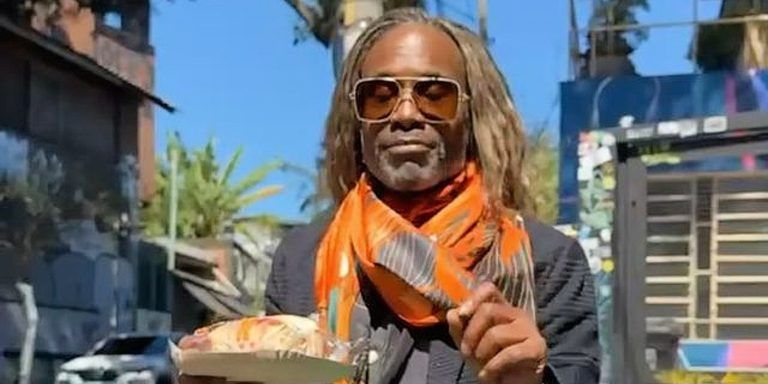
(Chris Cella Jr., Headline USA) Billy Porter, whose status as a flamboyantly gay actor of color has made him one of woke Hollywood’s hottest commodities, urged undecided voters via social media to “pull your s**t together” and support behind Vice President Kamala Harris.


View this post on Instagram


A post shared by Billy Porter (@theebillyporter)

Porter, best known for his role as the Fabulous Godmother in Amazon’s 2021 live-action adaptation of Cinderella, invoked the oft-repeated trope that anyone who strayed from Democrats’ demands for total, unquestioned loyalty was complicit in a threat to democracy itself.

“It’s democracy or not. And we all know that,” Porter said.

While considered a popular talking point among the Biden–Harris administration at one time, it has largely fallen out of use since the two assassination attempts and multiple threats on GOP nominee Donald Trump’s life convinced some that the rhetoric might need to be toned down a notch.

Porter, however, had no qualms about viciously attacking the former president and claiming Trump was only elected because many voters “held their noses” while voting for him.

“The people I’m talking about, you’re not heroes,” he said, insisting that the former president never deserved to hold office.

“Y’all knew that the first time,” but did not elaborate on why he believed Trump was unworthy.

Porter also referenced unnamed individuals in “positions of power” who “let this happen” regarding Trump’s 2016 victory. He promised to “name names later,” suggesting that viewers already knew their identities.

Speculation has arisen that he may be targeting singer Chappell Roan, who recently announced she would not endorse any candidate in the upcoming election.

His views echoed sentiments expressed by other LGBT activists, including actor George Takei, who tweeted that the LGBT community was “under attack from the GOP” and urged community members to “take a stand in this election.”

In a CBS News interview last month at the Democratic National Convention, Porter called on Harris and her running mate, Minnesota Gov. Tim Walz to take stronger action on trans issues.

He criticized the legacy media for failing to censor Trump’s staunch opposition to transgender medical treatment for children.

Porter expressed frustration, stating, “It’s exhausting. It’s gross. And it’s not working anymore. The only reason it works at all is because we continue to give it oxygen. It’s time for us to cut that off.”

A Rasmussen Reports poll found that 58% of Americans oppose the use of sex-changing drugs and procedures for minors.

Porter’s demand for stronger support for pro-trans policies, coupled with his call to silence opposition, raises concerns about authoritarianism on a highly divisive issue.

BREAKING: Identity Revealed of Heroic Local Cop Who Stopped the Trump Shooter

(Ken Silva, Headline USA) At Thursday’s much-anticipated congressional hearing into the July 13 Trump shooting, Rep. Clay Higgins, R-La., identified the local cop who took the first shot at would-be assassin Thomas Crooks—stopping the gunman from firing further.

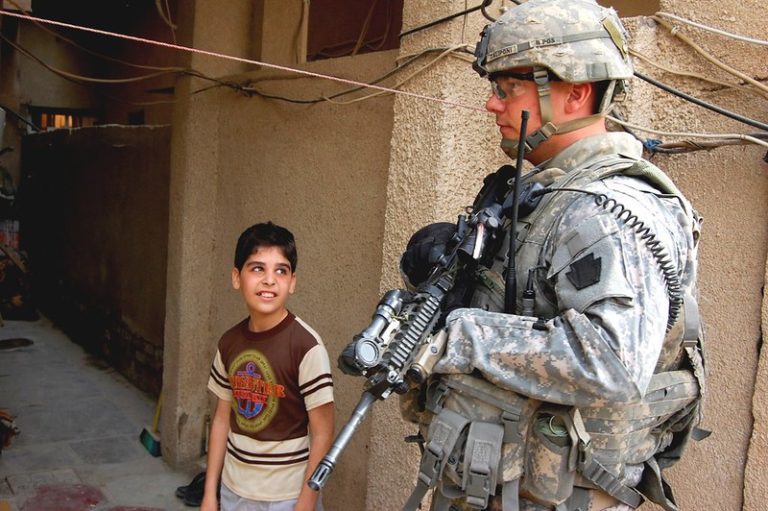
Higgins identified the heroic local cop as Adams Township Police Department Sgt. Aaron Zaliponi, a member of the Butler County Emergency Services Unit. A quick Google search revealed that Zaliponi is a Butler native who served the U.S. military in Iraq.

According to Higgins, Zaliponi’s shot may have hit Crooks’s rifle—which stopped him after eight shots, allowing the Secret Service to put the kill shot in him about 10 seconds later.

“The 9th shot fired on J13 was from a Butler SWAT operator from the ground about 100 yards away from the AGR building. Shot 9 hit Crooks’ rifle stock and fragged his face/neck/right shoulder area from the stock breaking up,” Higgins said last month in a preliminary report, calling the local cop a “total badass.”

“When he had sighted the shooter Crooks as a mostly obscured by foliage moving target on the AGR rooftop, he immediately left his assigned post and ran towards the threat, running to a clear shot position directly into the line of fire while Crooks was firing 8 rounds. On his own, this ESU SWAT operator took a very hard shot, one shot. He stopped Crooks and importantly, I believe the shot damaged the buffer tube on Crooks’ AR,” Higgins added.

Last month, the FBI released a photo of Crooks’s rifle, showing a chunk missing from its stock—which suggests that Zaliponi’s shot indeed hit there.

However, the FBI has claimed it has “no forensic evidence indicating that [the round fired by the local officer] either struck our subject or the subject’s rifle.”

At Thursday’s hearing, Allegheny County Medical Examiner Ariel Goldschmidt, who conducted the autopsy on Crooks, also said there’s no evidence that Zaliponi hit Crooks.

Higgins asked Goldschmidt whether it was possible that Zaliponi’s shot caused a fragment to enter Crooks’s shoulder, which was later also hit by the Secret Service sniper. Goldschmidt also insisted that was impossible, though it’s not clear how he could make that determination.

Zaliponi didn’t return a phone call from Headline USA seeking comment.

Ken Silva is a staff writer at Headline USA. Follow him at x.com/jd_cashless.

Feelings Trump Economics: Price Gouging Edition

(Mike Maharrey, Money Metals News Service) As I sit here and watch outer bands from Hurricane Helene spin into the area, I thought this would be a great time to teach a little economics.

I know this is a fruitless endeavor, but I have to at least give it the old college try.

As is always the case in the run-up to a major storm, the Florida governor declared a state of emergency a few days ago. This activated one of the most misguided and counterproductive economic policies imaginable.

But it is extremely popular because it sounds nice.

I’m talking about a ban on “price gouging.”

Attorney General Ashley Moody announced she activated Florida’s “Price Gouging Hotline” right after Gov. DeSantis declared a state of emergency.

“During a storm-related declared state of emergency, state law prohibits excessive increases in the price of essential commodities, such as equipment, food, gasoline, hotel rooms, ice, lumber and water needed as a direct result of the event.”

It sounds so good, right? Your benevolent overlords in Tallahassee are protecting you. 

But it’s dumb.

And in the big scheme of things, it’s hurting you, not helping.

I recently wrote about the economic absurdity of Kamala Harris’s plan to ban price gouging on groceries. Price gouging bans during storms are equally absurd from an economic standpoint.

Nevertheless, “price gouging” bans sound good in theory and that means they will probably never go away, no matter how harmful they might be in reality.

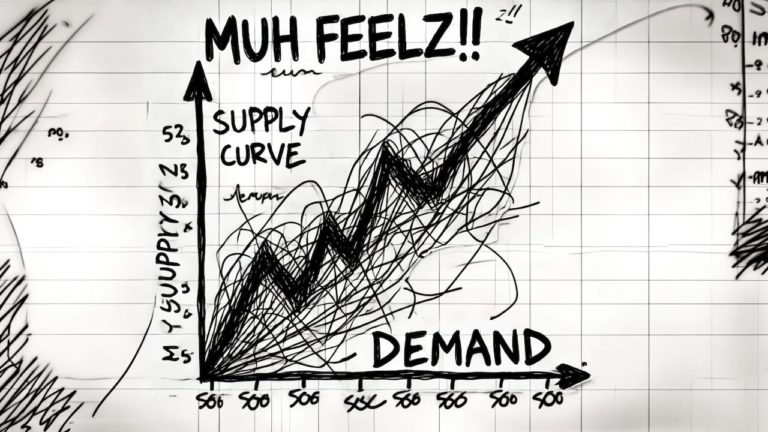
People have a visceral emotional reaction to people raising prices during a disaster. But it is nothing but feelz.

In fact, “price gouging” serves an important economic function. Not allowing prices to rise causes more harm than good. But trying to explain this to the average person is like spitting into the wind. (Hurricane pun intended.)

I mean, I get it. The idea of greedy people profiting from people’s pain during a storm is pretty cringey. And I don’t deny that some price gougers may well be greedy. But that doesn’t mean prices shouldn’t be allowed to go up during an emergency.

From a purely economic perspective, so-called price gouging during a disaster is purely a function of supply and demand. Prices rise as demand goes up and supplies tighten. That’s economics 101.

And when government steps in and interferes with the free-market pricing system, it creates all kinds of bad (but generally unseen) consequences. It might make you feel better, but it’s not helping. 

Pretend the weather people tell you it’s going to rain every day for two months. You’d probably run out and buy an umbrella, right? Most people would if they didn’t have one already. Under these circumstances, the price of an umbrella would go quickly skyrocket. 

Now, if umbrella prices were forced to remain low, say because some knucklehead politician passed a law declaring you can’t raise the price of an umbrella when the weatherman predicts rain, you might buy a bunch of umbrellas. You might purchase one for each member of your family and a couple of spares – just in case. But if prices spiked in response to demand, you would probably make do with one or two, leaving some umbrellas for somebody else.

Nice, right?

The rising price would also help boost supply. If umbrellas got expensive enough, some guy in a less rainy locale with lower umbrella demand might be willing to drive in a shipment of bumbershoots. It would be worth it to pay transportation costs so he could take advantage of the higher prices he could charge in the rainy market. The increase in supply would likely push prices back down, or at least keep them from rising even higher.

But if the knucklehead politician gets his way, the price can’t legally rise and our intrepid umbrella entrepreneur will just stay home and sell sunglasses.

All of this makes perfect sense, right?

Doesn’t matter. 

No matter how much sense it makes, or how well I explain the economics, most people will get angry and start rambling about greed. I can’t win this argument. 

Muh feelz always trump economics.

Of course, these same people will pay $5 for a bottle of water at a baseball game or the airport. But when you ask them to pay $3 for a bottle of water before a storm, they want to make it a federal crime. Never mind that while people are yelling and screaming about “price gouging,” there’s nothing left to buy.

Too bad there were no price signals to direct supply and demand.

(Never mind the fact that a sane person living in a hurricane-prone area prepares for storms ahead of time and already has water on hand. But that’s a different article.)

Here’s the thing: economic reality doesn’t care about your feelings. 

And price gouging just feels – wrong. 

So, we cheer for the knucklehead politician and gripe when the shelves empty before a storm.

The problem is you can see the results of price gouging. You feel the pain of the higher prices. It’s easy to finger-point at the greedy guy. 

Of course, you may also feel the pain of shortages. You see the empty shelves. But virtually nobody understands that the anti-price gouging policy caused it. The cause and effect are hidden

It’s a classic example of economist Frédéric Bastiat’s seen and unseen. Good economists consider both the obvious “seen” effects of a policy as well as the less obvious “unseen” effects.

Unfortunately, most people aren’t good economists.


Mike Maharrey is a journalist and market analyst for MoneyMetals.com with over a decade of experience in precious metals. He holds a BS in accounting from the University of Kentucky and a BA in journalism from the University of South Florida.

Israel Considers Limiting Ownership of Gold and Silver, Eliminating Large-Denomination Notes

(Mike Maharrey, Money Metals News Service) Israel is poised to take the war on cash to another level by eliminating the highest denomination of Israeli currency and limiting private ownership of gold and silver.

According to a report by YNetNews.com, Prime Minister Benjamin Netanyahu has asked high-ranking government officials to discuss the elimination of the 200-shekel banknote. Netanyahu called for the sweeping move to “curb illicit cash flows” and fight “black market money.”

This is government-speak for increasing tax receipts. According to the report, the plan could boost state tax revenues by 90 to 115 billion shekels ($24 to $31 billion) by 2030.

According to YNet, this would be the first step in a more comprehensive plan. In the medium term, officials hope for “a drastic reduction” in cash use with the ultimate goal of completely eliminating cash transactions. All transactions in the country would be made via credit/debit cards or bank transfers.

The plan would also ban private individuals and companies from holding “large amounts” of “cash alternatives,” including gold and silver.

In effect, Netanyahu hopes to ban all physical money and push society to electronic transactions.

The plan would reportedly roll out quickly, allowing a very short amount of time to change out 200-shekel notes. According to YNet, “This is expected to hinder criminal organizations from disposing of millions of notes.”

Other aspects of the plan include an expansion of financial reporting requirements, the creation of a multi-agency enforcement program, the implementation of AI to identify and track tax evaders, and increased oversight of non-bank financial entities such as currency exchanges.

This isn’t Israel’s first move against cash. In 2022, the government banned the use of cash in business transactions over 6,000 shekels ($1,625). Private cash transactions can’t exceed 15,000 shekels ($4,063). Any transaction above those thresholds must be made via bank transfer or a debit card.

The War on Cash

This proposed Israeli plan is part of a broader global “war on cash.”

Governments around the world would like to minimize or even eliminate the use of cash. To achieve that aim, governments implement various policies, including removing large-denomination notes from circulation, increasing the cost of cash transactions, levying fees on obtaining cash, and, at the extreme, eliminating cash altogether.

The Israeli proposal takes things to a whole new level by limiting possession of real money – gold and silver.

Government officials sell the war on cash to the public as a matter of convenience, arguing that electronic transactions are much easier and hassle-free.

Government people also claim that getting rid of cash will stop criminals who use it to evade tracking and detection.

But there is a more sinister rationale for a war on cash that government officials won’t talk about out loud.

It’s a matter of control.

Imagine if there was no cash or physical money. It would become impossible to hide any transaction from the government’s eyes. Officials would know all about your morning trip to Dunkin’, your shopping spree at the gun store, and your most recent medical procedures.

In a cashless society, the government could track and record virtually every move you make, turning the banking and financial system into a massive surveillance network.

A cashless society would ultimately give the government complete control of your money. And that means significant control over you. Virtually every action you take would be subject to government scrutiny.

As the Israeli government admits, eliminating cash would facilitate the maximum collection of taxes and fees. It would make it easier for central banks to “incentivize” spending with negative interest rates. And in the worst-case scenario, the government could shut off your ability to make transactions.

If you hold cash, or even better, gold and silver, you can make transactions with virtually anybody in private. Nobody needs to know. You can also protect your wealth from the banking system by stuffing cash under your matters or holding gold and silver in your safe. Without cash or real money, your entire financial life is subject to government scrutiny and control.

Israel isn’t the first country to fire shots in the war on cash.

In 2019,  the International Monetary Fund (IMF) published a working paper outlining policies to move toward a cashless society even in the face of public opposition.

“Although some countries most likely will de-cash in a few years, going completely cashless should be phased in steps. The de-cashing process could build on the initial and largely uncontested steps, such as the phasing out of large denomination bills, the placement of ceilings on cash transactions, and the reporting of cash moves across the borders. Further steps could include creating economic incentives to reduce the use of cash in transactions, simplifying the opening and use of transferrable deposits, and further computerizing the financial system.”

The paper also suggested private institutions should lead the way to minimize the (very real) impression that governments are trying to control the population.

“In any case, the tempting attempts to impose de-cashing by a decree should be avoided, given the popular personal attachment to cash. A targeted outreach program is needed to alleviate suspicions related to de-cashing; in particular, that by de-cashing, the authorities are trying to control all aspects of peoples’ lives, including their use of money, or push personal savings into banks. The de-cashing process would acquire more traction if it were based on individual consumer choice and cost-benefits considerations.”

This isn’t merely a theoretical policy.

Beginning in 2016, the European Central Bank phased out the 500-euro note.

In 2023, more than a billion dollars in physical cash disappeared from circulation in Australia. 9News called it “the strongest sign yet” that the country is moving toward a cashless society.

Officials in the U.S. have also flirted with the war on cash. Former Treasury Secretary and Obama economic advisor Lawrence Summers floated the idea of eliminating the $100 bill.

These are just a few examples of government actions taken to eliminate cash.

While the idea may seem benign, it is nothing but a massive government power grab.


Mike Maharrey is a journalist and market analyst for MoneyMetals.com with over a decade of experience in precious metals. He holds a BS in accounting from the University of Kentucky and a BA in journalism from the University of South Florida.