Drone Footage Shows Hamas Leader Behind Oct. 7 Massacre in Final Moments

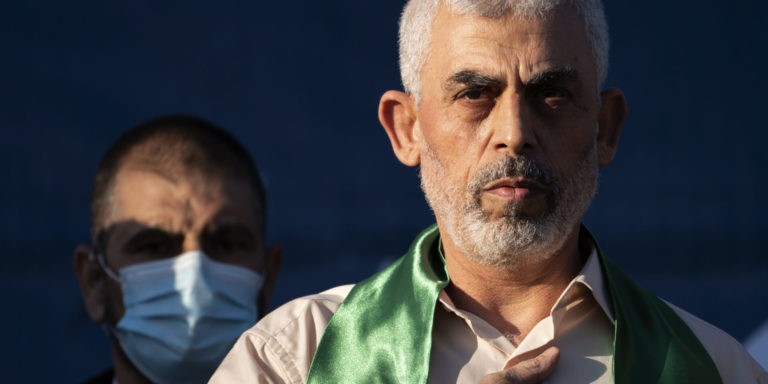
(Luis Cornelio, Headline USA) Hamas leader Yahya Sinwar is dead. 

The Israeli Defense Forces confirmed Thursday that Sinwar was killed in Rafah, following a year-long manhunt after the Oct. 7 massacre. His death was publicized through photos and videos showing his lifeless body. 

“Since the beginning of this war that Sinwar started on October 7 — we’ve said: Our war is with Hamas, not the people of Gaza. We mean it,” IDF spokesperson Daniel Hagari said in a statement on X.

Now-viral photos showed Sinwar dead, covered in dust and rubble—likely from bomb explosions. Part of his brain and fingers were blown off, while his arm twisted unnaturally.  

A cord was tied around his arm, seemingly to stop the bleeding from a previous injury.

Additionally, the IDF released drone footage capturing Sinwar’s last moments, also gaining viral attention on social media.

A man, identified as Sinwar, is seen sitting on a sofa, holding a stick with his face partially covered. The cornered Hamas leader then throws the stick at the drone before the video cuts off. 

Sinwar was widely regarded as the mastermind behind the brutal terrorist attacks on Israel’s southern region, near the Gaza border.  

The Oct. 7, 2023, assault resulted in the vicious deaths of around 1,200 people, including American citizens. 

During the hours-long attack, Hamas militants terrorized men, women, Israeli soldiers and even babies.

Some women were horrifically brutalized, with some reports detailing their breasts being cut off, their necks sliced and being gang raped. 

The Oct. 7 attack also saw Hamas take several civilians hostage, prompting Israel to invade Gaza in a mission to rescue them.  

Since then, pro-Palestinian activists have clutched their pearls at the fact that Israel dared to respond militarily to Hamas, a foreign-designated terrorist group, for its atrocities that day.

President Joe Biden celebrated Sinwar’s death in a statement issued on X.

Even in Jail, 2nd Trump Assassin Has Sought out News Agencies

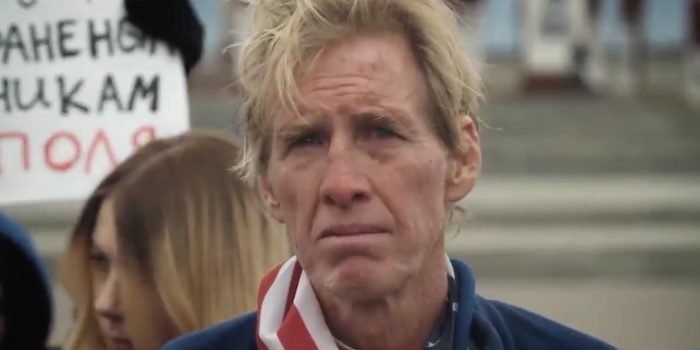
(The Center Square) – Prosecutors said they don’t want the man they accused of trying to assassinate former President Donald Trump to turn over evidence in the case to the media or anyone else.

Federal prosecutors filed a motion seeking protections for discovery materials in the case that would prohibit Ryan Routh, 58, from possessing discovery materials outside the presence of his defense team unless authorized by prosecutors.

Prosecutors said the protections are necessary to “prevent the improper dissemination of the discovery materials to influence the public’s perception of the matter or unduly interfere with the proper administration of justice.”

Prosecutors also said Routh had sought out contact information for media outlets. They also said he had sought additional publicity.

“Routh himself has proven to be someone who desires the spotlight,” prosecutors wrote in the motion.

“Within the past few years, Routh self-published a book in which he called for the assassination of former President Donald J. Trump; exuded condemnation towards the Former President both in public and private messages; attempted to copyright a work of fiction based on his life; drafted multiple letters addressed to various media outlets to discuss his world views; and drafted a separate letter in which he announces a $150,000 bounty for someone to complete his objective of assassinating the Former President.”

Even behind bars, Routh has sought out news agencies. Prosecutors said Routh told his daughter during a phone call from jail that he wanted the addresses for news organizations. He also said that the Bureau of Prisons denied NBC’s request to conduct an interview.

“Routh then advised that he wanted to mail letters to these news agencies, prompting the daughter to respond that it would not be good for ‘us’ at this time,” according to the motion from prosecutors.

A judge had not ruled on the prosecution’s request as of Thursday.

Prosecutors accused Routh, 58, of Hawaii, of stalking Trump for a month before he built a sniper’s nest near the Trump International golf course in West Palm Beach.

Federal prosecutors charged Routh with possession of a firearm by a felon and possession of a firearm with an obliterated serial number and attempted assassination of a major presidential candidate.

Routh has pleaded not guilty.

An FBI agent detailed in court documents the inside of the alleged gunman’s sniper nest where prosecutors said he waited for hours with a scope-fitted rifle.

A photo of the nest showed two bags hanging from a fence off the sixth hole. An FBI agent said the bags contained plates that could stop small arms fire. In between the two bags was an SKS-style rifle with a scope. Agents matched a fingerprint on the rifle to Routh.

Federal prosecutors said the FBI examined the SKS-style rifle that was recovered from Trump International Golf Club and found a latent fingerprint on a piece of tape attached to the rifle. The latent print preliminarily matches Routh.

Prosecutors said Routh had been planning to kill the former president for months. Agents found in Routh’s Nissan Xterra a handwritten list of dates in August, September and October 2024 and venues where Trump had appeared or was expected to be present.

A U.S. Secret Service agent, a hole ahead of Trump walking the perimeter, spotted a rifle sticking out from the tree line. The agent fired in the direction of the rifle before a witness told authorities Routh sped away in a Nissan sport utility vehicle.

Routh’s cellphone records indicated he had been camped out from 1:59 a.m. to 1:31 p.m., according to a criminal complaint filed in the federal case.

Authorities caught Routh on Interstate 95.

Desperate Fani Willis Tries to Save Trump Case after Judge Tosses Charges

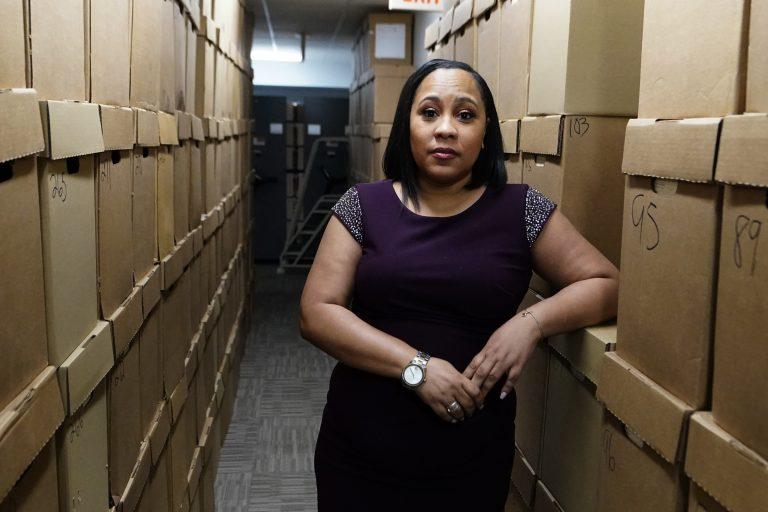
(Headline USA) Fulton County District Attorney Fani Willis asked the Georgia Court of Appeals this week to reinstate six racketeering charges against former President Donald Trump.

Willis had filed three solicitation counts against Trump for allegedly soliciting Georgia House Speaker David Ralston and Georgia Secretary of State Brad Raffensperger to change the results of the 2020 election.

She brought the same charges against Trump’s former lawyer, Rudy Giuliani, and his former chief of staff Mark Meadows.

The charges were dismissed against all defendants by Superior Court Judge Scott McAfee, who ruled Trump and the others charged in Willis’s sprawling election interference case had not been provided with enough detail to mount a proper defense.

McAfee also dismissed three other charges against Trump because they “lie beyond” Willis’s jurisdiction.

“[McAfee] erred by quashing six counts of the indictment in this case, each of which alleged the crime of Solicitation of Violation of Oath by Public Officer,” Willis’s office wrote in a filing this week. 

The state does not need to provide “specific details as to the target crime of violation of oath by public officer,” Willis argued in the filing, because those details are “not required for a charge of solicitation of violation of oath by public officer.”

Steve Sadow, Trump’s lead attorney in the case, dismissed Willis’s request as “simply incorrect on the law.”

Willis’s case against Trump has been paused since June while the Georgia Court of Appeals weighs whether to disqualify her from the case entirely over her inappropriate relationship with former special prosecutor Nathan Wade.

Wade testified before the House Judiciary Committee on Tuesday and insisted that the case against Trump was “not politically motivated” and that he did “nothing to compromise the integrity” of it despite his romantic relationship with Willis.

Oral arguments on whether Willis can remain on the case are set to take place on Dec. 5.

RFK Jr. Hints At Big Agricultural Role in Next Trump Admin

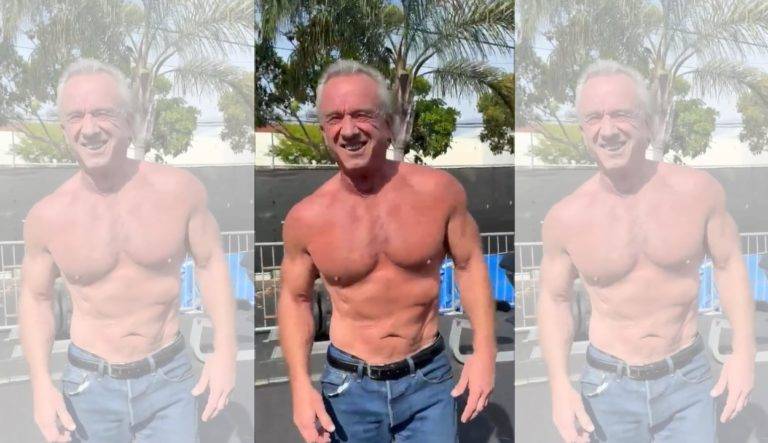
(Headline USA) Former presidential candidate Robert F. Kennedy Jr. suggested this week that he will play a significant role guiding health and agricultural policy in a second Trump administration.

Kennedy ended his independent campaign and endorsed former President Donald Trump in August and launched a new pro-Trump slogan: “Make America Healthy Again.”

Speaking outside the Department of Agriculture headquarters in Washington, D.C., this week, Kennedy said he has several policy ideas he would like to implement as part of that agenda.

“When Donald Trump gets me inside the building I’m standing outside of right now, it won’t be this way anymore. American agriculture will come roaring back, and so will American health,” Kennedy said in a video he posted Monday.

Kennedy went on to blast the U.S.’s current agricultural policy for “destroying America’s health on every level,” including the “economic health of farmers” who don’t want to become corporate operations.

He then vowed to ban the use of toxic pesticides and remove “conflicts of interest” within the agency that undermine good policy decisions.

“We’re going to ban the worst agricultural chemicals that are already prohibited in other countries. And we’re going to remove conflicts of interest from the USDA dietary panels and commissions,” he said. “I’ve seen some of what America’s most innovative, regenerative farmers are doing today. They can literally green deserts. They rebuild depleted soils, wells that have been dry for 30 years start flowing again.”

Trump has also hinted at a prominent role for Kennedy.

“We will make America healthy again. You know who’s going to do that? RFK Jr. He’s got some good ideas,” Trump said at a recent rally in Reading, Pennsylvania. 

Kennedy’s team said in August that Trump and Kennedy had discussed “the possibility of a Cabinet position,” specifically in regards to the Department of Health and Human Services, which includes the Centers for Disease Control and Prevention, the Food and Drug Administration, and the National Institutes of Health.

GOP Challenger and Purported Rape Victim Blasts Sen. Warren For Ignoring Epstein Scandal

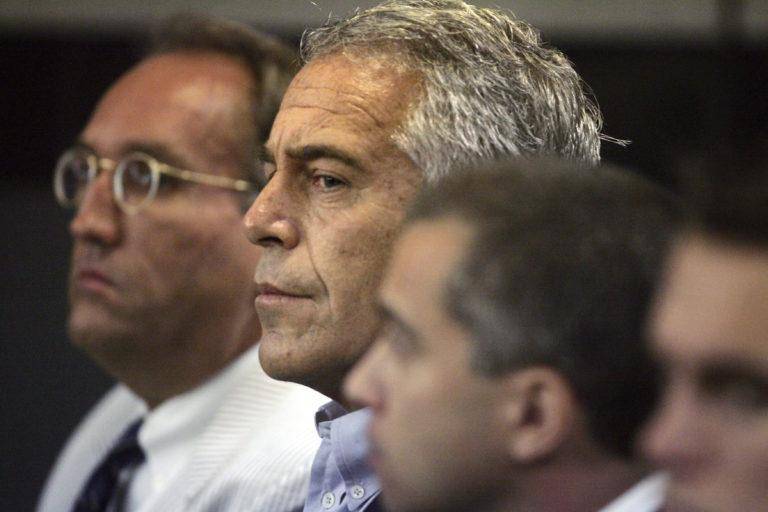
(Headline USA) During a heated Massachusetts Senate debate this week, Republican challenger John Deaton pressed incumbent Sen. Elizabeth Warren, D-Mass., on why she didn’t use her oversight power to uncover the truth about billionaire Jeffrey Epstein’s sex trafficking ring.

Deaton, a Massachusetts trial attorney and former Marine, is trying to become the first Republican in decades to oust a sitting Massachusetts senator. Though he’s trailing in the polls and in fundraising, Deaton’s vow to “disrupt” the elites in Washington, D.C., including Warren, could resonate among voters, according to some observers.

At one point during their debate on Tuesday, Deaton blasted Warren’s priorities.

“She’s so focused on [regulating] crypto[currency,” Deaton pointed out. “She had the COO of JPMorgan-Chase available for questioning, and they had financed the largest child sex-trafficking operation in history with Jeffrey Epstein, and you know Senator Warren didn’t ask a single question. She wanted to talk about crypto because she’s so hyper-focused.”

Deaton was referring to the fact that recently agreed to pay $290 million to Epstein victims for banking the sex trafficker’s criminal enterprise.

Deaton then bizarrely claimed he had been the victim of rape as a child for “two years,’ which makes him “more sensitive to those child rape victims” than Warren.

“I was raped as a child for a period of two years; I might be a little more sensitive to those child rape victims,” he said. Deaton didn’t elaborate on his claim, Warren didn’t mention it, and few details appear to exist online.

But Warren’s true motivation for refusing to dig into the Epstein scandal, Deaton argued, is the fact that a “former Democrat president” — likely a reference to former President Bill Clinton — and “Democratic donors” were involved. 

“People she knows are involved,” he said. “Again, loyalty to an agenda, loyalty to a party. I come in and I want transparency on everything.”

Deaton went on to blast Warren for being out-of-touch with voters on the economy and immigration. On abortion, Deaton said he is pro-choice and would not vote to limit abortion access in the state.

“There’s only one extremist on this stage tonight and it’s Elizabeth Warren. I’m the moderate, centrist, common-sense candidate. … I got news for you, senator, all of you suck,” Deaton said. “It’s a broken system. I’m disrupting that system.”

‘Star Wars’ Actor Mark Hamill Calls for Sabotaging Trump’s Madison Square Garden Rally

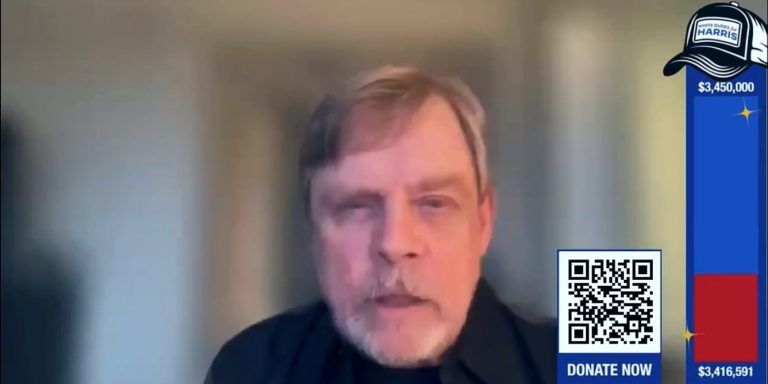
(Chris Cella Jr., Headline USA)  Legendary Star Wars actor Mark Hamill is teaming up with the Lincoln Project to disrupt former President Donald Trump’s upcoming rally at Madison Square Garden on October 27.

The anti-Trump organization is encouraging attendees to obtain tickets and then not show up, aiming to create a small, embarrassing turnout for Trump, who often emphasizes crowd size.

Lincoln Project co-founders Rick Wilson and George Conway, a former husband of Trump surrogate Kellyanne Conway, are rallying supporters to participate in this initiative. They apparently hope that a low turnout will highlight Trump’s waning popularity and embarrass the campaign just over a week before election day.

Hamill, known for his vocal opposition to Trump, took to Twitter/X to promote the effort. He urged his millions of followers, “Who would sign up, then NOT go? (except everyone who puts country over party) 🇺🇸,” while retweeting the Lincoln Project’s invitation to sign up for tickets.

Founded in 2019 by Republicans opposed to Trump’s America First agenda, the Lincoln Project consists of former Republicans and others united by a single mission: to prevent Trump from returning to office. The group endorsed Joe Biden in the 2020 election and now supports Kamala Harris for the 2024 race.

However, analysts suggest the plan may not have the desired impact. The rally’s ticketing system operates on a first-come, first-served basis, with no assigned seating, which could mitigate the effects of any empty seats.

Trump’s New York City rally is expected to focus on the sky-high crime rates and high taxes associated with Democratic policies. New York, a historically blue state, has voted Democratic in the last nine presidential elections. Trump aims to sway a state that Biden won by 23 points in 2020. Recent polling from FiveThirtyEight shows Harris currently leading Trump by 14 points in New York.

Hamill has consistently used his platform to criticize Trump, making him a prominent figure in the anti-Trump movement. As a vocal opponent, some have argued that the former Jedi Master embodies “Trump Derangement Syndrome.”

Ex-FBI Agent Arrested for Having ‘Arsenal’ of Illegal Ghost Guns

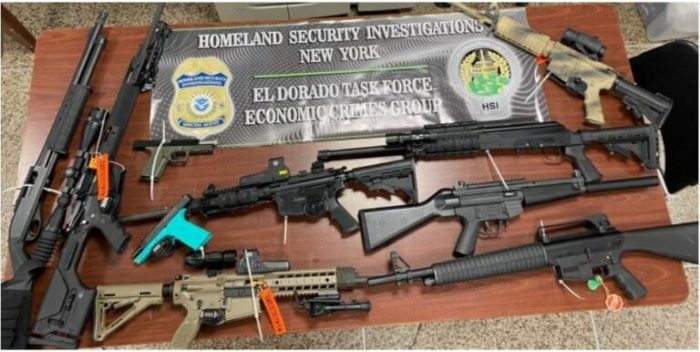
(Ken Silva, Headline USA) Queens District Attorney Melinda Katz announced Wednesday that former FBI agent Scott Chiang has been charged with multiple counts of criminal possession of a weapon, after police found what she described as an “arsenal” of illegal ghost guns and other firearms.

Chiang, 53, of Peck Avenue in Queens Village, was arraigned Friday on a 242-count criminal complaint, which charges him with criminal possession of a weapon in the first, second, third and fourth degrees, endangering the welfare of a child, and several other crimes.

According to a Queens DA press release, members of the DA’s Crime Strategies & Intelligence Bureau conducted a long-term investigation into the Chiang’s online purchase of polymer-based, unserialized firearm components. The DA said those components can easily be assembled into operable firearms that are untraceable.

Officers from the New York Police Department’s Financial Crimes Task Force, Homeland Security Investigations and the Queens District Attorney’s Detective Bureau executed a search warrant of Chiang’s Queens Village residence on Oct. 10, finding the alleged arsenal.

Weapons recovered included five loaded a fully assembled Glock-style ghost gun pistols, one Sig Sauer pistol, a loaded serialized MP5 assault weapon, a loaded black serialized Remington 700 hunting rifle, as well as a slew of, parts and ammo. Another search warrant on Chiang’s storage unit yielded a handful of AR-style rifles and shotguns.

Additionally, police found a Republic of China Passport bearing the name of “Scott Chiang,” the DA said.

To top it off, while the search warrant was being executed, a postal carrier delivered a package to Chiang’s residence, addressed to Chiang, containing a complete Glock pistol slide and barrel, according to the DA.

Chiang allegedly does not hold a license to possess or own firearms in New York City, despite having previously worked for the FBI’s New York Field Division from April 2004 until November 2005.

Criminal Court Judge Germaine Auguste has remanded Chiang and ordered him to return to court on October 31. If convicted, he faces up to 25 years in prison.

Ken Silva is a staff writer at Headline USA. Follow him at x.com/jd_cashless.

SCOOP: DEA Firearms Parts Were Stolen from Gov’t Facility and Made into Ghost Guns

(Ken Silva, Headline USA) The DOJ Inspector General issued a notice to the FBI and the Drug Enforcement Administration that they’re not properly disposing government-issued firearms, after local police recovered a “ghost gun” that was made with DEA gun parts.

According to the DOJ-OIG, a local police department arrested someone last year and found a privately made firearm, also known as a ghost gun. Police traced the serial number of the slide and barrel of the ghost gun to the DEA. The DOJ-OIG then launched an investigation, of which the results were announced Wednesday.

“According to DEA records, the slide and barrel were part of a DEA employee issued firearm that had been destroyed over three years earlier,” the DOJ-OIG said in its Wednesday report.

During its investigation, the DOJ-OIG found that the DEA and FBI both destroy government-issued firearms by separating the slide and barrel from the rest of the firearm, and placing them in open bins in a gun-cleaning room that was collocated at the DEA and FBI training academies in Quantico, Virginia.

“The OIG further learned that the gun cleaning room was accessible to thousands of employees and contractors at Quantico, including FBI and DEA armory employees, FBI and DEA academy trainers and students, cleaning staff, maintenance contractors, and others,” the DOJ-OIG’s report continued.

“Because the gun cleaning room was in a shared building that also held the Quantico cafeteria, security control measures were limited to a Quantico access card provided to every individual that had access to the grounds at Quantico. There were no safeguards to ensure that the location where the slides and barrels were stored was secured, document who had access to the location or DEA property, or document when the slides and barrels were destroyed,” the report said.

The DOJ-OIG added that only “some” FBI employees destroy firearms in the manner described above. Others said they never separated the slides and barrels of firearms from their frames, the report said.

According to the report, the DEA and FBI justified their actions by saying that they considered only the frames and receivers of employee-issued firearms as necessary to safeguard in a secure vault prior to destruction.

But the DOJ-OIG explained why that’s incorrect.

“This is problematic given that slides and barrels can be attached to compatible frames or receivers and end up in the hands of criminals. Further, although the slides and barrels are not considered firearms in themselves, they contain serial numbers that identify their origin and implicate the DEA or FBI when recovered,” the DOJ-OIG explained.

The DOJ-OIG recommended that the DEA and FBI update their policies for firearms disposal. Both departments agreed.

However, it appears that there may be other ghost guns with DEA parts. According to the DOJ-OIG report, the DEA conducted an inventory of several hundred employee-issued firearms intended for destruction in 2019—and later found that 100 of those firearms were unaccounted.

“The DEA ultimately concluded that the 100 firearms were destroyed based on an unofficial spreadsheet created by a DEA employee; however, there was no official documentation to confirm this conclusion was accurate,” the DOJ-OIG noted.

Ken Silva is a staff writer at Headline USA. Follow him at x.com/jd_cashless.

Elon Musk Calls Out Media’s Hive Mind Headlines On Kamala’s Fox News Interview

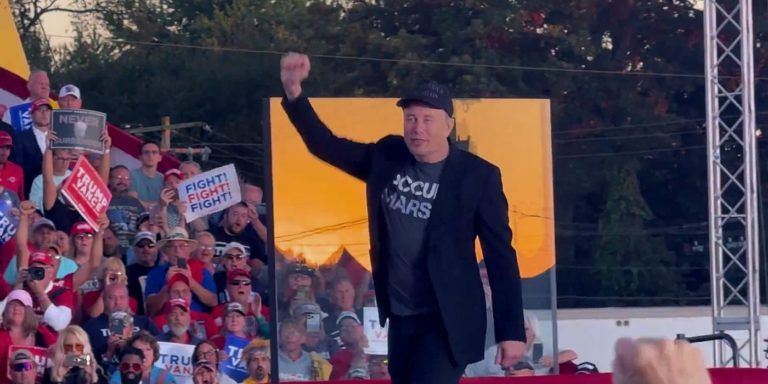
(Julianna Frieman, Headline USA) Left-leaning news outlets ran headlines on Democrat nominee Kamala Harris’s Fox News interview in lockstep — and billionaire Elon Musk called them out early Thursday.

Musk recommended that reporters from publications including CNN, NPR, the Associated Press, The Guardian, The Hollywood Reporter and Business Insider learn some new words as they all used the adjective “testy” in their headlines highlighting the vice president’s grilling by Fox News anchor Bret Baier on Monday.

“Who sends out the commands to the NPC media puppets? I’d like to meet them,” Musk wrote on X.

He added, “They should really use a thesaurus, so that every media outlet doesn’t use the EXACT SAME words every time.”

Musk urged Americans not to be fooled by what he referred to as “propaganda,” suggesting that Americans get their news from X instead.

“‘Testy’ is this week’s ‘sharp as a tack.’” Musk wrote with another screenshot of outlets’ headlines featuring the word, comparing the parroting to coverage of President Joe Biden’s mental fitness before he dropped his reelection bid in July.

Other publications including the Chicago Tribune, LiveNOW from FOX, MSNBC News, The Boston Globe and many local outlets ran the “testy” headline.

Even notoriously right-leaning Newsmax shied away from testing out the thesaurus, running the headline “VP Harris Gets Testy in Fox News Interview.”

The Hill dared to be different by opting out from the word “testy” and running “contentious” instead. Newsweek reported that Harris “struggled to hold her own.”

The word “heated” appeared to be another favorite, with news outlets including CNN, Forbes, The Washington Post, and TMZ running headlines using that adjective.

Similarly, the word “fiery” was commonly used by media outlets, including the Wall Street Journal and The Guardian, in their headlines reporting on Harris’s performance in her ABC News debate against Republican opponent Donald Trump on Sept. 10.

Julianna Frieman is a freelance writer also published by the Daily Caller and The Federalist. Follow her on Twitter at @JuliannaFrieman.

Dollar Alternatives Will Be Top of BRICS Summit Agenda

(Mike Maharrey, Money Metals Exchange) U.S. dollar – we’re coming for you! That’s the message ahead of the upcoming BRICS summit set to kick off in Kazan, Russia, next week.

The Russian finance ministry and the Central Bank of Russia distributed a document to the media ahead of the meeting outlining topics on the agenda. On top of the list — a new global payment system to end dollar dominance.

An Alternative to the Weaponized SWIFT System

According to Reuters, commercial banks would be linked together through the BRICS nations’ central banks using a blockchain-based system.

“The system would use blockchain technology to store and transfer digital tokens backed by national currencies. This, in turn, would then allow those currencies to be easily and securely exchanged, bypassing the need for dollar transactions.”

Western nations have tried to economically isolate Russia in the wake of its invasion of Ukraine. The U.S. and its allies have locked Russia out of the dollar-based SWIFT payment system, so it’s no surprise that the Russians are pushing for alternatives. As Reuters notes, the economic sanctions even impact Russian trade settlements with friendly countries such as China due to local bank worries that they could get hit with secondary sanctions by the U.S.

SWIFT serves as the global economy’s superhighway. In effect, it operates as a global financial messaging service, facilitating cross-border payments. As the SWIFT website puts it, “SWIFT is the way the world moves value.”

Since the dollar serves as the world reserve currency, SWIFT effectively facilitates an international dollar system.

Kremlin aide Yury Ushakov floated the plan to develop a new payment system based on the blockchain last spring. At the time, Ushakov said the system should be convenient for governments, businesses, and common people to use, “as well as cost-effective and free of politics.”

And significantly, it would operate without dollars.

“Work will continue to develop the Contingent Reserve Arrangement, primarily regarding the use of currencies different from the U.S. dollar.”

The weaponization of the dollar and using SWIFT as a hammer isn’t just a problem for Russia. While it may make sense from a Western foreign policy perspective, it has made a lot of countries wary and has sped up the movement to minimize dependence on the greenback. After all, if you have something that can be used as leverage against you, it’s only natural to try to minimize your exposure to that thing. If the U.S. can pull the dollar rug out from under you, why not try to get that rug out of the room?

Pushing the Dollar Off Its Perch Won’t Be Easy

Nevertheless, the dollar is deeply entrenched in the global economy, and Russia faces an uphill battle to knock it off its throne.

BRICS+ Analytics think tank founder Yaroslav Lissovolik told Reuters that an alternative payment system is undoubtedly feasible, but it will likely take time to develop.

“After the significant expansion of BRICS membership last year, the attainment of consensus is arguably harder.”

BRICS is an economic cooperation bloc originally made up of Brazil, Russia, India, China, and South Africa. As of Jan. 1, 2024, the bloc expanded to include Egypt, the UAE, Iran, and Ethiopia. Saudi Arabia has also been formally invited to join but has yet to formally accept the invitation. It will reportedly send representatives to the summit.

More than 40 other nations, including Turkey, have expressed interest in BRICS membership.

The expanded BRICS has a combined population of about 3.5 billion people. The economies of the BRICS nations are worth over $28.5 trillion and make up roughly 28 percent of the global economy. BRICS nations also account for about 42 percent of global crude oil output.

Other BRICS Proposals

The pre-summit document also criticized the International Monetary Fund (IMF), accusing it of serving the interests of Western countries. The document said the IMF needs to make “improvements to better serve the evolving global economy.”

Russian Finance Minister Anton Siluanov recently called on BRICS to create an alternative to the IMF.

“The IMF and the World Bank are not performing their roles. They are not working in the interests of BRICS countries. It is necessary to form new conditions or even new institutions, similar to the Bretton Woods institutions, but within the framework of our community, within the framework of BRICS.”

Other proposals on the agenda for the BRICS summit next week include the development of a “BRICS Clear” platform to settle securities trades, better communication between credit rating agencies in member countries, a uniform credit rating methodology, and a BRICS grain trading exchange.

The grain exchange would create an alternative to Western exchanges that set international prices for agricultural economies.

Last month, the Russian news agency TASS reported that BRICS officials are “developing a wide range of instruments for creating an inclusive international financial system.”

These instruments include a common unit of account (a currency), a platform for international payments using a BRICS digital currency, a payment system, a settlement depository, an insurance system, and a BRICS rating alliance.

The common unit of account would be pegged by 40 percent to the price of gold. The other 60 percent would be pegged to a basket of BRICS currencies.

Ramifications for the Dollar

These new systems will be difficult to develop and wouldn’t likely threaten dollar dominance in the immediate future. But it does signal an increasingly multi-polar global financial system where the dollar is no longer the only rooster in the hen house.

In fact, dollar dominance is already eroding. Dollar reserves globally have dropped by 14 percent since 2002, and de-dollarization accelerated after the U.S. and her Western allies aggressively sanctioned Russia.

The Atlantic Council identifies the rise of BRICS as a threat to long-term dollar dominance.

“The project identifies the BRICS as a potential challenge to the dollar’s status due to the individual members’ signal of intent to trade more in national currencies and the BRICS’ growing share of global GDP.”

This isn’t just about a geopolitical power play. Any erosion of the dollar’s status could have significant economic ramifications for the average American.

Because the global financial system runs on dollars, the world needs a lot of them, and the United States depends on this global demand to underpin its bloated government. The only reason the U.S. can borrow, spend, and run massive budget deficits to the extent that it does is the dollar’s role as the world reserve currency. It creates a built-in global demand for dollars and dollar-denominated assets. This absorbs the Federal Reserve’s money creation and helps maintain dollar strength despite the Federal Reserve’s inflationary policies.

But what happens if that demand drops? What happens if BRICS nations and other countries don’t need as many dollars?

A de-dollarization of the world economy would cause a dollar glut. The value of the U.S. currency would further depreciate. At the extreme, global de-dollarization could spark a currency crisis. You and I would feel the impact through more price inflation eating away at the purchasing power of the dollar. In the worst-case scenario, it could lead to hyperinflation.

The world doesn’t have to completely abandon the dollar to create negative impacts. Even a modest drop in the demand for dollars will ripple through the U.S. economy.