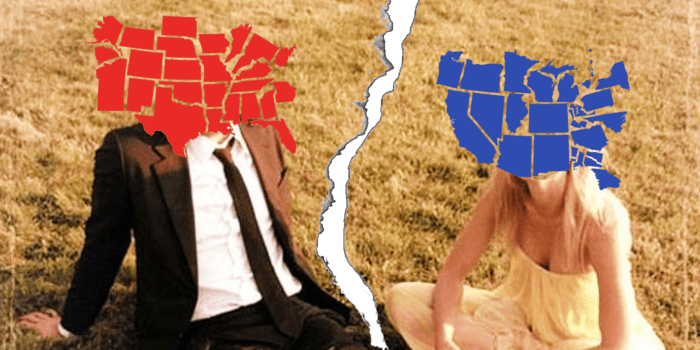
(Ben Sellers, Headline USA) Virginia Democrats’ attempt to gerrymander the state and a landmark Supreme Court decision that ended race-based redistricting have spurred what some consider to be a race to the bottom for control of the U.S. House.
But the jury is still out as to who will wind up with the upper hand.
Things are moving really fast across the entire South. Louisiana, Tennessee, and Alabama all appear to be poised to redistrict. South Carolina may follow suit as well.
At a minimum, we’re looking at three districts flipping this year. If Louisiana and Alabama both eliminate…
— Christian Heiens 🏛 (@ChristianHeiens) May 2, 2026
Red states including Mississippi, Alabama, Tennessee and Louisiana have signaled plans to redraw their districts following the Louisiana v. Callais decision, which said the minority–majority districts used since the passage of the 1965 Voting Rights Act did more to promote racism and inequity than to resolve it.
The now-unconstitutional VRA mandates had essentially guaranteed seats for Democrats, even though doing so required them to go to great lengths to segregate black-heavy constituencies.
Even before the SCOTUS ruling, Florida Gov. Ron DeSantis had called for a special session to redraw Florida’s maps following Virginia’s April 21 ballot referendum.
Virginia Democrats succeeded in passing their effort to create a “temporary” loophole in the state’s constitution — which normally requires a bipartisan redistricting commission to draw reasonably apportioned maps. But despite their dubious victory at the polls, the issue is now being considered by the Virginia Supreme Court after plaintiffs argued that the Democrat General Assembly violated several other laws in the process.
Florida’s new maps would effectively offset Virginia’s gains, but if the courts shut down the Democrat referendum in the Old Dominion, the brazen power grab could backfire exquisitely.
Still, radical leftists are not likely to concede defeat gracefully.
An Axios report said Democrats may seek to retaliate by shoring up their already lopsided maps in 11 other blue-controlled states.
Axios: Inside Democrats' sweeping 2028 redistricting plans
Democrats are eyeing the following states to redistrict in 2028:
California
Colorado
Illinois
Maryland
Minnesota
New Jersey
New York
Oregon
Pennsylvania
Washington state
Wisconsinhttps://t.co/zUGzt4Irpp— Politics & Poll Tracker 📡 (@PollTracker2024) May 1, 2026
That might include using extreme “spaghetti” maps in states like Illinois, routing districts from the entire red-leaning southern part of the state through deep-blue Chicago in the northeast.
If Republicans aggressively gerrymander the South and eliminate up to 10 Democratic seats under a narrowed VRA, Democrats could become desperate and respond with absurd maps in blue states.
This 17-0 Illinois map could become legal, flipping three seats from 🔴 to 🔵. pic.twitter.com/dwdEHliy43
— Zachary Donnini (@ZacharyDonnini) April 29, 2026
Some speculated that the effort to squeeze more Democrat seats out of states that already are maxxed out could fail by diluting already-blue districts, including those earmarked for black voters.
Moreover, redrawing states like Pennsylvania, Wisconsin and Minnesota — where Republicans currently maintain some legislative power — could prove challenging, if nothing else becoming a focal point of upcoming state elections.
Democrats cannot redistrict PA, Minnesota nor Wisconsin because they don’t control and won’t control those states
Except for NY and CO all other states on this list are gerrymandered the maximun
Gerrymandering more in CA, IL, NJ and WA could easily backfire for the Democrats… https://t.co/ZbKigWHoUQ
— Richard Arion (@RichardArion1) May 2, 2026
Other states, like New Jersey and Washington, would have to follow Virginia’s model of circumventing the fair-map safeguards already enshrined in their state constitutions.
Still, there are likely to be some avenues for Democrat seat gains in states like Colorado and New York — the latter of which saw an earlier 2022 attempt to gerrymander its seats shut down by the state courts. The shifting circumstances, along with an activist bench that has become increasingly ideologically driven, may compel judges to reconsider their previous objections.
Those two states, if they left no Republican seats, could add up to 11 more into the Democrats’ column. But South Carolina and Georgia, two red states that have signaled they are not likely to redraw their maps before the 2026 midterms, may move before the 2028 race, adding up to six seats in the red column — including those of notorious race baiting representatives James Clyburn and Hank Johnson.
Lawmakers from both parties still expect Kemp to summon them back before his term ends in January for a simple reason: Republicans want to lock in new maps while they are sure they still have a GOP governor to sign them. https://t.co/9VRuYgvL7T
— Greg Bluestein (@bluestein) May 1, 2026
Christian Heiens, a Virginia-based podcaster and political strategist, broke down all of the seats in play for 2028, concluding it would likely be a wash with 19 seats going both ways.
But in order to offset desperate Democrats who are willing to bend the rules to achieve the desired outcome, Republicans must reach even deeper into states like Ohio, Missouri, Indiana, Nebraska, Utah, Kansas and Kentucky.
Some of these are entirely possible and even likely, others are just straight up impossible without some extraordinary measures employed to make it happen.
>Dems can and possibly will eliminate California’s remaining four GOP districts (+1-4)
>They will probably draw a 8-0 or… https://t.co/dC9ZAbypjH pic.twitter.com/dB5BhGHuNp— Christian Heiens 🏛 (@ChristianHeiens) May 3, 2026
“If Republicans aren’t prepared to do all of this to counter what’s coming they will lose the redistricting war,” Heiens wrote. “At some point we’ll see both sides begin to run out of targets and it’s a just a matter of which side is willing to go further to win.”
There are good reasons to be alarmed about the chain reaction that hyperpartisan gerrymandering will trigger, which will potentially disfranchise all of the voters in a state who may be in the political minority. Yet, having less-concentrated districts also may give some voters more of a sporting chance by creating a greater number of potential tossup races, with voter turnout becoming even more of a deciding factor.
Public distaste over the tit-for-tat rule-changing also may provide the catalyst needed for a constitutional amendment that would take the power from individual state legislatures and establish a uniform method for drawing fair maps — perhaps with help from emerging artificial-intelligence technology.
There a lot more seats for the Republicans to gerrymander because Dems have already squeezed out more of their opponents than vice versa. And none of it is healthy for the Republic. Best answer is a constitutional amendment that says new districts must be set by an independent… pic.twitter.com/yjpf9ZylTl
— V (@V35000) May 2, 2026
Ben Sellers is a freelance writer and former editor of Headline USA. Follow him at x.com/realbensellers.