


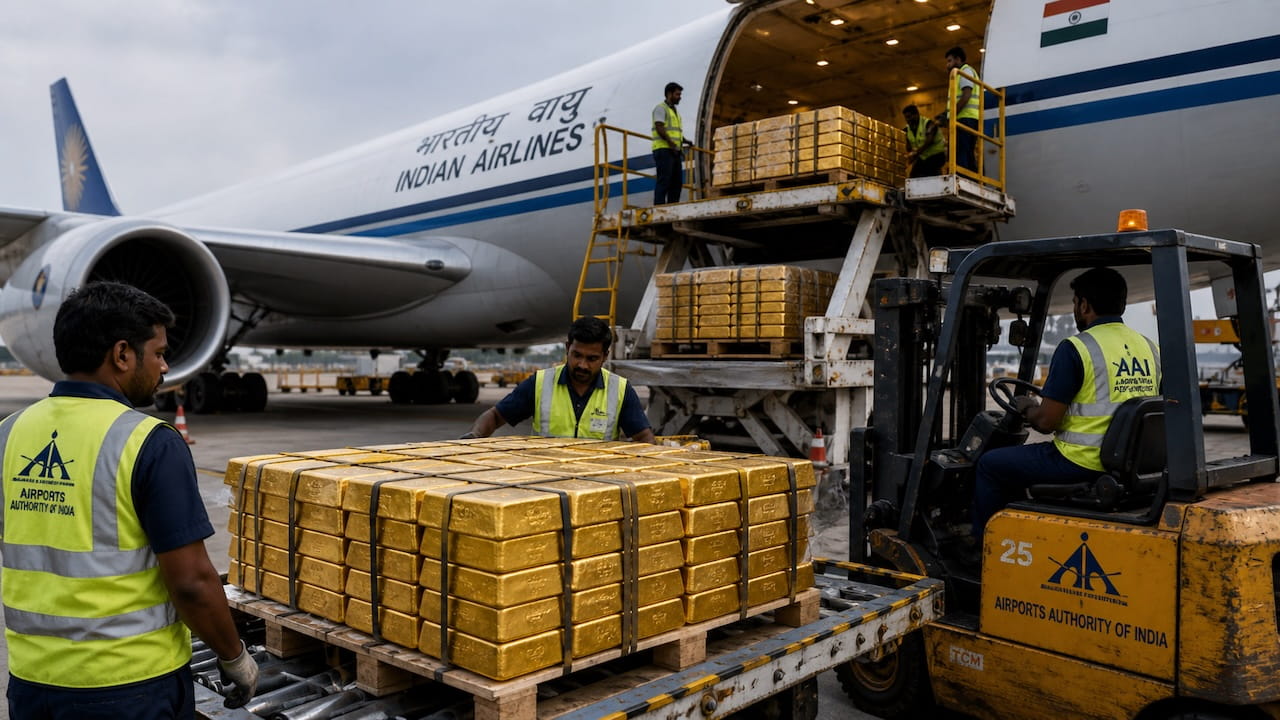
(Mike Maharrey, Money Metals News Service) India has accelerated efforts to bring its gold home.
In the spring of 2024, India brought 100 tonnes of gold home, repatriating it from vaults in the UK. Over the last six months, the Reserve Bank of India has repatriated another 104 tonnes.
According to data from the Management of Foreign Exchange Reserves, India now has about 680 tonnes of its 880.52-tonne gold reserves (77 percent) stored within its borders. Approximately 197.67 tonnes remain stored in the Bank of England and the Bank for International Settlements vaults.
As of March 2023, India only held around 37 percent of its gold reserves within the country.
After a 100-tonne move in 2024, an anonymously quoted central bank official told Reuters, “We did have it [gold] held in London… but now we’ve transferred it back to our country to hold as a safe haven asset and to keep it safe.”
At the same time, Invesco’s head of official institutions, Rod Ringrow, told Reuters this reflects a widely held view.
“‘If it’s my gold then I want it in my country,’ has been the mantra we have seen in the last year or so.”
According to the Economic Times of India, U.S. weaponization of the dollar is one of the key factors driving gold repatriation, specifically aggressive sanctions levied on Russia after it invaded Ukraine, and the freezing of Afghanistan’s reserves by Western powers.
“Those episodes, involving G7 countries restricting access to sovereign assets, have reshaped how central banks think about custody.”
India was also a leading gold buyer in 2024, upping its gold holdings by 73 tonnes. The pace of buying slowed last year, with reserves increasing by around 5 tonnes.
Even with the slower pace of purchases, India’s increasing gold holdings over the last two years reflect a longer trend. The RBI has been buying gold since 2017. Over that period, it has increased its gold reserves by over 270 tons.
The Times of India reported that de-dollarization is one of the primary motives behind India’s gold-buying spree.
“India’s central bank has shown a preference for increasing gold reserves instead of U.S. Treasury bills to strengthen its foreign exchange holdings. This is part of a broader global shift towards diversifying national reserves beyond dollar-based assets.”
An economist told the Times, “It makes a lot of sense (to invest in gold), given the increased volatility in the FX market, elevated interest rates in the U.S., and, of course, also as the central banks in each economy would like to diversify the asset classes in which they are parking their reserves.”
India isn’t the only country worried about the weaponization of the dollar, along with U.S. fiscal mismanagement.
According to a World Gold Council survey in 2023, a “substantial share” of central banks expressed concern about potential sanctions after the U.S. and other Western countries froze almost half of Russia’s $650 billion gold and forex reserves in the wake of its invasion of Ukraine. According to the WGC, 68 percent of the banks surveyed said they plan to keep their gold reserve within their country’s borders. This was up from 50 percent in 2020.
There has been a growing chorus of voices calling for Germany and Italy to bring their gold home.
There has also been speculation that other countries have been moving gold and other assets out of the U.S. in the wake of economic sanctions on Russia. However, this has been difficult to confirm because the Federal Reserve will not release information on the amount of gold in its vaults.
The gold repatriation trend started long before the West slapped sanctions on Russia. In 2019, Poland brought home 100 tons of gold. Hungary and Romania also repatriated some of their gold reserves around that same time. In the summer of 2017, Germany completed a project returning roughly half of its gold reserves inside its borders. In 2015, Australia launched efforts to bring half of its reserves home. The Netherlands and Belgium have also initiated repatriation programs.
This gold repatriation trend underscores the importance of holding physical gold free from counterparty risk.
If you store your gold and silver with a third party, you could lose your metal through theft, fraud, or an act of God. Of course, you could lose silver and gold stored in your home the same way (except for fraud), so you have to weigh the risk of using third-party storage and keeping large amounts of silver and gold at home.
If you opt for third-party vaulting, it is important to choose a trusted company.
Money Metals offers secure precious metals storage in its state-of-the-art facility.
Here are just a few advantages of storing with Money Metals:
- Money Metals Depository contents are fully insured by Lloyd’s of London.
- Metals stored in your account are segregated and never commingled or rehypothecated — and cannot be used as collateral for a loan by anyone but you.
- Depository holdings are independent and removed from any bank, Wall Street, or Washington, D.C.
Mike Maharrey is a journalist and market analyst for Money Metals with over a decade of experience in precious metals. He holds a BS in accounting from the University of Kentucky and a BA in journalism from the University of South Florida.

 stored within its borders. Approximately 197.67 tonnes remain stored in the Bank of England and the Bank for International Settlements vaults.)