

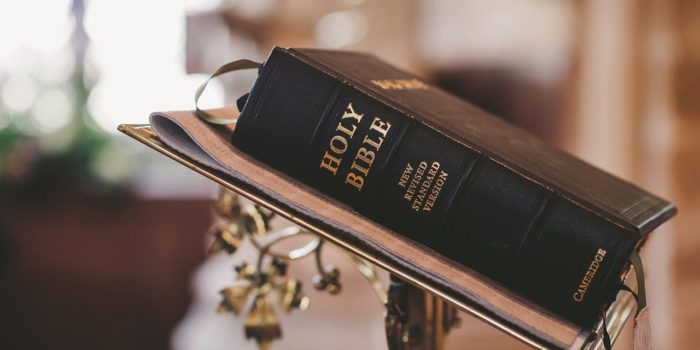
(Kim Jarrett, The Center Square) Tennessee lawmakers will consider a bill that would allow voluntary prayer and Bible studies in state schools and public charter schools.
House Bill 1491, by Rep. Gino Bulso, R-Brentwood, said the prayer time could be silent or groups could have a designated prayer time. Parents would be required to give schools written permission for their children to participate.
The 1962 U.S. Supreme Court decision Engel v. Vitale banned prayer in public schools. The case was based on the Establishment Clause of the First Amendment of the U.S. Constitution. Bulso said the court did not correctly understand the history of that clause.
“The Establishment Clause of the United States Constitution restricts only laws enacted by Congress, and the 14th Amendment of the United States Constitution offers no support for requiring states to comply with the restrictions that the Establishment Clause imposes on Congress,” according to the bill, which is named the Protecting Religious Liberty and Expression in Public Schools Act. “This Legislature enjoys the power to extend protection to religious liberty and freedom of expression and to provide redress against deprivations of these liberties.”
The prayers could not be broadcast over a school intercom system or take away from instructional time, the bill said. Prayers are also not limited to Christian prayers, but parents must give schools permission.
The 1962 case involved a 22-word prayer that students could opt into or out of, Bulso said in an interview with TCS.
The Supreme Court has been actively addressing the issue of religious liberty recently, he said. In 2022, the court sided with a high school football coach in the state of Washington suspended for having an on-field private prayer with his team.
“I think this is exactly the right time to have this issue brought back into public square both because you know our Supreme Court has I think more properly aligned in most recent decisions and because I think we just need to have prayer back in our schools,” Bulso said.
The study of the Bible would be in a historical context, not as religious dogma, Bulso told TCS in an interview. Parents could choose not to allow their children to participate in the Bible curriculum.
Another Supreme Court case is the basis of Bulso’s House Bill 1473, which would protect private citizens opposed to same-sex marriage from doing things that violate their religious beliefs.
The court legalized same sex marriage in a 2015 ruling. A Colorado baker was sued for refusing to bake a cake for a same-sex couple because of his religious beliefs. The Supreme Court ruled in favor of the baker in 2018.
House Bill 1473 would protect individuals and private entities who are not going to be “compelled to do something to violate their sincerely held religious beliefs,” Bulso said.
Tennesseans passed a constitutional amendment in 2006 that defined marriage between a man and a woman. The 2015 decision that legalized same-sex marriage was a federal overreach, Bulso said.
“Those five judges had no ability legislative to do anything but they used an interpretation of the 14th Amendment to accomplish what they couldn’t accomplish legislatively,” he said.
Bulso does not have a Senate sponsor for his bills as of Monday, the day before the General Assembly convenes. He said he hasn’t had time to talk to his colleagues in the upper chamber.
“But believe me, all of these bills that we are talking about are going to enjoy enormous bipartisan support in both the House and Senate and we will be able to get a really good Senate sponsor for each one of them,” Bulso said.
