EXCLUSIVE: Peruvian Man Misidentified in ICE Car Assault, Now Threatens Legal Action

(Luis CornelioHeadline USA) A Peruvian man initially linked by DHS to an alleged vehicle assault against an ICE officer during an enforcement operation in New Jersey is now considering legal action after saying he was wrongly identified in the incident.

The apparent confusion stems from a June 15 operation at the last known address reported by the man, Friedrich Castillo-Ormeno.

An X post by DHS did not explicitly identify Castillo-Ormeno as the suspect but opened by mentioning his name. It then referred to the suspect as “the driver.” DHS later pointed to that distinction in defending its statement.

Castillo-Ormeno took to social media to argue that he was not the suspect, who at the time remained at large, noting that he was in Peru during the incident.

He told Noticias Univision that he has been in the South American country since March, after an immigration judge denied his asylum case in February and ordered him removed.

Headline USA identified Castillo-Ormeno before Noticias Telemundo went live with its interview. This outlet reviewed public records and social media activity tied to Castillo-Ormeno through his rapper name “Wai.” At the time, he was actively posting video coverage of the incident a day after it allegedly unfolded.

In an interview with Headline USA, Castillo-Ormeno said he is seeking legal counsel to clear his name.

“I am looking to find somebody who can help me verify that my name is clean and/or pursue legal action,” Castillo-Ormeno said. In subsequent posts, he added that he is seeking an attorney.

It isn’t immediately clear whether he could pursue defamation claims or simply seek to ensure that his name is not placed on an immigration blacklist.

DHS defended its handling of the incident in a June 16 statement.

“We stand by our statement. We never said Friedrich Castillo-Ormeno was the driver of the vehicle that was weaponized against our officer. The facts remain that ICE was conducting a targeted immigration enforcement operation at Castillo-Ormeno’s last known address. Officers observed an illegal alien who looked similar to the target get into a van that departed the residence.”

The agency added that it was “glad Castillo-Ormeno did what every illegal alien should do—self deport. Illegals can take control of their departure with the CBP Home App.”

Castillo-Ormeno is concerned that confusion around his name could harm his ability to seek a visa in the future. During his brief stay in the U.S., Castillo-Ormeno and his girlfriend conceived a daughter who is now a U.S. citizen through birthright citizenship. The child would be able to petition Castillo-Ormeno and her mother once she turns 21 under federal law.

DHS announced on June 17 that it had detained the individual it said assaulted the ICE officer at Castillo-Ormeno’s last known address. The suspect in the incident is facing federal charges of assaulting and injuring a federal officer.

“Let these charges be a reminder: assaulting and obstructing ICE law enforcement is a serious crime — and will NOT BE TOLERATED,” DHS said.

The alleged perpetrator is unlikely to face state charges, as officials in the Ocean County Prosecutor’s Office told Headline USA that it only investigated the matter as a traffic incident and that the DOJ has since taken over the case.

Beef Prices Surge as Cattle Crisis Worsens

(José Niño, Headline USA) Shoppers bracing for elevated beef costs face an increasingly dire situation as multiple crises converge on the North American cattle industry, Fortune reported.

A screwworm infestation that ravaged Mexican livestock has now entered American territory, compounding damage from prolonged drought that pushed the U.S. cattle population to figures unseen since the 1950s, according to a Los Angeles Times investigation.

The price of ground beef has climbed over 20 percent compared to January 2025 levels. Consumers who endured years of punishing inflation now face further strain on household budgets.

Uncertainty surrounding international commerce compounds the problem. As the New York Times reported,President Donald Trump indicated last week that his administration might decline to extend the United States-Mexico-Canada Agreement or potentially exit altogether. The president secured that very deal during his initial White House tenure as a replacement for the North American Free Trade Agreement, which had structured continental commerce since 1994.

The USMCA became operational in 2020 and features a 16-year sunset provision mandating tripartite review every six years. The three governments face a July 1, 2026 deadline to determine whether they will extend the pact for an additional 16 years or shift to yearly assessments until termination in 2036, the Wall Street Journal noted.

Beef occupies a unique position as both a leading agricultural import and export for the United States, leaving the sector particularly vulnerable to trade friction. Products covered by the agreement remained exempt from tariffs Trump enacted against Mexican and Canadian merchandise in 2025.

Livestock and beef commodities traverse national boundaries without barriers owing to lowered duties and standardized rules crafted over 30 years. Virtually all cattle entering the United States arrive from Mexico and Canada, reaching approximately 2.1 million animals valued beyond $3 billion in 2024, United States Department of Agriculture figures show.

That critical supply chain has deteriorated significantly. Live cattle entering America dropped more than 50 percent during 2025. Imports of young Mexican cattle cratered over 80 percent in 2026 because of the screwworm epidemic.

Ranchers have now detected the parasite among herds in southern Texas and New Mexico, the Wall Street Journal documented. Canadian authorities reacted by prohibiting live cattle shipments from contaminated areas.

Ottawa continues refusing to participate in current negotiations, forcing Washington and Mexico City to proceed bilaterally. Agricultural matters have become the focal point, with beef commanding particular attention.

José Niño is the deputy editor of Headline USA. Follow him at x.com/JoseAlNino

Big Money, Enforced Silence Play Roles in Pennsylvania’s Data Center Push

(Ford Turner, The Center Square) Two powerful forces, money and silence, have been stirring hearts and minds as well as controversy in a 240-year-old township near a scenic bend of the Susquehanna River in northeastern Pennsylvania.

All of it is tied to the artificial intelligence-data center boom.

Rural residential property owners in one part of Salem Township, Luzerne County, may sell out for $250,000 per acre with an additional $1 million per home. In another nearby area, the people are already completely gone. The landscape is eerily quiet, with home after home empty, boarded-up, and posted with yellow “No Trespassing” placards.

Meanwhile, the township government has signed non-disclosure agreements with two major data center entities. The documents, obtained by The Center Square via public records requests, were greeted with concern when shown to a university professor who has carried out a broad study of so-called “NDA’s” in Virginia.

“It does raise important concerns around transparency,” said Eric Bonds, a sociology professor at Mary Washington University in Virginia.

And a state lawmaker has said he will be doing some “investigation” on what has happened in Salem Township.

Bonds said one concern is that because of the NDA’s, government leaders in the township will be hesitant to speak publicly, for fear of being taken to court by an entity with massive legal resources.

Another, he said, is the wording on at least one of the NDA’s could be construed as calling for the township to show Right-to-Know requests it receives to the private entity.

“To me, that is not how government should work,” Bonds said.

For months, lawmakers in Harrisburg have talked about bills to ban such non-disclosure agreements when it comes to data centers, but none have become law.

Both of the Salem Township projects have received special state government “Fast Track” permitting status.

The first, sponsored by Amazon Data Services, is already underway. The second, sponsored by QTS Data Centers, is still in what township Supervisor John Fogg Jr. called – from a government perspective – “the planning phase.”

And, already, a private entity has pulled together land-purchase options for a third proposal in close proximity to the other two.

The entire scenario is troubling to state Rep. Jamie Walsh, a Republican who was elected in late 2024 to represent the region in Harrisburg. In particular, he pointed to the many land transactions involved in amassing large tracts for data center proposals.

“Things that have happened in Salem Township don’t seem to have been all fully transparent,” Walsh said. “I plan to do a lot more digging and investigation on this.”

In his 18 months in Harrisburg, Walsh has become one of the leading critics of how rapid data center development is playing out in the state.

A prominent figure in the land transactions has been the former, one-term state representative whom Walsh defeated by a handful of votes in 2024, Mike Cabell. In a phone interview Tuesday, Cabell said he was aware of Walsh’s positions on data centers.

“This stuff should be left up to local control,” said Cabell.

After he departed the Legislature about 18 months ago, Cabell said he worked on “land aggregation” in Salem Township in which a large number of residential properties spanning 1,700 acres were purchased and then sold to QTS Blackstone. He said he then did a one-year stint as the U.S. Department of Agriculture’s director of rural development in Pennsylvania.

Now, he said, he is a principal at 4-3 Consulting, the private entity that has pulled together options that could become a third data center initiative.

The latest effort, he said, came about because of local landowners outside the outline of the first two projects who approached 4-3 about selling their land.

An application related to that third initiative – technically, a request to amend the “data center overlay” in township zoning – was filed last week, according to Cabell.

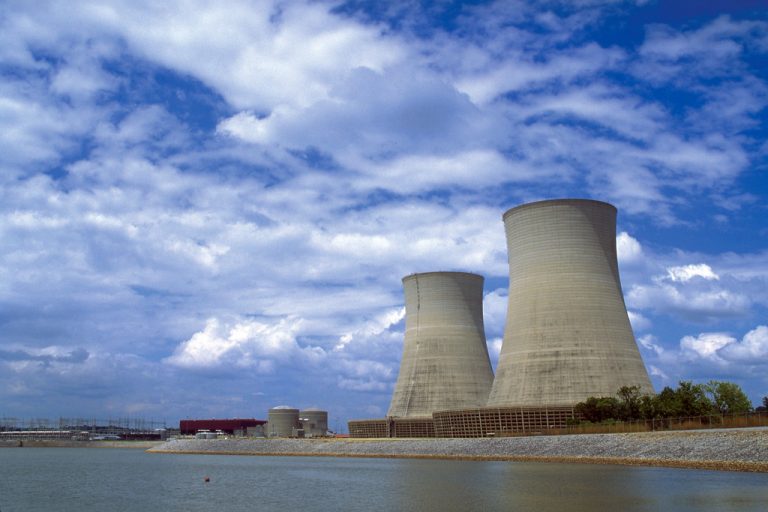
Salem, Cabell said, is “perfect” for data center development because it already hosts industry on a mass scale. Twin nuclear cooling towers poke up from the Susquehanna Steam Electric Station power plant. There are power lines, a natural gas-fired power plant, and pipelines.

What the township already has experienced, in Cabell’s view, is “nuclear towers and industrialization and noise and dirt and having spent nuclear rods stored in the middle of the township.”

Fogg, the township supervisor, described residents’ general reaction to the idea of data centers as, “You hear people say they love them. You hear people say them hate them.”

In the portion of the township with the QTS project outline, a rural road leads past a long series of empty homes, with yards that are weedy and overgrown, mailboxes hanging open, and windows boarded shut.

Cabell confirmed statements from multiple sources that in the newest initiative, property owners have agreed to options that could lead to sales of their properties for $250,000 an acre and an additional $1 million for the house.

Some residents say they love the countryside with its woods and deer, and an occasional bear rooting through the garbage, but the money is amazing. And, nobody wants to live alone next to a data center.

Township resident Laura Rinehimer, the 68-year-old retired owner of a gift shop in nearby Berwick, said “they are not forcing anyone to sell.” Her husband had an excavating business for years and so they are not hard-pressed for money, but the money from the sale of their 30-plus acres and their house will be a “nest egg,” Rinehimer said.

Lewis Canouse, a 68-year-old retiree of the logistics industry, splits his time between a home in the Philadelphia region and a Salem Township property. “The money is generational. It is enough for my children, my grandchildren, and my grandchildren’s grandchildren,” Canouse said of the potential purchase of his property. “Everybody’s moving. I’ll buy something else around here.”

Sixty-four-year-old Tammy Laubach, another neighbor, has lived in her home with her family for 36 years.

She doesn’t want to live next to a data center. But it appears everyone else will be selling their properties, she said, leaving the prospect of being a neighbor to the new industrial site.

“What can we do?” Laubach said.

Intelligence Report Says Israel Will Sabotage Trump’s Peace Deal

(José Niño, Headline USA) U.S. spy agencies warned the Trump administration that Israeli Prime Minister Benjamin Netanyahu will probably undermine President Donald Trump’s pursuit of a durable peace agreement with Iran, the Washington Post reported.

Analysts determined that Netanyahu confronts powerful domestic political forces pushing him to sustain military action against Hezbollah in Lebanon, a course that would breach a fundamental requirement of the nascent accord calling for a cessation of fighting there.

According to the Post, Israeli warplanes struck targets throughout southern Lebanon on Friday following a Hezbollah drone assault that claimed four Israeli soldiers’ lives. The escalation caused U.S. and Iranian diplomats to delay negotiations set for Switzerland. Vice President JD Vance scrapped his planned trip to head the American delegation.

At a Wednesday press conference in France unveiling the U.S. and Iran “memorandum of understanding,” Trump conceded tensions with his Israeli counterpart. The president said he has a “little dispute over Lebanon” with Netanyahu and urged the Israeli leader to not “knock down a building every time somebody walks into it that’s from Hezbollah.”

The classified assessment found that Netanyahu’s political fortunes hinge on proving to domestic audiences that he refuses to pull forces from Lebanon and intends to intensify operations against Hezbollah, a U.S. official with knowledge of the report told the Post.

A May survey conducted by the Institute of National Security Studies found that 70 percent of Jewish Israelis favor stepping up military action against Hezbollah.

Members of the Israeli cabinet offered no sign of backing down. “For every tear shed by an Israeli mother, a thousand Lebanese mothers should cry. All of Lebanon should burn,” National Security Minister Itamar Ben Gvir wrote on social media Friday.

Danny Citrinowicz, who previously served as an Israeli military intelligence analyst and now works at the Institute for National Security Studies, warned that Netanyahu courts “huge friction” with Trump. The American president initiated the war against Iran on February 28 after Netanyahu pushed for it. That conflict has drained tens of billions of dollars from U.S. coffers, driven global fuel prices higher, and resulted in 13 American military deaths.

“Bibi’s in a very tough situation,” Citrinowicz said. “He’s seeing his greatest rival, the Iranian regime, being strengthened by the U.S. administration—and he cannot do anything about it.”

The White House pushed back sharply. “Donald J. Trump is the only head of state in the entire world who is sympathetic to the nation of Israel at this moment in time, and he happens to be the head of state of the world’s superpower,” Vice President Vance told reporters Thursday. “If I was in the cabinet of the Israeli government, I might not be attacking the only powerful ally that I have anywhere left in the entire world.”

Netanyahu refused to budge. “We will stay in the Lebanon security buffer zone for as long as necessary,” he told journalists in Jerusalem. On some issues, “we see less eye to eye,” he said about his dealings with Trump.

The Israel Defense Forces presently control over 200 square miles of Lebanese land and have forced more than one million people from their homes. Lebanese officials report that over 3,000 individuals have perished since military operations commenced in mid-March.  

José Niño is the deputy editor of Headline USA. Follow him at x.com/JoseAlNino 

DOJ Announces 455 Indictments in Connection to Billions in Alleged Fraud

(Sarah Roderick-Fitch, The Center Square) The U.S. Department of Justice announced Tuesday that 455 people have been indicted for alleged health care fraud, believed to cost taxpayers over $6.5 billion.

Acting Attorney General Todd Blanche said the defendants spanned 45 states and territories.

“These individuals participated in health care fraud schemes involving over $6.5 billion in false claims submitted to Medicare, Medicaid and other health care programs,” Blanche said during a press conference.

The acting attorney general highlighted a corporate executive in Arizona accused of fraud involving over $1 billing “involving unnecessary wound grafts.” He added that the alleged “scheme” cost taxpayers over $1 million “per patient in total.”

“Our indictment charges 11 defendants for over $2 billion in fraud and fraudulent claims in connection to alleged would care schemes. The indictment also alleges that these individuals then used the taxpayer money to bankroll multi-million-dollar homes, luxury vehicles,” said Blanche.

In addition, the defendant has been accused of using the money to purchase expensive jewelry and funding the construction of a $4.6 million beach resort in the Philippines.

Health and Human Services Secretary Robert F. Kennedy, Jr., described how HHS is tracking down fraudsters.

“We are deploying advanced artificial intelligence and data analytics to identify fraudulent billing patterns in real time, stop improper payments before they occur, and strengthen oversight across federal health programs. Our objective is straightforward: stop the fraud before it happens,” said Kennedy.

FBI Director Kash Patel said that in the last two weeks alone, “perpetrators and criminals who have been arrested and apprehended from around the world, totaling over six and seven billion dollars in fraud in money stolen from the American people.”

The investigations stem from the White House Anti-Fraud Task Force, with support from the DOJ, FBI, HHS, the Office of Inspector General, and the Centers for Medicare & Medicaid Services.

Trump Administration Announces $17.5 Billion in Loans for 10 New Large Nuclear Reactors

(Headline USA) The Trump administration is providing $17.5 billion to speed the development of 10 new large nuclear reactors to meet the skyrocketing power demand from massive data centers.

Energy Secretary Chris Wright cited “tremendous interest” among developers of data centers that would buy the power, as well as utilities and energy companies. The nuclear plants could begin construction by 2030 and become operational in the mid-2030s, Wright and other officials said Tuesday.

“This is the start,” Wright said on a call with reporters. “We’re going to move with the players that are ready to stand up and move quickly. Once that supply chain is up and running, do we think there will be dozens of these built going forward? I’d be very surprised if there were not.”

Most U.S. nuclear power plants were built between 1970 and 1990. Only two new large reactors have been built from scratch in the United States in recent decades. Those two reactors, at Georgia Power Co.’s Plant Vogtle, were completed years late and billions of dollars over budget. The 10 new reactors will use the same design, Westinghouse’s AP1000.

Wright said the Plant Vogtle project struggled because of bad planning, supply chain problems and the COVID-19 pandemic. But, he said, the reactor design is “robust and sound.”

“By building in volume and at multiple locations, we think we will create and stand up a large supply chain and build a lot of construction expertise,” Wright said. “We expect the timing and cost of these plants to well outperform what was done on Vogtle.”

Seven utilities and energy companies signed letters of intent that identified sites, the Energy Department said. The agency plans to pick five, which would host two reactors at each site. The federal financing would be used to purchase nuclear components with long lead times, and are not construction loans.

The department declined to name the utilities involved or the states they are in, calling it premature until the selections are made. It did not give a timeline for making those selections.

President Donald Trump set a goal of quadrupling domestic production of nuclear power within the next 25 years, and he has signed executive orders to speed development. The administration is working to advance new nuclear technologies, such as small modular nuclear reactors.

Dan Sumner, president and chief executive officer of Westinghouse, said industrialized nuclear power needs to be built at fleet scale, in order for the United States to lead in artificial intelligence, advanced manufacturing and the industries that will define the next century.

Critics of building more nuclear reactors say they’re too expensive and riskier than other low-carbon energy sources. Several states restrict or ban new nuclear power plant construction.

Travis Fisher, director of energy and environmental policy studies at the libertarian Cato Institute think tank, said the Energy Department has the authority to issue these loan guarantees, but he doesn’t think the executive branch should be so heavily involved in the electricity sector.

If the past is any indication, the next administration will use similar authorities to favor a different set of energy resources, he added. “Remove the state barriers and the federal favoritism and let companies build the power plants that pass the market test,” Fisher wrote in an e-mail Tuesday.

Data centers used 4% to 5% of the nation’s total electricity in 2024, a share that could nearly triple by 2028, according to government estimates. Some analysts predict nationwide electricity use to rise as much as 20% in the next decade, with data centers a big reason.

The Energy Department said the loans could speed up the development of these 10 reactors by up to three years and lower construction costs. Its goal is for all 10 to be under construction by 2030, to start providing power in the mid-2030s.

The utilities and Westinghouse will be expected to contribute up to $5 billion in equity in total across the five, two-reactors projects. Wright said his department provides up to $17.5 billion in loans, or $3.5 billion per project, in debt to pair with the equity. He said it’s “very, very low risk to the American taxpayers.”Adapted from reporting by the Associated Press

8 Convicted in Texas Immigration Center Shooting and Protest are Sentenced to Decades in Prison

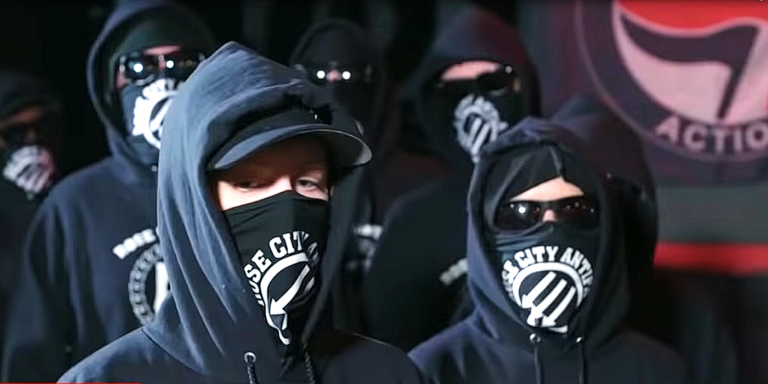
(Headline USA) Eight protesters accused by the Justice Department of having ties to antifa were sentenced Tuesday to decades in federal prison over a shooting outside a Texas immigration detention center that wounded a police officer and prosecutors called an act of terrorism.

One of the defendants, a former U.S. Marine Corps reservist convicted of opening fire during the July 4 demonstration outside the Prairieland Detention Center near Dallas, was sentenced to 100 years in prison, the maximum punishment.

The lengthy sentences were condemned by family members and supporters in a news conference outside the federal courthouse in Fort Worth. Hope Song, whose son Benjamin Song received the heftiest sentence, disputed prosecutors’ claims that her son shot the officer and said he didn’t intend to hurt anyone.

U.S. District Judge Reed O’Connor, one of two judges overseeing the proceedings, said what happened wasn’t a protest but “an assault on democracy.”

“The need to deter this type of conduct is high,” O’Connor said.

The seven other protesters received prison terms ranging from 30 to 70 years.

Prosecutors said the eight are members of antifa, a decentralized anti-fascist organization and a target of the Trump administration. Antifa is not a single organization but rather an umbrella term for far-left militant groups that confront or resist neo-Nazis and white supremacists at demonstrations.

President Donald Trump last fall signed an executive order designating antifa a domestic terrorist organization, even though there is no domestic equivalent to the State Department’s list of foreign terror organizations.

The defendants deny any affiliation with antifa and maintain they attended the demonstration in support of detained immigrants.

Prosecutor Frank Gatto urged the judge to impose stiff penalties.

“People with that kind of extremist beliefs need extra time in prison,” Gatto said. “They believe violence is justified.”

Phillip Hayes, Song’s attorney, said outside the courthouse that he takes issue with the idea that the protesters are extremists.

“This is a bunch of kids and young adults who really have a really big heart and really wanted their voice to be heard,” Hayes said. “It was never intended that anybody get hurt. It was never intended that any shots would be fired.”

Prosecutors said in court that Song had yelled “get to the rifles” and opened fire, striking a police officer who had just pulled up to the center.

Hayes argued that Song’s shots were “suppressive fire” and that a ricochet bullet hit the officer after he arrived on the scene and “aggressively” pulled out his firearm. He said his client will appeal the 100-year sentence.

“Song, aside from this day, has had an impeccable life. A former Marine. A good student,” Hayes said. “He had a lot of good qualities that were just ignored. The judge went ahead and gave as much as he could.”

Other defendants and their family members pleaded for leniency in court.

Autumn Hill said the gathering “seemed more like a party to me than anything else” and that she and others who participated “didn’t expect or want any violence or destruction of property to occur.”

Amber Lowrey told the judge that her sister, Savanna Batten, is a compassionate person with dreams of opening a bakery. She said Batten’s activism started with animal rights and evolved into anti-war and human rights advocacy.

“She’s the best person I know,” Lowrey said.

Hill and Batten both received 50-year sentences.

Other defendants previously pleaded guilty to providing material support to terrorists rather than take their case to trial.

Critics warn the case could have wide-reaching impact on protests given that organizations operating within the U.S. are supposed to be protected by First Amendment free-speech rights.

Last week, federal prosecutors charged 15 people with impeding the Trump administration’s immigration crackdown in Minnesota. They claimed the demonstrators were members of antifa who conspired against the federal government to block arrests and deportations by setting up blockades around government buildings and throwing chunks of ice at federal vehicles, among other actions.

Adapted from reporting by the Associated Press


DOJ Seeks 77 Years of Prison for Satanic Pedophile Exposed by Headline USA

(Ken Silva, Headline USA) The Justice Department has asked a judge to sentence Satanic pedophile cultist Kyle Spitze to 77 years in prison for heinous crimes against young girls—crimes that were exposed by Headline USA in February 2024, when Spitze was still a free man.

Spitze is set to be sentenced this Monday after striking a deal with the DOJ last December—agreeing to plead guilty to four of the eight crimes he was originally charged for. Part of his plea agreement entails him admitting that he committed his crimes with a terroristic purpose in mind.

Headline USA first reported on Spitze in February 2024, before Kyle had been arrested. This publication had received information that Kyle—who had recently achieved internet fame when a video of his mom’s boyfriend shooting him went viral—was involved in the Satanic pedophile cult “764.”

According to a DOJ sentencing memorandum filed last week, the FBI was hot on Spitze’s trail at the time of this publication’s initial reporting. The June 15 sentencing memo says that the online messaging platform Discord provided the FBI with a 29-page report in December 2023 on “Harm Nation”—a group similar to 764 that was operating on Discord. Spitze’s Discord account name, “CRIMINALOLI,” was listed in Discord’s report.

While the FBI was working to confirm that the “CRIMINALOLI” Discord account belonged to Spitze, he called worldwide attention to himself in early 2024 by posting the video of his mom’s boyfriend shooting him in the ear. Spitze then accepted an interview on the show CourtTV. When the interview went online, “numerous comments on YouTube identified the defendant as a pedophile,” the DOJ’s sentencing memo says.

Spitze then called more attention to himself when he posted a video of his mother Melanie Spitze, after finding her dead in a hotel room—as first reported on Twitter by the online researcher “Bx.”

Headline USA reported those and other details about Spitze on Feb. 3, 2024. He was arrested about a month later.

According to the DOJ’s sentencing memorandum, Spitze posted the video of his dead mother online—but never called 911 about it.

“Police were eventually called to the scene by the defendant’s father and his mother’s co-worker,” the sentencing memo says. “At least one additional person contacted law enforcement after seeing the graphic videos the defendant posted online. The defendant never called 911 to report his mother’s death.”

The sentencing memorandum also details Spitze’s crimes, which were estimated to be over 30. Only 19 have been identified so far, while two of them have committed suicide, according to the DOJ.

“Both killed themselves after the defendant contacted them from jail. The final proof needed that they would never be rid of his evil. The raw vulnerability they must have felt knowing their terrorizer could reach them even from jail,” the DOJ’s memorandum says.

“The defendant made each victim believe she was the defendant’s only girlfriend, or in some way special to him, over the other girls on the channel. Those who provided CP and self-harm content as demanded by the defendant were rewarded with attention and praise. The victims who did not comply with the defendant’s content demands knew they would be threatened and extorted using techniques such as swatting, doxing and publishing their CP,” the memo says.

Additionally, the memo says Spitze made moves to join an Aryan Nation prison gang while in jail.

The DOJ’s sentencing memo, written by Assistant U.S. Attorney Jennifer Kolman, ended with a flourish—and a warning to other members of groups like 764.

“Congratulations, you have our attention! … Society is aware that you made sport of placing young minors in your own special ‘hell’ simply for the crime of being an insecure teenaged girl. You will receive a sentence that reflects the seriousness of your crimes!” the memo concludes.

Meanwhile, Spitze’s father, Michael Spitze—whom Headline USA interviewed for its original February 2024 article—is serving a 70 month sentence for tampering with some of his son’s victims.

Ken Silva is the editor of Headline USA. Follow him at x.com/jd_cashless.

Georgia the Latest Country to Join the Central Bank Gold Rush

(Mike Maharrey, Money Metals News Service) Georgia has joined the growing list of countries expanding their gold reserves.

Last month, the National Bank of Georgia (NBG) purchased $100 million in gold. At the average gold price in May, that amount would buy approximately 22,000 ounces (0.7 tonnes) of gold.

The purchase boosted the eastern European nation’s gold reserves to nearly 8 tonnes, valued at $7 billion. Gold now makes up 15.5 percent of Georgia’s total monetary reserves.

The National Bank of Georgia President Natia Turnava said the central bank plans to purchase an additional $500 million in gold with the goal of raising gold’s share of reserves to 25 percent.

In a statement, Georgian central bank officials said the expansion of gold reserves was designed to diversify its reserve assets, enhance stability, and safeguard reserves against inflationary risks.

“Monetary gold is a reserve asset widely recognized by central banks around the world, which helps to increase the resilience of the portfolio to geopolitical risks and reduce risks.”

While it didn’t say so directly, the reference to stability and inflation risks was almost certainly directed toward the U.S. dollar.

Georgia’s accumulation of gold is part of a broader global de-dollarization effort. As the Financial Times recently reported, “The shifting composition of reserve assets — highly liquid holdings that central banks use to support their currencies, meet international payment obligations and provide liquidity in times of financial turmoil — reflects an attempt by many countries to seek alternatives to the U.S. dollar, the world’s de facto reserve currency.”

The Times noted that de-dollarization has accelerated since 2022, when the U.S. and its Western allies aggressively sanctioned Russia and effectively locked it out of the global SWIFT payment system after the invasion of Ukraine. This weaponization of the dollar has made some countries wary of holding dollar-denominated assets.

The NBG’s statement noted that central bank demand has been largely inelastic to fluctuations in the gold price and has provided strong support for the broader market.

“The ongoing conflict in Ukraine, escalation in the Middle East, U.S.-China trade tensions, and the U.S.-Iran conflict that erupted in February 2026 have all consistently driven and reinforced a structural risk premium in gold prices, cementing its value as a premier safe-haven asset.”

The pace of central bank purchases moderated in 2025 but remained far above the recent historical average. Official net full-year buying came in at 863.3 tonnes. That was down 21 percent year-on-year, charting the lowest level since 2021.

However, while central bank gold purchases declined last year, they remained well above the 2010-2021 annual average of 473 tonnes.

To put that into context, central bank gold reserves increased by an average of just 473 tonnes annually between 2010 and 2021.

Last year was the fourth-largest expansion of central bank gold reserves on record. The all-time high was set in 2022 (1,136 tonnes). It was the highest level of net purchases on record, dating back to 1950, including since the suspension of dollar convertibility into gold in 1971.

According to the Financial Times, central banks globally hold 36,000 tonnes of gold. That is nearly as much as the peak of the Bretton Woods era, when the dollar was tied to gold (38,000 tonnes).


Mike Maharrey is a journalist and market analyst for Money Metals with over a decade of experience in precious metals. He holds a BS in accounting from the University of Kentucky and a BA in journalism from the University of South Florida.

Chinese Gold Imports Hit Two-Year High in May

(Mike Maharrey, Money Metals News Service) Chinese gold imports surged to the highest level in two years last month despite sagging prices and cooling demand.

According to the latest customs data, China imported 163 tonnes of gold in May. The last time we saw imports at that level was March 2024.

Since the beginning of the year, China has imported 692 tonnes of the yellow metal. That represents a 76 percent increase from the same period last year.

A new import licensing scheme went into effect on June 1. The new rules will ease some regulations on certain banks. Analysts say the surge in imports could be partly due to banks using up their existing quotas before the new system goes into effect.

Investment buying is currently the primary driver of gold demand in China. Guangzhou Southern Gold Market Academy research analyst Song Jiangzhen told Bloomberg that demand for physical bullion bars and inflows of metal into gold accumulation plans are supporting demand. Accumulation plans, such as the monthly purchase plan at Money Metals, allow investors to buy gold incrementally with regular monthly payments.

Chinese buying helped push gold bar and coin demand to a 12-year high of 1,374.1 tonnes last year. In value terms, global bar and coin demand was a record-breaking $154 billion.

More than half of last year’s global coin and bar demand came from two countries – China and India.

The surge in Asian investment demand helped drive prices to record levels in January. It has since cooled as inflation fears and higher interest rate expectations have created headwinds for the gold market. The Shanghai Gold Benchmark Price dropped 2.7 percent last month, as yuan strength exacerbated the general downward trend in gold prices.

According to the World Gold Council, “Sustained local equity market strength diverted investor interest away from gold. And the lack of a clear gold price trend prompted some to sell their gold ETF holdings.

Chinese ETFs reported their first outflows since August 2025 last month, and there was a 38 percent decrease in gold withdrawals from the Shanghai Gold Exchange, reflecting wholesale demand. This was generally viewed as a seasonal decline.

However, the People’s Bank of China took advantage of the lower price to add 10 tonnes of gold to its official reserves, the largest monthly increase since December 2024.

The Chinese central bank is also known to be buying a significant amount of gold off the books.


Mike Maharrey is a journalist and market analyst for Money Metals with over a decade of experience in precious metals. He holds a BS in accounting from the University of Kentucky and a BA in journalism from the University of South Florida.