Reports: Islamic Terrorist Incidents Increased under Biden

() Islamic terrorist incidents increased under President Joe Biden, according to several reports, as a majority of Americans polled say terrorism dangers increased under his watch.

“The number of Islamist terrorist incidents targeting the United States increased in 2024 after several years of reduced activity, with federal and state authorities arresting individuals in seven different incidents on charges related to five unsuccessful plots and two actual attacks,” said an analysis published by the Anti-Defamation League.

The analysis was not all inclusive. It excluded several incidents, such as authorities stopping a 9/11-style terrorist attack plotted by a Lebanese man in Houston, and terrorist threats related to ISIS and Hamas posed by those in Canada, the Center Square first reported.

The ADL’s Center on Extremism claims to track Islamic-related terror incidents, reporting six in the U.S. between 2021 and 2023. It cites examples of authorities arresting potential terrorists for providing material support to Islamic terrorist groups, traveling overseas to join them, or plotting an attack against Americans.

In 2024, ADL identified seven Islamic-related terrorist incidents. Three of the most recent occurred in October—in Illinois, Arizona and Oklahoma.

On Oct. 26, authorities in Chicago arrested 22-year-old Sidi Mohammed Abdullahi after he shot a Jewish man on his way to synagogue, stayed at the scene and proceeded to shoot at responding officers and emergency personnel.

Before he shot at police, he was reportedly recorded on video shouting “Allahu Akbar.” At a detention hearing last month, prosecutors said he’d identified several synagogues and Jewish schools to target.

Abdullahi illegally entered the country in March 2023 from Mauritania, West Africa. He was processed by Border Patrol agents in the U.S. Customs and Border Protection San Diego Sector, and was released into the country under the Biden administration’s “catch and release” policy.

President-elect Donald Trump has vowed to end the policy on his first day in office. The policy, as well as multiple Biden administration-created parole programs, have been linked to illegal foreign nationals who committed violent crimes against Americans.

Had Abdullahi not been released into the country, the shooting would not have occurred, critics argue.

On Oct. 18, in Peoria, Arizona, authorities arrested a 17-year-old male for allegedly plotting an ISIS-inspired attack against attendees at the Phoenix Pride parade. He allegedly planned to use an explosive remote-controlled drone.

He was charged as an adult with the class 2 felonies of terrorism and conspiracy to commit terrorism.

On Oct. 7, the one-year anniversary of the Hamas terrorist attacks against Israel, federal authorities in Oklahoma City arrested an Afghan national released into the U.S. by the Biden administration for plotting a 9/11-style Election Day terrorist attack on American soil, the Center Square reported.

He was allegedly affiliated with ISIS’s subsidiary in Afghanistan and Pakistan, ISIS-K; two of his brothers were arrested on similar charges by French authorities.

In September, a Pakistani national was arrested by Canadian authorities for attempting to illegally enter the U.S. He reportedly planned a mass shooting targeting Jews in New York in support of ISIS, claiming it would be the “largest attack on U.S. soil since 9/11.”

He was indicted in New York and charged with one count of attempting to provide material support and resources to a designated foreign terrorist organization.

Also in New York, in August, a Pakistani national with close ties to Iran was arrested for attempting to “commit an act of terrorism transcending national boundaries and murder-for-hire as part of a scheme to assassinate a politician or U.S. government official on U.S. soil.”

He was indicted in September for his alleged murder-for-hire plot “straight out of the Iranian regime’s playbook,” said FBI Director Christopher Wray.

In July, federal authorities arrested a Jordanian national in Orlando. In August, he was indicted on four counts of threatening to use explosives and one count of destruction of an energy facility. According to court documents, he targeted and attacked Orlando area businesses for their perceived support of Israel.

The report comes as a recent Rasmussen Reports survey found that many Americans believe that danger related to terrorism increased under Biden.

The majority, 59%, said the U.S. is likely to be the target of a major terrorist attack under Trump’s term; 24% said it’s very likely.

It also comes as the greatest number of individuals on the U.S. terrorist watch list have been apprehended by U.S. authorities at the northern border, more than 1,200, the greatest number in U.S. history of any administration, the Center Square first reported.

While the Biden administration has never acknowledged the record number of illegal border crossers or terrorist threats coming from Canada, Trump has already made demands that Canada increase its border security.
Bill Clinton Denies Hunter Biden Pardon Is Similar to Roger Clinton Pardon

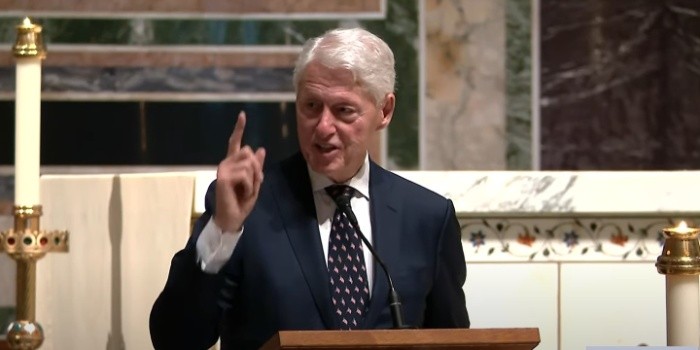
(Headline USA) Former President Bill Clinton insisted this week that his pardon of his half-brother Roger Clinton was in no way comparable to President Joe Biden’s pardon of his embattled son, Hunter Biden.

Speaking at the New York Times Dealbook Summit this week, Clinton partially defended Joe Biden’s decision to grant Hunter Biden a sweeping pardon that covers all criminal behavior Hunter Biden may have engaged in since 2014, including the tax and gun crimes he was convicted of this year.

“I personally believe that the president is almost certainly right that his son received completely different treatment than he would have if he hadn’t been the president’s son, in this kind of case,” Clinton said.

However, while Clinton clarified he was not “directly criticizing” Joe Biden, he rejected the argument that Biden’s pardon was in line with past precedent, including Clinton’s decision in 2001 to pardon Roger Clinton, who was sentenced to more than a year in prison after pleading guilty to selling cocaine to an undercover police officer. 

“My brother did 14 months in federal prison for something he did when he was 20,” he said.

Clinton added that his reasoning wasn’t motivated by keeping Roger Clinton from facing additional consequences, but by questions of whether his younger half-brother would “ever be able to vote again? Will he ever be able to have normal citizenship responsibilities?” Clinton explained.

When asked if Biden’s pardon of Hunter would hurt Democrats’ standing, Clinton brushed off that concern.

“We had a lot better record than Republicans did, didn’t we? And what good did it do us?” he said. “I mean, nobody believes anybody anymore.”

Several Democrats, including leftist California Gov. Gavin Newsom, have broken with Joe Biden over the pardon, argued it could have long-term consequences.

The White House, however, has continued to defend the pardon.

“Hunter was singled out, and because his last name was Biden, because he was the president’s son. That’s what we saw,” White House press secretary Karine Jean-Pierre said on Monday. “And so the president believed enough is enough, and the president took action, and he also believes that they tried to break his son in order to break him.”

Bezos Says He Is ‘Optimistic’ About Trump’s De-regulatory Agenda

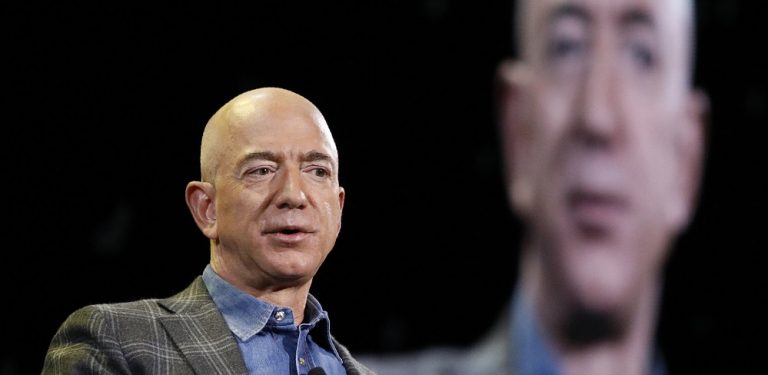
(Headline USA) Amazon founder and billionaire Jeff Bezos told big-wig investors this week that he is “optimistic” about President-elect Donald Trump’s agenda, specifically Trump’s plan to cut regulations throughout the federal government.

“I’m very hopeful—he seems to have a lot of energy around reducing regulation,” Bezos said during the New York Times Bookdeal Summit. “My point of view is, if I can help him do that, I’m going to help him. Because we do have too much regulation in this country.”

Though he didn’t directly cite Trump’s proposed Department of Government Efficiency, which will be led by tech mogul Elon Musk and former GOP presidential candidate Vivek Ramaswamy, Bezos added it’s clear Trump is “serious” about cutting government bloat.

“I think he has a good chance of succeeding,” Bezos said.

Bezos, who also owns the Washington Post, was later pressed on his decision to prevent the liberal publication from endorsing Vice President Kamala Harris ahead of the 2024 election.

“It was the right decision,” Bezos said. “I’m proud of the decision we made, and it was far from cowardly because we knew there would be blowback. We did the right thing.” 

When asked whether he was worried Trump might try to target leftist media outlets such as the Post, Bezos said he would ‘try and talk him out of that.” Bezos also admitted Trump has “grown” since the last time he was in office.

“I don’t think he’s going to see it the same way. Maybe I’ll be wrong,” Bezos said. “What I’ve seen so far is he is calmer than he was the first time. And more confident, more settled.”

Bezos wasn’t the only tech mogul who previously opposed Trump only to turn around and express support for the Republican president.

Meta CEO Mark Zuckerberg was also reportedly “keen to play an active role” in tech policy for the incoming Trump administration.

Fani Willis Forced to Turn Over Correspondence w/ Jack Smith, Jan. 6 Committee

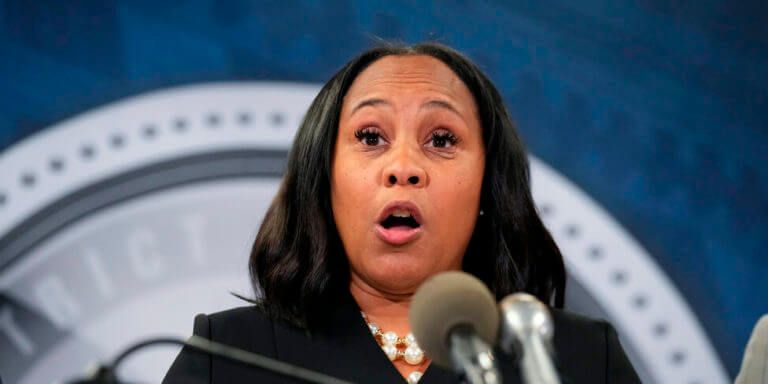
(Fulton County District Attorney Fani Willis must turn over to Judicial Watch any records relating to her correspondence with House Democrats’ partisan Jan. 6 committee or corrupt special prosecutor Jack Smith, a judge ruled Tuesday.

The case brought by the good-government watchdog organization focused on Willis’s lawfare against Trump and 18 others, whom she claimed were part of a racketeering conspiracy to overturn the highly dubious and disputed outcome of the 2020 election in Georgia.

Investigations by the state Board of Elections subsequently found serious irregularities in Fulton County that likely swung the razor-thin advantage in favor of President Joe Biden and two Democratic senators, effectively flipping the historically red state.

Willis, a George Soros-backed prosecutor, campaigned on a “Get Trump” platform during the 2020 election and found the so-called evidence she needed to prosecute in a private phone call between Trump and Georgia Secretary of State Brad Raffensperger that occurred the day after she was sworn into office.

However, her case crumbled after focus shifted to her own ethical scandals, including an illicit affair with one of her lead prosecutors and allegations that the pair had inappropriately embezzled funds for personal expenses. Willis and her ex-lover, Nathan Wade, were also accused of colluding inappropriately with Democrats at the national level on the politically charged prosecutions.

In its open-records case, Judicial Watch initially asked for the documents in August 2023. Fulton County claimed there were no documents, according to a news release.

Judicial Watch sued Willis in March. Fulton County Superior Court Judge Robert McBurney ordered Willis’s office to turn over the documents and awarded Judicial Watch attorney’s fees. A hearing on the fees is scheduled for Dec. 20.

McBurney also gave Willis’s office five days to hand over the correspondence.

Meanwhile, Fulton County Superior Court Judge Shukura Ingram heard a second case related to Willis’s lawfare against Trump—the challenge of a Georgia Senate subpoena of Willis—but did not indicate on Tuesday when she would rule on the subpoena.

Former Gov. Roy Barnes, in Tuesday’s hearing, claimed the subpoena of Willis from the Senate Special Committee on Investigations violated the state constitution.

The committee is tasked with determining if tax dollars were fraudulently used in President-elect Donald Trump prosecution.

Senate Resolution 465 alludes to a relationship between Willis and Wade that “would constitute a clear conflict of interest and a fraud upon the taxpayers of Fulton County and the State of Georgia.”

Willis did not respond to a subpoena from the committee to appear on Sept. 13 and challenged the case in court.

Barnes, representing Willis, told Ingram that the committee did not have the power to issue a subpoena. Subpoena power requires the agreement of both bodies of the General Assembly under the state’s constitution, according to Barnes.

“You can investigate until the cows come home, but you can’t subpoena anybody,” Barnes said. “There’s a reason. And you know what the reason was because from time to time one body of the General Assembly could go crazy.”

Josh Belinfante, representing the Senate, refuted Barnes’s claims that the resolution was made at the “behest” of Trump, noting that there were nine committee members and that the resolution focused on hiring practices for assistant district attorneys.

“The General Assembly has looked at similar things in the past,” Belinfante said, citing previous legislative action that scrutinized the hiring of special district attorneys on contingency.

Bitcoin Tops $100,000 with Trump-Election Crypto Rally Rolling on

(Headline USA) Bitcoin topped $100,000 for the first time as a massive rally in the world’s most popular cryptocurrency, largely accelerated by the election of Donald Trump, rolls on.

The cryptocurrency officially to rose six figures Wednesday night, just hours after the president-elect said he intends to nominate cryptocurrency advocate Paul Atkins to be the next chair the Securities and Exchange Commission.

Bitcoin has soared since Trump won the U.S. presidential election on Nov. 5.

The asset climbed from $69,374 on Election Day, hitting as high as $103,713 Wednesday, according to CoinDesk.

Just two years ago, bitcoin dropped below $17,000 following the collapse of crypto exchange FTX.

Bitcoin fell back closer to $103,000 early Thursday, but futures are up more than 4%.

Even amid a massive rally that has more than doubled the value of bitcoin this year, some experts continue to warn of investment risks around the asset, which has quite a volatile history.

Here’s what you need to know.

Back up. What is cryptocurrency again?

Cryptocurrency has been around for a while now. But, chances are, you’ve heard about it more and more over the last few years.

In basic terms, cryptocurrency is digital money. This kind of currency is designed to work through an online network without a central authority—meaning it’s typically not backed by any government or banking institution—and transactions get recorded with technology called a blockchain.

Bitcoin is the largest and oldest cryptocurrency, although other assets like ethereum, tether and dogecoin have also gained popularity over the years.

Some investors see cryptocurrency as a “digital alternative” to traditional money, but the large majority of daily financial transactions are still conducted using fiat currencies such as the dollar.

Also, bitcoin can be very volatile, with its price reliant on larger market conditions.

Why is bitcoin soaring?

A lot of the recent action has to do with the outcome of the U.S. presidential election.

Trump, who was once a crypto skeptic, has pledged to make the U.S. “the crypto capital of the planet” and create a “strategic reserve” of bitcoin.

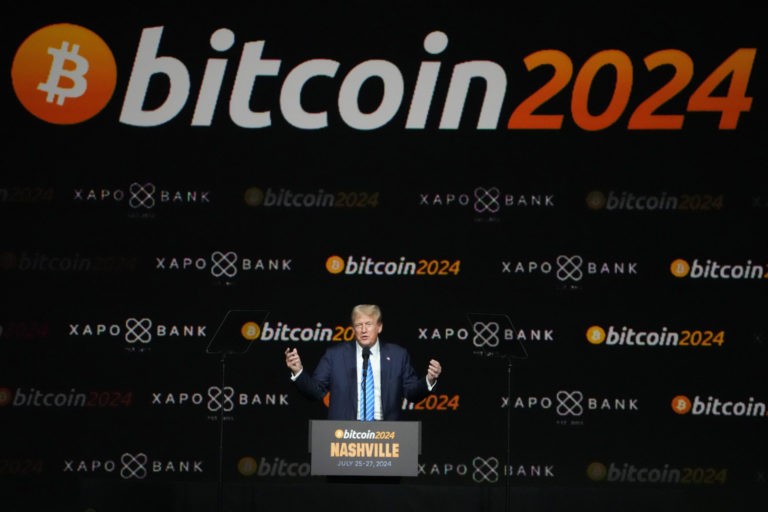
His campaign accepted donations in cryptocurrency and he courted fans at a bitcoin conference in July. He also launched World Liberty Financial, a new venture with family members to trade cryptocurrencies.

On Thursday morning, hours after bitcoin surpassed the $100,000 mark, Trump congratulated “BITCOINERS” on his social media platform Truth Social. He also appeared to take credit for the recent rally, writing, “YOU’RE WELCOME!!!”

Crypto industry players welcomed Trump’s election victory last month, in hopes that he would be able to push through legislative and regulatory changes that they’ve long lobbied for—which, generally speaking, aim for an increased sense of legitimacy without too much red tape.

Trump made a move in that direction Wednesday when he said he intends to nominate Paul Atkins to chair the Securities and Exchange Commission.

Atkins was an SEC commissioner during the presidency of George W. Bush.

In the years since leaving the agency, Atkins has made the case against too much market regulation. He joined the Token Alliance, a cryptocurrency advocacy organization, in 2017.

Under current chair Gary Gensler, the SEC has cracked down on the crypto industry, penalizing a number of companies for violating securities laws.

But he’s also faced criticism from industry players in the process, like the chief legal officer of Robinhood, who described Gensler’s approach toward crypto as “rigid” and “hostile.” Gensler will step down when Trump takes office.

One crypto-friendly move the SEC did make under Gensler was the approval in January of spot bitcoin ETFs, or exchange trade funds, which allow investors to have a stake in bitcoin without directly buying it.

The Spot ETFs were the dominant driver of bitcoin’s price before the election—but, like much of the crypto’s recent momentum, saw record inflows postelection.

What are the risks?

History shows you can lose money in crypto as quickly as you’ve made it. Long-term price behavior relies on larger market conditions. Trading continues at all hours, every day.

At the start of the COVID-19 pandemic, bitcoin stood at just over $5,000.

Its price climbed to nearly $69,000 by November 2021, during high demand for technology assets, but later crashed during an aggressive series of rate hikes by the Federal Reserve. And the late-2022 collapse of FTX significantly undermined confidence in crypto overall, with bitcoin falling below $17,000.

Investors began returning in large numbers as inflation started to cool—and gains skyrocketed on the anticipation and then early success of spot ETFs.

But experts still stress caution, especially for small-pocketed investors. And lighter regulation from the coming Trump administration could also mean less guardrails.

“I would say, keep it simple. And don’t take on more risk than you can afford to,” Adam Morgan McCarthy, a research analyst at Kaiko, previously told The Associated Press—adding that there isn’t a “magic eight ball” to know for certain what comes next.

Adapted from reporting by the Associated Press

Call It Expensive-otle: Burrito Chain Jacks Up Prices by 2% to Combat Bidenflation

(Consumers could soon pay more for a burrito at a popular U.S. chain as the company passes on higher food costs due to inflation.

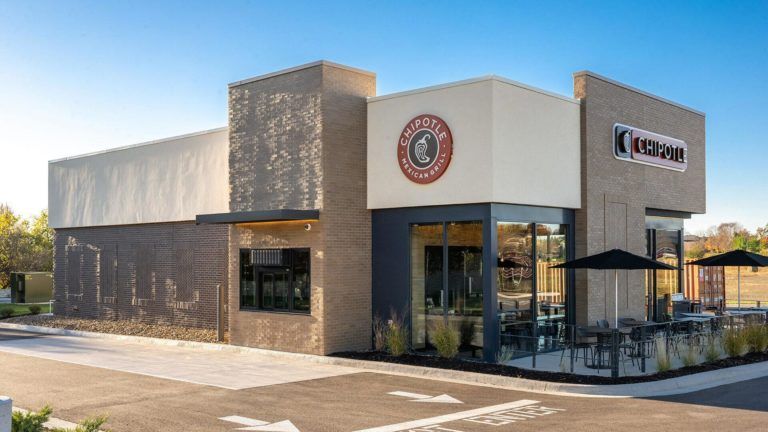
Chipotle Mexican Grill said it would implement a 2% increase at 20% of Chipotle locations to offset inflation.

“For the first time in over a year, we have taken a modest price increase of approximately 2% nationally to offset inflation,” Laurie Schalow, Chipotle’s chief corporate affairs officer, said in a statement to the Center Square.

Schalow made the statement in response to a Truist Securities Financial Group analyst report that noted a 2% increase at 20% of Chipotle locations surveyed.

The decision comes as the casual food chain continues to balance affordability with increasing expenses after Brian Niccol, the company’s previous chief executive officer, left to help rehabilitate coffee giant Starbucks and Scott Boatwright took his place as CEO.

“We have a number of initiatives underway, and I envision significant back-of-the-house changes in the near future that will drive efficiencies and improve the consistency of our culinary in our restaurants,” Boatwright said in an earnings call.

The restaurant chain has already made the leap to automating many of the services that used to be performed by human employees, responding in part to the massive minimum-wage hike enacted this year by California.

The price increase applies to most menu items, although specific costs vary by location.

Chipotle Mexican Grill’s Third Quarter of 2024 saw a 13% increase in total revenue to $2.8 billion compared to the third quarter of 2023. Food, beverage, and packaging costs were 30.6% of total revenue in the third quarter of 2024, an increase from 29.7% in the third quarter of 2023.

The company’s efforts to streamline operations and expand digital ordering come as it faces higher input costs.

According to the USDA, prices for beef and veal were higher than those in October 2023, and the agency predicts that both will increase faster than most other categories in 2024 due to “tight supplies and continued demand,” with a prediction interval of 4.2% to 5.7%.

Ultimately, food away from home rose 3.8% over the last year, according to the U.S. Bureau of Labor Statistics, increasing 28% since the pandemic’s peak.

Representatives for the chain have said the modest price hike is part of the company’s strategy to ensure sustainable growth without significantly impacting customer demand.

Chipotle announced in late November that it anticipates opening 315 to 345 new restaurants in 2025, with 80% featuring a Chipotlane, or drive-thru option.

The fourth quarter and full-year financial results for 2024 are expected to be released on Feb. 4, 2025.

Ammunition Used in CEO’s Killing Had ‘Deny,’ ‘Defend’ and ‘Depose’ Written on It, AP Source Says

(Headline USA) The masked gunman who stalked and killed the leader of one of the largest U.S. health insurance companies outside a Manhattan hotel used ammunition emblazoned with the words “deny,” “defend” and “depose,” a law enforcement official said Thursday.

The official was not authorized to publicly discuss details of the ongoing investigation and spoke to The Associated Press on the condition of anonymity.

UnitedHealthcare CEO Brian Thompson, 50, died in a dawn ambush Wednesday as he walked to the company’s annual investor conference at a Hilton hotel in Midtown, blocks from tourist draws like Radio City Music Hall and the Museum of Modern Art.

The reason behind the killing remained unknown.

The words on the ammunition may have been a reference to strategies insurance companies allegedly use to try to avoid paying claims.

Investigators recovered several 9 mm shell casings from outside the hotel and a cellphone from the alleyway through which the shooter fled, NYPD Chief of Detectives Joseph Kenny had said earlier.

The killing and the shooter’s movements in the minutes before and afterward were captured on some of the multitudes of security cameras present in that part of the city.

The hunt for the shooter brought New York City police Thursday morning to at least two hostels on Manhattan’s Upper West Side, based on a tip that the suspected shooter may have stayed at one of the residences, according to a second law enforcement official briefed on the investigation, who requested anonymity because they were not authorized to discuss the ongoing search.

Two detectives arrived at the Kama Central Park hostel with a photo of the shooter and asked staff if they recognized the man, an employee confirmed to the AP.

They did not, the employee said, and the detectives left.

An employee at the nearby HI New York City hostel also confirmed that police had visited the location Thursday, but declined to provide further information.

Also Thursday, police released photos of a person they said was wanted for question in connection with Thompson’s shooting.

Police Commissioner Jessica Tisch said at a news conference Wednesday that while investigators had not yet established a motive, the shooting was no random act of violence. “Many people passed the suspect, but he appeared to wait for his intended target,” she said.

Investigators believe, judging from surveillance video and evidence collected from the scene, that the shooter had at least some prior firearms training and experience with guns and the weapon was equipped with a silencer, said one of the law enforcement officials who spoke with the AP.

Investigators are also looking into whether the suspect had pre-positioned a bike as part of an escape plan, the official said. The shooter fled on a bike and he was last seen riding into Central Park.

Authorities were running DNA and fingerprint analysis on items found nearby, including a water bottle, that they believe the suspect may have discarded, the official said.

Security camera video showed the killer approach Thompson from behind, level his pistol and fire several shots, barely pausing to clear a gun jam while the health executive tumbled to the pavement.

Other cameras captured the initial stages of the gunman’s escape. He fled the block across a pedestrian plaza, then escaped on the bicycle.

Police used drones, helicopters and dogs in an intensive search, but the killer’s whereabouts remained unknown.

Police issued several surveillance images of the man, who wore a hooded jacket and a mask that concealed most of his face and wouldn’t have attracted attention on a frigid day.

Some of the photos were taken at a Starbucks coffee shop shortly before the shooting.

Police offered a reward of up to $10,000 for information leading to an arrest and conviction.
Thompson, a father of two sons, had been with UnitedHealthcare since 2004 and served as CEO for more than three years.

The insurer’s Minnetonka, Minnesota-based parent company, UnitedHealth Group Inc., was holding its annual meeting with investors in New York to update Wall Street on the company’s direction and expectations for the coming year.

The company ended the conference early in the wake of Thompson’s death.

“Brian was a highly respected colleague and friend to all who worked with him,” UnitedHealth Group said in a statement. “We are working closely with the New York Police Department and ask for your patience and understanding during this difficult time.”

Thompson’s wife, Paulette Thompson, told NBC News that he told her “there were some people that had been threatening him.” She didn’t have details but suggested the threats may have involved issues with insurance coverage.

Eric Werner, the police chief in the Minneapolis suburb where Thompson lived, said his department had not received any reports of threats against the executive.

UnitedHealthcare is the largest provider of Medicare Advantage plans in the U.S. and manages health insurance coverage for employers and state and federally funded Medicaid programs.

Adapted from reporting by the Associated Press

NASA’s Stuck Astronauts Hit 6 Months in Space

(Headline USA) Known across the globe as the stuck astronauts, Butch Wilmore and Suni Williams hit the six-month mark in space Thursday with two more to go.

The pair rocketed into orbit on June 5, the first to ride Boeing’s new Starliner crew capsule on what was supposed to be a weeklong test flight.

hey arrived at the International Space Station the next day, only after overcoming a cascade of thruster failures and helium leaks.

NASA deemed the capsule too risky for a return flight, so it will be February before their long and trying mission comes to a close.

While NASA managers bristle at calling them stuck or stranded, the two retired Navy captains shrug off the description of their plight. They insist they’re fine and accepting of their fate. Wilmore views it as a detour of sorts: “We’re just on a different path.”

“I like everything about being up here,” Williams told students Wednesday from an elementary school named for her in Needham, Massachusetts, her hometown. “Just living in space is super fun.”

Both astronauts have lived up there before so they quickly became full-fledged members of the crew, helping with science experiments and chores like fixing a broken toilet, vacuuming the air vents and watering the plants. Williams took over as station commander in September.

“Mindset does go a long way,” Wilmore said in response to a question from Nashville first-graders in October. He’s from Mount Juliet, Tennessee. “I don’t look at these situations in life as being downers.”

Boeing flew its Starliner capsule home empty in September, and NASA moved Wilmore and Williams to a SpaceX flight not due back until late February.

Two other astronauts were bumped to make room and to keep to a six-month schedule for crew rotations.

Like other station crews, Wilmore and Williams trained for spacewalks and any unexpected situations that might arise.

“When the crews go up, they know they could be there for up to a year,” said NASA Associate Administrator Jim Free.

NASA astronaut Frank Rubio found that out the hard way when the Russian Space Agency had to rush up a replacement capsule for him and two cosmonauts in 2023, pushing their six-month mission to just past a year.

Boeing said this week that input from Wilmore and Williams has been “invaluable” in the ongoing inquiry of what went wrong. The company said in a statement that it is preparing for Starliner’s next flight but declined comment on when it might launch again.

NASA also has high praise for the pair.

“Whether it was luck or whether it was selection, they were great folks to have for this mission,” NASA’s chief health and medical officer, Dr. JD Polk, said during an interview with The Associated Press.

On top of everything else, Williams, 59, has had to deal with “rumors,” as she calls them, of serious weight loss. She insists her weight is the same as it was on launch day, which Polk confirms.

During Wednesday’s student chat, Williams said she didn’t have much of an appetite when she first arrived in space.

But now she’s “super hungry” and eating three meals a day plus snacks, while logging the required two hours of daily exercise.

Williams, a distance runner, uses the space station treadmill to support races in her home state. She competed in Cape Cod’s 7-mile Falmouth Road Race in August. She ran the 2007 Boston Marathon up there as well.

She has a New England Patriots shirt with her for game days, as well as a Red Sox spring training shirt.

“Hopefully I’ll be home before that happens — but you never know,” she said in November. Husband Michael Williams, a retired federal marshal and former Navy aviator, is caring for their dogs back home in Houston.

As for Wilmore, 61, he’s missing his younger daughter’s senior year in high school and his older daughter’s theater productions in college.

“We can’t deny that being unexpectedly separated, especially during the holidays when the entire family gets together, brings increased yearnings to share the time and events together,” his wife, Deanna Wilmore, told the AP in a text this week. Her husband “has it worse than us” since he’s confined to the space station and can only connect via video for short periods.

“We are certainly looking forward to February!!” she wrote.

Adapted from reporting by the Associated Press

State Dept. Pushing Ukraine to Lower Conscription Age and Sacrifice Younger People to War

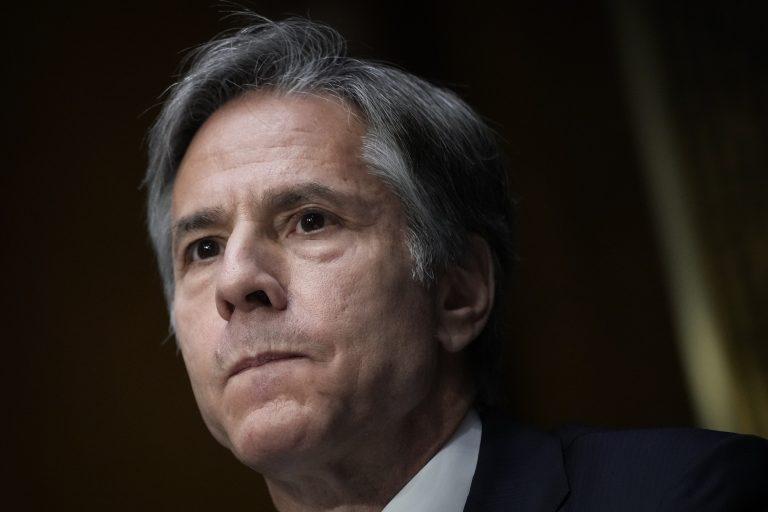
(Ken Silva, Headline USA) Secretary of State Antony Blinken told Reuters on Wednesday that Ukraine should lower its age of conscription from 25 years old to 18 so that it can send more of its citizens to fight in the war against Russia.

According to antiwar.com, Ukrainians ages 18 to 25 can join the military to fight but cannot be forced into combat under the latest mobilization law. That’s a problem, Blinken said Wednesday.

“These are very hard decisions, and I fully both understand that and respect that,” Blinken reportedly said in an interview with Reuters at NATO headquarters in Brussels. “But for example, getting younger people into the fight, we think, many of us think, is necessary. Right now, 18- to 25-year-olds are not in the fight.”

NATO chief Mark Rutte reportedly made similar statements.

“We have to make sure, obviously, also that enough people are available within Ukraine,” Rutte told Reuters. “We need probably more people to move to the front line.”

Russia has estimated that it’s killed or wounded some 700,000 Ukrainians since its invasion in February 2022. Russian forces have also suffered hundreds of thousands of casualties.

The push for Ukraine to lower its age of conscription comes after the Biden administration committed at least $275 million in new weapons to the war last month.

Trump’s upcoming move to the White House has triggered a scramble by the Biden administration to rapidly spend congressionally approved funding.

The Biden administration would have to rush $7.1 billion in weapons from the Pentagon’s stockpiles to spend all of those funds before Trump is sworn in.

That includes $4.3 billion from a foreign aid bill passed by Congress earlier this year and $2.8 billion still on the books in savings due to the Pentagon recalculating the value of systems sent.

As part of the wider effort, the administration also is on track to disperse its portion of a $50 billion loan to Ukraine, backed by frozen Russian assets, before Biden leaves the White House, according to two senior administration officials.

Ken Silva is a staff writer at Headline USA. Follow him at x.com/jd_cashless.

Kamala Spox Mocked for Hinting at Future Rogan Appearance

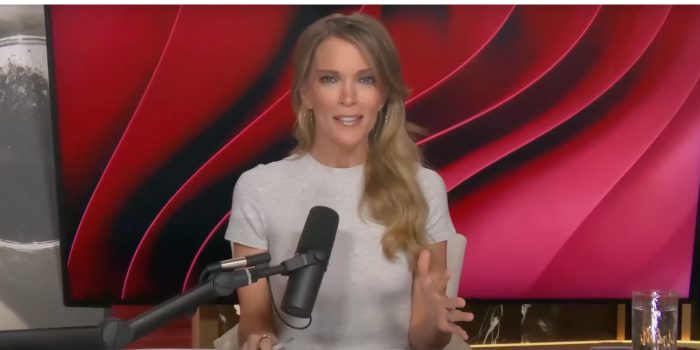
(Julianna Frieman, Headline USA) SiriusXM’s Megyn Kelly ridiculed Harris campaign staffers Wednesday for teasing a possible post-election appearance on podcaster Joe Rogan’s show.

On her own podcast, Kelly revisited Harris campaign chair Jen O’Malley Dillon’s comments about Vice President Kamala Harris’s decision not to follow in then-opponent Donald Trump’s footsteps by doing The Joe Rogan Experience.

O’Malley Dillon said, “Will she do it some time in the future? Maybe, who knows,” when reflecting that Harris was in Texas at the time but scheduled a rally with pop star Beyonce instead.

Kelly was not amused by the Harris campaign chair’s tease.

“Who the f cares? Who gives two s**ts whether she’s gonna go on? She lost!” Kelly exclaimed. “The freaking point was to do it before the election. What do you mean? Who cares if she’s going to go on in the future?”

Kelly answered her own question by saying “literally no one” cares if Harris goes on Rogan’s show—including the host himself.

She called out the campaign’s excuses that Harris was very busy, referencing the Democrat candidate’s loss in all seven battleground states—Arizona, Georgia, Michigan, Nevada, North Carolina, Pennsylvania and Wisconsin—in the context of her visit to Houston, Texas.

“That was for the Beyonce event where she didn’t sing. Remember? She showed up for literally three minutes, gave a bunch of campaign nonsense and then went away without performing a song,” Kelly recalled. “Even Hillary got some songs.”

Kelly blasted Harris’s Houston visit as an “utter waste of time.”

The vice president could have traveled to Rogan while in Texas, his home state, like Trump but passed on the opportunity.

“She flew to Texas. She blew it. She clearly didn’t want to sit with Rogan because she couldn’t,” Kelly said. “But here again, the campaign won’t be honest about the ineptitude of their candidate, their exquisite candidate. Okay! We’ll look forward to whether she does it in the future.”

Julianna Frieman is a freelance writer published by the Daily Caller, Headline USA, The Federalist, and The American Spectator. Follow her on Twitter at @JuliannaFrieman.