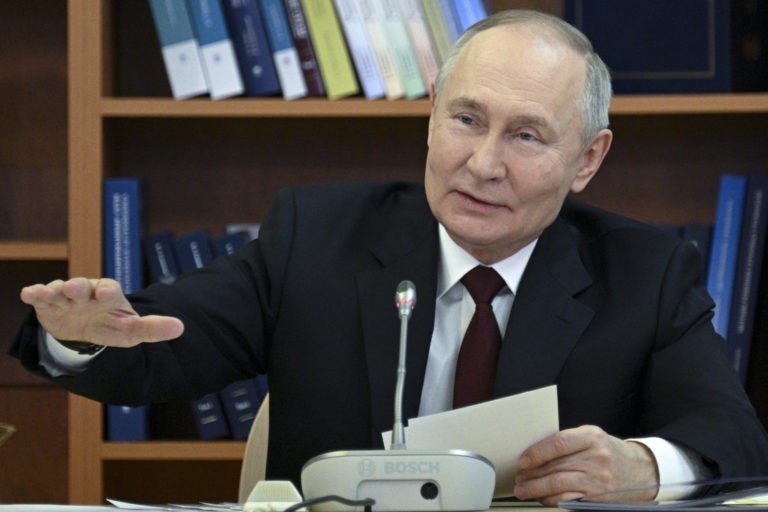
(Ken Silva, Headline USA) In an interview excerpt circulating online Friday, Russian President Vladimir Putin said that he might not have invaded Ukraine in February 2022 if Donald Trump were still U.S. President at the time.
“If the victory wasn’t stolen from him in 2020, maybe the Ukrainian crisis that arose in 2022 would never [have] appeared,” Putin said, according to an English translation that appeared on the Russian media outlet RT.com.
🚨PUTIN on TRUMP: “If the victory wasn't stolen from him in 2020, maybe the Ukrainian crisis that arose in 2022 would never [have] appeared.” pic.twitter.com/GEFI5736aM
While some may brush off Putin’s statement as a negotiating tactic, it’s certainly the case that he invaded Ukraine during the Obama and Biden presidencies—but not Trump’s.
His remarks come as Trump seeks to end the war in Ukraine.
On the campaign trail last year, Trump repeatedly vowed to end the Ukrainian war on the first day of his administration. But after winning the election in November, he and his advisors suggested that peace negotiations could take longer. Trump has also threatened stronger sanctions against Russia, much to the chagrin of peace activists.
On Thursday, Trump renewed his calls for peace at the World Economic Forum in Davos, Switzerland.
“It’s so important to get that done. That is an absolute killing field. Millions of soldiers are being killed. Nobody has seen anything like it since World War II,” he said, as reported by antiwar.com.
Trump also called for denuclearization with Russia and China.
“We were talking about denuclearization of our two countries, and China would have come along. China right now has a much smaller nuclear armament than us, or field, than us, but they’re going to be catching [up] at some point,” Trump reportedly said.
“I will tell you that President Putin really liked the idea of cutting back on nuclear, and I think the rest of the world, we would have gotten them to follow, and China would have come along too. China also liked it. Tremendous amounts of money are being spent on nuclear, and the destructive capability is something that we don’t even want to talk about. It’s too depressing,” he reportedly added.
Ken Silva is a staff writer at Headline USA. Follow him at x.com/jd_cashless.
(Headline USA) The water bordered by the Southern United States, Mexico and Cuba will be critical to shipping lanes and vacationers whether it’s called the Gulf of Mexico, as it has been for four centuries, or the Gulf of America, as President Donald Trump ordered this week.
North America’s highest mountain peak will still loom above Alaska whether it’s called Denali, as ordered by former President Barack Obama in 2015, or changed back to Mount McKinley as Trump also decreed.
“It is in the national interest to promote the extraordinary heritage of our Nation and ensure future generations of American citizens celebrate the legacy of our American heroes,” Trump wrote in his executive order—titled “Restoring Names That Honor American Greatness.”
“The naming of our national treasures, including breathtaking natural wonders and historic works of art, should honor the contributions of visionary and patriotic Americans in our Nation’s rich past,” he added.
But Trump’s territorial assertions, in line with his “America First” worldview, sparked a round of rethinking by mapmakers and teachers, snark on social media and sarcasm by at least one other world leader.
And though Florida Gov. Ron DeSantis put the Trumpian “Gulf of America” on an official document and some other gulf-adjacent states were considering doing the same, it was not clear how many others would follow Trump’s lead.
Mexican President Claudia Sheinbaum joked that if Trump went ahead with the renaming, her country would rename North America “Mexican America.”
On Tuesday, she toned it down: “For us and for the entire world it will continue to be called the Gulf of Mexico.”
A new twist on an old debate
Map lines are inherently political. After all, they’re representations of the places that are important to human beings—and those priorities can be delicate and contentious, even more so in a globalized world where multiple nations often share the same maps.
There’s no agreed-upon scheme to name boundaries and features across the Earth.
“Denali” is the mountain’s preferred name for indigenous Alaskans, while “McKinley” is a tribute to President William McKinley, designated in the late 19th century by a gold prospector.
Likewise, the countries surrounding what the United States calls the South China Sea have multiple names for the same body of water.
The Persian Gulf has been widely known by that name since the 16th century, although usage of “Gulf” and “Arabian Gulf” is dominant in many countries in the Middle East. The government of Iran—formerly Persia—threatened to sue Google in 2012 over the company’s decision not to label the body of water at all on its maps.
Many Arab countries don’t recognize Israel and instead call it Palestine. And in many official releases, Israel calls the West Bank—inhabited mostly by culturally Arab Palestinians—by its biblical name, “Judea and Samaria.”
Americans and Mexicans diverge on what to call another key body of water—the river that forms the border between Texas and the Mexican states of Chihuahua, Coahuila, Nuevo Leon and Tamaulipas. Americans call it the Rio Grande; Mexicans call it the Rio Bravo.
But what to call the gulf with the 3,700-mile coastline?
“It is, I suppose, an internationally recognized sea, but (to be honest), a situation like this has never come up before so I need to confirm the appropriate convention,” said Peter Bellerby of London company Bellerby & Co. Globemakers.
Bellerby said he was talking over the issue with the company’s cartographers. “If, for instance, he wanted to change the Atlantic Ocean to the American Ocean, we would probably just ignore it.”
For some, it’s decision time
As of Thursday afternooon, map applications for Google and Apple still called the mountain and the gulf by their old names. Spokespersons for those platforms did not immediately respond to emailed questions.
A spokesperson for National Geographic, one of the most prominent map makers in the U.S., said this week that the company does not comment on individual cases and referred questions to a statement on its web site, which reads in part that it “strives to be apolitical, to consult multiple authoritative sources, and to make independent decisions based on extensive research.”
National Geographic also has a policy of including explanatory notes for place names in dispute, citing as an example a body of water between Japan and the Korean peninsula, referred to as the Sea of Japan by the Japanese and the East Sea by Koreans.
The Associated Press, which disseminates news around the world to multiple audiences, will refer to the Gulf of Mexico by its original name while acknowledging the name Gulf of America.
AP will, however, use the name Mount McKinley instead of Denali; the area lies solely in the United States, and as president, Trump has the authority to change federal geographical names within the country.
At the Interior Department, a spokesman said Thursday that staff were working to comply with the president’s executive order quickly.
In discussion on social media, one thread noted that the Sears Tower in Chicago was renamed the Willis Tower in 2009, though it’s still commonly known by its original moniker.
Pennsylvania’s capital, Harrisburg, renamed its Market Street to Martin Luther King Boulevard and then switched back to Market Street several years later—with loud complaints both times.
In 2017, New York’s Tappan Zee Bridge was renamed for the late Gov. Mario Cuomo to great controversy. The new name appears on maps, but “no one calls it that,” noted another user.
“Are we going to start teaching this as the name of the body of water?” asked one Reddit poster on Tuesday.
“I guess you can tell students that SOME PEOPLE want to rename this body of water the Gulf of America, but everyone else in the world calls it the Gulf of Mexico,” came one answer. “Cover all your bases—they know the reality-based name, but also the wannabe name as well.”
Wrote another user: “I’ll call it the Gulf of America when I’m forced to call the Tappan Zee the Mario Cuomo Bridge, which is to say never.”
This brand new fellowship attracted many strong candidates with interesting proposed research topics. Ultimately three fellows comprise the program’s first class.
The fellows will advance scholarship pertaining to sound money by conducting in-depth exploration of monetary history, policy analysis, and monetary sociology.
Researchers will produce three short articles and one insightful paper furthering our understanding of sound money.
Findings will be published in the Sound Money Review, an annual publication that highlights the contributions of our fellows while serving as a valuable resource for academics, legislators, the sound money movement, and the greater public.
Introducing the 2025 Sound Money Fellows:
Joakim Book is a professional editor and writer with a passion for monetary economics and financial history.
He holds a Master’s degree in economic history from the University of Oxford, and a joint undergraduate degree in economics and economic history from the University of Glasgow.
He has been a research fellow at the Mises Institute and the American Institute for Economic Research and writes regularly for Mises Daily, The Daily Economy, and more.
Matt Layton is an accomplished executive and thought leader with over 20 years of experience spanning both the private and public sectors. With a Bachelor of Arts in Political Science and an MBA from the University of Oklahoma.
In the private sector, Matt has excelled as the Senior Vice President of Analytics & Business Insights at LegalShield. He helped found the LegalShield Economic Stress Index, a groundbreaking tool featured in major outlets such as Forbes, Yahoo Finance, and US News & World Report.
In public service, Matt served as Vice Mayor and Councilman for the City of Ada, Oklahoma, where he led legislative and strategic planning efforts, overseeing budget management and economic development initiatives. His leadership extended to the Planning & Zoning Commission, aligning municipal growth strategies with community goals.
A champion of sound policy and innovative solutions, Matt’s work reflects a commitment to understanding and addressing the complex interplay between monetary policy, economic health, and societal well-being.
Samuel Peterson is a Policy Associate at the Institute for Energy Research. Samuel is a graduate of Grove City College where he earned a B.A. in economics.
Samuel’s popular writing has been published on numerous sites including AIER, Mises Wire, and National Review. His academic research has been published in The Grove City College Journal of Law and Public Policy and The Independent Review: A Journal of Political Economy. He has also contributed to policy papers published by The Heritage Foundation, The Mackinac Center for Public Policy, and IER.
A proud Floridian, Samuel now lives in his fiancée’s homeland of West Michigan.
“We’re extremely excited to provide this opportunity for individuals with a deep passion for sound money,” said Stefan Gleason, President of Money Metals.
“We’re not simply selling and storing gold and silver widgets. I started this company with a belief in sound money as a core tenet,” said Gleason.
The Sound Money Defense League and Money Metals Exchange remain dedicated to promoting sound money through the Sound Money Fellowship and many other offerings.
Jp Cortez is the Executive Director of theSound Money Defense League, an organization working to remonetize gold and silver through nationwide legislative efforts. He is a graduate of Auburn University and a resident of Charlotte, North Carolina. Follow him on X (Twitter) @JpCortez27.
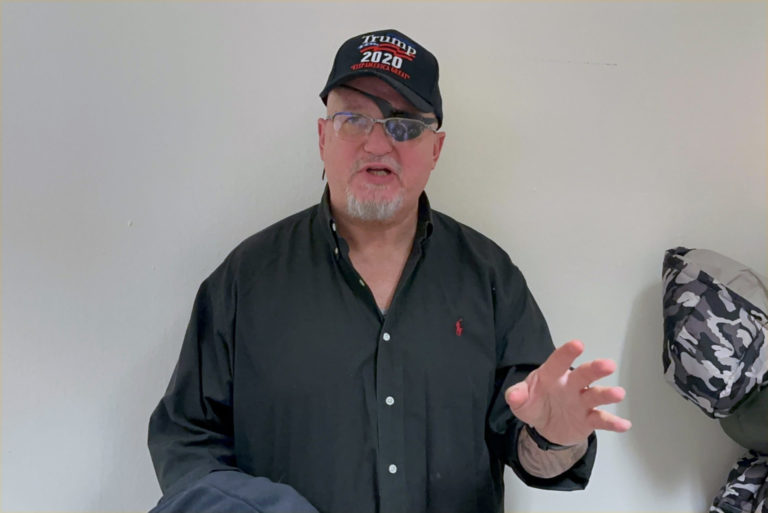
(Headline USA) A federal judge on Friday barred Oath Keepers founder Stewart Rhodes from entering Washington, D.C., without the court’s approval after President Donald Trump commuted the right-wing group leader’s 18-year prison sentence.
Rhodes was convicted of seditious conspiracy for helping orchestrate the brouhaha at the U.S. Capitol four years ago, which delayed certification of the highly disputed 2020 presidential election in favor of Democrat Joe Biden and forced the Joint Session of Congress to bypass several challenges that Republican lawmakers intended to wage.
U.S. District Judge Amit Mehta issued the ban two days after Rhodes visited the Capitol, where he met with at least one lawmaker, chatted with others and defended his actions during the mass uprising on Jan. 6, 2021. Rhodes was released from a Maryland prison a day earlier.
Mehta’s order also applies to seven other newly freed political dissidents who were convicted of charges in the Capitol breach but not fully pardoned by Trump. The order prohibits them from entering the Capitol building or surrounding grounds without the court’s permission.
Rhodes was accused by the Justice Department of orchestrating a weekslong plot that culminated in his followers attacking the U.S. Capitol in a desperate bid to keep Trump in power.
Rhodes himself did not enter the building on Jan. 6 and has said it was “stupid” that members of the Oath Keepers did.
“My guys blundered through doors,” he insisted during his visit to Capitol Hill earlier this week.
Trump’s clemency order on Monday upended the largest and most egregious lawfare abuse in Justice Department history, freeing from prison some 1,500 political prisoners. Many entered the Capitol peacefully.
Others were actively provoked and entrapped by crisis actors within the Capitol Police and D.C. Metro Police—some of whom outgoing president Joe Biden pardoned for their criminal conduct—including presumed perjury—just hours before leaving office.
A recent inspector general’s report also revealed that the FBI had dozens of paid informants in the crowd, including some who entered the Capitol but were not charged.
Trump has defended the pardons , saying the defendants had “already served years in prison” in conditions he described as “disgusting” and “inhumane.”
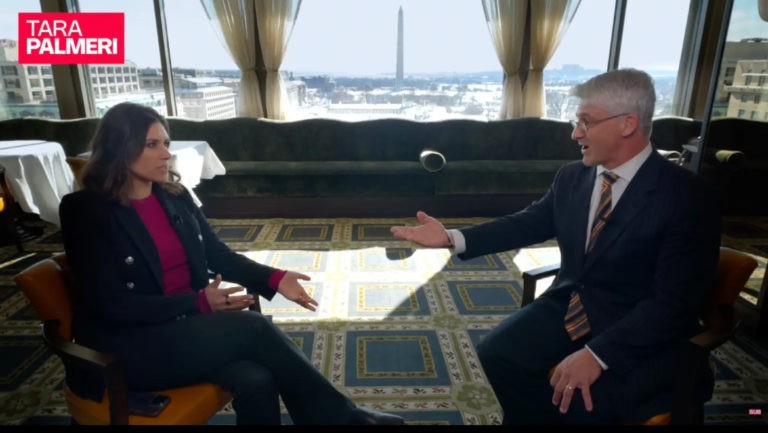
(Julianna Frieman, Headline USA) Two former Politico reporters revealed in a bombshell video released Thursday how “cowardly editors” at their ex-outlet tried to use their coverage—or lack thereof—to steal the 2020 election from President Donald Trump.
Politico actively worked to suppress stories unflattering to former President Joe Biden and his family, Tara Palmeri, who now writes for Puck News, and Marc Caputo, now the senior politics reporter at Axios, said.
“Politico did that terrible, ill-fated headline: 51 intelligence agents, or former intelligence agents, say that the Hunter Biden laptop was disinformation, or bore the hallmarks of disinformation,” Caputo began. “Turns out that story was closer to disinformation because the Hunter Biden laptop appeared to be true.”
Palmeri chimed in by recalling how social media giants like Facebook and Twitter colluded to censor the Hunter Biden laptop story, which reflected poorly on the 2020 Democrat nominee.
Caputo slammed Twitter for having “punished” the New York Post for its accurate reporting by locking the outlet out of its account due to pressure from the FBI.
“I was covering Biden at the time,” Caputo told Palmeri on her “Somebody’s Gotta Win” podcast. “And I was told this came from on high at Politico: Don’t write about the laptop, don’t talk about the laptop, don’t tweet about the laptop.”
Caputo added that a story he was working on about Hunter Biden’s work for Ukrainian natural gas company Burisma Holdings was “killed” by an editor as Biden was battling through the 2020 Democrat primaries.
“I wrote what would have been a classic story saying, you know, ‘The former vice president’s son was slapped with a big tax lien for the period of time that he worked for this controversial Ukrainian oil concern, or natural gas concern, which is haunting his father on the campaign trail,’” Caputo said.
The ex-Politico reporter said his story was spiked without any explanation, adding that readers “don’t understand the dumb decisions of cowardly editors that are made above us.”
Tameri told her former colleague that she worked for three months on a report she co-wrote in March 2021 about the U.S. Secret Service trying to obtain a copy of Hunter Biden’s federal gun-purchase form that ultimately resulted in his criminal charges and subsequent pardon from his father.
She wondered aloud if Biden’s presidency could have played out differently if her story dropped sooner.
“I spent three months on it, I went to the laptop shop, and I did all of the reporting in Delaware,” Tameri remembered. “But I do wonder if it could have, if it would have been published a little quicker if it was a different type of story.”
She added, “It was the beginning of his administration, it was a honeymoon period — you know what I mean?”
Julianna Frieman is a freelance writer published by the Daily Caller, Headline USA, The Federalist, and the American Spectator. Follow her on Twitter at @JuliannaFrieman.
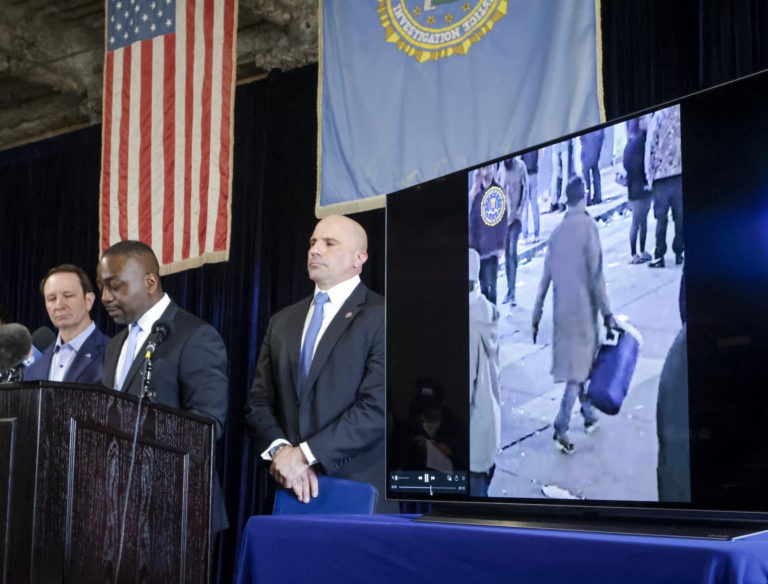
(Ken Silva, Headline USA) Apparently the second-deadliest foreign-inspired terrorist attack in the U.S. since 9/11 wasn’t enough for the boss of the New Orleans FBI field office to end his vacation early.
Early on New Year’s Day, 42-year-old Army veteran Shamsud-Din Bahar Jabbar rammed a pickup truck into a crowd in New Orleans’s famed French Quarter—killing 14 people who were celebrating the New Year. Police fatally shot Jabbar in a following firefight, and authorities later determined that the incident was inspired by the foreign terrorist organization ISIS.
Despite that, New Orleans FBI Special Agent in Charge Lyonel Myrthil took several more days to return to the office, according to a whistleblower working with the office of Sen. Chuck Grassley, R-Iowa.
“Myrthil vacationed in Europe from late December to early January, which included New Year’s Eve, New Year’s Day, and the Sugar Bowl and took multiple days to return to New Orleans after the terrorist attack on January 1,” Grassley said in a Tuesday letter to FBI Acting Director Brian Driscol and Acting Attorney General James McHenry.
“The FBI failed to note this in any of the joint briefings it provided to Congress and must provide more information.”
A lazy SAC of ….. According to a whistleblower working with Sen. Grassley's office, the New Orleans FBI Special Agent in Charge did not leave his vacation early after the New Year's Day terrorist attack in his city — one of the deadliest terrorist attacks since 9/11 pic.twitter.com/fCD8vpbWWF
Along with questions about the vacationing SAC, Grassley’s office seeks more information about the New Orleans attack, as well as info about the Tesla Cybertruck that exploded in front of the Trump International Hotel in Las Vegas on the same day. Grassley also wants to make sure whether those two attacks were connected—especially given that the driver of the Cybertruck, Matthew Alan Livelsberger, served at Fort Bragg and in Afghanistan at the same time as Jabbar.
“Similarities do reportedly exist between Jabbar and Livelsberger. For example, both individuals had experience in the U.S. Army and the vehicles in both incidents were rented from the same company, Turo. Further, according to reports, authorities claimed Livelsberger and Jabbar “likely overlapped at Fort Bragg and again in Afghanistan,’” Grassley noted. “It remains unclear whether there are additional similarities or connections between Jabbar and Livelsberger.”
Grassley and Sen. Ron Johnson seek updates on the New Year’s Day attacks by Feb. 5.
Grassley and Johnson also wrote a separate letter to Meta CEO Mark Zuckerberg, asking about Jabbar’s terroristic Facebook posts in the leadup to his attack.
Ken Silva is a staff writer at Headline USA. Follow him at x.com/jd_cashless.
(Mike Maharrey, Money Metals News Service) Silver was up 20.5 percent in 2024, nearly keeping pace with gold. But as gold set multiple records last year, silver remained well below its all-time highs. This created the impression that silver underperformed.
Could 2025 be silver’s year?
Some mainstream analysts believe it could be.
Saxo Bank head of commodity strategy Ole Hansen recently said silver’s dual role as a monetary and industrial metal creates the potential for a strong upside in the coming year and projected a 30 percent gain.
He noted that in 2024, “increased industrial demand helped create physical tightness in the silver market. Sectors such as electronics and renewable energy, particularly photovoltaic (solar) technologies, significantly contributed to this surge.”
Hansen pointed out that the silver market has run a supply deficit for three straight years with demand outstripping mine production and recycling.
“The expectation of sustained industrial demand is likely to keep silver in a supply deficit into 2025, potentially deepened by a pick-up in ‘paper’ demand through exchange-traded funds.”
Analysts at StoneX Financial are also bullish on silver. In their 2025 Annual Metals Outlook, they picked silver to outperform all precious and base metals.
StoneX analysts said that silver, along with copper and tin, will benefit from green energy and “digital transitions.”
“Even after its strong performance in 2024 (+22%), silver, the precious-industrial hybrid, is expected to collect the laurels in 2025 as the market’s tightening fundamentals and strong future prospects, which have already enticed investors, continue to capture the imagination, partly on the back of the continued long-term prospects for the solar industry – although policies of the new Administration in the United States may dampen this.”
We’ve already seen a surge in industrial demand due to green energy applications, particularly from the solar sector.
Based on preliminary data from the Silver Institute, industrial demand set a record in 2024, topping 700 million ounces for the first time. With mine output declining, the market will likely see its fourth consecutive supply deficit.
StoneX analysts noted that silver ran a cumulative surplus from 2011 through 2023 despite supply deficits in 2022 and 2023. The surplus totaled 78,000 tonnes, about 2.6 times the 2024 industrial demand. However, the analysts pointed out Investors “were more than up to the task of absorbing this metal, with OTC investment of just shy of 100,000 tonnes and ETPs, almost 12,000 tonnes.”
“From late 2024, however, the fundamental balance moves into a deficit that will expand substantially over the next few years on the back of solar, AI, and transport electrification, underpinning an increasing run-down in inventory.”
StoneX analysts also factored in silver’s fundamental role as a monetary metal.
“The relationship with gold has therefore always been a key to silver’s price performance, but in truth it is more complex than that. For much of the past year it has felt as if silver was behaving like a precious metal on the way up, and a base metal on the way down. Statistical analysis bears this out […] During U.S. recessionary periods, silver’s price performance, and correlations, with gold and with copper have shown that the majority of the time it has traded much more in line with copper [than] with gold. In inflationary periods, the reverse has been the case.”
The analysts pinpoint two primary reasons for this dynamic.
“[O]ne is that the nature of silver’s supply (largely by-product of base metals or from industrial scrap) it does not have a market-clearing price; and the other is because of the small army of investors that think of silver as an accessible method of having exposure to [gold] price movements. Add to this the fact that during the period when silver was on the gold standard, private individuals were not allowed to hold gold as an investment, so they turned to silver. This has led to a degree of price volatility such that when gold moves with conviction, silver will move by at least twice as much. This encourages investors and speculators to gear up on gold positions by taking sliver – and often doing it first.”
The analysts speculated that silver may break from this trend and chart its own path due to the weight of the solar sector.
“Silver is an integral part of solar cells and while, as an expensive component, it is liable to be subject to thrifting, it is highly unlikely that it can be substituted. Indeed, the latest generation of PV cells carries a heavier loading than previously. Metals Focus estimates that solar absorbed almost 6,019t of silver in 2023; based on estimates from the International Energy Agency for future power generation, we could be looking at growth rates of 16% per annum through to 2027.”
The AI sector also consumes significant amounts of silver.
Overall, StoneX analysts concluded, “With the markets’ appetite for silver already rekindled by the invigoration of the gold and silver markets in 2024, investors are likely to remain loyal to this metal.”
“Silver will continue to react to any strong activity in gold, while also due for further transition this year as the pre-investment fundamental deficit continues to develop. Possible continued drag from stagnant Europe and any over-supply of solar cells, but a bright long-term future is likely to continue to attract investment and speculative funds.”
The bottom line is silver isn’t priced for the current supply-demand dynamics. The gold-silver ratio is hovering at around 90-1, indicating that silver is on sale when priced in gold. Historically, when the ratio gets distorted to this degree, it tends to snap back to the mean with a vengeance as the silver price spikes to catch up.
And as analyst Jesse Colombo explained, bearish investor sentiment on silver due to its perceived underperformance last year is bullish from a contrarian perspective.
When you add it all up, there are plenty of reasons to be bullish on silver and it appears at least some in the mainstream are picking up on these dynamics.
Mike Maharrey is a journalist and market analyst for MoneyMetals.com with over a decade of experience in precious metals. He holds a BS in accounting from the University of Kentucky and a BA in journalism from the University of South Florida.
(Jesse Colombo, Money Metals News Service) Investors’ extreme bearish sentiment on silver is ironically bullish from a contrarian perspective.
I strongly believe in applying contrarian logic to analyze financial markets and investments. The core idea behind this approach is that “the crowd” or so-called “dumb money” tends to be wrong more often than it is right, especially at major market turning points.
At market peaks, they become excessively bullish, and at market bottoms, overly bearish. Consequently, adopting a strategy that goes against the crowd often proves successful—this is precisely the approach taken by insiders or “smart money.”
Currently, the crowd’s sentiment toward silver is deeply bearish, which should be music to the ears of contrarians and silver bulls alike.
Contrarian investors use various methods for analyzing financial markets, often focusing on gauging market sentiment through surveys, polls, or patterns of bullish and bearish trading behavior.
One effective approach is examining short interest—the number of shares sold short and yet to be covered for a particular financial instrument.
When short interest is unusually high, for example, it signals that the crowd has adopted an excessively bearish stance. This often indicates a strong likelihood that a market bottom is near, paving the way for a bullish reversal.
An analysis of the popular iShares Silver ETF (ticker symbol: SLV) reveals a significant spike in short interest immediately following the U.S. presidential election, reaching approximately 47 million shares—the highest level since August 2022 and notably elevated compared to much of the past 15 years.
This surge is also reflected in the short interest ratio, which divides short interest by the stock’s average daily trading volume. The ratio climbed to 3, an unusually high level for this ETF, signaling extreme bearish sentiment.
The spike in short interest in the iShares Silver ETF aligns with what I’ve observed through managing a large social media presence and this newsletter: retail investors have grown increasingly frustrated and disinterested in silver following the U.S. presidential election, marking a dramatic shift in sentiment toward precious metals.
However, I firmly believe that the future is bright for both gold and silver. I encourage everyone to remain patient and steadfast.
The current wave of extreme bearish sentiment in silver is setting the stage for a short squeeze, where bearish investors are forced to cover their short positions, driving prices sharply higher.
One reason for the pessimistic sentiment toward silver since the election is the Trump administration’s focus on supporting cryptocurrencies while largely ignoring precious metals—a shortsighted and foolish approach, in my view.
Consequently, nearly every cryptocurrency, from Bitcoin to Dogecoin, has soared in value since the election, creating eye-popping gains—at least on paper—for many speculators.
Highlighting the current climate of reckless speculation, “Fartcoin”—yes, you read that correctly—has astonishingly skyrocketed by 18,500% since its launch on October 21st.
This phenomenon has made prudent investing appear laughable to many retail investors who might otherwise have shown greater interest in precious metals, particularly silver.
Amid the frenzy surrounding the current crypto mania, it’s important to recognize that many retail investors are falling into the classic trap: becoming overly bullish on flimsy assets that have already experienced significant price increases, a behavior that typically results in serious losses.
Additionally, much of the cryptocurrency space is gripped in a massive speculative bubble, with most cryptocurrencies trading at prices far exceeding their intrinsic value.
The current infatuation with crypto, combined with the neglect of gold and silver, is deeply misguided. In my view, investors would be wise to take the opposite approach.
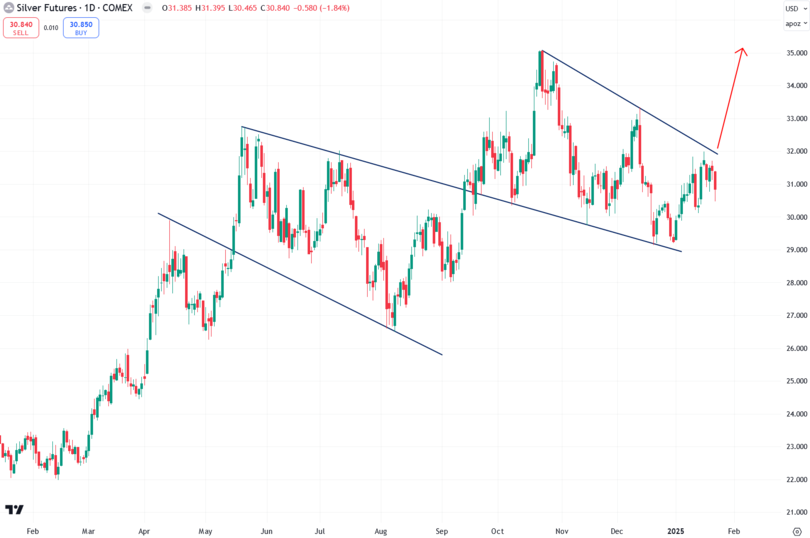
From a technical standpoint, silver continues to trade within the same consolidation pattern it has been stuck in since the election. This lack of movement has contributed to investor boredom, as many tend to lose interest when an asset is quietly “coiling” like a spring, preparing for its next significant move.
That’s exactly how I view silver right now. This is not the time to lose focus but rather to recognize the great opportunity forming. I’m watching closely for silver to break out of its current consolidation pattern, which I believe will signal the start of a substantial rally.
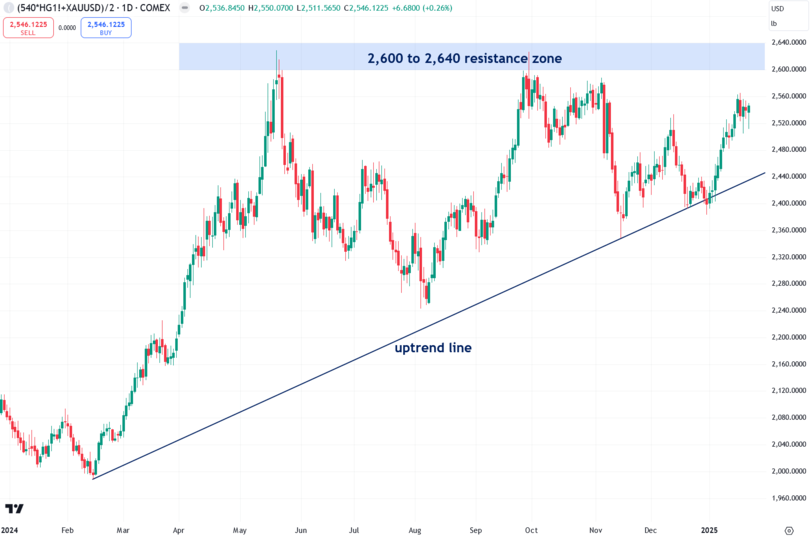
I’ve developed an indicator to help confirm price movements in silver, called the Synthetic Silver Price Index (SSPI). This index averages the prices of copper and gold, with copper adjusted by a factor of 540 to prevent gold from disproportionately influencing the index.
The SSPI closely mirrors silver’s price movement, even though silver itself is not an input. I’m encouraged to see that the SSPI recently bounced off its uptrend line, signaling underlying strength.
The SSPI is rapidly approaching the 2,600–2,640 resistance zone, which has served as a key ceiling for much of the past year. A decisive close above this zone would signal a strong bullish breakout, indicating a likely upward move for silver itself.
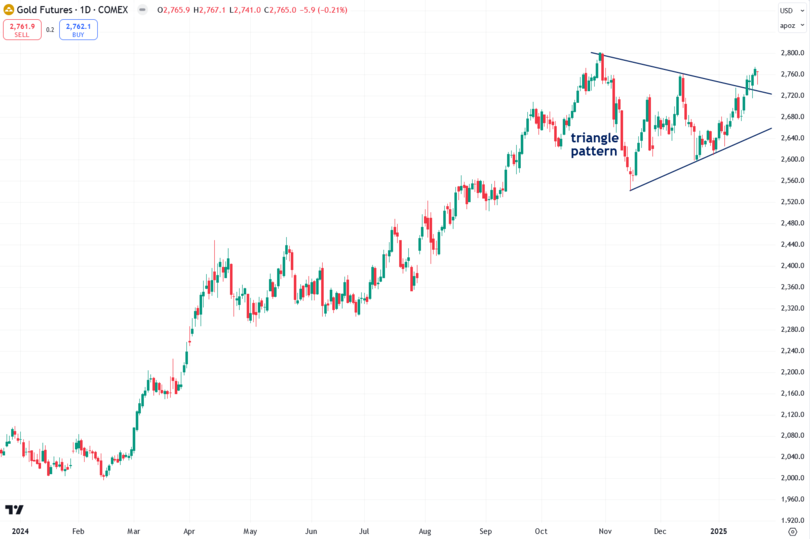
Gold, one of the two components of the Synthetic Silver Price Index, has recently broken out of a triangle pattern, signaling the start of the next phase in its bull market.
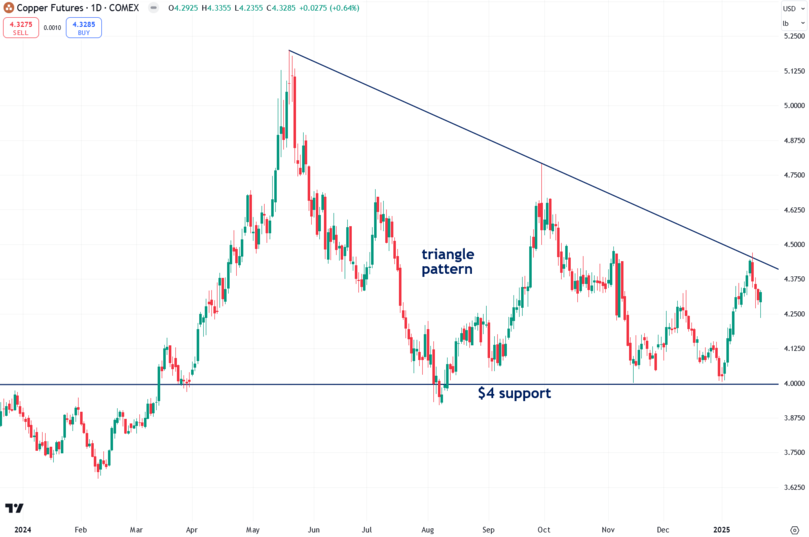
Copper, the other component of the Synthetic Silver Price Index, is also showing positive signs as it recently rebounded off the $4 support level, as I had expected. It is currently trading within a triangle pattern, and a breakout to the upside should provide a strong tailwind for silver.
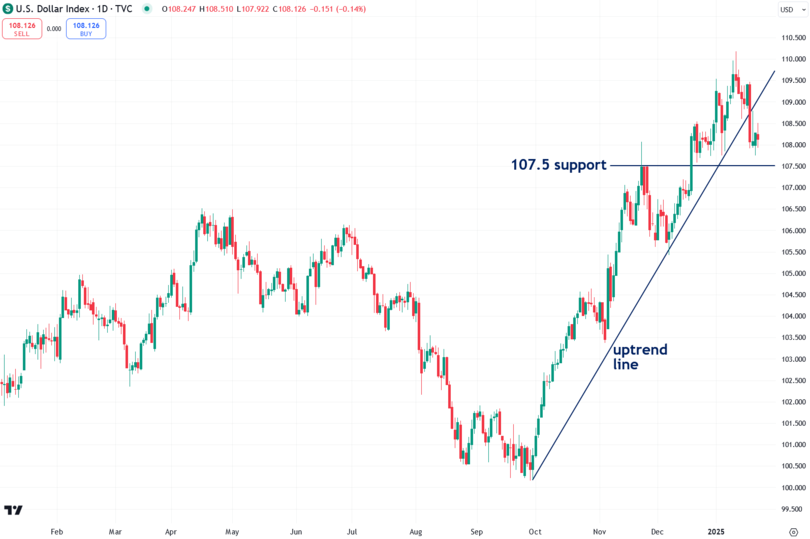
I’m also keeping an eye on the U.S. Dollar Index, which has been on a relentless surge since October. Its strength has exerted downward pressure on commodities like gold, silver, and copper. A major driver of this rally has been anticipation of President Trump’s protectionist policies.
However, the index experienced a sharp pullback on inauguration day in a classic “sell the news” reaction. I’m closely monitoring the 107.5 support level—if this level is breached, it would signal a deeper correction in the Dollar Index, which would be bullish for commodities.
In summary, retail investors are overwhelmingly bearish on silver at the moment, distracted by the allure of speculative cryptocurrencies and tech stocks.
However, for contrarian investors—the “smart money”—this widespread negativity is a strong indicator that silver’s best days are still ahead. Staying committed to sound money assets like gold and silver requires faith and vision, especially while the crowd chases fleeting trends in assets with no historical track record as reliable stores of value.
I am confident that when the world inevitably returns its focus to fundamentals, these timeless assets will richly reward those who remain steadfast in their belief.
Jesse Colombo is a financial analyst and investor writing on macro-economics and precious metals markets. Recognized by The Times of London, he has built a reputation for warning about economic bubbles and future financial crises. An advocate for free markets and sound money, Colombo was also named one of LinkedIn’s Top Voices in Economy & Finance. His Substack can be accessed here.
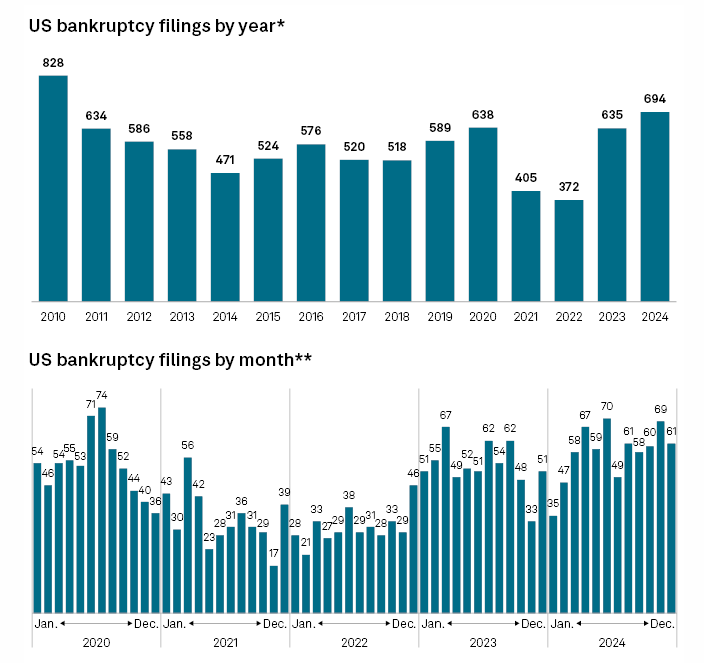
According to data gathered by S&P Global Market Intelligence, 61 corporate bankruptcy filings were made in December, bringing the total for 2024 to 694. This was a 9.2 percent increase over 2023 and the highest number since 2010, in the aftermath of the Great Recession.
There have been more corporate bankruptcies in the last two years (1,329) than during the pandemic era of 2020 and 2021 (1,043).
Party City Holdco Inc. and China Construction America Inc. announced the largest bankruptcies in December.
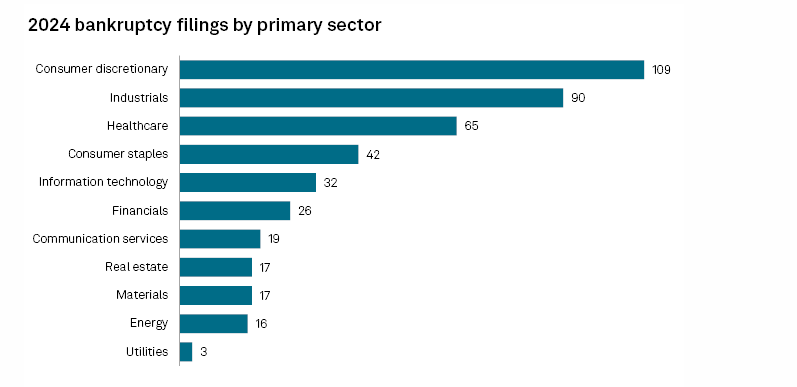
The consumer discretionary sector recorded the most bankruptcies in 2024 (109), followed by the industrial sector (90).
Consumer discretionary is a category of businesses that sell goods and services considered non-essential. According to S&P Global, this sector “has been particularly susceptible to economic headwinds, even with strong overall U.S. retail sales activity, as consumer buying trends have shifted and budgets have tightened due to inflation.”
Why the Big Jump in Corporate Bankruptcies?
Businesses are going under due to a combination of debt and higher interest rates.
Total debt accumulated by credit-rated nonfinancial U.S. companies reached a quarterly record of $8.45 trillion in Q3, according to Market Intelligence Data. Couple with a higher interest rate environment created by the Federal Reserve to battle fight inflation, you have a recipe for disaster.
S&P Global specifically noted that “businesses continued to face pressure in 2024 from elevated interest rates.”
The central bank held interest rates at zero for nearly a decade after the 2008 Financial Crisis and dropped them back to that level during the pandemic. Years of artificially low rates coupled with multiple rounds of quantitative easing addicted the economy to easy money and incentivized a borrowing binge. The debt-riddled bubble economy simply can’t function in anything remotely resembling a normal interest rate environment.
Even now, monetary policy is loose, based on the Chicago Fed’s Financial Conditions Index. The NFCI was at –0.64 as of Jan. 17. A negative number indicates loose conditions from a historical standpoint.
This puts the Federal Reserve in an impossible situation. It simultaneously needs to raise rates to fight the price inflation driven by easy money and lower rates to keep the air in the debt bubble.
S&P Global hinted at the issue facing the Fed.
“While some relief came in September when the U.S. Federal Reserve began lowering its benchmark interest rate from a 20-year high, the central bank’s monetary easing may slow in 2025.”
This could accelerate the surge in corporate bankruptcies and create economic chaos.
On the other hand, cutting rates more aggressively could revive the inflation dragon. Even with rates elevated compared to the decade after the 2008 financial crisis, we’re seeing an increase in the money supply which is, by definition, inflation.
Powell & Company are walking that tightrope, but stubbornly high price inflation and rising corporate bankruptcies indicate their balance is starting to falter.
Mike Maharrey is a journalist and market analyst for MoneyMetals.com with over a decade of experience in precious metals. He holds a BS in accounting from the University of Kentucky and a BA in journalism from the University of South Florida.
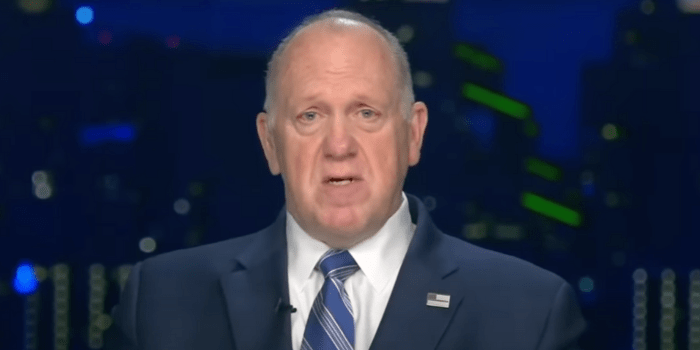
(Luis Cornelio, Headline USA) White House Border Czar Tom Homan delivered a blunt response to an apprehended Haitian national who went viral for shouting, “I’m not going back to Haiti!”
In an interview with Fox News on Thursday, Homan wittily remarked, “Well, he’s wrong, he’s going back to Haiti.”
Talk about a mic-drop moment.
Homan’s response followed the arrest of an unidentified illegal alien by Immigration and Customs Enforcement (ICE) agents. The man reportedly has a lengthy criminal record.
A video of the man shouting and swearing at President Donald Trump has gained widespread condemnation on social media platforms.
“F**k Trump! You feel me? Yo, Biden, forever, bro! Thank Obama for everything he did for me, bro!” the man exclaimed. ICE told Fox News the man has 17 criminal convictions.
During his interview with Fox News host Will Cain, Homan rebuked the Haitian national and accused the Biden administration of intentionally creating the border crisis.
“I’ve said it on this network for four years: Joe Biden opened these borders on purpose. It wasn’t mismanagement. He knew exactly what he was doing,” Homan said, referencing Biden’s campaign promise to undo the Trump-era immigration policies in 2020.
“You thought you had a secure border before? Watch what happens now,” Homan continued. “It’s going to be the tightest border in the history of this nation and ICE officers are finally getting the handcuffs taken off them and they’re going to put them on bad guys throughout the country.”
Homan affirmed that the Trump administration has deployed U.S. soldiers to the southern border and resumed construction of a border wall.
Border Czar @TomHoman_ to @willcain on President Trump's Immigration policies: "President Trump is going to secure the border at the highest level ever… It'll be the tightest border in the history of this nation." pic.twitter.com/H3VhKXarlo