Report: Trans Illegal Immigrant Raped a 14-Year-Old Boy

(Ken Silva, Headline USA) The New York Post reported Saturday that a biological male illegal immigrant, who identifies as a woman, stalked and raped a 14-year-old boy in a Manhattan bathroom last week.

The illegal immigrant was identified as Nicol Suarez, a 30-year-old Colombian who was already wanted by Immigration and Customs Enforcement. Suarez also had outstanding charges in New Jersey and Massachusetts, according to the Post.

“Suarez allegedly followed the 14-year-old into the bathroom of a bodega across the street from Thomas Jefferson Park in East Harlem Tuesday and attacked him,” the Post reported, citing unnamed sources. “The boy then left the bathroom and flagged down witnesses, who alerted police.”

Suarez was arrested last Wednesday and charged with first-degree rape. Prosecutors initially asked for $500,000 bail and $1.5 million bond for the trans rapist, but Democrat Judge Elizabeth Shamahs lowered the amount to $100,000 bail or $250,000 bond, according to the Post.

Suarez was being held on Rikers Island as of Saturday.

The Post quoted an unnamed source, who said the horrific incident shows why New York City needs to end its sanctuary status for illegals.

“It just goes to show that Donald Trump and [border czar] Tom Homan are correct that you need to get the violent people out of New York City and Eric Adams, Letitia James and Kathy Hochul should all cooperate because this person has an ICE detainer,” the source reportedly said.

“ICE could just pick this person up and deport them back,” the source added. “But due to our sanctuary laws we can’t do anything.”

Ken Silva is the editor of Headline USA. Follow him at x.com/jd_cashless.

Drastic Change Made to U.S. Policy Towards Taiwan

(Headline USA) China’s Foreign Ministry took issue Monday with a revised U.S. government fact sheet that removed a line on American opposition to independence for Taiwan.

The United States has “gravely backpedaled” on its position on Taiwan and sent the wrong message to “separatist forces” on the island, ministry spokesperson Guo Jiakun said.

Taiwan and China split in 1949 during the civil war that brought the communists to power in China. The defeated Nationalists fled to Taiwan and set up a rival government there. Taiwan has its own government and military but has never declared formal independence from China.

“We urge the U.S. to … stop emboldening and supporting Taiwan independence and avoid further damaging China-U.S. relations and the peace and stability of the Taiwan Strait,” Guo said when asked about the revision at a daily media briefing.

The Taiwan Strait is a narrow waterway that separates the island of Taiwan from China’s east coast.

The U.S. State Department removed the phrase “we do not support Taiwan independence” from the fact sheet last week. The document on America’s relations with the self-governing island is posted on its website.

Taiwan’s government welcomed the move, though a statement sent to The Associated Press on Monday did not mention the language specifically.

“The Ministry of Foreign Affairs has noted that the U.S. State Department updated the ‘Current State of U.S.-Taiwan Relations’ page … with text that is positive and friendly toward us, reflecting the close and amicable partnership between Taiwan and the United States,” it said.

It’s not the first time the State Department has removed the phrase. It did so in May 2022 but restored it a few weeks later after a strong protest from China.

It’s unclear why the State Department changed the language again and whether it signals any shift in policy under President Donald Trump, who returned to the White House last month.

The government in Taiwan is worried that Trump might not be as steadfast a supporter of the island as his predecessor, former President Joe Biden.

The U.S. does not recognize Taiwan as a country but is its strongest backer and biggest arms supplier.

Trump said last week that Taiwan, a leading maker of semiconductors, had taken the chip business away from the U.S. and that he wants it to come back.

China, which says that Taiwan must come under its control, has stepped up military exercises around the island of 23 million people in recent years. The U.S. government fact sheet says that it expects “differences to be resolved by peaceful means, free from coercion, in a manner acceptable to the people on both sides.”

Adapted from reporting by the Associated Press

Trump’s HHS Purge Begins w/ More than 5,000 Jobs on the Chopping Block

(Headline USA) The Trump administration’s effort to slash the size of the federal workforce reached the Food and Drug Administration this weekend, as recently hired employees were fired.

Probationary employees across the FDA received notices Saturday evening that their jobs were being eliminated, according to three FDA staffers who spoke to The Associated Press on condition of anonymity because they were not authorized to speak publicly.

The total number of positions eliminated was not clear Sunday, but the firings appeared to focus on employees in the agency’s centers for food, medical devices and tobacco products — which includes oversight of electronic cigarettes. It was not clear whether FDA employees who review drugs were exempted.

On Friday, some officials expected the U.S. Department of Health and Human Services to fire 5,200 probationary employees across its agencies, according to an audio recording of a National Institutes of Health department meeting. HHS oversees NIH, FDA and the Centers for Disease Control and Prevention, among other things.

People who spoke with the AP on condition of anonymity on Friday said the number of probationary employees to be laid off at the CDC would total nearly 1,300. But as of early Sunday afternoon, about 700 people had received notices, according to three people who spoke on condition on anonymity because they were not authorized to speak publicly. They said none of the CDC layoffs affected the young doctors and researchers who track diseases in what’s known as the Epidemic Intelligence Service.

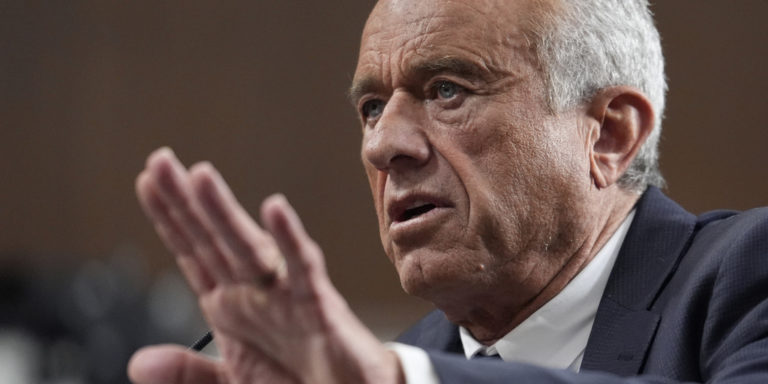
The FDA is headquartered in the Maryland suburbs outside Washington and employs nearly 20,000 people. It’s long been a target of newly sworn-in health secretary Robert Kennedy Jr., who last year accused the agency of waging a “war on public health” for not approving potentially life-saving treatments such as psychedelics, stem cells and chelation therapy.

Kennedy also has called for eliminating thousands of chemicals and colorings from U.S. foods. The cuts at FDA include staffers responsible for reviewing the safety of new food additives and ingredients, according to an FDA staffer familiar with the firings.

An HHS spokesperson did not immediately respond to a request for comment Sunday afternoon.

Nearly half of the FDA’s $6.9 billion budget comes from fees paid by companies the agency regulates, including drug and medical device makers, which allows the agency to hire extra scientists to swiftly review products.

A former FDA official said cutting recent hires could backfire, eliminating staffers who tend to be younger and have more up-to-date technical skills. The FDA’s workforce skews toward older workers who have spent one or two decades at the agency, and the Government Accountability Office noted in 2022 that the FDA “has historically faced challenges in recruiting and retaining” staff due to better money in the private sector.

“You want to bring in new blood,” said Peter Pitts, a former FDA associate commissioner under President George W. Bush. “You want people with new ideas, greater enthusiasm and the latest thinking in terms of technology.”

FDA inspectors are responsible for overseeing thousands of food, drug, tobacco and medical device facilities worldwide, though the AP reported last year that the agency faced a backlog of roughly 2,000 uninspected drug facilities that hadn’t been visited since before the pandemic.

The agency’s inspection force have also been criticized for not moving faster to catch recent problems involving infant formula, baby food and eyedrops.

Adapted from reporting by the Associated Press

Trump’s Nat. Sec. Director Outlines 4 Main Terms of Ukraine Peace Deal

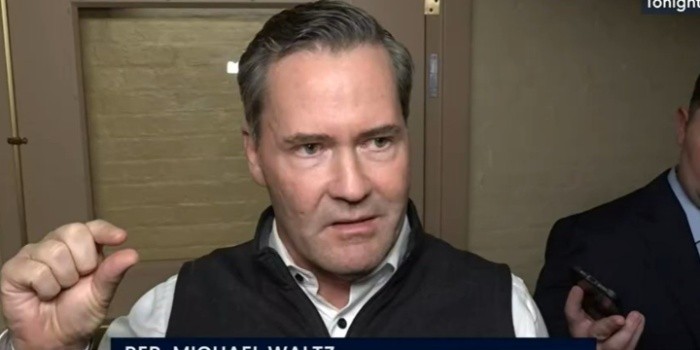
(Kyle Anzalone, Libertarian Institute) National Security Adviser Mike Waltz discussed some of the core issues for Donald Trump in the upcoming talks on ending the war in Ukraine. He did not confirm that Ukraine would be involved in the talks.

On Fox News Sunday, Waltz explained, “Number one, it has to be a permanent end to the war, not a temporary end to the war. Number two, this can’t be ended on the battlefield. This has turned into a World War I-style meat grinder of human beings.” He continued, “Number three, I talked about how the structure of our aid has to change. Then number four, we’re talking about economic integration going forward as the best arbiter of peace.”

The remarks follow Trump’s call with Russian President Vladimir Putin to discuss the war in Ukraine. After speaking with Putin, Trump contacted Ukrainian President Volodymyr Zelensky, who said it was “not very pleasant” that the American President spoke with the Russian leader first.

The Trump administration has been speaking with Kiev about giving the US control over Ukrainian national resources in exchange for aid. The Financial Times reported on Saturday that Zelensky rejected a proposal that would give the US access to 50% of Ukraine’s rare earth minerals and other national resources.

The outlet reports that Zelensky is demanding security guarantees in exchange for Kiev’s national resources. During his interview Sunday, Waltz said security guarantees would have to come from Europe. Waltz suggested that the US gaining access to Kiev’s rare earth would be intended as a way to repay the US for the aid Washington had already sent.

Waltz is expected to be a member of the American delegation that will speak with Russian officials in Saudi Arabia next week. Waltz did not answer the Fox host’s question regarding whether or not Ukraine will be a party to the negotiations with Russia. Zelensky says Kiev won’t comply with any agreement that is negotiated without Ukrainians.

In recent days, members of the Trump administration, including Vice President JD Vance and Secretary of Defense Pete Hegseth, have walked away from the hardline stance Washington took during the Joe Biden presidency. Hegseth suggested Kiev would not be admitted into NATO, describing the idea as “unrealistic.”

This article originally appeared at The Libertarian Institute.

CNN Anchor Denies Fundraising for Left-Wing Assassin—Even Though She Did

(Luis Cornelio, Headline USA) CNN anchor Kaitlan Collins has denied that she promoted a fundraiser page of accused murderer Luigi Mangione—even though she did exactly that. 

The accusations began Friday after critics noted that Collins had shared a link to Mangione’s website. That site included a tab where visitors could donate to his legal defense. 

Mangione faces 20 criminal counts in federal, New York and Pennsylvania state courts for the execution-style murder of UnitedHealthcare CEO Brian Thompson. 

Mangione’s attorneys launched a website weeks after his arrest, prompting Collins to post on X: “Luigi Mangione’s legal defense team has launched a new website today. luigimangioneinfo.com.” 

In response to a New York Post story about her now-deleted tweet, Collins misleadingly said, “This is not true. I posted that his attorneys created a website, which is newsworthy and other outlets have also reported on. In no way did I share a fundraising link for him.”

Despite her denial, Collins failed to mention that the page prominently featured a “Contribute” tab that directed visitors to a GiveSendGo campaign that has already raised over half a million dollars for Mangione. Donations have ranged from $5 to over $10,000. 

Nearly $100,000 has poured in since the scandal broke. Among the donations, a $5,698 contribution seems to have been “inspired” by Collins herself, who has over a million followers on X.

“CNN’s Kaitlan Collins was forced to delete a tweet, alleging she promoted this fundraiser,” the user wrote. “FALSE. She tweeted Luigi’s attnys launched a new website for him. That website’s address was noted thereafter-NOT a link to this fundraiser.” 

The user added, “Kaitlan’s now being mercilessly harassed on X. Such blatant media spin to control Luigi’s narrative pretrial. Well thx, you inspired donation.” 

The scandal comes as White House Press Secretary Karoline Leavitt faces mounting calls to revoke Collins’ access to the Oval Office after the CNN anchor abruptly interrupted President Donald Trump while he was signing executive orders. 

Collins did not return Headline USA’s request for comment before this article’s publication.

WATCH: CBS Host Blames Free Speech for the Holocaust

(Luis Cornelio, Headline USA) Margaret Brennan is at it again with another hot political take, this time blaming not Hitler or Nazism, but free speech for the Holocaust. 

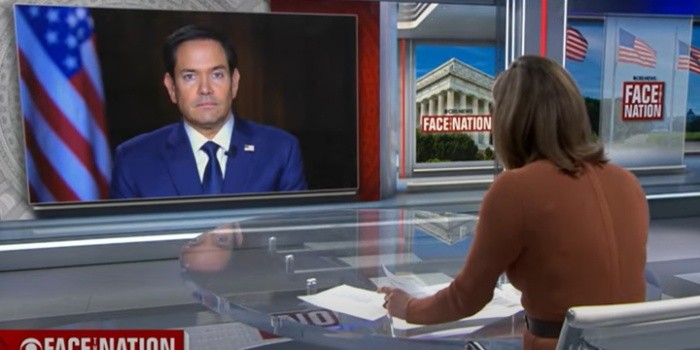
Brennan, host of CBS News’s Face the Nation, made the unsubstantiated claim Sunday during an interview with Secretary of State Marco Rubio while discussing Vice President J.D. Vance’s rebuke of global censorship at a German conference. 

Brennan asked Rubio what Vance had accomplished “other than irritating our allies” by making the apparently controversial pledge that the U.S. would stand behind free speech in the development of artificial intelligence. 

“Why would our allies or anybody be irritated by free speech and by someone giving their opinion?” Rubio fired back. “We are, after all, democracies. The Munich Security Conference is largely a conference of democracies, in which one of the things that we cherish and value is the ability to speak freely and provide your opinions.” 

Brennan quickly jumped in to present her puzzling take on what caused the Holocaust: “Well, he was standing in a country where free speech was weaponized to conduct a genocide.” Who would’ve thought: Hitler, a free speech warrior.

Expanding on her claims, Brennan added, “And he met with the head of a political party that has far-right views and some historic ties to extreme groups. The context of that was changing the tone of it. And you know that, that the censorship was specifically about the right.” 

Rubio wasted no time correcting Brennan’s historically flawed assessment, lecturing her on basic world history: Nazism—not free speech—led to the Holocaust, one of the most vile crimes in human history. 

“Free speech was not used to conduct a genocide,” he stated. “The genocide was conducted by an authoritarian Nazi regime that happened to also be genocidal because they hated Jews and they hated minorities.” 

Rubio added, “There was no free speech in Nazi Germany. There was none. There was also no opposition in Nazi Germany. They were the sole and only party that governed that country. So that’s not an accurate reflection of history.” 

Brennan’s ahistorical fallacy was met with widespread ridicule on social media, including CBS News’s own YouTube channel.

One of the comments read: “Her position that Free Speech was used to conduct a genocide in Germany is the most insane, dangerous, divisive and ahistorical sophism I have ever heard in my life. Fire her immediately, that is beyond anything I could ever imagine hearing.”

Tellingly, Brennan did not respond to Headline USA’s request for comment before this article’s publication.

Her latest blunder follows a series of widely criticized takes. Among them are claims that the U.S. could be missing out on the next Albert Einstein by banning refugees and that the U.S. should have open borders because some of the Founders were not born in American land.  

She was also publicly corrected after falsely suggesting that USAID, the now-defunct federal agency, had not funded leftist initiatives. 

Fiscal Hawks: House Budget Plan Could Add $25 TRILLION in Debt over Next Decade

(The Center Square) House leaders have praised their early work on crafting a budget, but outside groups estimate the spending plan could add $25 trillion to the national debt over the next decade.

Part of the disconnect is the extension of the 2017 Tax Cuts and Jobs Acts, which Republicans view as preventing a tax hike rather than a reduction in revenue. Extending the provisions could considerably add to U.S. debt without corresponding spending cuts.

The Congressional Budget Office has said it won’t pay for itself without further budget offsets. Another issues is President Donald Trump’s tariff plan, which could raise revenue, but figuring out how much remains a challenge as Trump implements some tariffs and leaves others on pause.

In December, Trump promised to cut “hundreds of billions” in federal spending in 2025 through the reconciliation progress. Last week, Trump posted “balanced budget” in all capital letters followed by three exclamation points on Truth Social. He signed the post with his initials. Congress hasn’t proposed anything close to meeting those goals.

The House resolution would allocate $4.5 trillion to extend the president’s 2017 tax cuts. The House resolution raises the debt ceiling by $4 trillion and instructs congressional committees to find at least $1.5 trillion in spending cuts over the next 10 years, only partially offsetting the tax cuts extension. In return, the bill would authorize a $300 billion increase in mandatory spending split among the Armed Services, Homeland Security, and Judiciary committees.

Trump’s comment aren’t the only ones that don’t square with the proposals Republicans have put forward.

U.S. Rep. Jodey Arrington, a longtime fiscal hawk, holds the House Budget Committee gavel, but it’s unclear if he’ll correct course on the nation’s spending even with Trump in the White House and narrow GOP majorities in both legislative chambers.

“This budget resolution is more than numbers on a ledger, it’s a blueprint for restoring America’s security, prosperity, and leadership in the world,” Arrington said.

“It’s a promissory note for our children to preserve the land of liberty and opportunity by safeguarding it from an unwieldy government and the unbridled spending, taxing, and regulating that threatens to destroy it,” he said. “This budget blueprint is the fiscal framework for our unified Republican leadership to rein in Washington’s reckless spending and endless bureaucracy, reignite economic growth and prosperity, and restore the bulwark of our common defense.”

However, the blueprint he’s talking about doesn’t stop the federal government from spending money it doesn’t have. An analysis from the Committee for a Responsible Federal Budget said the budget resolution includes $3.3 trillion of net allowable deficit increases. With interest, that would allow almost $4 trillion of additional debt.

A bill consistent with those instructions would increase debt in 2034 to 126% of gross domestic product, a measure of economic output. The budget window – fiscal year 2025 through fiscal year 2034 – is an eight-year extension of the 2017 Tax Cuts and Jobs Act, which could make the $4.8 trillion of tax cuts and spending increases in this budget window translate to $5.5-$6 trillion of 10-year increases, CRFB noted.

“Overall, the budget resolution would allow lawmakers to increase borrowing by nearly $4 trillion over the next decade at a time when it would be a mistake to make our fiscal situation worse,” the nonpartisan group said.

Michael A. Peterson, CEO of the Peter G. Peterson Foundation, said the House budget plan could add $25 trillion in debt over the next decade.

“Unfortunately, this resolution sets the stage for adding trillions more in new deficits and debt,” he said. “It allows for $4.5 trillion in revenue reductions, with only $1.2 trillion in offsets. All told, this plan would add more than $25 trillion to the debt over the next decade.”

Peterson said taxpayers can’t afford it and lawmakers should make changes.

“They should avoid budget gimmicks like unrealistic economic growth, undefined spending cuts, uncertain tariff revenue, or timing games, all of which simply conceal more debt,” he said. “The bottom line is that America is in terrible fiscal shape and the new administration and Congress have many available policy options to improve our fiscal outlook, or at the very least fully offset any policies they wish to enact or extend. Now is the time to prioritize our fiscal future and put our nation on a more sustainable path.”

Congress’ own research service, the Government Accountability Office, has for years been warning presidents and lawmakers that the nation remains on an unsustainable fiscal path. The GAO repeated those warnings last week.

A GAO report warned that unchecked spending could push public debt to 219% of GDP by 2051 and create a significant economic and national security risk.

“We project that public debt will reach an unprecedented level by 2027,” said Gene Dodaro, U.S. Comptroller General and head of the GAO. “We’re calling on Congress and the Administration to act now to develop and implement a strategy to address this acute challenge. Inaction could result in great difficulties for many Americans and impede policymakers’ flexibility to respond to future economic recessions or unexpected events.”

Republican Study Committee Chairman August Pfluger, R-Texas, said the group will continue to look for ways to reduce the deficit.

“I commend Budget Chairman Jodey Arrington on navigating a budget resolution through markup and setting up the Trump agenda for success,” he said. “RSC’s stated position is this process must reduce the budget deficit and we will continue to work with the Administration and designated committees to achieve additional savings.”


Hurricane Helene Survivors Agree w/ Trump: Abolish FEMA!

(Headline USA) Emily Russell remembers feeling hopeful after she managed to get an appointment with the Federal Emergency Management Agency not long after Hurricane Helene ripped though her home in Swannanoa, North Carolina.

But after several assistance requests were denied or left pending, Russell says the agency has been of “no help” to her family after the late September storm. Still reeling in a world turned upside-down by the most damaging storm in state history, she finds herself open to President Donald Trump’s suggestion about “getting rid of” FEMA.

That is a common sentiment in the mountains of western North Carolina, where living in a trailer with limited supplies for months can try anyone’s patience. Russell, who like many others did not have flood insurance, endured those stresses as she prepared for the birth of her son, but then volunteers stepped up to rebuild her home. Back there now, she can cradle her tiny infant in her arms on her newly constructed front porch — overlooking a heaping pile of rotting debris and two Trump-Vance signs posted to a pole in her yard.

Frustration with stopgap relief efforts has been exacerbated by confusion over where long-term help should come from. FEMA is meant to be a first line, providing temporary housing and funding for repairs while insurance foots most of the bill. It is not the message residents heard initially, when politicians, including then-President Joe Biden, who toured the damaged area, promised residents they would have whatever they needed.

As more time passes, the reality of long-term recovery has gotten complicated.

To Russell and many others, Trump saying he would consider eliminating FEMA made sense. To some experts and officials, however, that could cause more problems than it would solve.

Days after Trump took office on Jan. 20, he surveyed the fallout from wildfires in California and the hurricane in North Carolina and suggested that states primarily manage the response to natural disasters. As a candidate, he had disparaged FEMA’s work in the southern states hit by Helene. That criticism, which began almost as soon as the wind stopped blowing, has not stopped.

More recently, FEMA was criticized by Trump adviser Elon Musk over payments to reimburse New York City for hotel costs for migrants. Four FEMA employees were fired, accused of circumventing leadership to make the transactions, which have been standard for years through a program that helps with costs to care for a surge in migration.

North Carolina’s government estimated that Helene caused a record $59.6 billion in damages. FEMA has contributed almost $380 million through public assistance grants to the state and local governments, as well as approximately $372 million directly to North Carolinians as of Feb. 11, according to the agency. FEMA’s responsibilities include direct financial assistance to individuals and reimbursements to governments for recovery tasks like debris removal and rebuilding roads.

Russell was confused when she was denied on her FEMA application, especially after she said an inspector told her the home was a complete loss. Rushing floodwaters tore off the side of her house, and heavy mud seeped inside, warping the floorboards and rendering most things unsalvageable. She thought the home she grew up in would be bulldozed.

Russell called FEMA and spoke with representatives in-person about her denied request. She said they told her she needed receipts for certain personal items, which she did not have.

“To keep being told it’s pending or not approved, it’s just, it’s just a devastating feeling,” Russell said. “I mean, you just feel lost.”

In Buncombe County, where Russell lives, about 70% of homeowners who registered with FEMA received some level of assistance, according to the agency’s data. Approximately 91% of those approved received up to $10,000, while about 3.6% got between $25,000 and a maximum payment that would likely top out at a little over $40,000.

Danny Bailey, a 61-year-old Buncombe County retiree, said he received $42,500 after losing practically everything from flooding, including the trailer he lived in, his sister’s double-wide mobile home and a barn. His family had moved to the property in 1968.

Bailey already spent some of his money on necessities, such as propane to make it through the winter. He lives in a donated trailer on his property, now a muddy, rutted expanse, and said FEMA “should’ve done more.”

“If this is the way they are, he ought to do away with them,” Bailey said of Trump, whose win in North Carolina helped propel him to victory in November.

Bailey ran into issues getting the money. A few days after Helene, he said a FEMA inspector came to his property and told him to go online to apply for disaster assistance, but Bailey had no computer or reliable cell service. He traveled almost 100 miles east to Statesville to use his nephew’s computer, Bailey said, and then had problems getting clear answers from FEMA on his application status. Eventually, he received his money.

“Their attitude was, you know, this happened to you, but it’s up to you to fix it. And I ain’t the one who caused it,” he said with a laugh.

Complaints about FEMA’s application process are common because of the administrative hurdles in place to ensure applicants’ eligibility, said Miyuki Hino, a city and regional planning professor at the University of North Carolina at Chapel Hill. People may also believe FEMA should provide more assistance when its role is mainly to meet immediate needs such as shelter, Hino said.

Adapted from reporting by the Associated Press


Trump: Military Spending Could Be Cut in Half; No Reason to Build New Nuclear Weapons

(Dave DeCamp, Antiwar.com) President Trump told reporters on Thursday that he believes US military spending could eventually be cut in half and that he wants to pursue the idea as part of an agreement with Russia and China. He also said there was no reason to build new nuclear weapons.

“At some point, when things settle down, I’m going to meet with China and I’m going to meet with Russia, in particular those two, and I’m going to say there’s no reason for us to be spending almost $1 trillion on the military … and I’m going to say we can spend this on other things,” Trump said.

“When we straighten it all out, then one of the first meetings I want to have is with President Xi of China and President Putin of Russia, and I want to say let’s cut our military budget in half. And we can do that, and I think we’ll be able to do that,” he added.

The US spends significantly more on its military than Russia and China combined. According to the Stockholm International Peace Research Institute (SIPRI), in 2023, the US accounted for 37% of global military spending. China came in second but was still far behind, accounting for 12% of military spending, and Russia was in third at 4.5%.

Discussing nuclear weapons, Trump said, “There’s no reason for us to be building brand new nuclear weapons. We already have so many you could destroy the world 50 times over or 100 times over. And here we are building new nuclear weapons, and [Russia] is building new nuclear weapons, and China is building new nuclear weapons.”

The US has been working to modernize its nuclear triad, a project that’s expected to cost $1.5 trillion. Trump also repeated his call to seek “denuclearization” with Russia and said Russian President Vladimir Putin had agreed to do so “in a very big way.”

Trump has previously claimed that he was pursuing denuclearization with Russia and China in his first term in office, but the US also withdrew from key arms control treaties during that time.

Russia recently said the outlook was not good for the state of US arms control as the last nuclear arms control treaty between the two powers is due to expire in February 2026, and there’s currently no replacement. But Trump’s talks with Russian President Vladimir Putin on the Ukraine war could lead to arms control negotiations.

On the other hand, Trump also recently signed an executive order to build a major new missile defense system to cover the US and its military bases abroad, which could lead to a new arms race and will come with a huge price tag. Republicans in Congress are also looking to increase military spending by at least $100 billion.

This article originally appeared at Antiwar.com.

Sec. Hegseth Talks Tough on NATO, but then Promises to Expedite Weapons Sales

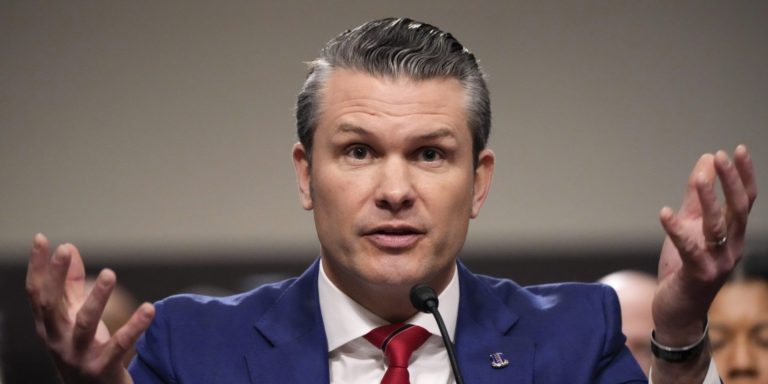
(, The Libertarian Institute) Secretary of Defense Pete Hegseth said that the US will accelerate weapon deliveries to its allies in Europe. Initially, the proposal was made by NATO Chief Mark Rutte, and received mixed reviews from European powers.

On Thursday, speaking at a press conference alongside Secretary-General Rutte, Hegseth explained, “Foreign Military Sales [is] something the United States is committed to Expediting the process of ensuring that our allies get what they need when they need it.”

Under President Joe Biden, the White House worked to boost American weapons production capabilities to match the needs of his aggressive foreign policy that saw Washington flood weapons to Ukraine, Israel, and Taiwan. However, the US is currently unable to deliver weapons to allies in a timely manner and countries have found other sellers.

Hegseth did not provide details on what steps Trump will take to try to ramp up further US weapons production. Trump and Hegseth have called for NATO to massively increase its military spending. Currently, the alliance requires its members to spend 2% of GDP on defense, a standard some nations fail to meet. Hegselth said multiple times during his trip to Europe that Washington wants its allies to spend 5% of GDP on the military.

Hegseth claimed the increased spending and expedited arms production are needed to “ensure we’re able to meet the threats of the future whether that’s Russia on the continent or an ascendant China who has their own ambitions.”

Trump’s policy will be a boon to the US arms industry, which is already operating at capacity and reporting record sales.

The plan for the US to accelerate Foreign Military Sales was first made by Rutte. At the time, European countries had split reactions to the proposal. France sees additional US arms sales as cutting into the European market, while Germany supports the plan.

At a presser later in the day, Hegseth had harsh words for European countries, claiming they were not bearing their fair share of the bloc’s collective burden. “Trump will not allow anyone to turn Uncle Sam into Uncle Sucker,” he said.

This article originally appeared on The Libertarian Institute.