

Secret Service Was Planning for Trump to Go to Prison

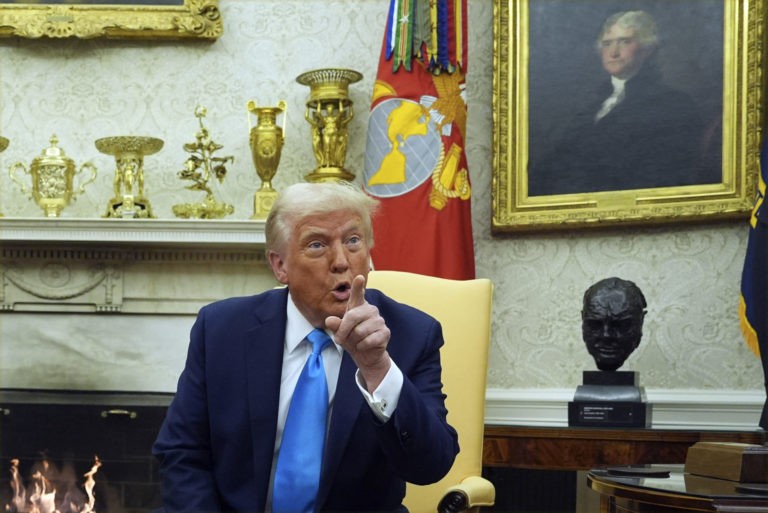
(Ken Silva, Headline USA) New Secret Service Director Sean Curran, who was the head of Donald Trump’s security detail during the two assassination attempts last year, recently gave a softball interview to CBS.

Curran is the agent seen to Trump’s left as he triumphantly pumped his fist in the air after getting shot in the ear at Butler, Pennsylvania. In the CBS interview, excerpts of which were published Monday, Curran was reportedly tight-lipped about the July 13 and Sept. 15 assassination attempts. He said he’s been working non-stop ever since then, and hasn’t had the chance to process the events.

“Part of me probably still hasn’t processed it. I haven’t — from that day to now — I haven’t stopped,” Curran reportedly told CBS News in his first news interview.

“I felt like I couldn’t let him out of my sight. Not to the point where I’d be overworked, but to a point where I felt like I needed to be with him to ensure that things were done the way I needed them to be done. I didn’t want to leave his side. I think he probably didn’t want me to leave his side, either,” he said.

Perhaps the most interesting part of the CBS interview was Curran’s revelation that his agency was planning for the event of Trump going to prison.

“We had serious conversations about it, and I at one point told him, he and I might be — getting a lot closer,” Curran reportedly said.

“Look, if it came to it, I’d be sitting right next to him. That’s how much I care for him. That’s how much I felt that he deserved the level of protection that any of our protectees should get. There’s nothing I would have not done for him,” he added on a more serious note.

“I think we would have treated [prison] probably like a site, and we would have had to probably own a certain portion of that facility. It’s still a law, you know, whether someone is in prison or not. The law still dictates that we have to protect them.”

Curran did discuss purging DEI mandates from the Secret Service, reportedly saying that he disagrees with former Director Kim Cheatle’s plan to make the agency  a 30% female workforce by 2030.

“When you highlight a specific group or person, you are not going to get the best qualified candidates,” he said.

Along with the interview, CBS reported biographical details about Curran.
According to CBS, he grew up in New Jersey and joined the Secret Service in 2001.

“He was assigned to then-Sen. Barack Obama as part of the Secret Service’s dignitary protection division, then to Obama’s presidential protection detail. Curran was recognized as special agent of the year in 2007,” CBS said.

“After a stint working for the assistant director of investigations, he was promoted to run the Secret Service coverage of the 2016 presidential campaign, and later, the protective intelligence squad. During Mr. Trump’s first term, Curran became deputy supervisor on Mr. Trump’s detail, then, in 2021, one of the youngest special agents ever to be named agent in charge.”

CBS didn’t release the full interview. A CBS reporter summarized her interview with Curran instead.

“He didn’t seem too interested in talking about it or dwelling on it,” the reporter said, referring to Butler.

Ken Silva is the editor of Headline USA. Follow him at x.com/jd_cashless.
Rep. Byron Donalds Says He’s Running for Florida Governor

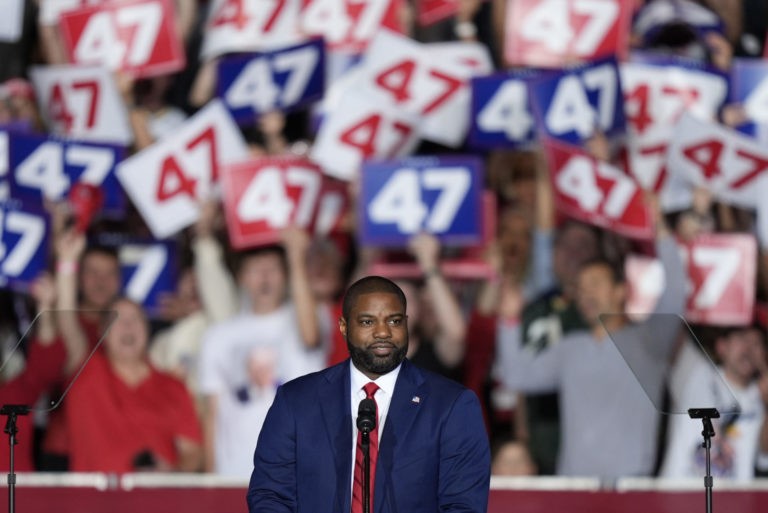
(Headline USA) Republican U.S. Rep. Byron Donalds announced Tuesday that he’s entering the 2026 race to succeed Florida Gov. Ron DeSantis, who is ineligible to seek another term after eight years in office.

Donalds enters the race with President Donald Trump’s endorsement. Donalds has been a frequent Trump surrogate and was on the short list to be his vice presidential running mate last year.

DeSantis, who cannot run again due to term limits and unsuccessfully tried a presidential bid against Trump last year, has not yet made any official endorsement for his successor.
Just before Donalds’s announcement, DeSantis suggested that his wife, Casey DeSantis, would be a worthy governor and said Donalds was not a part of his victories on conservative priorities.

Donalds praised the governor Tuesday, saying he had done a “tremendous job for our state.” Speaking to Sean Hannity on Fox News, Donalds did not directly address the speculation about a Casey DeSantis run but noted his Trump endorsement and his record in elected office.

“For a long time, I’ve been in the trenches, in a lot of these battles, dealing with conservatism,” he added, saying he would prioritize lowering insurance costs, promoting the cryptocurrency industry and preserving the waterways of the Everglades, the largest subtropical wilderness in the U.S.

The 46-year-old Donalds, who lives in Naples in southwest Florida, was born and raised in Brooklyn. He graduated from Florida State University.

He was working as a financial adviser when then-Gov. Rick Scott appointed him to the board of trustees at a state college, cementing his rise in the state GOP.

He entered the Florida House in 2016, won a seat in the U.S. House in 2020 and has been on the short list for multiple opportunities ever since, including being nominated in January 2023 by the far-right wing of as a candidate for House speaker.

After Trump’s endorsement, Donalds indicated that he would make an announcement soon and said he was “committed to working with him to Keep Florida Great.” In a speech at the Conservative Political Action Conference on Feb. 21, Donalds said Trump has called him to talk to him about running.

“Florida is not going to stop leading,” Donalds said. “We’re going to build off of what we’ve done, and we are going to continue to lead bigger, better, faster, greater, safer, freer, because the American dream is for everybody, and we’re going to show the other 49 states how to get it done.”

In addition to Casey DeSantis, other potential GOP candidates include former U.S. Rep. Matt Gaetz, who said in January that he was considering a run, and Florida Agriculture Commissioner Wilton Simpson, though he recently fought with DeSantis over immigration policies.

But Trump’s endorsement may clear the way for Donalds given his dominance in Republican politics, particularly in his adopted home state. Trump established residency in Palm Beach during his first term.

“Byron Donalds would be a truly Great and Powerful Governor for Florida and, should he decide to run, will have my Complete and Total Endorsement,” the president posted Thursday on his social media site. “RUN, BYRON, RUN!”

One of the state’s most high-profile black Republicans, Donalds would become the first African American to serve as governor if he wins.

Donalds and his wife, Erika Donalds, built a reputation for working to transform public education and direct more taxpayer dollars into private and charter schools. A former county school board member, she runs a company that oversees charter schools and a virtual academy.

Adapted from reporting by the Associated Press

Elon: Audit the Fed

(Peter St Onge, Money Metals News Service) Last week Elon Musk suggested DOGE could audit the Mother of Slush Funds, the Federal Reserve.

He even suggested Ron Paul could lead the team.

DOGE has already found at least $55 billion in waste and fraud. The Fed could ramp that up ten-fold.

“Less Oversight than the CIA”

Economist Murray Rothbard, in his book The Case Against the Fed, famously noted the Federal Reserve has less oversight than the CIA.

Indeed, you can find videos across the internet of Ron Paul — then-Chair of the House Subcommittee on Monetary Policy — pressing Fed Chairs for information only to get smirks from Ben Bernanke or Alan Greenspan.

Raising the question of who exactly runs the Fed.

To which the answer is the Fed runs itself. On behalf of the banks that literally own it.

Ben Bernanke Federal Reserve

Why Audit the Fed: Monetary Policy

So what would an audit of the Fed uncover? There are 2 big areas: first, how the Fed conducts monetary policy — meaning how much money to print; and second, where to put interest rates, which can spin money for Wall Street.

Today, these decisions are secret — we can only guess how much is negotiated over late-night dinners that touch on future employment prospects.

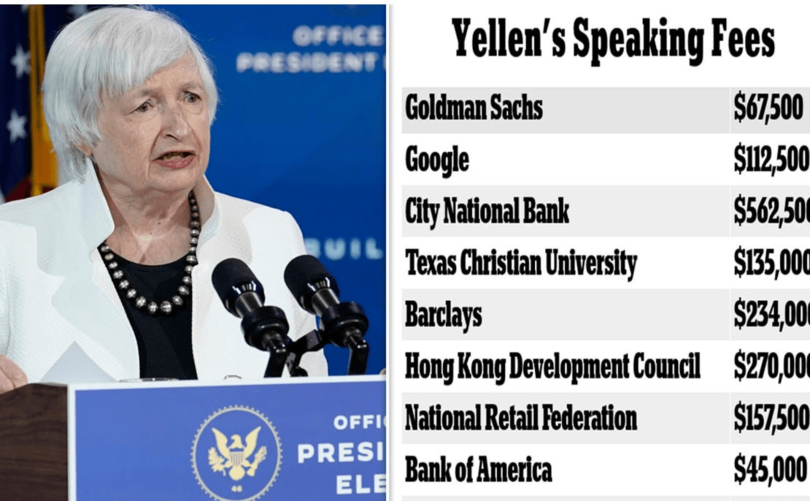
Given Wall Street banks habitually pay former Fed chairs hundreds of thousands for speeches — Janet Yellen got over $7 million — we can guess these are fruitful dinners.

Janet Yellen Speaking FEEs

Why Audit the Fed: A $7 trillion Slush Fund

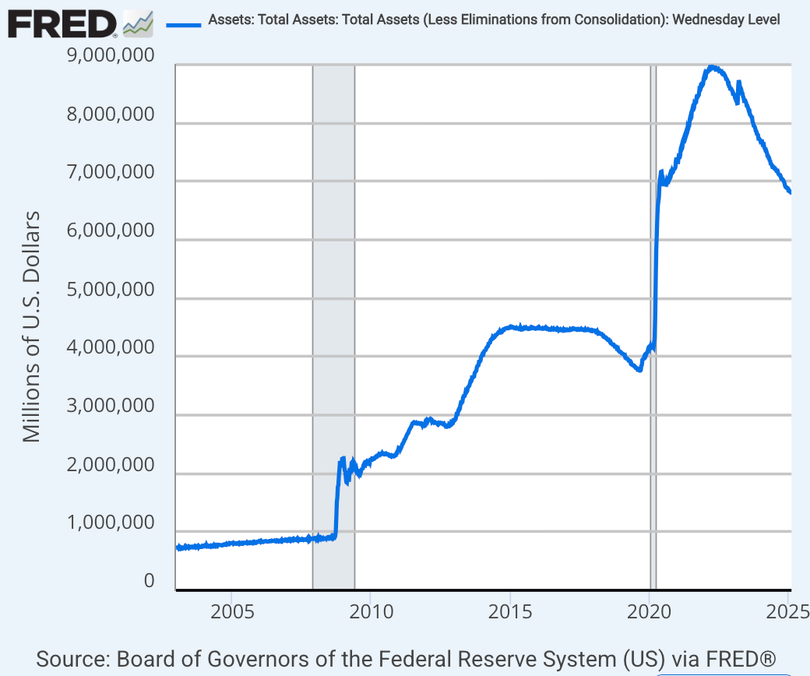
The second big area is the Fed as a slush fund. The Fed currently reports $7 trillion in assets.

These were overwhelmingly bought directly from Wall Street or hedge funds, including hundreds of billions in overseas swaps where the Fed just hands dollars to foreign central banks.

We have no idea what back-room deals went on to use your dollars to bail out one bank — or hedge fund — but not another. Or one country — remember the Tequila Crisis — but not another.

In short, they practically printed up 7 trillion dollars and we have no idea where the dollars went.

In fact, without an audit we have no idea if the 7 trillion number is even accurate — maybe it’s 9, maybe it’s 12. Who knows how many counterfeit dollars they dumped into special interests to dilute the dollar’s buying power and siphon away Americans’ life savings?

Why the Fed has Never Been Audited

A main reason the Fed has never been audited is because it’s self-funding. Meaning it practically prints its own budget. Similar to the way a basement counterfeiter prints their own budget.

This means the Fed doesn’t go to Congress for budget — in fact, it traditionally handed money to Congress — called remittances, and essentially some of the proceeds of its counterfeiting.

These were substantial — around 70 billion a year until Jerome Powell managed to put the Fed a quarter trillion in the hole. But even in the good old days, they represented perhaps 10% of what the Fed prints every year — the rest we don’t know where it went.

What’s Next

The Swamp will fight a Fed audit for the same reason they fight all the audits — they own the grift.

The trick will be communicating to voters just how corrupt Wall Street and the Federal Reserve are.

A 2022 poll by IPSOS found that 93% of Americans know little to nothing about the Fed — which the Fed likes just fine.

Fortunately, the corruption DOGE is currently uncovering can make it crystal clear to this 93% why the Mother of Slush Funds needs the Mother of Audits.


Peter St. Onge writes articles about Economics and Freedom. He’s an economist at the Heritage Foundation, a Fellow at the Mises Institute, and a former professor at Taiwan’s Feng Chia University. His website is www.ProfStOnge.com.

Golden Hiccups in our Modern Financial System

(Joakim Book, Money Metals News Service) Last time this much gold crossed the Atlantic, the French were repatriating their gold reserves from New York — in the 1960s, a few years before the gold-based Bretton Woods monetary system collapsed. The time before then, in July 1940, Operation Fish had the Brits shuffle away 1,500 metric tons to Canada, to keep the treasure away from Hitler in the event the latter would capture London.

The armies imminently circling London these days are of a different sort, clad in bankers’ attire rather than military uniform, their appetite for vaulted gold no less strong. Some 500 tons of gold bars have made their way to the New World once more, flown into the Commodity Exchange (COMEX) vaults in New York in recent days and weeks — most coming from London directly, or via pit stops at refineries in Switzerland and elsewhere (to be melted into the exact COMEX specifications — 100 oz bars vs London’s 400 oz).

Robert Armstrong at the Financial Times gives appropriate voice to the bewilderment (italics in original): “…the gold is then flown to New York (Planes! To settle a financial transaction! In the 21st century!).”

Understandably, some logistical problems have emerged. The Bank of England reported at its monetary policy committee press conference on February 6 that all its gold delivery slots are backed up for weeks. Dave Ramsden, deputy governor at the Bank, put it bluntly: “It’s an obvious point, but, you know, gold is a physical asset. So there are real logistical constraints and security constraints.”

Gold has backstopped the global monetary and financial system for centuries — obviously so under the various gold standards (classical, interwar, Bretton Woods), but no less important during the last fifty-odd years of pure fiat money. Central banks have for the most part held on to the gold of ages past; in recent years some of them — Poland, Russia, China, India — have acquired sizable amounts. (The World Gold Council now routinely reports that the central banks buy above 1,000 tonnes a year.)

When gold shot up to above $2,900 earlier this month, the growing pains of this most ancient and analog of financial assets clashed with the fast-paced, modern, digital financial system that surrounds it.

Two things happened at once to unleash a flood of gold bars shuttling across the Atlantic at full speed — or at least the speed of the cargo hold in a passenger jet, as Joe Wallace reported recently for The Wall Street Journal. The New York gold price acquired a premium of upward of $70 during a few days last week; at $2,900, that 2.5 percent premium was enough to salivate the mouths of bullion traders and arbitrageurs everywhere.

Secondly, the sudden price jump sent the spot-vs-futures market for gold in complete disarray. A gold-dealing bank often lends out its gold to borrowers who use the bullion as collateral for various types of financial market trades and operations. The bank charges interest on the loan but is in the deal for interest revenue rather than gold price exposure, so it hedges out the price risk by selling gold futures.

That seems clear enough: the bank gets interest, the borrower carries price risk, and the holder of the futures contract takes later delivery of gold.

The hiccup?

Most gold, for historical and path-dependency reasons, sits physically in vaults below London, while the futures contracts are traded in New York.

In a typical pennies-in-front-of-steamrollers trade, then, a number of banks got themselves in a pickle. Since they’re short gold on the futures leg of the trade, and buying futures at higher gold prices to close out that exposure would saddle the bank with substantial losses, the obvious emergency solution was… to fly the gold over the pond. Writes Greg McKenna for Fortune:

Typically, traders have no intention of fulfilling their obligation to deliver physical gold and instead purchase futures contracts to close out their positions. Instead of taking that loss, however, some dealers have found it’s cheaper to pay up — even if that means using plenty of frequent-flier miles.

“Banks,” described Joe Wallace for the Wall Street Journal, “run big offsetting positions, owning gold bars in London, lending them out to earn a return and hedging the risk that prices fall by selling futures in New York.”

Some candidate explanations for why gold prices suddenly exploded upward in recent weeks and months — and specifically the gap between London and New York opened up — include Trump’s tariff threats; expectations of monetary policy diverging between Europe, the UK, and the US; transitions from LIBOR to SOFR interest rates; and real rates coming down.

It’s always hard to determine exactly what market prices are telling us, but what Rob Haworth at US Bank Wealth Management says in an interview for Fortune seems obvious enough: “We have too much gold in London and not enough gold in New York.”

After last week’s mad dash, hopefully, we’ve rebalanced. Adrian Ash, of BullionVault, told Sky News that, “This is a financial market phenomenon. It’s helped juice prices higher, but it hasn’t had any real impact on the availability of metal.”

Consequently, he says, it’ll “all come back out again.”

It’s ironic that it’s around gold that the financial system is squeaking. Lyn Alden, in her book Broken Money: Why Our Financial System is Failing Us and How We Can Make it Better (which I helped edit and research), identified precisely this discrepancy in speed as a prime candidate for why the twentieth-century march toward fiat money was unavoidable: information, about bank ledgers, debts, and contracts, moved at the speed of light, while gold, the settlement media underpinning it all, shipped at the speed of… ships.

As of Friday evening, the New York and London gold prices were once more roughly in line, the golden arbitrage having rapidly closed. Lease rates, a type of gold interest rate, have come down as well from their heights above 5 percent just a few days ago. Maybe this is the beginning of gold’s new role in the global, geopolitical monetary system. Or maybe Ash is right, and it was all just a glitch in the glittering matrix that is the gold market.

Originally Published on AIER’s The Daily Economy.


Joakim Book is a professional editor and writer with a passion for monetary economics and financial history, and a 2025 Sound Money Fellow conducting advanced comparative analysis of economic history and financial behavior under a gold standard in 19th-century Britain and America versus current times.

Patriot Front Settles another Lawsuit w/ Leftist Non-Profits

(Ken Silva, Headline USA) Two North Dakota nonprofits have settled their lawsuit against the white nationalist group Patriot Front, which allegedly vandalized local businesses and public property in recent years.

Terms of the settlement weren’t disclosed. The settlement, which was docketed in federal court on Feb. 7, appears to cover Patriot Front leader Thomas Rousseau and member Trevor Valescu—but not the other 10 anonymous members listed on the lawsuit as John Does.

The settlement stems from a 2023 lawsuit filed by the North Dakota Human Rights Coalition and the Immigrant Development Center, which alleged that Patriot Front vandalized businesses and public property in recent years, including spray-painting Patriot Front designs on the front of the International Market Plaza, an indoor marketplace for immigrant business owners in Fargo. The complaint also claims they defaced a mural depicting Black women wearing hijabs.

The lawsuit mostly sat on the docket in its early stages, with the plaintiffs claiming they couldn’t serve the group members because they went “underground.”

“Patriot Front has no known physical address and operates as a semi-clandestine white nationalist organization online. And Defendant Rousseau and Defendant [Trevor] Valescu’s whereabouts are likewise unknown, despite Plaintiffs’ best efforts to locate them,” the plaintiffs said in December 2023.

The plaintiffs were given permission to serve the Patriot Front via email.

Last year, a federal judge dismissed some of the claims against Rousseau and Valescu. The parties commenced settlement talks soon thereafter.

The settlement comes about a month after a federal judge issued a default judgment against Patriot Front members last year in a separate case—ordering them to pay more than $2.7 million to a black man they allegedly accosted in July 2022 in an incident where no criminal charges were filed.

In yet another case involving the vandalism of a mural honoring black tennis star Arthur Ashe, five members reached a settlement—but not Rousseau, who already has a default judgment issued against him in that case.

The Associated Press contributed to this report.

Ken Silva is the editor of Headline USA. Follow him at x.com/jd_cashless.

House Republicans’ $4.5 Trillion Budget Resolution Overcomes Odds, Passes

(Thérèse Boudreaux, The Center Square) President Donald Trump’s tax cuts, border, defense, and energy promises are one step closer to enactment after the U.S. House narrowly passed its $4.5 trillion budget resolution Tuesday night, officially kickstarting the budget reconciliation process.

Following hours of Speaker Mike Johnson, R-La., convincing Republican holdouts to commit, a brief cancellation of the vote, and then an abrupt recalling of all House members, the resolution passed 217-215 and now heads to the Senate.

Republicans have a majority in the upper chamber with 53 members to the Democrats’ 45 and two independents caucusing with them.

The passage of the House budget resolution was far from certain.

Both the high price tag and the steep spending cuts worried some Republicans, with centrists opposed to possible slashes to Medicaid and fiscal hardliners revolting against the estimated tens of trillions of dollars the resolution could add to the federal deficit over the next 10 years.

Besides extending the 2017 Trump tax cuts for at least 10 years at the cost of $4.5 trillion, the resolution authorizes a $300 billion increase in defense and border security spending, to be split among the Armed Services, Homeland Security, and Judiciary committees.

To partially accommodate its price tag, the proposal also instructs the Ways and Means Committee to raise the debt ceiling by $4 trillion and instructs other committees to find at least $1.5 trillion in spending cuts over the next 10 years, likely from changes to Medicaid.

Just two Republican “no” votes could have tanked the resolution. Out of the four Republican holdouts who had either indicated or outright stated their intent to vote no, Reps. Victoria Spartz, R-Ind., Tim Burchett, R-Tenn., and Warren Davidson, R-Ohio, ultimately flipped after pressure from party leaders. Rep. Thomas Massie, R-Ky., was the lone Republican who voted against the resolution.

The “very complicated negotiation,” in Johnson’s own words, marked yet another odds-defying moment where the Louisiana Republican pulled through on Trump’s agenda despite substantial resistance from members of his party.

“We have a lot of hard work ahead of us,” Johnson acknowledged after the vote. “We are going to deliver the America First agenda. We’re going to deliver all of it, not just parts of it, and this is the first step of that process.”

Questions Swirl Around Musk’s Role at DOGE

(Morgan Sweeney, The Center Square) The White House continues to face questions about billionaire and DOGE leader Elon Musk’s role and actions in the federal government.

Reporters at the White House press briefing asked Karoline Leavitt if Elon Musk was the DOGE administrator. At first, Leavitt responded by clarifying that Musk “oversees” DOGE but did not say directly whether he was the administrator.

The executive order Trump used to establish DOGE also stipulates the agency will be run by an administrator who “shall report to the White House Chief of Staff.”

“The president tasked Elon Musk to oversee the DOGE effort. There are career officials and there are political appointees who are helping run DOGE on a day-to-day basis,” Leavitt replied. “There are also individuals who have onboarded as political appointees at every agency across the board to work alongside President Trump’s cabinet to find and identify waste, fraud and abuse, and they are working on that effort every day.”

When pressed again later by a second reporter, Leavitt repeated that Musk “oversees the effort,” but then said he is not the administrator and is instead a special government employee, as the White House has previously said.

Since the creation of the department on Trump’s first day in office, he has faced questions over whether he has the authority to create a government agency, with some saying that authority lies with Congress, as well as many concerning the agency’s transparency and the legality of Musk’s role.

“…Elon Musk is a special government employee,” Leavitt said, restating that career officials and political appointees help run DOGE.

A special government employee, according to the U.S. Department of the Interior, is someone appointed to perform “important but limited” services to the government for no more than 130 days in a year. DOGE is supposed to be a temporary organization terminating in July 2026. A reporter followed up with a question around the president’s timeline for Musk.

“Musk has obviously been doing a lot of work. He’s been working every day, and a lot of the time, weekends,” the reporter said. “Is the White House expecting him to limit his work to 130 days?”

Citing the date, Leavitt told the reporter to ask again when that day comes.

“I think we’ve been here about 35 days, roughly, so ask me in another 100 days,” she said.

Leavitt also faced questions Tuesday about Musk’s authority as the head of DOGE. DOGE was created to identify and eliminate fraud, waste and abuse in the federal government, and has been instructing various government departments to put hundreds of employees on leave, as well as terminate some positions. Most recently, Musk sent out an email to federal workers demanding they send an email detailing what they did last week or be fired. Some department leaders directed their employees to ignore the email.

Leavitt insisted that Trump and DOGE are working in concert and that the entire administration is committed to the same priorities of eliminating government waste and inefficiencies. She said employees should look to agency leaders for clarification.

Musk will be at the first meeting of Trump’s new cabinet on Feb. 26, according to Leavitt.

Supreme Court Seems Likely to Rule for Ohio Woman Subjected to Anti-Straight Bias

(Headline USA) The Supreme Court seemed likely Wednesday to side with an Ohio woman who allegedly suffered sex discrimination from her employer because she is straight.

The outcome of the case could remove an additional requirement that some courts apply when members of a majority group, including those who are white and heterosexual, sue for discrimination under federal law.

Justice Brett Kavanaugh stated a way of resolving the case, that seemed to enjoy broad support among his colleagues.

“Discrimination on the basis of sexual orientation, whether you are gay or straight, is prohibited. The rules are the same whichever way it goes,” Kavanaugh said.

The justices heard arguments in an appeal from Marlean Ames, who has worked for the Ohio Department of Youth Services for more than 20 years.

Ames contends she was passed over for a promotion and then demoted because she is heterosexual. Both the job she sought and the one she had held were given to LGBTQ people.

Title VII of the Civil Rights Act of 1964 bars sex discrimination in the workplace. A trial court and the 6th U.S. Circuit Court of Appeals ruled against Ames.

The question for the justices is that the Cincinnati-based 6th Circuit and several other appeals courts covering 20 states and the District of Columbia apply a higher standard when members of a majority group make discrimination claims. People alleging workplace bias have to show “background circumstances,” including that LGBTQ people made the decisions affecting Ames or statistical evidence showing a pattern of discrimination against members of the majority group.

The appeals court noted that Ames didn’t provide any such circumstances.

Ohio Solicitor General T. Elliot Gaiser told the justices that the officials who made the job decisions did not even know Ames’ sexual orientation.

But even Geiser didn’t object too much to the narrow outcome that seemed most likely. “Everyone here agrees that everyone should be treated equally,” Gaiser said.

His concession prompted Justice Neil Gorsuch to note, “We’re in radical agreement on that today.”

America First Legal and other conservative groups filed briefs arguing that members of majority groups are as likely to face job discrimination, if not more so, because of diversity, equity and inclusion policies.

President Donald Trump has ordered an end to DEI policies in the federal government and has sought to end government support for DEI programs elsewhere. Some of the new administration’s anti-DEI initiatives have been temporarily blocked in federal court.

Lawyers for America First, founded by Trump aide Stephen Miller, wrote that the idea that discrimination against members of majority groups is rare “is highly suspect in this age of hiring based on ‘diversity, equity, and inclusion.’”

Adapted from reporting by the Associated Press

ESPN’s Stephen A. Smith ‘Likes’ Right-Winger Nick Fuentes’s Anti-Israel Rant

(Ken Silva, Headline USA) Is Stephen A. Smith a closeted Groyper?

The outspoken ESPN personality was revealed Wednesday to have “liked” an Instagram post featuring right-wing personality Nick Fuentes ranting about Israel’s influence on American society.

“Let’s just be open and honest about the stats: 17 of top 25 hedge funds are run by Jews, 17 of the top 27 donors in the 2020 presidential election were Jews … three out of three of the major record labels are run by Jews,” Fuentes says in the rant. “AIPAC [is] the most powerful lobbying group in the country—on both sides … It’s peculiar, it’s remarkable, it’s statistically significant, it’s anomalous—and its’ true.”

The Twitter account AF Post reported Smith having liked Fuentes’s rant on Tuesday night. On Wednesday morning, Smith responded to the news—saying that if he did like the post, it was by accident.

“I do not know who this is or what that video is. If it was ‘liked’ it was unintentional,” Smith said on Twitter/X, disavowing Fuentes.

Given Fuentes’s close relationship with rapper Kanye West, it seems unlikely that Smith—who talks about African American culture for a living—doesn’t know about the controversial Christian nationalist.

Smith, one of the biggest stars in the history of ESPN, has become increasingly involved in Democratic politics—often receiving attention for his willingness to criticize his own party. He’s even been floated as a potential presidential candidate for 2028.

Just two days ago, Smith aired some of his grievances about the Democrats during an interview with House Minority Leader Hakeem Jeffries, D-N.Y.

“When are we going to let go of January 6th? When are you gonna let that go? Because he—I mean the man was impeached twice and convicted on 34 felony counts, and still reelected,” Smith asked, according to a video shared by the Daily Caller.

Following the interview, Smith praised Jeffries but slammed the Democratic Party for its lack of leadership.

“What are you going to do, and how are you going to convince us to believe you? You first got to find somebody that’s worth believing. And I’m not denigrating Leader Jeffries in any way, but when you think about a national voice for the party, who is that person? It’s nonexistent right now,” Smith added.

Ken Silva is the editor of Headline USA. Follow him at x.com/jd_cashless.
Trump to Introduce ‘Gold Card’ Visa for Wealthy Immigrants

(Headline USA) President Donald Trump said Wednesday that he plans to start selling a “gold card” visa with a potential pathway to U.S. citizenship for $5 million, seeking to have that new initiative replace a 35-year-old visa program for investors.

“I happen to think it’ll sell like crazy. It’s a market,” Trump said. “But we’ll know very soon.”

During the first meeting of his second-term Cabinet, Trump suggested that the new revenue generated from the program could be used to pay off the country’s debt.
“If we sell a million, that’s $5 trillion dollars,” he said. Of the demand from the business community to participate, he said “I think we will sell a lot because I think there’s really a thirst.”

Commerce Secretary Howard Lutnick told reporters during the same meeting that Trump’s initiative would replace the EB-5 program, which offers U.S. visas to investors who spent about $1 million on a company that employs at least 10 people.

Lutnick said that program “has been around for many years for investment in projects” but “it was poorly overseen, poorly executed.”

The new program could mark a dramatic shift in U.S. immigration policy but isn’t unprecedented elsewhere. Countries in Europe and elsewhere offer what have become known as “golden visas” that allow participants to pay in order to secure immigration status in desirable places.

Congress, meanwhile, determines qualifications U.S. for citizenship, but the president said “gold cards” would not require congressional approval.

Trump said of future possible recipients of the gold visa program: “They’ll be wealthy and they’ll be successful and they’ll be spending a lot of money and paying a lot of taxes and employing a lot of people, and we think it’s going to be extremely successful.”

Henley & Partners, an advisory firm, says more than 100 countries around the world offer “golden visas” to wealthy individuals and investors. That list includes the United States, United Kingdom, Spain, Greece, Malta, Australia, Canada and Italy.

“Companies can buy gold cards and, in exchange, get those visas to hire new employees,” Trump said.

“Everybody wants to come here, especially since Nov. 5,” he said of his Election Day victory last fall.

Lutnick suggested that the gold card — which would actually work, at least to start, more like a green card, or permanent legal residency — would raise the price of admission for investors and do away with fraud and “nonsense” that he said characterize the EB-5 program.

A pathway to citizenship as part of the new program also would set it apart from the EB-5 program. Trump said vetting people who might be eligible for the gold card will “go through a process” that is still being worked out.

Pressed on if there would be restrictions on people from China or Iran not being allowed to participate, Trump suggested it will likely not “be restricted to much in terms of countries, but maybe in terms of individuals.”

About 8,000 people obtained investor visas in the 12-month period ending Sept. 30, 2022, according to the Homeland Security Department’s most recent Yearbook of Immigration Statistics. The Congressional Research Service reported in 2021 that EB-5 visas pose risks of fraud, including verification that funds were obtained legally.

The Republican president added that the federal government could sell 10 million “gold cards” to reduce the deficit. He said it “could be great, maybe it will be fantastic.”

“It’s somewhat like a green card, but at a higher level of sophistication,” the president said. “It’s a road to citizenship for people — and essentially people of wealth or people of great talent, where people of wealth pay for those people of talent to get in, meaning companies will pay for people to get in and to have long, long term status in the country.”

Adapted from reporting by the Associated Press