(Stefan Gleason, Money Metals News Service) Gold and silver traded in a volatile fashion over the past several days as investors weighed conflicting signals from the Federal Reserve, economic data, and geopolitical developments in the Middle East.
Both metals attempted to rebound early in the week after softer labor-market data encouraged hopes that the Fed may be nearing the end of its tightening cycle.
However, those gains proved short-lived as Treasury yields climbed back toward recent highs and investors continued to price in the possibility that interest rates could remain elevated for longer.
The white metal continues to be weighed down by economic fears related to the Iran War — even as its long-term industrial demand outlook remains strong thanks to growing consumption from solar, electronics, artificial intelligence infrastructure, defense applications, and power-grid expansion.
Meanwhile, the Federal Reserve offered little clarity. Minutes from its June meeting revealed a notable divide among policymakers, with some officials still favoring another rate hike while others see weakening labor conditions eventually opening the door to easier monetary policy.
That uncertainty has translated into heightened volatility across financial markets, particularly for precious metals.
Despite the recent pullback, the underlying fundamentals supporting gold remain in place. Central banks continue to accumulate bullion at a healthy pace, reinforcing a trend that has persisted for several years as nations diversify reserves away from the Federal Reserve Note dollar.
Investors are also keeping a close eye on inflation data due this week, along with developments in the Middle East. Any signs of cooling inflation or a more dovish Fed should provide the catalyst for gold and silver to regain momentum after their recent consolidation.
For disciplined long-term investors, periods of volatility like this have often proven to be opportunities rather than reasons for concern.
Stefan Gleason is President and CEO of Money Metals Exchange, the company recently named “Best Overall Online Precious Metals Dealer” by Investopedia. A graduate of the University of Florida, Gleason is a seasoned business leader, investor, political strategist, and grassroots activist. Gleason has frequently appeared on national television networks such as CNN, FoxNews, and CNBC and in hundreds of publications such as the Wall Street Journal, TheStreet, and Seeking Alpha.
(Mike Maharrey, Money Metals News Service) When you watch the gold price all day, every day, you start to pick up on trends intuitively. Since gold corrected in January, I’ve noticed it often rises in the early morning and then drops as soon as the U.S. market opens. This would seem to indicate that demand for gold is generally stronger during Asian sessions and weaker in the West.
Turns out that my perception is the reality.
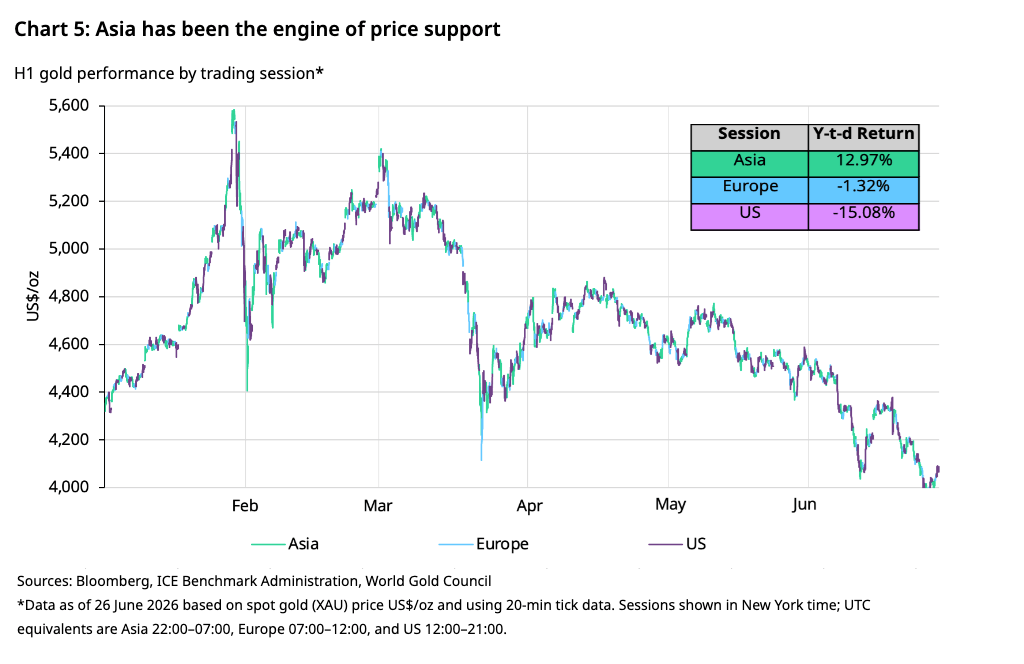
Buried at the end of the World Gold Council’s H1 gold market summary was an interesting chart that breaks down gold’s price movement by trading session. This data reveals that North American investors are driving the sell-off, while Asian investors are buying the dips.
In fact, the World Gold Council called Asia “the engine of price support.”
“Interestingly, intraday analysis suggests that the bulk of gold’s movements have been linked to activity during Asian and U.S. trading hours. Many of the pullbacks occurred during US hours and, conversely, gold’s rebounds generally occurred during Asian hours.”
During Asian trading hours, gold was up 12.9 percent through the first six months of the year. During North American trading hours, the yellow metal was down 15 percent. European sessions split the difference, with gold falling modestly by 1.3 percent.
Chinese buying helped push gold bar and coin demand to a 12-year high of 1,374.1 tonnes last year. In value terms, global bar and coin demand was a record-breaking $154 billion.
More than half of last year’s global coin and bar demand came from two countries – China and India.
The split between East and West becomes even more stark when looking at the data for the first half of last year.
Chinese bar and coin demand grew by 44 percent year-on-year in H1 last year as investors snapped up 115 tonnes of gold bars and coins in the second quarter alone. It was the strongest H1 for physical gold buying since 2013.
Meanwhile, Americans continued to sell their gold. Year-on-year bar and coin sales plummeted by 53 percent in H1. Demand in the second quarter was only 9 tonnes, the lowest quarterly level since Q4 2019.
Asian Markets Have Out-Bulled the West for Decades
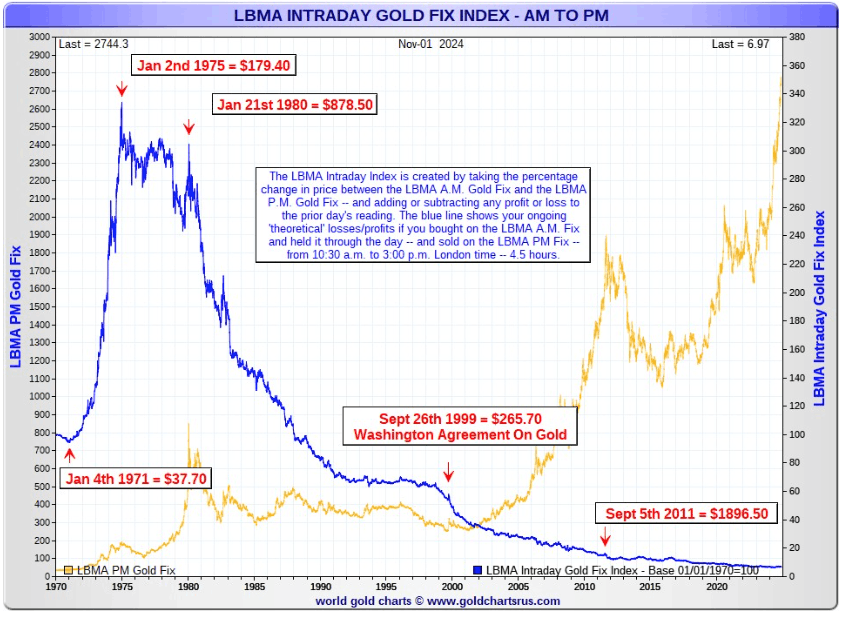
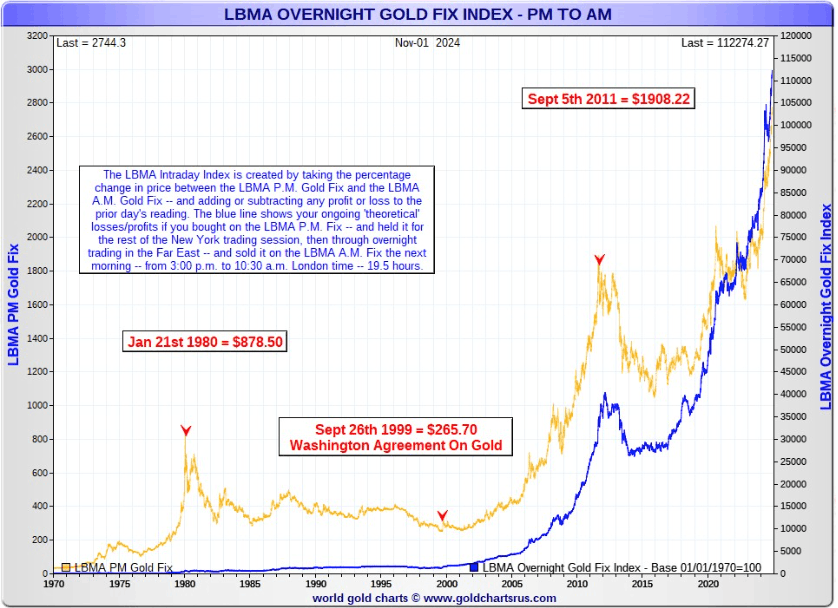
As it turns out, this phenomenon of gold rising during Asian trading hours and falling during North American sessions is not limited to the recent past. If you only invested at the London morning gold fix (10:30 a.m. GMT/5:30 EDT) and sold shortly after the P.M. price fix (3 p.m. GMT), you would gain very little. But if you bought at the P.M. fix and sold in the morning, you’d be up substantially.
“This first chart shows what happened to your $100 investment if you’d bought at the 10:30 a.m. GMT morning gold fix in London — and then sold it at the 3:00 p.m. GMT afternoon gold fix starting on the first trading day of January 1970…then reinvested that $100…plus or minus any gains or losses…the following day at the morning gold fix — and sold again at the p.m. fix once again.
“If you did this every business day for 54 years, your initial $100 investment would be worth US$6.97 today. Of course, that doesn’t include the loss due to currency debasement over that time…so in other words, you lost everything.”
Conversely, if you’d invested $100 at the afternoon gold fix in London, held that investment until early in the Far East Globex trading session overnight — and then sold at the morning gold fix in London, the chart looks like this:
“As of the close of trading on 01 November 2024…that theoretical $100 invested 54 years ago had morphed itself into $112,274.27.”
Asia’s Lover Affair With Gold and Western Price Manipulation
This data underscores two important market realities.
First, Asians love gold even as Western investors tend to spurn it. As a result, gold is flowing from the West to the East. As Americans sell the yellow metal, Asians take advantage of the price dips and gobble it up.
Second, the data may hint at price manipulation by big Western banks, as Steer noted in his analysis.
“This simple difference in investment strategy is all the proof needed that the world’s banks and large commercial traders are actively managing the price between the a.m. and p.m. gold fixes in London — and have been doing so since the paper market in gold first opened on 02 January 1975.”
The paper market makes this kind of manipulation possible. The fact that there is far more paper gold than physical metal allows big banks to move paper quickly and en masse, and nudge the price lower. This type of manipulation is even more effective in the less deep silver market.
Steer argues that due to this tinkering, nobody knows the true free-market price of gold.
“But one thing is for sure is that they are many, many multiples of what they’re trading at today…silver in particular, as you already know.”
Interestingly, the Asian market is much more oriented around physical metal, with paper taking on a smaller role. As a result, Asian trading likely comes closer to representing a free market price than the London gold fix.
It’s impossible to know how much of this trend is due to manipulation and how much is simply a function of higher gold demand in Asia. However, the center of gold’s gravity is clearly much closer to Beijing than New York.
Meanwhile, Asian hubs, including Singapore and Hong Kong, are positioning themselves to take a more significant role in the global gold market.
Hong Kong recently launched a gold settlement system to challenge Western dominance. The government-owned clearing system will reportedly “mirror” the financial infrastructure used by the LBMA in London and will include a Hong Kong ticker (HAU). According to a spokesperson, the ticker will “ensure that Hong Kong gold prices are fully accessible to global market participants.”
It will be interesting to see how a more active Asian role in the market impacts the global dynamics. It may well make it more difficult for the powers-that-be in the West to control the price.
Mike Maharrey is a journalist and market analyst for Money Metals with over a decade of experience in precious metals. He holds a BS in accounting from the University of Kentucky and a BA in journalism from the University of South Florida.
Analysts at Metals Focus expect gold to remain range-bound in the near term but still see upside over a longer time horizon.
Gold’s Bearish Near-Term
Interest rate expectations continue to be the primary headwind for gold. Since the oil shock at the beginning of the U.S.-Iran conflict, expectations for a rate hike this year have continued to increase. Even after the weaker job numbers in June, the markets continue to price in a high probability of an interest rate hike this year.
Since gold is a non-yielding asset, the conventional wisdom is that rising rates are negative for gold (Keep in mind it’s crucial to pay attention to real interest rates, not just the nominal rate you see in the media).
As Metals Focus analysts note, even with a peace plan apparently in the works, the situation in Iran remains uncertain and volatile.
“Looking ahead, even following the peace agreement and the reopening of the Strait of Hormuz, a normalization in tanker traffic is likely to take time, which should continue to underpin inflation concerns. Moreover, President Trump’s latest comments that the interim deal with Iran was ‘over’ highlight how fragile conditions remain, which may also keep energy prices elevated.”
Meanwhile, July and August are historically seasonally slow months for gold demand, and we were already seeing demand slow, particularly in Western markets.
“Much of this recent weakness reflects a cooling in retail investment across all major markets. Losses following the January rally, together with recent range-bound prices have discouraged many individual investors. Moreover, several key markets have been hit hard by higher oil prices, which have eroded disposable incomes.”
Higher gold prices continue to weigh on the jewelry sector. At just under 300 tonnes, global jewelry demand fell 23 percent year-on-year in Q1. A 19 percent dip in Indian demand and a 32 percent crash in Chinese sales pushed overall jewelry demand lower. It was the lowest quarter for gold jewelry demand since COVID.
As gold prices have moderated, there appears to be a bit of a resurgence in jewelry demand in both China and India. However, Metals Focus analysts noted, “These gains have come from a low base and remain modest, particularly given that both countries will only enter their seasonally stronger demand period from August or September onwards.”
Gold Bulls Down But Not Out
Despite the current headwinds, Metals Focus analysts expect gold prices to resume their bullish trend, perhaps as early as the latter part of Q3.
Despite market expectations, Metals Focus does not expect an interest rate hike this year, saying the central bank is more likely to simply hold rates steady.
“Although inflation is unlikely to disappear quickly, we believe policymakers will be willing to tolerate above-target inflation in order to avoid a material slowdown, let alone a recession. Under such a scenario of unchanged policy rates and higher inflation, real yields should come under pressure, providing support for gold.”
Metals Focus analysts also believe the fundamentals that supported gold throughout the 2025 bull run are likely to remain in place “for some time.”
They specifically note ongoing central bank gold demand.
There was a brief slowdown in net central bank gold purchases in March and April as countries coped with the oil price shock. Selling by Turkey and Russia drove net purchases negative in March. However, net central bank gold holdings began climbing again in April and grew by 41 tonnes in May.
Metals Focus analysts said that gold sales and swaps were used to raise dollar liquidity, but that the need for further liquidations has diminished, “particularly following the de-escalation of tensions and the subsequent fall in oil prices.”
“Meanwhile, lower gold prices, continued US policy uncertainty and elevated geopolitical risks have encouraged many regular official sector buyers to continue adding to their gold holdings.”
The geopolitical and economic fundamentals supporting the gold bull market are also expected to remain in place.
“U.S. policy uncertainty should persist and could intensify, depending on the outcome of the mid-term elections. Concerns over the long-term outlook for the U.S. dollar are also unlikely to fade. Geopolitical risks should remain elevated, particularly given the precedent set by recent U.S. unilateral actions and Iran’s recognition of the strategic leverage offered by the Strait of Hormuz. Finally, equity valuations have become even more stretched. Against this backdrop, gold’s role as both a safe-haven asset and a portfolio diversifier remains as important as ever.”
Mike Maharrey is a journalist and market analyst for Money Metals with over a decade of experience in precious metals. He holds a BS in accounting from the University of Kentucky and a BA in journalism from the University of South Florida.
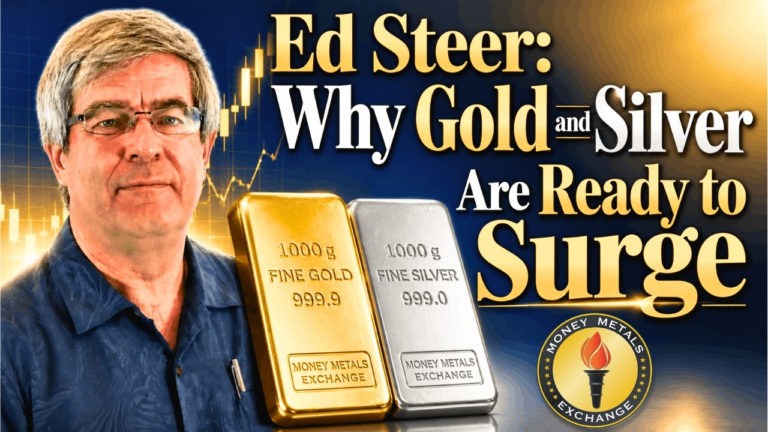
(Money Metals News Service) Gold and silver may have spent much of 2026 consolidating after January’s sharp correction, but veteran precious metals analyst Ed Steer believes the next major move could be much higher.
In a conversation with Money Metals’ Mike Maharrey, Steer explained why tightening physical supplies, growing demand from the East, unsustainable government debt, and shifting global pricing power all point toward significantly higher precious metals prices. He also shared why he believes silver could return to triple-digit prices before the end of the year if market conditions unfold as expected.
(Interview Starts Around 7:58 Mark)
Ed Steer Says Gold and Silver Are Nearing a Major Breakout
Steer began by looking back at the powerful rally that carried gold and silver into late January. He explained that large bullion banks began covering short positions around May or June of the previous year, helping drive prices higher as they bought back contracts. The rally accelerated in December as speculative traders entered the market, eventually becoming nearly parabolic before abruptly ending in late January.
According to Steer, the correction that followed was not the result of changing market fundamentals. Instead, he argued that the largest bullion banks deliberately intervened to halt the rally and continue reducing their short exposure while pushing prices lower.
Despite months of sideways trading and heightened geopolitical uncertainty, Steer believes the current correction is nearing its end. He expects gold and silver to begin recovering during July or August and said silver could return to triple-digit prices before the end of 2026 if commercial traders allow the rally to unfold.
Physical Silver Shortages Continue to Strengthen the Bullish Case
Maharrey pointed to reports of silver shortages in London, strong physical demand from India, and the movement of metal between London and New York earlier this year. He asked whether these developments exposed growing vulnerabilities within the global bullion market.
Steer believes they did.
He noted that the silver market has now experienced a structural supply deficit for six consecutive years, with annual consumption consistently exceeding global mine production. While many assumed roughly 150 million ounces of freely available silver remained within the London Bullion Market Association (LBMA), Steer said recent events demonstrated that readily available inventories were far smaller than expected.
According to Steer, transporting silver between trading hubs only temporarily addresses shortages. The underlying supply-and-demand imbalance remains intact, and he believes the market will eventually experience what he described as a “discontinuous price event” once available physical inventories can no longer satisfy demand.
Why Steer Continues Buying Precious Metals
One question Maharrey frequently hears is why investors should own precious metals if prices are heavily manipulated.
Steer’s response was straightforward: even if prices have been artificially suppressed, long-term investors have still been rewarded.
He recalled purchasing silver for about $5 Canadian per ounce in the late 1990s while gold traded near $250 per ounce. Today, gold trades above $5,000 per ounce, while silver has appreciated dramatically over that same period.
Steer also highlighted mining investments he made years ago, including First Majestic Silver and Wheaton Precious Metals, both of which generated substantial long-term gains.
Rather than viewing temporary price weakness as a reason to avoid precious metals, Steer believes corrections create buying opportunities. Citing the old investing principle of buying when “blood is running in the streets,” he said recent weakness has encouraged him to continue adding mining stocks to his own portfolio.
East Versus West: A Shift in Gold Pricing
Maharrey highlighted a fascinating statistic from the World Gold Council’s review of the first half of 2026.
Gold gained 12.9% during Asian trading sessions in the first six months of the year. During North American trading sessions, however, gold actually declined by more than 15%.
Steer said this pattern has persisted for decades. Since COMEX gold futures began trading on January 2, 1975, he believes gold has consistently performed better during Asian trading hours than during London and New York sessions.
He argues this reflects an ongoing struggle between Eastern physical demand and Western paper markets. While the East increasingly drives genuine demand for precious metals, Steer believes futures markets in London and New York continue to dominate short-term pricing.
Could Shanghai Become the World’s Gold Pricing Center?
The conversation then shifted toward the long-term balance of power in global precious metals markets.
Steer believes this represents a much larger transition that has been unfolding for decades. As China, India, Russia, and other Eastern economies have become major producers and consumers of precious metals, he expects pricing authority to gradually shift away from Western futures exchanges.
Unlike COMEX and the LBMA, which Steer describes as primarily paper markets, the Shanghai Gold Exchange operates as a physical market. He believes that if London and New York eventually exhaust their physical inventories, Shanghai could naturally emerge as the world’s primary center for gold and silver price discovery.
Debt and Monetary Policy Continue to Favor Gold and Silver
Maharrey also asked Steer about newly appointed Federal Reserve Chair Kevin Warsh, whose hawkish stance has fueled expectations that interest rates could remain elevated.
Steer questioned whether any Federal Reserve chair can successfully maintain restrictive monetary policy given the scale of government debt. He cited approximately $40 trillion in U.S. debt, excluding unfunded liabilities, and argued governments ultimately face only two realistic options: default or inflation.
With federal deficits approaching $2 trillion annually, Steer believes gold and silver will continue re-monetizing regardless of Federal Reserve policy. In his view, debt levels have become so large that market forces will eventually overwhelm central bank decisions.
The discussion also touched on the passing of former Federal Reserve Chairman Alan Greenspan, whose early support for sound money contrasted sharply with the monetary policies pursued after the United States abandoned the gold standard in 1971.
Ed Steer’s Favorite Silver Product
To close the interview, Maharrey asked a lighter question by inviting Steer to name his favorite bullion product.
Although Steer said he has handled virtually every major gold and silver product while working in the retail bullion industry and doesn’t have a strong personal favorite, he ultimately selected the Royal Canadian Mint 10-ounce silver bar.
He praised its design and said he believed it would become one of the industry’s standard 10-ounce silver bars shortly after its introduction, a prediction he believes has proven accurate. Steer also complimented Australian bullion products, noting their high quality despite being less readily available where he lives in Canada.
Looking Ahead
Throughout the interview, Ed Steer argued that the forces supporting higher gold and silver prices continue to strengthen despite recent volatility. He believes tightening physical supplies, years of structural silver deficits, mounting government debt, and the gradual shift of price discovery from West to East are creating the conditions for a powerful move higher in precious metals.
Whether or not every aspect of Steer’s market thesis ultimately proves correct, his message was clear: he believes today’s precious metals market is laying the groundwork for substantially higher gold and silver prices in the years ahead, making this a pivotal time for investors to pay close attention.
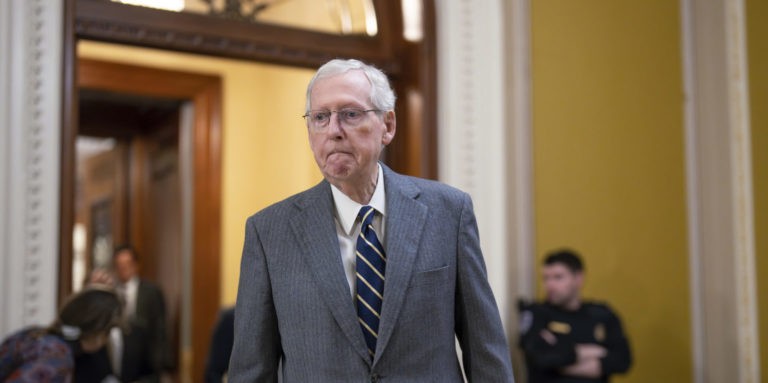
(Headline USA) Sen. Mitch McConnell on Sunday revealed for the first time that a fall led to his hospitalization, breaking the silence about his condition after weeks of mounting speculation about the Kentucky Republican’s health.
McConnell, 84, said in a statement that he was “briefly unconscious” around the time he was first taken to the hospital and has undergone a battery of tests to try and determine what led to his fall. He said he was also treated for mild pneumonia and has been moved to a rehabilitation facility.
“My doctors have confirmed that I didn’t break any bones or suffer a concussion. I didn’t have a heart attack or a stroke. I don’t have any tumors or hemorrhages,” McConnell said, adding that he is now “regaining my strength.”
McConnell’s statement came on the heels of the unexpected death of his fellow Republican Sen. Lindsey Graham of South Carolina. McConnell said he cannot return to the Senate “quite yet.”
MCCONNELL releases a photo – and statement.
“To my fellow Kentuckians –
“When you elected me to a seventh term and made me our Commonwealth’s longest serving Senator, you did so trusting that I’d keep showing up to fight for you every day. And over the past several weeks,… pic.twitter.com/YTzTXDhEgu
Coupled with Graham’s passing, that will temporarily whittle the GOP majority in that chamber down by two, to 51-47, as Republicans try to increase military funding, advance President Donald Trump’s agenda and confirm Trump’s nominees.
McConnell explained the four-week silence about his condition by saying that “folks of my generation often hesitate to share the vulnerability that comes with growing older.”
“Even in the public eye, I feel that same instinct — I can’t help it,” he said.
McConnell said he will continue to work with his staff on Senate business. His statement included a smiling picture of the senator with his wife Elaine Chao, a tacit response to speculation online that McConnell had died or was incapacitated.
McConnnell’s disclosure comes after growing pressure
McConnell had provided little information since his hospitalization on June 14, his office insisting only that he was “receiving excellent care” and recovering. Speculation about his condition grew so intense that Kentucky’s Democratic Gov. Andy Beshear took the extraordinary step last week of issuing a public letter asking McConnell to update the public in a “transparent manner.”
McConnell is retiring at the end of January after one of the most consequential careers in modern politics. Republicans have nominated U.S. Rep. Andy Barr to replace him, while Democrats have nominated former state lawmaker Charles Booker. He said he is determined to finish out his term.
“I still have unfinished business to complete on your behalf,” McConnell wrote in the statement addressed to Kentuckians, “and I have every intention of finishing the job you elected me to do.”
McConnell has a history of health problems
McConnell had polio in his early childhood and has long acknowledged some difficulty as an adult in walking and climbing stairs.
The physician’s office in Congress in the statement Sunday said McConnell has “experienced several falls through the year” due to his “post-polio condition.” The office said his physical therapy is aimed at reducing the risk of him falling again.
“A comprehensive evaluation by a multidisciplinary team determined that he had no fractures, cardiac abnormalities, stroke, tumor, or hemorrhage,” the physician’s office said.
McConnell was first elected to the Senate in 1984 and was the Republican leader from 2007 until last year, serving as both majority and minority leader during that period. He has remained active as a rank-and-file senator, showing up for work when the chamber is in session, often using a wheelchair to get around.
But the senator’s physical condition has visibly declined in recent years.
He was hospitalized with a concussion in March 2023 and missed several weeks of work after falling in a Washington hotel. He twice froze up during news conferences after he returned, staring vacantly ahead before colleagues and staff. A year later, he fell and sprained his wrist while walking out of a GOP luncheon.
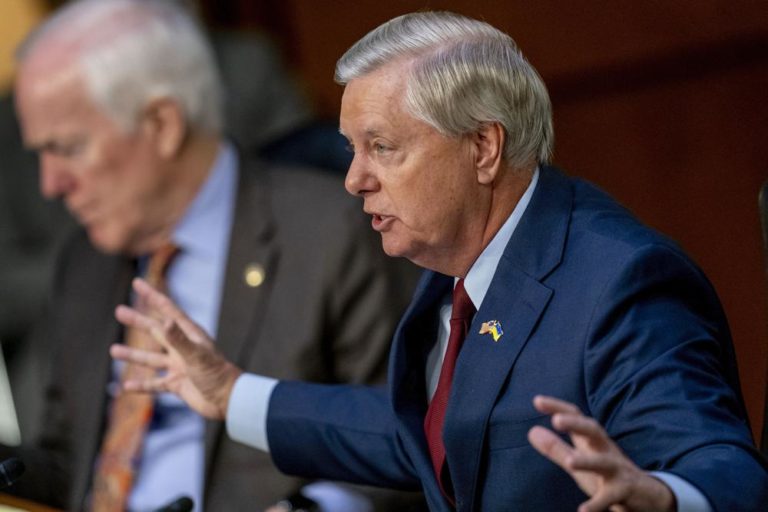
(Headline USA) Sen. Lindsey Graham, one of President Donald Trump’s closest allies in Congress who traveled the globe to advocate for a more aggressive U.S. foreign policy, died after a tear in his aorta, according to a preliminary medical examiner finding shared by his office.
The tear in the inner wall of the aorta, called an aortic dissection, was related to the hardening of Graham’s arteries. An official cause of death will be disclosed after toxicological and microscopic testing.
Graham, a prominent South Carolina Republican and former Air Force lawyer who served in Congress for more than three decades, had turned 71 years old just two days before dying on Saturday night. His office had originally said he had suffered from a “brief and sudden illness.”
Trump, who talked to Graham frequently, said he was “like a member of the family. It’s very tough.” He said on NBC’s ”Meet the Press” that Graham had called him on Saturday night after returning from a trip to Ukraine and “sounded a little bit tired, but perfect.” The president ordered that flags across the country be flown at half-staff until next Saturday evening.
A noted foreign policy hawk, Graham was one of the most influential figures in Washington on international affairs and he advised Trump on matters such as the Iran war and Russia. On Friday, Graham had announced an agreement with the Trump administration to move forward on a package of Russia sanctions.
As chairman of the Senate Budget Committee, Graham also had a central role during Trump’s second term as Republicans pushed major legislation on party-line votes while holding a narrow 53-47 majority in the chamber.
Under South Carolina law, Republican Gov. Henry McMaster will appoint a temporary replacement for Graham, who was seeking a fifth term in November. A new nominee will be selected in a special primary, which is required to be held within weeks of a vacancy. The winner of November’s general election will start a full six-year term in January.
Carr — who found himself at the center of controversy last year for allegedly pressuring the network to fire late-night host Jimmy Kimmel over his offensive, victim-blaming remarks about Charlie Kirk — singled out daytime talk show “The View” for a recent display of bias over the implosion of alleged Nazi rapist Graham Platner’s senatorial campaign.
ABC is arguing to the FCC that The View is a “bona fide news program”—just like Meet the Press—and thus exempt from the political equal opportunity rules.
“ABC is arguing to the FCC that The View is a ‘bona fide news program’—just like Meet the Press—and thus exempt from the political equal opportunity rules,” Carr wrote in a post Thursday, accompanied by a clip from the Media Research Center of “View” co-host Sunny Hostin saying, “We’re in an existential crisis. We need to flip the Senate.”
Hostin’s comment came as she sought to justify support for Platner, even while acknowledging that he had a troubling history.
Although the New York Times already had run a story on Platner’s skeletons, with damning accounts from multiple women, many of his supporters on the Left dismissed it because the primary source was a conservative.
However, with just days left for Platner to withdraw from the ballot, Politico ran a second story with an even more graphic account of forcible rape that led many Democrats to spontaneously withdraw their support.
The case of Hostin and her co-hosts using openly partisan talking points in their discussion of Platner was just one egregious example of the show’s routine bias.
Carr went on to announce during a CNBC interview on Friday that he planned to require an early renewal of Disney’s ABC broadcast licenses, citing specifically their DEI practices.
“Broadcast licenses are not sacred cows,” he said, in what may have been a nod to the ladies of “The View.”
“You have to comply with certain public-interest obligations to get them and to maintain them and to renew them,” Carr added. “We’ve called in Disney’s ABC licenses early for early renewal. That’s pending before the FCC.”
🚨 NOW: Trump FCC Chair Brendan Carr is officially CALLING IN EARLY Disney's ABC licenses after their DEI practices were scrutinized
ABC should reverse course NOW! DEI is DOA!
"Broadcast licenses are not sacred cows. You have to comply with certain public interest obligations… pic.twitter.com/O3AFABp1oj
Carr said that the agency had received complaints seeking to deny the Big-3 network its renewal, although he did not elaborate on the details or sources of those complaints, nor whether they related to the earlier Kimmel scandal.
“Ultimately, if Disney has not been operating its ABC TV stations in the public interest over the last several years, then that’s a pretty long putt for them,” he said.
“But ultimately, we’ve not made our decision yet,” he added. “We’ll be guided based on the record before us — but of course we’re open-minded to that type of outcome.”
The Manhattan jury in the civil suit concluded that Trump should be accountable for “sexual assault,” a minor offense that required a much lower standard of proof, based on the serial accuser’s hazy claim of a sexual encounter several decades prior.
ABC settled its lawsuit for $16 million, including $1 million in legal fees and $15 million to be directed to Trump’s presidential library.
Ben Sellers is a freelance writer and former editor of Headline USA. Follow him atx.com/realbensellers.
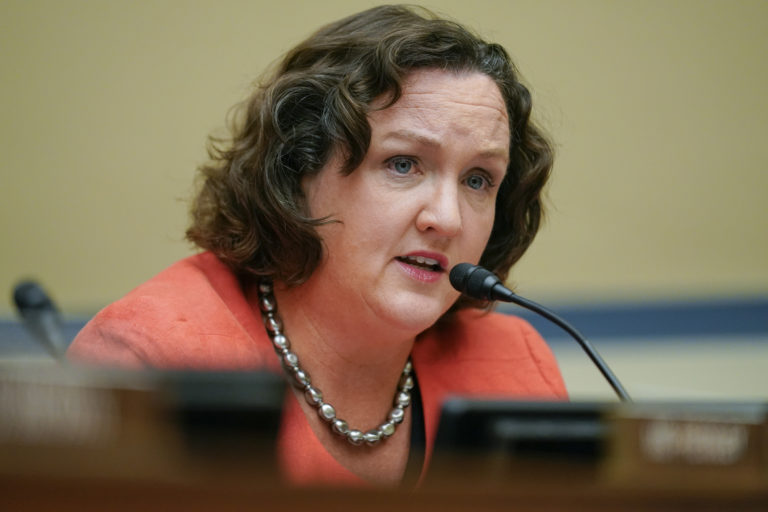
(Ben Sellers, Headline USA) Former Rep. Katie Porter, D-Calif., may have seen her political career go up in smoke after a distant fifth-place finish in last month’s California gubernatorial primary.
But the troubled ex-lawmaker still has plenty of flames to dispense.
Porter, best known for allegedly dumping a bowl of steaming mashed potatoes on her then-husband’s head, is equally hotheaded when strangers are doing the cooking — or performing any other service-industry tasks — according to LA Material, which investigated the Yelp accounts of several California politicians.
“Many Los Angeles elected officials, it turns out, love to leave online reviews,” said the article, posted on July 9. “We compiled an interactive map of their ratings by trawling public databases for their emails, then using a publicly available program to identify their Yelp and Google Maps accounts.”
For the most part, the local leaders, including Los Angeles county supervisors and city councilors, had positive things to say about the businesses they supported.
“Oh my Pho-kin good jesus!” wrote councilor Hugo Soto–Martinez of an East Hollywood Vietnamese restaurant.
Porter, however, was less charitable.
“If you want consistent good service, and want to patronize a place that treats employees with respect, I would never recommend this,” she wrote of a massage parlor in 2017. “I cannot continue in good conscience to be a patron, even though it is a very convenient location and a nice facility.”
She also trashed a taxi company, a hair salon and a pizza parlor, according to the California Post.
“Horrible service on delivery,” she wrote of Tony Pepperoni Pizzeria in July 2013.
“I ordered at 4:39. I am told 35-40 min.,” she continued. “I call to check at 40 min. Driver on way. I call again at 5:31—52 minutes later. He says driver will call me. He doesn’t. I have 20 angry hungry kids! Pizza was decent when it arrived. But allow ample ample time.”
It seems Porter’s pizza party was just one of many situations in which she waited too late to call and then proceeded to lose her patience. She also booked a cab for 6 a.m. to catch a 7:15 flight, leaving much to chance on a trip where she was “trying to lug my 3 preschoolers and our stuff through the parking lot.”
The company, Irvine Yellow Cab, was delayed after the original driver failed to respond — perhaps because he’d already been on Porter’s Yelp account to see how she treated people.
Porter seems to have adopted a more stoic mindset, however, since bombing in California’s U.S. Senate and governor’s race due, in part, to her abrasive personality.
“The Yelp reviews are what they are,” she told the Post on Thursday.
She was not the only top official to show her disdain for the help on social media.
Sen. Alex Padilla, who was California secretary of state at the time, trolled a Great Clips hairstylist whom he accused of having a “bad attitude” while barbering his son.
The stylist, Jessica, “was impatient with my son, who is a pretty easy child, and she clearly does not know how to cut hair,” Padilla wrote in September 2018.
“I do not recommend you let Jessica cut your hair or your child’s hair,” he added. “And I hope she gets more training.”
Ben Sellers is a freelance writer and former editor of Headline USA. Follow him atx.com/realbensellers. Don’t follow him on Yelp.
The organization officially filed its paperwork last week, as reported by the Center Square.
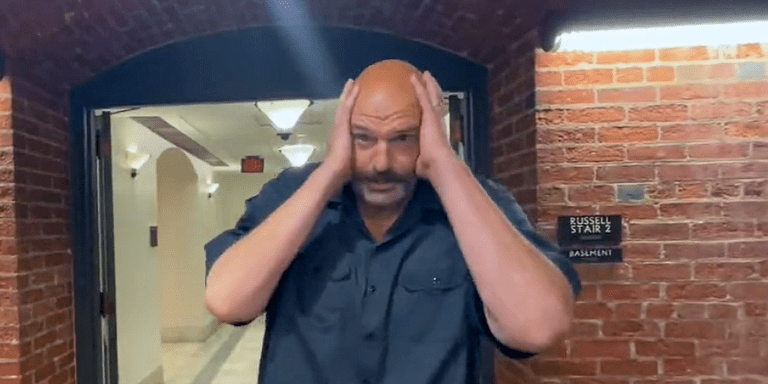
“This would seem to be a very intriguing development, and a further sign of the close coordination on not just policy, but now political issues between Senators McCormick and Fetterman,” said Christopher Nicholas, a GOP consultant and Pennsylvania politico.
While the reaction from the Right may have been one of interest and encouragement, those on the Left seem less thrilled.
Fox News’s resident left-wing shill, Jessica Tarlov, characterized the development as “So so bad.”
Rick Wilson, the NeverTrump cofounder of the notorious Lincoln Project, said the collaboration offered the greatest indication that Fetterman felt out of place among the radical leftist element that has captured the Democratic base.
“He’s gonna flip,” said Wilson, who himself previously identified as a Republican and was a campaign staffer for President George H.W. Bush.
An article on Mediaite compiled those and several other reactions that seemed to be anticipating a party switch.
Fetterman keeps saying he’d be a terrible Republican, incompatible with most GOP hot button issues, but then there once was a man who said “I didn’t leave the Democratic Party, the Democratic Party left me.” That man got pretty high up in politics after that – as a Republican. https://t.co/4sxj8OSLbN
— Rasmussen Reports (@Rasmussen_Poll) July 9, 2026
In recent months, Fetterman has been increasingly critical of the fringe Left, becoming one of the few Democrats to denounce alleged Nazi rapist Graham Platnerbefore the erstwhile Maine senatorial candidate began losing ground in the polls.
Fetterman has, in particular, been a staunch supporter of the Trump administration’s war with Iran and ongoing alliance with Israel.
He and McCormick recently teamed up to bring sponsors to Pennsylvania’s exhibit at the Great American State Fair after the state’s Democrat governor, Josh Shapiro, signaled his intention to boycott the “America 250” event at Washington, D.C.’s National Mall.
Despite the growing rift with his own party, Fetterman has previously dismissed the idea of a party switch.
“I’m the Senator for all Pennsylvanians—not just Democrats in Pennsylvania,” Fetterman said following a January 2025 meeting with incoming President Donald Trump.
“I’ve been clear that no one is my gatekeeper,” he continued. “I will meet with and have a conversation with anyone if it helps me deliver for Pennsylvania and the nation.”
Ben Sellers is a freelance writer and former editor of Headline USA. Follow him atx.com/realbensellers.
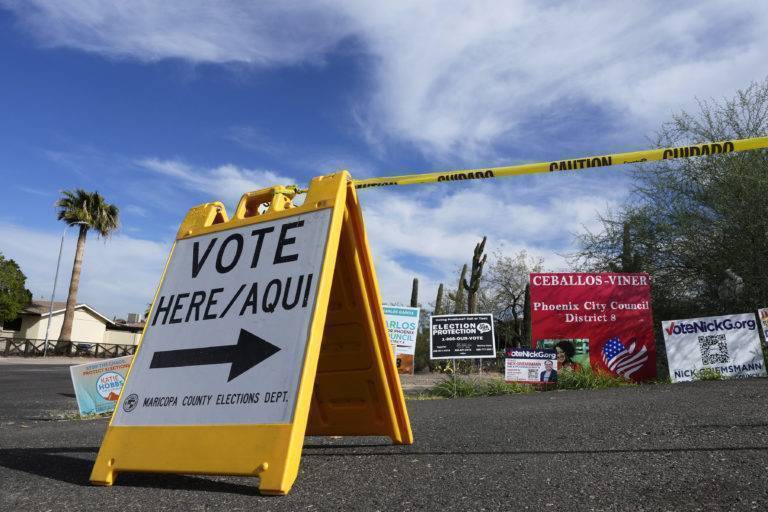
(Ben Sellers, Headline USA) With the SAVE America Act facing an uphill climb even before the unexpected death of Sen. Lindsey Graham on Saturday, President Donald Trump and his allies are trying to find a legislative workaround that would allow them to close election-integrity loopholes.
One solution may be targeting ineligible voters at the source.
Among the more egregious examples of Democrat-run states engaged in bad-faith voting practices, some are being called out for counting the ballots of so-called never-residents — often overseas voters who have a tenuous claim to residency in the last state where their parents resided.
A recent dispute between two judges in North Carolina who were vying for a seat on the state Supreme Court brought the issue to light after the losing Republican candidate argued that some 60,000 ballots should be invalid due to irregularities.
That included never-residents who had cast ballots without even supplying a government-issued form of identification.
The state court’s ruling in the case determined that such voters must verify their identity in future elections but stopped short of disallowing them to vote in federal elections in the state.
Now, similar practices are coming to light in other states where swing votes could make a meaningful difference.
The Republican National Committee and New Jersey Republicans are reportedly suing the Garden State over its 2022 law allowing never-residents to vote. The lawsuit comes as recent races, including last year’s gubernatorial race, show Republicans closing the gap in the deep-blue state, long considered a hotbed of fraud.
🚨 JUST IN: The RNC has just SUED New Jersey's Democrat Secretary of State after it was exposed they let people vote who have *NEVER LIVED IN THE STATE*
WTF?! How many states allow this? 🤯
"[NJ allows] non-residents who have never lived in New Jersey to register and vote in… pic.twitter.com/3olyTIXaXd
Meanwhile, in a recent memo that went to multiple secretaries of state — including Michigan’s Jocelyn Benson and Pennsylvania’s Al Schmidt — the Justice Department demanded that the blue-state officials comply with federal laws on voter eligibility.
“[A]ny election officer, including the chief election officer of the state, who knowingly retains noncitizens on the state’s [voter rolls] or facilitates noncitizens in receiving and casting ballots could be subject to criminal liability,” said the letter from Harmeet Dhillon, assistant attorney general for the DOJ’s Civil Rights Division.
Trump administration calls out Pennsylvania for allowing non-citizens to vote and clearly warns them that they will be sitting in a jail cell if they allow non-citizens to continue voting.
Never forget that Trump was up over 650,000 votes, with 75% of the vote counted in PA… pic.twitter.com/RsRWuoePKL