Gov. DeSantis Signs Big-Government Bill Attacking Florida’s Gold Industry

(Jp Cortez, Money Metals News Service) How do you turn a sound money bill into a big-government bill? Florida has just shown us.

When Florida lawmakers approved so-called ‘transactional gold’ legislation, supporters claimed it was a historic step toward restoring gold and silver as constitutional money.

Governor Ron DeSantis, who is often thought to be a champion of economic freedom, almost certainly believed he was signing legislation that would expand liberty rather than government.

But intentions and results are not always the same.

Instead of simply recognizing gold and silver as lawful money, Florida’s law reaches much further – and in exactly the wrong direction.

It expands the state’s Money Services Business framework into the precious-metals marketplace, subjecting dealers, depositories, and other businesses to licensing, examinations, compliance programs, reporting obligations, and regulatory oversight more commonly associated with banks and money transmitters than with neighborhood coin shops.

That negative outcome was neither inevitable nor unforeseen.

Before the Governor signed HB 1311, sponsored by Rep. Doug Bankson, industry participants and sound money advocates warned that the legislation would do exactly this – and urged a veto.

Our concern was never with innovation. Companies offering gold-backed payment technologies were already free to operate in Florida. They did not need legislative permission to compete.

What they sought was a marketing advantage and the ability to claim the State of Florida has formally blessed their product offering. And in tandem, long-established dealers and precious metals depositories were thrown under the bus, inheriting new compliance burdens and uncertainty.

That’s not free-market competition; it’s cynically weaponizing government for competitive gain.

The irony is particularly striking because precious-metals businesses were already subject to extensive regulation before the self-serving vendors marched in with poorly written legislation to impose much more.

Federal anti-money-laundering laws, the Bank Secrecy Act, IRS reporting requirements, and numerous state and federal consumer-protection statutes already govern the industry. Florida added a new layer without bothering to demonstrate why existing safeguards were insufficient.

The legislative history makes matters worse.

The original measure was drafted last year without meaningful participation from established dealers, depositories, sound-money scholars, or even the regulators later charged with implementing it.

After its unintended consequences became apparent, regulators worked with industry representatives on corrective legislation. That effort stalled this year. Instead, Florida lawmakers permanently codified the original framework.

This debate ultimately isn’t even about mom-and-pop coin shops being thrown under the bus. It’s about first principles.

The modern sound money movement has always sought to reduce the government’s control over money, increase competition, protect financial privacy, and expand individual choice.

Ludwig von Mises, F.A. Hayek, and Dr. Ron Paul did not advocate replacing one regulatory system with another. They argued that governments should stop placing unnecessary obstacles between citizens and honest money.

Florida has an opportunity to correct course. Lawmakers should repeal all the new licensing and money services provisions that threaten competition and increase compliance costs.

The broader lesson extends well beyond the Sunshine State. Assuming good intentions were actually at play here, good intentions alone are not enough.

Folks with no practical knowledge of the precious metals industry or with self-serving motivations to use government to gain an advantage over their competitors should be sidelined.

And every legislative proposal involving precious metals should be judged by a simple question: Does it make it easier for free people to own and use gold and silver, or does it expand government’s power over those who do?

If the answer is the latter, then it is time to go back to the drawing board.

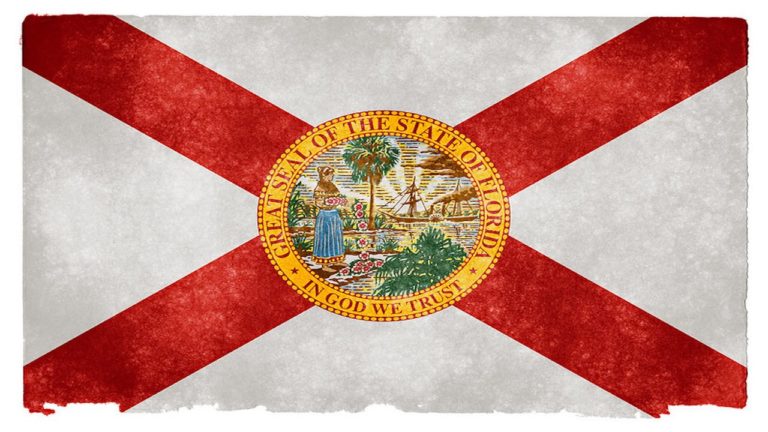
Img credit: Nicolas Raymond/Flickr 


Jp Cortez is the Executive Director of the Sound Money Defense League, a national project working to promote and defend gold, silver, and sound money policy at the state and federal level. He is a graduate of Auburn University and a resident of Charlotte, North Carolina. Jp is the lead author of the Sound Money Index. Follow him on X (Twitter) @JpCortez27.


Saudi-Led Forces Bomb Yemen’s Sanaa Airport, Reigniting War With the Houthis

(Dave DeCamp, Antiwar.com) Saudi-led forces bombed the international airport in Sanaa, Yemen, on Monday, reigniting the war with Yemen’s Houthis, officially known as Ansar Allah, which has been in a state of ceasefire that has held relatively well since 2022.

The attack was claimed by Yemen’s so-called “internationally recognized government,” which is based in Saudi Arabia and doesn’t have an air force of its own, meaning the strikes were almost certainly launched by Saudi warplanes.

In response, Ansar Allah’s military spokesman, Yahya Saree, vowed Yemen would hit back and said the era of “de-escalation” between the two sides was over. A spokesman for the Saudi-led coalition later claimed that Saudi “air defenses intercepted a ballistic missile threat launched by the terrorist Houthi militia towards the southern region.”

Saree then announced that Yemeni forces targeted Saudi Arabia’s Abha International Airport with a “a number of ballistic missiles and unmanned aerial vehicles.”

The purpose of the strikes on the Sanaa airport was to prevent the landing of a plane from Iran carrying a Yemeni delegation that attended the funeral of Iranian Supreme Leader Ayatollah Ali Khamenei. Despite the strikes, the plane was rerouted and landed at the airport in the Yemeni Red Sea port city of Hodeidah.

The strikes came after the Saudi-led coalition threatened to take action in response to an Iranian flight that landed in Sanaa on July 3. At the time, Ansar Allah said that its forces “repelled” Saudi warplanes attempting to interfere with the flight, and two days later, Houthi fighters launched an offensive against Saudi-backed forces, the heaviest fighting between the two sides in years.

While the two sides agreed to a ceasefire in 2022, a long-standing blockade on Yemen that included restrictions on Sanaa airport was only partially lifted, and in recent months, calls have been growing in Yemen for a complete end to the siege.

The escalation in Yemen comes after the ceasefire between the US and Iran has collapsed, meaning Yemen could be another front in the regional war. Ansar Allah could also potentially close the Bab al-Mandeb Strait, which connects the Red Sea and the Gulf of Aden, a move that would further exacerbate the global economic crisis caused by the US-Israeli war against Iran.

The US and Ansar Allah agreed to a ceasefire last year after President Donald Trump conducted a brutal bombing campaign in Yemen for about a month and a half, which failed to stop Yemeni attacks on Israel and the blockade of Israeli shipping in the Red Sea that was being done in response to Israel’s genocidal war and siege on Gaza.

Ansar Allah is known for its resilience as it faced a US-backed Saudi/UAE war and blockade from 2015 to 2022, which killed at least 377,000 people, according to UN numbers, and only became a more formidable fighting force in that time as it began successfully striking oil infrastructure in Saudi Arabia. The group first took power in Sanaa in 2014, and the Saudis failed to reinstall former Yemeni President Abd Rabbuh Mansour Hadi, who died in Riyadh earlier this year.

This article originally appeared at Antiwar.com.  

ICE Deports Criminal Illegal Immigrant Despite Minnesota Pardon

(Elyse S. Apel, The Center Square)  U.S. Immigration and Customs Enforcement deported a criminal illegal immigrant despite an effort by the Minnesota Board of Pardons to prevent his removal.

U.S. Department of Homeland Security, which criticized the board for issuing a pardon for Tou Lue Vang on June 10, confirmed the deportation.

ICE deported Tou Vang, an illegal alien convicted child rapist. This monster repeatedly sexually assaulted a 10-year-old girl,” said Acting Assistant Secretary Lauren Bis in a statement released Friday. “Tim Walz pardoned this sex criminal in an attempt to allow him to remain in our country. These are the criminal illegal aliens he and sanctuary politicians are protecting. We will always put the safety of the American people first.”

The pardon was unanimously approved this spring by Minnesota’s Board of Pardons, which includes Gov. Tim Walz, Attorney General Keith Ellison and state Supreme Court Chief Justice Natalie Hudson.

Both Walz and Ellison are Democrats, while Hudson serves in a nonpartisan role. She was appointed to her role by Walz.

Federal officials said Vang, who was convicted in 2006 of first-degree criminal sexual conduct, had a final order of removal issued by an immigration judge that same year. Before receiving the pardon, he was facing “imminent” deportation by the Trump administration.

That pardon removed the conviction that made Vang removable under federal immigration law, which DHS previously said put his deportation in jeopardy.

Secretary of State Marco Rubio addressed the case in a video on Friday.

“Just days before this foreign sex offender was scheduled to be deported, Tim Walz, the governor, issued him a pardon, setting him free to once again endanger the children of America,” Rubio said. “This week, I revoked his legal status in the United States, and as a result, federal agents took him into custody . . . because of our action, this foreign criminal will never pose a threat to any Americans ever again.”

He called out Democrats for trying to prevent the deportation.

“Americans must never be forced by their elected leaders to live alongside foreign sex criminals who have no right to begin with to reside in our country,” Rubio said. “This administration will always stand with the American people and defend them from violent criminals.”

According to court records, Vang repeatedly sexually assaulted a 10-year-old girl between 2002 and 2004.

DHS said prosecutors alleged Vang attempted to pay the victim $10 to remain silent and later told investigators “it is a cultural thing” to marry and have sex with girls as young as 12. He also claimed the victim shared responsibility for the assaults.

Vang, a native of Laos, entered the United States in 1994 and obtained legal status. Following his conviction, he lost that status.

Under Minnesota law, Vang’s pardon set aside his criminal record and purged it from his criminal record. Vang would also no longer be required to disclose the conviction.

On Monday, DHS addressed media reports that allege Vang’s pending deportation was a factor considered in his pardon.

“[Walz] and Minnesota sanctuary politicians granted CHILD RAPIST Tou Lue Vang a pardon in an attempt to let him stay in our country,” DHS said on social media. “While Walz and his fellow sanctuary politicians fight to protect illegal alien sickos like this, we’ll keep fighting to get them OUT of our country.”

Walz addressed the case in a recent press conference.

“I would note that immigration status or pending deportation is not a reason in and of itself in the granting of a pardon,” Walz said.

That said, he said he could find “no reason” for deportation.

“In Mr. Vang’s case, I state this: I can find no reason how Minnesota will be safer or better if Mr. Vang is deported to a country he has not been to since he was a child,” Walz said. “I do not see how it would serve his family and the stability of his family, nor the economic interests of Minnesota, where we have a tax-paying citizen who is creating job growth and living a life free from any criminal activity.”

DHS called these comments “truly disgusting.”

Left’s ‘Rosa Parks’ Narrative Derails as Family Speaks Out

(Luis CornelioHeadline USA) The family members of a woman who left-wing activists compared to Rosa Parks after a viral Fourth of July photograph are speaking out, suggesting that some individuals have exploited her story for attention while failing to provide meaningful support.

The woman, Bernita Bowlding, was photographed sitting inside a Washington, D.C., train surrounded by members of the white nationalist group Patriot Front. The image gained viral attention over the holiday weekend, with some users portraying her as a symbol of resistance—even though, by all accounts, the Patriot Front totally ignored her.

In an interview with left-wing outlet NOTUS, the family said that the media’s attention has done little to address her needs. Bernita is homeless and suffers from mental health issues.

Her mother, Roberta Bowlding, said she did not like the attention Bernita received and described the situation as “embarrassing.”

Her brother, Joseph Bowlding, even reportedly shook his head at the online comparisons of his sister to civil rights leaders.

“They say that ‘We love you, we got you,’ but the reality is that this woman is homeless,” Joseph said. “Are they willing to sacrifice and say, ‘Let’s help her get a place?’ Are they willing to do that?”

Joseph also criticized individuals who may benefit financially from his sister’s image.

“The more views they get, they’re getting money,” he said.

He added that many people on social media may be dismissing his sister’s actual situation.

“They don’t understand her. They don’t know how our family feels,” Joseph stated, according to NOTUS. “It was important to hear the true side of who she really is, instead of just like a fantasy fairytale.”

As reported by NOTUS, Bernita’s photograph was featured by CNN and other major outlets. Some commentators used the image to criticize racism and the Trump administration.

Report: Hunter Biden And Nick Fuentes Nearly Get Physical in Motel

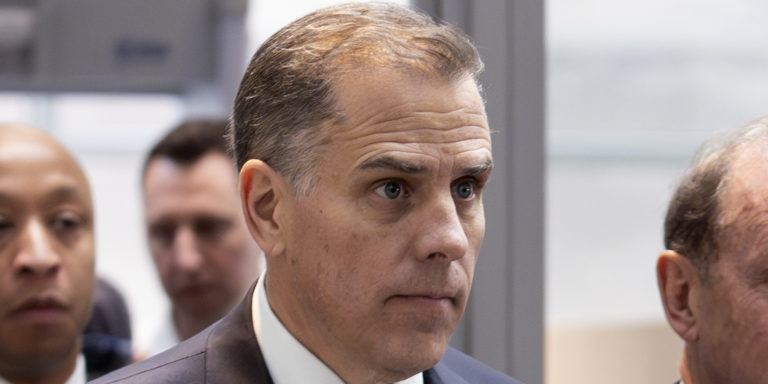
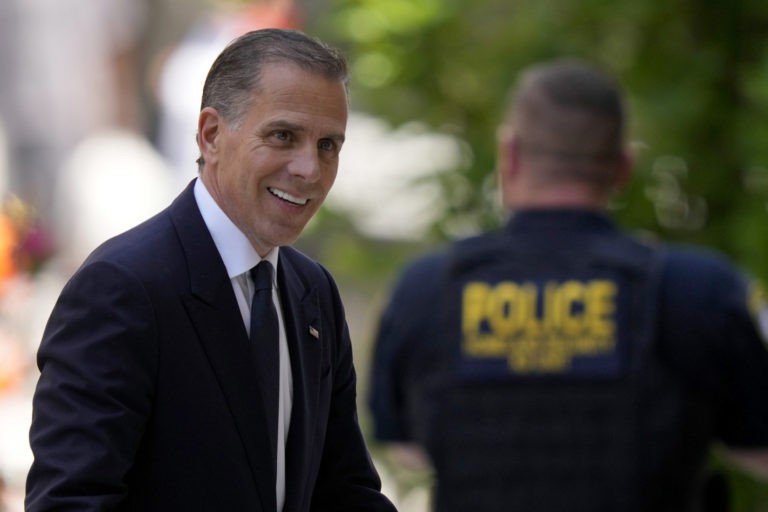
(José Niño, Headline USA) Hunter Biden, son of former President Joe Biden, reportedly agreed to an interview with national commentator Nick Fuentes that came close to erupting into a physical clash, according to a fresh TMZ report.

Insiders told TMZ that Hunter, Fuentes, and Channel 5 host Andrew Callaghan met inside a Philadelphia motel room on Sunday, July 12, for a “no question off limits” sitdown. The three wanted to see whether the son of a Democratic president and a right wing streamer could uncover any common ground. What unfolded instead caught fire.

According to TMZ, Hunter and Fuentes shared jokes and kicked around ideas in some stretches, though the meeting also erupted into sharp clashes. Tensions climbed so high at one point that Callaghan almost had to jump in and stop the conversation from spiraling into a fistfight.

TMZ reports that Fuentes made the first move, reaching out to Callaghan’s team in hopes of securing an interview where he could lay out how his views have changed and answer what he sees as false impressions of him. Hunter and Callaghan were already planning something together, so Callaghan’s crew brought Fuentes aboard, and he pounced on the opening.

Each man has built a name for saying incendiary things. TMZ points out that only last week Hunter casually raised the possibility that he could start an OnlyFans account while appearing on “Friends Keep Secrets.” Fuentes, on the other hand, has faced sweeping backlash over comments detractors label antisemitic and over his promotion of turning America into an authoritarian, Christian nationalist regime.

So far, not one of the three men has confirmed the meeting on the record, and no video has emerged. TMZ reports the interview will hit later this month.

José Niño is the deputy editor of Headline USA. Follow him at x.com/JoseAlNino 

Trump: U.S. to ‘Run’ Strait of Hormuz

(Sarah Roderick-Fitch, The Center Square) The United States appears to be on the cusp of returning to full-scale strikes against Iran after pounding the Islamic Republic over the weekend, stemming from Iranian aggression over control of the Strait of Hormuz.

President Donald Trump told Fox News Monday that the U.S. plans to control the Strait of Hormuz, on the heels of the Islamic Republic once again targeting commercial ships transiting through the strait.

“We are going to keep the strait. We will probably run it. We will become the guardian of the strait, and this time we will be reimbursed. We protected it for 50 years without getting paid, now we’re going to make money,” the president told Fox News.

Trump’s comments came hours after the U.S. launched “offensive” strikes against the Islamic Republic.

U.S. Central Command confirmed that dozens of targets were struck at “multiple locations with precision munitions to degrade Iran’s ability to continue attacking international shipping flowing through the Strait of Hormuz.”

CENTCOM added that U.S. forces targeted Iranian air-defense systems, radar sites, missile and drone capabilities, as well as small boats.

Despite being pounded for the fourth time in less than a week by U.S. forces, Iran launched attacks on neighboring Gulf neighbors, with senior Iranian officials claiming the attacks were focused on U.S. military sites in the region.

The Trump administration has requested $87.6 billion from Congress to cover the costs of the conflict, including more than $70 billion for military expenses, according to a White House supplemental appropriations request.

The latest round of strikes comes a few days after Trump proclaimed the ceasefire, which went into effect April 8, is over.

While U.S. officials and allied representatives maintain that talks are continuing, the president has voiced his frustration with Iran, saying that dealing with the Islamic Republic is a “waste of time,” calling the leaders “dirty players” and “liars.”

Last week, while attending the NATO summit in Turkey, Trump indicated to reporters that the Iranian leadership can’t be trusted in negotiations, coming weeks after the U.S. and Iran signed a memorandum of understanding, entering technical talks to end the conflict.

The president has also highlighted Iran’s threats on his life, revealing he has been targeted by the Islamic Republic, underscoring it a handful of times over the past week. Multiple reports claim Israeli intelligence uncovered an alleged plot by Iran to target the president.

Despite Iran’s threats on cargo ships in the Strait of Hormuz, U.S. officials maintain ships continue to transit through the vital waterway.

Questions on Fulton County 2020 Election Investigation Unanswered

(Kim Jarrett, The Center Square) A national news report indicates an FBI investigation into Fulton County’s 2020 election is intensifying. 

Fulton County has not received any communication, notification or additional subpoenas from the FBI or the Justice Department about an increase in agents reviewing ballots, a spokesman for Fulton County Commission Chairman Robb Pitts told The Center Square in an email. 

MS NOW, formerly MSNBC, reported the FBI has hundreds of analysts examining ballots from the 2020 election. The agency seized more than 600 boxes of ballots, tabulator tapes and other election-related materials during a January raid on the Fulton County Elections Office.

FBI special agent Hugh Raymond Evans said in the warrant that the documents were part of an ongoing criminal investigation. In the nearly six months since the raid, no criminal charges have been filed, and no end date has been given for the probe.

“We cannot comment on status of investigation or any potential steps being taken,” FBI spokesman Tony Thomas said in an email to The Center Square. 

Last week, a Trump-appointed federal judge denied the Justice Department’s subpoenas for Fulton County election workers’ personal information. 

“The information sought herein (names, addresses, phone numbers, emails) is private and sensitive, so much so that should a private company fail to protect such information from electronic thieves, such company would most likely be sued in a data breach class action lawsuit,” U.S. District Judge William M Ray II wrote in his order. “Thus, everyone, whether you support the president or you do not, or whether you believe the 2020 election was fair or believe that it was not, should be concerned about the DOJ’s ability to utilize the power of the grand jury to appropriate your private information without a legitimate purpose.”

President Donald Trump has said repeatedly that the election was “stolen” and that he won Georgia’s electoral college votes in 2020. Former President Joe Biden defeated Trump 306-232 in the Electoral College. Georgia contributed 16 electoral votes to the Democrats’ win, not enough by itself to reverse the 74 votes needed to overcome Biden.

South Carolina’s Governor Should Appoint Graham’s Sister to Finish His Term, Trump Says

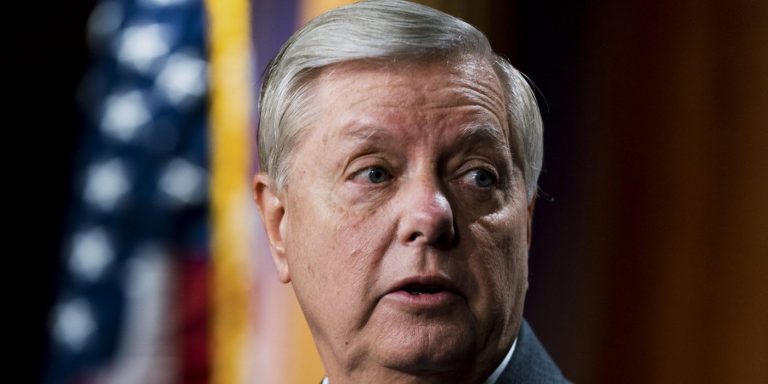
(Headline USA) President Donald Trump said Monday he’s recommended that Lindsey Graham’s sister be named as his temporary replacement in the U.S. Senate.

Trump posted on social media that Gov. Henry McMaster should appoint Darline Graham Nordone to fulfill the rest of Graham’s term, which expires in January. Graham died over the weekend at age 71, and McMaster is expected to announce his pick later Monday.

After their parents died at a young age, Graham was left to raise his sister, for whom he later became legal guardian. They were very close, and she was by his side as he filed reelection paperwork earlier this year, along with her children and grandchildren.

A person familiar with the appointment process but not authorized to speak about it publicly said that the interim senator would be sworn in on Wednesday. Sen. Tim Scott, who the person said had spoken with Graham’s sister multiple times since his death, planned to be at McMaster’s announcement.

A special election will be held next month to pick a new Republican nominee in the general election for Graham’s seat. He had been seeking a fifth term this year.

The rare open Senate seat has ignited a scramble among South Carolina’s most ambitious conservatives, who have been eager to climb the political ladder.

Republicans just finished a sprawling and bruising contest to figure out their nominee for succeeding McMaster, who is wrapping up his second term. State Attorney General Alan Wilson won the nomination, overcoming a field that included Lt. Gov. Pamela Evette, Rep. Nancy Mace and Ralph Norman — all of whom are now eyeing Graham’s seat following his death over the weekend.

According to South Carolina law, a one-week filing period for a special primary election begins on the second Tuesday after the candidate’s death, or July 21.

The special primary election would be held on the second Tuesday after that filing period closes, or Aug. 11. Any necessary runoff would follow two weeks after that, or Aug. 25.

From that point, the new nominee would have just over two months to campaign for the general election on Nov. 3.

All of this is problematic according to federal law, which requires military and overseas ballots to go out 45 days before any federal election. For the special election primary, that would have been June 27. Federal Election Commission officials didn’t immediately return a message seeking clarity about the process.

Graham died on Saturday night, and a preliminary medical examiner report said he suffered a tear in his aorta, known as an aortic dissection.

In the hours after Graham’s death was announced, South Carolina’s Republican circles were already swirling with rumors about possible replacements. Given the proximity of November’s election, it’s likely that whomever McMaster appoints could be a top contender in the special primary, although it’s possible that McMaster’s choice will only serve as a temporary caretaker.

Evette, who has served nearly eight years alongside McMaster and received his endorsement in the governor’s race, is one possibility. She lost the June 23 runoff to Wilson.

A person with knowledge of Evette’s thinking but not authorized to discuss it publicly said that she was getting encouragement from across the state and feels she would have good chances in the special primary.

It’s unlikely that any House member would be appointed to finish Graham’s current term, since Republicans have such a slim majority in the chamber.

U.S. Rep. Joe Wilson, a rumored replacement, said he assured Trump on Sunday that “my goal is to remain in the House to keep his two-vote majority for the American people!!!”

However, that doesn’t mean that House members won’t run for the next full term. A person with knowledge of Mace’s thinking but not authorized to speak about it publicly said she was considering the race. Mace is not running for reelection to the House.

But another Republican from the state, Rep. Russell Fry, could be a possibility. The two-term lawmaker represents the growing area around Myrtle Beach, and he’s been a top Trump ally.

A spokesman for businessman Mark Lynch, whom Graham defeated in the primary, didn’t return a message Sunday.

Treasury Secretary Scott Bessent, who lived in South Carolina before joining the Trump administration, has fielded calls about potentially replacing Graham but doesn’t have interest in the role and enjoys working for the president, according to a person who insisted on anonymity to describe private conversations.

No Democrat has won a Senate seat in South Carolina in decades, and Republicans in recent history typically take statewide seats by double digits. When he last ran in 2020, Graham defeated his Democratic opponent, Jaime Harrison, by a 10 percentage point margin.

So while history suggests that Graham was en route to a fifth term, Republicans are carefully surveying the landscape.

Charleston pediatrician Annie Andrews won the Democratic nomination last month and has raised more than $8 million in the race, and she had just under $3 million cash on hand at the end of May, according to federal filings. Graham had taken in $6 million, with just over $4 million on hand.

In a statement Sunday, Andrews called on South Carolinians to join her “in setting partisanship aside and offering gratitude” to Graham for his service.

Harrison, noting that he and Graham “had our share of political disagreements,” wrote on social media that he “always appreciated that even in our fiercest political battles, we could still share a conversation, a laugh, and a mutual respect for South Carolina and the institutions we were both privileged to serve.”

Graham leaves a major void in the Senate, where seniority can determine influence. He served more than two decades in the chamber, positioning himself to lead committees and set the agenda.

Scott, South Carolina’s junior senator, has been in office only since 2012 — short by the state’s standards. Fritz Hollings served for 38 years, and Strom Thurmond was there for 47.

Scott, who co-chaired Graham’s reelection effort, described his former colleague as “irreplaceable.”

“America lost a statesman, but I lost a friend,” he told ABC’s “This Week.”

Adapted from reporting by the Associated Press

Sen. Graham Met Zelensky, Visited Ukrainian Drone Factory, Before Death

(Dave DeCamp, Antiwar.com) Ukrainian President Volodymyr Zelensky on Sunday published a post on X mourning Lindsey Graham, who died at 71 on Saturday night, just one day after meeting with Zelensky in the Ukrainian capital of Kyiv.

Graham was one of Washington’s leading supporters of the proxy war in Ukraine, and according to Zelensky, he had visited the country 10 times since Russia invaded in February 2022.

“He visited Ukraine ten times during the years of Russia’s full-scale invasion and was here with our people when it was most needed. We remained in constant dialogue, and I will miss our conversations. We met twice in just the past week,” Zelensky said.

During his last visit to Kyiv, Graham announced that the White House had reached a deal with Congress to move forward with a new bill on Russia sanctions and said he would work on it when he returned home. He also visited a Ukrainian drone manufacturing plant operated by the Ukrainian firm SkyFall, which comes as Ukrainian forces continue to fire hundreds of drones into Russia each day, operations supported by US intelligence.

“I believe that it would be a huge mistake for America not to cooperate with Ukraine in the field of drones. They are ready to help us because we were ready to support Ukraine in the hardest times,” Graham said, according to the Kyiv Post.

“Today, I visited a state-of-the-art enterprise that has huge capacities and produces technologies far more advanced than anyone on the planet. After all, necessity is the ‘mother’ of all inventions,” he added.

Graham’s support for Ukraine against Russia goes back many years, well before Russia invaded in February 2022. At the end of 2016, Graham, his late friend Sen. John McCain, and Sen. Amy Klobuchar (D-MN) visited Ukrainian marines on the front lines of the Donbas war and urged them to go on the “offense” despite the Minsk Accords, the agreements meant to end the conflict.

“Your fight is our fight,” Graham told the soldiers on December 21, 2016. “2017 will be the year of offense. All of us will go back to Washington, and we will push the case against Russia. Enough of Russian aggression. It is time for them to pay a heavier price. Our fight is not with the Russian people but with Putin. Our promise to you is to take your cause to Washington, inform the American people of your bravery, and make the case against Putin to the world.”

Following the Russian invasion in 2022, Graham supported each escalation of US involvement in the proxy war and called several times for the assassination of Russian President Vladimir Putin. Graham was also known to revel in the death of Russians and called the US military aid to Ukraine the “best money we ever spent.”

President Trump spoke with Graham after he returned from Ukraine on Saturday, just hours before his death. The president said that Graham had a “great trip” to Ukraine and seemed fine “other than being tired.” Graham’s office said that a preliminary medical examination found that he died due to an “aortic dissection.”

This article originally appeared at Antiwar.com.  

Pardon Recipient Hunter Biden Praises ‘Rule of Law’ after Defamation Victory

(Luis CornelioHeadline USAHunter Biden, the only child in U.S. history to receive a presidential pardon from his father, praised the “rule of law” after winning a multimillion-dollar defamation lawsuit against former Overstock.com CEO Patrick Byrne.

At the center of the lawsuit were Biden’s claims that Byrne defamed him by alleging he sought an $800 million bribe from Iran following the 2020 election.

U.S. District Judge Stephen Wilson issued the 25-page ruling as part of a default judgment against Byrne.

Wilson awarded Biden Biden $1.7 million in punitive damages after Byrne reportedly failed to respond to the lawsuit adequately. Byrne was also ordered to pay $34,969.20 in monetary sanctions.

The judge ordered Byrne to pay within 14 days. If he fails to do so, the judgment will increase by $1,000 per day.

Wilson described Biden’s evidence as “clear” and “convicting that defendant has engaged in intentional misrepresentation with conscious disregard towards plaintiff’s rights.”

The judge found that Byrne’s “defamation went far beyond mere negligence.”

“In fact, defendant has admitted that after the offending article was published, defendant repeatedly reposted the article across social media platforms and encouraged his followers on those platforms to promote it further,” Wilson wrote.

Wilson also accused Byrne of repeatedly attempting to delay the litigation. According to Courthouse News, Byrne fired his attorneys ahead of the July trial before later failing to appear in person as promised.

“Defendant has sustained a campaign of dilatory tactics that have indefinitely extended this years-long litigation, while denying plaintiff his day in court,” Wilson added. “This was not a product of excusable neglect but rather of coordinated strategy.”

Biden celebrated the ruling in an X post, writing: “I am grateful that the rule of law prevailed in my defamation case against Patrick Byrne.”

The victory marks one of several civil lawsuits Biden has pursued in connection to his controversial finances and laptop.

He also sued John Paul Mac Isaac, the owner of a Delaware computer repair shop who facilitated the release of Biden’s abandoned laptop, alleging invasion of privacy. A Delaware judge later dismissed the case after ruling Biden waited too long to file his claims.

Biden also withdrew a separate lawsuit against Fox News over the network’s reporting on the contents of his laptop.