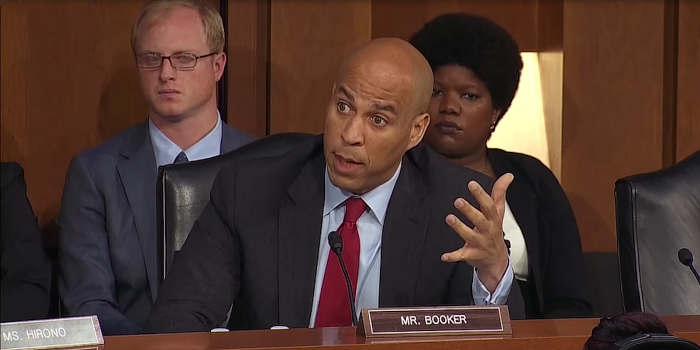
(Luis Cornelio, Headline USA) As Sen. Cory Booker, D-N.J., held the Senate floor with a nearly day-long filibuster, one of his aides was busted by Capitol Police for carrying a pistol without a permit outside the Senate galleries.
The aide, identified as 59-year-old Kevin Batts, was allegedly guided past security by an unidentified member of Congress and only disclosed his firearm later that evening. Batts has been with Booker’s office as a special assistant since 2013 and is a retired police officer from Newark, N.J.
“All weapons are prohibited from Capitol Grounds, even if you are a retired law enforcement officer, or have a permit to carry in another state or the District of Columbia,” Capitol Police said in remarks to The Hill.
Capitol Police did not reveal the identity of the member of Congress who helped Batts bypass security. It remains unclear when Batts’s gun permit expired, potentially raising questions about how a retired law enforcement official could miss such a security lapse.
Booker’s office described Batts works as a “New Jersey-based driver who often accompanies him to events” and said it is “working to better understand the circumstances around this.”
Batts’s arrest coincided with Booker’s marathon speech aimed at protesting the Trump administration’s policy victories. Booker, determined to speak as long as he was physically able, ultimately delivered a 23-hour address.
His speech—the second longest in Senate history—featured familiar critiques of Trump and his MAGA agenda.
“These are not normal times in our nation,” Booker declared at the start of his speech. “And they should not be treated as such in the United States Senate. The threats to the American people and American democracy are grave and urgent, and we all must do more to stand against them.”
Despite the record-breaking speech, most media attention focused on Batts’s arrest. A Headline USA review noted that coverage of Booker’s speech was merely fixated on the opening remarks, suggesting the remainder of his speech might soon be forgotten.
(Luis Cornelio, Headline USA) Internal FBI chat logs revealed that the bureau imposed a “gag order” on agents regarding the New York Post bombshell story on the Hunter Biden laptop. Along with showing Hunter’s depravity, the laptop revealed Joe Biden’s involvement in his son’s foreign business dealings.
The chat logs, published Tuesday by the House Judiciary Committee on X, show that the gag order extended to an FBI analyst who attempted to alert social media companies that the laptop was authentic—before these companies moved to censor the story’s spread.
The FBI had Hunter Biden’s laptop, but on the day the NY Post story came out, the FBI refused to tell Big Tech the truth.
— House Judiciary GOP 🇺🇸🇺🇸🇺🇸 (@JudiciaryGOP) April 1, 2025
On Oct. 14, 2020, the New York Post released its first story on the laptop’s content. That same day, FBI officials instructed agents, “please do not discuss Biden matter.”
Earlier chats show a group of agents—including Laura Dehmlow, Bradley Benavides and James Dennehy—debating the Post’s story.
“You guys are tracking the coverage of the laptop right?” Dehmlow wrote. Both Benavides and Dennehy replied affirmatively.
Later, agents whose names remain sealed sent messages stating, “right answer – nobody on call is is [sic] authorized to comment upon NY Post story” and “nobody [is] authorized to comment.”
One agent asked if another had “admonished” the colleague who nearly revealed the laptop’s authenticity to Big Tech companies. “yes but he wont [sic] shut up,” one response read.
Hours later, agents reiterated that they were forbidden from commenting on the laptop story, with messages like “official response no commen [sic] and “we cannot comment.”
A previous transcribed interview with Dehmlow revealed that during a Zoom meeting with Big Tech, an FBI agent was interrupted before he could confirm the laptop was real and already in the bureau’s possession.
The FBI had verified the laptop in 2019 by cross-referencing its serial number with Hunter’s iCloud storage, FBI special agent Erika Jensen stated during Hunter’s criminal trial in 2024.
Despite this verification, the bureau remained silent while social media companies debated whether the Post’s story was tied to a Russian disinformation campaign.
Notably, the FBI had warned them weeks earlier of an imminent “hack-and-leak” story about the 2020 election, leading many to mistakenly equate that warning with the laptop exposé.
The laptop revealed that while Hunter failed to pay millions in taxes, he also consumed drugs, paid for prostitutes and launched what Republicans call an “influence-peddling scheme” aimed at selling access—or at least the appearance of access—to Joe Biden in exchange for payments.
According to the laptop, 10% of these payments were earmarked for the “Big Guy,” a term confirmed by former Biden ally Devon Archer to refer to Joe Biden.
Biden went on to win the 2020 election, and before leaving office in 2025, he issued sweeping pardons to his siblings and Hunter, covering offenses committed between 2014 and 2025.
Read the full House Judiciary Committee’s X thread on the chatlogs:
The Committee had testimony from key FBI personnel, but until now, the FBI refused to produce the internal communications from that day in unclassified form for the American public to see. pic.twitter.com/I5uGnJICVM
— House Judiciary GOP 🇺🇸🇺🇸🇺🇸 (@JudiciaryGOP) April 1, 2025
The internal FBI chat log also shows how far senior FBI officials went to silence this analyst.
(Ken Silva, Headline USA) Despite finding that the FBI indeed encouraged them, the Sixth Circuit Appeals Court has nevertheless upheld the convictions of the alleged “ringleaders” who were accused of plotting to kidnap Michigan Gov. Gretchen Whitmer in 2020.
“The Defendants are correct that the government encouraged them to settle on a plan,” the Sixth Circuit said in its Tuesday decision, referring to the informants and undercover agents who repeatedly encouraged militias to engage in criminality throughout 2020. “But as the government points out in its supplemental briefing, the jury heard the substance of most of these statements and yet still convicted both Fox and Croft.”
This is batshit crazy: "The defendants are correct that the government encouraged them to settle on a plan … but a jury of sub-literates convicted them so we're affirming convictions anyway" OK I'm paraphrasing the last part a little, but still. This is the American justice… https://t.co/vBeReElDDkpic.twitter.com/0GopBBdDth
Fox, 41, and Croft, 49, had appealed their late 2022 convictions on several grounds, including that they were improperly limited in questioning government’s star witness at their second trial, and that their lawyers were denied the ability to vet a juror who had expressed bias against them. Perhaps most critically, Croft and Fox weren’t allowed to present full statements made by FBI informants and their handling agents out of court.
The statements that Croft and Fox wanted their juries to hear indicate that the FBI was working to entrap Fox, Croft and the other defendants—five of which were acquitted. For instance, at one point, an FBI informant named Steve Robeson said in August 2020: “If we don’t talk about actually doing what the fuck we need to be doing, I’m done with meetings”—clearly pressuring Fox and Croft to formulate a plan.
In another statement that was excluded from court, an FBI informant stated, “I don’t know where he’s really at, but I just know that [he’s] backing off as hard as he has from other stuff, I have concerns with”—referring to the fact that Croft was having second thoughts because he was nervous that law enforcement may have been watching.
But while the Sixth Circuit agreed that District Judge Robert Jonker erred in not allowing the defendants to present those and many other statements, the appeals justices nevertheless upheld the convictions. According to the Sixth Circuit, Fox and Croft already showed that they were predisposed to committing terrorism.
And even though they weren’t allowed to admit the FBI’s out-of-court statements in court, the defendants could have taken to the stand themselves, according to the Sixth Circuit.
“Here, neither Fox nor Croft testified in support of their entrapment defense, nor do they claim that they were prevented from doing so. And the evidence they may not have been able to testify to due to the district court’s hearsay order could have been explored through cross examination of the confidential informants,” the justices said.
“Because Defendants had other avenues available to them to support their entrapment defense and chose not to use them, they cannot establish that the harm they purportedly suffered gave rise to a constitutional injury,” they said.
“The government has sufficiently demonstrated that the jury’s verdict was not ‘substantially swayed’ by the district court’s error. We, therefore, conclude that the exclusion of the informants’ statements was harmless,” they concluded, upholding the convictions.
Fox and Croft are being held at a supermax prison in Florence, Colorado — the same jail that holds inmates such as Oklahoma City bombing accomplice Terry Nichols — after being sentenced to nearly 20 years for Croft and 16 years for Fox.
The Sixth Circuit’s decision has already prompted calls for President Donald Trump to pardon the men.
Now that these two men have had their wrongful convictions upheld, it’s time for Trump to pardon Adam Fox and Barry Croft
I hope the families don’t mind me using these pictures, I prefer these over the government dehumidifier them and only using mugshots pic.twitter.com/p9wo18qcyb
(Money Metals News Service) In a timely episode of the Money Metals podcast, host Mike Maharrey sat down with veteran journalist and Gold Anti-Trust Action Committee (GATA) co-founder Chris Powell to discuss gold’s historic surge past $3,000 an ounce and what it signals about the global monetary system.
The conversation offered deep insight into decades-long gold market manipulation, shifting central bank behavior, and the potential ramifications of a long-awaited Fort Knox audit.
(Interview Starts Around the 6:04 Mark)
A Milestone for Gold—and a Cracking Facade?
As of March 2025, gold has crossed the $3,000 per ounce threshold, a milestone that Chris Powell calls “a lovely start.”
Reflecting on his early days in gold activism—when the metal traded at just $250 per ounce in 1998–1999—Powell believes the recent surge is a result of central banks losing their grip on the decades-old system of gold price suppression.
Notably, the latest $500 gain—from $2,500 to $3,000—took just 210 days. That pace is extraordinarily fast compared to the historical average of nearly 1,000 days per $500 increment.
Powell interprets this as a sign that gold price controls are unraveling: “The speed here indicates that central bank rigging of the market is falling apart pretty fast.”
The Split Among Central Banks
A central theme of the interview is the growing divide between Western and emerging-market central banks. Powell argues that while Western central banks—especially the U.S. Federal Reserve—historically colluded to suppress gold prices through leasing and swaps, many emerging economies are breaking ranks.
“There’s speculation that central banks now need a higher gold price,” said Powell, referencing analysts Paul Brodsky and Lee Quaintance, who 15 years ago suggested that gold suppression was only a temporary strategy to redistribute gold reserves before a revaluation.
Powell highlights that emerging markets like China, India, and Poland are aggressively buying gold. Over the past three years, central banks have reported net purchases exceeding 1,000 metric tons per year—double the typical annual average of 500 tons.
But that’s just the official number. China and Saudi Arabia have reportedly bought large quantities off the books, bypassing IMF reporting standards.
Gold: A Return to Monetary Sovereignty
Quoting Poland’s central bank governor—whose goal is to hold at least 20% of reserves in gold—Powell argues that gold is being re-monetized globally. “It’s money without counterparty risk,” he said. “It guarantees national sovereignty and liberty.”
Powell dismisses the claim that there isn’t “enough gold” to support modern economies: “At a higher price, gold can support any economy. You don’t need to back every unit of currency—just enough to balance trade deficits.”
Fort Knox, Audits, and the IMF Cover-Up
Touching on recent buzz about auditing the U.S. gold reserves, Powell emphasized that the real issue isn’t whether the 8,133 tons of gold supposedly in Fort Knox, the Denver Mint, and West Point actually exist—it’s whether those holdings are unencumbered.
Powell referenced a letter from the Federal Reserve acknowledging gold swap records with foreign banks, as well as a secret March 1999 IMF report.
That report explicitly warned that disclosing how much central bank gold is on loan would be “market-sensitive” and could destabilize currency markets—so the IMF allowed member nations to combine physical and leased gold in a single reporting number.
“If you show the world how little unencumbered gold is really out there,” Powell warned, “you’ll explode the currency markets.”
Despite manipulation, gold has outperformed most assets over the long term. “Take a 20- to 40-year view,” he said. “Gold has done just fine.” Plus, gold has the unique advantage of being real, tangible money that cannot be devalued overnight—unlike fiat currencies.
Crypto and Market Control
Powell expressed skepticism about U.S. plans to hold crypto reserves, viewing it as a potential move to control digital assets in the same way gold has been managed.
“I can’t see it, I can’t touch it, and I don’t trust what I can’t understand,” he said. “If the power goes out, your crypto is gone. Gold buried in your backyard will still be there.”
GATA’s Work: Follow the Documentation
Powell encouraged listeners to explore the evidence themselves at GATA.org, where years of documentation on gold market rigging and central bank policy are available.
The organization, Gold Antitrust Action Committee Inc. (EIN: 06-1537205 | Bolton, Connecticut, United States), recognized as a 501(c)(3) nonprofit, publishes a free daily newsletter and welcomes tax-deductible donations.
Conclusion
As gold surges to all-time highs and geopolitical shifts fracture the old monetary order, Powell believes we’re witnessing the early stages of a broader return to sound money. Whether investors choose to act on that signal—or wait for the next chapter in the gold saga—is the $3,000 question.
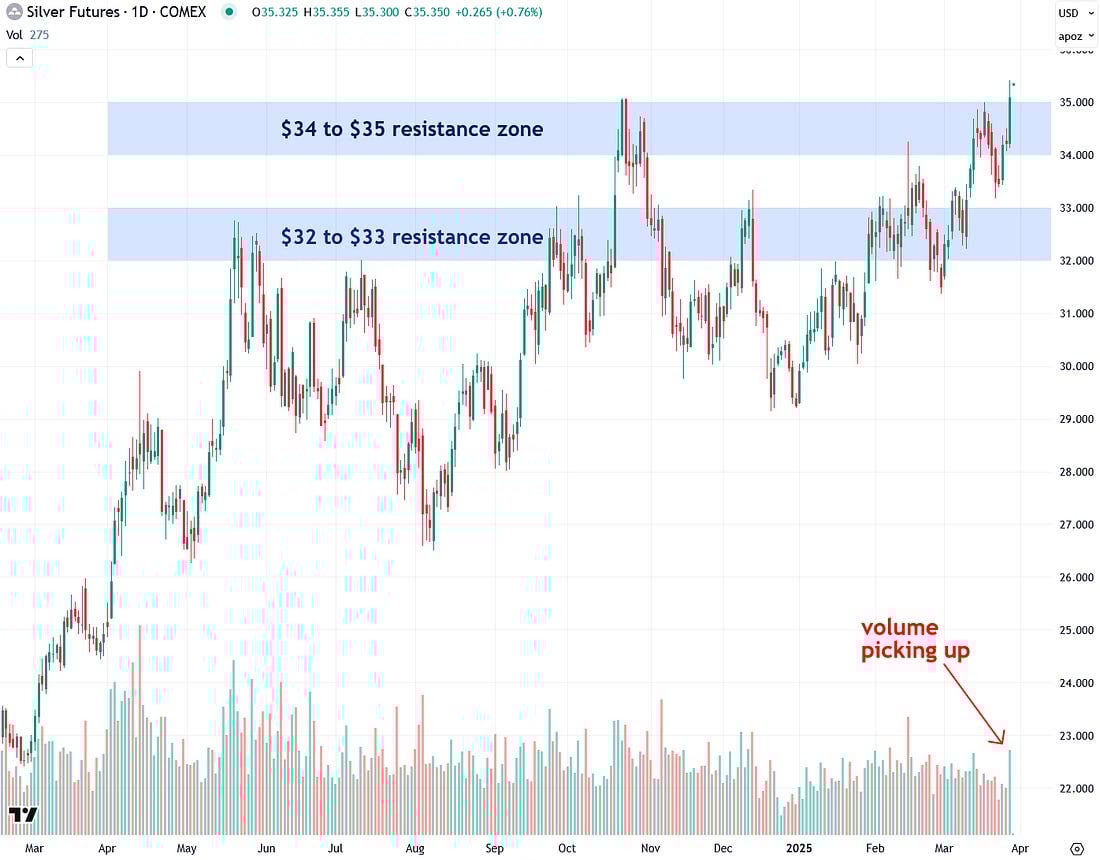
(Jesse Colombo, Money Metals News Service) Yesterday was an exciting day for silver, which surged 2.52% to a 13-year high, finally breaking above the key $34–$35 resistance zone I’ve been watching for months.
This is a level I’ve called “the line in the sand” to confirm a true breakout and the beginning of the next phase in the bull market.
What makes this move even more compelling is that it’s happening just as momentum around the March 31st ‘Buy Silver Day’ is accelerating and gaining solid media attention, which may be playing a key role in pushing silver through this long-standing barrier.
In this article, I’ll break down where silver stands now and what I’m watching next.
COMEX silver futures—the key benchmark I track rather than spot silver—finally closed above the critical $34–$35 resistance zone today on strong volume, marking a 13-year high.
This breakout is a major technical milestone and exactly what I’ve been anticipating as the trigger for the next powerful phase of the bull market. It’s a very bullish sign, but it’s important to note that COMEX silver futures must hold above the $35 level in order for the breakout to remain intact.
A drop back below that threshold would invalidate today’s move—something worth mentioning given the persistent manipulation in the silver market.
What makes the current silver breakout particularly fascinating and promising is the backdrop of growing speculation around a potential silver squeeze.
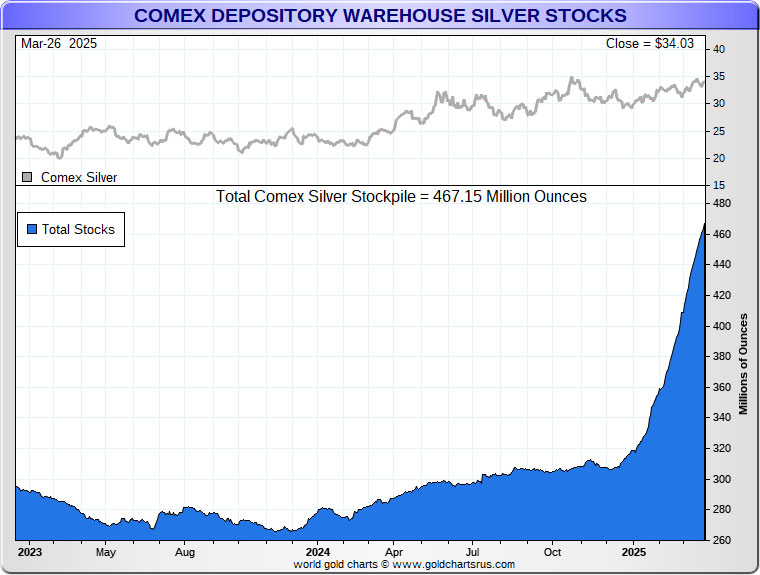
In recent months, there’s been a scramble to bring physical silver onshore to the United States, leading to a sharp rise in COMEX inventories—up roughly two-thirds since December.
While the official explanation points to possible tariffs from the Trump administration on imported silver, there’s reason to believe that may only be part of the story.
Something larger may be unfolding behind the scenes—what exactly, no one knows for sure yet, but I believe it will become clear very soon.
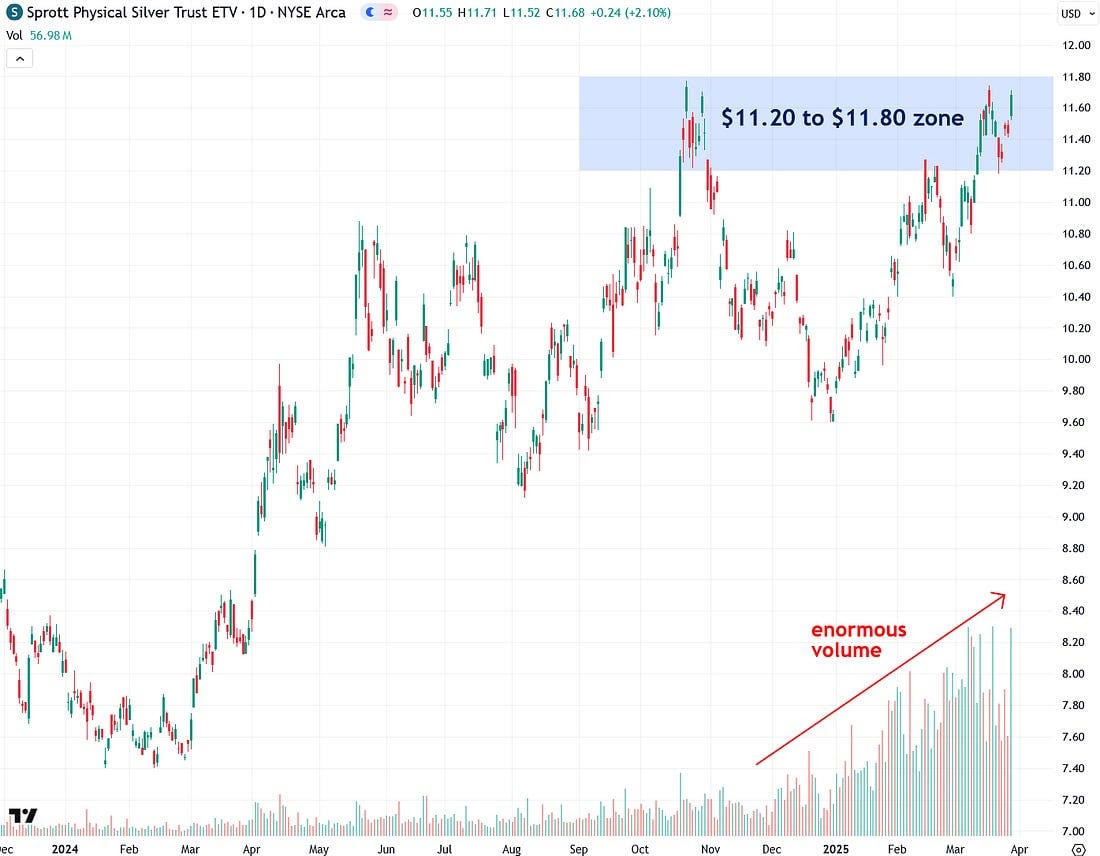
Further confirming the scramble for physical silver is the surge in trading volume since December in the Sprott Physical Silver Trust (PSLV), the most well-known physically backed silver exchange-traded product. In stark contrast, the non-physically backed iShares Silver Trust (SLV) has seen flat volume over the same period—highlighting a clear investor preference for products backed by actual silver.
From a technical standpoint, I’m watching for a decisive close above the $11.20–$11.80 resistance zone in PSLV, which would serve as another strong signal that the bull market is truly underway.
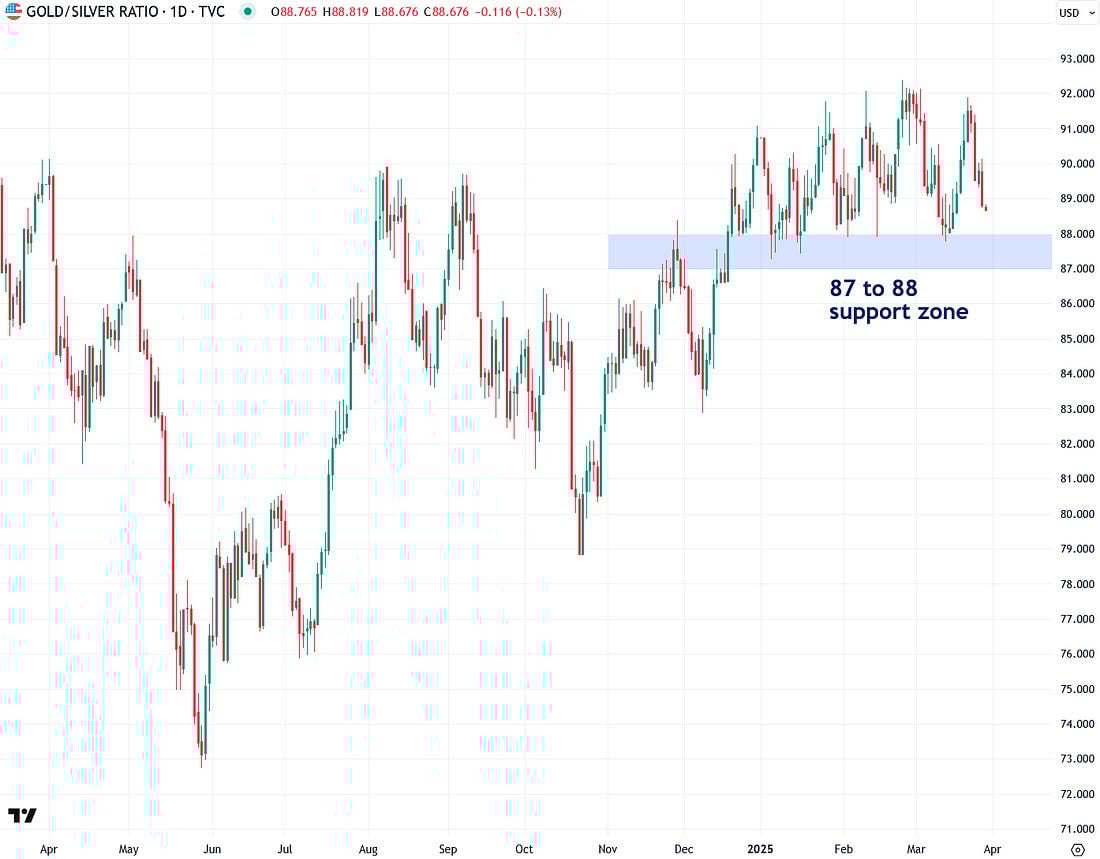
The gold-to-silver ratio is a valuable tool for silver investors, offering insight into silver’s relative strength compared to gold from a technical perspective.
Over the past year, gold has outperformed significantly while silver has lagged—but that dynamic may be about to shift. Silver remains deeply undervalued relative to gold, and a correction in that imbalance appears imminent.
I’m now closely watching the 87–88 support zone in the gold-to-silver ratio; a decisive break below this level would signal that silver is poised to step into the spotlight—and even take the lead in the next leg of the precious metals bull market.
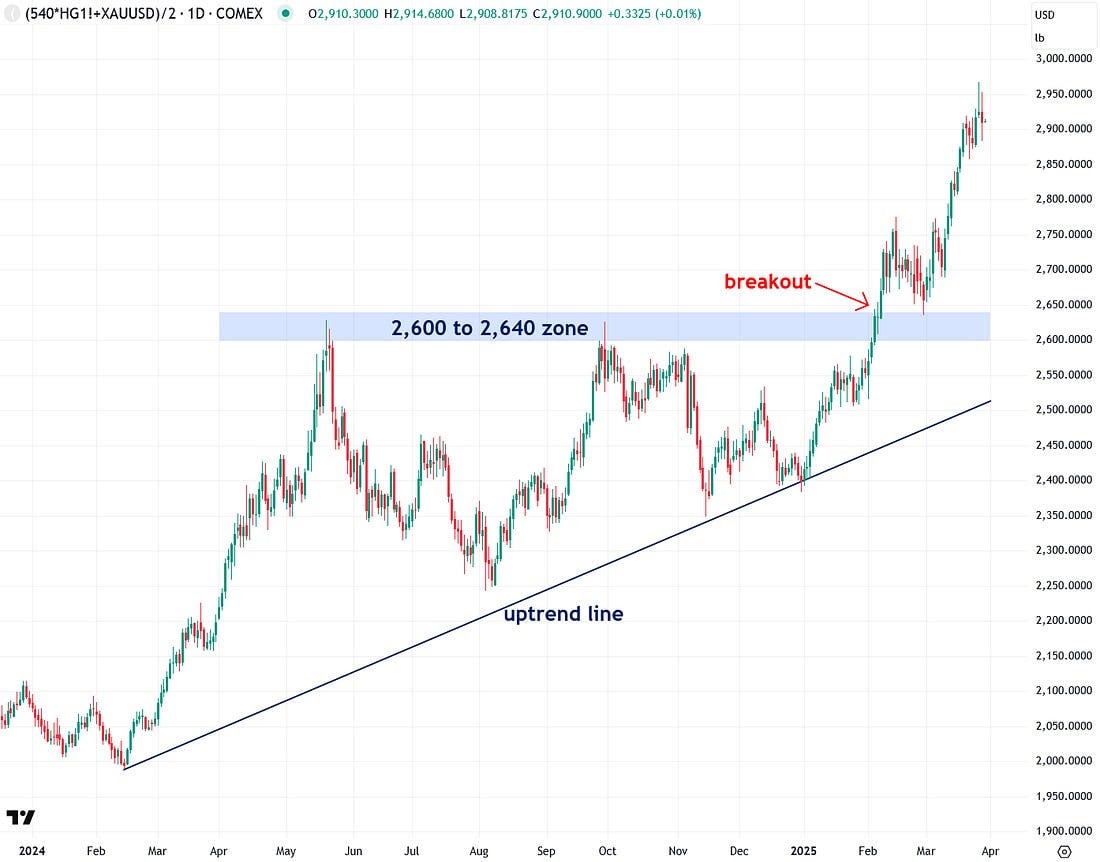
The Synthetic Silver Price Index (SSPI) is a custom indicator I developed to help validate and analyze silver’s price trends. It averages the prices of gold and copper—weighted so that copper (multiplied by a factor of 540) balances gold’s influence.
While silver itself isn’t included in the input, the SSPI has demonstrated a strong correlation with silver’s actual price action, providing valuable insight into its underlying market dynamics.
For much of the past year, the 2,600–2,640 zone has served as a key resistance level for the SSPI.
I’ve consistently stated that a breakout above this range would signal the start of a bull market in both the SSPI and silver—and that breakout occurred in early February.
Since then, the SSPI has moved steadily higher, which should continue to support silver’s upward momentum, especially as algorithmic trading reinforces the price relationships among the metals.
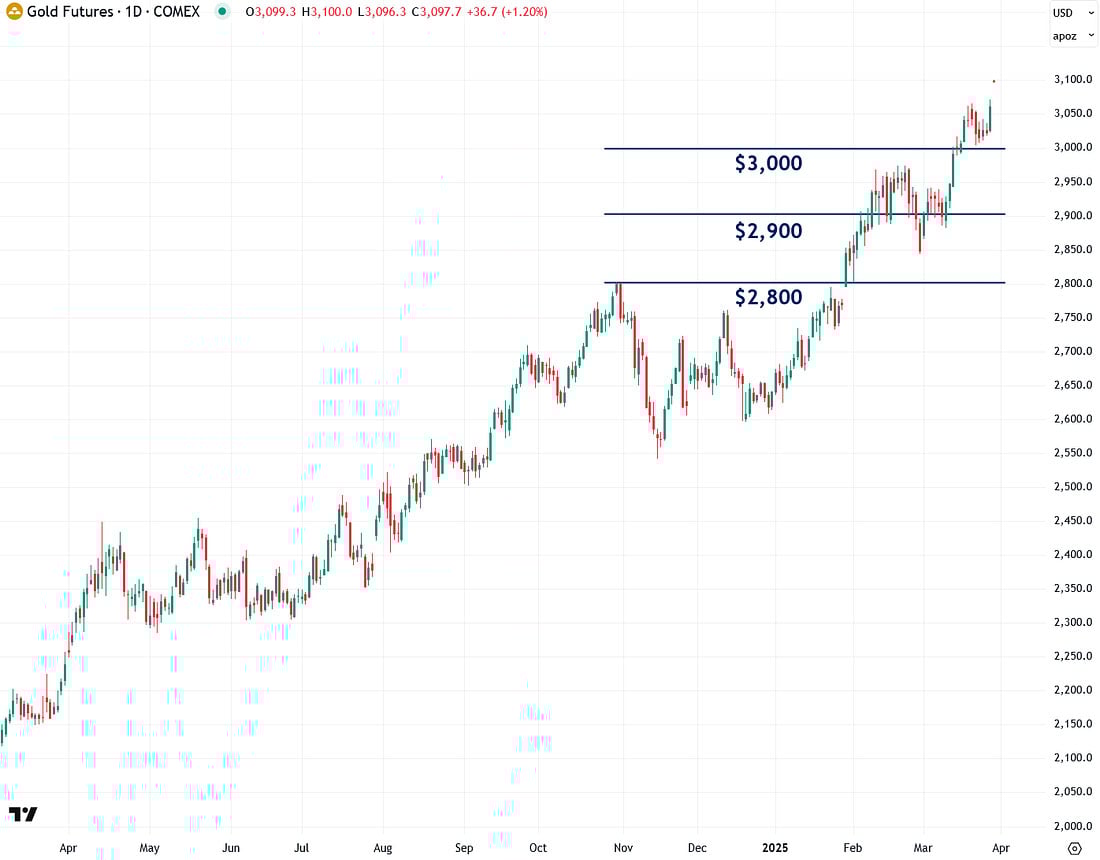
Gold plays a major role in influencing silver’s price, and over the past year, it has been a standout performer—just yesterday breaking out to a new all-time high of $3,100 in COMEX futures.
With gold now holding firmly above the key $3,000 psychological level, the bias remains clearly to the upside. This continued bullish momentum in gold should create a strong tailwind for silver moving forward.
Turning to silver miners and their ETFs, I’ve seen quite a few people on social media expressing frustration today about miners lagging, even as silver posted strong gains.
My take on this is twofold: first, copper pulled back 2.3% today—and since many silver miners also produce copper, that likely weighed on their performance.
Second, miners often lag the underlying metal in the early stages of a rally. I believe this precious metals bull market will unfold in the following sequence: first gold, then silver, followed by gold miners, and finally silver miners. It’s a process that requires patience—but once it gets fully underway, I believe it will be well worth the wait.
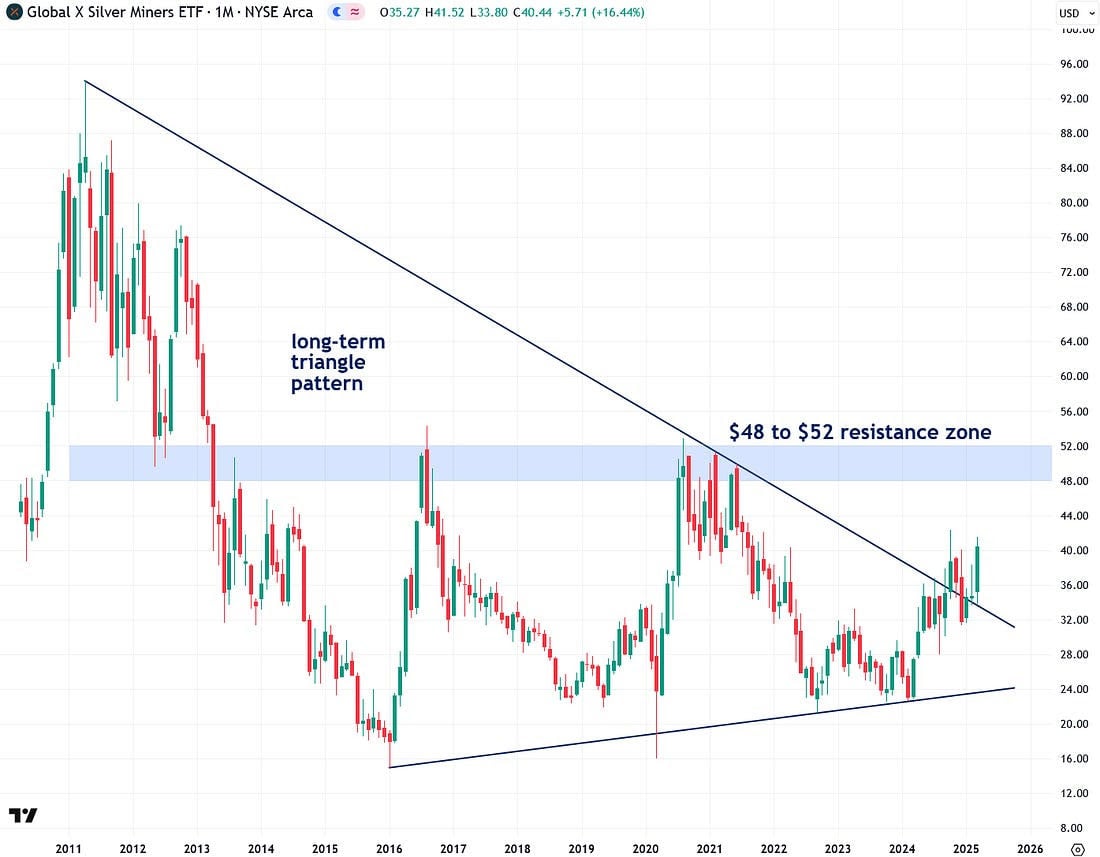
The flagship silver mining ETF, the Global X Silver Miners ETF (SIL), has had a strong month so far, gaining 16.44%. A few months ago, it broke out of a long-term triangle pattern dating back to 2011—an early signal that a major bull market in silver mining stocks was underway.
I’m now watching for a decisive close above the $48–$52 resistance zone to confirm the next leg higher and give the full green light for this emerging bull trend. It’s important to remember we’re still in the early stages, so staying patient and focused on the bigger picture is key. I’m using this chart as my roadmap for what’s to come.
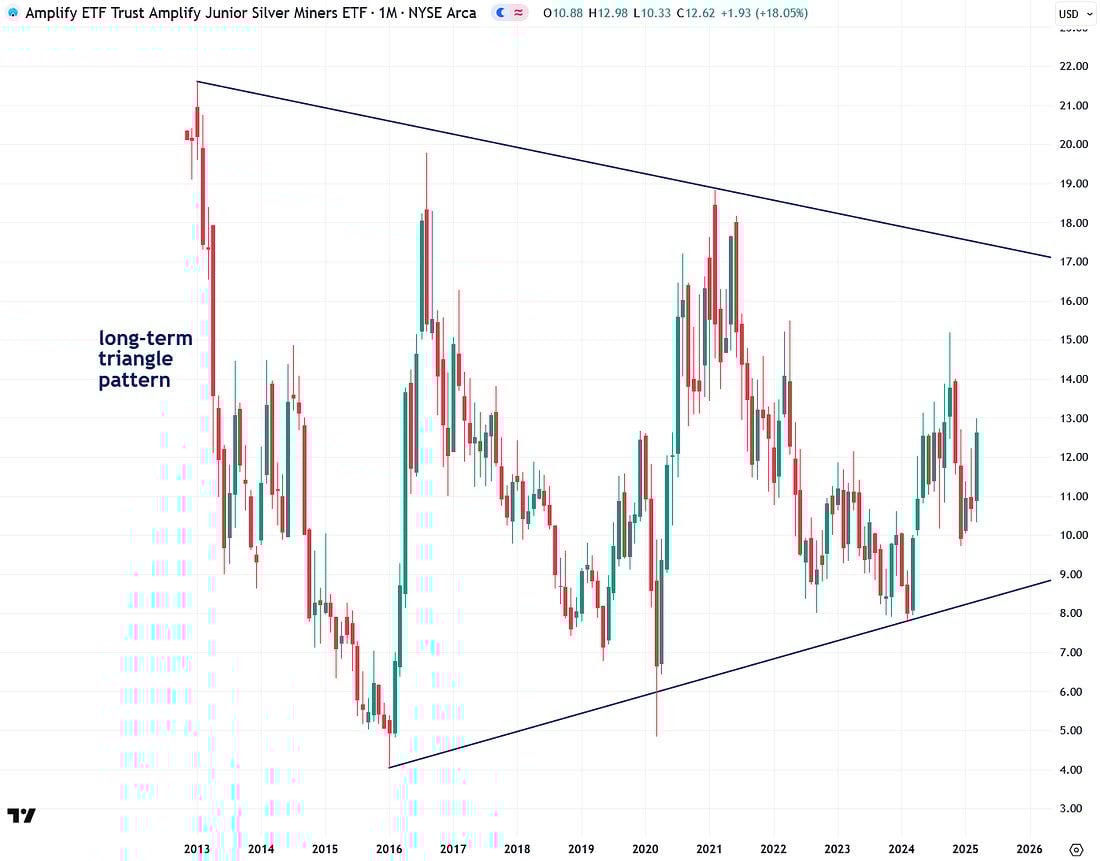
I also keep a close eye on the Amplify Junior Silver Miners ETF (SILJ), which I find especially compelling because I believe the smaller silver miners have the most explosive upside potential in the coming silver bull market.
SILJ has been forming a long-term triangle pattern since 2013, and once it finally breaks out, I expect silver mining stocks to go ballistic.
Until then, I’m staying patient—it’s still early, and there’s no need to stress. In fact, I’d prefer they don’t take off too quickly just yet, because I’m still looking to accumulate more at these levels!
To sum it up, things are really looking up for silver following COMEX silver futures’ breakout above the key $34–$35 resistance zone.
We’re also seeing breakouts in other currencies, including Australian dollars, Canadian dollars, Chinese yuan, and Singapore dollars. For full confirmation, I’m now watching for a decisive breakout in silver priced in euros and the other currencies mentioned earlier.
I see this not as a single binary event, but more like a spooling-up process—momentum building layer by layer. I wanted to give you all an early heads-up on what’s unfolding.
I’m feeling optimistic, but as I mentioned earlier, these breakouts need to hold above their key levels to remain valid. A strong follow-through over the next few days would go a long way in confirming that the silver bull market is truly underway.
Jesse Colombo is a financial analyst and investor writing on macro-economics and precious metals markets. Recognized by The Times of London, he has built a reputation for warning about economic bubbles and future financial crises. An advocate for free markets and sound money, Colombo was also named one of LinkedIn’s Top Voices in Economy & Finance. His Substack can be accessed here.
(Mike Maharrey, Money Metals News Service) I finally found something that can survive an association with Nazis.
Gold and silver.
A trove of around 15,000 rare gold and silver coins worth somewhere in the neighborhood of $100 million is about to go up for auction.
About 10,000 coins were buried in a European garden for over 50 years after their owner hid them fearing the Nazis were about to invade.
Now granted, hiding something from the Nazis shouldn’t taint it. But this is Nazis we’re talking about, and we now live in a world where things that aren’t associated with Nazism at all in real life are smeared as being Nazis. You’ve probably heard that political activists vandals have been defacing Teslas with swastikas because they don’t like Elon Musk.
On that note, I’ve got some bad news for Volkswagen owners.
Anyway, according to the co-owner of Numismatica Ars Classica (NAC), the outfit running the auction, the owner of the coins was a Europe-based heir to a family business. As the threat of a Nazi invasion grew, the man put the coins into envelopes, placed them in cigar boxes, sealed the boxes in aluminum casings, and buried them. The man’s wife was the only other person who knew the coins’ location.
Ultimately, the Nazis did invade. Soon after, the man died of a stroke.
In the mid-90s, the widow decided it was time to unearth the collection. NAC was chosen to produce an inventory and valuation of the coins. The treasure trove wasn’t publicly revealed until 2022.
According to NAC, there has never been a coin collection of higher value offered for public sale. The company plans to sell the collection in 15 separate auctions over several years.
The collection includes coins spanning from 20th-century England all the way back to ancient Greece. Perhaps the most valuable coin is a 100-ducat gold piece dated 1629 from the Holy Roman Emperor Ferdinand III of Habsburg. The coin weighs 350 grams (11.25 troy ounces) and is valued at $1.4 million. At the current price, the gold alone is worth nearly $34,700.
An MSN article about the coins highlights an important characteristic of gold and silver that supports their use as money. They don’t deteriorate over time, and they maintain their value. A gold coin buried in a garden for 50 years is the same gold coin as when it was minted 1,000 years ago.
As MSN put it, “The decades underground have not impacted their condition.”
“A couple of the boxes were broken and the paper failed on some envelopes, on which their owner had recorded their acquisition and other details.”
But the coins were just fine.
On top of their intrinsic value, the coins are a historical gold mine (pun intended). David Guest helped evaluate the coins, noting that they are a piece of history you can clasp in one hand.
“Coins were the mediation between leaders and their subjects, a projection of image and power. They were a way to celebrate peace or war. They were the social media of their day.”
But can the coins escape the shadow of Nazism?
I imagine so, since the coins themselves weren’t Nazi, and they weren’t owned by Nazis.
But this raises a question.
Would the Tesla vandals accept a gold coin with a swastika engraved on it?
This would be an interesting sociology experiment. You could hand people a 1-ounce gold coin emblazoned with the Nazi symbol, emphasizing that the metal itself is worth $3,000. Would people take it? I mean, you can buy a lot of spray paint for three grand.
I wouldn’t hesitate for a second.
And no. I don’t like Nazis. (Things people shouldn’t need to say in 2025.)
But at the end of the day, gold is gold, no matter what is printed on it. And the beauty of gold is that it can always be melted down and reformed with no loss in value!
By the way, if you want gold and silver coins without any Nazi association, peruse our website. You’ll find plenty to choose from!
Mike Maharrey is a journalist and market analyst for Money Metals with over a decade of experience in precious metals. He holds a BS in accounting from the University of Kentucky and a BA in journalism from the University of South Florida.
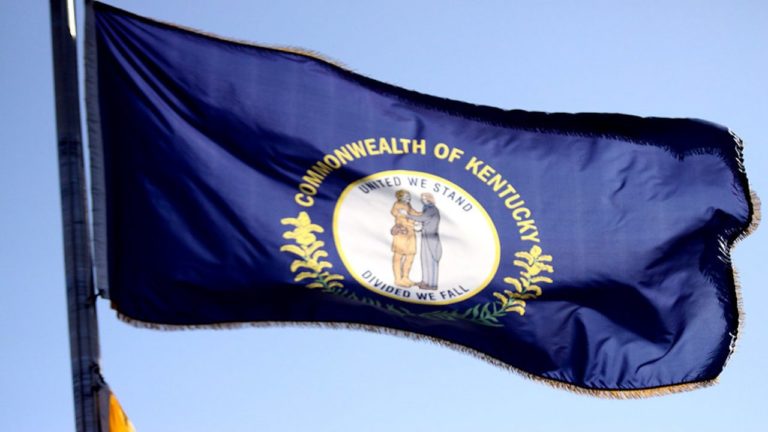
(Sound Money Defense League, Money Metals News Service) Three Kentucky taxpayers and one of America’s largest precious metals dealers today filed a class-action lawsuit against Governor Andrew Beshear, the Commonwealth of Kentucky, and the Kentucky Department of Revenue for their illegal sales tax collections in connection with retail purchases of physical gold and silver.
Money Metals Exchange, Jill Stahl Huston, Stacie Earl, and Karen Strayer filed the state court complaint in the Boone Circuit Court on behalf of themselves and all similarly situated Kentucky taxpayers and precious metals dealers across America.
The class-action suit comes immediately on the heels of overwhelming votes by both the Kentucky House and Senate to override Gov. Beshear’s veto this week of House Bill 2, a measure which expanded last year’s new sales tax exemption for precious metals purchases.
HB 2, which became law today, provides a right for full recovery of unlawfully collected taxes (plus interest), stiff penalties on state officials (acting in their official capacities and potentially, their personal capacities), and attorney’s fees for the Department of Revenue’s flagrant violation of a sales tax exemption that had taken effect on August 1, 2024.
Rep. TJ Roberts (R-66) and Rep. Steve Doan (R-69) introduced HB 2 in January, and the bill was championed by the Sound Money Defense League and Money Metals Exchange who had backed efforts since 2020 to end Kentucky’s taxation of gold and silver purchases,.
In 2024, the Kentucky legislature passed House Bill 8 to remove the state’s 6% sales tax on purchases of gold and silver coins, bars, and rounds. Gov. Beshear had attempted to exercise a line-item veto that the Constitution of the Commonwealth of Kentucky had only created for appropriations bills.
Rather than override the veto of HB 8 last year, however, the legislature deemed the veto invalid and the Revisor of Statutes codified the sales tax exemption in accordance with the state Attorney General Russell Coleman’s legal opinion.
Governor Beshear and his Department of Revenue nevertheless insisted that all Kentucky citizens must pay, and all businesses that sell gold and silver must continue to collect and remit, such taxes or face prosecution.
“Governor Beshear’s brazen and illegal actions have put online precious metals dealers like my company in an untenable position, but we refuse to be the bagman in his illegal money grab,” said Stefan Gleason, CEO of Idaho-based Money Metals Exchange, a U.S. focused dealer and depository recently named “Best Overall” online precious metals by Investopedia.
“We are proud to stand with our three brave co-plaintiffs to take on this scofflaw governor to protect the rights of tens of thousands of Kentucky savers and investors,” continued Gleason.
“Gold and silver are money, and folks should not be taxed for saving gold and silver to protect themselves from inflation and currency debasement. Almost every other state in our nation agrees and has already removed sales taxes from constitutional money.”
In addition to recovery of back taxes, interest, and attorney’s fees, the class-action suit seeks temporary and permanent injunctive relief preventing further collection of sales taxes on gold and silver and any enforcement actions taken by the Beshear administration against citizens of Kentucky or precious metals dealers like Money Metals.
Sound Money Defense League is a non-partisan public policy group working nationally since 2014 to restore gold and silver as sound money – America’s constitutional money. The League, in partnership with Money Metals, also publishes the annual Sound Money Index.
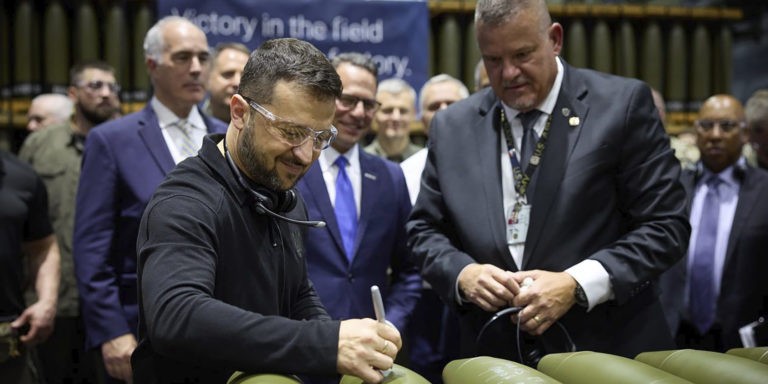
(Kyle Anzalone, Libertarian Institute) A new investigation by the New York Times discloses the extent of the US support for the proxy war in Ukraine. One European official said Washington is “part of the kill chain now.”
“But a New York Times investigation reveals that America was woven into the war far more intimately and broadly than previously understood,” writes Adam Entous, who says he conducted more than 300 interviews for the story. “At critical moments, the partnership was the backbone of Ukrainian military operations.”
The article reports that US and Ukraine’s military leaders convened in Germany to design a plan to defeat the Russian invasion. Early in the war, Washington helped to locate the position of Russian generals and targets on the Crimean Peninsula for Kiev to strike.
“Every morning, officers recalled, the Ukrainians and Americans gathered to survey Russian weapons systems and ground forces and determine the ripest, highest-value targets.” The Times article continues, “The priority lists were then handed over to the intelligence fusion center, where officers analyzed streams of data to pinpoint the targets’ locations.”
When the Ukrainians questioned the US intelligence, an American general was said to have explained, “Don’t worry about how we found out. Just trust that when you shoot, it will hit it, and you’ll like the results, and if you don’t like the results, tell us, we’ll make it better.”
According to Entous, the relationship between the US and Ukrainian militaries strained over differences in strategy, writing that “The Ukrainians aimed to win the war outright. Even as they shared that hope, the Americans wanted to make sure the Ukrainians didn’t lose it.”
In some cases, Ukrainian successes in the war, such as the sinking of the flagship of Russia’s Black Sea Fleet, caused anger and panic in the White House. A second example is the 2024 Ukrainian invasion of Russia’s Kursk region. The Ukrainian general that ordered the attack exploited a CIA personnel change in Kiev to conduct the offensive without Washinton’s knowledge.
In the leadup to Ukraine’s 2023 counteroffensive, Kiev broke from the plan designed by US military leaders. The decision led one American official to tell the Times, “We should have walked away.” The counteroffensive failed to meet its objectives.
The reporting matches a remark from Eric Green, who was on President Joe Biden’s National Security Council at the time of the invasion. In January, he told Time Magazine that the White House never gave any promises to help Ukraine take back the land Russian forces had captured.
“That was not going to be a success story ultimately,” he said. “The more important objective was for Ukraine to survive as a sovereign, democratic country free to pursue integration with the West.”
According to Entous, the relationship between then-top US General Mark Milley and his Ukrainian counterpart, General Valery Zaluzhny, became so fraught that the Pentagon worked up “an elaborate telephone tree” that included entrepreneur Igor Pasternak, who would use his contacts in Ukraine to beg Zaluzhny to return Milley’s calls.
While Washington struggled for influence in Kiev, London had more sway. In one case, an American general went to the UK defense minister to force Ukraine to dismiss Major General Andrii Kovalchuk, who did not conduct the operations recommended by the US military leadership.
The NYT investigation also found that as Washington escalated support for Kiev, including allowing the CIA to coordinate strikes on Russian positions near the front lines, the CIA was additionally authorized to help Ukraine use a maritime drone developed for Taiwan against the Russian Black Sea fleet.
However, the White House was concerned about pushing the Kremlin to turn to its nuclear arsenal. At one point in the war, US intelligence agencies believed there was a 50% chance Russia would use a tactical nuclear weapon.
As Ukraine became more desperate, the war plans became bolder. In 2024, the US provided Ukraine with arms for a military operation intended to drive Russia from the Crimean Peninsula, while the CIA also helped to plan an operation to destroy the Kerch Bridge connecting Crimea to the Russian mainland.
Entous compared the war in Ukraine to those fought in Vietnam and the Soviet invasion of Afghanistan, arguing that it could give the West a future conflict with Russia. “That was not going to be a success story ultimately. The more important objective was for Ukraine to survive as a sovereign, democratic country free to pursue integration with the West,” he wrote.
This article originally appeared at The Libertarian Institute.
(Dave DeCamp, Antiwar.com) President Trump has issued a new threat toward Yemen’s Houthis and Iran, warning that the “real pain is yet to come” if Houthi attacks on US warships don’t stop.
The president has been blaming Iran for Houthi attacks, even though US officials have acknowledged the Yemeni group operates independently and has its own domestic weapons supply.
Trump claimed in a post on Truth Social on Monday that his bombing campaign in Yemen has “decimated” the Houthis’ capabilities even though Yemeni forces have been firing missiles at Israel and claiming attacks on US warships just about every day.
“The Iran-backed Houthi Terrorists have been decimated by the relentless strikes over the past two weeks. Many of their Fighters and Leaders are no longer with us. We hit them every day and night — Harder and harder. Their capabilities that threaten Shipping and the Region are rapidly being destroyed,” Trump said.
“Our attacks will continue until they are no longer a threat to Freedom of Navigation. The choice for the Houthis is clear: Stop shooting at US ships, and we will stop shooting at you. Otherwise, we have only just begun, and the real pain is yet to come, for both the Houthis and their sponsors in Iran,” the president added.
The Houthis, officially known as Ansar Allah, ceased their attacks when the Gaza ceasefire went into effect on January 19. President Trump began bombing Yemen again on March 15, after the Houthis said they would reimpose a blockade on Israeli shipping in response to Israeli ceasefire violations, but before they actually started launching new attacks.
The Houthis didn’t restart attacks on US warships until after the US started bombing Yemen again. Trump has threatened the Houthis with “annihilation,” but the group is extremely resilient, having survived a brutal US-backed Saudi war on Yemen from 2015 to 2022, which Trump backed throughout his first administration.
(José Niño, Headline USA) The Daily Wire is seemingly undergoing a rapid and dramatic implosion following the resignation of co-founder Jeremy Boreing.
According to a Twitter/X thread compiled by journalist James Li, the company has laid off roughly 25% of its workforce, including the complete shutdown of its kids division, and fired Alyssa Cordova, the vice president of public relations.
🚨 SCOOP: The implosion at The Daily Wire is accelerating!!
What started with Jeremy Boreing stepping down has now spiraled into MASS LAYOFFS and another FIRING of a senior executive — Alyssa Cordova, the Vice President of Public Relations.
Cordova is alleged to have played a central role in crafting an aggressive and controversial PR strategy, which included stalking former employees online and maintaining dossiers on perceived enemies.
Internal sources blame Boreing’s leadership for the current crisis, claiming his departure should have happened sooner to prevent job losses.
With leadership in disarray and significant layoffs, questions loom about the future stability of The Daily Wire and its high-profile personalities like Matt Walsh and Michael Knowles.
Toward the end of last month, The Daily Wire began implementing dramatic organizational changes that have quickly escalated into what many observers are describing as a full-blown crisis.
The sequence of events began when Boreing announced he was stepping down as co-CEO to focus on “creative and entertainment ventures for the company,” with Caleb Robinson taking over as full-time CEO.
However, what initially appeared to be a standard leadership transition has rapidly deteriorated into a much more serious situation. Just days after Boreing’s departure, reports emerged that The Daily Wire was laying off a significant portion of its workforce.
One of the most notable casualties was the company’s kids division, which has been completely eliminated despite a significant financial commitment made just three years earlier.
In March 2022, The Daily Wire had announced plans to invest at least $100 million into children’s entertainment content over a three-year period as a response to Disney’s woke content.
Former Daily Wire personalities have publicly reacted to Boreing’s departure in ways that suggest previous internal discord.
Brett Cooper, who left the company earlier, posted a GIF of Jimmy Fallon smirking in response to the news of Boreing stepping down.
Similarly, Candace Owens, who had a public falling out with the company over differences regarding Israel and her friendship with Kanye West, described Boreing’s departure as “tremendous news”.
The official explanation from The Daily Wire for the layoffs was that the decision was “based on business needs and operational efficiencies”.
A spokesperson stated: “As part of our ongoing plan to better align resources with business priorities and growth areas, The Daily Wire has made the decision to streamline and in some cases, reduce some of our workforce.”
Pro-Trump conservative commentator Scott Greer observed that the Daily Wire’s decision to create conservative movies proved to be a bad business decision. He noted in an X post, “It turned out to not be a wise decision to make conservative movies. The film industry as a whole is in decline and conservatives weren’t eager Daily Wire knock-offs of standard Hollywood fare. Cultural endeavors from the Right need a different approach”
It turned out to not be a wise decision to make conservative movies. The film industry as a whole is in decline and conservatives weren’t eager Daily Wire knock-offs of standard Hollywood fare. Cultural endeavors from the Right need a different approach https://t.co/wSzUigSc4A
The Daily Wire was founded in 2015 by conservative commentators Ben Shapiro and Jeremy Boreing, and has built a substantial audience, particularly on social media platforms like Facebook.
José Niño is the deputy editor of Headline USA. Follow him at x.com/JoseAlNino