DOJ’s Mixed Signals on Pistol Braces Leave Gun Owners in Legal Limbo

(José Niño, Headline USA) The Justice Department is under fire from gun rights advocates for continuing to prosecute pistol brace owners, even as it claims to be reviewing the controversial rule.

The DOJ is currently prosecuting a case in the U.S. District Court for the District of Columbia involving the possession of a handgun outfitted with a pistol stabilizing brace, in U.S. v. Taranto. 

“This does not inspire confidence in the DOJ,” the National Association for Gun Rights (NAGR) posted on X on Sunday. “They are ‘reviewing’ the pistol brace rule and yet are still continuing to charge individuals for possessing them. This is not what gun owners asked for.”

In this case, prosecutors are charging a man, Taylor Taranto, for possessing a CZ Scorpion pistol equipped with a stabilizing brace. 

Taranto was arrested on June 28, 2023, after the Secret Service and FBI found him near former President Barack Obama’s home. 

He was allegedly engaged in “erratic behavior,” livestreamed threats about a vehicle “detonator,” and fled into woods when approached. Authorities discovered a CZ Scorpion pistol with an SBTEVO stabilizing brace in his vehicle.

He faces multiple charges, including:

  • Possession of a pistol without a D.C. license
  • Possession of an unregistered short-barreled rifle (SBR)

In response to this case, Gun Owners of America and the Firearms Regulatory Accountability Coalition (FRAC) have called on the DOJ to drop the charge, arguing that it sets a troubling precedent for the estimated 40 million Americans who legally own similar firearms.

Pistol stabilizing braces are firearm accessories initially designed to help disabled veterans shoot heavier pistols one-handed. Created in 2012 by SB Tactical founder Alex Bosco, the braces strap to a shooter’s forearm for stabilization. They differ from rifle stock, which are designed to be shouldered. This distinction is crucial.

If a firearm with a barrel shorter than 16 inches is intended to be fired from the shoulder, it’s considered a short-barreled rifle under the National Firearms Act (NFA), requiring special registration and taxation. 

For years, the ATF allowed braces without classifying them as SBRs.

That changed in January 2023 when the Biden administration’s ATF published a 293-page rule redefining braced pistols as SBRs if they met certain criteria. 

This rule, known as 2021R-08F, reclassified potentially millions of pistols, threatening owners with felony charges unless they registered the firearms under the NFA.

Gun Owners of America (GOA), the National Association for Gun Rights (NAGR), and the Firearms Regulatory Accountability Coalition (FRAC) quickly filed lawsuits against the brace rule.

In a landmark decision in 2024, U.S. District Judge Reed O’Connor issued a nationwide injunction, ruling that the brace rule violated the Administrative Procedure Act. Other courts followed suit, effectively blocking the rule’s enforcement.

Despite these victories, gun groups say the DOJ and ATF continue to pursue cases that rely on the same legal theories the courts rejected.

In U.S. v. Taranto, the DOJ claims it isn’t enforcing the vacated rule but is instead applying the underlying statute — the NFA —as it has always done.

In a recent filing, prosecutors wrote, “ATF is not barred from continuing to enforce the underlying statute … those determinations will naturally tend to look substantially like the determinations that would follow from applying the clear framework outlined in the rule.”

To GOA and NAGR, this amounts to a bureaucratic sleight of hand.

While the Trump administration has publicly supported gun rights and assembled a new DOJ task force to uphold Second Amendment protections, groups like GOA and NAGR are alarmed that prosecutions like Taranto continue.

“Even under a Trump administration, it appears that career anti-gun bureaucrats within ATF, along with some holdover prosecutors at the DOJ, just aren’t willing to give up their anti-gun agenda,” one GOA representative said in a statement.

The issue, GOA argues, is that the Taranto case could establish a precedent by stealth. Although the defendant faces numerous unrelated charges, including allegedly outfitting his vehicle with a detonator and fleeing Secret Service agents, GOA and FRAC emphasize they are solely focused on the NFA charge for possessing a braced firearm.

Taylor Rhodes, the Director of Communications at the National Association of Gun Rights, chimed in as well.

“The DOJ’s relentless pursuit of law-abiding gun owners over pistol braces is a blatant assault on our Second Amendment rights—rights that a federal appeals court already deemed violated by this unconstitutional rule,” Rhodes said. 

He added: “Charging individuals for owning any brace, despite ongoing reviews, proves the Biden administration’s anti-gun agenda is alive and well, and we won’t stand for it.”  

Rhodes stressed: “Gun owners are not criminals, and we’ll fight tooth and nail to ensure the government stops weaponizing vague regulations to strip away our freedoms.”

The stakes are high. According to the Congressional Research Service, as many as 40 million firearms equipped with pistol braces are in circulation. For their owners, the current legal gray zone is both confusing and potentially perilous.

Though the courts have enjoined the brace rule, the DOJ continues to prosecute cases using the same framework. That leaves gun owners unsure whether they’re protected under current law or one prosecutorial decision away from a felony.

GOA, NAGR, and FRAC are urging the DOJ to drop the brace-related charge in U.S. v. Taranto and abandon what they see as a selective, unconstitutional enforcement strategy.

Despite promises of review and reform, the DOJ’s actions suggest that the fight over pistol braces is far from over.

José Niño is the deputy editor of Headline USA. Follow him at x.com/JoseAlNino 

Did a Pro-Gun Group Oust a Director over His Views on Israel?

(José Niño, Headline USA) A popular YouTuber known for his gun advocacy has ended his role as a state director for Gun Owners of America, leaving followers speculating whether his skepticism of Israel cost him his role.

Gun YouTuber Iraqveteran8888, whose real name is Eric Blandford, was GOA’s Georgia State Director until last Tuesday, when he was apparently relieved of his position.  Blandford was originally brought on board by GOA on May 23, 2022. 

His departure from GOA has raised speculation as to why he is no longer working with the pro-gun lobby. 

Several of his followers on X/Twitter, believe that he parted ways with GOA owing to his commentary about Israel. 

Thomas C. Leager, a former Senate candidate for Wisconsin, exclaimed on X, “@GunOwners have officially sold out. Eric @Iraqveteran8888 had a huge audience WAYYYYY before Gun Owners of America. He will after.”

When Headline USA editor Ken Silva inquired about Blandford’s apparent firing, Leager responded, “They got the call and distanced themselves from @Iraqveteran8888 because he asked questions about the “chosen people” on his X Acct.”

Comments from a now-deleted Reddit thread have also mentioned that Blandford has experienced a difficult divorce and has been frequently posting content about Jewish and Israeli influence — something that has alarmed several of his followers. .

One reddit user observed, “Eric has been crashing out hard on X. Seemingly after his divorce? I dont know nor do I care — but the man has been posting about jews nearly 24/7 for I dont know how long. I thought to myself a week ago like – damn I cant believe GOA hasn’t dropped him yet. This was the least surprising thing ever.” 

Reddit Post Concerning Iraqveteran8888’s Firing

While there is no smoking gun confirming his anti-Israel commentary as the precipitating factor behind the termination of his relationship with GOA, Blandford has a notable history of Israeli skeptic commentary.

Since Hamas’ attack on Israel on October 7, 2023, a sharp and unprecedented divide has emerged within conservative media over the value of the United States’ alliance with Israel.

Blandford himself recorded a YouTube video titled “Firing Back with Erich Pratt #1: ‘The Israeli Situation'” where he discusses Israel with GOA Senior Vice President Erich Pratt. This video was originally published on October 15, 2023, on the heels of the October 7 attacks. 

In the video, Eric took a more neutral tone and expressed sympathy for Israelis affected by violence, characterizing the situation as “extremely emotional” and noting that “war is extremely terrible.” He described the Hamas attacks as a situation where “people came across the border started shooting people up” and states that Israelis were “caught off guard.”

During the conversation with Pratt, Blandford highlighted the contrast between Israeli and U.S. gun control policies, noting that following the Hamas attacks, the Israeli government began to “slash their gun control laws” and started “handing out machine guns to their citizens.”

Blandford expressed solidarity with the Israelis saying they are “like us in a lot of ways” and that “they want to live free and they want to be safe just like any other person.” He acknowledges that Israelis “live in a very hostile place with people all around them that hate them.”

However, Blandford’s comments on Israel have taken a more critical tone since 2024. 

In one post he published on October 18, 2024, Blandford argued that various nations and organizations such as Hamas, Israel, the United States, Russia, and Ukraine, have all committed serious violations such as war crimes or crimes against humanity. 

In a similar vein, Blandford made a post on October 23, 2024 highlighting the actions of the aforementioned state and non-state actors pointing out that these entities have been responsible for significant violence, including the deaths of children. 

He argued that political efforts to restrict personal firearms overlook the broader issue of violence perpetrated by powerful groups. The post critiques what the Blandford perceives as a flawed moral stance by certain political factions, advocating instead for the right to personal defense through firearm ownership

In the middle of March, when Donald Trump authorized the United States military to carry out a series of air strikes against the Houthis in Yemen, Blandford raised the question of whether Israeli influence was driving the decision

At the start of April, the gun YouTuber began to increase his anti-Israel posts. In one post, Blandford questioned the validity of the United States’ alliance with Israel.  


Blandford also published a post requesting clarification for certain passages in the Talmud that he finds perplexing or troubling. 

The Talmud, a central text in Rabbinic Judaism, is made up of a vast collection of discussions and interpretations of Jewish law, ethics, customs, and history. Some passages have been sources of controversy. 

Five days before his exit from GOA, Blandford asked his Twitter followers if there is any other political figure outside of Rep. Thomas Massie, R-KY, who is not “in bed with Israel.”

The string of anti-Israel posts he published apparently got numerous people to privately message Blandford about the pivot in his commentary. Despite these messages of concern, Blandford stressed that he would not change his stance on Israel unless he was presented with truly compelling and indisputable evidence to the contrary.


Curiously, the day before Blandford and GOA parted ways, the firearms personality posted a satirical “Dying for Israel Risk Index” on his X account.

Shortly afterwards, he published a series of posts condemning Israel’s punitive campaign in Gaza, focusing on the high number of civilian casualties it has inflicted.

According to figures from the Gaza Health Ministry, the Israel Defense Forces (IDF) have killed close to 51,000 Palestinians, with nearly 116,000 others wounded. 

These final posts may have been the tipping point that ultimately led GOA to sever its ties with Blandford.

After his departure from GOA, Blandford has continued criticizing Zionist interest groups. In response to a tweet published by conservative commentator Candace Owens, he highlighted that the Zionist lobby has been losing the public relations battle for millennia, and only now is the mainstream beginning to acknowledge it.

Headline USA has reached out to Blandford and GOA for comment, but has not received any response thus far.

As Headline USA has previously covered, there appears to be a concerted effort by several Zionist organizations and conservative media personalities to discredit and suppress the voices of right-wing critics of Israel.

Since Israel launched its military campaign against Hamas following the October 7 attacks, a range of conservative figures — including Candace Owens, Tucker Carlson, and even social media personalities like former MMA fighter Jake Shields and Dan Bilzerian — have openly criticized Israel’s actions.

This has likely prompted Israeli Prime Minister Benjamin Netanyahu to hold a private meeting with conservative influencers such as Tim Pool to discuss this anti-Israel trend, which appears to be growing on the Right. 

In a movement long defined by loyalty to guns, God, and country, Blandford’s case poses a provocative question: Is Israel now the third rail of the American Right?

José Niño is the deputy editor of Headline USA. Follow him at x.com/JoseAlNino.

‘Illegal:’ Coalition of State Attorneys General Warn Businesses About DEI Policies

(Casey Parker, The Center Square)  A coalition of state attorneys general sent a letter to a top business leaders group Tuesday warning its members that if they continue their Diversity, Equity and Inclusion practices, they are “often illegal.”

Missouri Attorney General Andrew Bailey led the letter with more than a dozen other state attorneys general which was sent to the Business Roundtable, a group comprised of top CEOs.

The attorneys general’s letter, not the first of its kind, says businesses that continue DEI could be liable for choosing social or political goals over doing what is best for the shareholders. 

“By now it should be clear that attempts to reorient corporate policy to appease progressive activists are not only unworkable, but they are also often illegal,” the letter said. “Simply put, a corporation’s lawful purpose is to faithfully honor its fiduciary and contractual obligations to shareholders. Deviating from this fundamental duty, all to seek the applause of so-called ‘stakeholders’ pushing DEI goals, puts corporations at risk for legal action.”

Private businesses have faced a reckoning with their internal DEI policies in the last year, with many reducing or removing the policies altogether. The reasons for this vary from changing emphasis to fear of boycott from conservative customers. 

A turning point in the DEI battle is when the U.S. Supreme Court ruled against university affirmative action policies in June 2023. 

From the letter:

As corporate CEOs, pressured by far-left political activists, abandoned their fiduciary responsibilities in exchange for social cachet, state attorneys general stepped up to defend the legal rights of millions of their citizens. These efforts have included launching investigations of major corporations under state consumer protection laws. When a number of large banks—at the expense of shareholder value—signed on to the United Nation’s Net Zero Banking Alliance (NZBA), agreeing to reorient their investing and lending practices to achieve certain climate goals by 2050, 19 state attorneys general launched legal proceedings to determine if anti-trust or laws requiring fiduciary integrity had been violated. As of the writing of this letter, each of the banks targeted for investigation have publicly announced they are withdrawing from the NZBA.

In some instances, state attorneys general have brought legal actions under state human rights acts to push back against illegal corporate racial preference policies. When IBM created racial targets for its workforce and tied those targets to compensation, the Missouri Attorney General brought a lawsuit to enforce the state’s antidiscrimination laws.11 Likewise, in response to publicly acknowledged racial quotas by Starbucks,12 the Florida Attorney General brought a discrimination complaint regarding those goals to the state Commission on Human Relations, and the Missouri Attorney General filed suit on similar grounds. 

Report: US Tells Israel It Will Begin Drawdown From Syria in Two Months

(Dave DeCamp, Antiwar.com) Pentagon officials have told their Israeli counterparts that the United States will begin a phased withdrawal of its troops from Syria within two months, the Israeli news site Ynet reported on Tuesday.

A senior Israeli official said that the US withdrawal could be partial, meaning only some of the estimated 2,000 US troops in eastern Syria could leave. Reuters later reported that the US is planning to “consolidate” its presence in Syria and will likely reduce the number of troops in the country to about 1,000.

Israel is opposed to any drawdown or a full withdrawal of US troops from Syria, and the Ynet report said Israeli officials are working to prevent it over concerns related to Turkey.

Since the regime change that ousted former Syrian President Bashar al-Assad, which Israel supported, the Israeli military has invaded southern Syria and has been bombing military targets across the country. Israel now appears focused on keeping Turkish forces out of central Syria, warning it would impede the Israeli military’s “operational freedom” in the country.

Israel recently bombed the T-4 air base in Tadmur, central Syria, amid reports that Turkey is planning to establish a military presence there, and Israeli officials said the airstrikes were meant as a “message” to Ankara. One Israeli security source told Ynet that the attacks on the T-4 base were part of “a race against time” before “the Americans pack up and leave.”

During the first Trump administration, Israel played a role in convincing President Trump to keep troops in Syria after he announced plans for a withdrawal. At the time, Israel didn’t want Iran or its allies, which included the Assad government, gaining a foothold in the areas currently occupied by the US, which include oil and gas fields.

The US backs the Kurdish-led SDF in eastern and northern Syria, which recently began handing over control of some areas in the northern Aleppo Governorate to government forces under an integration agreement with the Syrian government that’s led by the al-Qaeda offshoot Hayat Tahrir al-Sham. The deal has eased tensions in northern Syria, ending fighting between the SDF and the Turkish-backed SNA, and was seen as a potential path to a US withdrawal.

This article originally appeared at Antiwar.com.

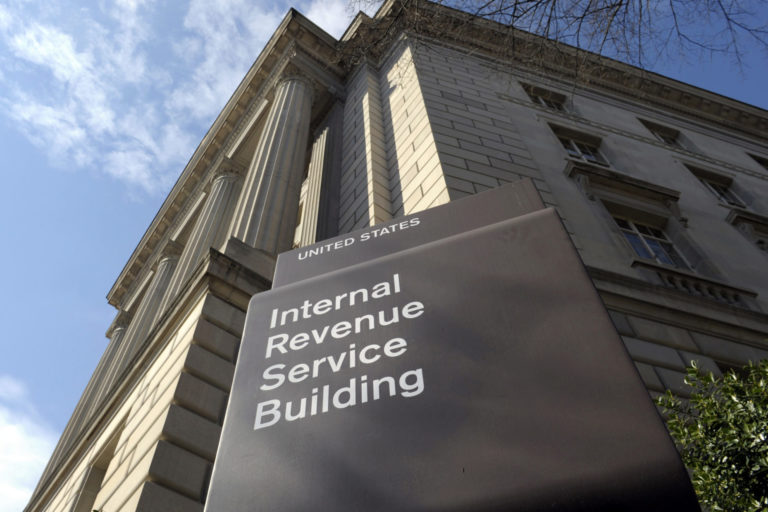
IRS Agent Who Investigated Hunter Biden Expected to be Named IRS Acting Chief

(Headline USA)  An IRS whistleblower who testified publicly about investigations into Hunter Biden’s taxes is reportedly expected to be promoted to IRS acting commissioner.

Gary Shapley, an IRS employee who testified to Congress as Republicans reviewed the business dealings of Joe Biden’s son, said he was retaliated against for cooperating in the investigations. In March, Shapley was promoted to Deputy Chief of IRS Criminal Investigations, and another IRS investigator who testified about Biden’s taxes, Joseph Ziegler, was assigned to the Treasury Secretary’s office as a senior adviser for IRS reform.

Now, the tax collection agency is planning to name Shapley to one of the highest-ranking roles at the agency — in an interim role — as former Missouri congressman Billy Long awaits a confirmation hearing to lead the agency permanently, the people say. They were not authorized to speak publicly about the plan.

President Donald Trump nominated Long, who worked as an auctioneer before serving six terms in the House of Representatives, to serve as the next commissioner of the IRS.

Shapley replaces Melanie Krause, who is resigning from her role as acting IRS commissioner over a deal to share immigrants’ tax data with Immigration and Customs Enforcement to identify and deport people illegally in the U.S. CNN originally reported the news about Shapley’s new role.

“Gary is a long-tenured civil servant who has dedicated the last 15 years of his professional life to the IRS,” a Treasury spokesperson said in an email Tuesday. “Gary has proven his honesty and devotion to enforcing the law without fear or favor, even at great cost to his own career. He’ll be a great asset to the IRS as we rethink and reform this crucial organization.”

Shapley and Joseph Ziegler say they were removed from the Hunter Biden case in December 2022 after they told their bosses that the Justice Department and former Delaware U.S. Attorney David Weiss had engaged in a pattern of “slow-walking investigative steps” and delaying enforcement actions in the months before the 2020 presidential election won by Democrat Joe Biden.

The investigation into Hunter Biden ended with Joe Biden pardoning his son, sparing the younger Biden a possible prison sentence for federal felony gun and tax convictions and reversing his past promises not to use the extraordinary powers of the presidency for the benefit of his family.

Hunter Biden had been set to stand trial last September in the California case accusing him of failing to pay at least $1.4 million in taxes. But he agreed to plead guilty to misdemeanor and felony charges.

Adapted from reporting by the Associated Press.

Meta CEO Zuckerberg Considered Selling Instagram in 2018 Over Antitrust Worries

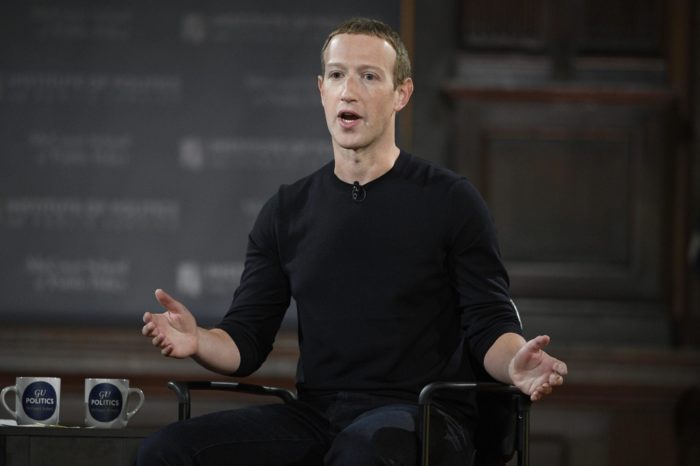
(Headline USA)  Meta CEO Mark Zuckerberg once considered separating Instagram from its parent company due to worries about antitrust litigation, according to an email shown Tuesday on the second day of an antitrust trial alleging Meta illegally monopolized the social media market.

In the 2018 email, Zuckerberg wrote that he was beginning to wonder if “spinning Instagram out” would be the only way to accomplish important goals, as big-tech companies grow. He also noted “there is a non-trivial chance” Meta could be forced to spin out s and perhaps WhatsApp in five to 10 years anyway.

He wrote that while most companies resist breakups, “the corporate history is that most companies actually perform better after they’ve been split up.”

Asked Tuesday by attorney Daniel Matheson, who is leading the antitrust case for the Federal Trade Commission, which incidence in corporate history he had in mind, Zuckerberg responded: “I’m not sure what I had in mind then.”

Zuckerberg, who was the first witness, testified for more than seven hours over two days in the trial that could force Meta to break off Instagram and WhatsApp, startups the tech giant bought more than a decade ago that have since grown into social media powerhouses.

While questioning Zuckerberg on Tuesday morning, Matheson noted that he had referred to Instagram as being a “rapidly growing, threatening, network.” The attorney also pointed out Zuckerberg’s referring to trying to neutralize a competitor by buying the company.

But Zuckerberg said while Matheson was able to show documents in court that indicated his concern about Instagram’s growth, he also had many conversations about how excited his company was to acquire Instagram to make a better product.

Zuckerberg also said Facebook was in the process of building a camera app for sharing on mobile phones, and he thought Instagram was better at that, “so I wanted to buy them.”

Zuckerberg also pushed back against Matheson’s contention that the reason for buying the company was to neutralize a threat.

“I think that that mischaracterizes what the email was,” Zuckerberg said.

In his questioning of Zuckerberg, Matheson repeatedly brought up emails — many of them more than a decade old — written by Zuckerberg and his associates before and after the acquisition of Instagram.

While acknowledging the documents, Zuckerberg has often sought to downplay the contents, saying he wrote them in the early stages of considering the acquisition and that what he wrote at the time didn’t capture the full scope of his interest in the company.

Matheson also brought up a February 2012 message in which Zuckerberg wrote to the former chief financial officer of Facebook that Instagram and Path, a social networking app, already had created meaningful networks that could be “very disruptive to us.”

Zuckerberg testified that the message was written in the context of a broad discussion about whether they should buy companies to accelerate their own developments.

Zuckerberg also testified that buying the company, taking it off the market and building their own version of it was “a reasonable thing to do.”

Later Tuesday, Mark Hansen, an attorney for Meta, began his questioning of Zuckerberg. Hansen, in his opening statements Monday, emphasized that Meta’s services are free and that the company, far from holding a monopoly, actually has a lot of competition. He made a point of bringing up those issues in just over an hour of questioning Zuckerberg, with more expected to come Wednesday.

“It’s very competitive,” Zuckerberg said, noting that charging for using services like Facebook would likely drive users away, since similar services are widely available elsewhere.

The trial is one of the first big tests of President Donald Trump’s FTC’s ability to challenge Big Tech. The lawsuit was filed against Meta — then called Facebook — in 2020, during Trump’s first term. It claims the company bought Instagram and WhatsApp to squash competition and establish an illegal monopoly in the social media market.

Facebook bought Instagram — which was a photo-sharing app with no ads — for $1 billion in 2012.

Instagram was the first company Facebook bought and kept running as a separate app. Until then, Facebook was known for smaller “acqui-hires” — a popular Silicon Valley deal in which a company purchases a startup as a way to hire its talented workers, then shuts the acquired company down. Two years later, it did it again with the messaging app WhatsApp, which it purchased for $22 billion.

WhatsApp and Instagram helped Facebook move its business from desktop computers to mobile devices, and to remain popular with younger generations as rivals like Snapchat (which it also tried, but failed, to buy) and TikTok emerged.

However, the FTC has a narrow definition of Meta’s competitive market, excluding companies like TikTok, YouTube and Apple’s messaging service from being considered rivals to Instagram and WhatsApp.

U.S. District Judge James Boasberg is presiding over the case. Late last year, he denied Meta’s request for a summary judgment and ruled that the case must go to trial.

Adapted from reporting by the Associated Press.

The Re-Emergence and Death Knell of Century Bonds

(Joakim Book, Money Metals News Service) The monetary regime has immediate consequences for our behavior—as individuals, institutions, and financial entities.

One underappreciated victim of the fiat age is long-dated bonds. When price predictability of the money is strong, and commitment to the monetary regime is credible, you can finance projects or business ventures over very long time frames—especially if you think those ventures or institutions will be around by then.

Universities serve as perfect illustrations. Whatever the troubles in higher ed these days, most elite universities are probably fine: They have weathered worse.

Case in point, my alma mater, University of Oxford, has had some form of higher education teaching since 1096, its oldest colleges having existed since the 1250s.

That’s roughly three times(!) longer than these United States have been around.

Oxford has seen everything—wars, famines, changing rulers, religious wars, population increases, industrialization, globalization, and certainly many different sorts of monetary shifts.

It’s fair to bet they’ll be around in a decade or a century; financing their operations (maintenance, build-outs, facilities, etc.) with long-duration debt thus makes sense—morally and economically. Most such facilities will benefit several generations of students and scholars, and so it’s reasonable to spread out the expense over time.

If the money works to faithfully reflect underlying economic reality, which allows for the price system to work its magic, everyone involved can plan for such expenses.

Under gold, aggregate prices are mean-reverting, and so we know that $100 tomorrow or a century hence buys roughly what $100 buys today. (According to a famous Wall Street adage, an ounce of gold bought a man a high-quality suit across all ages.)

Making debt contracts becomes simple and transparent: $100 borrowed at X% interest a year, repaid in a decade or a century, means the borrower gets funding and the creditor gets x% predictable return on their investment.

When the money isn’t working, as is the case under fiat, there is no such long-term price predictability.

You’re always living in financial terror, waiting for the inflationary sword of Damocles to drop; when it does, it completely undermines your finances and ruins profitability calculus for decades (the “dangers of duration,” Financial Times journalist Robin Wigglesworth calls it).

Ergo: nobody issues long-term debt, and every institution—from banks and corporations to universities and governments—is stuck constantly rolling over debts at new and hopelessly variable rates…

…except something strange happened in the 2010s. As central banks were tripping over themselves to push interest rates lower and lower—not even zero stopped them—“century bonds” returned to the world of finance.

Whether by greed or simply eye-popping, unprecedentedly low rates, people forgot that there was a monetary regime reason why the once-thriving market for long-dated bonds had more or less vanished.

So Mexico, Argentina, and Austria issued century bonds, as did many universities and large corporations. In 2017, Oxford placed a three-times oversubscribed century bond at 2.5% interest. (MIT, having been too early to the party, issued $500m at 3.885% already in 2016.)

In the 2020s, then, the issuers of these bonds (universities, countries, companies) had a field day. Austria issued its first-ever century bond at 2.1%, the price of which rallied during Covid.

That was just simple bond math: When money is completely free, investors salivate at the prospect of earning 2.1% from a calm, reputable, fiscally conservative European government.

When inflation started to reassert itself, the bond traded at well above 200. The story from then on was a drawdown worthy of Bitcoin’s worst episodes: -73%—on a safe, government bond!

Mid-pandemic, Austria even returned to the yield-hungry bond markets and placed another century bond at 0.85%, in a move that was fiscally ingenuous but morally almost criminal.

While the printers were running at full pace, they took money from investors—money they must have known would be worth much, much less when finally repaid in 2120, let alone after the fresh euros had bid up the prices of consumer goods by some 15-20% just a few years thereafter. (Today, the Oxford and Austria bonds trade at 56, 66, and 36, respectively—significantly below par, let alone what they were at their peak in 2021.)

Having already financed government expenditures or a new university research center at a low single-digit percentage interest cost when inflation roared to upward of 10% was like getting a corresponding discount on their outlay—after the fact.

They got somebody else’s labor and resources for less than what they were worth by the time the projects were finished.

Wigglesworth again: “There are few better examples of the explosive power of duration when the interest rate cycle turns.”

None of this is to lament the tragedies of bond investors or to cherish the fiscal ingenuity of government or university finance directors, but to illustrate the hopelessness of planning finances under fickle monetary regimes.

In the 2010s, during the era of extremely loose monetary policy and “there is no alternative,” there was nowhere to place savings but the stock market, or venturing further and further out the duration curve for bonds.

In the 2020s, after the turbulence of COVID policies and a transformation of the stock market into the Magnificent 7 show, those very same “safe” government bonds became exceedingly risky. (Silicon Valley Bank in 2023!)

Anyone who put their funds in Austria’s or Oxford’s century bonds in recent years must wait a very long time to nominally get their funds back; in real terms, they probably never will.

Interestingly, Dr. Judy Shelton, economist and proponent of sound money, has recently suggested long-term, gold-backed “Treasury Trust Bonds.”

Making financial decisions (borrowing and lending, saving and investing) for periods such as a lifetime or retirement requires extreme faith in the stability of fiscal/monetary conditions—not to mention the political institutions and arrangements themselves!

A friend once put it to me that relying for your retirement on tax-favored accounts and investing rules currently in place implicitly trusts the next ten Treasury Departments not to cheat you—or the next half-dozen Fed chairpersons to responsibly steward the dollar’s monetary policy. That’s a tall order.

By holding cash, bonds, bank deposits, CDs, or a plethora of various financial instruments to carry value forward in time, you’re hoping—against all evidence—that the guardians of the fiat monetary system’s levers won’t unleash more bouts of inflationary madness on you.

Good luck with that.

Financial markets learned some form of lesson on century bonds and duration in the last fifteen years: One cannot sensibly have long-duration credit assets under fickle, unpredictable money.

Until we have better money (i.e., sound money), I doubt we’ll see many more century bond offerings.


Joakim Book is a professional editor and writer with a passion for monetary economics and financial history, and a 2025 Sound Money Fellow, conducting advanced comparative analyses of economic history and financial behavior under a gold standard in 19th-century Britain and America versus current times.

EPA Probing Firm for Releasing Sulfur into Atmosphere to ‘Geoengineer the Planet’

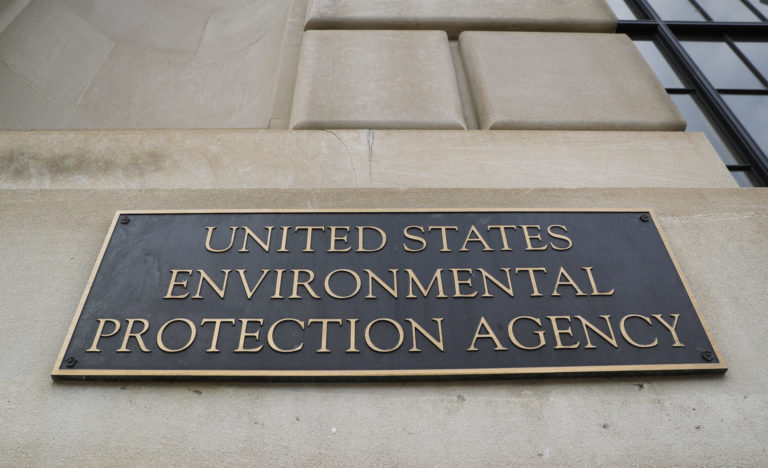
(Ken Silva, Headline USA) The U.S. Environmental Protection Agency announced Tuesday that it’s investigating a startup that’s been launching balloons filled with sulfur dioxide (SO2) into the atmosphere, allegedly as part of a scheme to “geoengineer the planet.”

According to the EPA, the company in question, Making Sunsets, has already launched dozens of balloons filled with SO2, which is an air pollutant that can be harmful to humans.

“Their website states they want to scale this activity significantly and have already conducted over 124 deployments. It is unclear where the balloons are launched and where the SO2 is from,” the EPA said in a press release.

“Furthermore, it is not known if the company has been in contact with any state, local or federal air agencies.”

The EPA also noted that Making Sunsets is already banned in Mexico.

“The idea that individuals, supported by venture capitalists, are putting criteria air pollutants into the air to sell ‘cooling’ credits shows how climate extremism has overtaken common sense,” added EPA Administrator Zeldin. “Based on Make Sunsets’ responses to our information request, we will look into all our authorities to ensure that we continue maintaining clean air for all Americans.”

Making Sunsets has been pushing back against the EPA’s accusations online. Its cofounder, Andrew Song, quipped that it “only takes 124 balloons filled with sulfur dioxide deployed into the stratosphere to start the stop of global warning.”

On its Twitter/X account, the firm also shared an article that explains what it’s trying to do.

“SO2 injection occurs naturally from volcanic eruptions: the 1991 Mt. Pinatubo eruption contained some 15–20 million tons of SO2, and lowered global temperatures by about 0.5º C for more than a year. We could do it artificially using planes or balloons. One startup, Make Sunsets, will launch a balloon to release SO2 in the stratosphere for you right now. Their costs are only $0.28/g,” stated an article on the site The Roots of Progress.

“At that price, we could reflect the entire excess heating of all human CO2since the Industrial Revolution for a total of $634 million/yr. Round up to a cool billion for overhead, and it would still only cost one penny per month for each person on the planet—or if Americans were feeling generous, we could fund the whole thing ourselves for less than $3/person/yr.”

Ken Silva is the editor of Headline USA. Follow him at x.com/jd_cashless.

Trump Says He Wants to Pay Immigrants to ‘Self-Deport’

(Headline USA)  President Donald Trump said he wants to give money and an airplane ticket to any immigrant who is in the country illegally who chooses to “self-deport,” and work to get those who are “good” back in the U.S.

Trump, who campaigned on a pledge to carry out mass deportations, said in a taped interview with Fox Noticias that aired Tuesday that his administration is focused right now on getting “murderers” out of the country. But for others in the U.S. illegally, he said, he’s going to implement “a self-deportation program.”

Trump offered few details about the plan, including timing, but said the U.S. would provide immigrants airfare and a stipend.

“We’re going to give them a stipend. We’re going to give them some money and a plane ticket, and then we’re going to work with them — if they’re good — if we want them back in, we’re going to work with them to get them back in as quickly as we can,” Trump said.

Fox Noticias interviewer Rachel Campos-Duffy, who is married to Transportation Secretary Sean Duffy, played Trump a clip of a Mexican man who she said arrived in the U.S. illegally more than 20 years ago and has children who are American citizens.

It is not clear if the man now has legal permission to be in the country, but Campos-Duffy said the man said that even though he cannot vote, he would have supported Trump. She played a clip of the man saying he agrees that if someone commits a crime, they should be returned to their countries — including himself.

“I look at this man. I say, this is a guy that we want to keep,” Trump replied. “I’ll probably take heat for saying it.”

He then asked if the man was supposed to be deported and answered his own question: “No, he didn’t say that. Good.”

“I don’t think he’s in any danger of it,” Trump said.

The Republican president also said he wants to help hotels and farms get the workers they need and recommend people to fill needed positions.

He said that would be “very soothing” to farmers and said he ultimately wants workers who are in the U.S. illegally to leave and come back with legal permission, but he did not outline any steps to do that.

“We’re doing a self-deportation and we’re going to make it comfortable for people,” he said. “And we’re going to work with those people to come back into our country legally.”

Fox Noticias said the interview with Trump was taped Monday.

Adapted from reporting by the Associated Press.