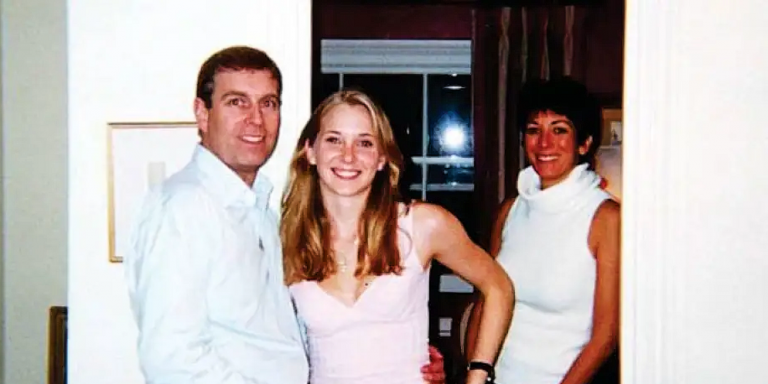
BREAKING: One of Jeffrey Epstein’s Most Prominent Victims Reportedly Kills Herself

(Ken Silva, Headline USA) Virginia Giuffre, who was one of the most vocal survivors of Jeffrey Epstein’s sex trafficking ring, has died by suicide, according to NBC News.

“It is with utterly broken hearts that we announce that Virginia passed away last night at her farm in Western Australia. She lost her life to suicide, after being a lifelong victim of sexual abuse and sex trafficking,” her family reportedly said Friday in a statement to NBC News.

“Virginia was a fierce warrior in the fight against sexual abuse and sex trafficking. She was the light that lifted so many survivors,” the statement reportedly said. “In the end, the toll of abuse is so heavy that it became unbearable for Virginia to handle its weight.”

Giuffre’s reported suicide comes just weeks after she claimed that she had four days to live. Giuffre, 41, who was living in Australia,  said on March 30 that she was recently hit by a bus.

“They’ve given me four days to live, transferring me to a specialist hospital in urology,’ she said Sunday on Instagram, explaining that she’s gone into kidney failure, and that she wants to see her babies one more time before she dies.

However, Giuffre was released from the hospital days later, and was presumed to be on the upswing. Police reportedly described the bus crash as “minor,” even though Giuffre said the vehicle was driving faster than 50 mph when it hit her.

Giuffre, formerly Virginia Roberts, alleged that Epstein and his associate Ghislaine Maxwell groomed her, starting at 16 years old, for Epstein’s “pleasure, including lessons in Epstein’s preferences during oral sex.” Giuffre said she was trafficked to prominent figures such as Prince Andrew, attorney Alan Dershowitz, politician Bill Richardson, and others.

She settled a lawsuit with Maxwell in 2017 and Prince Andrew in 2022, while dropping her lawsuit against Dershowitz.

Meanwhile, Maxwell is serving a 20-year sentence after being found guilty of conspiring with Epstein in 2021. Epstein was reportedly found dead in his prison cell in August 2019—allegedly of suicide, though Maxwell recently said she doubts that.

Epstein’s lawyers have also contested the claim that he killed himself. Skeptics point to malfunctioning surveillance cameras, sleeping guards, and broken bones in Epstein’s neck as indications that his death was something other than suicide.

Ken Silva is the editor of Headline USA. Follow him at x.com/jd_cashless.

Trump Says He’s Keeping Assassination Investigation Secret: ‘It’s Very Personal’

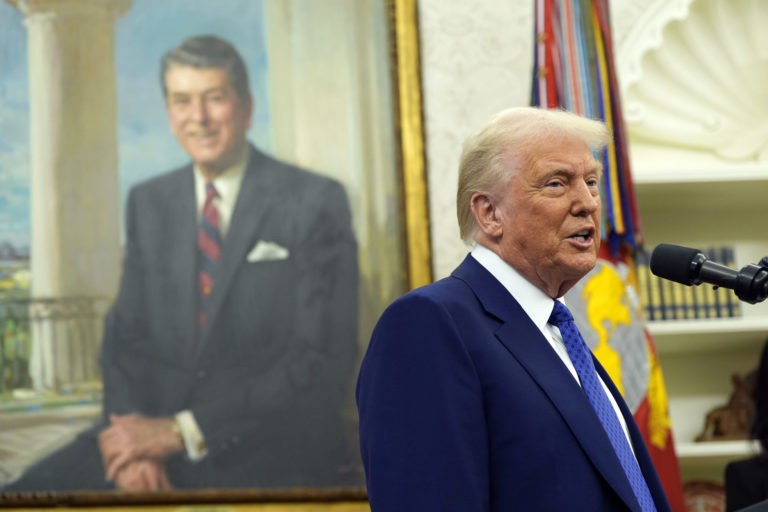
(Ken Silva, Headline USA) President Donald Trump continues to give mixed messages about the investigation into the assassination attempts against him last July and September.

On Wednesday, Trump was asked about the probe into Thomas Matthew Crooks, the gunman who allegedly shot him in the ear last July at a campaign rally in Butler Pennsylvania. Crooks also allegedly shot and killed firefighter Corey Comperatore, and seriously wounded at least two others.

“Can you confirm the Butler investigation? Are you getting intelligence briefings?” a reporter asked Trump during a press scrum.

“I have. I’ll keep that to myself,” Trump said, before adding: “It’s very personal.”

Trump’s latest remarks about the assassination come days after he raised questions about whether Crooks acted alone—pointing to the three overseas chat apps he allegedly had.

“I don’t know what to believe. I really don’t … [Crooks’s] father’s got the ultimate law firm—a white shoe law firm from Pittsburgh. They have a lawyer who IBM would hire. Where did he get this person?” Trump said, referring to the fact that Crooks’s parents have hired the prestigious law firm Quinn Logue, which describes itself as trial attorneys who specialize in both criminal defense and civil suits, including wrongful death and personal injury.

“I’ll be honest: It has not been explained to me perfectly by the Secret Service or FBI,” Trump said.

Trump said he still needs a better explanation about Crooks—as well as Ryan Routh, who is accused of trying to kill him last September at his golf course in Florida—even if it’s a private briefing. Trump said at the time that he might make the results of that briefing public.

Last month, Trump gave yet another conflicting message about the assassination investigation—telling Newsmax  that he was recently briefed on last year’s attempts on his life, and that he believes the FBI’s story that his two would-be assassins acted alone.

“They don’t seem to think there was anything other than abnormal people,” he said, referring to Thomas Crooks and Ryan Routh. “I’ll assume that’s true.”

Meanwhile, members of Congress insist that they’re continuing to look into the matter on their end. Rep. Cory Mills, R-Fla., told conservative pundit Benny Johnson that he and Eli Crane, R-Ariz., recently had a meeting with three “special operators” from the Office of the Director of National Intelligence, which is purportedly conducting its own investigation.

“We are far from over in digging into this,” Crane said.

Ken Silva is the editor of Headline USA. Follow him at x.com/jd_cashless.

Ex-Taliban Commander Pleads Guilty in Killings of U.S. Soldiers and Kidnapping of Journalists

(Headline USA) A former Taliban commander pleaded guilty Friday to providing weapons and other support for attacks that killed American soldiers and for key roles in the 2008 gunpoint kidnapping of a reporter for The New York Times and another journalist.

Speaking through an interpreter, Haji Najibullah entered the plea in Manhattan federal court to providing material support for acts of terrorism and conspiring to take hostages.

The bearded Najibullah, wearing a black skull cap over his shaved head, told Judge Katherine Polk Failla that he provided material support including weapons and himself to the Taliban from 2007 to 2009, knowing that his support “would be used to attack and kill United States soldiers occupying Afghanistan.”

“As a result of material support I provided to the Taliban, U.S. soldiers were killed,” Najibullah said.

He said his material support also included his role as a Taliban commander in Afghanistan’s Wardak Province, “where the fighters under me were prepared to, and sometimes did, conduct attacks against U.S. soldiers and their allies using suicide bombers, automatic weapons, improvised explosive devices and rocket propelled grenades.”

Najibullah, 49, said he also participated in the hostage taking of David Rohde “and his companions” so demands could be made for ransom and for the release of Taliban prisoners held by the U.S. government.

“I created proof-of-life videos of David Rohde and his companions in which they were forced to convey the Taliban’s demands,” he said.

The former Times reporter and Afghan journalist Tahir Ludin were abducted when they were on their way to interview a Taliban leader.

Both men made a dramatic escape from a Taliban-controlled compound in Pakistan’s tribal areas more than seven months after their Nov. 10, 2008, kidnapping. Their driver, Asadullah Mangal, was a third kidnapping victim. He escaped a few weeks after Ludin and Rohde.

Rohde, a Pulitzer Prize winner who now works as senior executive editor for national security at NBC News, attended the plea proceeding.

“I am pleased that he admitted his guilt today and grateful to all the U.S. officials who brought him to justice,” he said in an email to The Associated Press after his sentencing. “Most of all, my heart goes out to the families of the three U.S. soldiers and the Afghan translator who were killed.”

After the plea, Najibullah was led from the courtroom in shackles and handcuffs by U.S. marshals to face an Oct. 23 sentencing. Federal sentencing guidelines, as acknowledged by a plea agreement signed by Najibullah and prosecutors, recommend a life prison sentence.

New York Times spokesperson Danielle Rhoades Ha expressed gratitude to U.S. authorities for pursing Najibullah, and she noted the dangers journalists face worldwide.

“More than 120 journalists were killed in 2024, the most on record,” she said. “Journalists go to dangerous places to uncover the facts that citizens need. Governments can and should protect journalists by investigating all attacks against reporters and publicly condemning threats.”

Adapted from reporting by the Associated Press

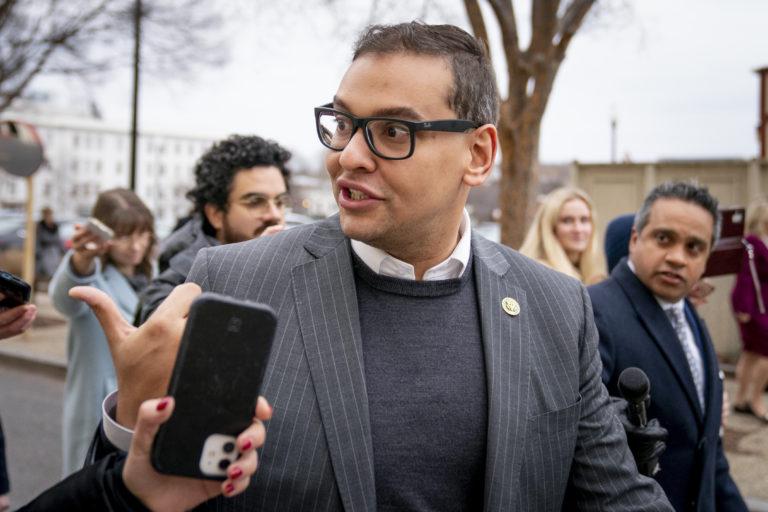
Ex-US Rep. George Santos Sentenced to over 7 Years in Prison

(Headline USA) Disgraced former U.S. Rep. George Santos was sentenced Friday to over seven years in prison, sobbing as he learned his punishment for the crimes that led to his expulsion from Congress.

Santos, who pleaded guilty last summer to federal wire fraud and aggravated identity theft, appealed for mercy. In a federal court a short drive from his old congressional district, he said through tears that he was “humbled” and “chastised” and realized he had betrayed his constituents’ trust.

“I offer my deepest apologies,” he said, adding: “I cannot rewrite the past, but I can control the road ahead.”

U.S. District Court Judge Joanna Seybert evidently wasn’t convinced.

“Where is your remorse? Where do I see it?” she asked as she sentenced him to 87 months behind bars. She said the former politician appeared to feel that “it’s always someone else’s fault.”

The New York Republican served in Congress barely a year before becoming just the sixth member of the House to be ousted by colleagues.

He admitted to deceiving donors and stealing the identities of nearly a dozen people, including his family members, to fund his winning campaign. His plea deal included agreeing to pay roughly $580,000 in penalties.

“From the moment he declared his candidacy for Congress, Santos leveraged his campaign for his own enrichment and financial benefit,” U.S. Attorney John Durham, whose office prosecuted the case, said outside court.

The 36-year-old Santos is due to report to prison July 25. He didn’t respond to reporters’ shouted questions outside the courthouse, but he had told The Associated Press by text Thursday that he was “ready to face the music.”

Prosecutors sought the 87-month sentence, questioning Santos’ remorse in light of his recent social media posts casting himself as a victim of prosecutorial overreach.

Santos’ victims included a woman with brain damage and two octogenarian men who have dementia, prosecutor Ryan Harris told the judge.

New York Labor Commissioner Roberta Reardon added that “people think of this as a victimless crime because it’s about money,” but there actually are many victims, including New Yorkers’ unemployment system.

Before winning office, Santos collected unemployment benefits while actually working for a Florida company. Once in Congress, he co-sponsored legislation intended to root out unemployment fraud.

Santos’ lawyers had called for a two-year prison stint, the mandatory minimum sentence for aggravated identity theft.

Defense lawyer Andrew Mancilla portrayed the ex-congressman as a troubled figure forged by adversity.

Santos grew up in a “broken house” and was subjected to bullying throughout his life, the attorney said.

As a result, “he built the man he wanted to be, not who he was,” Mancilla said. “He did that because he believed that the world would not accept him for who he was.”

“Deep down, he is warm, kind, caring, and thoughtful,” Mancilla said.

But, the lawyer said, now “everyone hates George Santos.”

Santos was elected in 2022, flipping a wealthy district representing parts of Queens and Long Island for the GOP.

Soon after, it was revealed that the political unknown had fabricated much of his life story, painting himself as a successful business owner who worked at prestigious Wall Street firms and held a valuable real estate portfolio.

In reality, Santos was struggling financially and even faced eviction. The revelations led to congressional and criminal inquiries into how he had funded his campaign.

“He told lie after lie until it caught up with him — until we caught up with him and exposed him for what he truly was: an opportunist and a fraud,” Nassau County District Attorney Anne Donnelly, a Republican, said outside court Friday. Her office also investigated Santos.

As his sentencing approached, Santos was reflective in social media posts, thanking his supporters and detractors alike.

“I learned that no matter left, right or, center we are all humans and for the most part Americans (LOL) and we have one super power that I cherish and that is compassion,” he wrote Thursday on the social platform X. Addressing “the trolls,” he added: “y’all made me much stronger and made my skin thicker!”

He also made one final plug for his Cameo account, where he records personalized video messages for $100.

“Think ahead and of any celebration or event coming up later this year. Book them today,” Santos wrote, ending the post with a series of heart emojis.

Adapted from reporting by the Associated Press

BREAKING: FBI Arrests Judge for Allegedly Helping Illegal Immigrant Evade Federal Agents

(Headline USA) The FBI on Friday arrested a Milwaukee judge accused of helping a man evade immigration authorities.

FBI Director Kash Patel announced on social media the arrest of Milwaukee County Circuit Court Judge Hannah Dugan, who he said “intentionally misdirected” federal agents away from a man they were trying to take into custody at her courthouse last week.

“Thankfully our agents chased down the perp on foot and he’s been in custody since, but the Judge’s obstruction created increased danger to the public,” Patel wrote.

Dugan was taken into custody by the FBI on Friday morning on the courthouse grounds, according to U.S. Marshals Service spokesperson Brady McCarron. She appeared briefly in federal court in Milwaukee later Friday before being released from custody. Her next court appearance is May 15.

“Judge Dugan wholeheartedly regrets and protests her arrest. It was not made in the interest of public safety,” her attorney, Craig Mastantuono, said during the hearing. He declined to comment to an Associated Press reporter following her court appearance.

Dugan is charged with “concealing an individual to prevent his discovery and arrest” and obstructing or impeding a proceeding. She’s accused of escorting the man, Eduardo Flores-Ruiz, and his lawyer out of the courtroom through the jury door on April 18 as a way to help avert his arrest, according to an FBI affidavit filed in court.

The affidavit suggests that Dugan was alerted to the presence of U.S. Immigration and Customs Enforcement agents in the courthouse by her clerk, who was informed by an attorney that they appeared to be in the hallway.

The affidavit describes Dugan as “visibly angry” over the arrival of immigration agents in the courthouse and says that she pronounced the situation “absurd” before leaving the bench and retreating to her chambers. It says she and another judge later approached members of the arrest team inside the courthouse, displaying what witnesses described as a “confrontational, angry demeanor.”

She asked one of the officers if they had a judicial warrant and was told that the warrant was instead administrative. After a back-and-forth over the warrant, the affidavit says, she demanded that the arrest team speak with the chief judge and led them away from the courtroom.

After directing the arrest team to the chief judge’s office, investigators say Dugan returned to the courtroom was and was heard saying words to the effect of “wait, come with me” before ushering Flores-Ruiz and his lawyer through a jury door into a non-public area of the courthouse. The action was unusual, the affidavit says, because “only deputies, juries, court staff, and in-custody defendants being escorted by deputies used the back jury door. Defense attorneys and defendants who were not in custody never used the jury door.”

Dugan’s arrest comes amid a growing feud between the Trump administration and the judiciary over the president’s executive actions on immigration and other matters. Trump administration officials have sharply criticized what they have described as “activist” judges they say claim have overstepped their authority and unfairly impinged on the president’s executive powers by blocking many of his efforts.

The case is similar to one brought during the first Trump administration against a Massachusetts judge, who was accused of helping a man sneak out a back door of a courthouse to evade a waiting immigration enforcement agent.

That prosecution sparked outrage from many in the legal community, who slammed the case as politically motivated. Prosecutors dropped the case against Newton District Judge Shelley Joseph in 2022 under the Democratic Biden administration after she agreed to refer herself to a state agency that investigates allegations of misconduct by members of the bench.

The Justice Department had previously signaled that it was going to crack down on local officials who thwart federal immigration efforts.

The department in January ordered prosecutors to investigate for potential criminal charges any state and local officials who obstruct or impede federal functions. As potential avenues for prosecution, a memo cited a conspiracy offense as well as a law prohibiting the harboring of people in the country illegally.

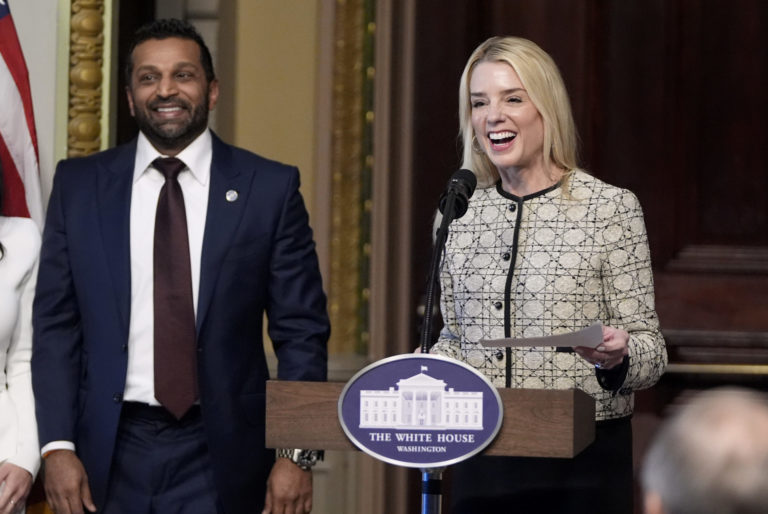
“No one is above the law,” Attorney General Pam Bondi said in a social media post Friday.

Dugan was elected in 2016 to the county court Branch 31. She also has served in the court’s probate and civil divisions, according to her judicial candidate biography.

Before being elected to public office, Dugan practiced at Legal Action of Wisconsin and the Legal Aid Society. She graduated from the University of Wisconsin-Madison in 1981 with a bachelor of arts degree and earned her Juris Doctorate in 1987 from the school.

Dugan’s arrest follows comes a day after a New Mexico county judge and his wife were arrested for housing illegal immigrants, including a suspected Tren de Aragua gang member.

Adapted from reporting by the Associated Press

Poll: Abortion, Trump Anger Drove Votes in Wisconsin Supreme Court Race

(Benjamin Yount, The Center Square)  A new poll says abortion and stopping President Trump were the top issues for voters in Wisconsin’s Supreme Court election.

The Institute for Reforming Government recently released the poll after the April 1 election.

“Every election that doesn’t go one side’s way people can get us to ‘Why voters did what they did?’ We thought it’s important to really take a deep dive and get some data,” IRG’s Chris Reader said Thursday. 

“There were really two, well two and a half, issues. There was Trump, Elon Musk, and the Trump agenda, And the left was just absolutely ready, and wanting, and angry, and they were able to get voters out to the polls in an effort – the voters thought – to stop Elon Musk [and] to stop President Trump’s agenda,” Reader added. “The other big issue that is out there, is the abortion issue.”

The poll said 80% of voters said abortion was an important issue, and 75% of voters said stopping Trump’s agenda was important. The poll said another nearly 60% of voters disapproved of Elon Musk.

The poll paints a picture of a wave of voters who didn’t so much vote for Justice-elect Susan Crawford but voted against Trump.

Reader said it hurt Brad Schimel that Wisconsin’s Trump base, largely, didn’t vote for him.

“The left turned out to stop him, [and] the right did not apparently see that same motivation,” Reader said. “So, 600,000 people that voted for [Trump] last fall did not now five months later and feel it necessary to turn out in order to protect the Trump agenda – to vote in-line with what President Trump and Elon Musk were saying.”

The IRG poll did say that 88% of voters said crime was an important issue. But Reader said no more than 5% said it was the issue that decided the race.

Many of the millions of dollars in ads in the race focused on crime, accusing both Crawford and Schimel of being soft on crime.

The IRG poll suggests those ads didn’t move the needle for most voters.

Wisconsin’s April Supreme Court race set spending records, with at least $100 million spent between both Crawford, Schimel, and outside groups.

Federal Regulations Cost Average American Household $16,000 a Year, Group Finds

(Thérèse Boudreaux, The Center Square)  Federal regulations cost taxpayers trillions of dollars annually, with the average American household paying roughly $16,000 per year in hidden costs, according to a new report.

The nonpartisan Competitive Enterprise Institute released its annual Ten Thousand Commandments report Thursday. It shows that total compliance costs and economic effects of federal regulations exceed $2.1 trillion annually, with the Federal Register having issued 220,813 final rules since it first began itemizing in 1976.

As a result, American consumers have faced higher prices and lost jobs due to businesses passing regulatory costs onto consumers. The average U.S. household, without realizing it, spends more on regulations than healthcare, food, transportation, apparel, and entertainment combined, according to CEI.

In 2024 alone, federal regulatory agencies issued 3,248 final rules while Congress passed 175 bills, or 19 rules for every law passed that year. The CEI report blames much of the surge on the Biden administration’s energy, climate, and equity mandates.

“Washington regulations got worse under President Biden because his administration sought to impose progressive rules against energy and consumer appliances, labor, banking, online speech, and other sectors of the economy,” Wayne Crews, the report’s author, said in a statement.

Regulations hit smaller businesses harder than larger ones, particularly in manufacturing. According to CEI’s analysis, companies with under 50 workers pay an average of $50,000 in per-employee regulatory costs, versus the $24,800 burden on larger firms.

Additionally, the 10.5 billion hours federal employees spent completing federal paperwork in 2023 cost taxpayers tens of billions of dollars.

The CEI report urges Congress to create a regulatory budget, require congressional approval and a cost analysis for major rules, restore agency focus on core missions, and scrap any departments or programs that are no longer useful.

“Congress needs to take spending policy and regulatory policy alike very seriously. It needs to emphasize regulatory oversight and transparency,” the report concludes. “Congress needs to limit not only executive power, but its own power as well. It has increasingly ignored those limits, but it does not have to be that way.”

President Donald Trump has made deregulation and cutting “bureaucratic bloat” a major goal of his agenda. He recently rolled back Biden-era regulations targeting the oil and gas industry, as The Center Square reported, and has instructed federal agencies to cut ten rules for every new rule.

Poll: Just 1 in 10 Believe America’s Checks, Balances are Very Effective

(Alan Wooten, The Center Square)  Only 1 in 10 Americans believe the current checks and balances for the three branches of government are very effective, says a national poll released Thursday in North Carolina.

Sampling April 10-17 of 1,000 adults by the Elon University Poll found 32% said it is somewhat or very ineffective. In answering who has too much power, 46% said the executive branch, 27% the judiciary and 19% the legislative branch.

“Americans are clearly questioning whether the rule of law and our constitutional structure are built to withstand the pressures of the current political moment,” said Zak Kramer, dean of Elon University School of Law. “There’s a lot of uncertainty about how these disputes will turn out, and things are moving fast, so we shouldn’t be surprised that most Americans view these questions through a heavily polarized lens.”

Tuesday will be the 100th day in office for President Donald Trump. Through Tuesday of this week, nonpartisan law and policy journal Just Security documented 206 legal challenges to his administration’s actions. The New York Times, the Elon Poll said, has found 98 judicial rulings at a minimum temporarily pausing some of the administration’s efforts.

Trump’s approval ratings, according to the Elon poll, have gone from positive to negative since a Feb. 6-11 polling just weeks into his second term. His job performance is approved by 41% and disapproved by 47%; in February it was 45% approved and 41% disapproved.

Party lines are strong, according to the poll. His executive orders are opposed by 83% of Democrats and approved by 73% of Republicans.

Survey answers were split nearly evenly on the U.S. Supreme Court – 51% confident, 49% little or no confidence. Only 21% believe it is balanced when considering conservative and liberal.

Regarding the Department of Justice, 69% believe a president should not influence cases. Within that principle, support is from Democrats (83%), independents (65%) and Republicans (61%). Only 38% believe Trump when he says the department’s processes were used against him; 43% think he is wrong.

Elon University said 1,149 adults age 18 and older were interviewed and matched down to the 1,000 sample. Margin of error is +/- 3.58%. The university funds and operates the poll “as the neutral, nonbiased information resource.”

Trump Memorandum Targets ActBlue Fundraising Platform

(Dan McCaleb, The Center Square)  Democratic campaign contribution platform ActBlue is the target of President Donald’s Trump’s latest memorandum after Congressional committees reported evidence it found that ActBlue was used to circumvent campaign finance laws.

Trump signed the memorandum Thursday directing U.S. Attorney General Pam Bondi and Treasury Secretary Scott Bessent to investigate ActBlue and other such platforms, writing “there is evidence to suggest that foreign nationals are seeking to misuse online fundraising platforms to improperly influence American elections. A recent House of Representatives investigation revealed that a platform named ActBlue had in recent years detected at least 22 ‘significant fraud campaigns’, nearly half of which had a foreign nexus.”

U.S. House committees launched investigations into ActBlue last year after “reports of potentially fraudulent and illicit financial activity,” including by accepting illegal foreign money and reports of “dummy” accounts being used to make thousands of donations.

“During a 30-day window during the 2024 campaign, the platform detected 237 donations from foreign IP addresses using prepaid cards, indicating that this activity remains a pressing concern,” Trump’s memorandum says.

A Congressional staff report released earlier this month claimed that ActBlue executives knew that “both foreign and domestic” actors used the platform fraudulently but did not work diligently to address the issues, The Center Square reported.

“These activities undermine the integrity of our electoral process,” Trump’s memorandum says. “Therefore, I direct the Attorney General, in consultation with the Secretary of the Treasury, to use all lawful authority, as necessary, to investigate allegations regarding the unlawful use of online fundraising platforms to make ‘straw’ or ‘dummy’ contributions or foreign contributions to political candidates and committees, and to take all appropriate actions to enforce the law.”

A Republican strategist in Wisconsin who says his name was used to give $900 to Democrats without his knowledge or consent sued ActBlue last year.

DOJ Taking Action Against Violent MS-13 Members Operating in Multiple States

(Bethany Blankley, The Center Square)   ​​The U.S. Department of Justice is taking action against La Mara Salvatrucha, MS-13, an international criminal organization whose members authorities say are involved in committing murder and other violent crimes in at least 10 U.S. states and the District of Columbia. Under the Trump administration, MS-13 was designated as a Foreign Terrorist Organization.

The DOJ is offering a $5 million reward for information leading to the arrest of MS-13’s highest-ranking member in Honduras, Honduran national Yulan Andony Archaga Carías. He was previously charged in 2021 in a superseding indictment in the Southern District of New York with racketeering, narcotics trafficking, and firearms offenses.

Archaga Carías oversees MS-13’s cocaine trafficking operations from Honduras to the U.S., “ordering and coordinating acts of violence, including numerous murders, and the laundering of drug proceeds,” among other violent crimes, according to the charges.

He and other MS-13 members also provided protection to drug trafficking organizations, including contracting “Sicarios” (hit men), by ordering numerous murders for hire, according to the indictment. Archaga Carías and MS-13 members also allegedly supplied DTOs with firearms, including machine guns, in El Salvador, Nicaragua and elsewhere.

Archaga Carías is on the FBI’s 10 Most Wanted Fugitives List, the DEA’s Most Wanted Fugitives List, and U.S. Immigration and Customs Enforcement Homeland Security Investigation’s Most Wanted Fugitives List. He remains at large.

Anyone with information is encouraged to contact the FBI at [email protected], or via WhatsApp at +1-832-267-1688.

In another case, a high-ranking member of MS-13 was arraigned on a four-count indictment charging him and 12 other high-ranking MS-13 leaders with directing its activities in the U.S., El Salvador, Mexico and elsewhere over the last 20 years.

Francisco Javier Roman-Bardales, 47, of Ahuachapán, El Salvador, and Veracruz, Mexico, a fugitive for nearly three years, was added to the FBI’s 10 Most Wanted Fugitives List under the Trump administration. He was arrested last month at the San Ysidro Port of Entry in San Diego, California.

Those charged “have engaged in a litany of violent terrorist activities aimed at influencing the policies of the government of El Salvador,” including targeting Salvadoran law enforcement and military officials; employing terrorist tactics like using Improvised Explosive Devices and grenades; operating military-style training camps for firearms and explosives; public acts of violence in order to intimidate civilians, control territory and manipulate the electoral process in El Salvador, according to the charges.

MS-13 members have engaged in a reign of terror in New York, with the U.S. Attorney’s Office for the Eastern District of New York prosecuting hundreds of MS-13 leaders, members and associates for more than 80 murders, the DOJ says.

In another case, an MS-13 leader, Joel Vargas-Escobar, was arrested in New York for his alleged role in a racketeering conspiracy that involved at least 11 murders in Nevada and California. He was also charged with two counts of murder-in-aid of racketeering and associated firearms charges. After previously being deported to El Salvador in 2018, he illegally re-entered the U.S. and became a fugitive from the law for nearly four years.

Vargas-Escobar and his co-defendants are part of MS-13’s command and control structure in Las Vegas and California, authorities allege. Many of their victims were kidnapped and taken to remote locations in the mountains and desert, where they were tortured and killed, according to the charges.

In another case, MS-13 member and Honduran national Bayron Wuifredo Santos-Recarte, 27, who was illegally in the U.S., was sentenced to 147 months in prison for kidnapping, retaliating against a federal witness, and unlawful possession of a firearm.

He and his associates were found guilty of kidnapping a former federal witness at gunpoint in the parking lot of a laundromat in Nashville, Tenn. The witness testified during a federal racketeering trial against MS-13 members that they twice tried to shoot and murder him. While kidnapped, he was held in a truck for hours and assaulted and tortured with a firearm, hammer and machete.

MS-13’s more than 10,000 members are operating in at least 10 U.S. states and the District of Columbia, with thousands more operating in Central America and Mexico, the DOJ says. MS-13 members are being prosecuted for racketeering, murder, kidnapping, narcotics distribution, extortion, robberies, obstruction of justice, and other violent crimes.