SCOOP: ATF Was Involved in 2002 Explosives Investigation of Alleged Would-be Trump Assassin

(Ken Silva, Headline USA) After Ryan Routh was arrested last September for allegedly trying to assassinate Donald Trump at his Florida golf course, media outlets quickly discovered that Routh had been charged in 2002 with possessing a “weapon of mass destruction.”

According to local reporting from the time, Routh was pulled over during a traffic stop in December 2002, and an officer saw what looked like a machine gun in his car. Routh fled the officer and barricaded himself inside his business, United Roofing, for several hours before he was finally arrested without incident. For those seemingly egregious crimes, Routh was sentenced to a mere 60 months of supervised probation.

The 2002 arrest raised eyebrows among some observers, but few other details were reported at the time.

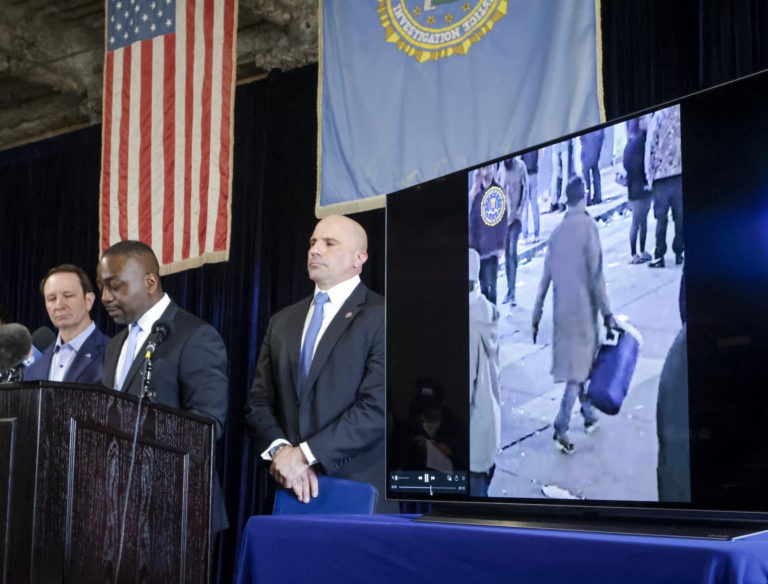
But on Monday, the Justice Department filed investigative reports from the Greensboro police about the 2002 incident—revealing that Routh’s crimes were even more brazen than previously known, and that the ATF became involved in the investigation into him. The DOJ filed the reports to convince Judge Aileen Cannon to allow the prosecution to present evidence of Routh’s prior convictions to a jury—ostensibly to demonstrate that Routh knew he was a felon who wasn’t allowed to possess a gun when he tried killing Trump last September.

Routh’s Wild 2002

According to the Greensboro Police Department reports, officers began investigating Routh in early April 2002, after they were called to his business, United Roofing, to respond to threats of violence.

A police report from April 13, 2002, stated that a large crowd of Hispanic men was standing in front of Routh’s business. When officers approached, they were told that one of the men worked for Routh—and that Routh threatened him with a sawed-off shotgun when he asked for his paycheck. The Hispanic employee told police that he was able to wrestle away Routh’s shotgun, but that Routh then “gassed his vehicle and backed out of the driveway”—hitting the Hispanic man with an ajar door in the process.

“The victim’s left forearm and elbow received the worst lacerations,” the Greensboro police report stated. Greensboro police didn’t arrest Routh at the time, but they marked him as a “dangerous person,” and a warrant was issued for his arrest.

Routh was arrested 10 days after the incident, on April 23, 2002. His case became even wilder after that.

A day after his arrest, Greensboro police received a tip from a “confidential reliable informant”—likely a jailhouse snitch—that Routh possessed a cache of explosives. According to a Greensboro police report, Routh used a cellphone to call an employee from Guilford County Jail, telling him to remove the materials from his property.

“The [confidential reliable informant] advised an explosive device was being kept at United Roofing … Furthermore, this [informant] advised the device had been picked up by [Routh’s employee].”

Police located Routh’s employee, who showed them the explosives Routh had him retrieve from United Roofing. Polcie observed a “red cylindrical tube with blasting cap and detonation cord,” and called in the local bomb squad, which eventually rendered the device safe. The police report said the device was the equivalent of one stick of dynamite.

According to Routh’s employee, that wasn’t the only explosive device he possessed at the time.

“[The employee] stated Mr. Routh had another device that was a different color, he believed green, approximately 10 to 15 days earlier. He stated Mr. Routh was carrying this green device in his jacket, but there were no wires attached at the time,” a Greensboro police report said. “[The employee] stated when he asked Mr. Routh why he was carrying this item, Mr. Routh stated it was the next best thing to a gun.”

Police reports don’t state whether any more explosives were found. Police did go to a Greensboro company that sold the materials. The company’s employees told police that they refused to sell to Routh, but they believed they knew who bought the materials for him.

That’s where the ATF came into the picture. At the end of his report, a Greensboro detective said he contacted a special agent with the ATF’s Greensboro office about the matter.

“Special Agent [REDACTED] stated he would be looking into this matter to determine if federal violations had occurred,” the police report concluded. “Nothing further to report.”

But that wasn’t the end of Routh’s 2002 crime spree. About five months later, while out on bond, he had another run-in with police—this one reported by the Greensboro News & Record on the day it occurred: Dec. 16, 2002.

“Ryan Routh, 36, was arrested without incident at 1 a.m. Monday at United Roofing, 1735 W. Lee St., Greensboro police said,” stated the December 2002 article from the Greensboro News & Record, which went viral after the alleged failed assassin’s arrest last September. “Routh was pulled over about 10 p.m. Sunday during a traffic stop … But he put his hand on a firearm and drove to United Roofing, where he remained barricaded inside.”

A day after Routh’s arrest, a local prosecutor moved to revoke the bond that was set for him when he was indicted earlier that year in April. Superior Court Judge Peter McHugh didn’t revoke the bond, but modified it instead—setting it at $100,000, barring Routh from driving or possessing a weapon, and subjecting him to random warrantless searches.

Two more days later, on Dec. 20, 2002, Routh was finally given the sweetheart deal—60 months supervised probation—that observers question more than two decades later.

Routh would have multiple run-ins with the law over the next 22 years—including several felony charges for possessing stolen goods—but would avoid prison until he was caught allegedly trying to kill Trump. The FBI and DHS received multiple tips about Routh’s crimes between 2019 and 2023, but declined to take any action.

Could the ATF Have Stopped Routh?

The ATF has declined to comment on the matter.

“For now, ATF cannot comment on the case and the ongoing investigation,” ATF public affairs officer Corey Ray told Headline USA on Tuesday. “I’ll keep tabs on our end and follow up with you as things progress.”

Former ATF agent Peter Forcelli, who blew the whistle on the Obama-era Operation Fast & Furious scandal, told Headline USA that the ATF could have taken action against Routh in 2002—but there were likely multiple factors to consider at the time.

“First, even though ATF investigates incidents like this, it doesn’t always mean that the local U.S. Attorney’s Office will take the case. Sometimes they look at the totality of circumstances and decide a better avenue is to leave the case in the hands of state prosecutors (or in some cases they are just too lazy to take the case—can’t say that is the case here),” Forecelli explained.

“Then, also consider that in some cases, the FBI steps in and claims that it falls into their lane. It is very common where there is a thread of evidence that there are terror ties, or the attack is directed at a public official or federal agent. In those cases, ATF is often asked to back off,” Forcelli added.

“Finally, ATF does have to check to see if the explosive device is registered in the National Firearms Registration and Transfer Record. It’s the NFA registry. Believe it or not, it’s possible for a citizen to own an explosive device, provided they follow the NFA policies, much like registering a silencer, SBR or sawed-off shotgun.”

While the public is left wondering about whether the feds could have taken Routh off the streets sooner, DOJ prosecutors now want a jury to see the full picture of his criminal record.

“Evidence of the 2002 WMD possession does not unfairly prejudice this defendant, who has portrayed himself falsely as a man of peace and non-violence,” prosecutors argued in their Monday filing to Judge Cannon. “Indeed, the Defendant here is charged with, among other things, an attempted assassination. It is hard to imagine how the prior conviction for possession of a WMD could be unduly prejudicial considering the charge at issue: that he attempted to kill another human being.”

The parties are set to meet for a status conference on May 14, when they’ll presumably argue about the issue in front of Judge Cannon. Routh’s trial is set for September.

Ken Silva is the editor of Headline USA. Follow him at x.com/jd_cashless.

Republicans Unveil Bill To Bring 2025 Military Budget to Over $1 Trillion

(Dave DeCamp, Antiwar.com) House Republicans unveiled a bill this week that would bring the 2025 US military budget to over $1 trillion.

The 2025 National Defense Authorization Act (NDAA) totaled about $885 billion, and the new supplemental bill drafted by the House and Senate’s armed services committees would add $150 billion, bringing the 2025 military budget to a record-breaking $1.035 trillion.

The bill includes $25 billion for President Donald Trump’s vision to create a new missile defense system for the United States, which he has called the “Iron Dome for America” or the “Golden Dome.” The project would be a boondoggle for US weapons makers and would likely kick off a new global arms race.

According to The Hill, the bill also includes $33.7 billion for shipbuilding, $20.4 billion for munitions, $13.5 billion for “innovation,” $12.9 billion for nuclear deterrence, $11.5 billion for military readiness, $11.1 billion for building up in the Pacific, $7.2 billion for aircraft, $5 billion for the border, $4.5 billion for the B-21 bomber, $2 billion for military intelligence, and $380 million for the Pentagon’s annual audit.

Republicans in the House initially proposed a budget plan to boost military spending by $100 billion, while Senate Republicans pushed for the $150 billion increase.

President Trump and Secretary of Defense Pete Hegseth have already said they will seek a more than $1 trillion military budget for 2026, and the White House is expected to make the request for the 2026 NDAA in May.

The US has never officially had a $1 trillion military budget, but the actual cost of US military spending has exceeded $1 trillion for years. According to veteran defense analyst Winslow Wheeler, based on the $895 billion NDAA, US national security spending for 2025 was expected to reach about $1.77 trillion.

Wheeler’s estimate accounts for military-related spending from other government agencies not funded by the NDAA, such as the Department of Veteran Affairs and Homeland Security. It also includes the national security share of the interest accrued on the US debt and other factors.

This article originally appeared at Antiwar.com.

100 Days in Office: Trump’s Legislative Accomplishments

(Thérèse Boudreaux, The Center Square) Over the first 100 days in his second term of office, President Donald Trump has signed five pieces of legislation into law, fulfilling some of his deregulation and immigration promises while preventing a government shutdown.

“The four words that best describe this administration so far are ‘promises made, promises kept,’ House Speaker Mike Johnson, R-La., told reporters Tuesday. “We’re just getting started, and that’s one of the reasons we’re so excited.”

Trump signed the first bill to hit his desk, the bipartisan Laken Riley Act, nine days after taking office and declaring an invasion at the southwest border.

Immigration officers can now detain for deportation any migrants residing illegally in the U.S. who are arrested for theft, assaulting law enforcement, or causing serious injury or death to another person. States can also sue federal officials who violate or refuse to enforce immigration law. 

Many Democratic lawmakers opposed the bill because it applies mandatory detention statutes on people who are charged with, and not convicted of, committing crimes. 

Trump’s aggressive approach to immigration and border security have resulted in record low illegal border crossings, down from record-highs under the previous administration. 

In March, the Republican-controlled 119th Congress sent two energy-related resolutions to Trump’s desk. 

One repealed a Biden-era fee on methane emissions before it could take effect. Republicans had said the Waste Emissions Charge, authorized by the 2022 Inflation Reduction Act, was the equivalent of a natural gas tax.

The second resolution rescinded a rule requiring extra archeological reports from operators managing oil and gas development on the Outer Continental Shelf, a measure meant to protect aquatic environments. 

Trump also signed and played a major role in the passage of the six-month Continuing Resolution, preventing a government shutdown by maintaining current funding levels for the rest of the fiscal year, which ends in October. 

The president repeatedly cajoled and pressured Republican holdouts to support the bill, despite it being the third time Congress punted the deadline to pass the 12 annual appropriations bills that provide money for federal agencies to spend on programs each year.

Another deregulation bill, codified in April, struck down a rule placing stricter tax reporting requirements on cryptocurrency brokers. 

During his first four years in office, Trump signed more than 780 bills into law, while former president Joe Biden signed more than 630 bills into law.

Trump for Pope? Watch His Response When Asked About the Job

(Luis Cornelio, Headline USA) Less than five months since taking office, President Donald Trump may have set his sights on a new role: pope, at least according to his recent jest. 

During an exchange with a reporter on Tuesday, Trump was asked whether he had any favorites to replace Pope Francis following his death earlier this month. 

Trump quipped that he would be his own “number one choice” to lead the Catholic Church, adding: “I’d like to be pope.”  

While Trump’s joke prompted laughter from reporters, he quickly took a more serious tone when asked who should be selected as the next pope. 

“I have no preference,” Trump responded, before actually mentioning a favorite. 

“I must say, we have a cardinal that happens to be out of a place called New York who’s very good, so we’ll see what happens,” Trump continued, referring to Timothy M. Dolan, the Archbishop of New York. 

Dolan has not been listed among the top contenders to become the next pope, according to early media speculation. 

Francis, born Jorge Mario Bergoglio, died on April 21 at the age of 88. He was the 266th Pope, having become Pope in March 2013. 

He was born in Buenos Aires, Argentina, on Dec. 17, 1936, to Piedmontese immigrants.  

His father Mario was an accountant, while his mother, Regina Sivori, took care of the home and the education of their five children, according to the Vatican. 

The Holy See said Francis died from a stroke and heart failure. He was the first Hispanic pontiff in the Church’s history. 

A conclave of 130 cardinals is scheduled to begin on May 7 to elect the next leader of the Catholic Church, according to the Vatican. 

State Supreme Court Suspends Milwaukee Judge Charged w/ Helping Man Evade ICE

(J.D. Davidson, The Center Square) The Wisconsin Supreme Court suspended a Milwaukee judge facing two federal charges for allegedly trying to help a man illegally in the country escape from immigration officials.

The order, released late Tuesday, said Milwaukee County Judge Hannah Dugan faces two federal charges – one a felony and one a misdemeanor – and it is in the public interest to relieve her of her duties temporarily.

“The court is charged in the Wisconsin Constitution with exercising superintending and administrative authority of the courts of this state. In the exercise of that constitutional authority and in order to uphold the public’s confidence in the courts of this state during the pendency of the criminal proceeding against Judge Dugan, we conclude, on our own motion, that it is in the public interest that she be temporarily relieved of her official duties,” the order reads.

Dugan is charged with obstruction of a federal proceeding and concealing an individual to prevent discovery or arrest. The obstruction charge could result in up to a $100,000 fine and a year in prison, while the second concealment charge can result in up to five years in prison and a $250,000 fine.

The defendant is accused of concealing Eduardo Flores Ruiz, who was previously deported and came back to the U.S., where he was facing charges in Milwaukee of domestic battery and abuse.

FBI Special Agent Lindsay Schloemer wrote in the complaint against Dugan that law enforcement often makes arrests at the courthouse because “not only the fact that law enforcement knows the location at which the wanted individual should be located but also the fact that the wanted individual would have entered through a security checkpoint and thus unarmed, minimizing the risk of injury to law enforcement, the public, and the wanted individual.”

Dugan is scheduled for a pretrial hearing on the federal criminal charges on May 15.

Trump Fires Susan Rice, Kamala’s Husband and More from U.S. Holocaust Council

(Headline USA) President Donald Trump has dismissed many of former President Joe Biden’s nominees to the United States Holocaust Memorial Council, including Doug Emhoff, the husband of former Vice President Kamala Harris.

Emhoff, who is Jewish and who led the Biden administration’s efforts to combat antisemitism, criticized Trump’s action, saying, “Let me be clear: Holocaust remembrance and education should never be politicized.”

He added, “To turn one of the worst atrocities in history into a wedge issue is dangerous — and it dishonors the memory of six million Jews murdered by Nazis that this museum was created to preserve.”

Others dismissed alongside Emhoff include former Biden chief of staff Ron Klain and former domestic policy adviser Susan Rice, who was the principal author of and the impetus behind the first-ever comprehensive National Strategy to Combat Antisemitism in 2023.

The White House did not immediately respond to a request for comment.

Since taking office in January Trump has moved to fire many Biden appointees across government. Biden also dismissed some Trump carryover appointees after he entered the White House in 2021, most notably 18 appointees named to U.S. military academy boards.

Adapted from reporting by the Associated Press

Iraq Arrests Possible Accomplice in New Orleans Truck Attack, but FBI Insists Driver Acted Alone

(Headline USA) An official with the Islamic State group has been detained in Iraq, suspected of being involved with inciting the pickup truck-ramming attack in New Orleans that killed more than a dozen people celebrating the start of 2025, Iraqi authorities said.

Iraqi authorities had received requests from the U.S. to help in the investigation of the attack in the predawn hours of New Years Day in the famed French Quarter of New Orleans, Iraqi judicial officials said.

A U.S. Army veteran driving a pickup truck that bore the flag of the Islamic State group sped down Bourbon Street, running over some victims and ramming others, authorities said at the time. The FBI identified the driver as Shamsud-Din Jabbar, 42, a U.S. citizen from Texas, and said it was working to determine any potential associations with terrorist organizations.

After driving his pickup truck onto a sidewalk around a police car blocking an entrance to Bourbon Street and striking the New Year’s revelers, he crashed into construction equipment, authorities said. He then opened fire on police officers and Bourbon Street crowds, and was shot and killed by the officers, authorities said. Investigators found guns and what appeared to be an improvised explosive device in the vehicle, along with other devices elsewhere in the French Quarter.

Iraqi officials said that Baghdad’s Al-Karkh Investigative Court specified the suspect who was later detained and turned out to be a member of the Islamic State group’s foreign operations office.

The officials, who spoke on condition of anonymity in line with regulations, did not release the name of the suspect, only saying that he is an Iraqi citizen. The officials said the man will be put on trial in accordance with the country’s anti-terrorism law, adding that Iraq is committed to international cooperation in fighting terrorism.

“The FBI’s investigation into the New Year’s Day terrorist attack in New Orleans remains active and ongoing,” the FBI said in a statement Tuesday.

“While we continue to work with our law enforcement partners, both in the U.S. and internationally, based on the information to date, we continue to believe that Shamsud Din-Jabbar acted alone in carrying out the attack on Bourbon Street,” the agency said, saying that anyone with information is encouraged to contact them.

Despite its defeat in Iraq in 2017 and in Syria two years later, Islamic State still has sleeper cells that carry out deadly attack in both countries as well as other parts of the world.

The group once attracted tens of thousands of fighters and supporters from around the world to come to Syria and Iraq, and at its peak ruled an area half the size of the United Kingdom and was notorious for its brutality. It beheaded civilians, slaughtered 1,700 captured Iraqi soldiers in a short period, and enslaved and raped thousands of women from the Yazidi community, one of Iraq’s oldest religious minorities.

Adapted from reporting by the Associated Press

AOC & Bernie Sanders Fight for the Working Class—From a Luxury Jet

(José Niño, Headline USA) The purported champions of the “little guy,” Alexandria Ocasio-Cortez and Bernie Sanders, were caught living large aboard a $15,000-per-hour private jet en route to a “Fighting Oligarchy” rally.

Footage captured by Fox News shows the far-left New York congresswoman and her longtime democratic socialist ally stepping off a Bombardier Challenger 604 — a luxury aircraft with a $5 million to $7 million price tag — even as they routinely denounce private plane travel and those who can afford it.

The extravagant ride — costing an eye-popping $15,000 per hour — ferried them to stops on Sanders’ “Fighting Oligarchy” tour, where the campaign website boasts they aim to “have real discussions across America,” and combat “the oligarchs and corporate interests who have so much power and influence in this country.”

Ironically, the campaign site solicits public donations to help fund the tour, claiming  that it only requires “a modest amount of resources” to cover travel expenses.

The site also brags the effort is “Paid for by friends of Bernie Sanders (not the billionaires),” a jab at the wealthy class both politicians routinely vilify.

According to The New York Post, the tour has included stops in Tucson, Arizona; Los Angeles, California; Salt Lake City, Utah; Nampa, Idaho; and Bakersfield, California, where AOC and Sanders speak before enthusiastic crowds about the dangers of wealth and income inequality.

At one rally, AOC proclaimed, “We as a community must choose and vote for Democrats and elected officials who know how to stand for the working class.” 

Private jets appear to be a lifestyle upgrade for AOC, who made headlines just in March when she was photographed flying first-class on JetBlue to another “Fighting Oligarchy” rally — traveling from JFK Airport in Queens to Las Vegas — an excursion critics mocked as her battle against inequality, one “mimosa at a time.”

A first-class ticket for a similar JetBlue flight can cost upward of $1,100, according to The New York Post. 

Meanwhile, Sanders is no stranger to criticism over his preferred mode of travel. During President Trump’s 2020 impeachment trial, Sanders’ campaign chartered a private jet for the entire period.

Federal Election Commission records show Sanders’ campaign dropped over $221,000 on private jet expenses in the first quarter of 2025 alone.

The hypocrisy is especially glaring given that both Sanders and AOC claim to champion the environment.

According to the International Energy Agency, 51% of private jets consume around 239 gallons of fuel per hour. In other words, they emit more carbon in just two hours than the average individual produces in a full year.

The Bombardier Challenger 604 the pair chartered reportedly burns a staggering 365 gallons of fuel every 1.32 hours, per a study published in Communications Earth & Environment by Nature journal, putting their climate footprint well above even the already-bloated private jet average.

The study further found that regular private jet travelers emit nearly 500 times the amount of carbon per year compared to the average person worldwide.

Fighting “oligarchy” one luxury jet ride at a time seems to be the real message of the tour.

José Niño is the deputy editor of Headline USA. Follow him at x.com/JoseAlNino 

Paper Money as a Weapon of War

(Lawrence W. Reed, Money Metals News Service) Ships of Britain’s massive Royal Navy, the largest in the world, inflicted great damage on American ports, property, and vessels during the years of the Revolution (1775–1783). Perhaps none of those ships wreaked more havoc than HMS Phoenix, and it accomplished its devious work not with a cannon but with a printing press.

The bodies from the battle on Boston’s Bunker Hill were buried just days earlier when the Second Continental Congress authorized the printing of paper money (see “The Times That Tried Men’s Economic Souls”).

What began with a modest batch of six million in continental dollars turned into a blizzard of several hundred million by the war’s end, yielding a steady depreciation and giving rise to the famous phrase “not worth a continental.”

With nothing to back the money but murky promises to redeem it in precious metal at a future date, Congress didn’t need any help to make it worthless, but the British were happy to assist, nonetheless.

“Efforts in war or peacetime to undermine the economies, societies, and governments of adversaries by falsifying their money,” wrote John Cooley in his 2008 book Currency Wars, “have proliferated since ancient times.”

In the 1770s, the British adopted the ruination of the enemy’s money as a potent instrument of war.

HMS Phoenix was a frigate, a fifth-rate vessel, and among the smallest in London’s fleet. Built in 1759, she carried a mere 44 guns. As part of a flotilla, she bombarded New York City in mid-July 1776 before anchoring off Staten Island.

By January 1776, Phoenix had begun counterfeiting continental dollars (mostly 30-dollar bills) and smuggling them onshore to help accelerate the devaluing of the new paper money.

Think of it as a miniature Federal Reserve on the sea.

Benjamin Franklin later wrote that the British plan for the American paper currency was…

to deprive us of its use by depreciating it; and the most effectual means they could contrive was to counterfeit it. The artists they employed performed so well, that immense quantities of these counterfeits, which issued from the British government in New York, were circulated among the inhabitants of all the States, before the fraud was detected. This operated considerably in depreciating the whole mass, first, by the vast additional quantity, and next by the uncertainty in distinguishing the true from the false; and the depreciation was a loss to all and the ruin of many.

In an article titled “The Successful British Counterfeiting of American Paper Money During the American Revolution,” we learn from historian Eric P. Newman that the Brits understood the connection between the volume of money and money’s value nearly 200 years before Milton Friedman expressed it in the famous formula, MV = PY.

As with anything else, the more there is of it, ceteris paribus, the less any one unit of it will be worth.

Newman explains:

During the American Revolution the method devised by the British was a powerful three-pronged attack. It consisted of (1) the preparation and distribution of actual counterfeits of the American paper money; (2) the encouragement of “Tories” and cheats to counterfeit and pass counterfeits independently; and (3) the issuance of propaganda as to the excellent quality and enormous quantity of counterfeits in circulation. The degree of effectiveness of these activities cannot be measured other than by recognizing that American paper money depreciated most when British counterfeiting activity was at its height.

For a year and a half, Phoenix belched out huge quantities of paper money. American forces frequently captured individuals involved in distributing the British counterfeits, especially in the New York area.

The British conducted similar inflationary activities from printing presses on land as well, and they counterfeited both continental dollars and local paper money issued by states.

“The speed with which prices rose and paper money became unacceptable,” Newman writes, “was materially stimulated by British counterfeiting activity.”

Price inflation, thanks to the printing presses of both the British and the Americans, ran as high as 50% per month by the early 1780s. America might well have lost the Battle of Yorktown and the war itself had not our French allies arrived just in time with the gold and silver needed to pay and provision American troops.

HMS Phoenix departed New York in mid-1777, then sank or captured a few French and American ships along the Atlantic seaboard before heading to the Caribbean.

In October 1780, she sank in a hurricane that disabled the British fleet in the West Indies—although most of the men on board were rescued.

We’ll never know for sure, but it seems quite plausible that the greatest harm the Phoenix inflicted on America was accomplished with paper, not gunpowder.

Gold Set an Inflation-Adjusted Price Record Last Week!

(Mike Maharrey, Money Metals News Service) It seems as if gold has been breaking records every week as bulls have run with wild abandon. However, last week, gold quietly hit a very significant milestone without much fanfare, taking out its all-time high in real terms.

For perspective, in October 2023, gold was at $1,830 an ounce. Today, the yellow metal is trading around $3,300 an ounce. That’s a 75 percent gain in just 18 months. Along the way, gold set 40 new all-time highs last year alone based on the afternoon London Bullion Market Association p.m. price.

But those records are in nominal terms. When we talk about an asset’s “real” price, we’re referring to the price adjusted for price inflation as measured by the CPI.

So, how has gold done on a “real” inflation-adjusted basis?

On April 22, gold cracked $3,500 at its intraday high. That broke the previous high of $3,493 in today’s dollar terms set on January 21, 1980, when the yellow metal hit an intra-day high of $850.

Gold also touched an inflation-adjusted high last fall. Of course, price inflation has increased since then, raising the value of $850 in 1980s dollars even higher.

Gold didn’t stay at that 1980 record level for very long. At the time, Federal Reserve Chairman Paul Volcker aggressively raised interest rates to battle price inflation. In February 1980, the Fed pushed interest rates to 15 percent, and in March drove them all the way up to 20 percent. (This is what a real inflation fight looks like.)

Gold quickly fell off the January 1980 high. By the end of the year, it was back below $600 an ounce in nominal terms, and it continued to trend downward for several years as Volcker’s inflation fight bore fruit.

Gold approached its real (inflation-adjusted) record high again in 2011 in the aftermath of the Great Recession and the Federal Reserve’s historic easy money policies in response to the downturn.

The fact that gold has traded below its 1980 real price high for decades doesn’t mean the yellow metal “hasn’t kept up with inflation,” as some people claim. That year was an anomaly. Through most periods, the price of gold has outpaced inflation as measured by the CPI and has served as an excellent inflation hedge.

In other words, if you bought gold virtually any time after 1980 and held it until today have been well ahead of inflation. And now, you’re on pace with price inflation even if you bought at the peak in 1980.

For instance, if you bought an ounce of gold in 2000, you paid around $285 an ounce, well below the 1980 high in both real and nominal terms. Since then, gold is up over 847 percent while the price inflation rate over that time comes in at around 81 percent.

Of course, the return on any investment depends on exactly when you buy and when you sell.  If you happen to buy gold at the peak of a bull cycle and sell at the bottom of a bear run, you will likely lose money in both real and inflation-adjusted terms. There is always an inherent risk in investing. That means one can select arbitrary dates to “prove” that gold failed as an inflation hedge. That’s why one must always look at longer trends.


Mike Maharrey is a journalist and market analyst for Money Metals with over a decade of experience in precious metals. He holds a BS in accounting from the University of Kentucky and a BA in journalism from the University of South Florida.