Messaging App Used by Trump’s Former Advisor Suffers Major Breach

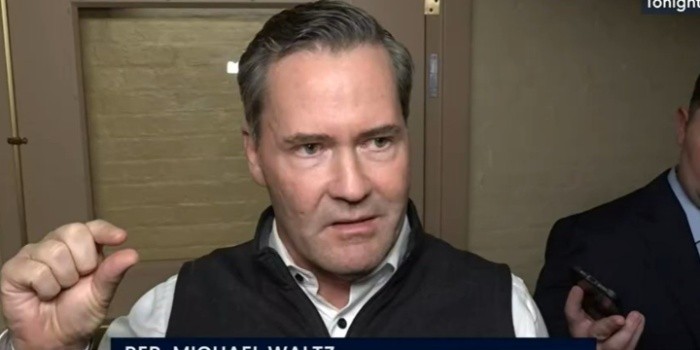
(José Niño, Headline USA) A hacker has reportedly breached the TeleMessage, an Israeli firm that sells modified versions of Signal and other encrypted messaging apps—recently revealed to have been used by Trump’s former National Security Advisor Michael Waltz.

According to a report by 404 Media, stolen data from TeleMessage includes the contents of some direct messages and group chats, as well as contact details for government officials and backend login credentials. 

While the hacker did not access all messages or those of cabinet members, the breach exposed serious vulnerabilities in a tool used to archive sensitive government communications.

As Headline USA previously reported, TeleMessage came under scrutiny after Waltz, the Trump administration’s former National Security Advisor, was photographed using the company’s Signal clone during a cabinet meeting with President Trump. 

The app, which is designed to comply with legal requirements to archive messages, has been used by officials including Marco Rubio, Tulsi Gabbard, and JD Vance. The hack shows that the archived chat logs are not end-to-end encrypted between the modified app and the archive server, undermining the security of the platform.

The hacker told 404 Media, “I would say the whole process took about 15-20 minutes. It wasn’t much effort at all.” The breach included data related to Customs and Border Protection (CBP), Coinbase, and other financial institutions. One screenshot showed contact information for up to 747 CBP officials, while another listed Coinbase employees. 

The hacker also accessed group chats discussing sensitive legislative efforts, such as a controversial cryptocurrency bill.

404 Media verified the data by contacting individuals named in the breach and using open-source intelligence tools to confirm phone numbers. The compromised server was hosted on Amazon AWS in Northern Virginia, and analysis of TeleMessage’s Android app confirmed it sent message data to this endpoint.

TeleMessage’s business model involves modifying popular encrypted messaging apps to send copies of messages to a remote server for archiving. While the company claims its apps maintain Signal’s security, the breach proves otherwise. 

“The only difference is the TeleMessage version captures all incoming and outgoing Signal messages for archiving purposes,” a company video states. However, security experts warn that adding a third party to store messages inherently weakens security.

“We cannot guarantee the privacy or security properties of unofficial versions of Signal,” a Signal spokesperson previously told 404 Media. The White House has previously stated that Signal is an approved app for government use, but the use of modified versions raises concerns about data security.

The hacker said he targeted TeleMessage out of curiosity about its security.

“If I could have found this in less than 30 minutes then anybody else could too. And who knows how long it’s been vulnerable?” the hacker said. TeleMessage has since suspended its services, and parent company Smarsh has engaged an external cybersecurity firm to investigate.

Public procurement records show TeleMessage has contracts with multiple U.S. government agencies, including the State Department and the CDC. The breach highlights the risks of using modified versions of secure messaging apps for sensitive communications.

The hack serves as a stark reminder that third-party archiving can undermine even the most secure messaging platforms.

José Niño is the deputy editor of Headline USA. Follow him at x.com/JoseAlNino

Israeli Government Approves Plan for Full Military Occupation of Gaza

(Dave DeCamp, Antiwar.com) The Israeli government has approved plans to expand the genocidal war on Gaza that Israeli officials say will lead to the full Israeli military occupation of the Palestinian territory.

The plan involves capturing more territory in Gaza, expanding the so-called “buffer zone” where the IDF has demolished virtually every structure, and forcibly displacing Palestinian civilians to move them all to a small area of southern Gaza.

Axios later reported that the Israeli plan involves flattening every single building that remains in Gaza, forcing the entire civilian population into one single area, and pressuring them to leave as part of an ethnic cleansing plan, though it’s unclear what countries are willing to take them.

An Israeli official told Haaretz that the plan is different from previous Israeli military operations because it will lead to “the occupation of territory and a sustained Israeli presence in Gaza.”

Israeli Finance Minister Bezalel Smotrich said Israel is “finally going to occupy the Gaza Strip” and that it was “no longer afraid of the word ‘occupation.’”

Smotrich said that once the new offensive starts, nothing will stop Israel’s plans to “conquer” Gaza, not even Hamas releasing all the Israeli hostages.

“There will be no retreat from the territories we have conquered, not even in exchange for hostages,” Smotrich said. “Once we occupy and stay, we can talk about sovereignty. But I did not demand that this be included among the goals of the war. First, we will defeat Hamas and prevent it from existing.”

Both Smotrich and Israeli Prime Minister Benjamin Netanyahu have made clear that freeing the hostages is not their priority and that the ultimate goal is ethnic cleansing, which they frame as “voluntary migration.”

A group representing the family members of Israeli captives held in Gaza slammed the new plan for Gaza. The Hostages and Missing Families Forum said the plan should be named the “Smotrich-Netanyahu plan” to “give up on the hostages and Israel’s security and national resilience.”

According to AFP, an Israeli official said Israel would allow a “window” to reach a hostage deal with Hamas during President Trump’s visit to the region, which will begin on May 13, before launching the offensive. But a deal is unlikely since Israel has repeatedly rejected an offer from Hamas for all the captives to be freed in exchange for a permanent truce.

The Axios report said that President Trump isn’t pushing for a ceasefire deal and has “effectively given Prime Minister Benjamin Netanyahu a green light to do as he sees fit.”

The approval of the plan to take over Gaza comes after over two months of a total Israeli blockade on the Strip, and as children are starving to death due to the lack of aid. According to CBS News, the plan includes a mechanism to have a private security company distribute aid in Gaza, but there’s no indication it will be implemented soon or that it would provide the relief needed to stave off a massive famine.

This article originally appeared at Antiwar.com.

DEA Official Spied on His Own Agents, Inspector General Finds

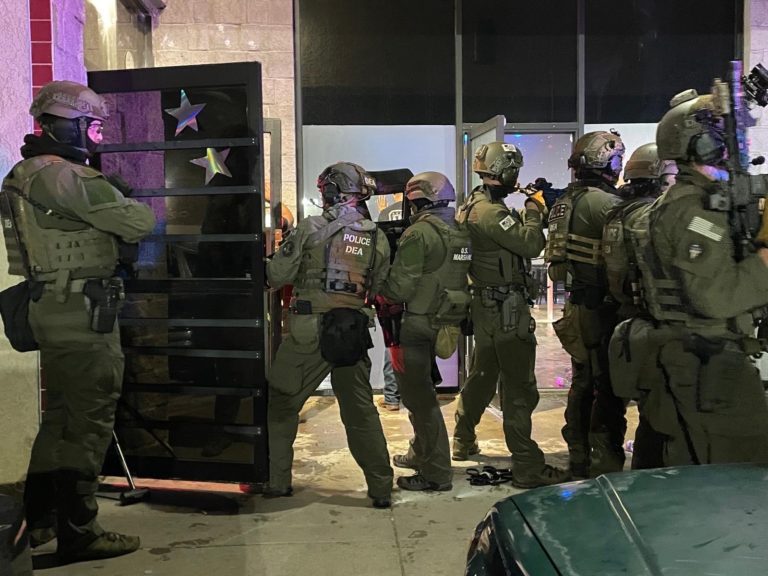
(Ken Silva, Headline USA) The DOJ Inspector General released a report Tuesday about a senior Drug Enforcement Administration official who was caught spying on the DEA’s own agents with a remote camera that installed in the official’s office.

According to the DOJ-OIG report, someone from the DEA’s Office of Professional Responsibility alleged that a DEA special agent in-charge had installed and remotely monitored a “personally-owned camera, with real-time video and audio, in the SAC’s DEA office and used the camera to monitor activities of individuals without their knowledge.”

“The OIG investigation substantiated the allegation that the DEA SAC installed and remotely monitored an unauthorized personally-owned camera, with real-time video and audio, in the SAC’s office, in violation of DEA policy,” the report said.

The DOJ declined to prosecute the official, who was removed prior to the Inspector General’s investigation “for misconduct unrelated to the OIG investigation,” the report said.

“The OIG has completed its investigation and provided its report to the DEA for its information,” the report concluded.

The DOJ-OIG report comes after it announced last November that it’s investigating the DEA’s interdiction activities at airports.

The DOJ-OIG has issued multiple reports over the decades about DEA agents racially profiling minorities when asking to conduct “consensual” searches at airlines.

In its most recent investigation, the DOJ-OIG said it learned of a DEA office that has a confidential informant who is an employee of a commercial airline. That informant—referred to in the report as a confidential source—has for years been receiving a percentage of cash seized from passengers based on the informant’s tips.

After the DOJ-OIG told the DEA about its findings, on Nov. 12 the agency suspended its practice of approaching passengers for consensual searches—unless the activity is either connected to an existing investigation or “approved by the DEA Administrator based on exigent circumstances.” The DOJ-OIG also recommended a number of reforms to the DEA’s consensual-search program, to which the agency agreed.

Ken Silva is the editor of Headline USA. Follow him at x.com/jd_cashless.

US to Upgrade, Transfer Missile Defense from Israel to Ukraine

(Kyle Anzalone, Libertarian Institute) The Donald Trump administration is moving forward with a Joe Biden-era plan to move a retired Patriot missile system from Israel to Ukraine. Washington will upgrade the air defense platform before transferring control to Kiev.

The New York Times reported the move on Sunday, citing four current and former US officials who confirmed that Trump planned to go through with sending a Patriot system to Kiev, despite his stated objections to continuing what he calls “Biden’s war” in Ukraine.

The plan to transfer a Patriot battery would also see Germany or Greece send a second system, giving Kiev a total of 10, though one official said two of them are currently not functioning. A Ukrainian official admitted on Friday that his forces lacked adequate air defenses.

The Patriot system set to be transferred from Israel is an older model that will be upgraded. The US recently deployed a Patriot and multiple THAAD air defense systems to the Middle East to defend Israel.

While Ukrainian President Volodymyr Zelensky has offered to buy more air defense platforms, Kiev is still largely dependent on aid transfers from Washington. However, last week, a natural resources deal between Washington and Kiev was signed that could give Ukraine access to funds to buy more American weapons.

Trump met Zelensky at the Vatican during Pope Francis’s funeral. The Ukrainian left the meeting feeling he had successfully swayed his American counterpart to take a harder line on Russian President Vladimir Putin. Following the meeting, Trump criticized Putin for targeting Ukrainian cities in a missile attack.


This article originally appeared at The Libertarian Institute.

Report: DOJ Probing Why FBI Had Suspected Human Smuggler Released in 2022

(Ken Silva, Headline USA) ABC News reported Tuesday that the Justice Department is investigating why the FBI had local police release “Maryland man” Kilmar Abrego Garcia when he was suspected of human trafficking in 2022.

Abrego Garcia is the El Salvador national who was deported in March on the grounds that he’s a suspected MS-13 gang member. Abrego Garcia was deported despite the fact that an immigration judge granted him special protection from removal around 2019, on the grounds that a local gang in El Salvador was extorting his family.

While the Trump administration continues to argue in court about whether Abrego Garcia’s deportation was justified, the DOJ is now also probing why the FBI ordered the Tennessee Highway Patrol to release him during a traffic stop in 2022—when he was found to have been driving a vehicle with eight individuals who had been allegedly smuggled into the U.S.

According to ABC News, the DOJ interviewed the owner of the vehicle Abrego Garcia was driving in 2022. That man, Jose Ramon Hernandez Reyes, is also an illegal immigrant and accused human smuggler.  ABC News said federal agents interviewed him late last month at the Federal Correctional Institution in Talladega, Alabama. Reyes was reportedly given “limited immunity” to talk about Abrego Garcia.

“Hernandez-Reyes told investigators that he previously operated a ‘taxi service’ based in Baltimore. He claimed to have met Abrego Garcia around 2015 and claimed to have hired him on multiple occasions to transport undocumented migrants from Texas to various locations in the United States,” ABC reported, citing anonymous sources familiar with the investigation.

“The frequency and time frame of the alleged trips was not immediately clear,” ABC reported. “It’s unclear whether prosecutors will ultimately gather enough evidence to bring charges against Abrego Garcia. The interview of Hernandez-Reyes, however, appears to be a new and aggressive step in the government’s efforts to gather potentially incriminating information about Abrego Garcia’s background.”

Abrego Garcia is reportedly currently detained in El Salvador’s maximum-security prison, Terrorist Confinement Center, or CECOT.

A judge—described by Republicans as a judicial activist—has ruled that the Trump administration must take steps to bring Garcia back to the U.S., based on the earlier court order. The administration is supposed to report to the judge this week about the steps it’s taken to retrieve him.

Ken Silva is the editor of Headline USA. Follow him at x.com/jd_cashless.

U.S. Launches More Airstrikes in Somalia, Says ISIS Targeted

(Dave DeCamp, Antiwar.com) US Africa Command said on Monday that its forces launched two airstrikes in Somalia’s Puntland region, targeting the local ISIS affiliate.

AFRICOM said one strike targeted the Miraale Region in Puntland on May 3, and the other struck the Golis Mountains on May 4. The attacks mark the first known US airstrikes in Somalia this month.

In both strikes, AFRICOM said they were launched in coordination with the US-backed federal government, but the government doesn’t control Puntland, and the US has been backing local Puntland forces against ISIS.

AFRICOM offered no details about potential casualties, saying that specific “details about units and assets will not be released to ensure continued operations security.” The Pentagon is known for hiding civilian casualties in Somalia, and there has been no accountability for its air campaign in the country due to a lack of media coverage.

The US has also launched several strikes against al-Shabaab, which is engaged in an offensive against the US-backed government in central and southern Somalia. The last known US airstrike against al-Shabaab occurred on April 24.

The Trump administration has significantly increased airstrikes in Somalia after the president loosened restrictions on airstrikes and raids in areas not officially declared combat zones, which applies to any country outside of Syria and Iraq. The new authorities give military commanders more freedom to launch attacks without getting permission from the White House.

AFRICOM has announced a total of 21 airstrikes against ISIS and al-Shabaab in Somalia under the new Trump administration. In 2024 and in the final weeks of the Biden administration in January 2025, AFRICOM announced a total of 10 airstrikes in Somalia.

Last month, the US military used its new authorities to bomb boats off the coast of Somalia that were allegedly smuggling weapons to al-Shabaab. It’s unclear what evidence the US had to support its claim that the boats were carrying arms.

This article originally appeared at Antiwar.com.

Global Gold Bar and Coin Demand Rose in Q1 But Not in the U.S.

(Mike Maharrey, Money Metals News Service) Demand for physical gold surged in the first quarter. But not in the United States.

Asian investors primarily drove demand for gold bars and coins as American investors continued to sit on the sidelines.

Global demand for gold bars and coins rose by a healthy 3 percent in the first quarter, rising to 317.3 tonnes in Q1’24 from 325.4 tonnes. That was comparable to fourth quarter demand and a 20.3 percent increase from the third quarter of 2024.

First quarter demand for gold coins and bars was 15 percent above the five-year average.

Asian Gold Demand Leads the Way

China drove the surge in retail investment demand, charting the second strongest quarter on record. Chinese investors gobbled up 126.7 tonnes of gold bars and coins. That was a 47 percent increase from Q4 ’24 and a 12 percent rise year-on-year.

The World Gold Council noted that the gain was particularly impressive given year-on-year growth was built on an already-strong Q1 2024.

According to the WGC, “The record-shattering gold price rally has been key in pushing up bar and coin demand during the quarter. With local assets – such as equities and bonds – underperforming, investors flocked to gold for returns.”

Demand for gold is so strong in China that the government allocated additional gold import quotas for commercial banks last month.

State Street Global Advisors’ strategist Aron Chan described it as a “multi-layered demand base,” noting that it helps support and stabilize the price even amid extreme volatility.

“This demand is less speculative and more strategic or culturally embedded, which means it is stickier and more resilient.”

Indian investors also continued buying gold, with coin and bar demand increasing by 7 percent year-on-year in the first quarter. It was the seventh consecutive quarter of year-on-year demand growth for gold coins and bars in India, the world’s second-largest gold market.

Indian demand was down quarter-on-quarter, but this was primarily due to seasonal fluctuations and an inauspicious period in the Indian calendar.

Other Asian markets also reported strong year-on-year increases in gold coin and bar demand.

  • Pakistan – 5%
  • Indonesia – 35 %
  • Singapore – 35%
  • Korea – 36%
  • Thailand – 25%
  • Malaysia – 34%

Investment demand was flat in the Middle East, hovering just above the average level seen over the past three years.

According to the World Gold Council, Middle Eastern gold coin and bar demand growth was concentrated in Saudi Arabia, driven by positive price expectations, and Iran, due to currency depreciation, high inflation, and concern over unpredictable U.S. foreign policy.

High interest rates in Turkey created some headwinds for gold, and higher prices curbed buying in the UAE.

There was also renewed interest in physical gold in Europe with a 79 percent year-on-year surge in demand for bars and coins in Q1. However, this increase came off a very low base.

The 26-tonne increase in demand was primarily driven by German-speaking investors. Demand in the UK also got a boost as investors sought capital gains tax-compliant gold in light of last year’s budget changes to CGT thresholds.

Canadians even got in on the act, with gold coin and bar demand surging by 85 percent year-on-year.

While Asians Buy, Americans Sell

And what about the U.S.?

Gold coin and bar demand dropped to the lowest level in almost five years.

While Asian investors bought gold, Americans sold, seeking profits with prices at record levels. At 19.3 tonnes, demand was down 22 percent year-on-year and 16 percent from Q4 ’24.

World Gold Council analysts said the drop wasn’t surprising given Trump’s transition into the White House.

“Historically, Republican presidencies have generally resulted in lower retail demand; however, fieldwork suggests that investment interest picked up late in the quarter and continued through early Q2 as tariff announcements dominated headlines.”

To be fair, American investors didn’t spurn gold completely. Gold flowed into North American-based ETFs, with fund holdings increasing by 134 tonnes.

Some of that ETF demand likely came from Canadians who, as already noted, flocked to the yellow metal in Q1.

ETFs are a convenient way for investors to play the gold market, but owning ETF shares is not the same as holding physical gold.

ETFs are relatively liquid. You can buy or sell an ETF with a couple of mouse clicks. You don’t have to worry about transporting or storing metal. In a nutshell, it allows investors to play the gold market without buying full ounces of metal at the spot price.

Since you are just buying a number in a computer, you can easily trade your ETF shares for another stock or cash whenever you want, even multiple times on the same day. Many speculative investors take advantage of this liquidity.

But while a gold ETF is a convenient way to play the price of gold on the market, you don’t possess any gold. You have paper. And you don’t know for sure that the fund has all the gold either, especially when the fund sees inflows. In such a scenario, there have been difficulties or delays in obtaining physical metal.

It’s significant that this gold bull rally has primarily occurred with U.S. investors on the sidelines. It will be interesting to see what happens when they jump on the bandwagon.


Mike Maharrey is a journalist and market analyst for Money Metals with over a decade of experience in precious metals. He holds a BS in accounting from the University of Kentucky and a BA in journalism from the University of South Florida.

Main Street Is Stressed: Bankruptcy Inquiries at Pandemic-Era Levels

(Mike Maharrey, Money Metals News Service) In another sign that things aren’t so great on Main Street, bankruptcy inquiries hit pandemic-level highs in Q1.

More and more people are worried about a looming recession. The mainstream blames these economic worries on tariffs, but it’s pretty clear Americans started feeling the squeeze long before the trade war. Tariffs may be the pin that pops the debt-riddled bubble economy, but if not, there is another pin out there.

Most families don’t go from “everything is great” to “we need to declare bankruptcy” in a matter of days. It is typically the last resort.

In other words, this surge in bankruptcy inquiries likely reflects economic struggles that have been ongoing for months.

LegalShield’s bankruptcy index surged to 2020 levels over the last three months. The index rose to 36.4 in Q1. That was up from 33.3 in Q4 and 30.0 in Q1 2024.

This could signal a wave of bankruptcy filings later this summer.

“Bankruptcy inquiries hit the highest we’ve seen since early 2020, just before Americans’ checkbooks were boosted by COVID checks from the government. When you combine record debt, rising delinquencies, and prolonged financial stress, topped by price pressures driven by tariff uncertainty, the risk of a summer surge in bankruptcy filings becomes very real.”

Bankruptcy filings are already elevated, surging 14.2 percent year-over-year in 2024.

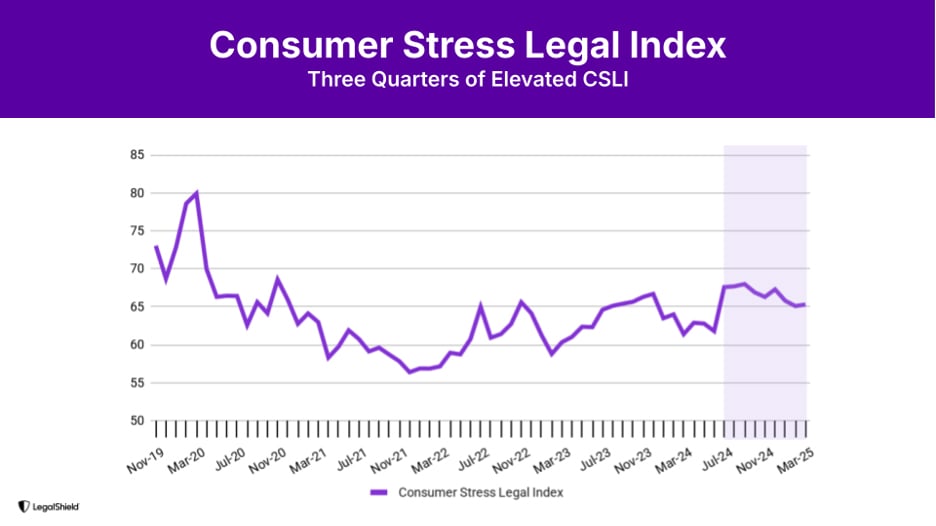
The spike in bankruptcy inquiries isn’t surprising given that LegalShield’s Consumer Stress Legal Index recorded its third straight quarter of high financial strain.

LegalShield bases its stress index on over 35 million legal service requests from its members. This “offers a unique, real-time view into American households’ financial well-being.”

The CSLI has been elevated since a spike in July 2024. It dropped modestly early this year. According to LegalShield, “The decline was driven by a significant drop in consumer finance inquiries amidst tax refund season and relatively strong employment numbers, which may be masking greater concerns as bankruptcy and foreclosure inquiries increased before tariff announcements sent the markets into turmoil.”

In an interview with Kitco News, a LegalShield spokesperson pointed out that these indices aren’t measuring sentiment or opinion.

“This is hard data that shows folks are having problems; they’re calling in today about issues they have right now. We’re not measuring how anyone feels or their emotions or their thoughts—we’re measuring the number of consumers who have a problem and are calling a lawyer because they need to solve it,”

American consumers are buried under record debt, and it’s beginning to squeeze them. The Federal Reserve Bank of New York reported that the share of households 90+ days late on credit card and loan payments rose to a 14-year high to close out 2024.

Note that this was before the tariff threat. This massive debt load was incentivized by more than a decade of artificially low interest rates courtesy of the Federal Reserve after the 2008 financial crisis.

Again — the economy is a bubble waiting for a pin.

LegalShield said the rise in the bankruptcy index could indicate the air is starting to leak out of that bubble.

“When you combine record debt, rising delinquencies, and prolonged financial stress—topped by price pressures driven by tariff uncertainty—the risk of a summer surge in bankruptcy filings becomes very real.”


Mike Maharrey is a journalist and market analyst for Money Metals with over a decade of experience in precious metals. He holds a BS in accounting from the University of Kentucky and a BA in journalism from the University of South Florida.

Trump Bans Gain-of-Function Research

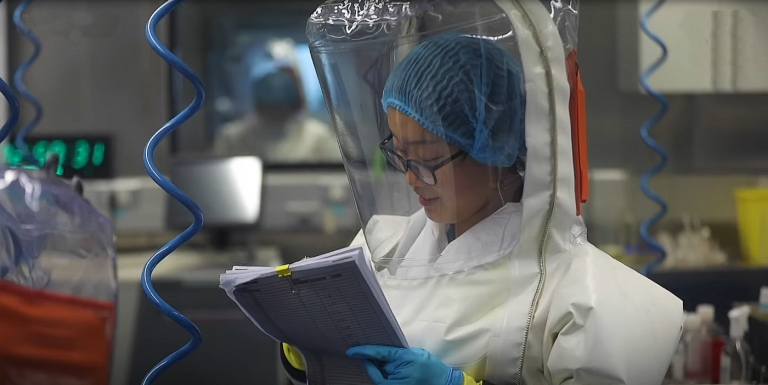
(Ken Silva, Headline USA) President Donald Trump on Monday signed an executive order to stop “dangerous gain-of-function research,” which some scientists believe may have caused the COVID-19 pandemic.

Among other things, the order says it will end federal funding of this research by foreign entities in places such as China or other countries where there’s not adequate oversight to ensure they comply with U.S. policies and standards.

Moments before signing the order, Trump said the virus that causes COVID-19 “leaked out in my opinion,” from a lab in China, a theory the president has wholly embraced since coming back into the White House.

Under the Trump administration, the covid.gov website now shows a photo of himwalking between the words “lab” and “leak” under a White House heading. It mentions that Wuhan, China, where the coronavirus first began spreading, is home to a research lab with a history of conducting virus research with “inadequate biosafety levels.”

The web page also accuses Dr. Anthony Fauci, the former director of the National Institute of Allergy and Infectious Diseases, of pushing a “preferred narrative” that COVID-19 originated in nature.

The origins of COVID have been disputed for years, but the FBI and some other intelligence officials have surmised since early 2020 that it likely came from the Wuhan Institute of Virology. U.S. labs and scientists were likely involved in the Wuhan research, too.

As has been widely documented, the FBI concluded with “moderate confidence”in 2020 that COVID likely originated from a lab leak. Three scientists at the National Center for Medical Intelligence, part of the Pentagon’s Defense Intelligence Agency, also reportedly concluded that “Covid-19 was manipulated in a laboratory in a risky research effort.”

Multiple COVID-era health officials have flip-flopped on the lab-leak theory in recent years.

Former National Institutes of Health director Dr. Francis Collins, for instance, reportedly admitted in January 2024 that the COVID-19 lab-leak hypothesis is plausible—a drastic reversal for a scientist who was involved in attempts to suppress information that COVID may have leaked from a lab.

Dr. Collins further admitted that the “6 feet apart” social distancing recommendation promoted by federal health officials was likely not based on any science or data.

Dr. Collins’s interview with the Coronavirus Subcommittee follows a 14-hour interview of former NIH head Anthony Fauci, who also admitted to the lab-leak theory’s plausibility.

The Associated Press contributed to this report.

Ken Silva is the editor of Headline USA. Follow him at x.com/jd_cashless.

RFK Jr. Shuts Down Beagle Lab after Decades of Sickening Experiments

(Luis Cornelio, Headline USA) The Trump-led National Institutes of Health has shut down a controversial experiment that involved the systematic slaughtering of beagles. 

The experiment, formerly run in-house by the NIH’s Clinical Center in Maryland, involved injecting pneumonia-causing bacteria directly into the lungs of 2,000 beagles. 

In a Saturday interview on Fox and Friends Weekend, NIH Director Jay Bhattacharya said animals would be replaced by more advanced tools in future research. 

“We put forward a policy to replace animals and research with other technological advancements, AI and other tools that actually translate better to human health,” said Bhattacharya, just a month after being confirmed by the Senate. 

“We got rid of all of the beagle experiments on NIH campus,” he added. 

Bhattacharya suggested the beagle experiments, along with other controversial practices, helped fuel public distrust in the agency. 

“The NIH, during pandemic, leaned in to lockdowns, schools closures [and] all these things. So, I think there’s a level of distrust that people have for the NIH that I’m hoping under President Donald Trump, we can reverse,” he said. 

According to watchdog White Coat Waste Project, federal researchers placed tubes into the dogs’ lungs to inject deadly pneumonia-causing bacteria. The goal was to study septic shock and organ failure in the animals. 

Four days later, the dogs that survived were euthanized and thrown into refrigerators, leading to the deaths of 2,133 puppies. Each beagle reportedly cost taxpayers between $1,000 and $1,500 from a puppy mill in Cumberland, Virginia, according to the New York Post. 

“As the watchdog that first uncovered and battled Dr. Fauci’s beagle tests (the biggest animal testing scandal in history), we’re proud that White Coat Waste has closed the NIH’s last in-house beagle laboratory following a hard-fought nine-year-long campaign,” WCW founder and President Anthony Bellotti told the Post.